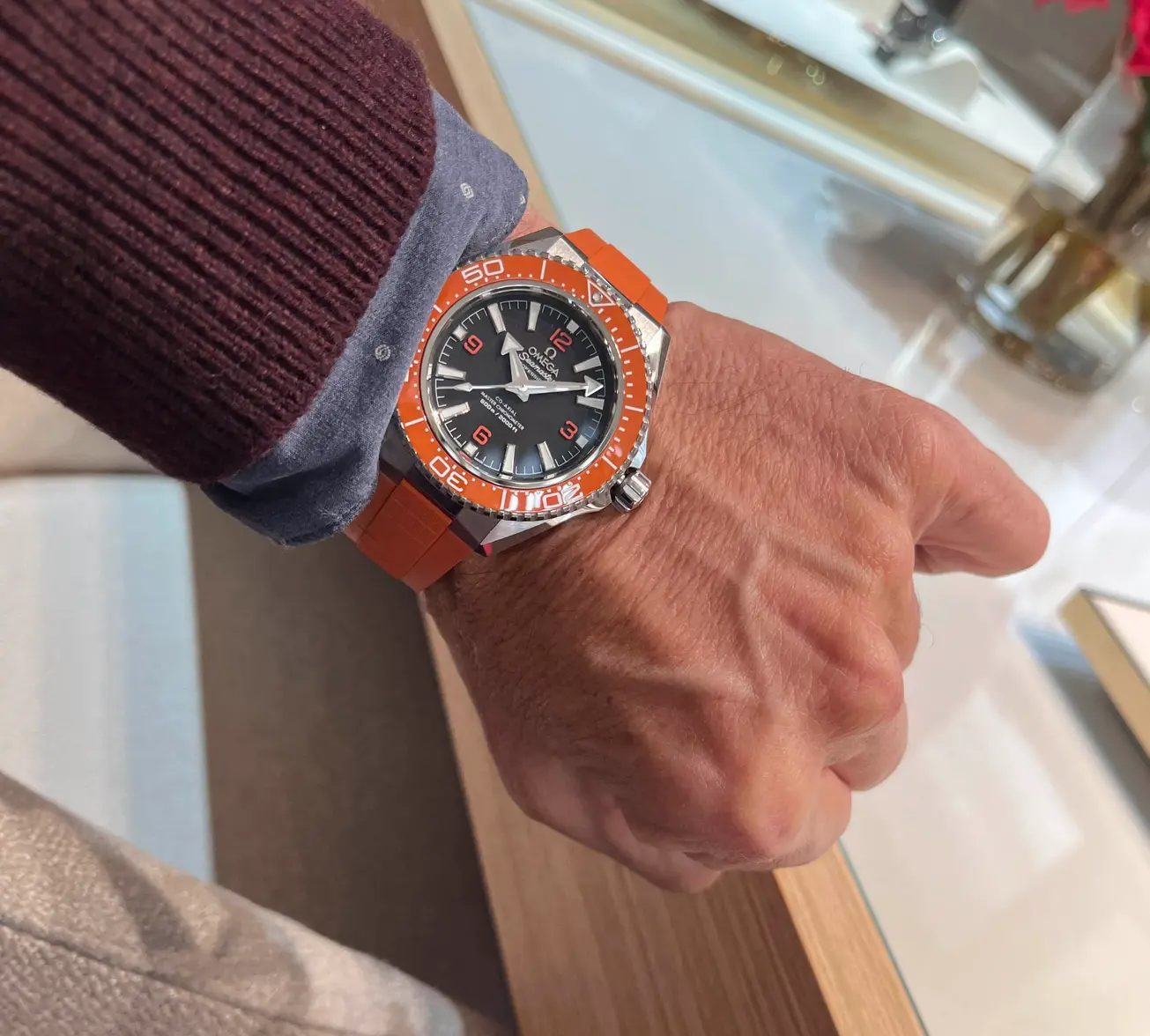
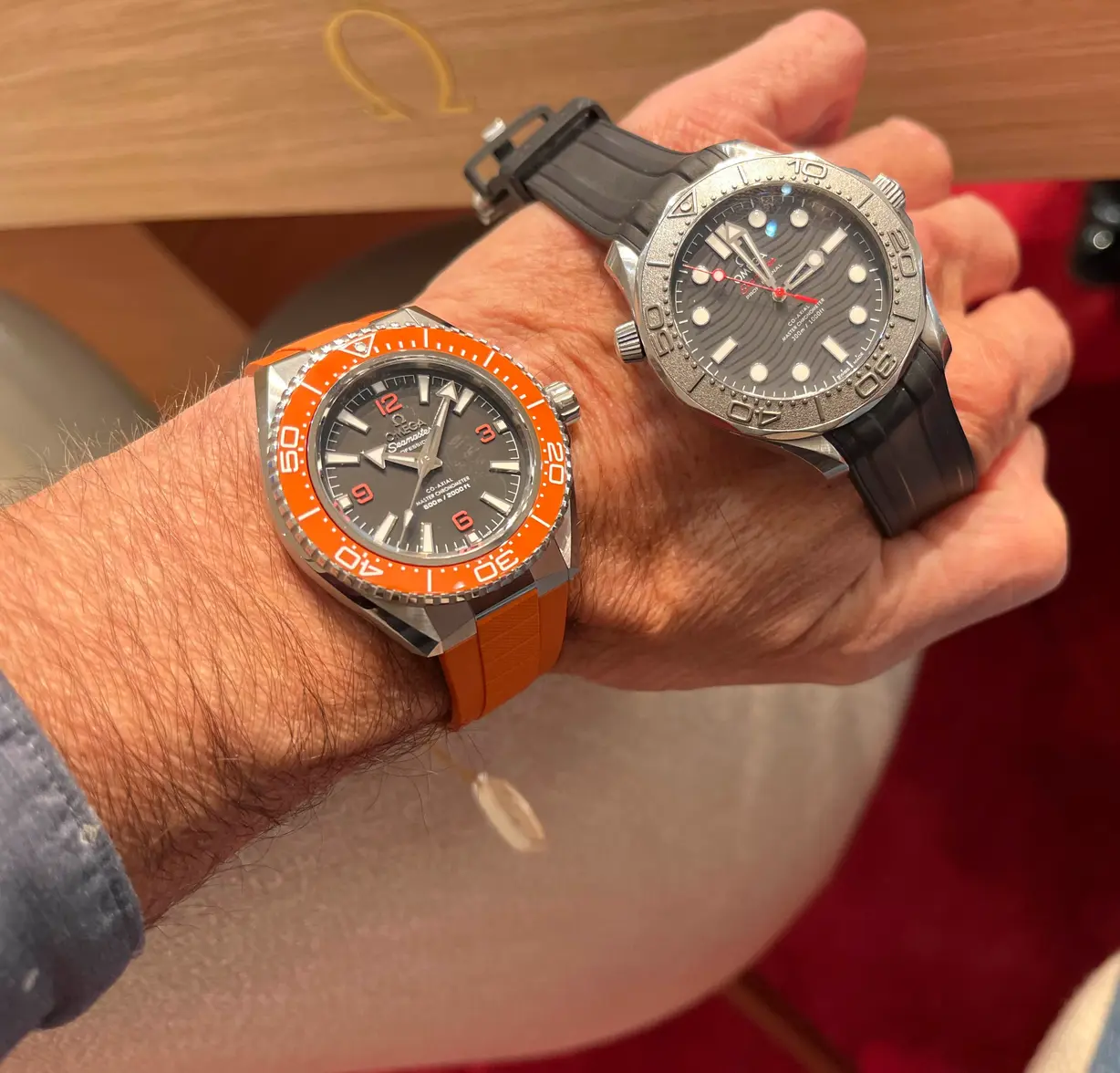
Just a point of information here, the summer blue Seamaster Heritage has a case back to bezel measurement of just under 12 mm (11.83mm or so). It has a ceramic bezel insert and steel caseback. If this watch went to a flat Crystal like the planet ocean has, it would be 12.3 - 12.5 mm thick. An SMP style crystal would probably result in a thickness very close to 13.2 mm. Omega chose a taller, vintage style dome.
I think it was true that Omega needed a larger ceramic bezel insert to avoid breakage at one time (I have heard it said that they didn't use a ceramic bezel in the Seamaster Trilogy for this reason- it was too thin and would break), but I don't think it is true anymore.
Obviously the rest of design of the SMP is a lot different than the heritage. But comparably, the first generation Seamaster professional had a very thin bezel, in the mid case of the current Seamaster is certainly thicker than the current heritage, and it may not need to be.
It
could be did the mid-case thickness is there specifically for the ceramic dial. I don't actually know how thick that dial is compared to the average brass dial though
The bezel insert is thicker than the aluminum one and the steel (or titanium) bezel is thicker to support the fragile ceramic. You can look at the date window to see how thick the ceramic dial is.
As far as thickness, again, there is a lot of disparate concerns that people have. I don't think a curved sapphire crystal is as precious as many other Seamaster design elements, but I also don't think it markedly changes the thickness of the watch. Not where it counts the most. Especially when we are comparing the modestly curved SMP crystal to a flat one. I think a display caseback falls onto the same category, but is likely more noticeable on the wrist.
A truly thinner SMP will only come by going back to basics; brass, aluminum (or other exotic similar performing material), solid caseback. It probably won't be as svelte as the early 2000s SMP, certainly not the 1960s SM300, but it might be a welcome change. I really think it's the ceramic dial that has to go. The contemporary Submariner has a brass dial, most put it at 12 to 12.5mm thick interestingly. Elimination of the HEV and switching to a fully automatic (smaller overall diameter) version may reduce thickness, too. Then the design question becomes if you keep the helium resistance of the design, how might those changes drive overall thickness? It's a bunch of sliding rules, nothing is designed in isolation.
Watch design is a constrained optimization problem. Every variable pushes on other variables. You are constantly trading:
thickness, rigidity, water resistance, shock resistance, magnetic resistance, serviceability, manufacturability, movement dimensions, visual proportions, bracelet integration, crystal geometry, bezel architecture, and identity.
You dont get anything for free.
A thinner crystal may require: different gasket compression, less safety margin, or a thicker retaining structure elsewhere (looking at you ceramic). A thinner mid-case may require:
shorter movement height, reduced dial clearance, less rotor travel margin, or different caseback geometry. A flatter caseback may worsen wearability if the lugs are not adjusted. A thinner bezel may reduce grip. A thinner automatic movement may reduce rotor efficiency or durability.
Even aesthetic decisions cascade mechanically: lyre lugs distribute visual mass differently, broad flat lugs visually amplify thickness, polished bevels can visually “shrink” a case, domed crystals can hide bezel height, darker bezels visually compress vertical mass. I do respect Rolex and their Submariner because for all intents and purposes, it's quite faithful to what was in the beginning. I mean, details have been changed, it's shinier, but it's impressive in a way that it's so similar.