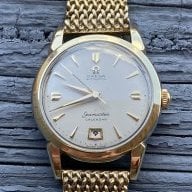
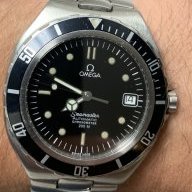
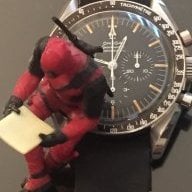
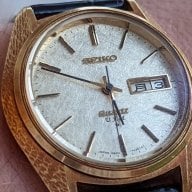
It seems that when you look on, for example, eBay, at some of the more interesting watches, the name brand seems to get a premium.
We all know there is no real difference between a Casio digital from the 80s or an Omega digital from the 80s. Probably the same OEM for the module.
A Hewlett-Packard calculator watch sells for thousands more than anyone else's just because it's Hewlett-Packard.
I would love to have an Omega LED but I'm sure as hell not paying two grand for it.
Ah well.
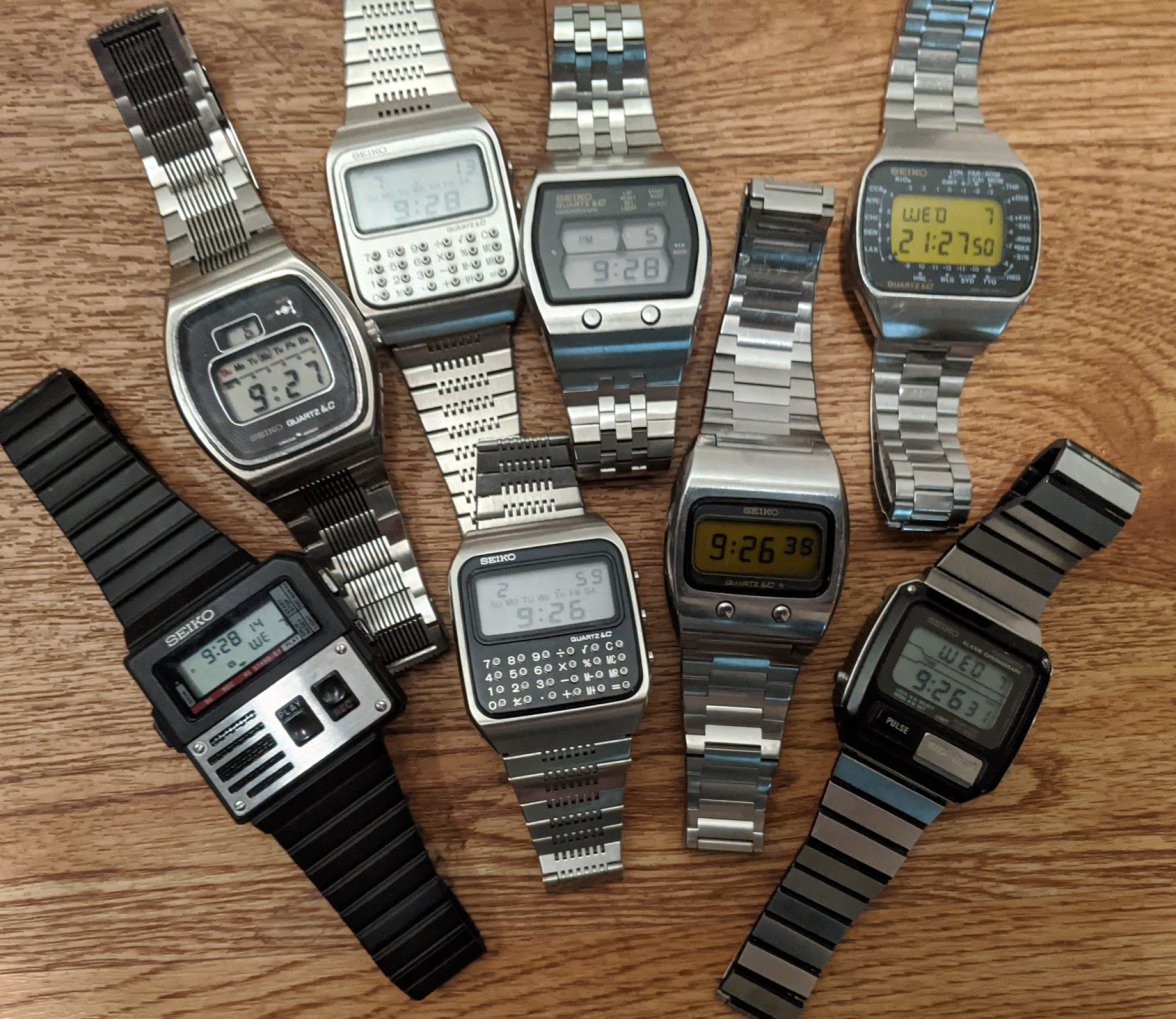
In the early LCD world, there's one undisputed king, and that's Seiko. They started in 1973 with the 06lc, the first commercially available LCD watch. Omega was still focused on analog quartz, and was using Pulsar modules in their LED watches. In the following years, Seiko ticked off a number of firsts, including the first LCD chronograph, with the 0634 in 1976, the first LCD calculator with the C153 in 1977, the first LCD world timer with the M158 in 1978, the first LCD sensor watch with the S229 in 1982, and the first voice recorder with the M516 in 1983. Omega didn't really get started until 1977 with the LCD Speedmaster, which is pretty lame compared to what Seiko was doing by then.
By the late 70s, the focus had shifted from technology to cost, which was terrible timing for Omega. The 80s saw two trends: on the affordable end, it became a race to the bottom for the cheapest watch, with Casio dominating by making cheap watches with enduring designs that are still best sellers today. On the high technology end, we saw Seiko and Casio battling to see who could put the most gimmicks on their watches: TV tuners, day planners, cameras, altimeters, games. All were useless, but pretty damn cool anyway. Omega had the touch screen, but was going neck-and-neck with the cheaper and better Casio touch screen (they're not the same OEM). This competition had Omega spending huge sums on R&D to create watches that did less and cost more than their rivals. Their pedigree of fine watch making didn't help them in a world of mass manufacturing, but they tried anyway. Unfortunately, it almost bankrupt them. The only thing Omega LCD watches have going for them today is relative scarcity (because they were complete commercial flops and few were sold), and the Omega badge. Sure, the LCD Speedmaster was NASA flight certified. Big deal. You could watch TV on a Seiko! The only bright spot in Omega's LCD adventures is that they always had a cool line of Ana-Digis, starting with the 196.0052 Montreal in 1976 and continuing today.
So yes, I agree. Omega digitals, both LED and LCD are bunk.
You're wrong about Hewlett-Packard though. The HP-01 Calculator watch is a masterpiece. It's a true Silicon Valley miracle of the transistor age, even though Pulsar did it first. The $1,000+ price tag on those isn't for the name, it's for the technological history. Have you ever met a Hewlett Packard fanboy? What would they collect? Vintage printers? If it weren't for the fragility and irrepairability of those, prices would be much higher, and deservedly so.
Here are my Seikos, including the "firsts". no Omega line-up can come close ;-)