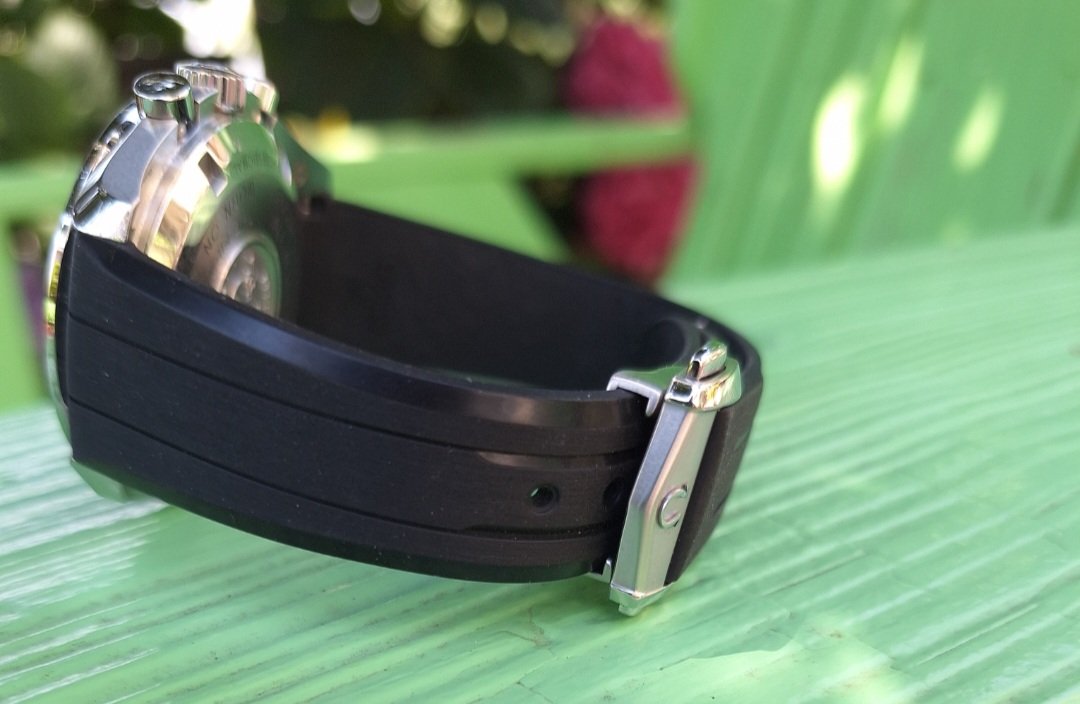
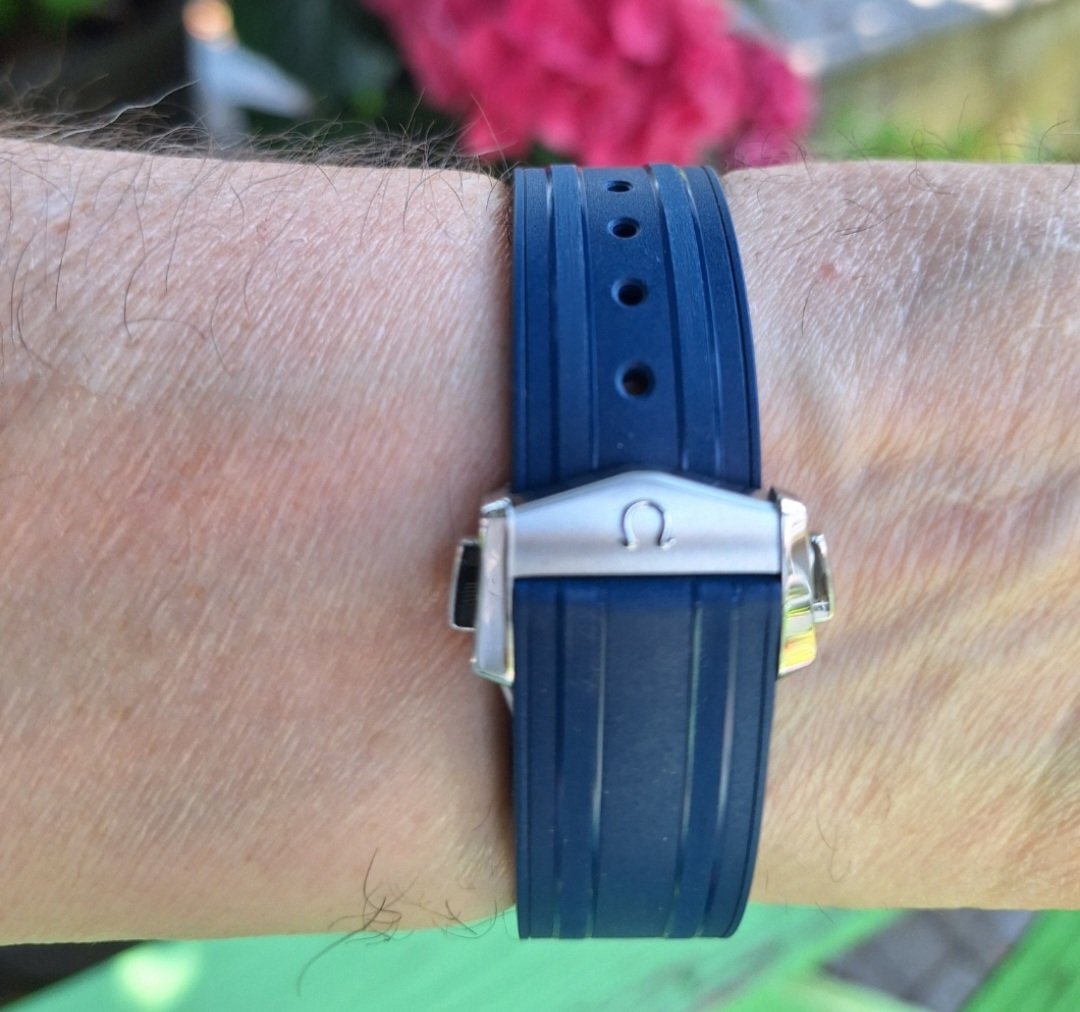
Maybe both, but definitely too big-feeling: I didn't like having all that bulk on the underside of my wrist. The previous generation has a clasp that is more sensibly sized and less prone to failure. Goes without saying that this is just my opinion---lots of people like the current generation clasp just fine and haven't had any issues.
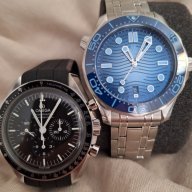
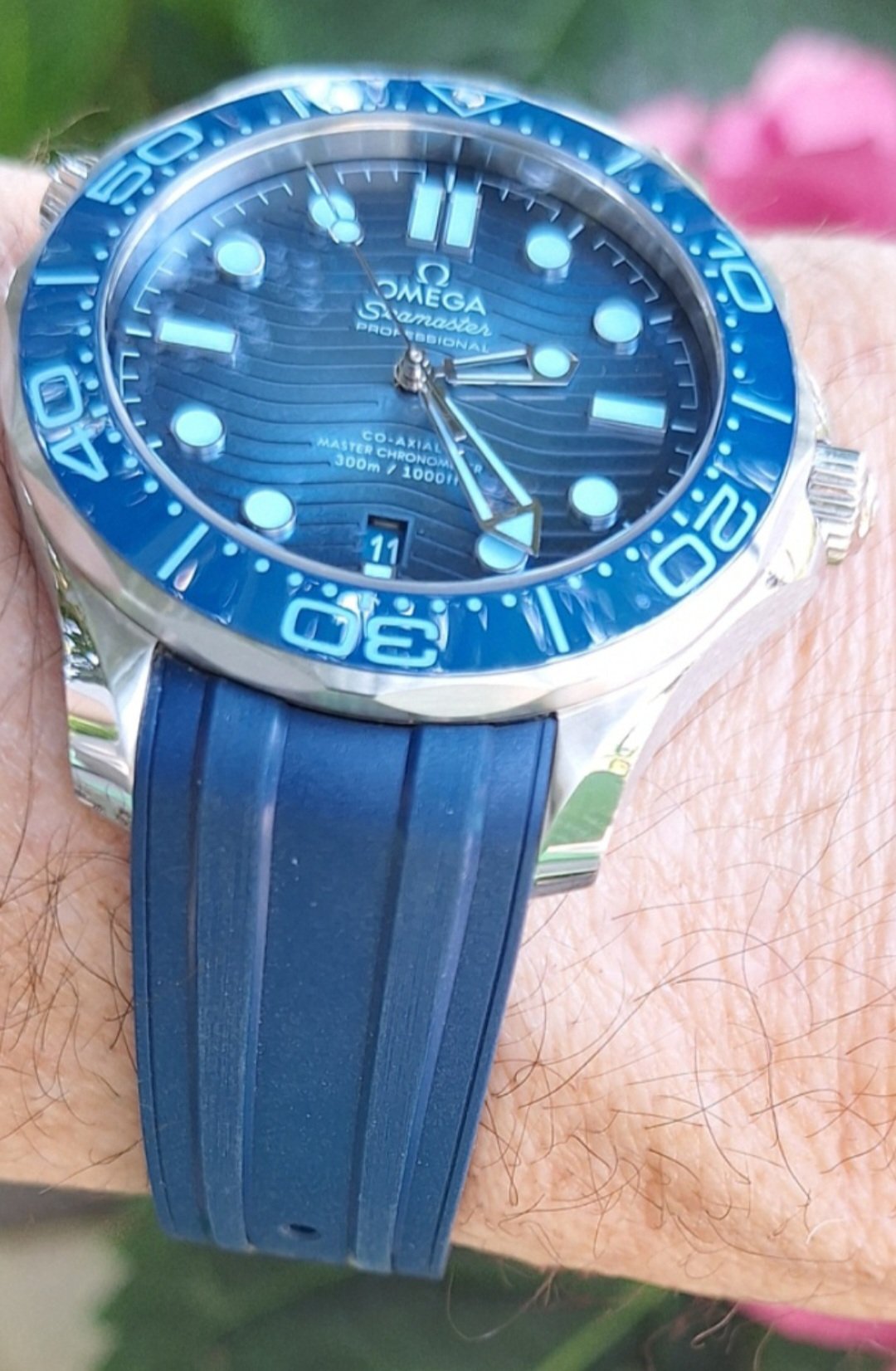
Overall, the previous generation wins for me: better clasp, better-sized case (41mm rather than 42), no cut-wave dial pattern, and slimmer. The new ones are beautiful in their own way, but in my view they're just too massive and clunky, and I've fallen out of love with the current version of the wave dial.
Like I said, the previous gens can be had in like-new condition for 3000 to 3500 USD. That's actually not too different from what the current gens sell for (new or almost new) on the secondary market. Even though Omega wants people to buy them at retail for 5900, they tend to sell, in reality, for about 3700 to 3900. I guess what I'm saying here is that it speaks well of the previous gens that they've retained value after all these years--they're
still selling at prices close to what their
replacements sell for! Now that I've owned both, I understand why. The previous version just impresses me as a better watch overall, even though the movement is older tech and it doesn't have a clear caseback. (Really, who cares? The 8800 is wonderful, but it isn't much to look at.) They've aged well, and I suspect they're more likely to become "classics" than the current ones.
One thing I'd stress: unless having the AD/OB "experience" is worth $2,000 to you, do not buy one of the current gen divers at retail. They get
crushed in terms of street value the second you leave the store (like I said, $3700--
or less!--to
3900), and Omega cranks them out by the thousand---they're not at all hard to find. Even the more ambitious sellers who list them in the mid-4s will probably end up chasing you down a week or two after rejecting an offer closer to the range I mentioned.