Making an escape wheel for a chronometer

Posts
17,938
Likes
37,514
I can't imagine how the original clockmakers must have gone about making these components.
No electric motors to power the lathes etc, just human power.
 
Posts
2,842
Likes
4,536
One of my mentors could hand file teeth. A lot of the early instruction was abou filing. This was more for clock repair.

Bow powered lathes and drills are surprisingly efficient. I suspect it really comes down to practice. A cold winter's day probably also helps. These things were also not done in isolation.

Wind and water are also useful. Those though tend to a more industrial approach. I have an old textbook from like the 1850s on hydrodynamics. If anything these power sources are almost too powerful for individual use.

I did build a pinion cutting machine to make a pinion for a repeater (a project long abandoned.) That of course uses small motors. I took a lot of photos of the old hand turns and things in museums. Some placed in out of the way places.

I suspect that the real talent is in knowing how to sharpen the gravers and files. The rest is motivation, dedication and determination.
 
Posts
15,477
Likes
45,824
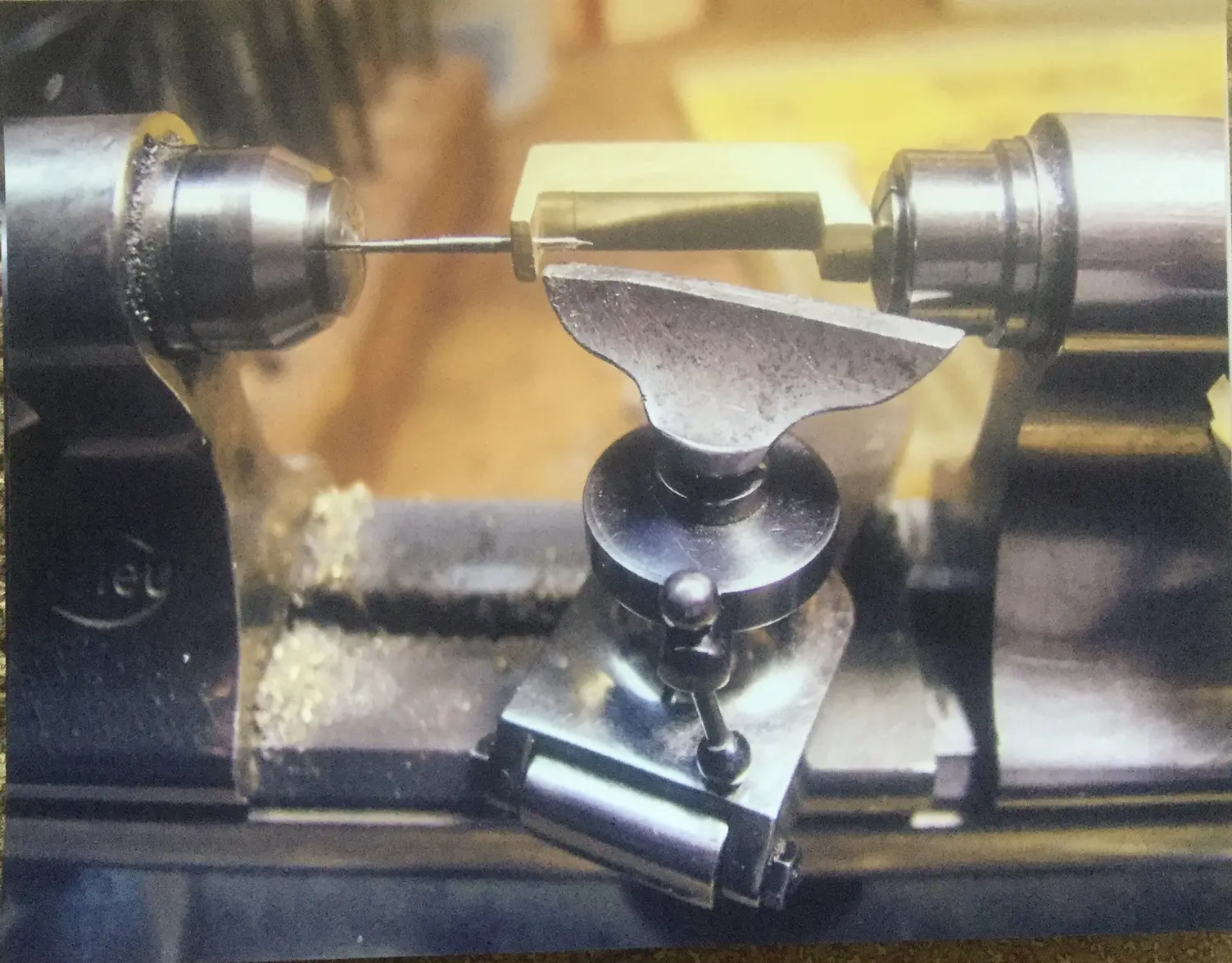
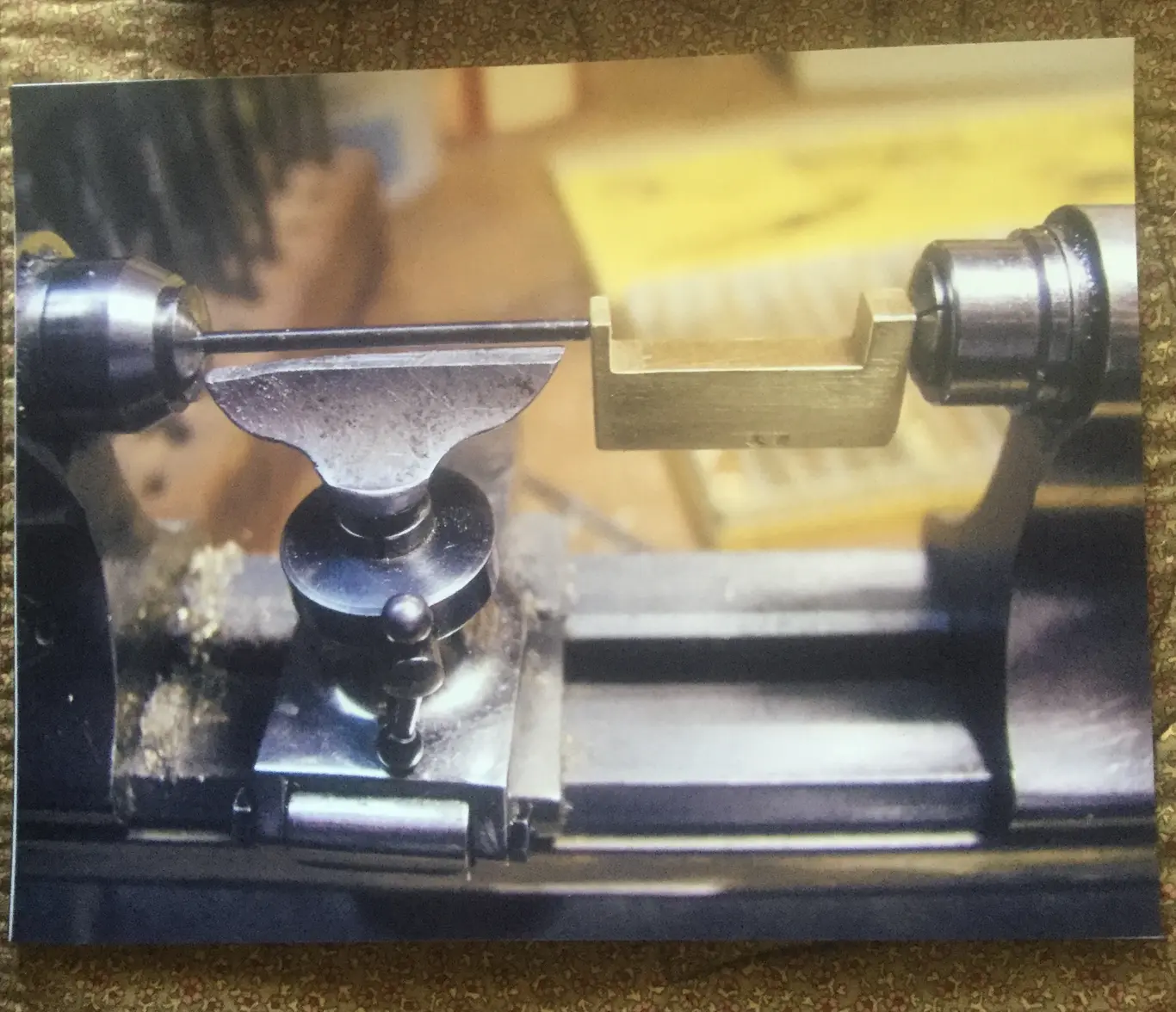
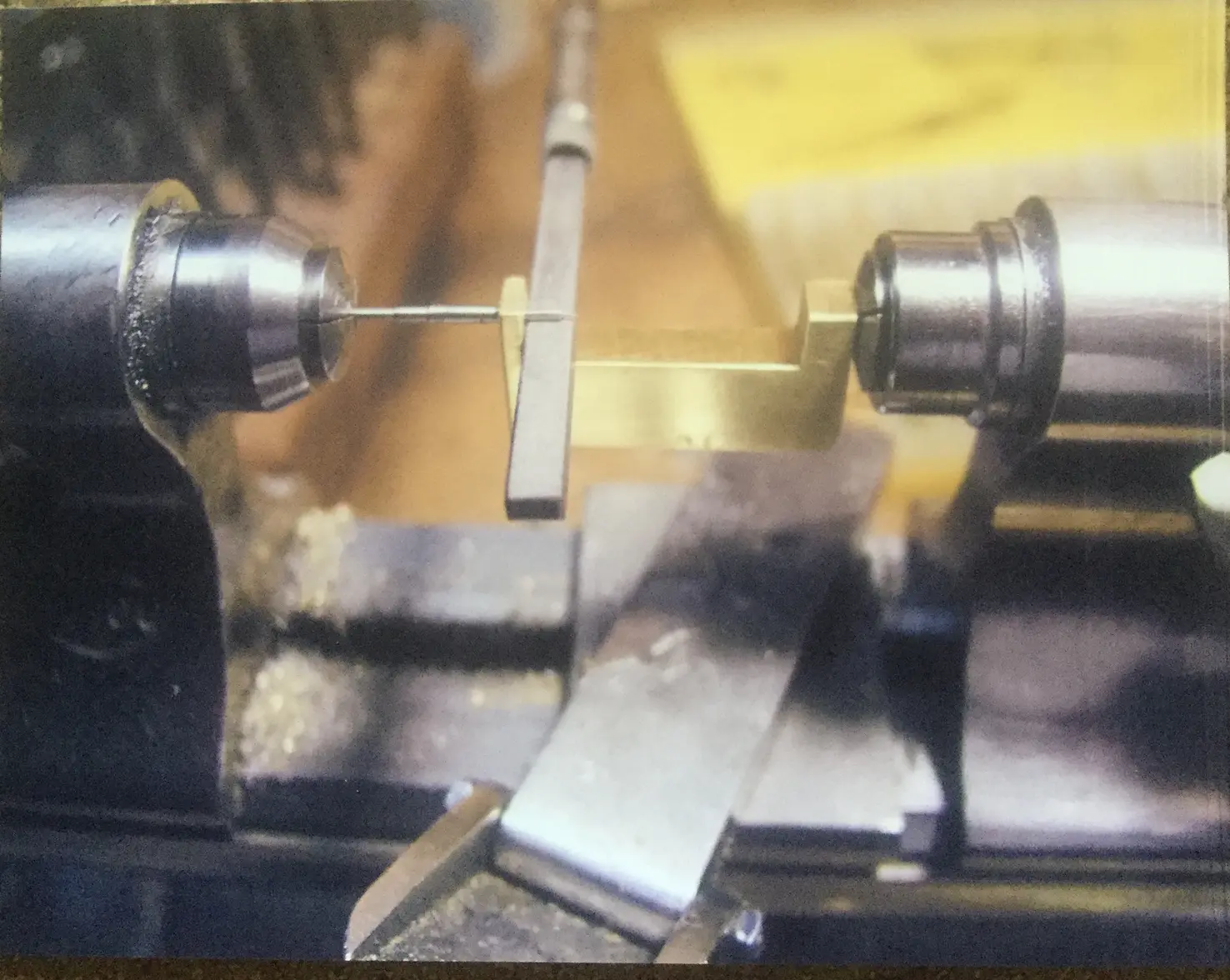
This wasn’t the making of an escape wheel, but years ago, I had to fabricate a balance staff for a Russian chronometer. The staff was about 28 mm long (over one inch). I started out with a heavy slab of brass. I turned a 5 mm stump off centre on one end of the brass. I filed a deep recess into one edge of the brass, leaving a shoulder at each end of the brass as shown. I have two Boley lathes. I placed the one headstock on the lathe bed as shown (on the right), chucked up the 5 mm stump in a 5 mm chuck in the second head stock (on the right). I placed a small drill into the headstock on the left, and centre drilled a hole in the tool I made. At this point, I had a ready made “brace” to use as a steady while I put a piece of pivoting steel into the headstock on the left. This enabled me to do all the turning and polishing necessary to finish that long balance staff. Sometimes you have to put your thinking cap on in order to do unusual things.