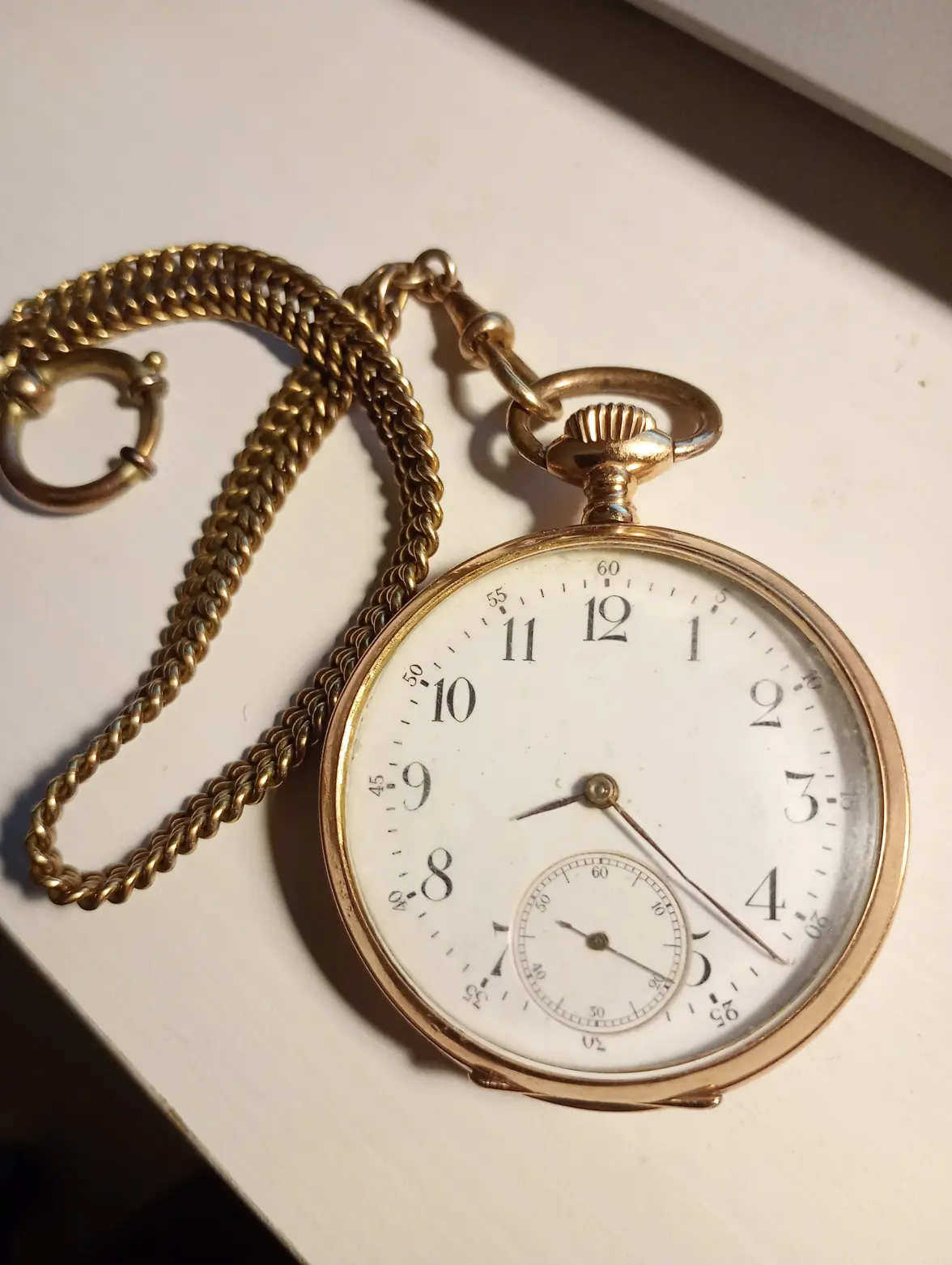
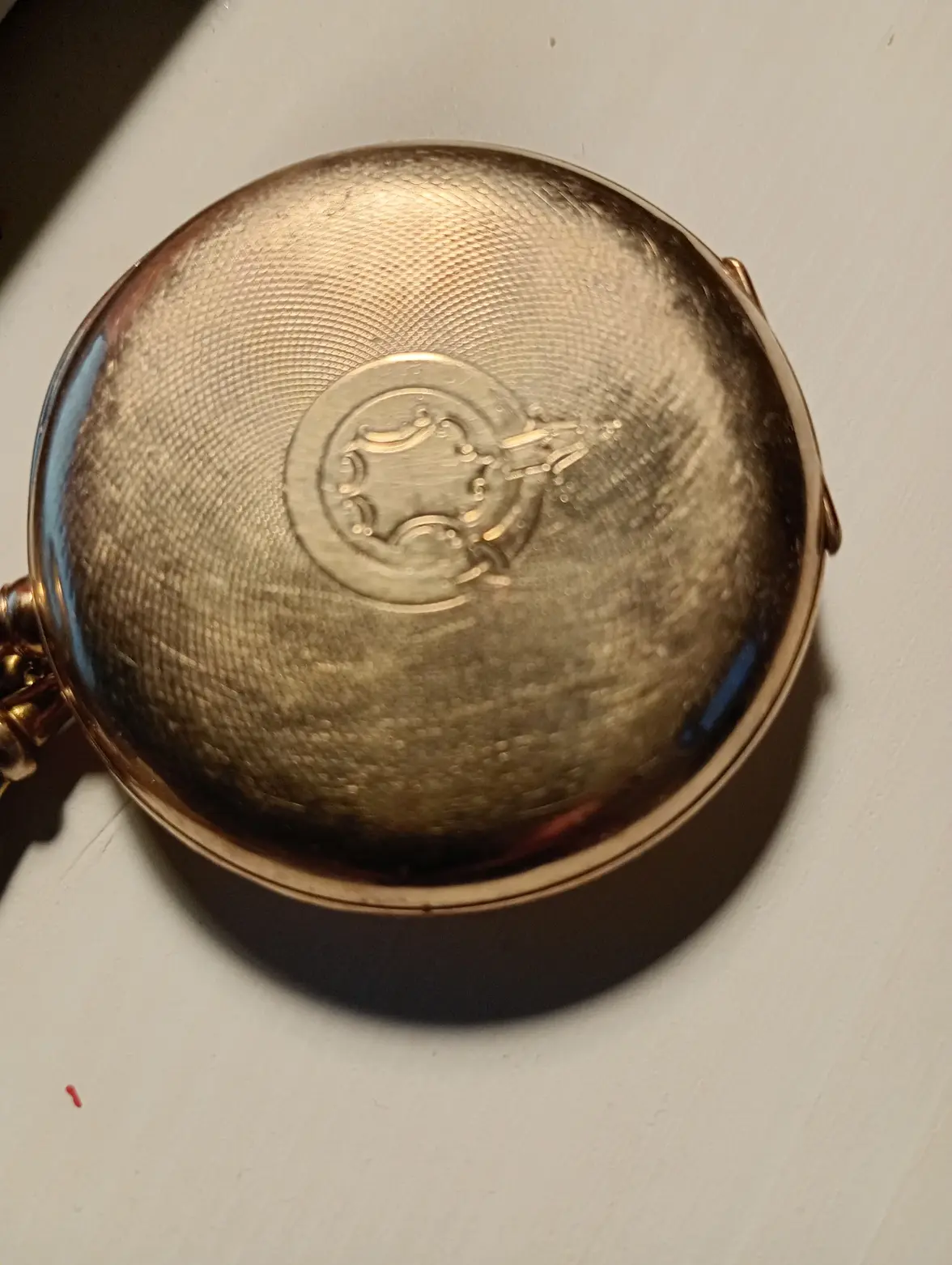
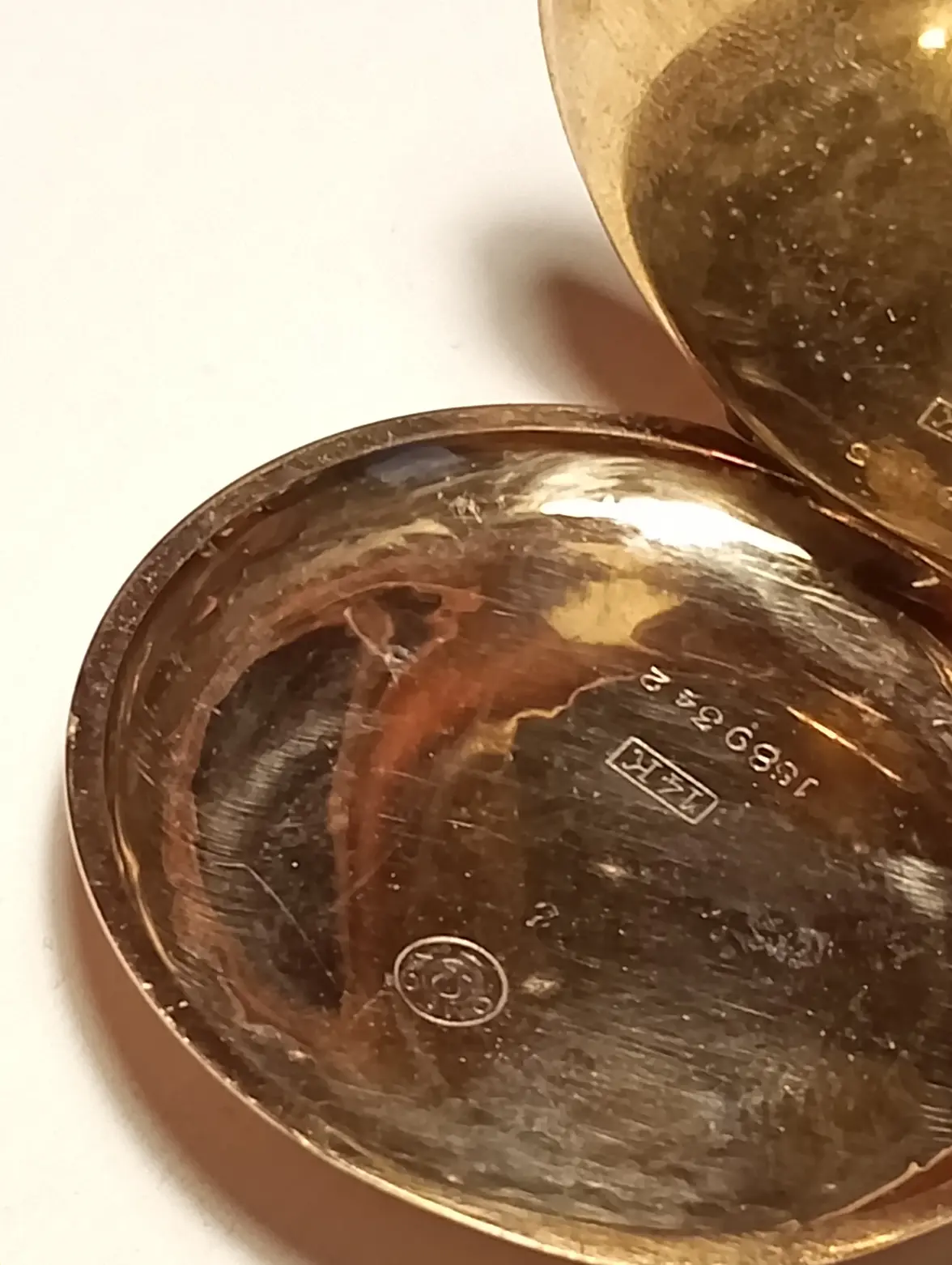
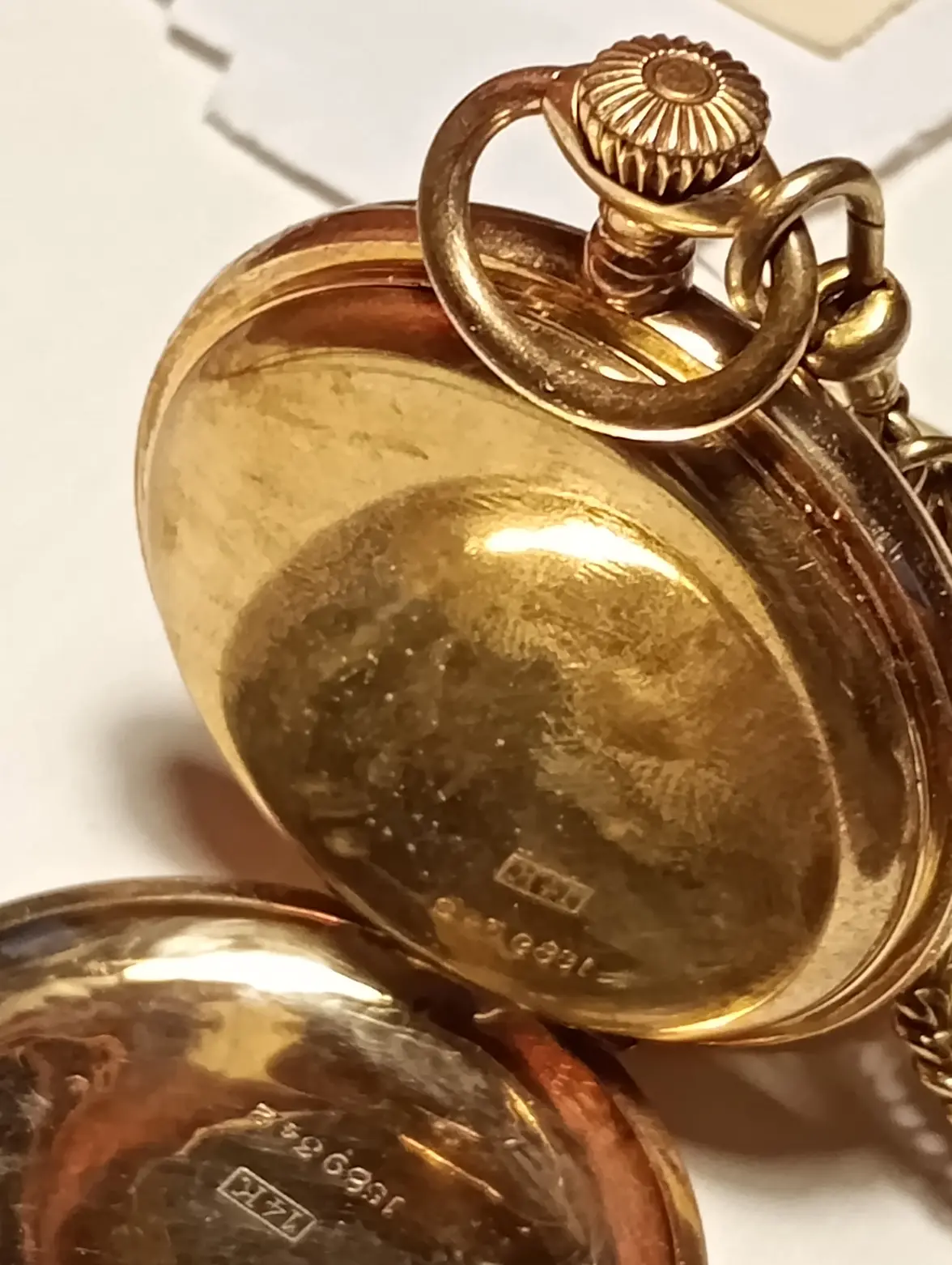
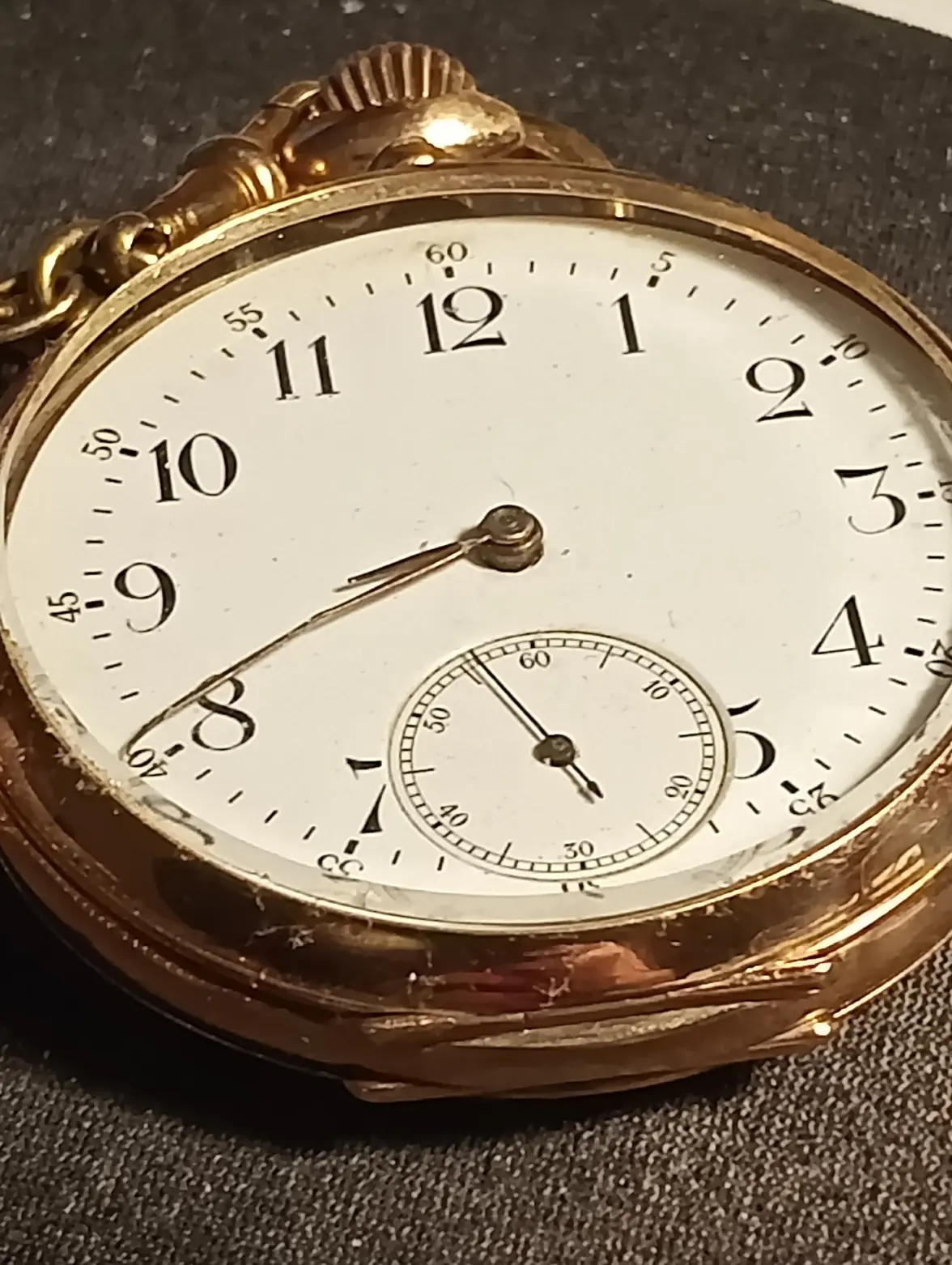
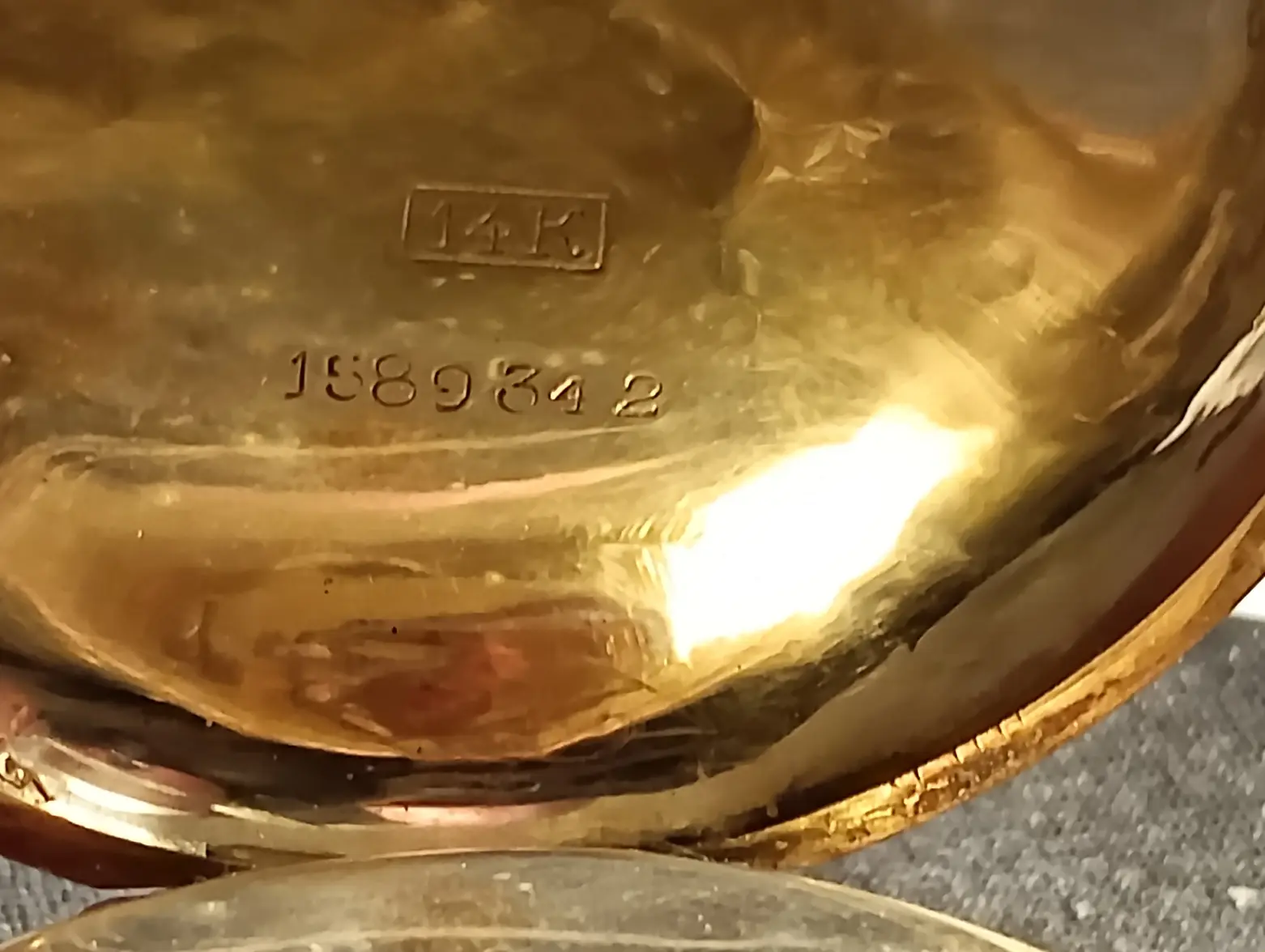
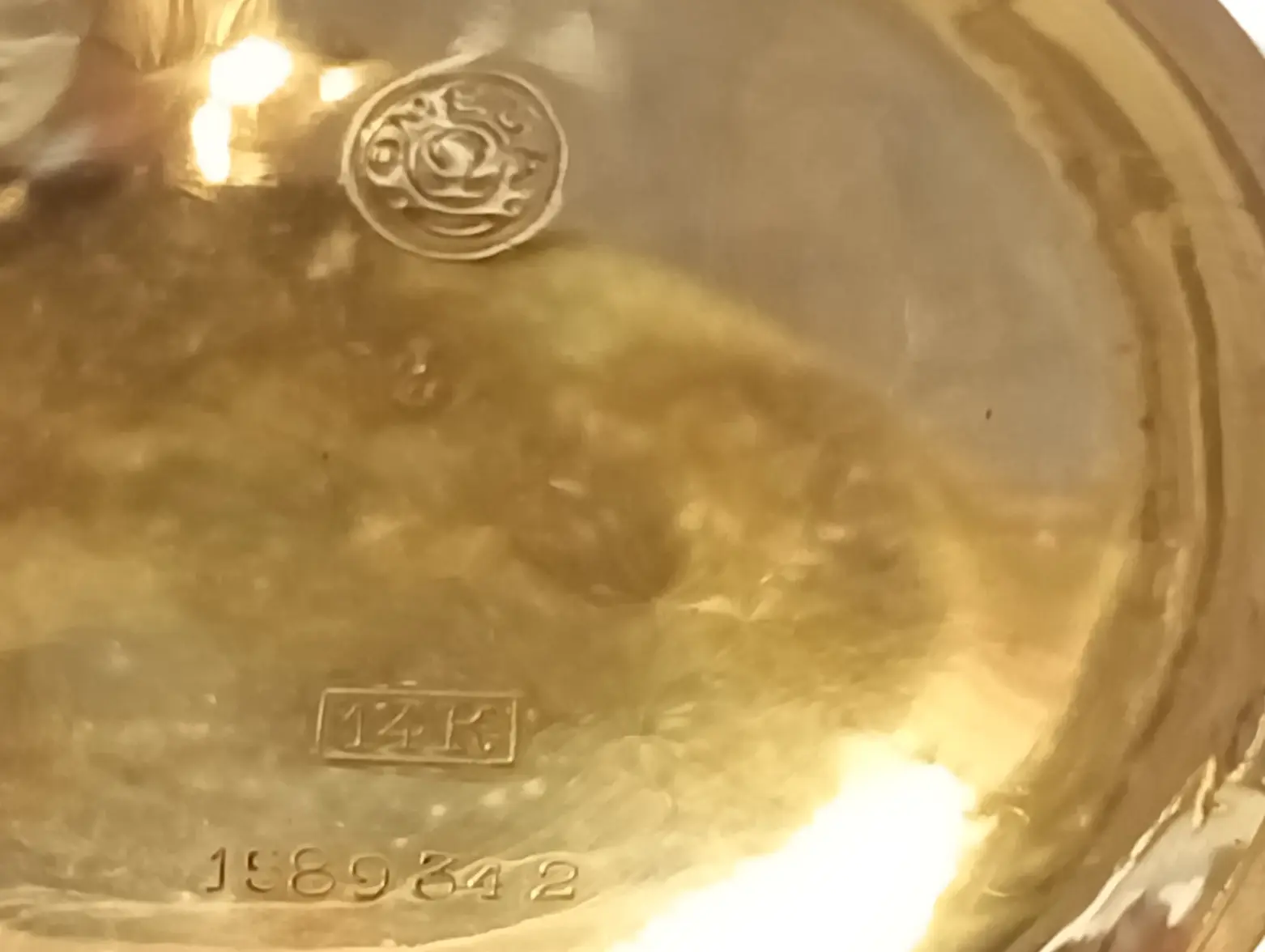
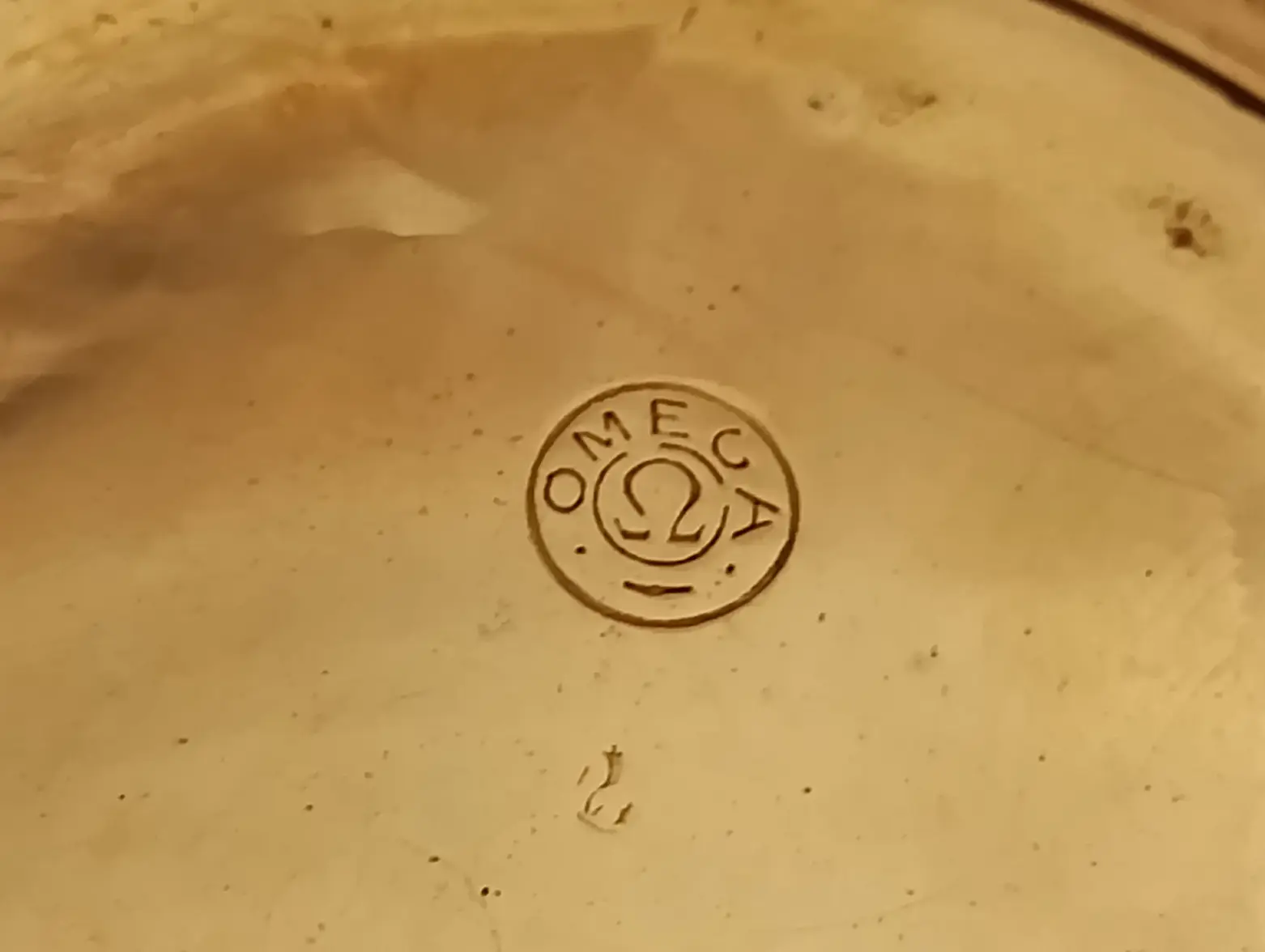
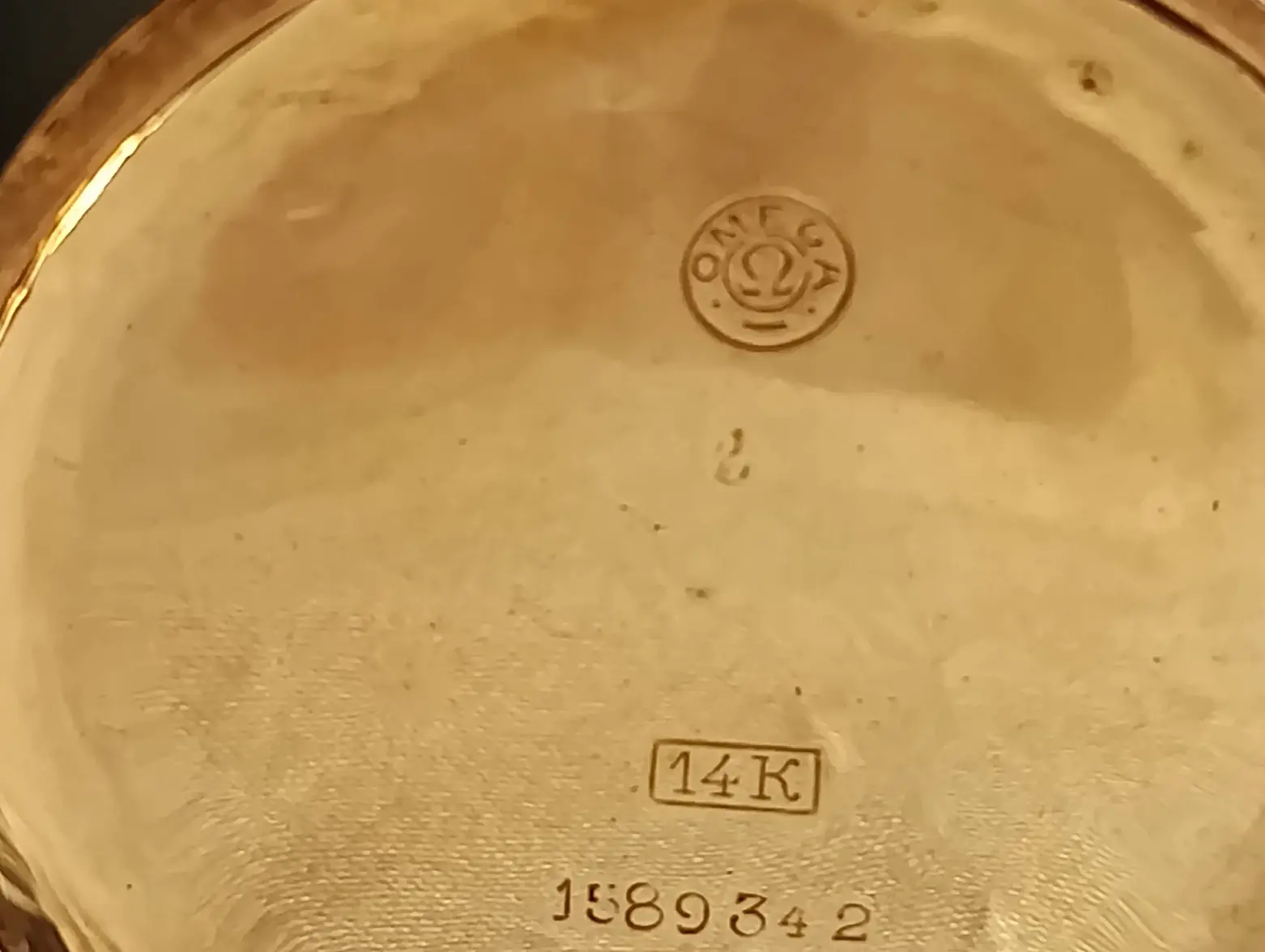
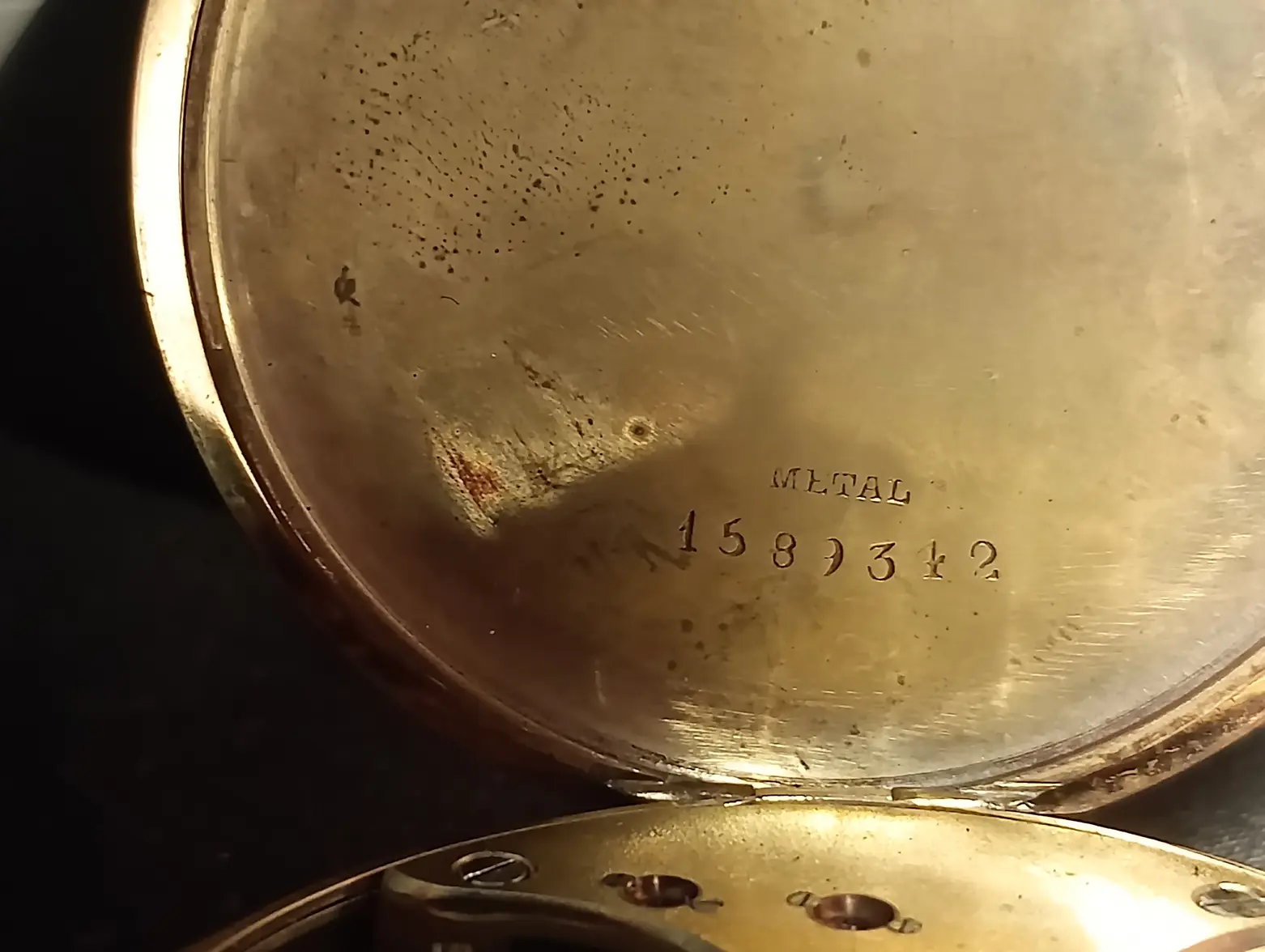
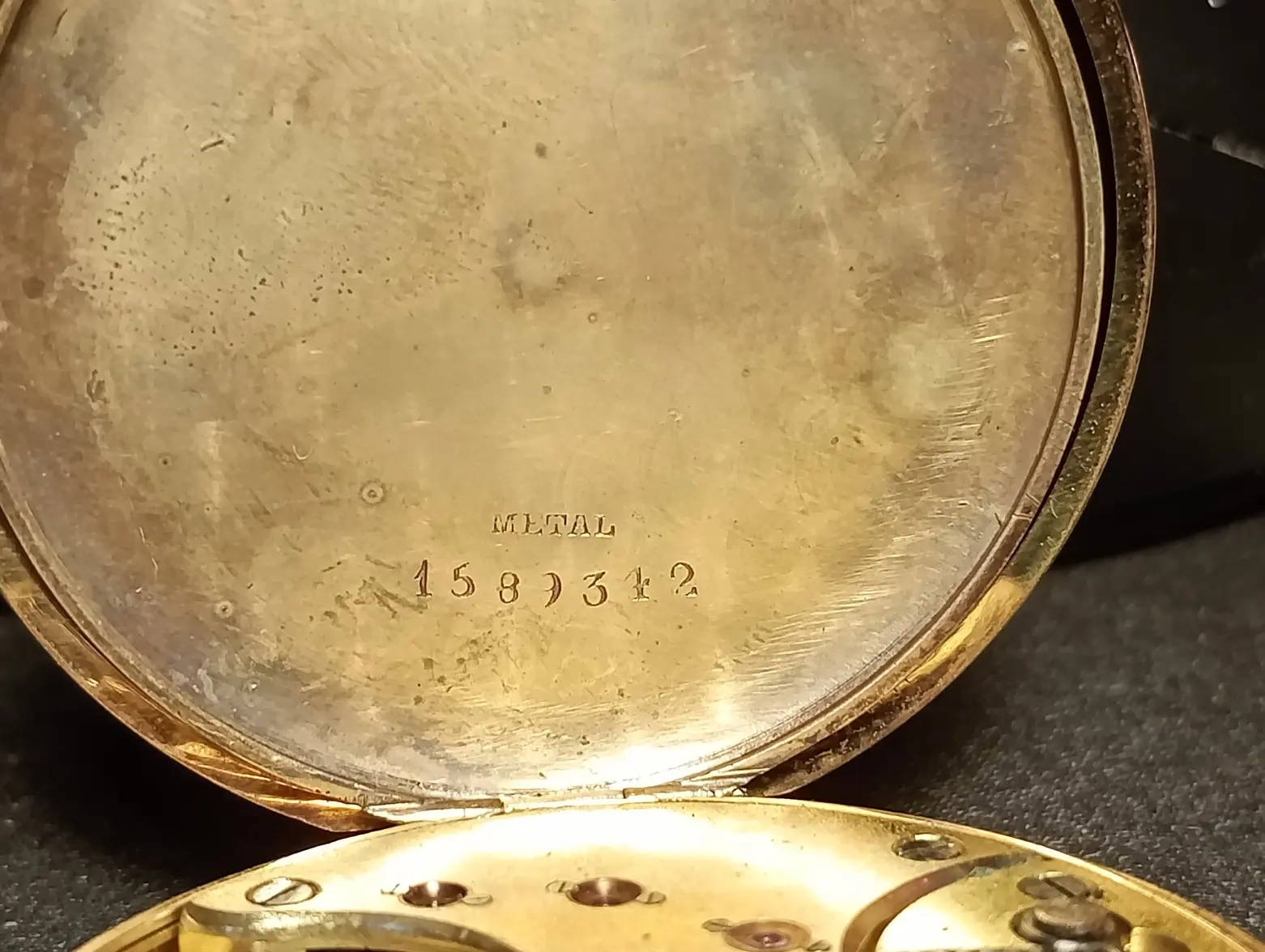
I recently inherited this watch from my parents. They have inherited it from my grandmother. It has been in a box for at least 50 years. It seem to be an early Omega watch. I am wondering if the ppl on this forum can give me some more info on the watch. It has a clear id number on the inside of the case. I am afraid to open the case to look at the mechanism fearing I will damage anything. Everything, including the strap that is attached to it is original. The pocket watch still works perfectly 😀 Any info will be much appreciated.
Other than it's a 14k gold cased pocket watch with damaged hands there's not much to go on.
The 1.5 million serial number may date the case to about 1904, but to get more accurate information we would need to see the movement, know its diameter in millimetres and know the serial number in order to be of more help.
@JimInOz Thank you very much for your answer. I tried to open the case to see the mechanism but I was unable. It has likely never been opened since production more than 100 years ago. I will have to go to a watchmaker to open it without damaging.
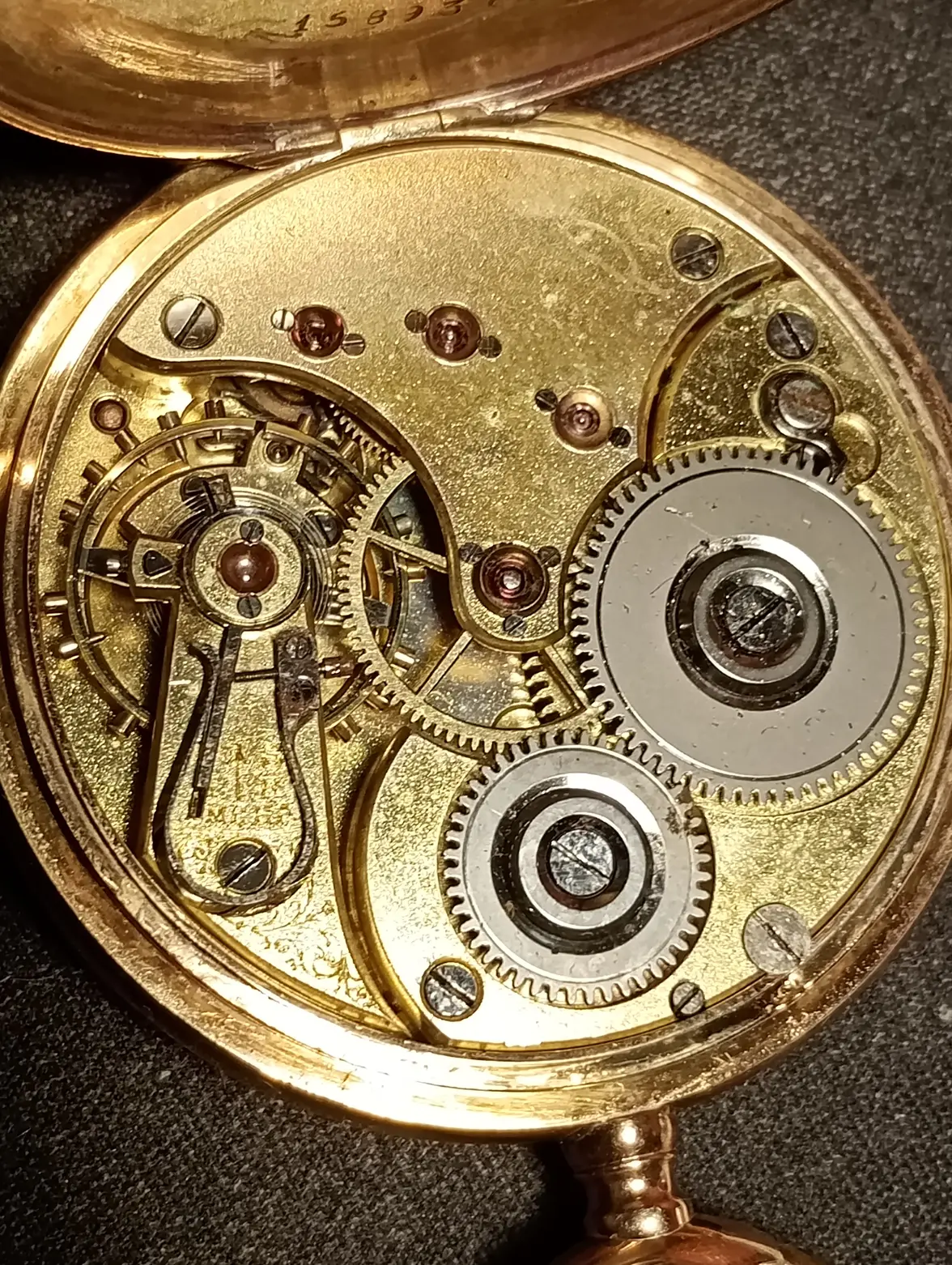
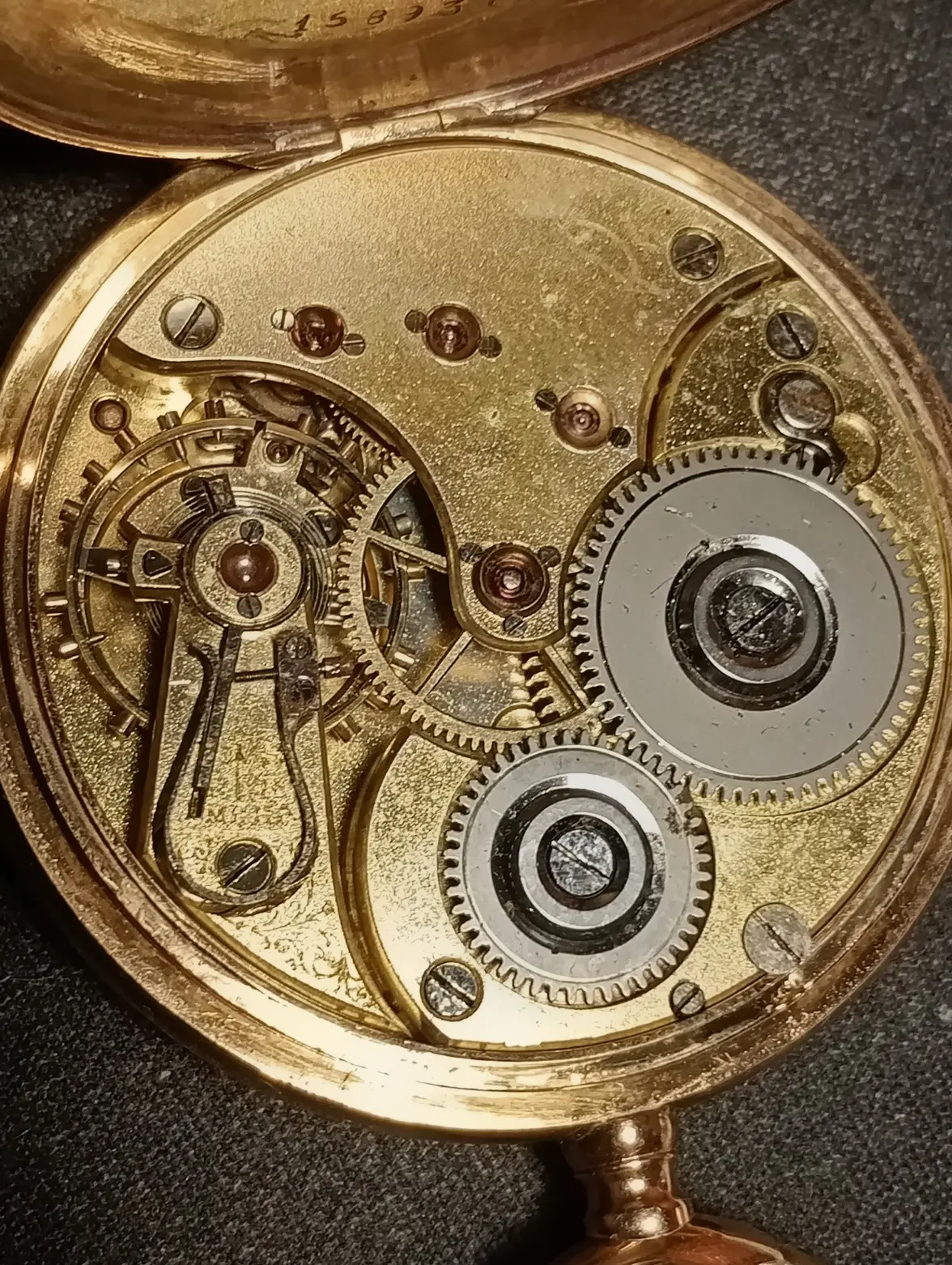
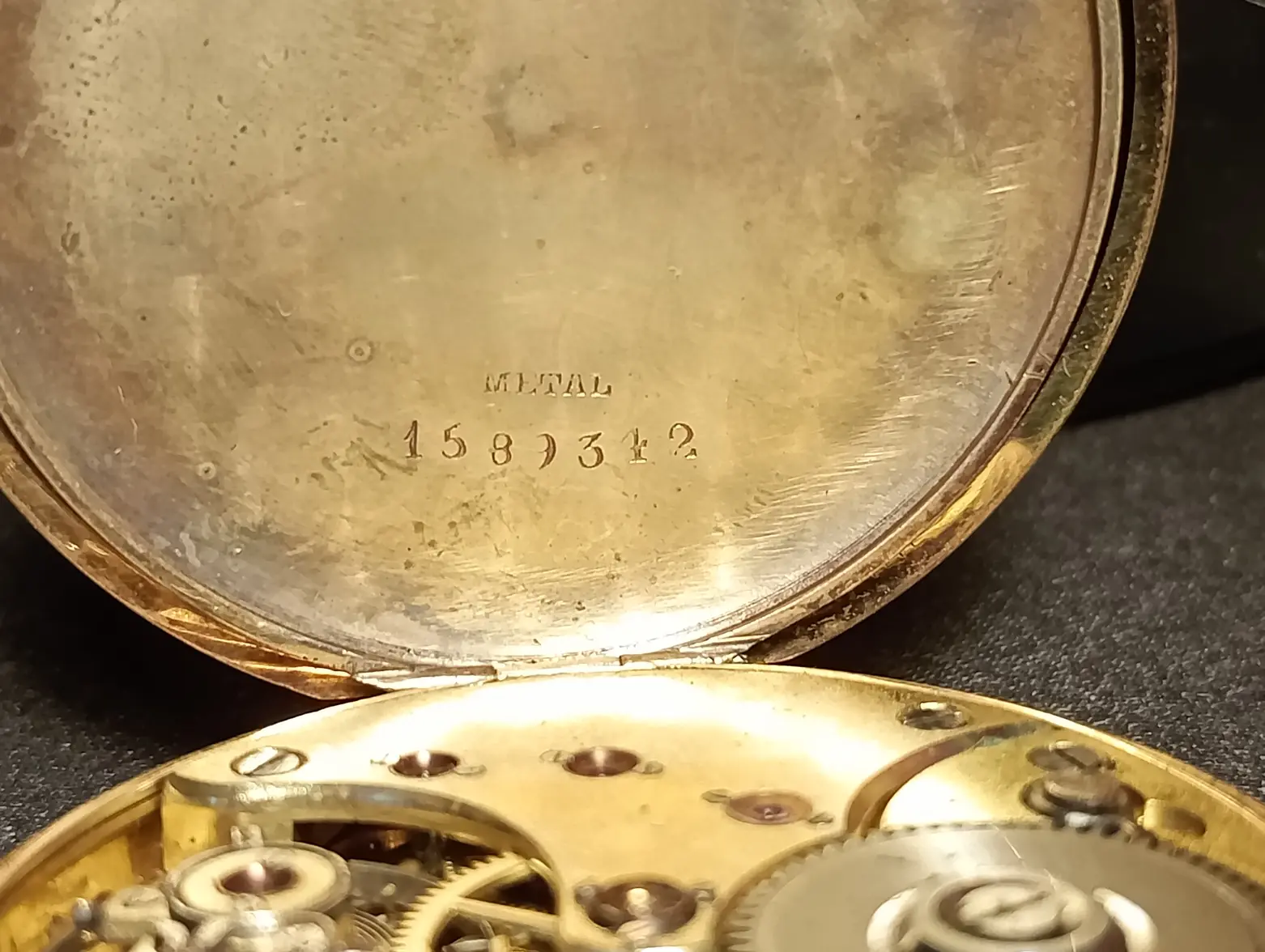
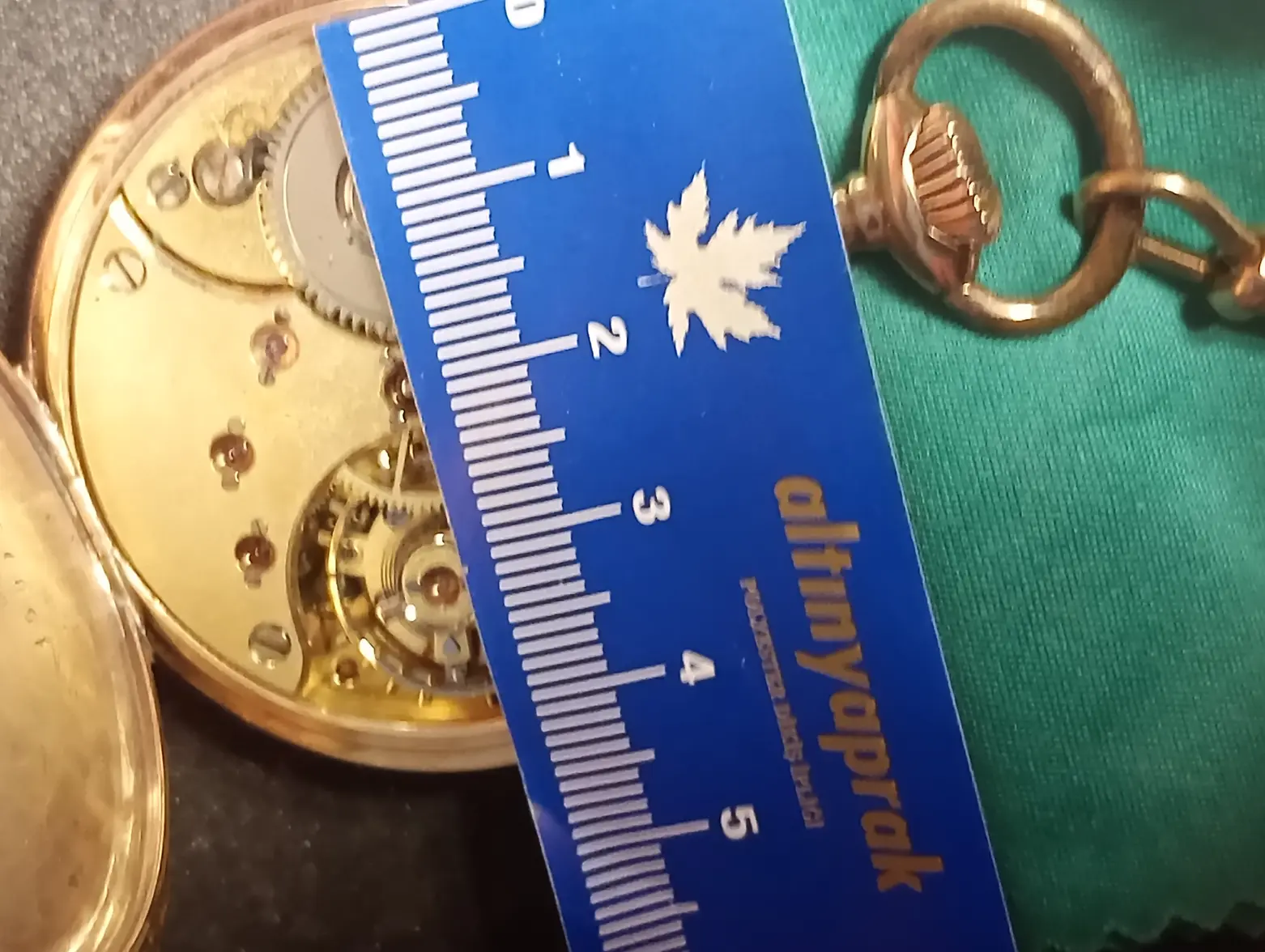
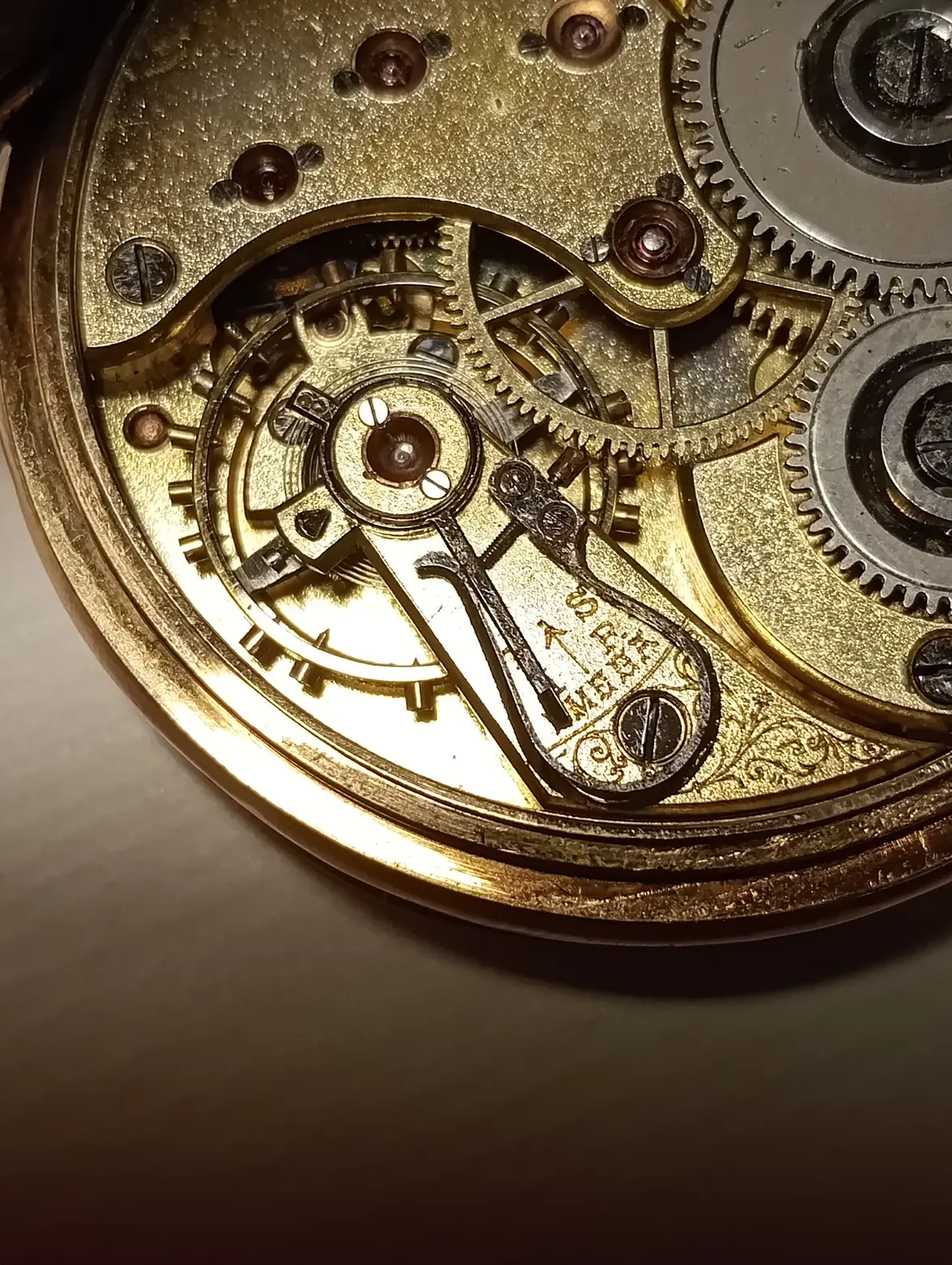
Hi @JimInOz , I saw on the edge of the inner case a small opening and I thought it would be for the purpose of opening the inner case. This way I was able to open the cse without damaging 😀 here are the fotos of the interior/mechanism. If you need more detailed fotos or other info, pls let me know. Thank you very much for any information you can give me 😀
The diamaeter of the plate looks to be 42mm, which equates to a 19''' caliber (19 Ligne).
So, your movement is from the famous "Omega caliber" family designed in 1894 by François Chevillat.
Having a swan neck regulator spring, I would say that this is a caliber 19''' NN 17P.
19''' is the diameter of the movement in lignes, equivalent to 42.3mm
NN is for New Negative, for time setting via the crown and stem.
17P is for 17 Pierres or jewels which are friction reducing bearings.
There is no movement serial number visible. This wasn't unusual for this period and the serial number will be stamped on the main plate (under the dial).
The markings on the balance cock are "F" and "S" for Fast and Slow, "A" and "R" for Advance and Retard.
If the watch was running fast, the watchmaker would turn the screw in the regulator spring to undo it a fraction and the spring would push the regulator lever to the right, or slow the movement down by increasing the effective oscillating length of the hairspring.
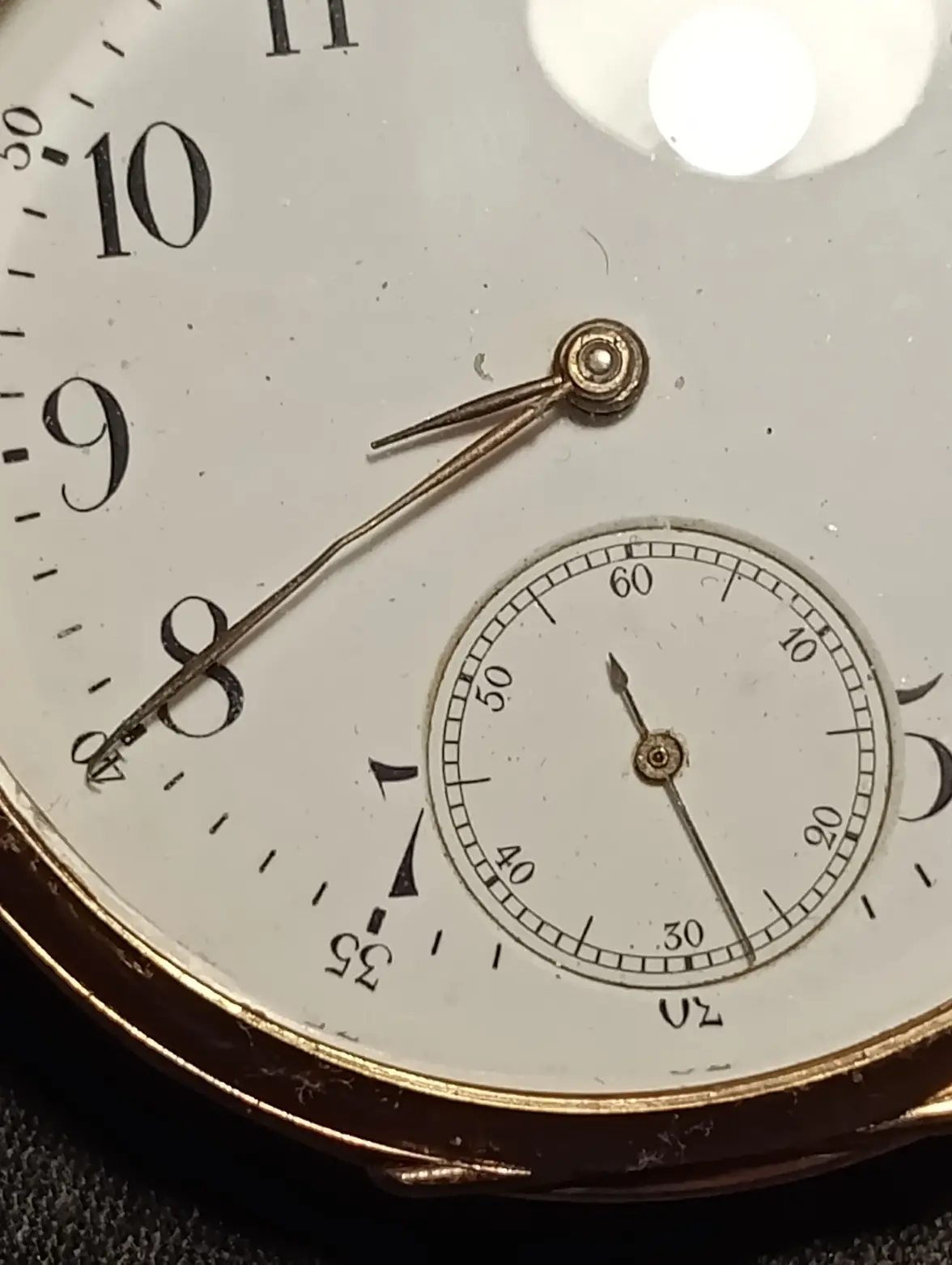
Regarding the rest of the watch. The dial is painted, not vitreous enamel, it has "Paris" style Arabic numerals and gilt "Poire" style hands.
I suspect the sub-seconds hand is a replacement, it would have been gilt to match the hour/minute hands.
The case may be local production due to the way the stamps are done. The case serial then, may be the movement serial, stamped there when the owner selected a case from the watchmaker to house their movement.
In that era, a watch was often purchased by choosing a movement and then they would be shown a selection of cases to pick one they liked.
@JimInOz Thank you very much for all that info! wow! It is a heirloom from my grandmother and all this info gives it so much more context and fits the timeline nicely. Very much appreciated 😀