Leobe Watch - please explain the bezel!!!

Posts
24,242
Likes
53,988
You can put lipstick on a pig, but it is still a pig! Call it Enicar if you like, but it is either an AS 1187 or it’s slightly larger brother, an AS 1194. The Swiss code initials MXL on the balance cock might identify the outfit who marketed it. That code doesn’t show in my reference material.


It looks like WXL to me, but that still doesn't really help me.
 
Posts
164
Likes
78
OK, thanks. I thought that's what you said but never heard of flaps that go up above the neutral point. I'm failing to visualize how any variation from neutral can reduce drag but a lot of things have been discovered by trial and error when it comes to drag, induced drag for one.
 
Posts
3,534
Likes
8,860
OK, thanks. I thought that's what you said but never heard of flaps that go up above the neutral point. I'm failing to visualize how any variation from neutral can reduce drag but a lot of things have been discovered by trial and error when it comes to drag, induced drag for one.

I took the German language course at school to try to learn more about this! An uncle, ex RAF navigator in WWII, said to me that all the fundamental research into aerodynamics had been done in Germany in the 1930/40s and never translated, so if I wanted to work in that area I needed to learn German.

I did learn German to school exam standard but ordering beer, chatting up Fräuleins and getting boxes of product brochures though Customs is most of I've used it for. Very handy as a tourist in Hungary though, all the older people spoke German, the youngsters had Russian.

Today I would say that outside the military-industrial outfits there's a lot of work being done by the glider designers in (mostly) western Europe.
 
Posts
504
Likes
1,951
My Cessna 182 didn't go too fast but it did have amazing modern glass panels in it (a Garmin G1000 cockpit).
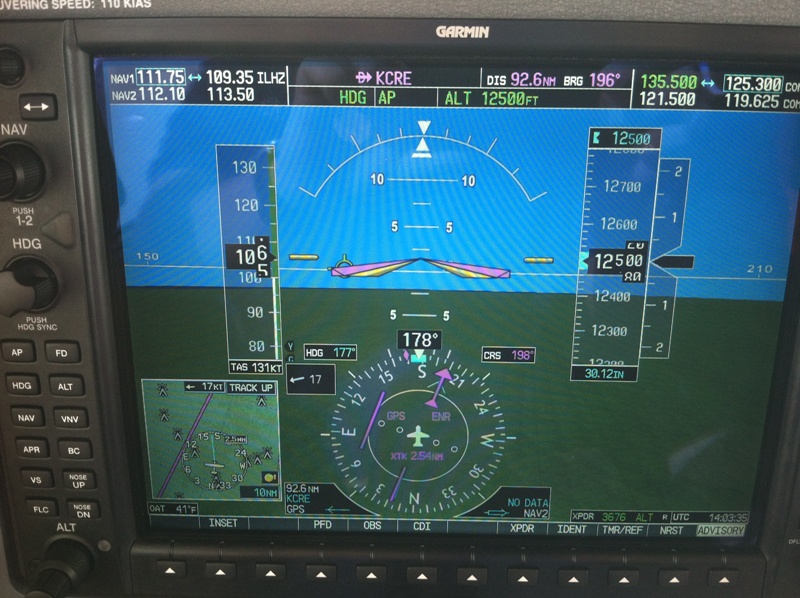
Here is a display of what I'd see while flying. There is a lot of data on it.

I am currently at 12,500 feet altitude, going an Indicated Airspeed of 106 knots (which equates to True Airspeed of 131 knots).
I am 92.6 nautical miles away from my destination airport KCRE (this is Myrtle Beach Grand Strand Airport).
I have a 17 knot cross wind coming from my right.
The nose of the plane is aiming for a 198 degree course but, because of the cross wind, is on a 177 degree heading.
And, the outside air temperature (OAT) is 41 degrees Fahrenheit at this altitude.

Compared to the old style gauges, this new technology makes it a lot easier to navigate.


Posts
164
Likes
78
My Cessna 182 didn't go too fast but it did have amazing modern glass panels in it (a Garmin G1000 cockpit).
Here is a display of what I'd see while flying. There is a lot of data on it.

I am currently at 12,500 feet altitude, going an Indicated Airspeed of 106 knots (which equates to True Airspeed of 131 knots).
I am 92.6 nautical miles away from my destination airport KCRE (this is Myrtle Beach Grand Strand Airport).
I have a 17 knot cross wind coming from my right.
The nose of the plane is aiming for a 198 degree course but, because of the cross wind, is on a 177 degree heading.
And, the outside air temperature (OAT) is 41 degrees Fahrenheit at this altitude.

Compared to the old style gauges, this new technology makes it a lot easier to navigate.
How can you have a right cross wind and fly a 198 course with a heading of 177? Did you mean a left crosswind?
In those glass panels is the gyro purely electronic?
Edited:
 
Posts
164
Likes
78
I took the German language course at school to try to learn more about this! An uncle, ex RAF navigator in WWII, said to me that all the fundamental research into aerodynamics had been done in Germany in the 1930/40s and never translated, so if I wanted to work in that area I needed to learn German.

I did learn German to school exam standard but ordering beer, chatting up Fräuleins and getting boxes of product brochures though Customs is most of I've used it for. Very handy as a tourist in Hungary though, all the older people spoke German, the youngsters had Russian.

Today I would say that outside the military-industrial outfits there's a lot of work being done by the glider designers in (mostly) western Europe.
The language part is very interesting. I understand the young learning Russian during the long occupation. May I presume they now prefer Hungarian? I still remember my dad being very disappointed at the lack of help we gave them when I was 5 back in '56. I guess we really had no choice with them on USSR doorstep and WWIII always a possibility. I do think that some aerodynamic research has occurred since the 40's.
 
Posts
504
Likes
1,951
How can you have a right cross wind and fly a 198 course with a heading of 177? Did you mean a left crosswind?
In those glass panels is the gyro purely electronic?

I think I was hand-flying the plane at that point as we were going between rising cumulus clouds (which is why we were that high up).
So the Course and Heading may not have been stabilized for that 17 knot cross wind.

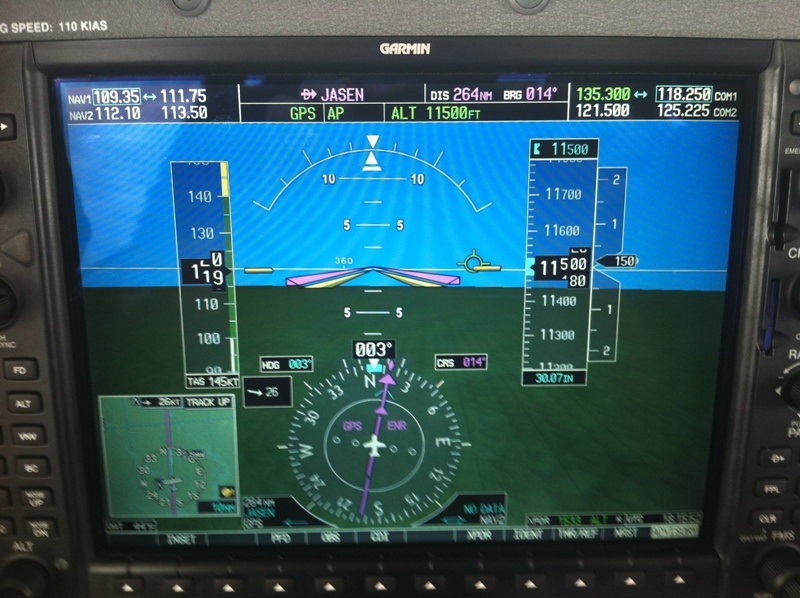
Here is a another panel picture in my plane, going North in this one.
True Air Speed is faster at 145 knots at 11,500 feet.
You can see the nose is pointing closer to the horizon in this one (which is why we're going faster).

This looks like a more stabilized Auto Pilot setting with a 26 knot cross wind coming from my left.
My Heading is 003 and my Course is 014.

 
Posts
504
Likes
1,951
How can you have a right cross wind and fly a 198 course with a heading of 177? Did you mean a left crosswind?
In those glass panels is the gyro purely electronic?

The Garmin G1000 panel uses a solid state AHRS (Attitude-Heading Reference System) instead of a traditional gyro.

Here is more info on the AHRS, if you're interested.
https://www.pacificflying.com/sites/default/files/How AHRS Works.pdf

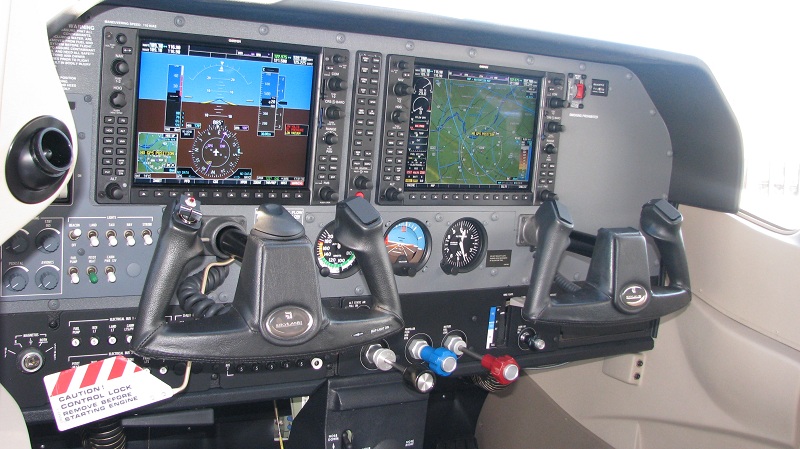
My plane also has a set of traditional instruments as back-up to the glass panels.
They are mounted in the middle of the panel down low. You can see them in the picture below.
So, those older-style instruments run off of the traditional gyro set up (and pitot tube and static port).

 
Posts
3,534
Likes
8,860
The language part is very interesting. I understand the young learning Russian during the long occupation. May I presume they now prefer Hungarian?

Sorry, no idea. 1992 was the last time I was there.

I still remember my dad being very disappointed at the lack of help we gave them when I was 5 back in '56.

A friend of mine of about that age left Hungary in 1956 and she and her parents were welcomed into the USA. So, there was some help.


I do think that some aerodynamic research has occurred since the 40's.

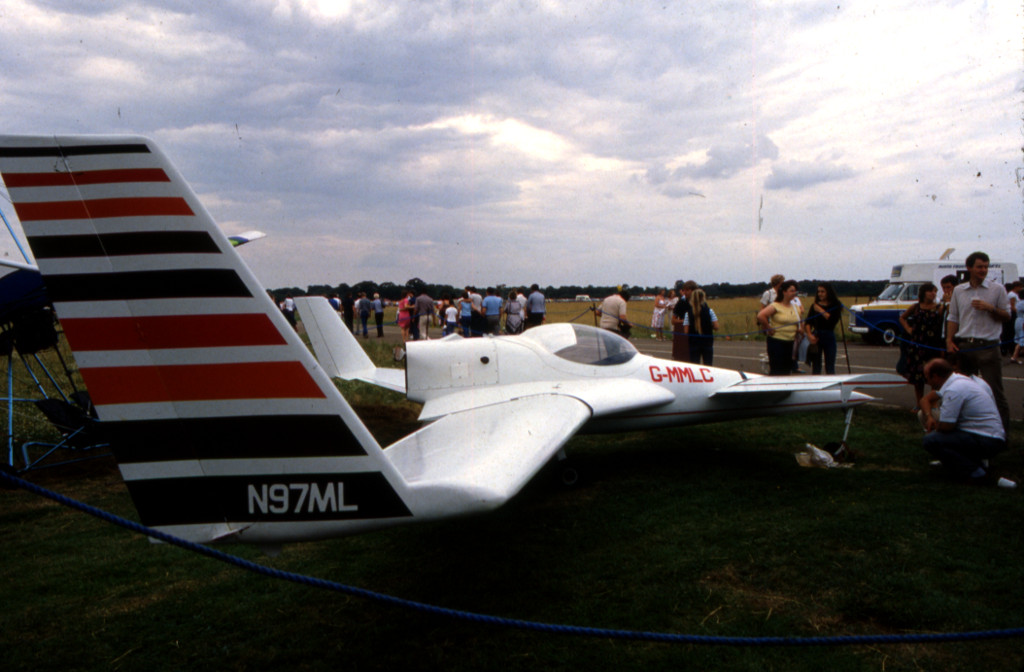
Oh yes, that is why I referenced the European work on gliders. And in the microlight area. Here is an American airframe / British engine effort. Know what it is without looking up the registrations??