legal question about redial companies

Posts
122
Likes
64
there are plenty of redial // dial restoration companies in Europe, for instance Causemann in Germany.

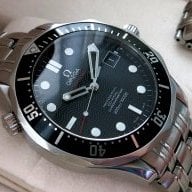
im wondering, how it is legally possible for them to print the logo of "big brand" watch companies on the dials without infringing trademark rights. so do they really have the right to print the "Omega" Logo onto a piece of metal?

 
Posts
478
Likes
490
I think the trick is that they do not do it on "a piece of metal" but "on a piece of metal made by Omega" (or a supplier of them, at Omega's demand). So: the part is authentic, you are just restoring it.

Now, do the same thing on a piece of metal you shaped and paint to look like an Omega dial, that is counterfeiting (again, expect if you was asked by Omega to do so).


I recently saw the website of a guy building new watches from old movements to give them a second life (so new case, dial, hands). He asked Omega if he was entitled to use the Omega logo on the dial as the movement is original and their answer was basically "it will be a infringement of our trademark, we recommend to avoid it" They have no problem about the reuse of the movement and the recasing/redialing, just that he should not use their name or logo on the watch
 
Posts
13,714
Likes
53,536
I go to a dial restorer as the owner and pay them for the work. It’s my watch and none of the MFG’s business. Do car restoration shops ask the MFG fo permission?
 
Posts
258
Likes
212
You could have a point on the logo reproduction, but as it is part of a restoration process I am not sure the IP rights jurisdiction is valid.
 
Posts
325
Likes
295
I go to a dial restorer as the owner and pay them for the work. It’s my watch and none of the MFG’s business. Do car restoration shops ask the MFG fo permission?
You are right. Your private agreement with a maker / restorer is none of the original manufacturer's business, nor anyone else's. The trouble is, if you commission a fake that is not clearly labeled as a reproduction, there is the possibility it will enter the stream of commerce and be offered to the public as the real thing, regardless of whether that was your original intention. That is why Omega was not thrilled about the guy taking original Omega movements and putting them in otherwise new watches calling them "Omega". He might be perfectly honest and not sell them as genuine Omegas, but what are the chances many of them eventually would be passed of as genuine? About 100 percent.
 
Posts
16,863
Likes
47,905

Didn’t need permission
 
Posts
15,522
Likes
46,035
I once had a Gerard Perregaux dial suffer severe water damage. The entire painted surface disintegrated and fell off, leaving just a brass disc with die struck markers. I sent the dial to Kirk of Seattle (now Kent, Wash.) but they refused the job and returned the dial. I put the dial onto the bare movement, (loose dial screws, no hands), and sent the package back. They did the dial. It appears there is no copyright problem provided the dial finisher qualifies it is a legitimate use of the logo.
 
Posts
13,714
Likes
53,536
You are right. Your private agreement with a maker / restorer is none of the original manufacturer's business, nor anyone else's. The trouble is, if you commission a fake that is not clearly labeled as a reproduction, there is the possibility it will enter the stream of commerce and be offered to the public as the real thing, regardless of whether that was your original intention. That is why Omega was not thrilled about the guy taking original Omega movements and putting them in otherwise new watches calling them "Omega". He might be perfectly honest and not sell them as genuine Omegas, but what are the chances many of them eventually would be passed of as genuine? About 100 percent.
AGREE .... Commissioning redials in high volumes for commercial purposes is a major grey area.