Learn How To Fish - A Guide - Not For Enquiries

Posts
9,588
Likes
27,696
Hi, I'm new here, first post. I'm planning on buying my first vintage Omega (either a Constellation or a Seamaster) to wear at my wedding next year. For right now I'm trying to learn as much as I can about them. One thing that has me a little confused is how to make sure the reference numbers match the movement and dial.

I know about this: http://www.old-omegas.com/omrefcod.html, but as far as I can tell, this only tells you what TYPE of movement should be in a watch, not which caliber it should be and I have no idea how to tell what dial would go with it. So I can be confident knowing, this case should have a chronometer grade movement, but how do I know WHICH chronometer movement should be in it? Also, I have noticed some don't match this convention at all, like the ref: 14381 Constellation, which according to the normal code rules, would be a men's, manual winding chronograph, non water resistant chronometer, but this came with an automatic 551 movement. I have tried to use the vintage section on the Omega website, but I've found it pretty hit or miss. I don't think I know how to use it correctly.

Thanks in advance.

Hi Smash 😀

Even though this thread isn't really for Q&As, I'll help you out a little. The reference system you mention are newer than the ref. 14.381, which is why you cannot make sense of it. Later Constellations, such as the 168.005, follow it IIRC. With vintage Omegas (and also a number of other Swiss makers) you will have to accept that there aren't any all-encompassing reference guides which will document all possible dial/hands/case references as there are simply too many to list - and then comes all the national varieties, such as the American market ones which is impossible to look up on Omega's charts... You are left only experience and research as ways of recognising which are correct and which are frankens. My guide here is a good starting point, but by no measure an even half-complete guide.

If I was you, I'd try to focus on a specific style/reference of Omega to buy and then soak up all the available information about that particular watch. Don't start going out of tangents, it'll only serve to confuse you. If you'd like a bit more help, send me a PM, and I'll try to steer you in the right direction.
 
Posts
375
Likes
541
For starting collectors threads like this are incredibly helpful. Thank you. I'm relatively new here, but you guys already have been quite helpful in assessing a 145.022 Speedmaster I considered buying-- of which I now am the happy owner!

The vintage Omega virus has bitten me, and I've stared looking out for a 1960s steel Seamaster Deville caliber 562 or 563. They're around in abundance with white dials, but I'm looking for a black crosshairs dial. From what I gather so far, there are a lot of DeVilles with re-painted black dials. Are there any telltale signs for black repainting? The examples you mentioned in this thread all concern white dials.

Thanks!

 
Posts
9,588
Likes
27,696
For starting collectors threads like this are incredibly helpful. Thank you. I'm relatively new here, but you guys already have been quite helpful in assessing a 145.022 Speedmaster I considered buying-- of which I now am the happy owner!

The vintage Omega virus has bitten me, and I've stared looking out for a 1960s steel Seamaster Deville caliber 562 or 563. They're around in abundance with white dials, but I'm looking for a black crosshairs dial. From what I gather so far, there are a lot of DeVilles with re-painted black dials. Are there any telltale signs for black repainting? The examples you mentioned in this thread all concern white dials.

Thanks!


More or less the same markers.

Being a new collector, I would definitely recommend that you avoid black dials of that period, as they are nearly all redials. Rule of thumb is that if it looks pristine, it is most likely, like the one you posted above, a redial. Also, look out for black dials with white lettering. Have a look at the patinated dials I posted, most of those are genuine black dials and have traits that are common on vintage black dialed Omegas.
 
Posts
9,588
Likes
27,696
Really informative post, how should the 's' look in 'seamaster'; on vintage dials? I've seen some that can look quite square ish and then others are rather curved.

The Seamaster S'es is a subject in itself... I have yet to see any 100% accurate guide to them as there is a host of variety and exceptions from the standards. I use fonts as a helping tool, not as a definitive measure of originality. It is rare (read: doesn't happen) that a single letter will be the only flaw on a reworked dial.
 
Posts
16,861
Likes
47,910
Really informative post, how should the 's' look in 'seamaster'; on vintage dials? I've seen some that can look quite square ish and then others are rather curved.

There is two significant S,s - coat hanger style and large curved style

As @ConElPueblo says above no guide
( Seamaster is one of those ones that I have thought redial several times to be shown correct and vice versa )
 
Posts
32
Likes
36
@ConElPueblo is there any literature on hands and markers? I'm trying to find any info on whether or not rusty hands and clean markers can be tell tail signs of franken??

Can't seem to find it, im sure there was something on here regarding this. 😕😵‍💫
 
Posts
16,861
Likes
47,910
@ConElPueblo is there any literature on hands and markers? I'm trying to find any info on whether or not rusty hands and clean markers can be tell tail signs of franken??

Can't seem to find it, im sure there was something on here regarding this. 😕😵‍💫

Hands can suffer deterioration quicker due to thinner material and both sides being exposed.
Also more chance of being changed

In the old days hands were made seperate to the dial by a different company in a lot of cases.
 
Posts
3,591
Likes
8,206
As a newbie, this was very informative, so thank you. I started to look at eBay for my first vintage watch, but everything I see looks sketchy. Now I have turned to estate sales, but that seems to be hit and miss. Any recommendations on where to buy authentic vintage watches?

https://omegaforums.net/forums/private-watch-sales/
A good place to start.
Send a private message to a seller that has what you like, introduce yourself.

Check the WRUW thread to see what you like.

If you don't want to learn and do homework, contact me directly for the sale of a lifetime.


""You can fool all the people some of the time and some of the people all of the time and some of the people some of the time and that's enough to earn a good living."
Edited:
 
Posts
8,830
Likes
73,379
As a newbie, this was very informative, so thank you. I started to look at eBay for my first vintage watch, but everything I see looks sketchy. Now I have turned to estate sales, but that seems to be hit and miss. Any recommendations on where to buy authentic vintage watches?
I’m only a little further down this road.
Ideally, buy from someone you know who’ll let you try it on, give you a receipt and a guarantee, information about the watch, a sight of or photos of the movement.
Second option would be to buy from a store or dealer, with the above.
Third option (IMO) is to go on a reputable website which gives some financial guarantees. Check that the watch is advertised as 'running well', ‘accurate’, ‘good condition’ (this list is not exhaustive) so that you can return it if faulty or inaccurately described. I’m not keen on 'no returns'.
For the last reason, I prefer to buy from/bid for in the UK, where I live and on the premise that if it goes wrong and the website can’t or won’t help, I can think about turning up and returning it personally.
I also prefer to buy when I have seen a photo of the movement although at the price levels I’ve set myself, this isn’t a deal breaker.
Above all, I only buy to wear so I always ask myself, will I wear it?
I hope this helps.

 
Posts
9,588
Likes
27,696
Probably one of the more significant buying tools I have read since i started collecting (just wish i had seen this before I had bought close to a hundred watches). I do know that re-dialing and/or polishing is a no-no, and I am conscious of those factors when I pull the trigger on a piece. One question on re-dialing: I have watched the process done on a youtube video at a very high level in a factory, and wonder if having the original maker redial you watch is an exception. And, is this a service Omega offers?

So I would have to say that I very much liked that post

I rarely visit this thread, so sorry to those who've asked me about something here and are waiting for my answer 😬

Omega does do redials, but they won't do them themselves. Remember that watches were assembled by Omega, but dials, hands, cases and sometimes movements as well (chronographs) came from other factories, few of them what we'd call "inhouse" today - this approach to specialised production facilities was what made the Swiss watch industry become the worlds leading.

This means that Omega has had no control over their subcontractors and they therefore don't have any "correct" dies/templates to produce a dial from, as the originals would have been thrown out years ago. Any redials offered by Omega as a part of a service will be a third party job. Service dials for some watches exist while NOS dials are pretty much unheard of. Old stock would have been cleared out years ago.
 
Posts
30
Likes
158
2.1. You may love patina, but for a lot of people it is still damage/decay so unless it's a special case, a patinated dial will lower the value of a given watch. As this subject is very, eh, subjective and a case of what one finds attractive take these points as mere guidelines.

Patina should be even on a dial. No matter if it's light spotting or the orangey-brown film of tobacco smoke residue from a long period of exposure to that particular element, you do not want random blotches on the dial, but instead an even spread. If the dial damage in question is pronounced at 3 o’clock on the dial there’s a good chance that the cause of the damage is a leakage around the crown, letting in moisture to the case.


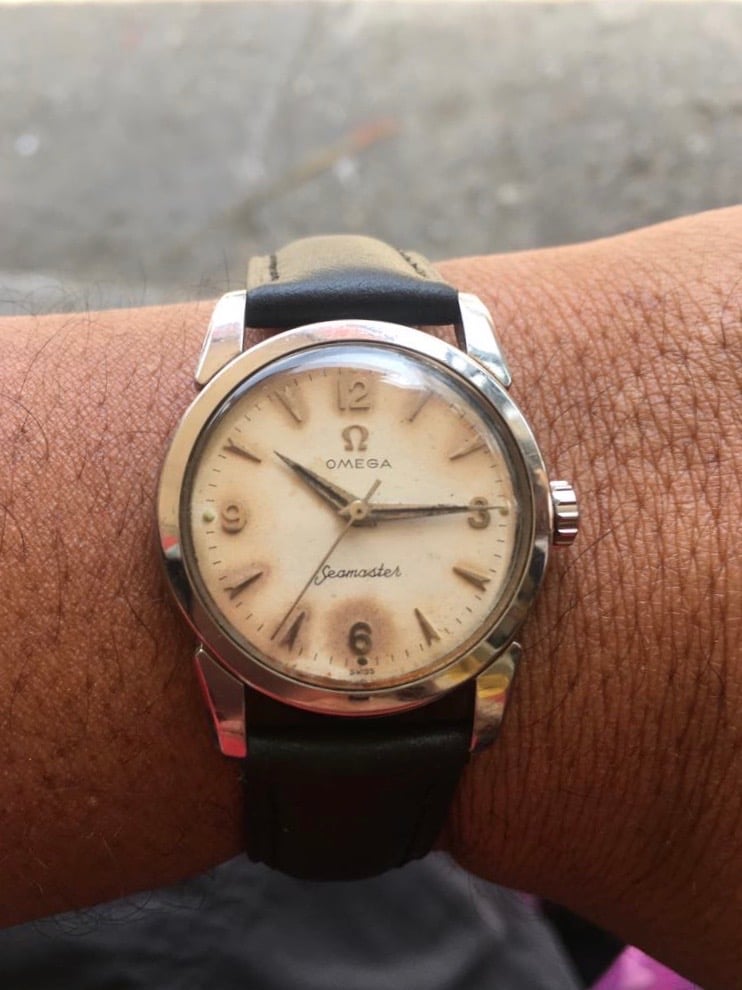
Two cases of heavy dial patina, probably from tobacco smoke exposure*. Note that the bottom one is next to a very similarly dialled Seamaster that's also patinated, in this case more light and mostly in the middle of the dial:


(yes, they both were the same light colour to begin with!)

As "patina" could just as well be called "damage", this raises another issue - how about the movement? If you find a heavily patinated watch to your liking, you must inspect the movement. Chances are that whatever caused the damage on the dial side has affected the movement too. Funnily enough, the word “patina” is rarely used on damage below deck...


In the case of black dials, there are several ways for these to age. Have a look in the "Vintage Black Dials Only!" thread, where I have found some of the following examples:


Black fading to grey:


Link


Link

In both cases the black colour is slowly losing its lustre and turning slightly grey. The text changes too and will, typically end up like the "Seamaster" text on the upper model and be hard to read.

Just like this:


Link

A pretty common variety of patina on a black dial is the "gold speck" dial, or the "starry night", where a number of golden stars dot the dial:


Link

This is due to the way the dial is produced: a layer of black paint is added to the brass dial, letting the brass appear where there is text. Eventually, the paint starts to flake and the brass peeks through. Simple.


Probably the most widely liked type of patination of a dial are of the "chocolate" or "tropical" variety. It is my understanding that to begin with, the "tropic" moniker would only be used on a black dial turned lighter brown, but now I seem to see it all over the place. Oh well. As mentioned, patina is a subjective thing and you'll have to make up your own mind whether or not you like it, and if you like it enough to pay a premium over a ordinary specimen. Most brown dials are due to paint defects and the effect of UV and/or moisture ingress.


Link


Link

Quite a few blue dials - often those with a metallic finish - have also been known to change appearances. Here's a member's Omega Seamaster 176.007, which was a striking electric blue when it was new:


Link

The reason why I've focussed so much on black dials is that when these 50's and 60's watches were new, black dials weren't in vogue for a number of reasons. Black dial Constellations, apparently, were even a special order item. This means that there are many fewer of them - and due to the popularity of today, redialers will often paint their creations black! So if you are assessing a piece online and the black dial looks too good to be true (most have deterioated to some extent), then it most likely is. Tread very carefully.


*EDIT: I have now, some time after writing this post, come to the conclusion that correlating this particular type of dial aging with tobacco smoke ingress is probably false. It seems to be more likely to be a manufacturing defect in the lacquer, seeing that it often occurs in the same references and isn't spread evenly across several different refs.
Great Stuff... this kind of posts keep em coming back to the forum... thanks mate
 
This website may earn commission from Ebay sales.
Posts
8,830
Likes
73,379
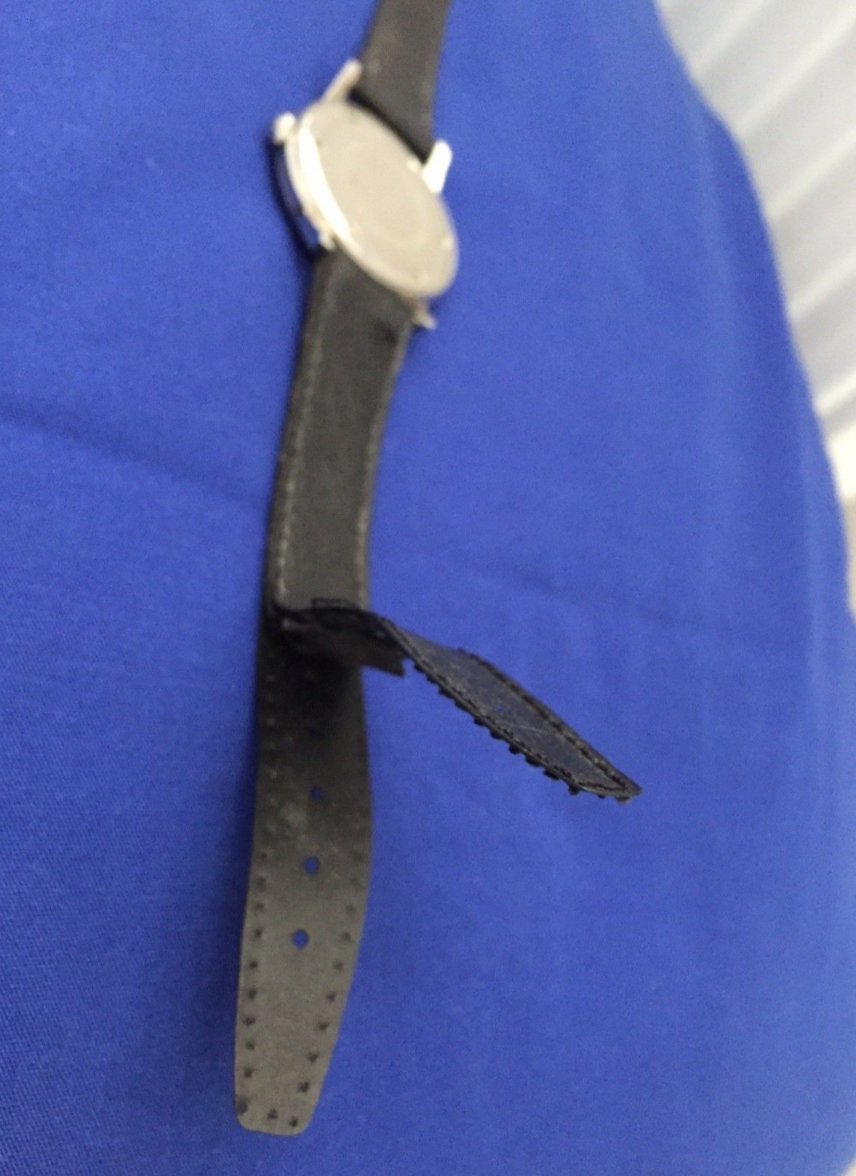
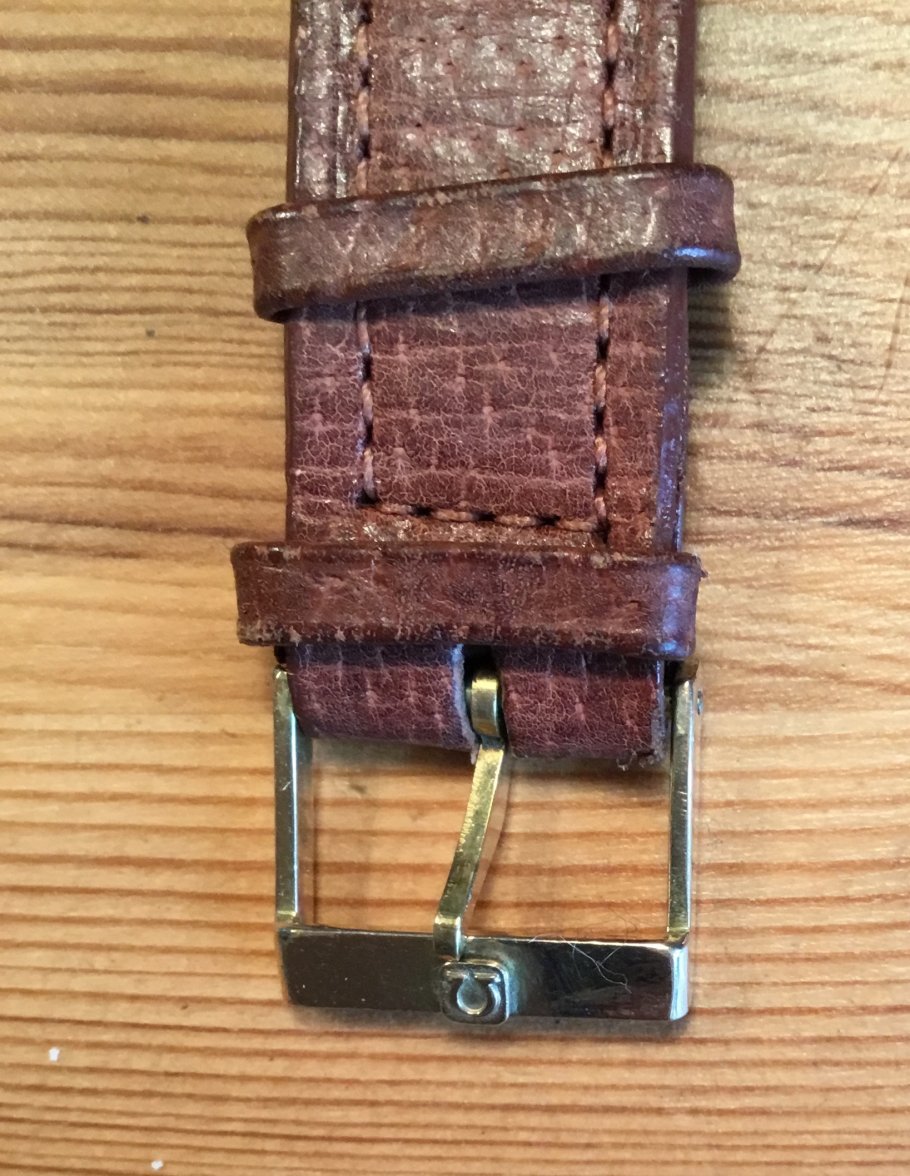
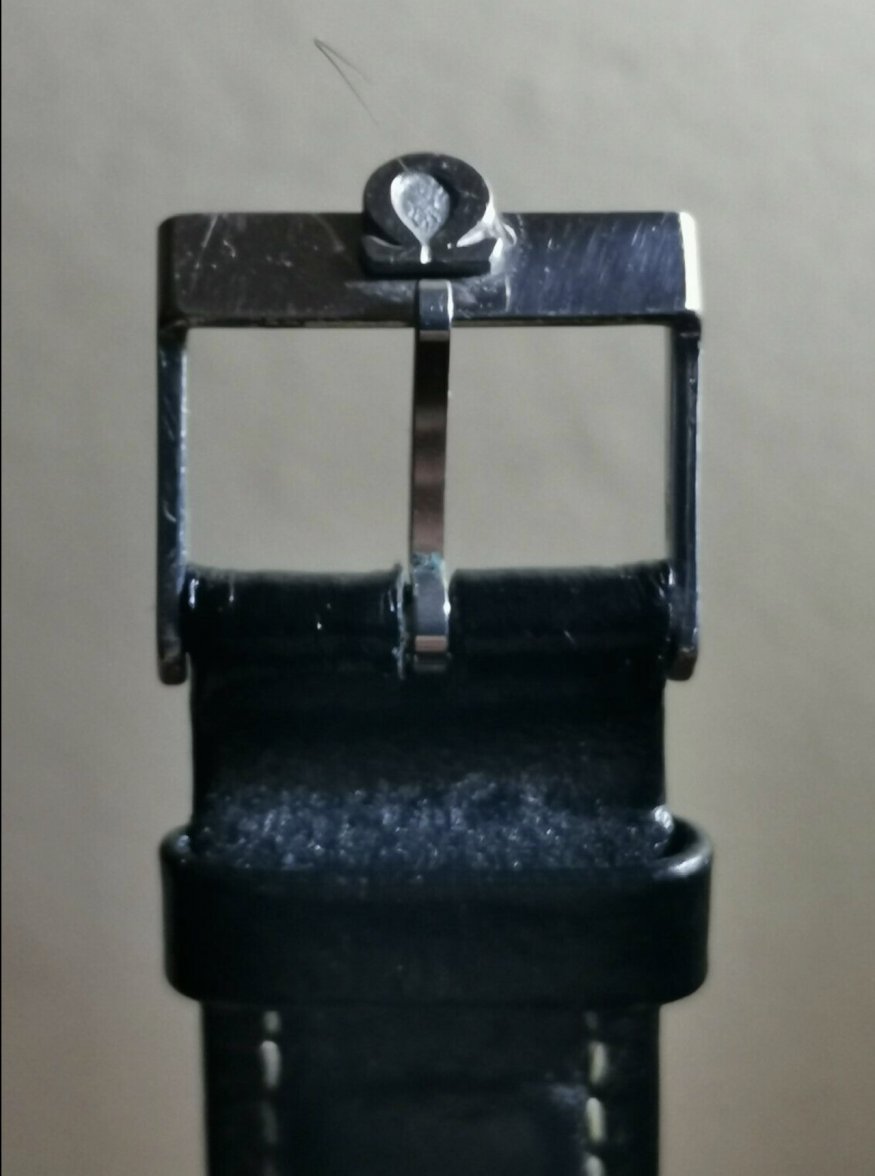
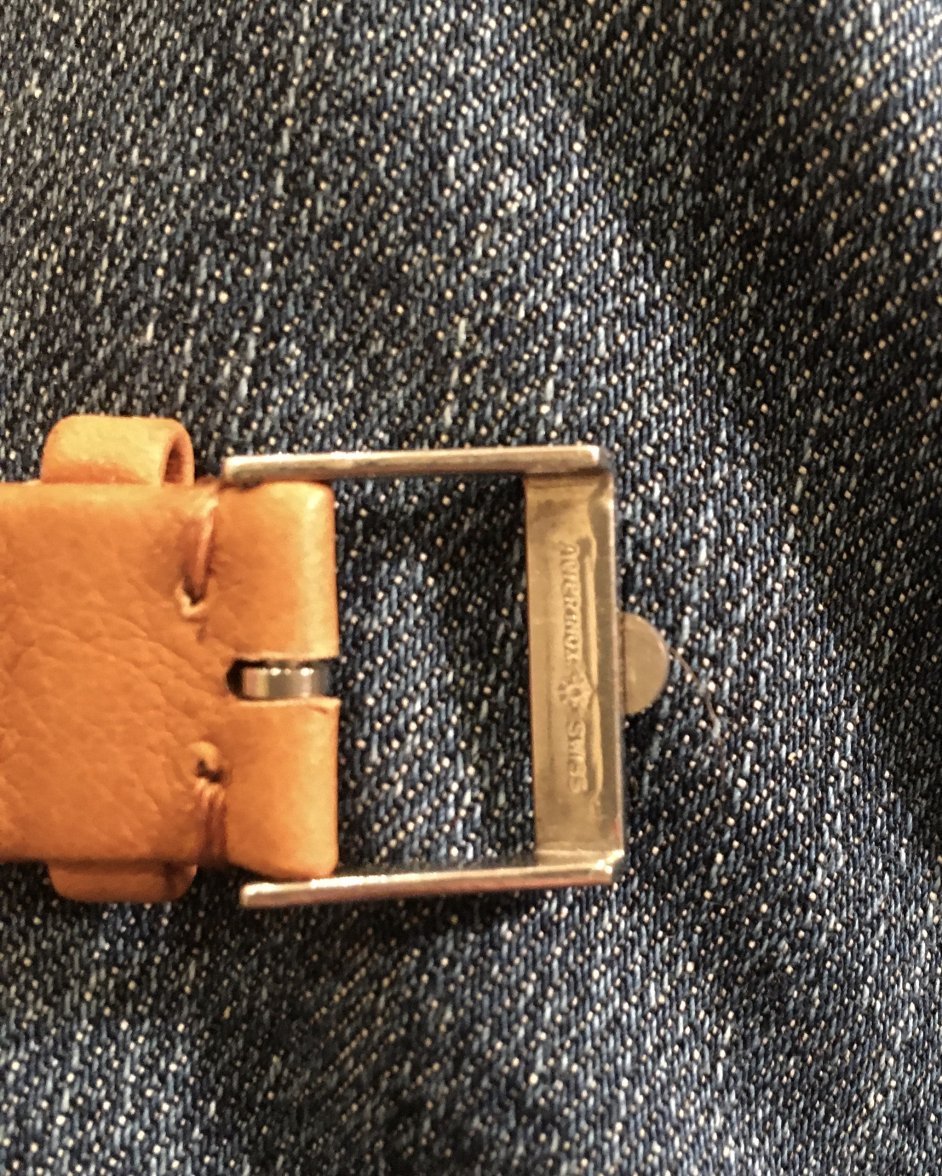
If you see a watch on eBay that might be what you’re looking for, and at a price within your budget, my practice is to spend a little bit of time looking at the strap, particularly if it’s leather (which is my preferred choice).

In my limited experience, the 'professional' eBay seller often puts on a new strap, and frequently adds a faux (Omega) buckle. This, I’ve assumed, is intended to entice the prospective purchaser to look to buy a ready to wear nice looking watch, with a nice strap and buckle and, possibly pay a little less attention to the watch face, case, movement and hands.

Apart from the fact that I like to choose my own strap, nearly all my 'finds', and I only venture into the sub-£400 market on eBay, have come with used (in some cases very worn) old straps.

In fact, the older and more disreputable the strap, I’ve surmised that it’s more likely that the watch hasn’t been the subject of the doubtful cosmetic practices that we read about and may well have been in someone’s sock drawer for the last twenty years.

In both the attached photos (attached to the seller’s particulars) the watches were significantly better than the straps.

 
Posts
8,830
Likes
73,379
Just a further two cents worth after reading many threads in which new collectors seeking guidance are sometimes advised to look at the 'Private Sales' section of this Forum.

All well and good but It’s not entirely straightforward, even there. Posters/sellers on OF always give good descriptions and excellent photos, particularly of the face, case and movement. You can probably rule out the risk of frankenwatches, redials (unless stated) or worse.

As a lower end (financially) collector with a liking for 50s & 60s watches I’ve never spent a great deal but even buying here, adopt the same mindset as you might when you buy on eBay or elsewhere.

In recent years, I’ve bought twice. The first was a 65 year old bumper. It looked as good when I got it as it had in the photos, it ran well and was just what I’d hoped it would be. I had it serviced and cleaned and my repairer confirmed everything that the seller had asserted. It is still running well and I remain a very satisfied customer.

The second purchase was comparatively inexpensive. The seller advertised that the watch hadn’t been serviced recently and that a hand had been changed. He sent the original removed hand with the watch.

It ran beautifully initially but then stopped. My watch repairer advised on parts that were need for this 63 year old timepiece. I sourced original spares from Finland, Poland and Holland. My repairer repaired, restored and serviced it and it now runs perfectly.

I have absolutely no criticism of the seller and I’m certainly not complaining. It is just what can happen when one buys an old watch either on OF or elsewhere. But I spent more on the parts and servicing than I spent on the original purchase. The upside is that I found the parts and that the watch could be, and was, repaired.
 
Posts
10
Likes
1
I am still learning like a lot of people in this quest. One of the things that seems consistent throughout the different eras on these is the script logos and so on. For example, on this one pictured the word “Seamaster” and even “Omega” are very heavy compared to solidly original ones you see. Also I have learned to look at the word Seamaster very very carefully and when you look at those original ones there’s a giveaway in the shape of the letter “m”. I am glad you inquired about the word being only “Swiss” Rather than Swiss maid because I myself and looking for an answer in that regard. Most of the ones that I see which are a few that say just Swiss always appear to have some other indication of redialing. I bought a semester recently and solid gold because I couldn’t resist it from the early 50s and it does not have Swiss or Swiss maid on the bottom of the dial. Someone out there In non Omega Forum land said they have seen ones like this but I kind of doubt it myself. Sometimes these things just get scrubbed off the dial when improperly cleaned. Do you make a form is in valuable for this type of information because there are collectors and dealers on here with beaucoup years of experience looking at these things.
 
Posts
112
Likes
697
Maybe. Need to see a couple of other angles. But yeah, more likely than not.
Thanks, what angle do you need to see? I will try to clearly zoom it...
 
Posts
5,632
Likes
5,812
Thanks, what angle do you need to see? I will try to clearly zoom it...
30 degrees up from the plane of the dial.
 
Posts
8,830
Likes
73,379
I’ve posted about straps previously. Recently I saw this stainless steel/gold indices and hands Seamaster 165.003 as a BIN or offer on eBay. I like this version but wasn’t entirely sure it was genuine. I posted the seller’s poor photos on OF seeking reassurance, which I didn’t get.

So, entirely down to me. Two things persuaded me to take a chance. First, the seller also lives in the UK and offered a 14 day return. Second, one of the photos showed the face of what I hoped was an original strap buckle.


So, I made an offer and was right about both the watch and the buckle but, if I hadn’t been, I could have returned it.

Hope this helps.

Edited:
 
Posts
18
Likes
20
i wish i had read this before buying my first vintage omega (cal 342 bumper gold capped dress watch) which turned out to have a redial as far as I can tell now and is a American imported watch from the 50's which as I understand now were imported as movements to be cased by American made cases for tariff reasons? This is still kind of unclear to me.

In any case, thank you so very much for sharing your expertise.
 
Posts
9,588
Likes
27,696
Thank you for this,
I still don’t trust myself buying vintage, I just don’t know enough

Have a long look in the depths of the Vintage Omega Watches subforum and read those threads that concern the models you really like and get a feeling of what to look for in the specific references. Some information may be a bit dated, but the groundworks are there 😀