Help Me Omega Etairos

Posts
2
Likes
4
Hi,

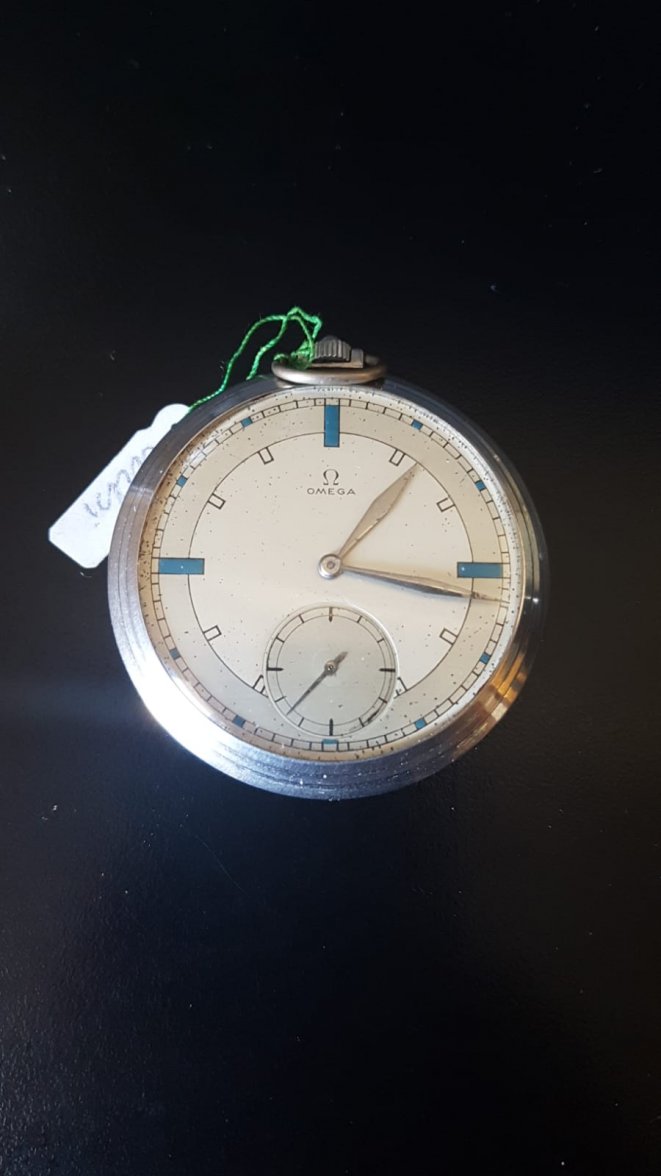
I have received this watch and would like to understand its age and possible value. I have only found one photo (on the web) of a 1932 Omega Etairos with the red index lacquer and slightly different pendant. I look forward to your suggestions. Thanks
 
Posts
561
Likes
1,440
Thanks @ConElPueblo

The Omega book ‘A Journey Through Time’ refers (of course), with entries on pages 93 and following (describing pocket watches) and pages 120 and following (describing wristwatches).

In the years 1932 - 1934, there was a series of wristwatches named Dedalos, Acribes, Firmus, Filenios, Euroos, Foibos and Argos.

Following that and parallel (about 1933 - 1935) were four pocket watches named Etairos (meaning ‘Companion’), Sideros (Steel), Fengos (Bright) and Lampros (Sparkling). A series of Italian advertisements is shown.

As was usual at the time, the different names described case, bow and dial differences - with various different calibres being used in each case. The calibres used ranged from 38.5 to 39.1L and 37.5L.

The OP tells us nothing about himself (welcome to OF!) and very little about his watch. More images showing the movement, caseback (inside and out) and further angles might help us offer him more. It would seem likely that the bow is a replacement and even the dial colouring (blue marks) may have been changed (hard to tell).
 
Posts
18,202
Likes
27,530
Well that’s 3 Omegas today I had no clue existed.
 
Posts
2
Likes
4
Ok, thanks for the reply.

I'll try to take some more photos and publish it so that I can better see the details of the watch.

Thanks @ConElPueblo

The Omega book ‘A Journey Through Time’ refers (of course), with entries on pages 93 and following (describing pocket watches) and pages 120 and following (describing wristwatches).

In the years 1932 - 1934, there was a series of wristwatches named Dedalos, Acribes, Firmus, Filenios, Euroos, Foibos and Argos.

Following that and parallel (about 1933 - 1935) were four pocket watches named Etairos (meaning ‘Companion’), Sideros (Steel), Fengos (Bright) and Lampros (Sparkling). A series of Italian advertisements is shown.

As was usual at the time, the different names described case, bow and dial differences - with various different calibres being used in each case. The calibres used ranged from 38.5 to 39.1L and 37.5L.

The OP tells us nothing about himself (welcome to OF!) and very little about his watch. More images showing the movement, caseback (inside and out) and further angles might help us offer him more. It would seem likely that the bow is a replacement and even the dial colouring (blue marks) may have been changed (hard to tell).