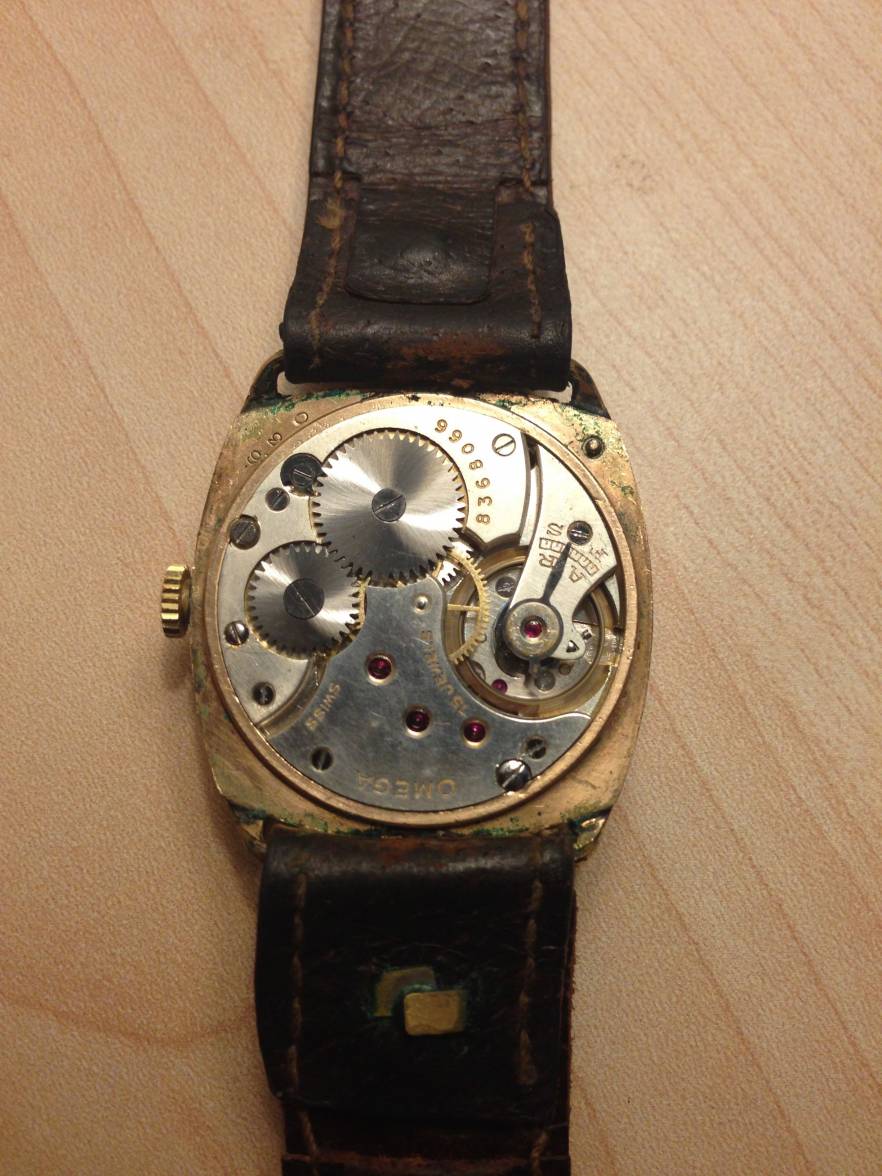
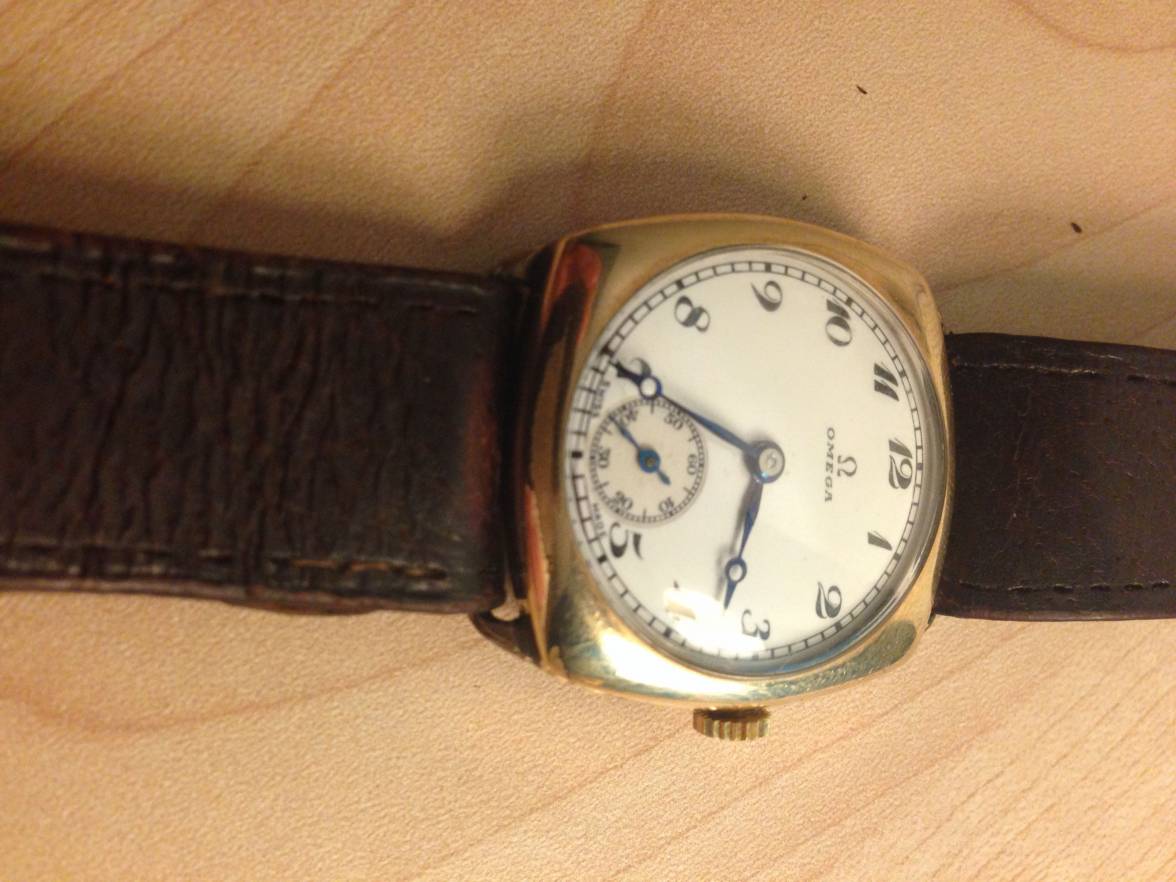
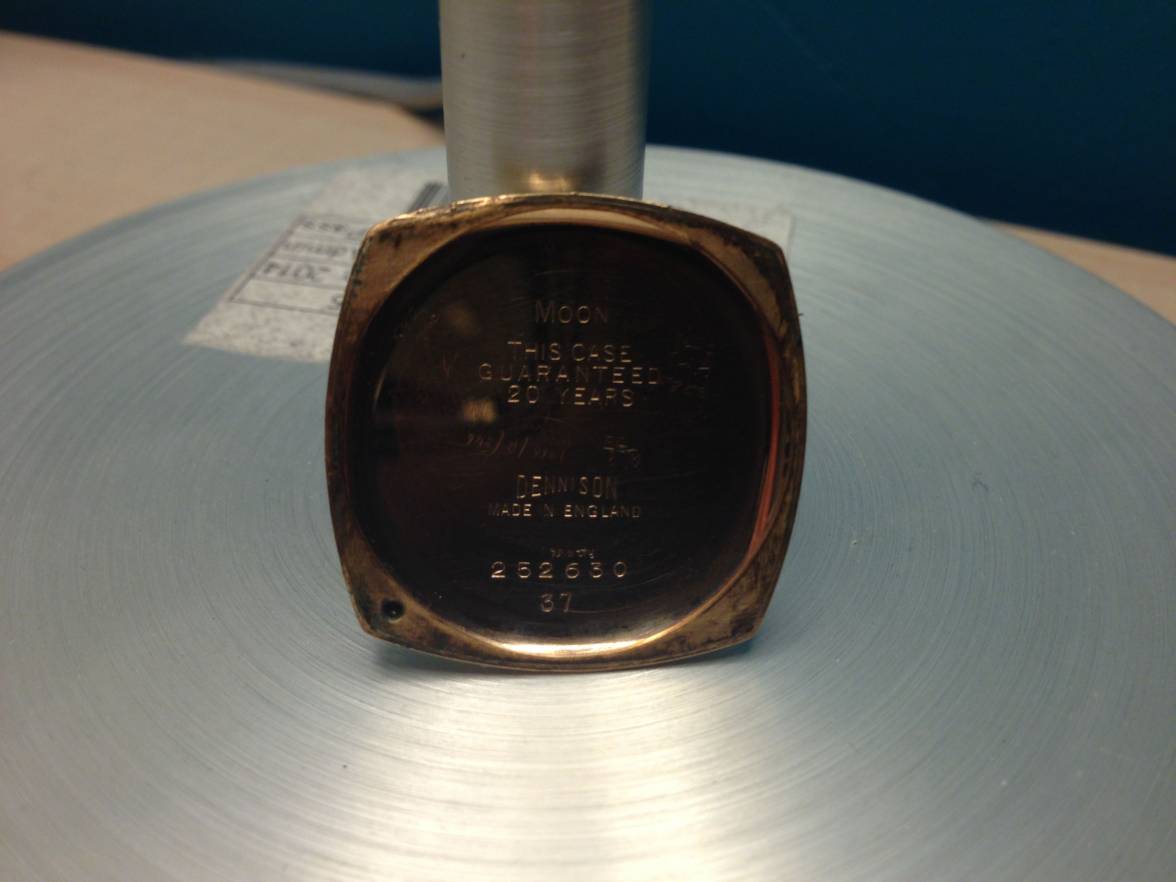
This is what I found on the net
http://watch-pop.com/vintage-watches/vintage-13421.html
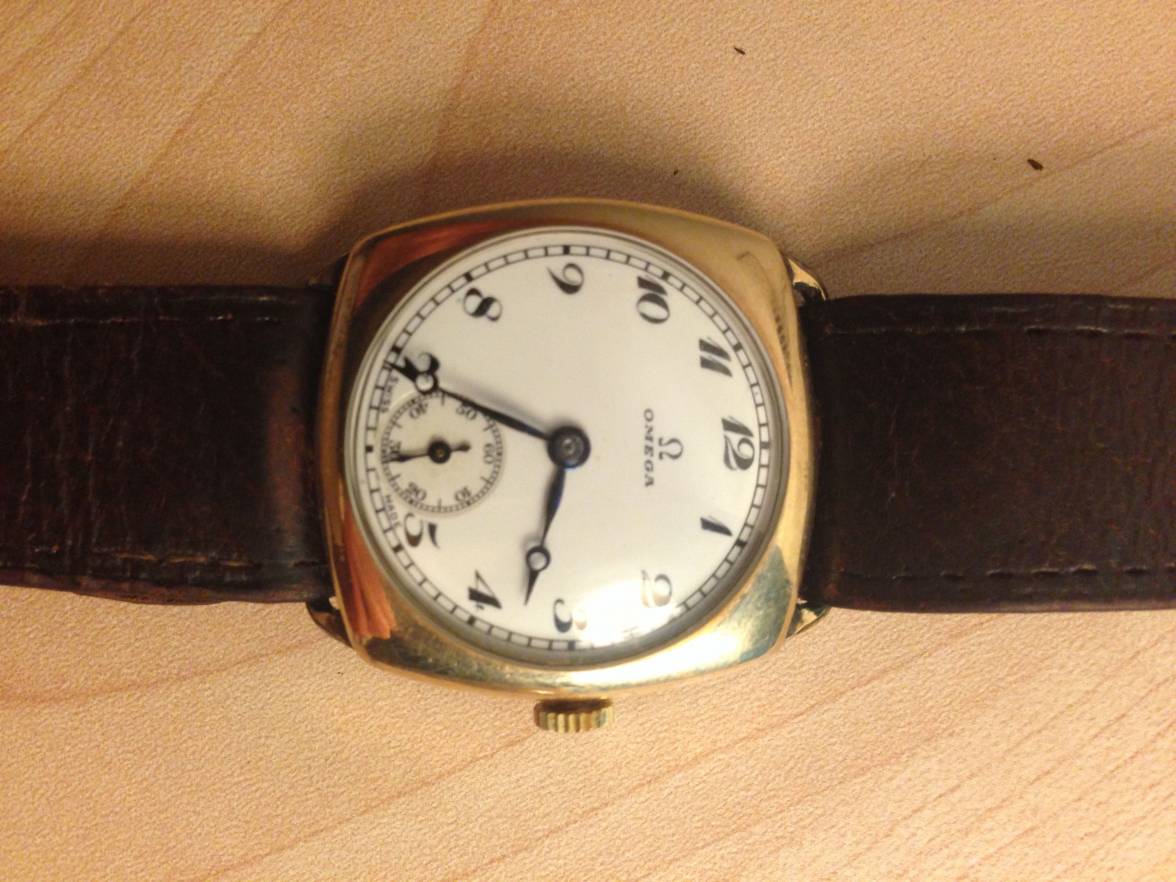
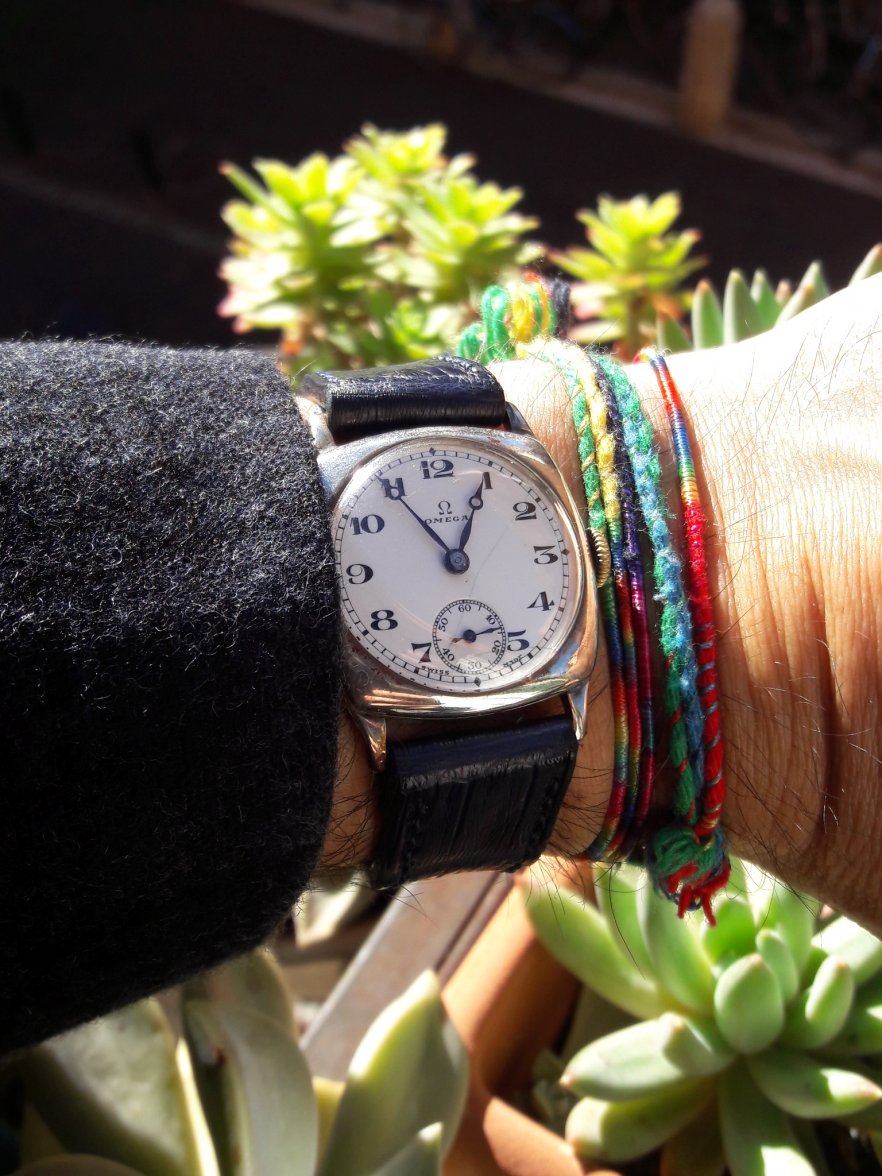
The 26.5 was very successful and long lived, being produced from 1926 to 1950 and approximately 391,000 were produced. My accumulation of information regarding Omega movements shows the following variations.
CalibreID (year of production start)
Omega 26.5 SAV (1926)
Omega 26.5 T1 (1932)
Omega 26.5 T2 (1934)
Omega 26.5 T2 PC (1938 -- I don't have the exact date)
Omega 26.5 T3 (1940)
Omega 26.5 T3 PC (1940)
Omega 26.5 T3 PC AM (1942 -- I don't have the exact date)
Omega 100 (1949)
T indicates "transformation" and indicates a change in design.
PC indicates shock protection. This calibre was the first Omega wristwatch with shock protection.
AM indicates antimagnetic.
When you next have the case back off the watch, the calibre indication (and perhaps some additional information) is engraved under the balance wheel. It it awkward to see without removing the balance wheel, but it will tell you exactly which variation you have and more accurately date your watch.
For instance, I have a cushion shaped watch with the engraving 26.5 SOB T1. It appears in this way:
26.5 SOB
T1
S indicates savonette (French for hunter), meaning the
relationship of the crown to the subseconds dial is 90
degrees apart, rather than opposite, as in hunter cased (covered) pocket watches, as is traditional for wristwatches, crown at 3, subseconds at 6.
Open faced pocket watches have the crown at 12 and subseconds at 6, an arrangement referred to by Omega as Lepine (L). As it was the standard arrangement for pocket watches, it was generally omitted as it was the default.
O indicates it is the Original thickness of the movement where variations were available; other indications were P for Plat(French for thin).
B indicates the movement is of base quality, where higher quality variations were available.
These designations were helpful when pocket watches were most popular. Customers could order several variation of quality for the movement and designate several different case
materials. In 1926, pocket watches were still more popular than wristwatches.
I believe later version of the movement dispensed with the SOB type designations, but am uncertain of when (and if) this occurred.