Comments re: the Hamilton 927 thread.
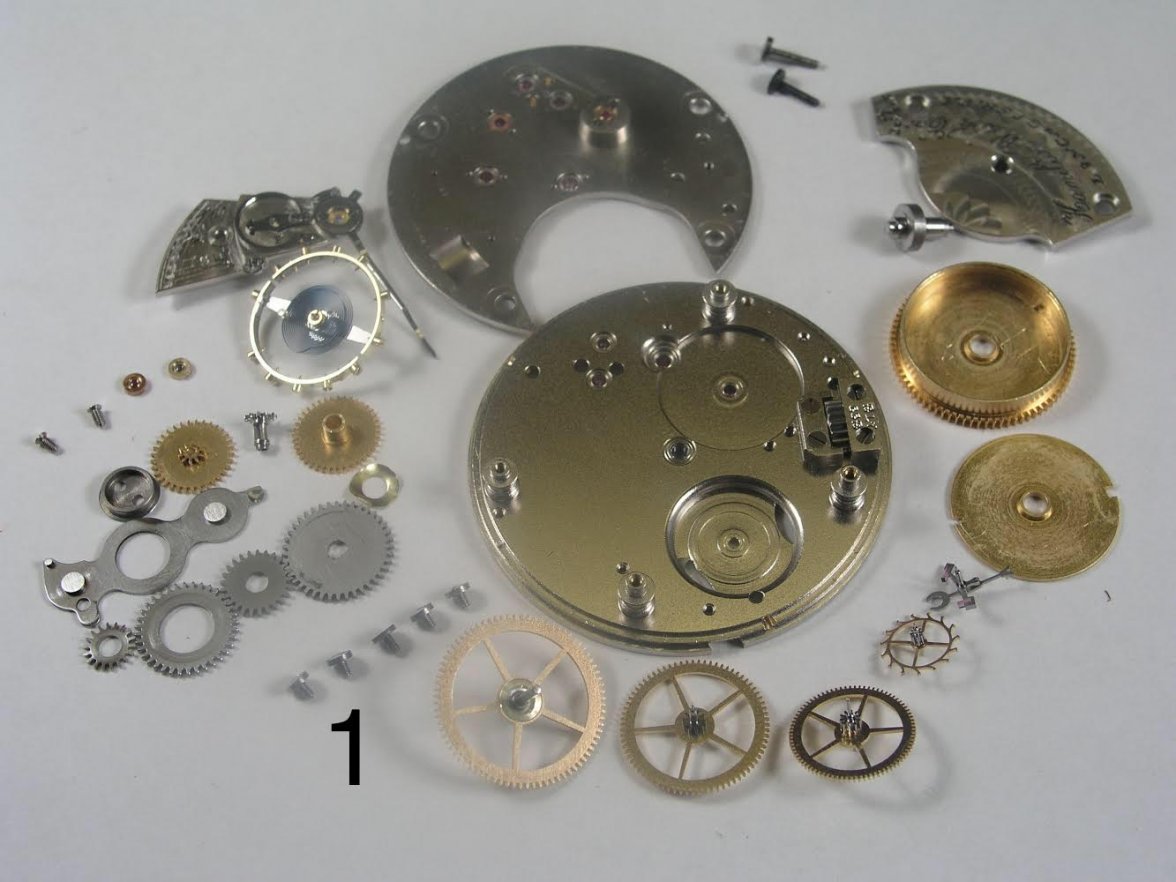
1- The movement cleaned and ready for assembly.
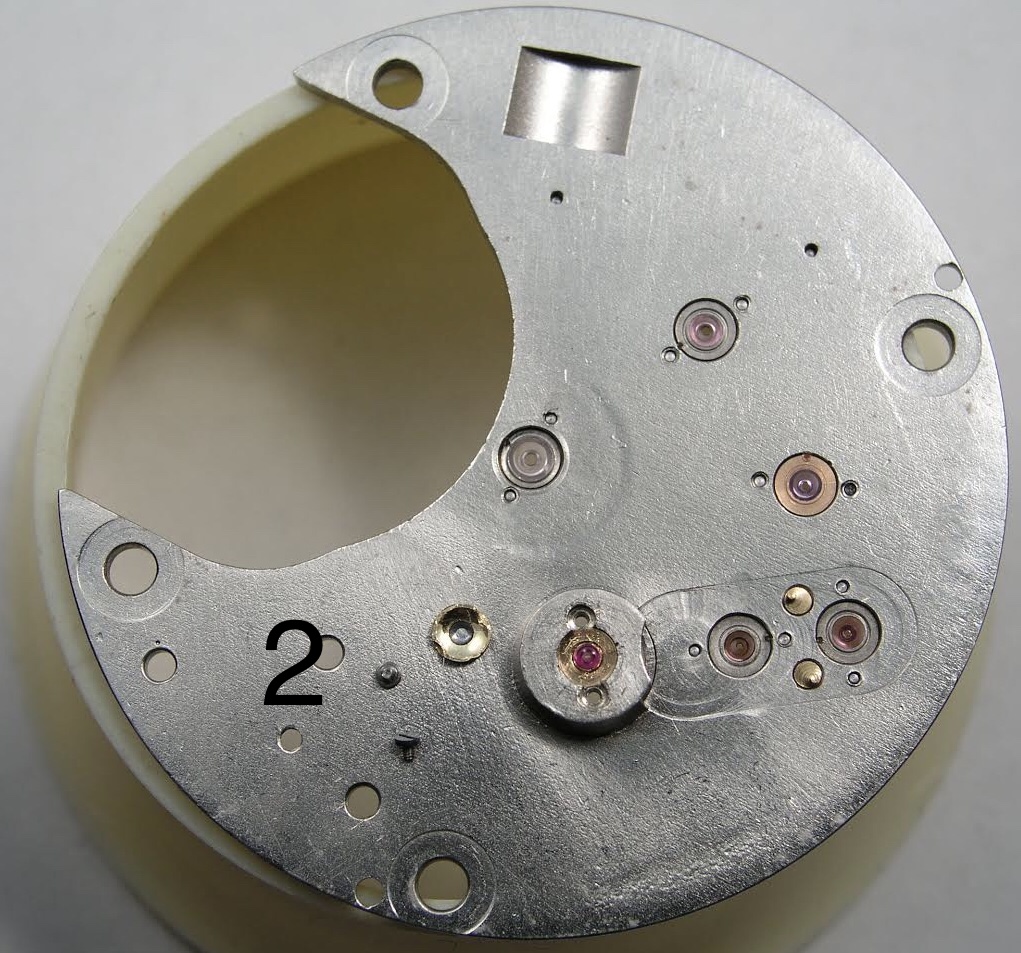
2- The cleaned cap jewel and two screws ready to be fitted to the potence which carries the balance wheel lower
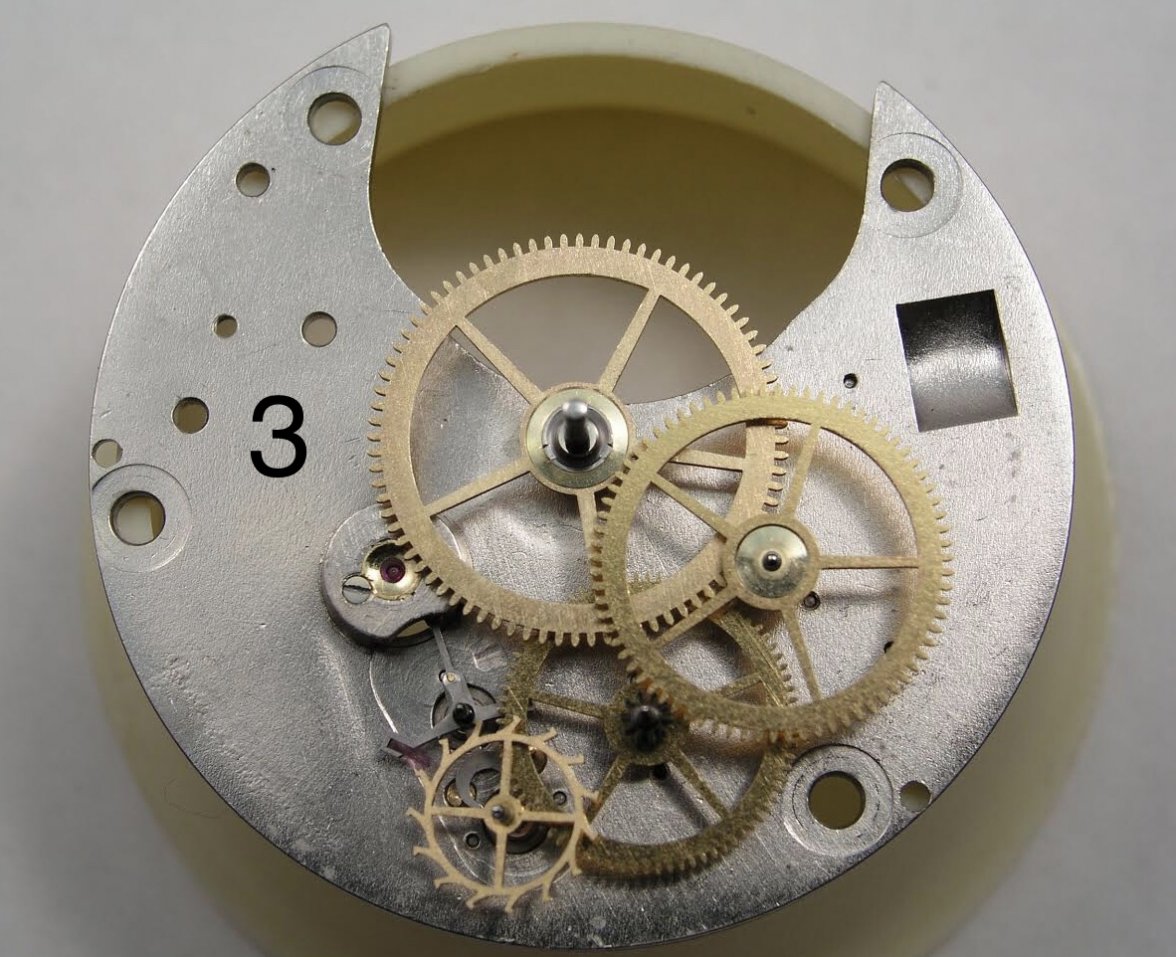
pivot. This potence causes newbies many problems as may be seen in picture # 3.
3- The lever projects into that potence, and the arbor can be snapped if careless. Watch is assembled upside down.
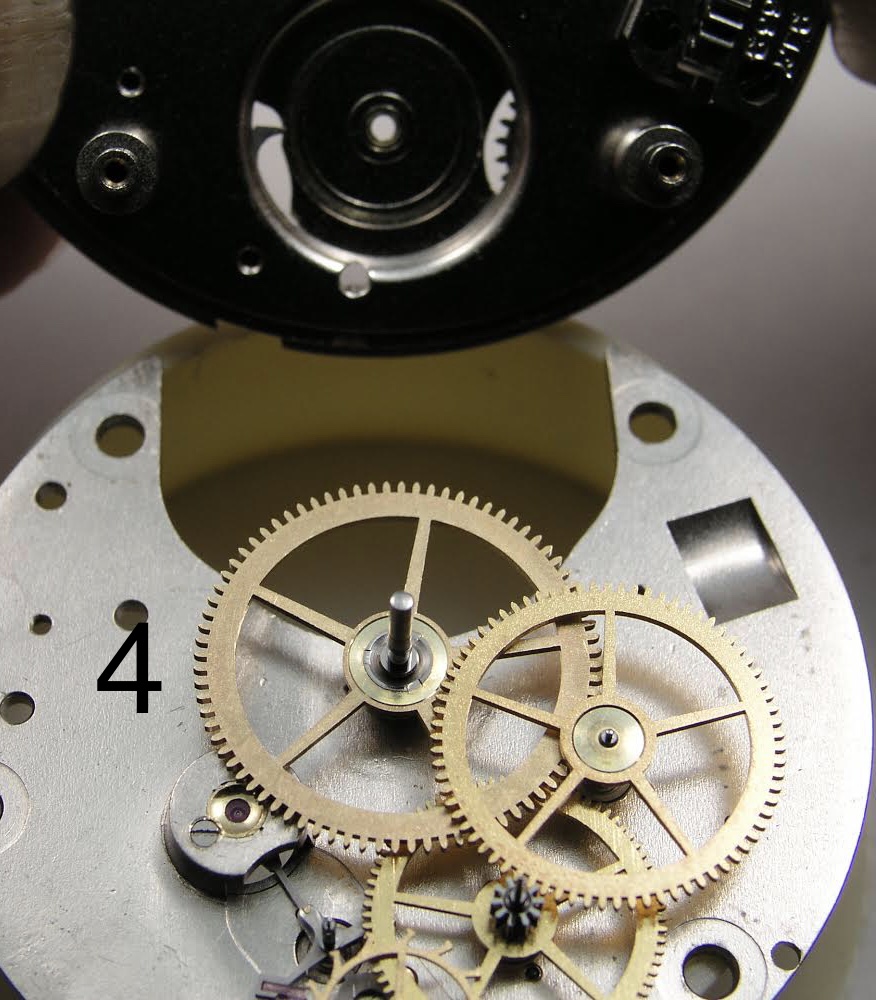
4- Pillar plate facing up, being lowered over the arbors of the lever and train wheels. Tricky, but it gets easier once
you are used to it.
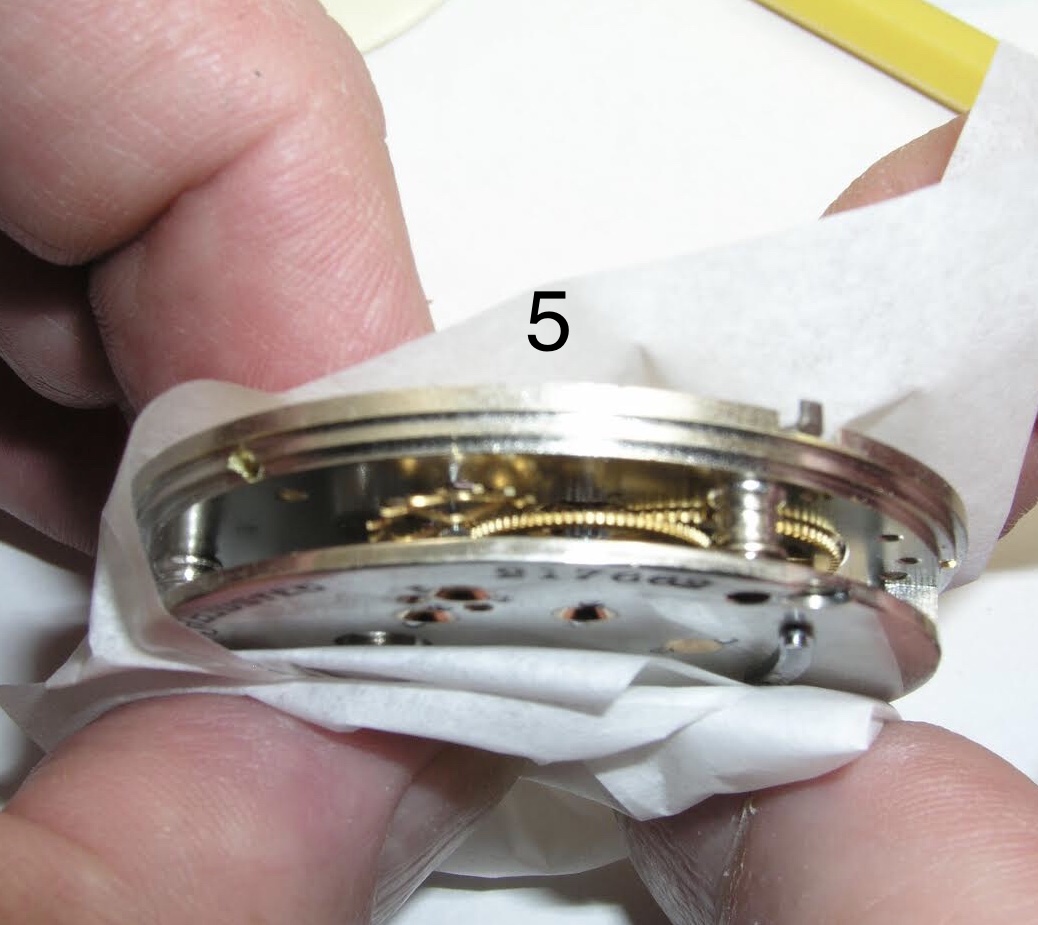
5- Some use finger cots during assembly, and I do as well, on occasion. Here I use bench tissue.
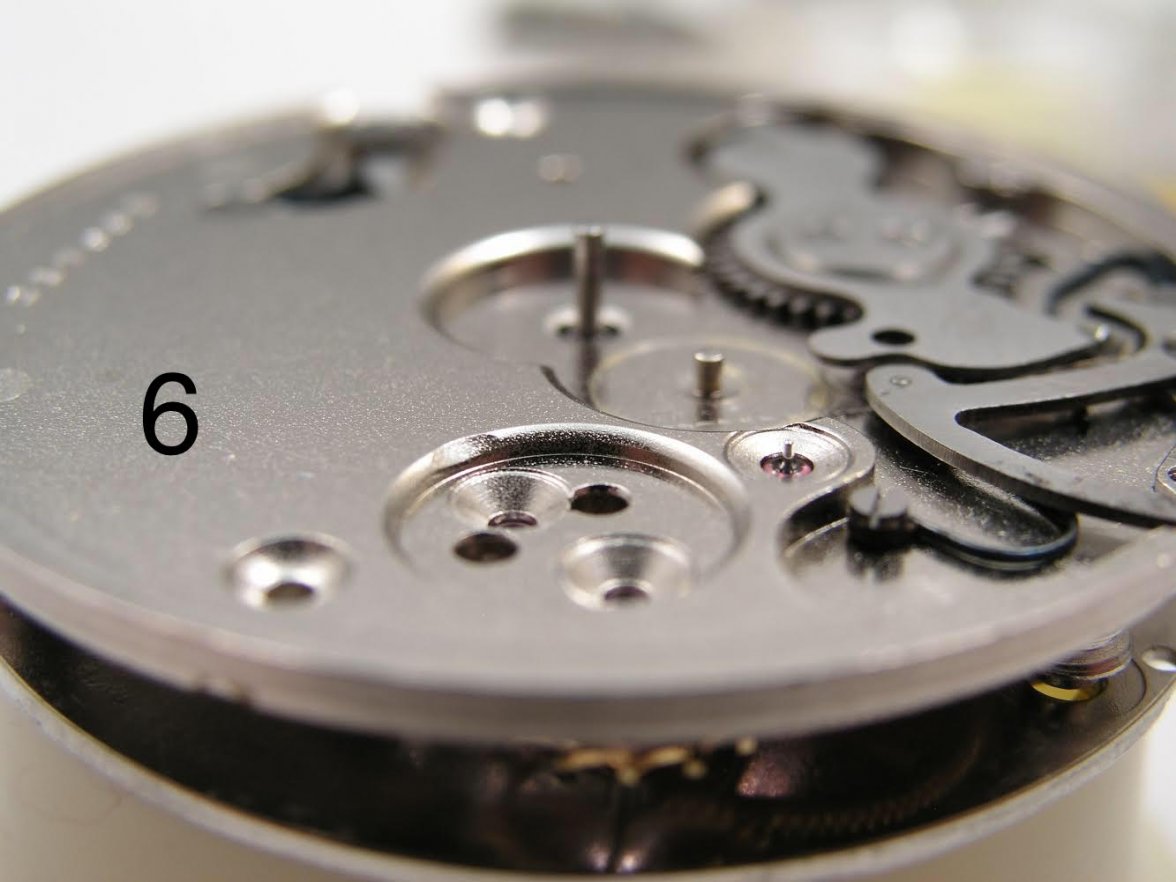
6- Now to carefully flip the movement face down, and fit screws.
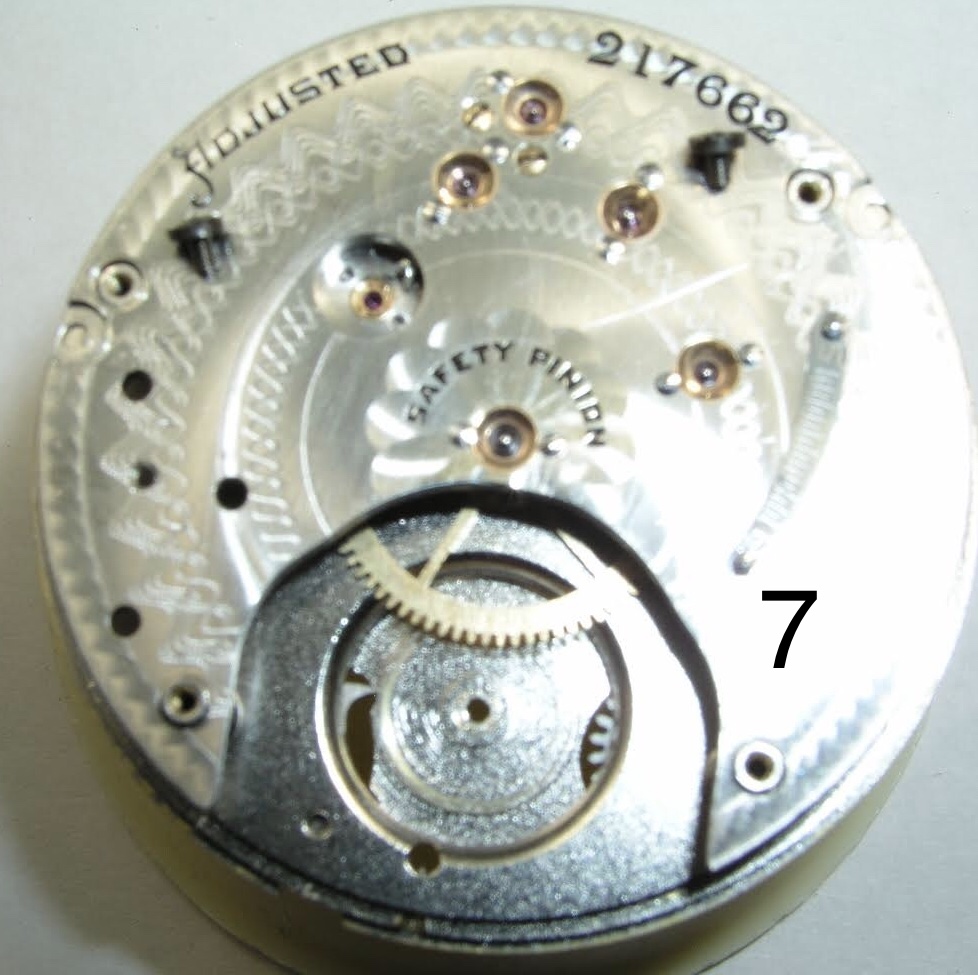
7- Ready to complete assembly.
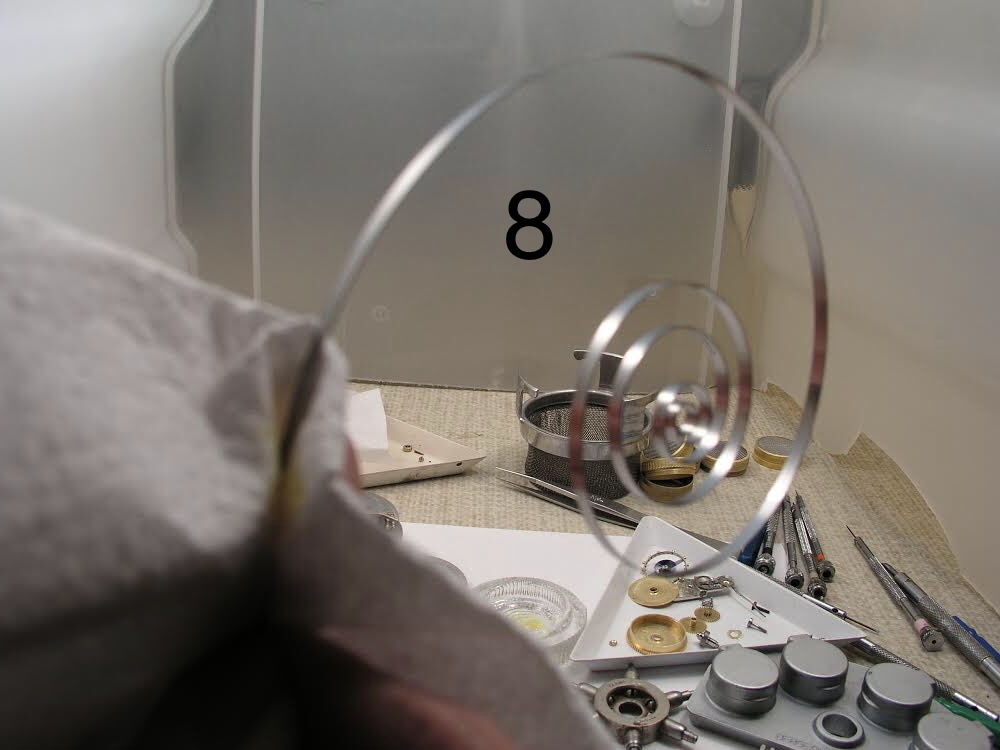
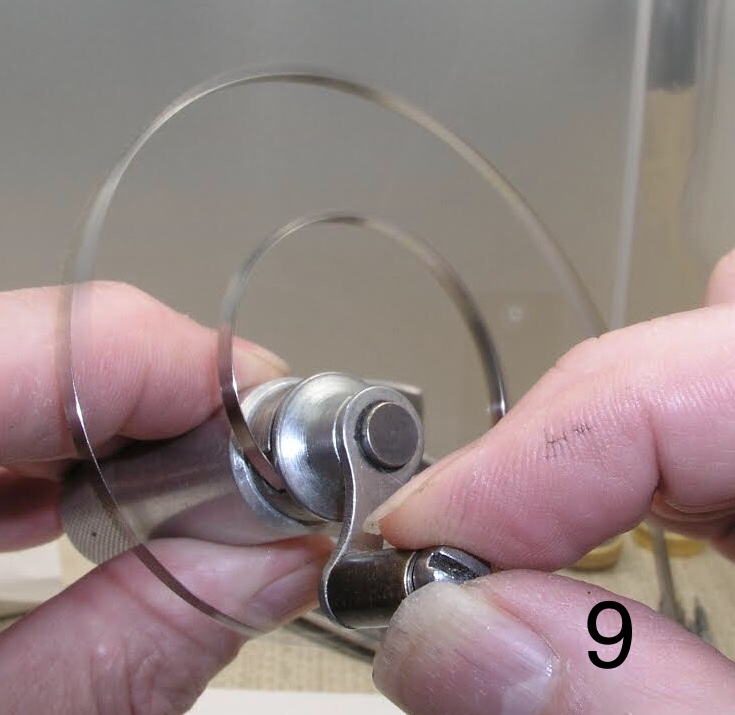
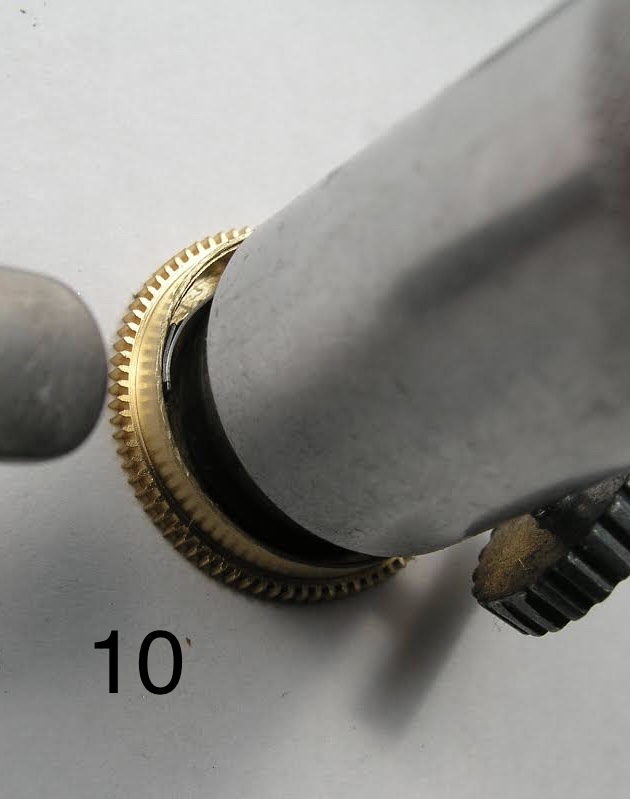
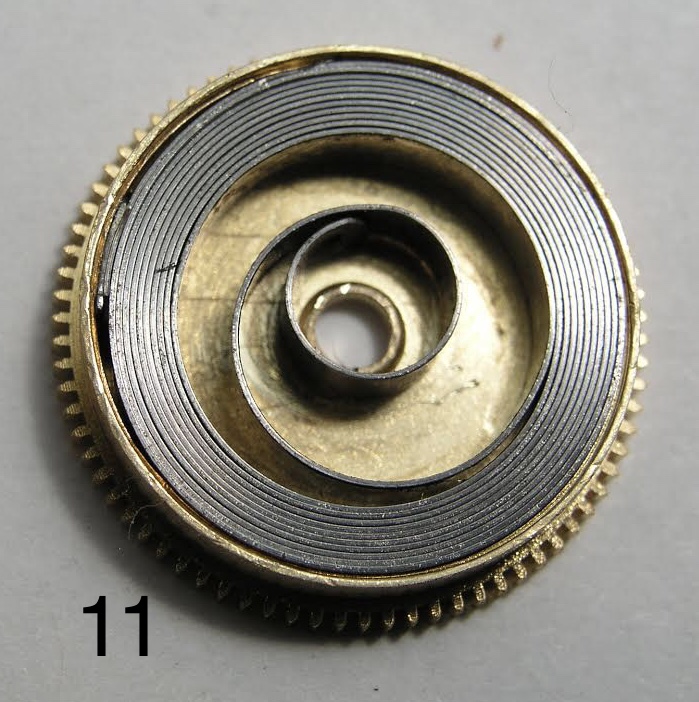
8, 9, 10, and 11- Greasing mainspring, installing spring into winder, fitting spring into the barrel, and spring in place.
The Hamilton spring has a “T” end which fits into one hole in floor of barrel, and a hole in the barrel cap. Note the
heel of the tweezer to the left, used to hold the “T” in place when spring is released into the barrel.
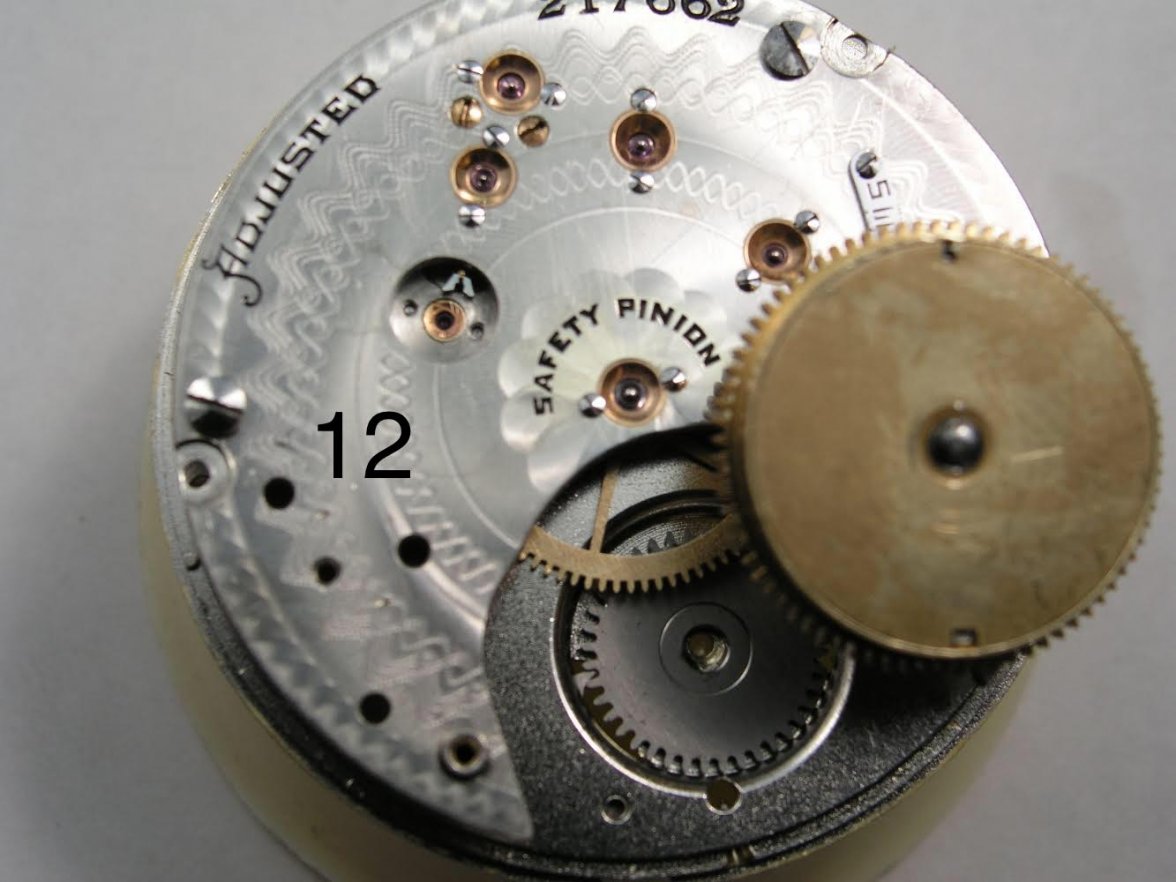
12- The final mainspring winding gear in place beneath the barrel, barrel ready to be flipped over and fitted.
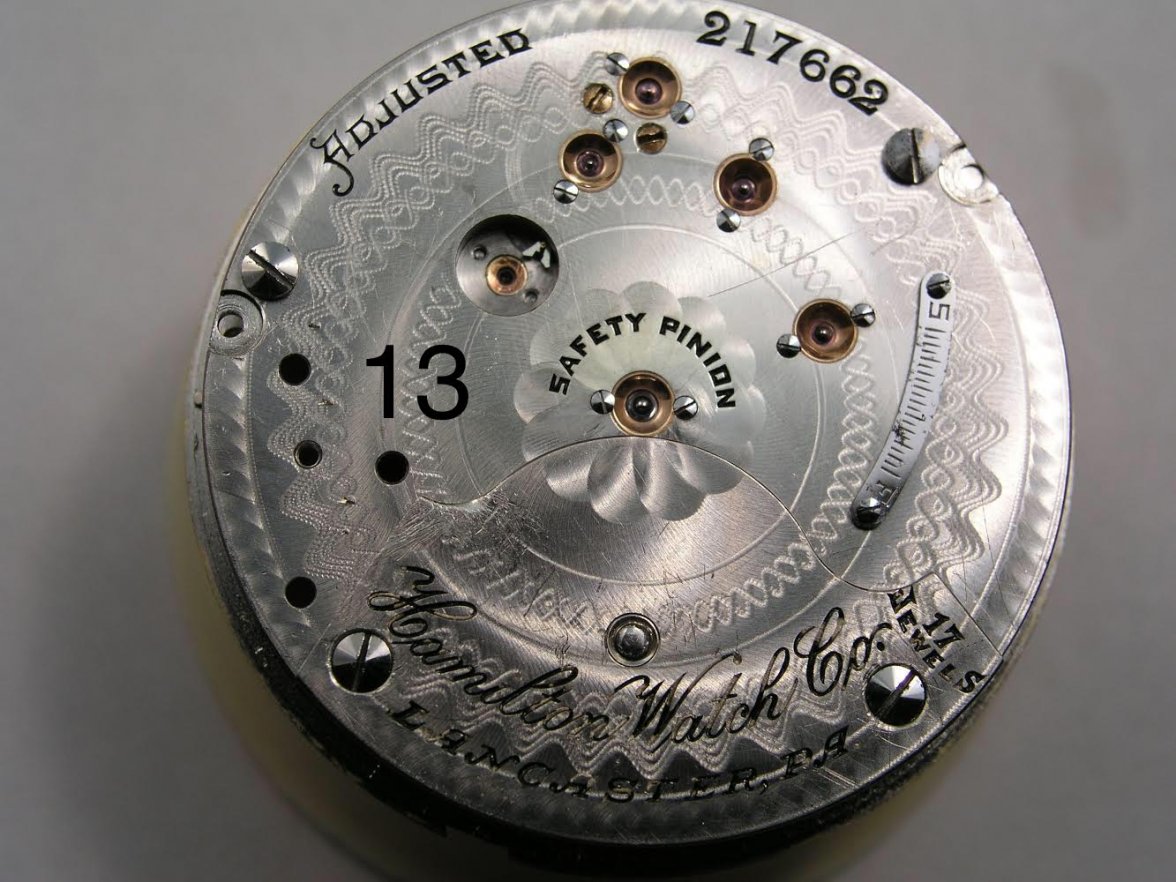
13- Barrel in place and bridge installed.
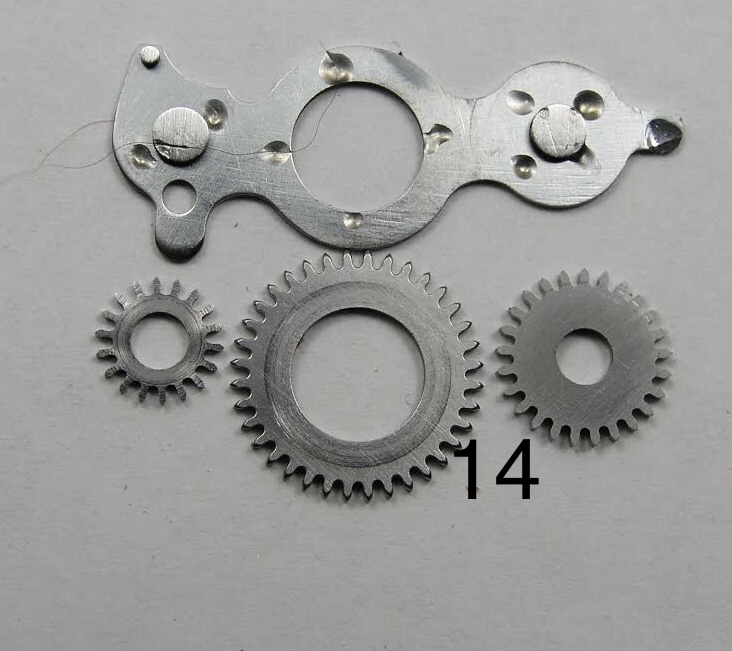
14- A lot of 18-size American watches use “rocker bar” winding which is behind the dial. Newbies often have a
problem at this point, because the rocking lever must be flipped over, and the gears fall off. I grease the lever
resulting in the gears staying in place.
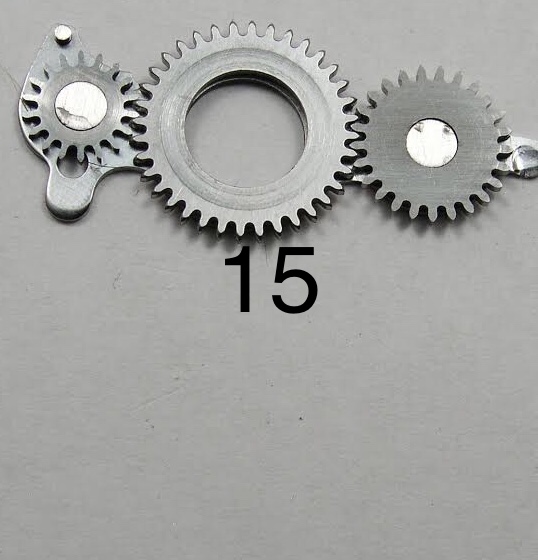
15- Gears in place on rocker bar lever.
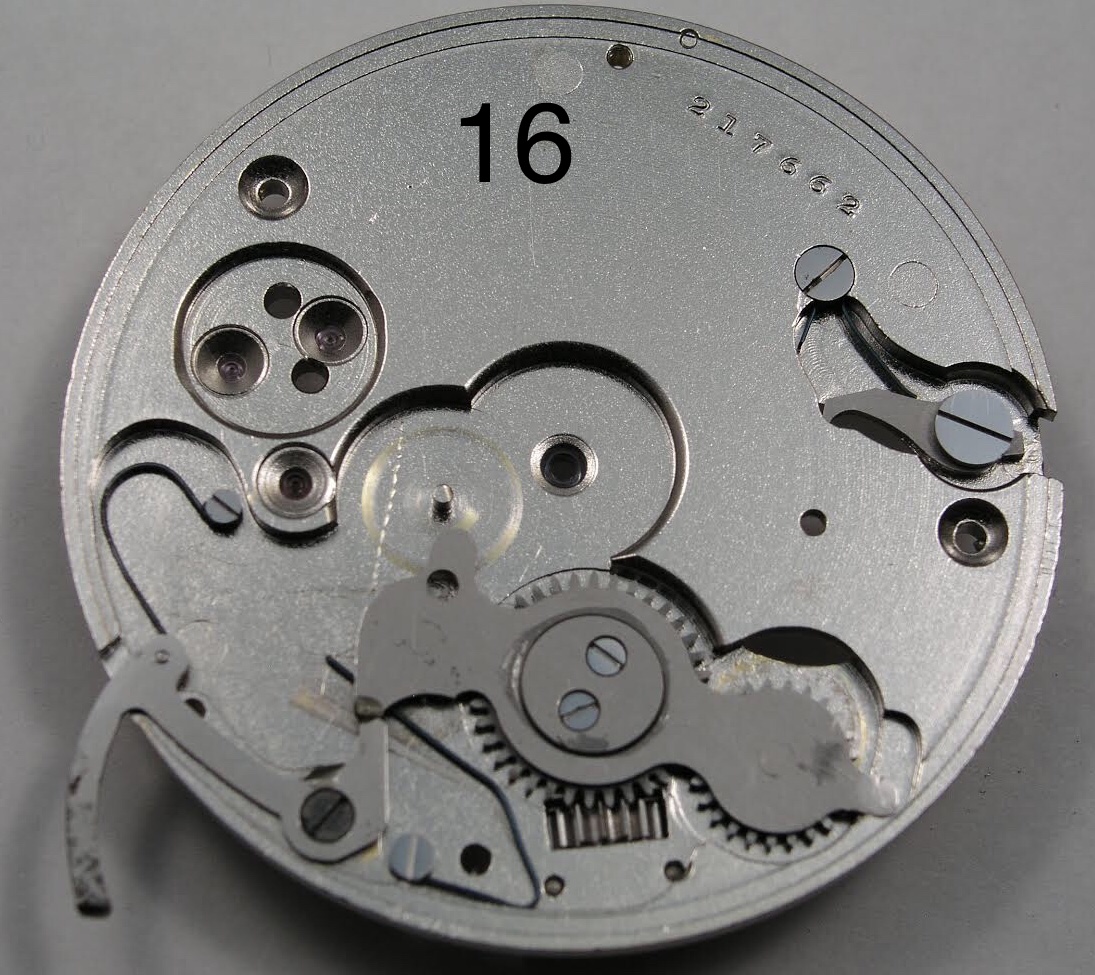
16- Rocker bar and gears flipped over, and held in place.
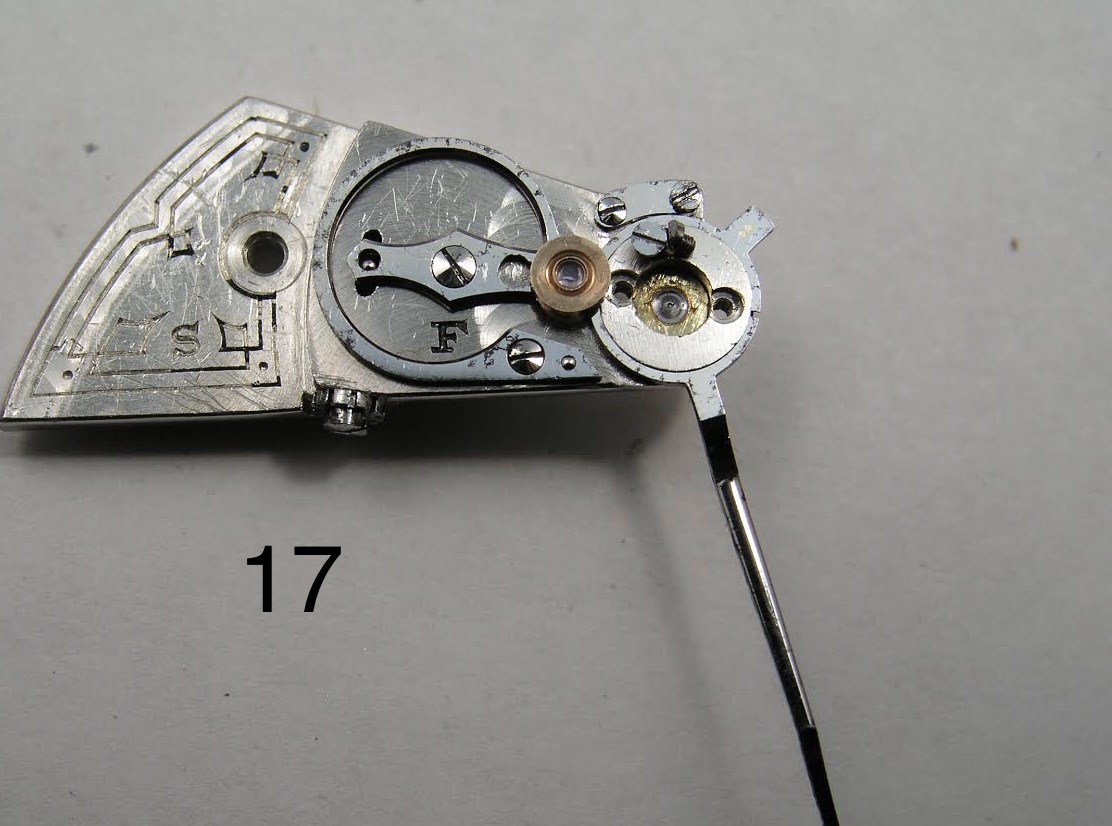
17- Preparing the balance cock to fit balance wheel.
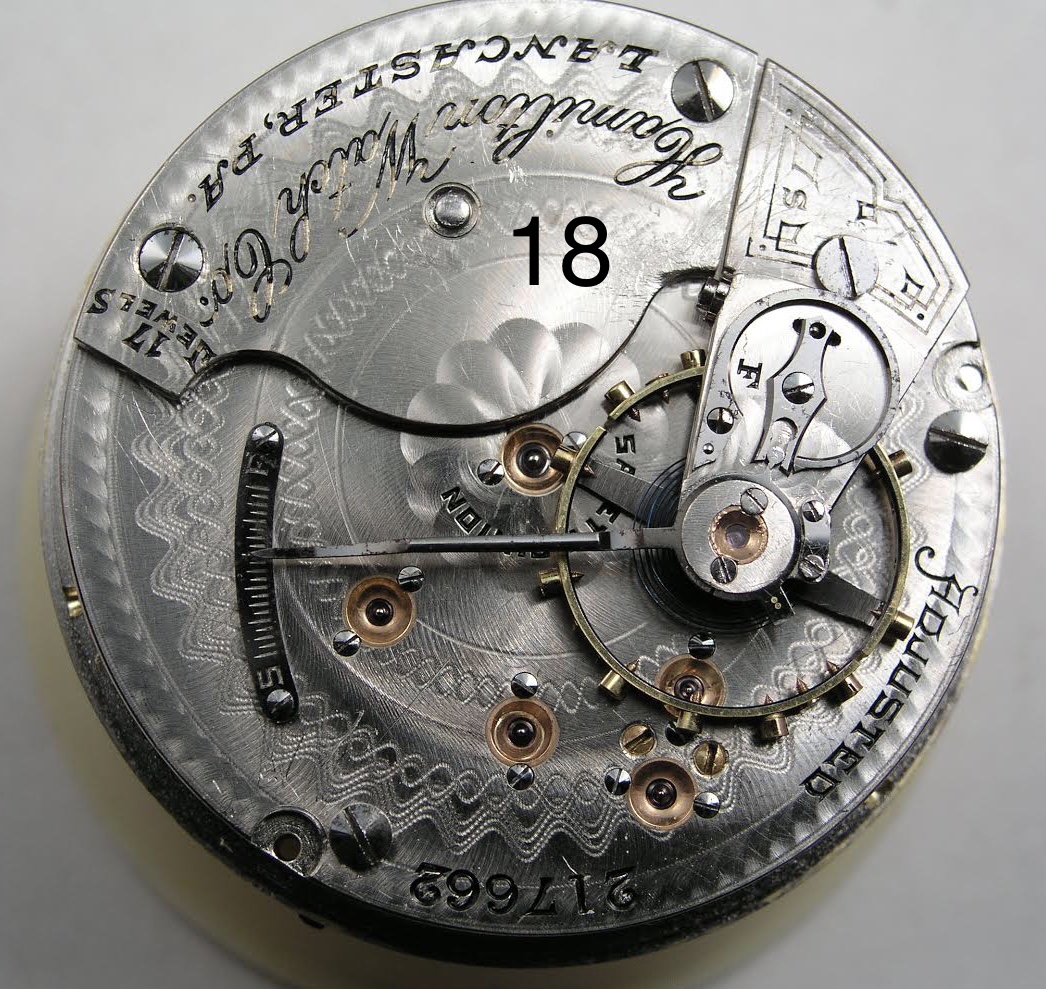
18- Assembly complete.
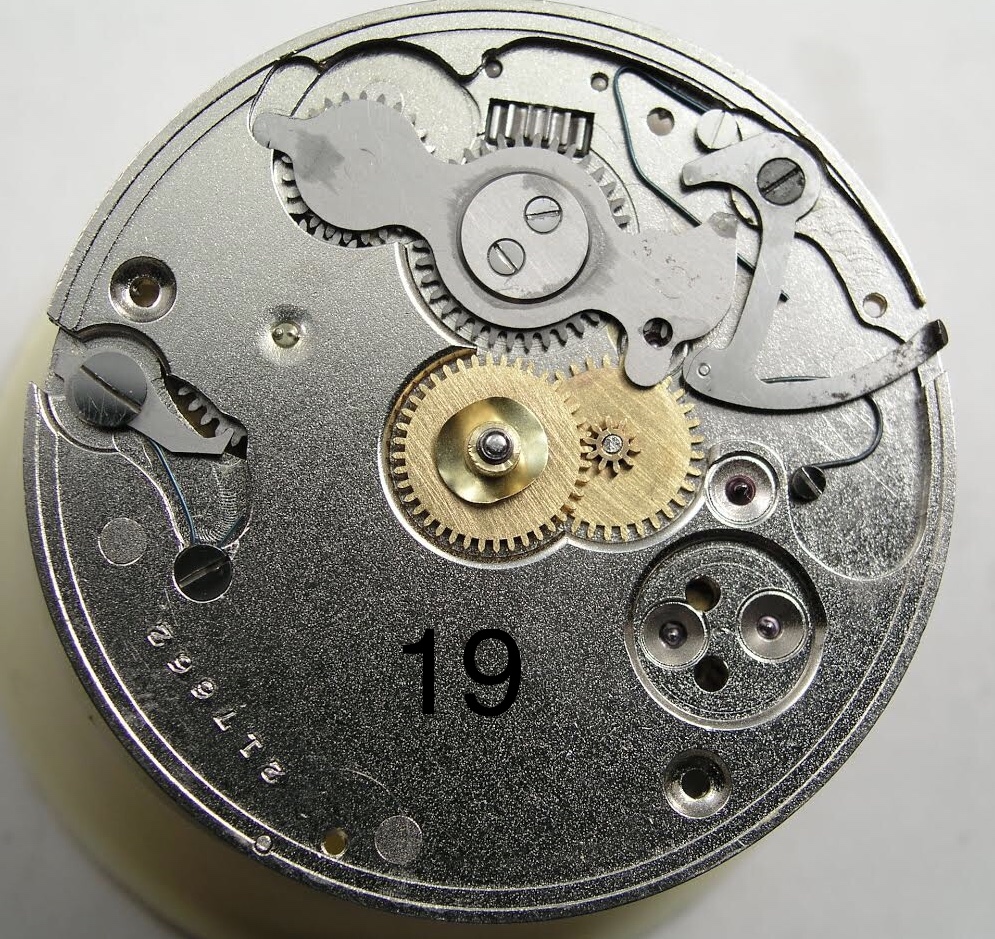
19- Ready to accept dial.
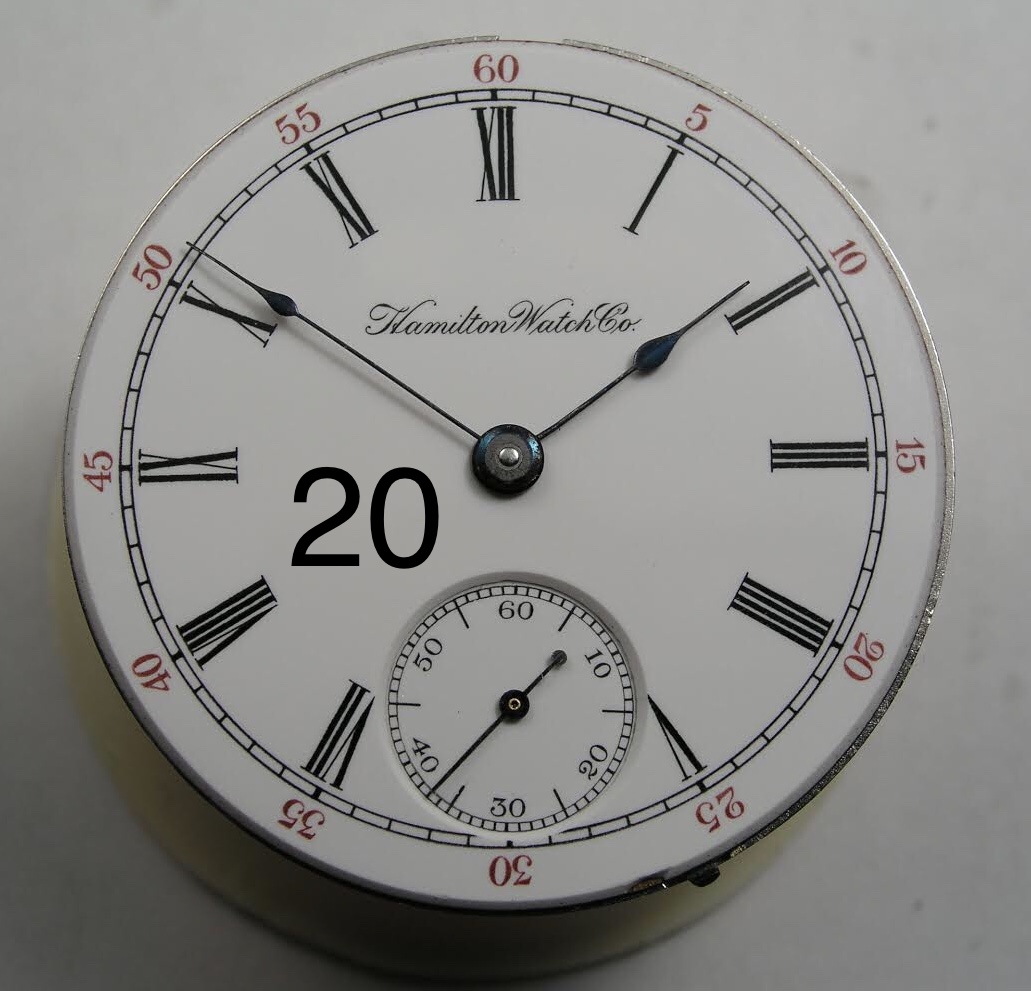
20- Job done.
These pictures and instructions are for you edification only. This formation in total is insufficient to steer you through your first attempt at servicing any similar American 18-size watch.