Going solar: considerations and numbers

Posts
444
Likes
751
Gentlemen

I had solar panels installed in July last year and thought it could be helpful for the community to discuss the subject.

It is a long story because the subject is pretty complex, so I guess I will break it down in a series of posts to make it easier to organize.

Of course, if the subject is not interesting to you, feel free to ignore.
angel.gif

So here it goes:
== Starting up ==

The first thing to start the discussion is by stating the obvious: solar panels need *sun* to work.

That means it will work fine in some places (parts of the USA) and it will not be economically viable in other places (e.g. Germany).

Peter Zeihan is a geopolitics analyst and explains it pretty well:

It is stupid to assume that solar would be a good choice in places like Montana or Minnesota.

Instead, if you have wind, wind turbines will work better. Otherwise, if you have lots of rain and land, hydropower will be a smart choice.

Finally, nuclear is also a good alternative that should be invested more in my personal view.

So stop reading this and watch Peter's video and we can continue the discussion.
😀
 
Posts
444
Likes
751
== Does it make financial sense? ==

The payback depends on:
a) How much energy costs.
b) How much the panels cost.
c) How much power they generate.
d) If your State allows net metering (i.e. the energy produced in excess counts as credits back to you).

To begin with, I pay between $0.32 to $0.45 per kWh here in California.
The numbers I run showed a payback around 6 years.

My house is not big, less than 2500sqft, but in the summer I was paying like close to 700 bucks per month to PG&E, the utility company.

My AC unit is single stage and not very efficient though.

Concerning my utility is PG&E, or how I like to call them, the 'lords of darkness, fire and cold'.

If you never heard about PG&E, just watch 'Erin Brokovich' with Julia Roberts.

They are the utility company who poisoned the water in vast areas in SoCal and gave people cancer. Those areas are inhabitable up to these days.

They are also responsible for setting two cities on fire in NorCal in 2018 (which actually killed quite a few elderly people).

But they control Sacramento politicians and are untouchable (not a single person went to jail due to the 2018's wild fires).

Instead the politicians allowed PG&E to pass the tab for the destruction of 2 cities to us, customers who are stuck with even higher electricity bills.

As you may have noticed by now, I rather deal with Satan than having to deal with PG&E.
 
Posts
444
Likes
751
== The system ==

The system I installed was sized to handle 111% of my energy needs.

It is 10.2kW by Sunpower, using the M425 panels that are 6th gen Maxeon cells with emphase micro inverters.

Solar systems are varied in features and operating technology.
There are many variables: single inverters vs micro inverters, AC vs DC, panel efficiency grades and warranties, batteries or not, etc.
It is a wild west out there and anyone considering to install a solar system has to do the homework to avoid buying something that will not fulfill the needs of your home.

Another consideration is the shape of your house roof and its orientation (ideally the panels should be mounted facing South).
The system costed me $38.7K, but I received 30% of that as tax credit this year.
Remember everything is more expensive in Cali. Odds are you can get the very same system much cheaper in your neck of the woods.

Another consideration is financing: most installers will offer a '1% to 2%' financing, which sounds great, right?
The solar installer will offer a low interest financing but will bake into it a huge mark up.
In my case, it would move the price of the project close to $50K financing for 20 years.
So I decided to finance with my credit union (2.99% interest) and paid the installer in cash.

Another consideration is the state of your roof (i.e. how much life it has). Removing the panels for installing a new roof is quite expensive.
Because if say, you need to replace the roof in 5 to 7 years and the life of the solar panels is 20 to 25 years, you end up paying for installation 2x.

Concerning a battery, it may make sense or not, it really depends if there is a 'peak hours' provision in your utility bill (i.e. charge more at peak hours or not) and how frequent are
the cases where the grid is down.
In my case, the grid in my neck of the woods is pretty stable (only once it was down in the last 2 years), so I decided to not install batteries at least for now.

Finally, even if you have great panels, the installer has to do a good job, otherwise the system will underperform (not to mention they may damage your roof).

As you can see, there are many variables to consider and pay attention.
Edited:
 
Posts
444
Likes
751
== The performance ==

I received permission to operate (PTO) last July.

We had 2 extreme weather events here in California last year:
a) Freakish heat wave in September.
b) Non stop rain/cold in December/January/February.

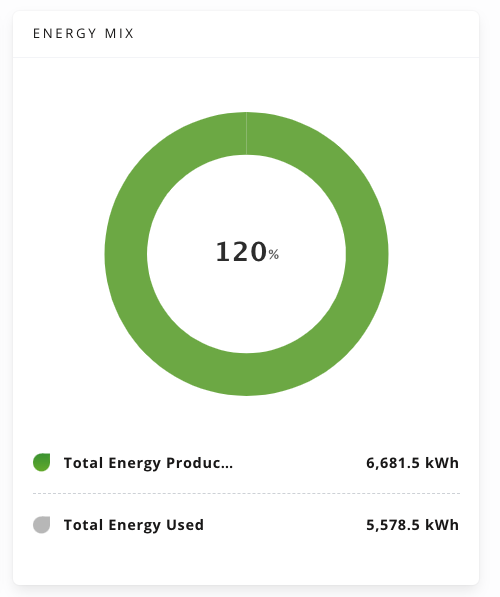
Both events worked against the idea of net-zero energy usage, as 'a)' implied excessive use of electricity and 'b)' meant lots of clouds and lesser generation of solar power.

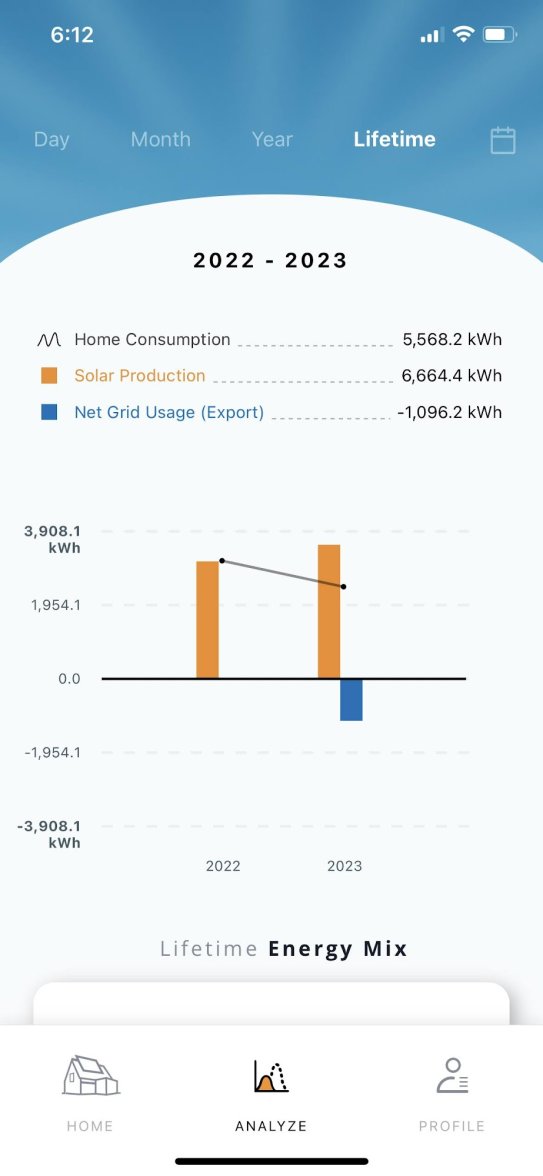
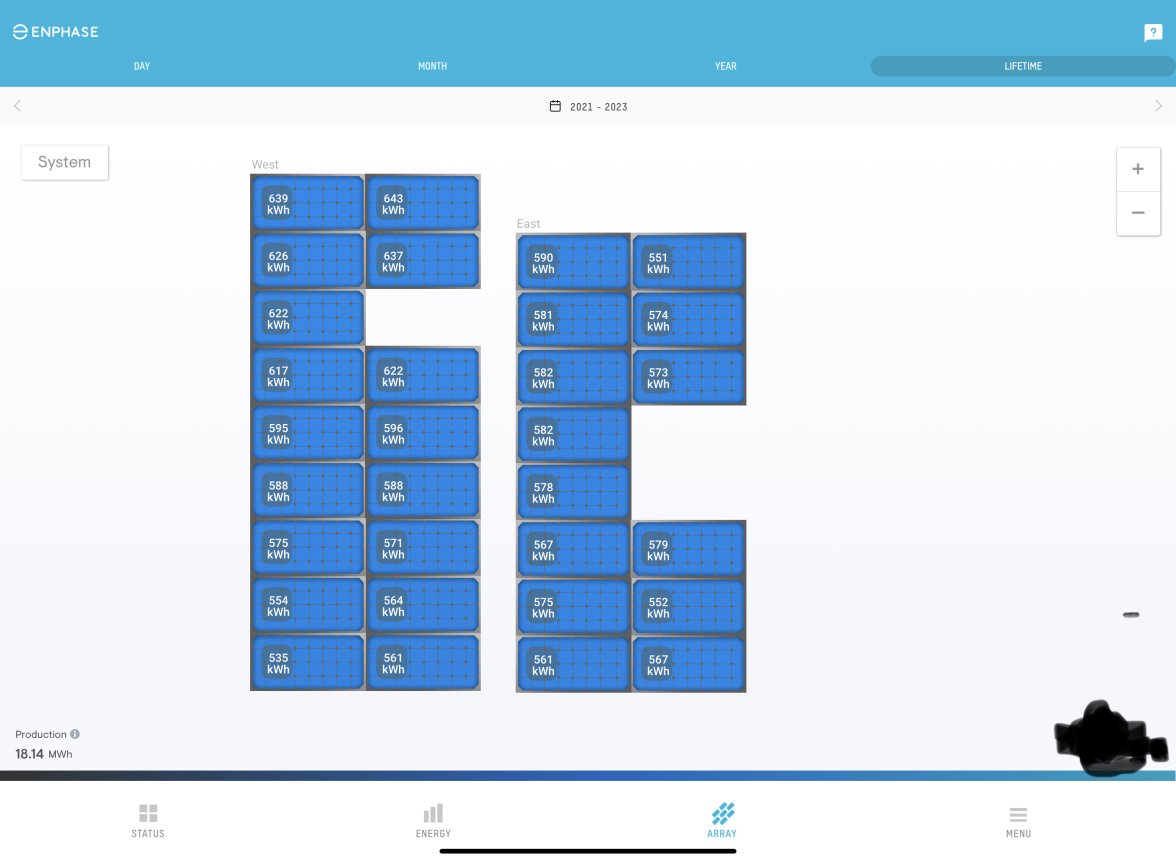
Yet, the solar panels produced all the electricity we used (precisely 120%), which is an excess of 1,000 kWh.

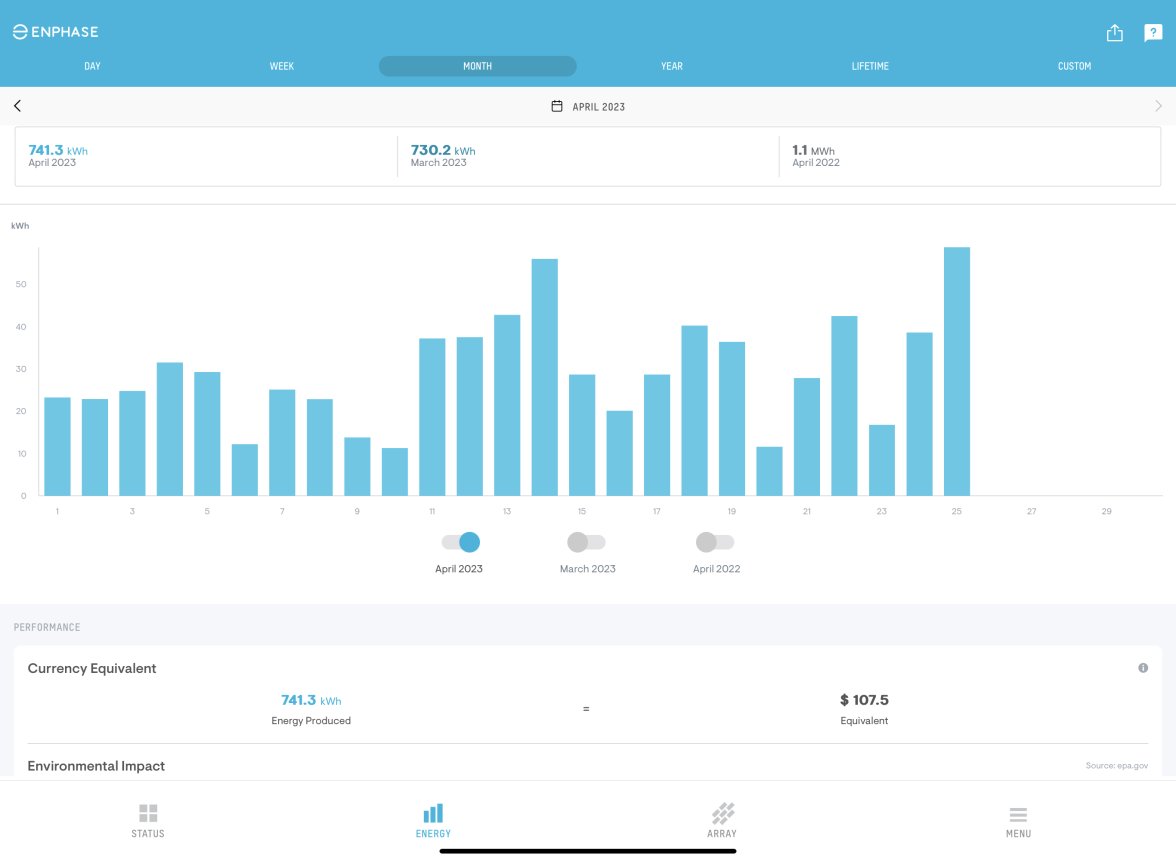
We still have near 3 months before the hot summer and the panels should be able to generate even more excess electricity in the coming weeks before July/August when AC has to run most of the time.

I started to research about heat pumps targeting using the excess energy to generate heat, so that could avoid burning fossil fuel during the winter for heat.
I rather save the gas juice (or recycled dinosaurs) for my motorcycles than wasting it for heat.
 
Posts
444
Likes
751
== Why solar is not widely deployed? ==

There are three things working against solar in the USA:
a) Unlike fossil fuel where you pay as you go, with solar you got to pay upfront the cost of the system.

b) Until fairly recently, the cost per kWh was pretty high. Fortunately the economies of scale are operating to bring the costs down. Today the most expensive component is labour,
not the panels themselves.

c) Policies and politics working against the solution.

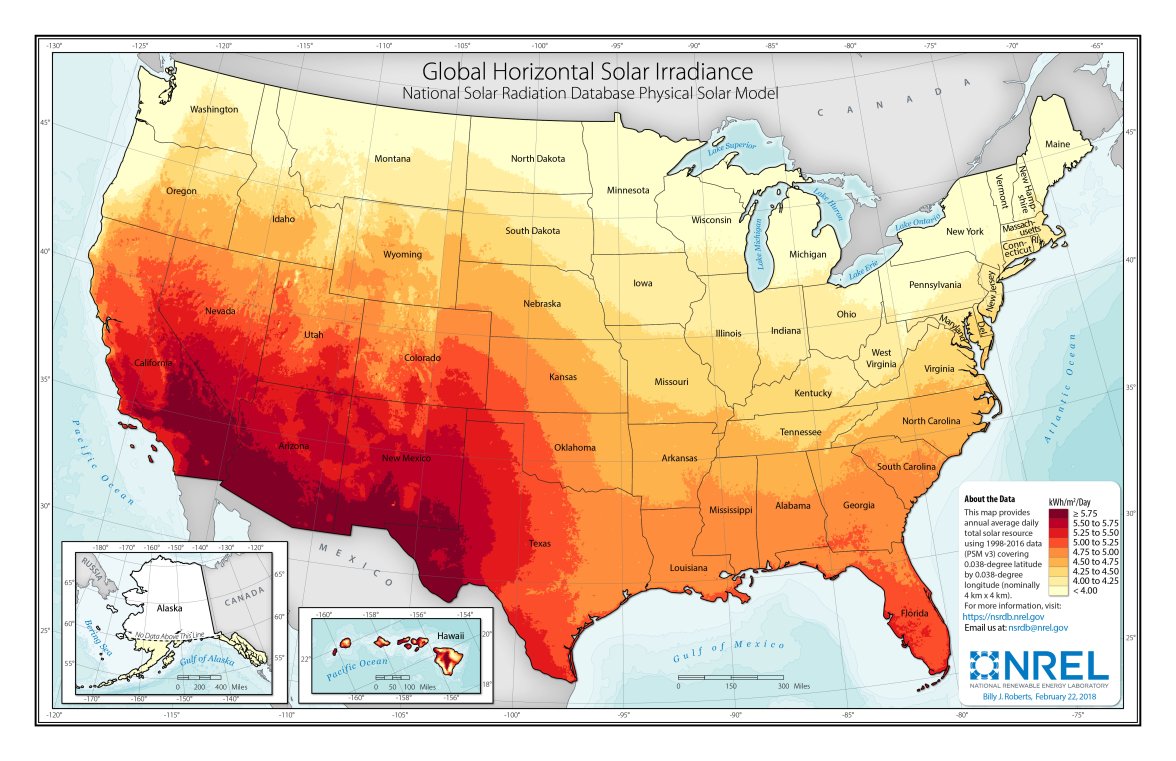
So looking in the USA map, if you are in an orange/red area, the odds of solar making sense are
pretty good (depending on policies of the utility company, if they have some sort of net metering
so you can use the grid as some sort of 'battery' to save energy credits during the spring time).

From this map, it is possible to see that California + Nevada + Arizona + Utah + Colorado + New Mexico + Texas + Florida
would be excellent for harvesting solar power.

Heck, even Kansas + Oklahoma + small part of Louisiana could potentially be good places for solar energy harvesting.

The main issue is that some of these States are run by politicians who have deep interests in
the oil industry, so they tell people that 'solar doesn't work', 'Ocasio Cortez will come for your hamburguer' or some other BS.

Other States, like California, are controlled by the utility company. PG&E got the
CPUC (State agency controlling energy in California and whose members are appointed by the Governor) to change the rules for net metering this month. That will allow them to pay 11x less
for the energy that your panels generate than what they charge back when you access the energy during the night.

That will effectively kill solar in California as it will only make sense if you have the panels paired with a huge battery to store the excess power locally instead of the grid.

Isn't that ironic that solar roof got kick started in California by a Republican governor (Arnold Schwarzenegger) and it was killed by a democrat governor (Gavin Newsom)?

I made my move in July last year because I learned that the net metering rules would change, so I was grandfathered into the old system for the next 15 years IIRC.

Energy prices in California are absurd. I pay between $0.33 to $0.45
per kWh (i.e. 3x more than is typical in Texas), as a result the payback of the system will be in 5 to 6 years.

But considering that energy is 3x cheaper in Texas, the payback would be 18 years
(i.e. 3x 6 years = 18 years). A good solar panel has a warranty of 25 years, that is guaranteed
at least 7 years of profit by going solar.

Probably more, as the solar panels should keep going way past the guaranteed 25 years.

My dream is to become self reliant on energy needs and not depend on the utility to have power.

In conclusion: solar is not a magic bullet. It will not work everywhere. Also, it is not the Anti-Christ. It may make sense for
sure in some areas.

Do the math and research the subject. It may be a good solution for you if the conditions are right.
 
Posts
444
Likes
751
When I say PG&E is worst than Satan, I'm not joking.

Check this out:
https://www.mercurynews.com/2023/04...-electric-customer-ratepayer-economy-utility/

It is a proposal to charge a fixed fee based on your income.

Quote: "
- Households earning less than $28,000 a year would pay a fixed charge of $15 a month on their electric bills.
- Households with annual income from $28,000 to $69,000 would pay $30 a month.
- Households earning from $69,000 to $180,000 would pay $51 a month.
- Those with incomes above $180,000 would pay $92 a month.
"

Last time I checked, I already pay a fortune in income taxes and sales taxes to California.

Basically PG&E wants to tax your income.

So even with the solar panels producing +111% of my electricity needs, if this proposal is approved by the CPUC (and it certainly will), PG&E will shaft me with a bill of $1104.00 per year for the privilege of having my house connected to the grid.

I already pay 10 to 12 bucks per month for a 'non by-passable fee to help maintain the grid'.

That is +$22K in 20 years, and for sure they will raise it following the inflation.

If I could, I would simply buy Tesla batteries (or Sunpower or LG) and go off-grid *but* in my county it is illegal to live in a city and being disconnected from the utilities.

If this goes through, the alternative I'm considering is to stop paying and have them disconnect the house from their grid.
angry.gif

I rather spend $22K and install batteries than paying even more money to PG&E.
 
Posts
444
Likes
751
== Conclusions ==

Would I go solar again? Definitely! My only regret is not going bigger on the size of the system. But apparently it is possible to add up to 1kW per year on the system while keeping NEM 2.0 (Net Metering) rules.

Did I overpaid for the system? Yep, a little bit. Mostly because I wanted a company that knew what they are doing, so I signed with a local installer that is in the business for quite a few years and they used to do roof installations so I realized that they could install the panels without destroying my roof. The company has almost 5 stars on Yelp and was pretty professional before/during/after the install.

Did you regret not installing batteries? Not really. Thanks to NEM 2.0 I use the grid as a battery. With the changed rules (NEM 3.0), having batteries is a must though.

What is next? Wait to complete 12 months of operation and inspect the numbers again. I can foresee installing heat pumps next to help save money and avoid pollution.
 
Posts
15,634
Likes
46,622
Clearing, then covering thousands of acres of land for the installation of solar panels that have a finite life expectancy of about 20 years, and cannot be recycled, is a strange way to “preserve the environment”!
 
Posts
444
Likes
751
Clearing, then covering thousands of acres of land for the installation of solar panels that have a finite life expectancy of about 20 years, and cannot be recycled, is a strange way to “preserve the environment”!
Hello there, @Canuck! I'm talking about rooftop solar here i.e. solar panels on top of the houses that already exist.

A decent solar panel should last over 30 years, way longer than what an average person lives in a single home. Plus, even after those 30 years, the panel will not self detonate... it will just generate less power (say, 92% to 85% of the original efficiency).

The alternative suggested by some people is to burn fossil fuel for those 30 plus years, which doesn't make sense in areas with good solar potential.
Edited:
 
Posts
1,956
Likes
5,913
We have solar here in southern NM... our heating costs during winter are between $15 and $25/month... from April thru Oct we are getting anywhere from $150 to $225 in credit from EPE (our utilities company) while using our one ton roof AC unit 24/7.

27 panels on our roof, all installed by the former owners the year before we bought the place.

By the way, incorrect to assume that places like Minnesota or Montana are poor choices... lots of sunny days during those subzero months and many sunny days during the summer as well -- we lived in Saint Paul and MPLS and knew/know many folks with solar.
 
Posts
34,814
Likes
39,380
Clearing, then covering thousands of acres of land for the installation of solar panels that have a finite life expectancy of about 20 years, and cannot be recycled, is a strange way to “preserve the environment”!
Not sure where you got the can’t be recycled bit from, in several states in Australia it is in fact illegal to not recycle them and they can’t be accepted in landfills. They’re aluminium, glass and plastic all three of which are widely recycled.

And yes that is how you spell aluminium.
 
Posts
1,956
Likes
5,913
Not sure where you got the can’t be recycled bit from, in several states in Australia it is in fact illegal to not recycle them and they can’t be accepted in landfills. They’re aluminium, glass and plastic all three of which are widely recycled.

And yes that is how you spell aluminium.

Al-Loo-Min-E-Ummm.
 
Posts
444
Likes
751
@SC1 excellent report! I'm really interested in hearing from people who live further North.

It is a bit hard to find good numbers and honest reports that are not tweaked to tell a story (either in favor or against solar panels).
 
Posts
1,956
Likes
5,913
@SC1 excellent report! I'm really interested in hearing from people who live further North.

It is a bit hard to find good numbers and honest reports that are not tweaked to tell a story (either in favor or against solar panels).

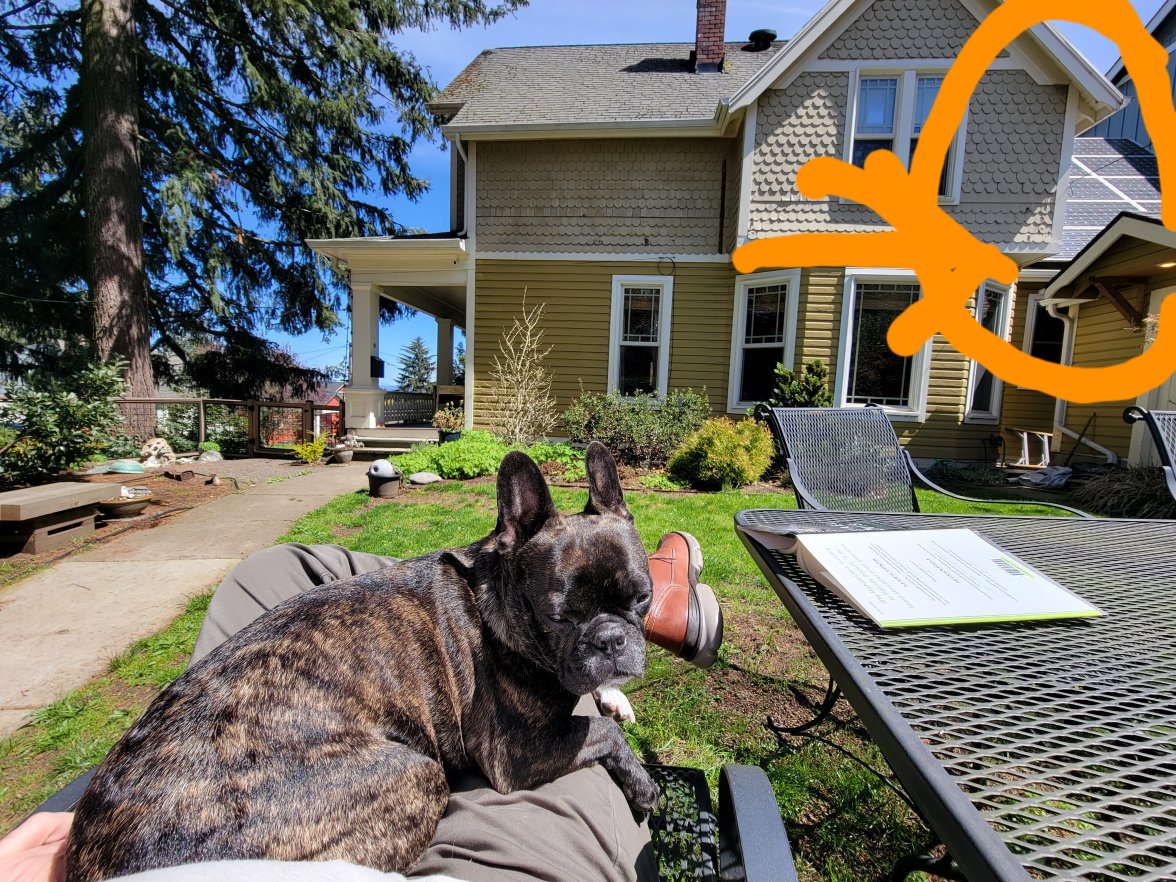
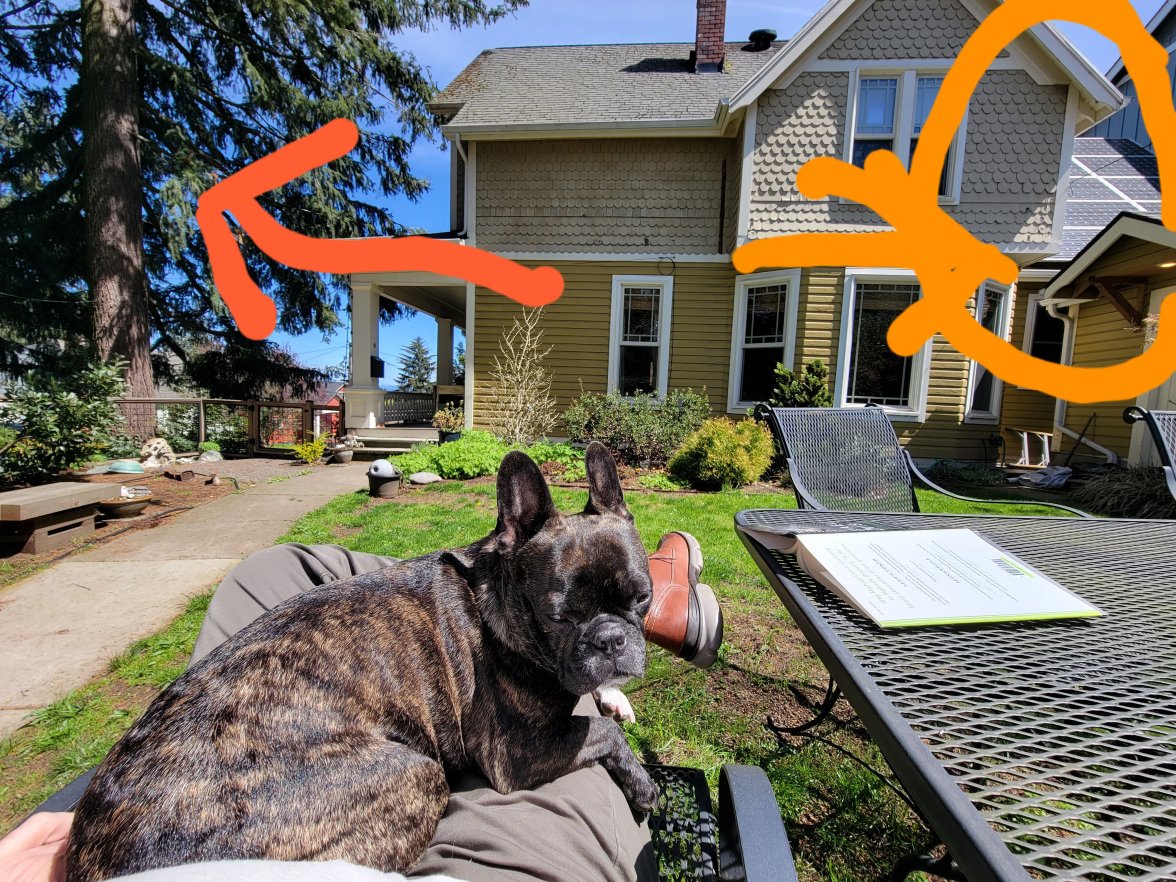
Even more compelling -- the decade we resided in Portland, Oregon and the PNW, so many houses with panels yet one of the single most overcast areas in the USA.
 
Posts
6,300
Likes
21,485
Even more compelling -- the decade we resided in Portland, Oregon and the PNW, so many houses with panels yet one of the single most overcast areas in the USA.

Part of the reason was cost. Here in PDX, we had lots of credits: Energy Trust, State and Fed. We also had a group buy. A few people got a bunch of neighbors to go in on a big buy to get a group discount. I ended up out of pocket less than 1500 for about a 13k price. It was a no brainer.

To be eligible, we had to have a sunlight survey to check if our roof received X amount of light throughout the day. (This was maybe 7 years ago and I don't remember the details.) We also needed an estimated 10 year remaining life left on the shingles.

Back then we purchased the equipment. Today there's leasing options to bring down the price.

Drove through Vermont years ago and they had fields of panels (no trees were harmed.) If anyone lives out there maybe they could comment.

I confess to being a bit downbeat when thinking about how much electricity is being consumed by Bitcoin mining. My little system is a joke compared to what they're burning up. But all I've done to maintain ours is the occasional washing of the panels. Occasionally I will look at the inverter to see what's cooking but mostly I forget it's there. It'd make more money sense in Hawaii or the sunny south.

We did see the sun today. Two days in a row now!

 
Posts
1,956
Likes
5,913
Part of the reason was cost. Here in PDX, we had lots of credits: Energy Trust, State and Fed. We also had a group buy. A few people got a bunch of neighbors to go in on a big buy to get a group discount. I ended up out of pocket less than 1500 for about a 13k price. It was a no brainer.

To be eligible, we had to have a sunlight survey to check if our roof received X amount of light throughout the day. (This was maybe 7 years ago and I don't remember the details.) We also needed an estimated 10 year remaining life left on the shingles.

Back then we purchased the equipment. Today there's leasing options to bring down the price.

Drove through Vermont years ago and they had fields of panels (no trees were harmed.) If anyone lives out there maybe they could comment.

I confess to being a bit downbeat when thinking about how much electricity is being consumed by Bitcoin mining. My little system is a joke compared to what they're burning up. But all I've done to maintain ours is the occasional washing of the panels. Occasionally I will look at the inverter to see what's cooking but mostly I forget it's there. It'd make more money sense in Hawaii or the sunny south.

We did see the sun today. Two days in a row now!


Most sun-starved I've ever been, like seriously crazed starved, was that decade in PDX -- which is why I went 180 degrees the other direction and moved us into a place with like 15 overcast days per year.
Now I could use more grey days... humans are such assholes with wanting perfection.
 
Posts
6,300
Likes
21,485
Most sun-starved I've ever been, like seriously crazed starved, was that decade in PDX -- which is why I went 180 degrees the other direction and moved us into a place with like 15 overcast days per year.
Now I could use more grey days... humans are such assholes with wanting perfection.


We have big trees. 😁

 
Posts
5,000
Likes
18,558
I've renovated my house. Triple glass, isolation, heatpump (still on the waiting list, takes more then a year to get one) and 8 solar panels. I bought them for eur 5300 and they should generate around 3200 kwh. That's what I use every year. I live in Amsterdam by the way. I got EUR 900 back from VAT. And the energy company pays me for the the solar energy I dont use and give back to the network. Energy prices were crazy last year because of the war in Ukraine. In december 2022 I paid more then eur 1000 for gas and electric.