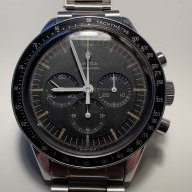
Gilt dials

Posts
226
Likes
529
I’ve been reading about old gilt dials, manufacture process, etc and have one big question unanswered… what are their major drawbacks (other than price)? Do they scratch more easily? I’ve seen they can tan/ become tropical and flake?

Thank you for your help!
 
Posts
13,223
Likes
22,989
They’re not common in good condition and imo a greater proportion seem to have light surface damage/scratches compared to silver/cream dials.
I don’t know whether this is because they’re slightly more prone to wear, or whether very slight imperfections are simply easier to see on the gilt/gloss finish compared to silver dials from the period.
 
Posts
226
Likes
529
Would you consider them a collectors item?
Or intended to be a work horse and worn more regularly? The case should protect the dial, yes? Or would just exposure to UV cause additional degradation?
Edited:
 
Posts
13,223
Likes
22,989
If well maintainer and worn with sensible precautions, there’s no reason pretty much all vintage Omega from the 50’s onwards can’t be daily wearers.
 
Posts
24,511
Likes
54,475
Generally speaking, they are desirable. Why do you think they would have major drawbacks?
 
Posts
226
Likes
529
Usually every positive quality has a corresponding drawback.
 
Posts
1,474
Likes
6,482
Usually every positive quality has a corresponding drawback.

Of course. And in the case of these vintage (black) gilt dials, it’s the fact that relatively few of these have been made. Consequently costly too.
 
Posts
13,223
Likes
22,989
Supply and demand. Much fewer black dial variants were made in comparison to their silver dial counterparts and modern tastes seem to prefer black dials.