Unless you live in a cave, can you explain the use of a 24hr indicator?
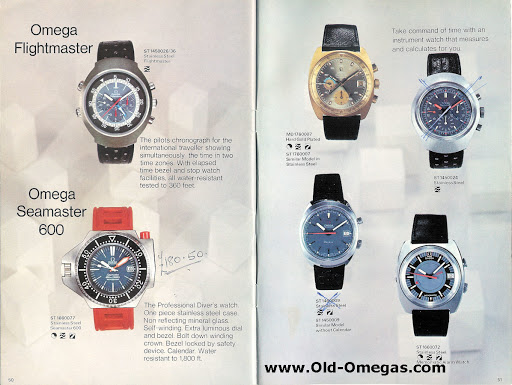
The only time I have found it useful is to set the date, and the Flightmaster doesn’t have the date.
Would love to chat about that
😁
To first level-set the discussion: we’re here talking about the relative utility of mechanical watch complications, where “relative utility” is a pretty narrow bandwidth.
That said:
Most GMT or second time-zone watches utilize a 24hr hand (rather than the flightmaster’s 12hr hand) precisely in order to both (1) actually display true GMT-based times (which are based on a 24hr format), and perhaps more important (2) have, on the face of the watch, accurately displayed time.
To explain (2) above: a 12hr hand does not alone accurately tell the time. Instead, the watch itself only tells the user that, in the 12hr format, it is
either [X] time in the first 1/2 of the day or [X] time in the second 1/2 of the day. The watch-wearer must reference third source information to actually and accurately tell the time (eg, look outside and see if it’s daylight).
The Flightmaster has an independently adjustable second time hand, a rather unique complication at the time of its manufacture. As would later be seen in the Rolex GMT II and others with independently set second time hands, it made for a rather useful dual-time device that could be used for both pure “GMT” time (a 24hr time-telling approach) or for any other second time zone using the 24hr format.
If it had the 24hr indicator.
And these accuracy/error issues are not purely theoretical: it is, after all, why 24hr time formats are used wherever accurate time-telling is important (military time, NASA mission time, medicines, naval and aeronautic uses, etc., etc.)
Its additionally the case that being unable to tell time using daylight is not a problem limited to only a cave environment: daylight is an unavailable third reference point near the poles, flying at high speeds or at altitude, underwater, etc. (The international space station experiences > 45+ sunrises/sunsets in the course of a 24hr day.)
(Further but a bit of a different matter: large portions of the world actually
use 24hr time rather than 12hr time, the latter being a largely British/colonial introduction.)
So, these are all roughly the reason I say the flightmaster should have a 24hr indicator to make sense of its second-zone 12hr hand.
As I understand it, Omega changed this design for another reason critical to such accuracy/error sensitive environments: a running second hand provides confirmation the watch is still running at all.
However, that Omega deleted the 24hr indicator to provide running seconds was a bit of a “one step forward two steps back”.
Possibly why an otherwise innovative watch/movement (designed by Alfred Piguet) did not ultimately have a long runway (bad pun unintended).
To be fair, designing watches for these uses was a rather new venture at the time, and there were winners and losers depending on design approaches relative to utility. In the main, watches that utilized a 24hr second time/GMT hand tended to “win out” compared to watches that attempted instead a second 12hr hand + 24hr indicator.
But least successful were watches with 12hr second time hands and no 24hr indicator
😁