Do we really have a "copyright" on pics we post?

Posts
18,202
Likes
27,530
Thanks gents, those protections are fair, I also find it more than fair to require pictures to stay up when people use the forum to sell items.

There’s another example I have in mind.

Some time ago I posted screen grabs of a certain watch sold on Ebay. I posted the Ebay price screen and pictures with no comment, just to record a hefty price achieved in a public sale.

Another member then found that archival info from the manufacture indicated the watch was not born with its current desirable and distinctive black dial —as the archive recorded a different dial color.
There ensues a discussion across various threads about speculative restorations with transplanted dials.

A couple of weeks later I received a private message from someone who had just joined the forum. He said he was the buyer of the watch (I realized we follow each other on Instagram although I don’t know him).
He had found out through the forum the dial was a graft, said he obtained from the seller the original dial, shared a nice picture privately, and was now asking me as a favor to remove the Ebay pictures I had published or at least the pictures showing serial numbers of “his” watch. Did not volunteer plans for the distinctive black dial now being set free.

I did not remove those pictures. Those pictures were published freely to the entire world for a public sale, the serial numbers give historical dating information and they carry relevant evidence. I suggested he post his end of the story- but he did not.
In this instance, if anyone came and said “I’m the copyright owner” I think my reply would be “sue me”.
Nope he is not a copyright holder of anything.
 
Posts
6,649
Likes
52,273
"I did not remove those pictures."

The photographs were inconvenient because they didn't fit the narrative someone was wishing to maintain as the "proper" history of a watch. It was appropriate to leave the photographs in place in order that the watch's entire story be available.
 
Posts
913
Likes
8,049
@Syrte your re-use of photos that are owned by someone else seems like a good example of the 1st of 4 elements of the ”fair use doctrine”. Your educational transformative use is actually why the non-owner wants them removed!

https://www.copyright.gov/fair-use/more-info.html
  • Purpose and character of the use, including whether the use is of a commercial nature or is for nonprofit educational purposes: Courts look at how the party claiming fair use is using the copyrighted work, and are more likely to find that nonprofit educational and noncommercial uses are fair. This does not mean, however, that all nonprofit education and noncommercial uses are fair and all commercial uses are not fair; instead, courts will balance the purpose and character of the use against the other factors below. Additionally, “transformative” uses are more likely to be considered fair. Transformative uses are those that add something new, with a further purpose or different character, and do not substitute for the original use of the work.

Thanks gents, those protections are fair, I also find it more than fair to require pictures to stay up when people use the forum to sell items.

There’s another example I have in mind.

Some time ago I posted screen grabs of a certain watch sold on Ebay. I posted the Ebay price screen and pictures with no comment, just to record a hefty price achieved in a public sale.

Another member then found that archival info from the manufacture indicated the watch was not born with its current desirable and distinctive black dial —as the archive recorded a different dial color.
There ensues a discussion across various threads about speculative restorations with transplanted dials.

A couple of weeks later I received a private message from someone who had just joined the forum. He said he was the buyer of the watch (I realized we follow each other on Instagram although I don’t know him).
He had found out through the forum the dial was a graft, said he obtained from the seller the original dial, shared a nice picture privately, and was now asking me as a favor to remove the Ebay pictures I had published or at least the pictures showing serial numbers of “his” watch. Did not volunteer plans for the distinctive black dial now being set free.

I did not remove those pictures. Those pictures were published freely to the entire world for a public sale, the serial numbers give historical dating information and they carry relevant evidence. I suggested he post his end of the story- but he did not.
In this instance, if anyone came and said “I’m the copyright owner” I think my reply would be “sue me”.
 
Posts
7,651
Likes
21,952
@Syrte your re-use of photos that are owned by someone else seems like a good example of the 1st of 4 elements of the ”fair use doctrine”. Your educational transformative use is actually why the non-owner wants them removed!

https://www.copyright.gov/fair-use/more-info.html
  • Purpose and character of the use, including whether the use is of a commercial nature or is for nonprofit educational purposes: Courts look at how the party claiming fair use is using the copyrighted work, and are more likely to find that nonprofit educational and noncommercial uses are fair. This does not mean, however, that all nonprofit education and noncommercial uses are fair and all commercial uses are not fair; instead, courts will balance the purpose and character of the use against the other factors below. Additionally, “transformative” uses are more likely to be considered fair. Transformative uses are those that add something new, with a further purpose or different character, and do not substitute for the original use of the work.
Thanks @GregH for this informative reference and analysis. The whole forum actually gets credit for further « transformative use ». Also good to know this could apply not just to Ebay but also to material distributed by major auction houses, including pictures or statements emailed privately in «condition reports ».
Edited:
 
Posts
29,671
Likes
76,828
Interesting discussion. I do watermark my photos, although sometimes that doesn't do much. Years ago I posted this photo on a brand specific watch forum (that no longer exists) showing wear in an ETA 2824-2 on the barrel bridge where the crown wheel rides:


Some time after this, an article appeared in a trade magazine warning of this problem, and using what appeared to be a cropped version of my photo:


I contacted the magazine and expressed my concern, showing how the original photo in the magazine had been cropped to remove my watermark:


They said that they would investigate, and they later got back to me relaying a message from the article's author. He claimed that the photo was sent to him by someone (he didn't say who) and was already in it's cropped form when he used it. He apologized, but the publisher really didn't offer up much of anything in the way of an explanation other then relaying the message from the author - the lack of concern was disconcerting to say the least. The author was also a member of that same forum where I posted this photo, and a member of his family runs the brand service center for that same forum brand, so my conclusion on the whole incident was very different from what they presented...

Cheers, Al
 
Posts
24,246
Likes
53,990
@Archer

You're so right. Once photos are inappropriately cropped and posted/published, it can become very difficult to identify the original source of the image, and any subsequent use of the cropped image can be very difficult to control, even by well-meaning people.

I would be hard-pressed to find the thread now, but I recall once posting an image on the WUS vintage forum to illustrate some point or other. Well, another member then became angry with me for cropping his watermark out of the image and failing to give him credit. Of course, I had found the photo already cropped in a Google Images search, and had no idea it was originally a part of his image. I explained the situation to him, and sent him the link so he could verify my story, and of course he understood ... we are good on-line friends now. 😀
 
Posts
1,699
Likes
1,654
@Syrte your re-use of photos that are owned by someone else seems like a good example of the 1st of 4 elements of the ”fair use doctrine”. Your educational transformative use is actually why the non-owner wants them removed!

https://www.copyright.gov/fair-use/more-info.html
  • Purpose and character of the use, including whether the use is of a commercial nature or is for nonprofit educational purposes: Courts look at how the party claiming fair use is using the copyrighted work, and are more likely to find that nonprofit educational and noncommercial uses are fair. This does not mean, however, that all nonprofit education and noncommercial uses are fair and all commercial uses are not fair; instead, courts will balance the purpose and character of the use against the other factors below. Additionally, “transformative” uses are more likely to be considered fair. Transformative uses are those that add something new, with a further purpose or different character, and do not substitute for the original use of the work.

This is a fairly tricky thing. It's not even clear to me what jurisdiction applies. Wherever the seller lives, because they were his pictures? Wherever Ebay is registered? Where Syrte lives (France, if I remember right)? Australia because that's where Omegaforums is?
 
Posts
7,651
Likes
21,952
@Archer that is pretty disgraceful. And it’s clear that with a traditional paper publication the remedy isn’t obvious. One would imagine it would be easier to depublish things on line, but I wonder whether it works.
All best
 
Posts
7,651
Likes
21,952
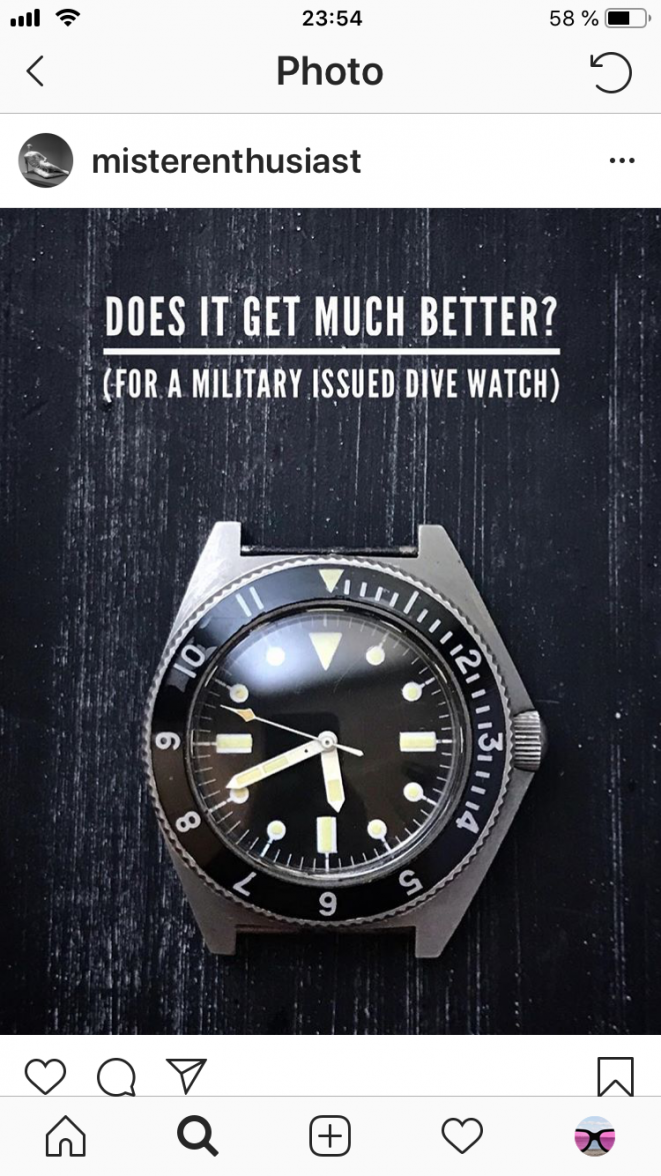
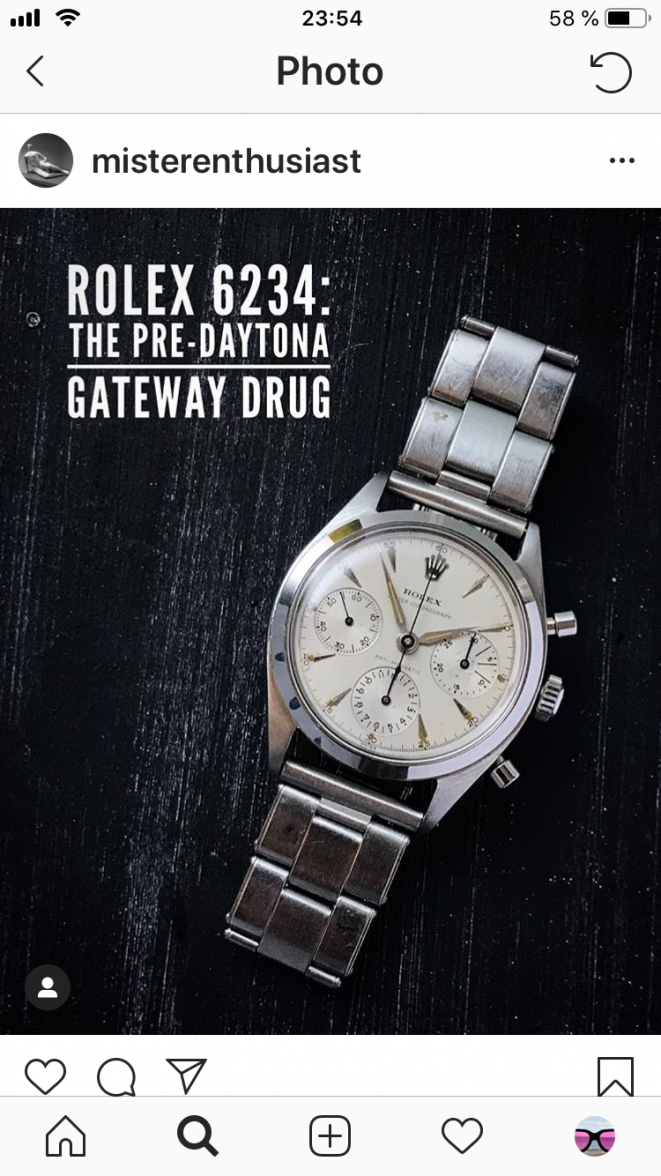
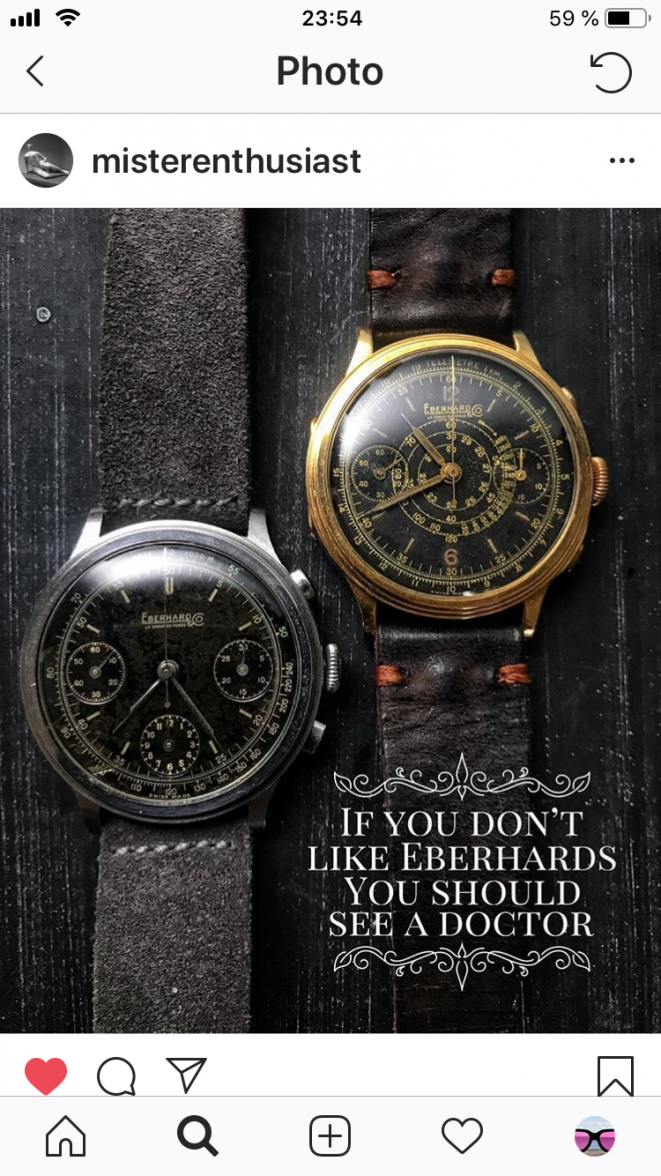
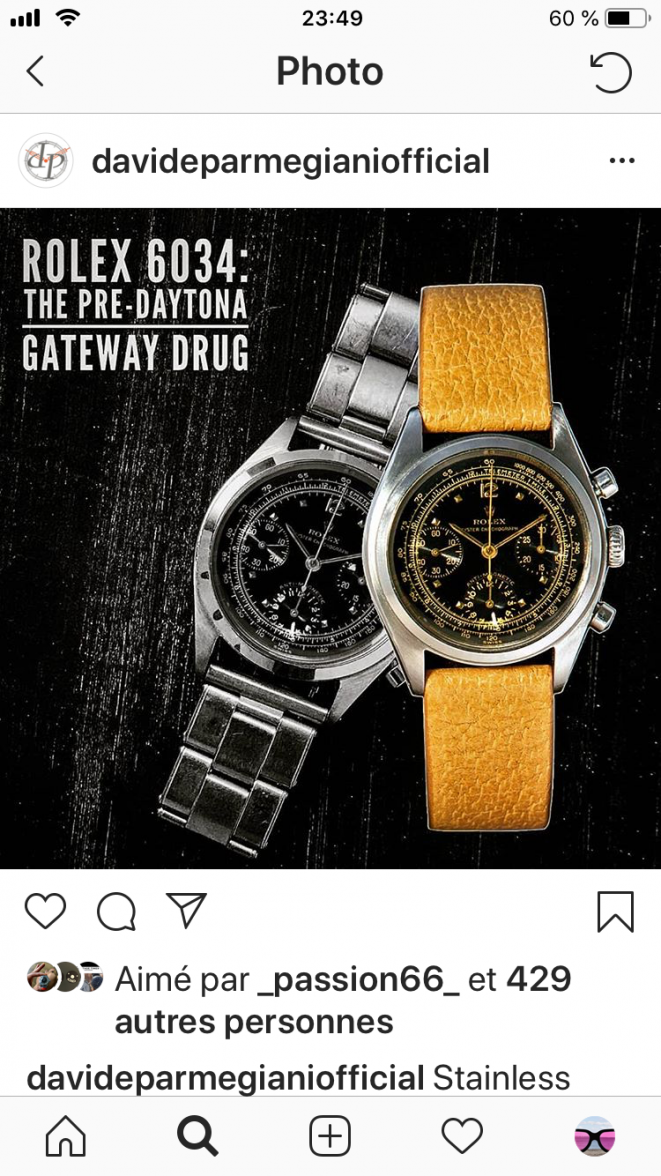
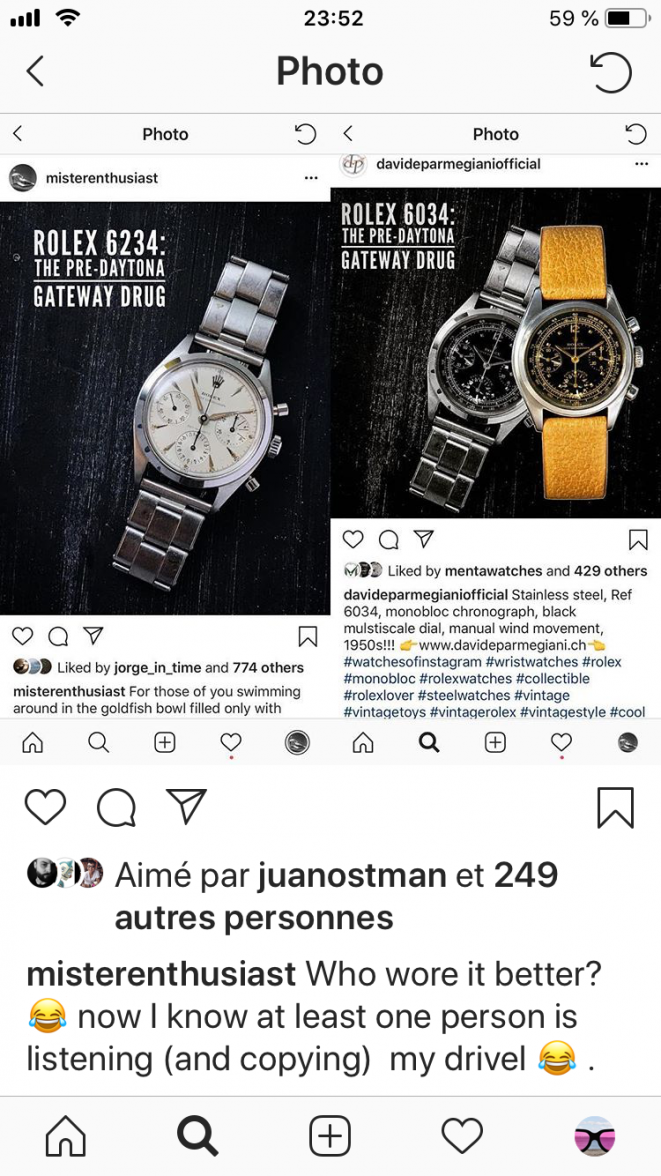
This was a very glaring copyright infringement on the part of a major Swiss dealer - Davide Parmegiani.
They literally stole and doctored a picture created in a very distinctive style by a watch enthusiast who is also a photographer with a prior career in advertising.
Doesn’t get more obvious that this. Shame on those Parmegiani guys.

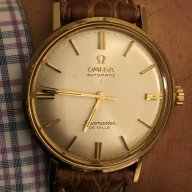
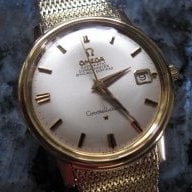
Below @Mr. Enthusiast’s creations, before and after Parmegiani stole and photoshopped one of them.
Edited:
 
Posts
625
Likes
999
This was a very glaring copyright infringement on the part of a major Swiss dealer - Davide Parmegiani.

This is more difficult, he is not actually copying the picture, but merely the composition. From a UK perspective, I don't think this would be infringing on his copyright.

But it is a tasteless.
 
Posts
7,651
Likes
21,952
This is more difficult, he is not actually copying the picture, but merely the composition. From a UK perspective, I don't think this would be infringing on his copyright.

But it is a tasteless.
He is copying everything but the watch. He took the background, the caption and title, the typeface, the position of the watch on the picture.
If that’s not copyright infringement I don’t know what is.
 
Posts
18,202
Likes
27,530
He is copying everything but the watch. He took the background, the caption and title, the typeface, the position of the watch on the picture.
If that’s not copyright infringement I don’t know what is.
its called a derivative work... outside of fair use, they are generally not allowed.
 
Posts
625
Likes
999
its called a derivative work... outside of fair use, they are generally not allowed.

He is copying everything but the watch. He took the background, the caption and title, the typeface, the position of the watch on the picture.
If that’s not copyright infringement I don’t know what is.

I would argue that although some elements are the same, the major focus of the (the watch) displays sufficient originality to not be infringing (at least in UK law). But this is really at the heart of copyright and IP cases generally, there is allot of scope for debate and manoeuvre, which is why it is so expensive to pursue through the courts.
 
Posts
18,202
Likes
27,530
I would argue that although some elements are the same, the major focus of the (the watch) displays sufficient originality to not be infringing (at least in UK law). But this is really at the heart of copyright and IP cases generally, there is allot of scope for debate and manoeuvre, which is why it is so expensive to pursue through the courts.
It is considered a derivitive work. The back ground and watch is exactly the same, they just photoshoped a new dial on to it, and added a second watch with the same photoshoped dial color changed.
 
Posts
7,651
Likes
21,952
I would argue that although some elements are the same, the major focus of the (the watch) displays sufficient originality to not be infringing (at least in UK law). But this is really at the heart of copyright and IP cases generally, there is allot of scope for debate and manoeuvre, which is why it is so expensive to pursue through the courts.
So if you do an advertising campaign and somebody uses all of the graphic elements that characterize the campaign but just swap the products there is no theft of a creation?
I would consider the watch here is not the main element, to me the main element is the staging of the watch. I shd try and see what it’s like in France...

PS- are you an IP lawyer? I’m not.
 
Posts
572
Likes
754
Depends on the product, use, and country. It even applies to the name in some cases.

I can recommend some great books on it lol.

Example. I could make a water purification system called Rolev Reverse Osmosis light emitting Viltration and call my process Viltration.

As long as my logo did not look like Rolex I’m in the clear as no one would confuse my company with Rolex and would not cause brand dilution. If I made a watch with that name it would be considered brand dilution and not allowed. Regardless of logo and symbol.

In the US Olympia and Olympic cannot be used in any form unless your company is in the Olympia area of Washington State as the US Olympic Committee has locked down any use of those 2 terms as causing brand dilution.
That is a trademark issue, not a copyright issue.
 
Posts
625
Likes
999
It is considered a derivitive work. The back ground and watch is exactly the same, they just photoshoped a new dial on to it, and added a second watch with the same photoshoped dial color changed.

What is below are my notes on the subject from my revision before I took my exams, I have omitted some irrelevant parts, but I think it gives somewhat of a brief overview of Copyright law and infringement.

Introduction
Copyright protects creations of the human mind in a very wide sense; Copyright doesn’t protect ideas - only expression of ideas. Copyright is protected in the UK by the CPDA 1988. It is divided into two categories; Authorial (Literary, Dramatic, Musical, Artistic) and Entrepreneurial (Sound recordings, Films, Braodcasts, Typograhpical).

In our case, photographs would fall into authorial artistic works.

General Protection
  1. Work must be recored in a material form
  2. The work must be
    1. Authorial works: Original
      1. Chistoffer v possiden film - labour, skill, effort and pre-expressive stage
      2. Can be new works, derivative works or copied works
  3. The work must be sufficiently connected to the UK
  4. The work must be not excluded from protection on public policy grounds
Clearly, in this case the original photograph is protected under UK law (if it is sufficiently connected to the UK, which in this case I will assume).

Infringement
When a person other than the author does anything which is reserved by the law. In this case this would be distribution to the public. These parts of my notes are extensive, and this is heavily litigated upon. I will reproduce my original lecture notes here, and you can take your own view.
  • The test is; There is a 'causal connection between the defendants work and copyright work
    • D's work was derived from the copyright work
  • What is a 'causal connection'
    • Causal link between the work used by the defendant and the copyright work
    • Burden of proof on the claimant
      • Direct evidence
        • that the defendant used the copyright work to produce their own
        • Very rare, most usually ex-employee proving that they had been asked to produce something similar to © work
        • Very difficult to make out, do not use in exam.
      • Derivation inferred
        • from the similarities between the two works and the fact that the defendant had access and opportunity to copy the copyright work
        • IPC Media v Highbury
          • The greater the similarities between the alleged infringement and the © work, the greater the prospect of copying being inferred
      • BUT Similarities do not necessarily indicate copying,
        • 'objective similarity' is the test used
          • E.g. Same mistakes in the © work
          • Same arrangement of materials
        • Benchmark of 70% similarity, but really varies depending on what has been copied.
  • 'substantial part of the work'
    • The infringing action must have been carried out in relation to the work or a substantial part of it
      • Designers guild v williams
        • Substantially is a matter of impression principally concerned with a works derivation
      • Quality over quantity
        • No need for the majority of the work to be copied
    • Depth of protection
      • Authorial works; it is possible to abstract from the final work to find the elements that cannot be copied without breaching ©
        • Artistic works: Krisaris v Briafine
          • The choices of the artist that make the work an original contribution e.g.. The viewpoint, the balance of foreground etc.
    • Has the defendant used the whole work or a substantial part of it?
      • Identical Copy - Infringement
      • Substantial
        • The part must be important --> in the copyright work, not the defendants
          • The importance of the part copied needs to be important in the original work and not the copied work.
          • Francis day and under v 20th centruy fox
            • Using the title of a song as title for a film does not brecah ©
            • British law does not protect names with ©
        • Repeated takings
          • If many infringing parts are combined, then it will not become significant
          • Insignificant parts are assessed by a case by case basis
            • It is a loophole in the law
            • 10% is not a subsntaial part for the book (but you can copy it 10 times)
          • Significant parts are significant parts by themselves
          • Insignificant parts cannot be combined to make significant parts for the purposes of © either a pert is significant or it is not (Lord Gibson)
What I think
Firstly, it is important to define exactly what has been copied, and what hasn't been. What has been: The background, some of the typing, 1 of the watches case and bracelet. What is new: An entirely new watch dial, a new watch, new reference number, digital manipulation of the existing photo (to my eyes, the second looks darker, and case looks different).

Applying my notes above, I think that the benchmark of 70% similarity has not been reached, I also think the copied parts are not 'substantial' enough to be considered infringing, especially with the digital alteration. I might also draw your attention to the last two paragraphs of my notes, 'the importance of the part copied needs to be important in the original work'. I would argue that the important part of the original work is the watch dial itself, and the reference number, neither of which feature in the second photograph. I do agree though, it is probably quite close to infringing.

So if you do an advertising campaign and somebody uses all of the graphic elements that characterize the campaign but just swap the products there is no theft of a creation?
I would consider the watch here is not the main element, to me the main element is the staging of the watch. I shd try and see what it’s like in France...

PS- are you an IP lawyer? I’m not.

Again, it depends on the exact circumstance of the graphic elements and what has been copied. These cases are heavily dependant on the exact images which have been used.

I am not an IP lawyer, I studied Law at undergraduate (with a 1st in IP law) and currently completing my second Masters in Law.

Please do not rely on anything above as legal advice, these are just my lecture notes.

 
Posts
18,202
Likes
27,530
@Lucasssssss

I’ve been involved in many DMCA issues. It’s easier to look at that framework with the internet and flexibility of location on the internet.

In regards to what was done by modifying someone’s pictures... it would trigger a host or service to remove the pictures if a DMCA takedown was submitted. It could be fought by the infringing party which would then devolve to hosting location copyright laws. In the case fair use would most likely cover it and it would be ok as no profit could be argued... or it could be viewed as an advertisement and subject to penalty. I just doubt it would ever get that far.
 
Posts
625
Likes
999
@Lucasssssss

I’ve been involved in many DMCA issues. It’s easier to look at that framework with the internet and flexibility of location on the internet.

In regards to what was done by modifying someone’s pictures... it would trigger a host or service to remove the pictures if a DMCA takedown was submitted. It could be fought by the infringing party which would then devolve to hosting location copyright laws. In the case fair use would most likely cover it and it would be ok as no profit could be argued... or it could be viewed as an advertisement and subject to penalty. I just doubt it would ever get that far.

My knowledge of the DMCA is rudimentary at best, so I can't really weigh in here, but it seems to go some way to address the problem of copyright in an internet age. I might also add that finding a balance between fair use and protecting copyright is always difficult, and requiring a party to remove any pictures pre-trial seems onerous to me.
 
Posts
18,202
Likes
27,530
My knowledge of the DMCA is rudimentary at best, so I can't really weigh in here, but it seems to go some way to address the problem of copyright in an internet age. I might also add that finding a balance between fair use and protecting copyright is always difficult, and requiring a party to remove any pictures pre-trial seems onerous to me.

No it’s just the hosting company/service tends to default to support the complainant and ask for removal unless the website owner can provide otherwise. It’s a messed up but at least working most of the time process.