Defy Lab

Posts
29,681
Likes
76,840
If we look at BMW. Mercedes and Audi...many admire the technology both in the car and advanced manufacturing processes used to produce these products, and would not trade off the significant gains in safety, comfort and efficiency just to know that high level craftsman were used intensively to build the product. We admire German luxury cars for their attention to detail in product development and manufacturing. Agreed, they generate practical advances relevant for the owner, but still much of appeal and branding for these products is the aspiration to own something which has been engineered in every minute detail. Many of these details are also almost "pointless", but again they reflect the pursuit of excellence. Many admire engineering excellence and not just craftsmanship excellence.

Between my wife and I we have owned 10 BMW's that range from her first 1989 325xi, to my current 2017 M2. A lot has changed in that time with regards to the technology, and real world performance gains. However for me there is a downside to these technologies in some respects. I would rather have the hydraulic rack and pinion steering that was in my 2007 Z4M (M Roadster) than I would the electric steering that is in my current M2 - the road feel and feedback is just not as good with this steering and one could argue that because of this the point at which you lose grip can't be as easily determined. I'm not saying I want all the advances gone, because I don't want to go back to having the manual transmission without synchromesh, but I also don't really need the car to blip the throttle for me on downshifts like this one does, and I doubt anyone who has learned to heel toe wants this...

This brings me to another point, I do think it is pretty much inevitable that even "traditional" hand finishing and many aspects of watch assembly / repair will be probably be robotized in the next 10-20 years. So we may find ourselves in the odd situation of some actually looking for imperfections in finishing if we want to admire the human effort that has gone into a particular piece. I do think that in the future we may have a higher level of finishing at the Omega/Rolex price level or product positioning, with advanced robotic technology, perhaps almost at holy trinity level. The new watchmakers will be robot teachers / programmers.

Not much of the finishing on current high production watches is done by hand (I say not much because it depends on what you mean by "hand" work). Certainly not at the mid-tier brands like Omega and Rolex, and even with some of the top brands they really only do the hand finishing on more exceptional pieces. Using "robots" is not the way these operations are automated. A 5 or 6 axis robot is not the right kind of automation for these finishing operations. It's mostly done via hard automation - dedicated machines that are made to perform the finishing. For example creating Côtes de Genève the pieces to be decorated are mounted in jigs, under a rotating spindle that has abrasive paper disks mounted to it, and you press a button and the plates travel under the disk to create the stripe, index over, and then make another pass - carries on until the work is done. This method of finishing does not produce the same quality of finishing - it's obvious of you know what to look for, but most people don't. "Hand" finishing is not inferior as you would suggest.

In this hypothetical future, if a consumer can have a high precision mechanical watch with high level finishing/decoration, would they still feel the justification to purchase an inferior product in terms of quality/finishing, just because it was handmade?

As noted, this is not a hypothetical future - this exists now and yes people do pay a large premium for pieces that are hand decorated. Keep in mind that this forum is not reflective of the sort of collector I am referring to.

I think how recently you have become a watch collector may have a big impact on how you see these technological "advancements" in watches. My general feeling is that newer collectors tend to value this sort of thing more then those who have been in the game for many years. It's clear many brands, like Omega, are primarily catering to a younger demographic with their designs - it's all related.

 
Posts
2,152
Likes
3,810
but I also don't really need the car to blip the throttle for me on downshifts like this one does, and I doubt anyone who has learned to heel toe wants this...
I certainly don't think my F1 hero Ayrton Senna, if he were alive today, would want that level of driving automation...he certainly loved to heel toe and pump the throttle around the curves😀 But still, although I personally agree with your perception of loss of the direct mechanical driving interface, I think many of the current luxury German car consumers prefer technology shiny toys such as digital cockpits, and you are right they are targeting a younger consumer with these highly digital products.

"Hand" finishing is not inferior as you would suggest.

A 5 or 6 axis robot is not the right kind of automation for these finishing operations. It's mostly done via hard automation - dedicated machines that are made to perform the finishing.

No I am certainly not suggesting that hand finishing is inferior now, nor will be in the coming years. I was also not thinking about 6 axis CNC robots, I was just wondering whether humanoid type robots in the future would be able to a better job in terms of being able to reproduce constant precise movements without tiring (long shifts etc), integrated with standard industrial robots in the production line, but this is something I can only see being viable in around 20yrs or so.

BTW I am certainly not looking forward to that scenario...I really do think we are going to face some serious ethical questions with the advance of robots in our daily lives. I sincerely hope that human watchmakers prevail and that the luxury consumer will still want a product with a "human touch"...my fear is that with these large watch / luxury groups the temptation to automate and improve the bottom line will take them down the direction of reducing human work to a minimum on the production line.
 
Posts
29,681
Likes
76,840
BTW I am certainly not looking forward to that scenario...I really do think we are going to face some serious ethical questions with the advance of robots in our daily lives.

If you drop the word "robot" which is sort of misleading as people think of humanoid robots, we already are. People often think of automation as the humanoid robots you are referring to or robots replacing assembly line workers (spot welding car bodies for example or in the paint shop - two common applications of this kind of robot), but some of the biggest job losses of late due to automation have been in the financial industry where white collar workers are losing out to algorithms that now do the job better than humans can.

Maybe something more close to home that people can understand without having been in the manufacturing sector, is the ethics of programming who a self-driving car will choose to kill in certain accident scenarios. Are you okay riding in a car that is programmed to kill you rather than a pedestrian in the case where the accident is unavoidable? Who should decide who gets killed?

Yes, we will face big ethical questions as technology moves forward, and sooner than most think.

my fear is that with these large watch / luxury groups the temptation to automate and improve the bottom line will take them down the direction of reducing human work to a minimum on the production line.

Again it's already here. I can assure you that the Swatch System 51 was not designed as it's own end game. It's only the start of producing watches in a fully automated manner. It won't happen all at once - that's not how this sort of thing progresses. It's automating bits and pieces here and there, and eliminating FTE's along the way. I know as this used to be my job, and I have designed and installed many manufacturing processes that have eliminated jobs over the years, and yes that included purchasing, installing, and programming six axis Fanuc robots...even though it was 20 years ago I still remembered the specific model somehow...

https://www.robots.com/fanuc/m-710i

Used it to load and unload parts from a Kitako MT4-200 multi-spindle CNC turning center...

http://www.pridemachinery.com/machine_sales/kitako/images/KITAKO_MT4-200.pdf

Load and unload in the top 2 spindles while machining in the bottom 2 - made the machine very efficient as the only non-productive time was when the spindles indexed 180 degrees...
 
Posts
2,152
Likes
3,810
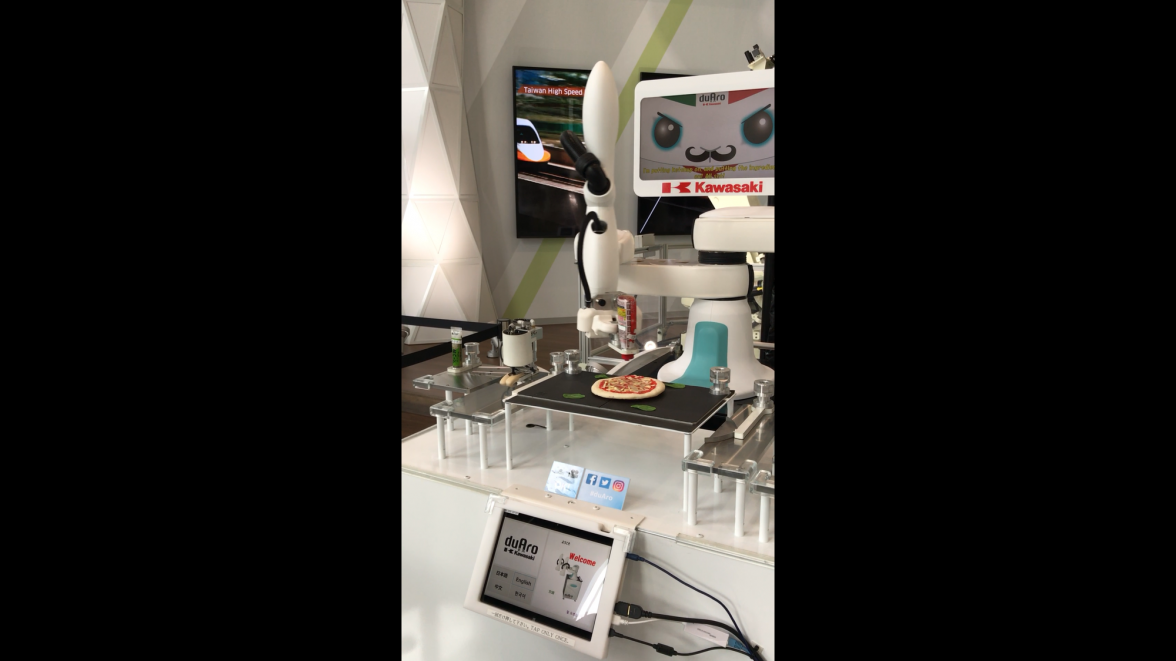
And they even attempt to make kids love and admire them🙄 During a recent family trip we visited the Kawaksi Robostage in Odaiba / Tokyo where they had friendly duAro robots pretending to make pizza...designed to "co-exist with humans" in the production environment.

Still shot from a video I took...
 
Posts
1,531
Likes
1,088
Ethical, social and other philosophical issues involved by "robots" and modern automatic production systems are main topics in current philosophical discussions. As far as I know, they are not really concerned by watchmaking though - much more by new automatic cars.

Concerning hand finishing on watch movements, I think Al made an important point. Thanks to some nice guys on a French speaking forum, I have learned (at my level, I am not Al!) to see the differences between a hand made decoration, anglage, etc., and a fair industrial one. Well, the differences are big!

But there is also a big gap between the quality of ancient and modern watches in the same brand. For instance, I currently own one VC, obviously not a museum piece, but I choosed a watch with a nice decoration, especially the Côte de Genève, which are much better ("softer") than the ones you can find on many current VC. I think the movement on my watch truly deserves its Poinçon de Genève. I am not sure every modern VC (and dare I say Patek?) do...

I cannot say in what extend this decoration was hand made, and obviously it is far, far from the quality of a Dufour. But you can see the difference with many modern "high end" watches. And if you dare touching the movements with your fingers (I hope you do not!), you could touch it as well!
 
Posts
2,446
Likes
7,040
. Thanks to some nice guys on a French speaking forum, I have learned (at my level, I am not Al!) to see the differences between a hand made decoration, anglage, etc.,
Bonjour François, do you have a link to that description?
 
Posts
1,531
Likes
1,088
Sure! It is in French, but those of you who do not speak Diderot's language can still see interesting pictures showing the differences.

By the way, "Steyr" is an engineer who was getting involved more and more into watchmaking. He spent months visiting manufactures and, in particular, whent on a course at Vianney Halter's. I enjoyed his posts and was very plesed to read his educated comments. He is no longer posting on this forum unfortunately.
The person who were in charge of this forum (it is no longer the case), "webmaster", teaches watchmaking at Genève. I think he teaches in particular how to make hand made anglages, etc. He worked before at manufactures such as Patek. There are several threads where he shows his work, but unfortunately most of the pics are no longer visible.

An article explaning the various ways (both industrial and artianal) to make decorations:
http://www.horlogerie-suisse.com/technique/la-terminaison-par-giulio-papi/l-anglage-1

Comments on this article:
http://forum.horlogerie-suisse.com/viewtopic.php?f=1&t=3865&hilit=anglage mains

Threads on the same topic:
http://forum.horlogerie-suisse.com/viewtopic.php?f=1&t=16181&p=166248&hilit=anglage steyr#p166248
http://forum.horlogerie-suisse.com/viewtopic.php?f=2&t=9905&hilit=anglage steyr&start=30

A comparison between anglages on an old and a recent JCL. Pretty obvious even if you do not speak French!
http://forum.horlogerie-suisse.com/viewtopic.php?f=2&t=17385&hilit=anglage steyr&start=15

And a very interesting page (from another source), which compares decoration from different manufactures and from Dufour's watches. Well, "les images parlent d'elles-mêmes"!
http://www.network54.com/Forum/125316/message/1126721648/Look very closely..
 
Posts
4,114
Likes
16,324
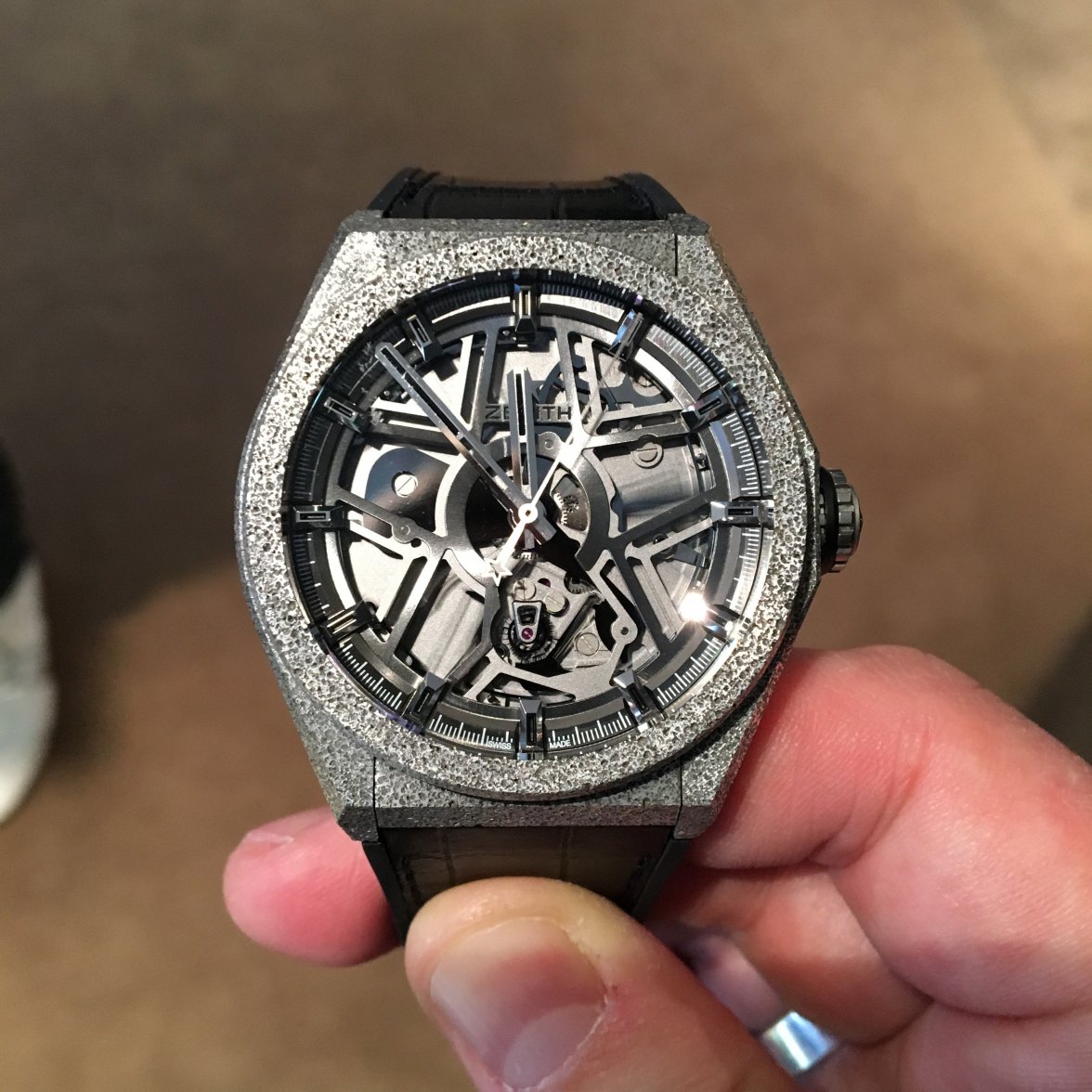
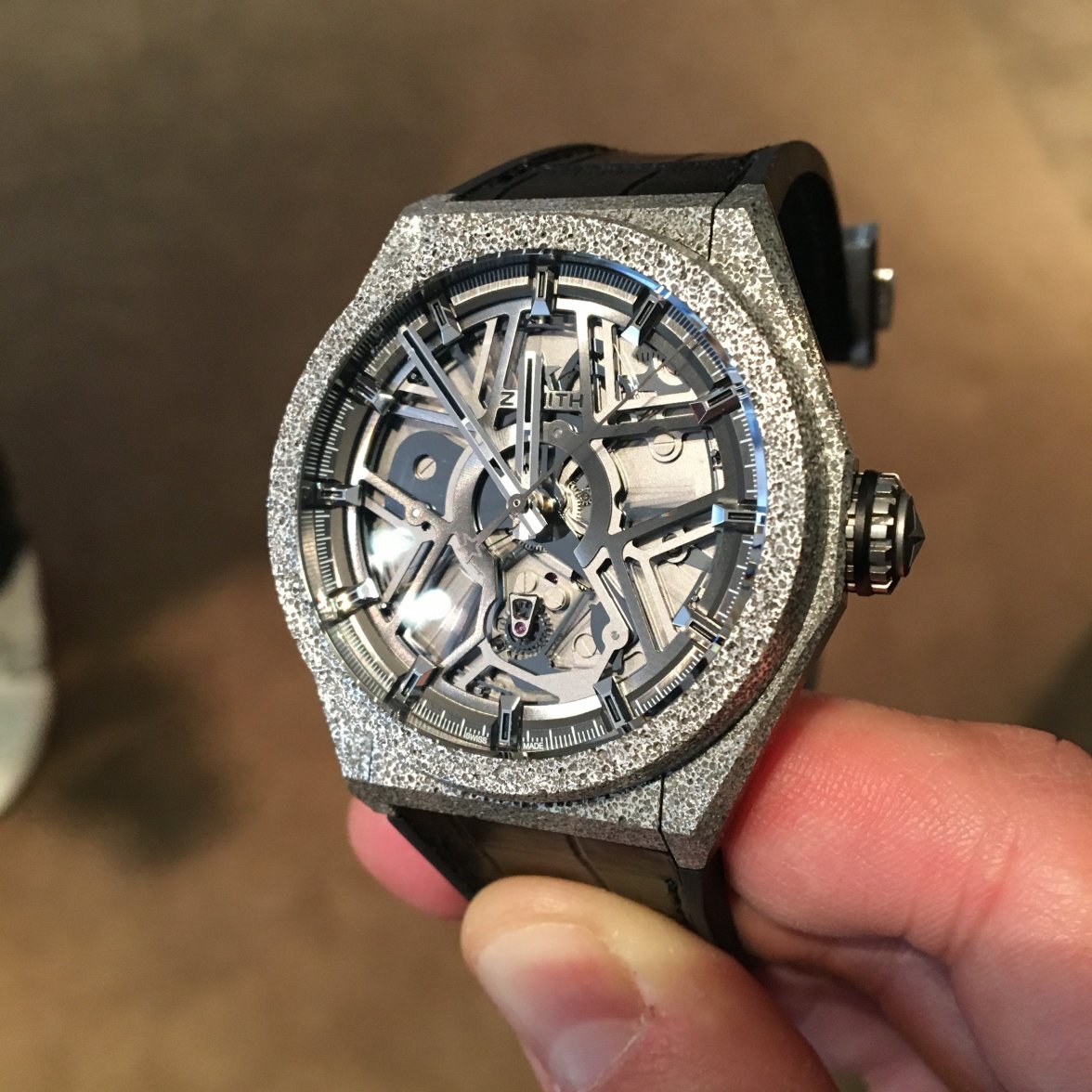
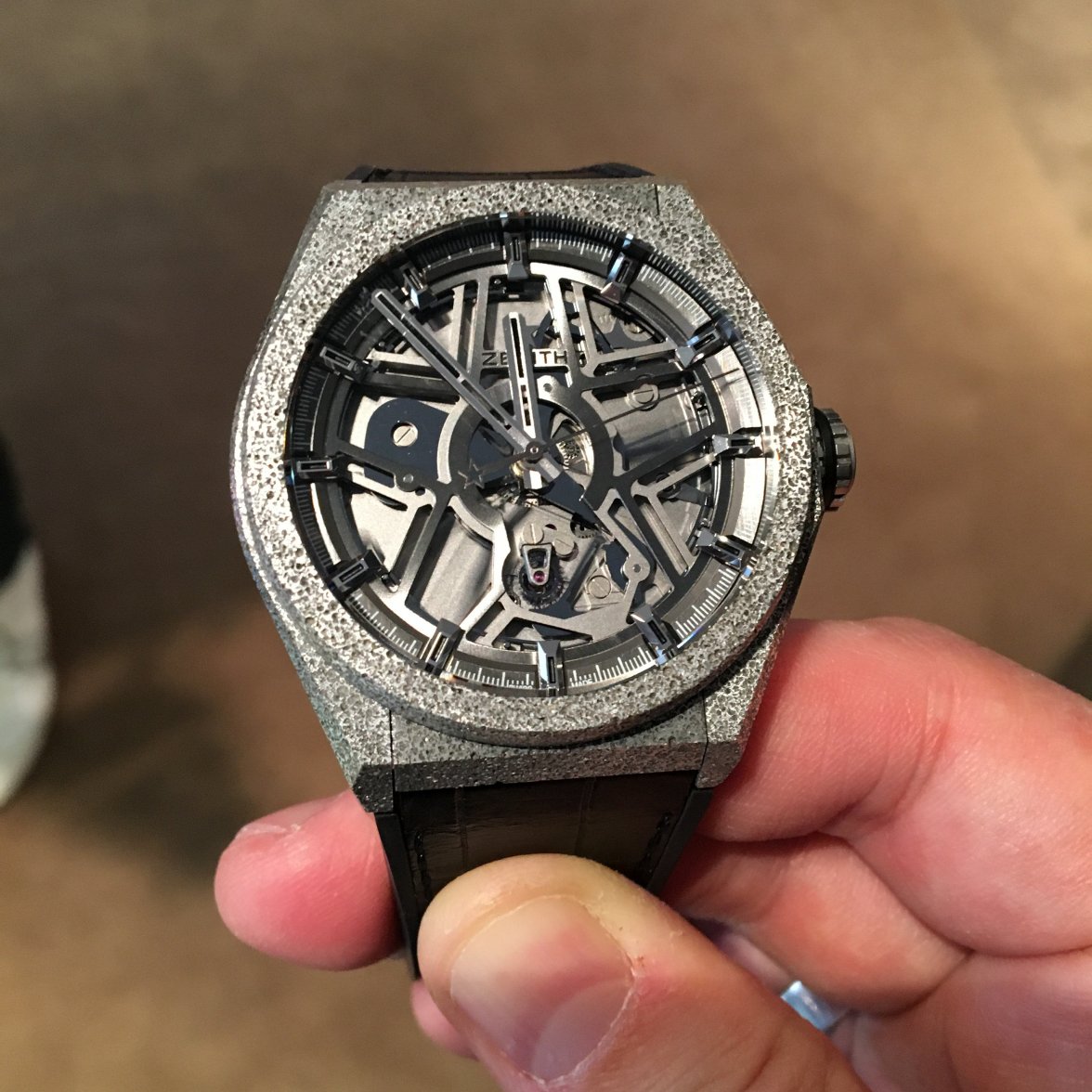
Just had it in my hands and I must say it’s really impressive !


The patented « ironite » is crazy light and feels good on the wrist.

The oscillating dial looks a bit hectic and very unusual but isn’t uninteresting at all ! Have made a video, will post it later.
 
Posts
29,681
Likes
76,840
Sure! It is in French, but those of you who do not speak Diderot's language can still see interesting pictures showing the differences.

Some good information in those links François! I know Mr. Dufour is working on a project to document the old ways of hand finishing, since he is concerned that they are disappearing quickly. Even some of the techniques being shown in those posts as traditional are not really all that traditional in the way they are being done.

In my conversations with him, he was very critical of the ways companies were making these decorations, and used examples from makers who have the Geneva Seal to illustrate how low the quality of work was. I know this is one reason why he wears a Datograph.

One key thing that was stated in there is that manufacturers who do still use more traditional techniques, don't use them on all their watches. The entry level watches get mass production methods applied to them, and only very special watches get the full hand treatment. I took this photo in the JLC factory, and I'm sure they were wondering why I would take this photo...can anyone guess?


This will give you a pretty good idea of the techniques that they use for application of Côtes de Genève.

Now at Patek, I did see this tray...


Again a clue about how they do things there, but this is not done on every watch this way - reserved for only the top pieces, and given the diameters of some of the disks it would be clear that these were used on pocket watches. In contrast Mr. Dufour uses a wooden disk charged with abrasive particles mixed with Lavender oil, and the work is moved under this disk by hand, so it takes skill that using a machine with an automatic feed does not. The finish you get is seen, but not felt.

One article there talks about making anglage with wooden disks, and I took this photo at the Vacheron factory...


So clearly they are not doing the most traditional hand application of anglage. This is a perlage station at Vacheron:


And at Patek the process was the same, and the ladies who were tasked with this had drawings to follow:


Me holding one of the main plates:


Automation was on full display though, and these wheel train bridges are in a vacuum fixture that holds them in place while they are engraved in a CNC machine:


I wasn't allowed to take a photo of it, but one morning when I arrived at Patek I spoke to a machine operator there, who was not happy. They employ lights out manufacturing, so they load up a machine at the end of the day, press the start button, turn out the lights, and go home. In the morning the machinery will have finished the batch of parts, and this machine had problems resulting in all the parts made being scrapped due to a problem with the work holding (an adhesive used to hold thin parts failed).

This is what real automation looks like, not the fantasy world of humanoid robots doing the same things in the same ways a human can. The real world of automation is quite different than what many people imagine. It's incremental so starts off small and grows from there, and this is another example from Vacheron:


This is a company that only makes maybe 50,000 watches a year (small in comparison to many other big brands) and yet they have conveyor belt systems under the assembly tables that raise each movement up so in this case the mainspring barrel can be dropped into the movement. There were probably a couple of hundred movements circulating on the conveyors just under the table surface. On the next go around the operator would install the next set of parts on each movement, and the cycle them through again and again...

Cheers, Al
 
Posts
1,531
Likes
1,088
Thanks Al!

I know the answer concerning JLC's côtes de Genève technics, but I have read it on another of your post!

Two things really bother me here. First, the lost of good artisanal technics and the use of short cuts - I remember a video where P. Dufour was saying "no compromise"...

Second, the commercial ads of major manufactures pretending to continue artisanal technics and traditional high quality. In one of the links I posted, a watchmaker working at JLC justifies shorts cuts saying that they are necessary for "cheap" watches arond 10k... I do not want to blame him - he probably likes his work and his company, and that is fine with me. But who would buy these watches at that price if they were clearly said they buy "low range" materials at the price of a car?

And Patek, VC and so on having (several of) their movements put together by operators only repeating one operation...

As far as I am concerned, I do not think there can be real watchmaking without real watchmakers.
 
Posts
2,446
Likes
7,040
This is what real automation looks like,
Two decades ago a mechanical engineer co-worker mentioned to me that Swatch was innovative (in the 1980's) by having made a machine that would assemble a complete movement without human intervention.
 
Posts
29,681
Likes
76,840
Two decades ago a mechanical engineer co-worker mentioned to me that Swatch was innovative (in the 1980's) by having made a machine that would assemble a complete movement without human intervention.

Well, in my experience the tasks that are involved in assembling a watch movement are not likely to be done with one single machine, but in a line configuration of several machines that would be connected together with a material handling system. This is the kind of engineering work I did for a couple of decades.

Many automated machines already exist for specific tasks and have for a long time - there is one for oiling for example, so when movements are mass produced they enter an automated oiling machine. This machine applies small drops of oils via syringe type applicators to all the predetermined points - in contrast I use a dip oiler that I have to dip into a reservoir of oil and apply by hand to each jewel.

Another automated task is poising the balance wheel. Material is removed from smooth balances by a cutter that leaves a fairly distinctive long narrow rectangular cut in the rim as shown on this Cal. 1120:


In the past it was done by hand with a small drill bit, the way a watchmaker like me would static and dynamic poise a balance, as seen on this Cal. 552:


Another automated task is setting on the hands - at the factory an automated machine does this, where I use a manual hand press:


I'm not sure that the time frame you cite is accurate, as Swatch said this in 2013 when they released the Sistem51:

"Sistem51 is a world first: it is the only mechanical movement ever made whose assembly is 100% automated."

Automation is generally more progressive than someone sitting down to design the entire process all at once. Not saying that doesn't happen, but generally business is risk averse and automating smaller parts of the process individually, and then once proven bringing it all together is a more common and less risky approach in my experience. In the case of the Sistem51 it involved redesigning the product as well, to prepare it for automation, but as I've mentioned before this wasn't done as an end goal for this one movement - what they learned from this will be used to reduce costs in other product lines.

Cheers, Al
 
Posts
2,446
Likes
7,040
I'm not sure that the time frame you cite is accurate, as Swatch said this in 2013 when they released the Sistem51:

"Sistem51 is a world first: it is the only mechanical movement ever made whose assembly is 100% automated."

That's true for a fully mechanical mouvement. After writing my post I googled Swatch automated and learned about the Sistem51 you mentioned but also I found this article on Hodinkee.

"Back in 1983, Swatch launched with the mission of making Swiss watches mass produce-able and available to everyone in the wake of the quartz crisis. By reducing the number of components in a quartz movement from the typical 91 to a much more manageable 51, Swatch was able to fully automate production."

How that was done in 1983, as a series of automated steps with materials handling or a single machine, is unknown to me.

As an aside, the co-worker I referred to was part of team designing a single machine that would automatically make an optical fiber telecommunications component called a fiber Bragg-grating (FBG). Literally a Rube Goldbergeresque machine with a spool of fiber at the input and connectorized FBGs at the output. It was an ambitious project because none of the steps involved were automated before. This was around the year 2000, just before the telecoms bust...
 
Posts
29,681
Likes
76,840
Certainly assembling a quartz movement is a much easier task to automate than a mechanical, so that makes sense that they did the quartz first.

Re: telecoms bust...I toured a Nortel factory back in the day with an engineering society (SME if I remember correctly) and I recall we were not allowed into the room with no windows that had the machinery that made the coiled cords for telephone handsets because the process was so secretive. I also know several people who lost a fortune when they went bankrupt...
 
Posts
29,681
Likes
76,840
Many automated machines already exist for specific tasks and have for a long time - there is one for oiling for example, so when movements are mass produced they enter an automated oiling machine. This machine applies small drops of oils via syringe type applicators to all the predetermined points - in contrast I use a dip oiler that I have to dip into a reservoir of oil and apply by hand to each jewel.

Well, just to show you what one example of such a machine looks like, in this Omega video starting at 30 seconds in you can see HP1300 noted on the machine, which is Moebius 9104 and is probably the most common oil used in these movements...


Video shows the machine applying oils. They also show a different machine that is installing/torqueing screws on the movement. These machines are mixed in with some hand assembly of course.

Cheers, Al
 
Posts
29,681
Likes
76,840
And just put on their YouTube page yesterday, this video:


At 35 seconds in, you can see the machine that installs the hands...
 
Posts
64
Likes
443
So as the oscillating part is silicon oxide... it's a quartz watch!!! ::stirthepot::
New to the forum, but love all the discussions I have been reading.
I am no physics expert, but the unique oscillator does not transmit an electric charge. It also does not take advantage of the piezoelectric properties of the silicon. No battery involved. It's mechanical. I assume the power if supplied by a spring?
MP
 
Posts
18,203
Likes
27,531
New to the forum, but love all the discussions I have been reading.
I am no physics expert, but the unique oscillator does not transmit an electric charge. It also does not take advantage of the piezoelectric properties of the silicon. No battery involved. It's mechanical. I assume the power if supplied by a spring?
MP
Yes I was making a joke.