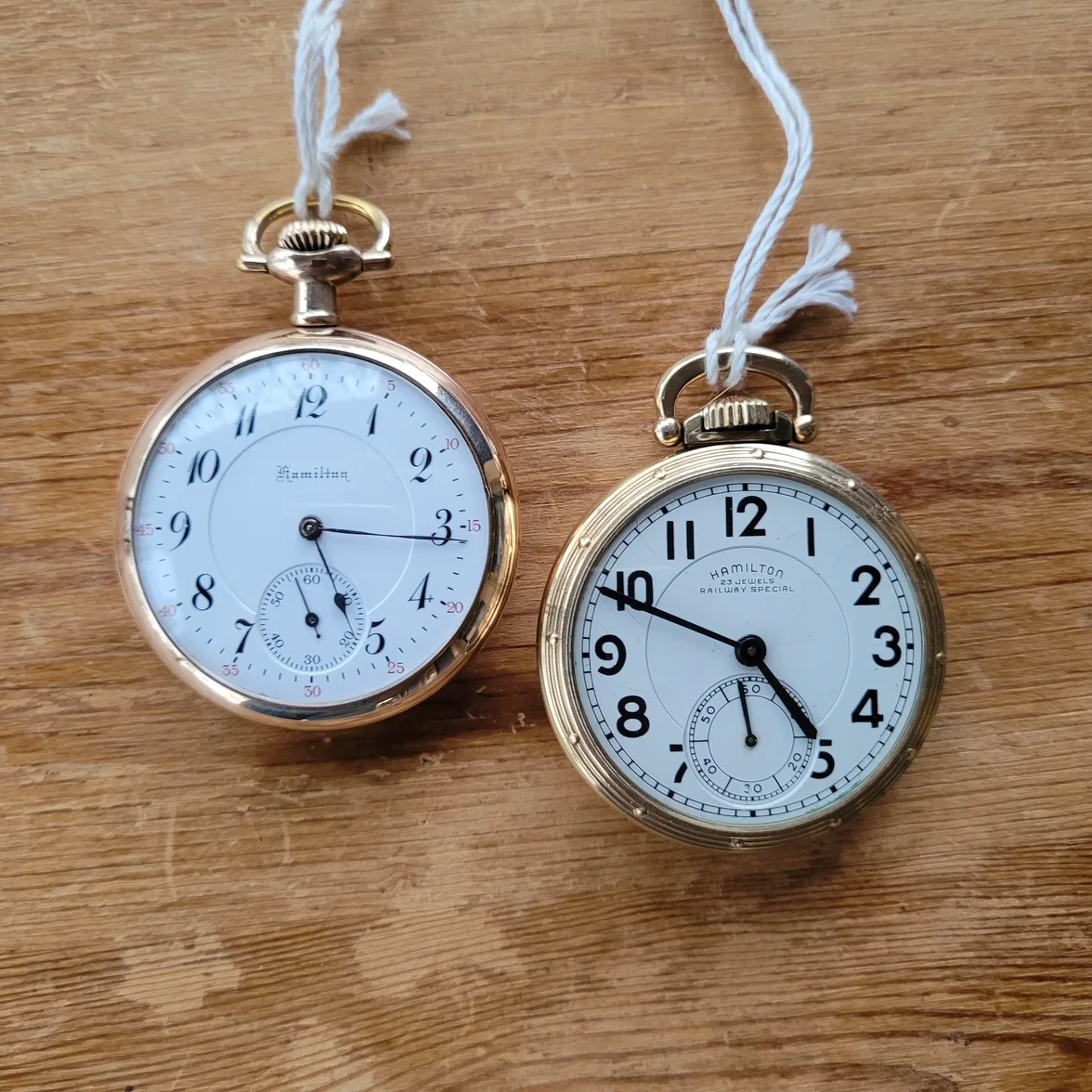
Calling all Pocket Watch Buffs

Posts
105
Likes
262
Hi bobertdob--Thank you for your observations and the examples of your hunting knives. About how long is the off-season that results in such an intense green? Also, was brass directly exposed, or was it plated? I am kind of surprised that the tarnish happens so fast and not over a longer period, even years long.
I used put my hunting stuff away towards the end of November and taken back out usually by early October to get organized.....stored in a basement in a big plastic tube so no airflow...just sayin' a really similar tarnish that had the three elements involved brass, leather and a tiny bit of moisture but not enough to rust or corrode the metal....
 
Posts
100
Likes
163
I used put my hunting stuff away towards the end of November and taken back out usually by early October to get organized.....stored in a basement in a big plastic tube so no airflow...just sayin' a really similar tarnish that had the three elements involved brass, leather and a tiny bit of moisture but not enough to rust or corrode the metal....
bobertdob, thank you for the greater description. These are really great clues for me to investigate further.
 
Posts
3,485
Likes
35,533
bobertdob, thank you for the greater description. These are really great clues for me to investigate further.

Leather attracts moisture. I’ve seen rifles left in leather cases that rusted quite quickly.

That and taking your rifle in the “super heated by a packed wood stove” hunting camp when it’s freezing outside.

We always left the rifles in the old Wagoneer. I miss those days… Wagoneer included.

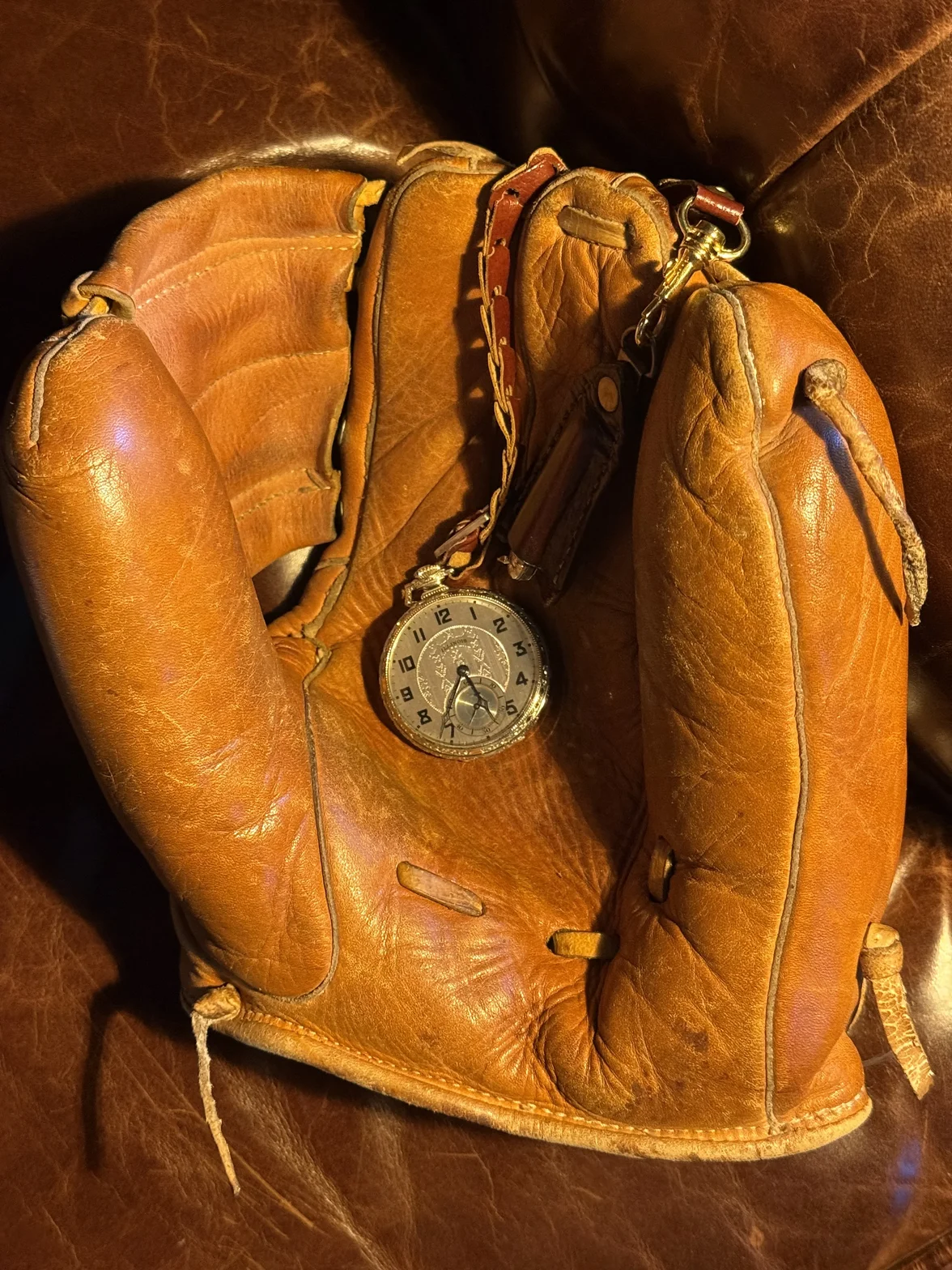
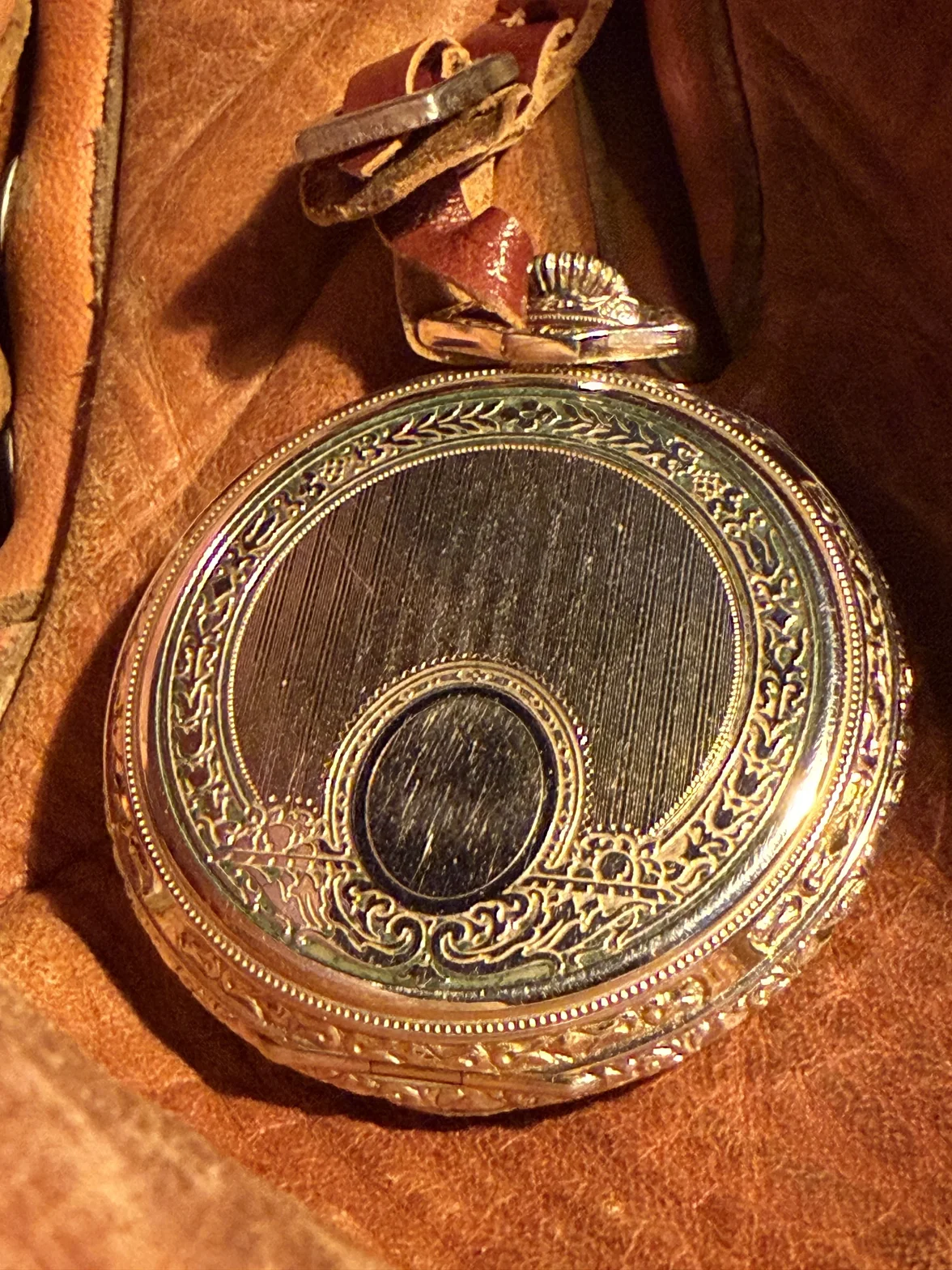
May as well post my Illinois. Am watching the White Sox right now anyway.


The glove is by Cooper Weeks. Circa 1960.
Edited:
 
Posts
15,981
Likes
48,047
I believe leather is tanned with acids. Watch kept in leather, base metal case, acid, verdigris.
 
Posts
6,513
Likes
22,137
May as well post my Illinois. Am watching the White Sox right now anyway.


The glove is by Cooper Weekes. Circa 1960.

Nice catch.

(That one's for Archer.)
 
Posts
105
Likes
262
Leather attracts moisture. I’ve seen rifles left in leather cases that rusted quite quickly.

That and taking your rifle in the “super heated by a packed wood stove” hunting camp when it’s freezing outside.

We always left the rifles in the old Wagoneer. I miss those days… Wagoneer included.

May as well post my Illinois. Am watching the White Sox right now anyway.


The glove is by Cooper Weekes. Circa 1960.
Really nice watch but I love the photography its very clear and bright nice amount of contrast....well done
 
Posts
8,855
Likes
62,725
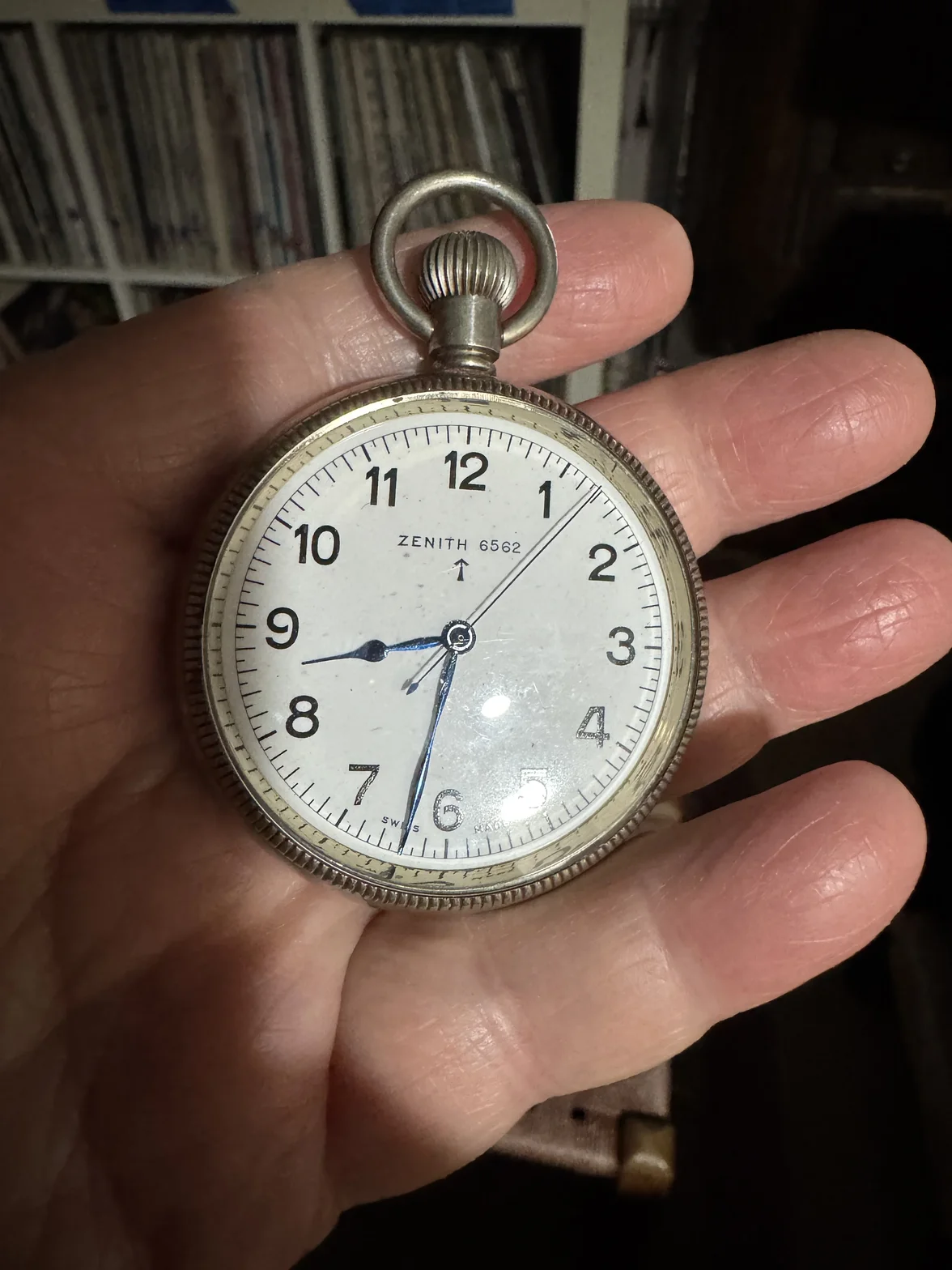
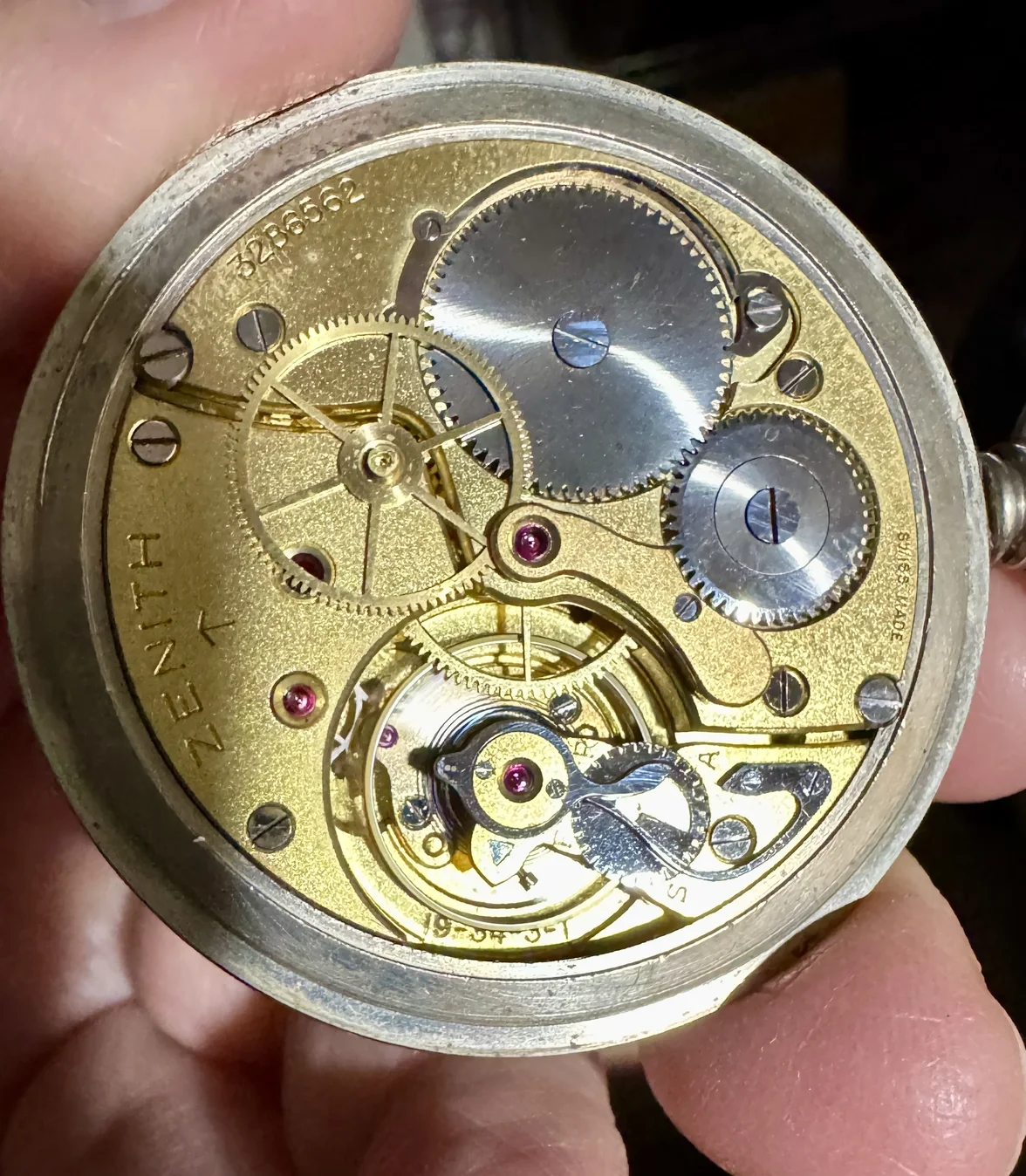
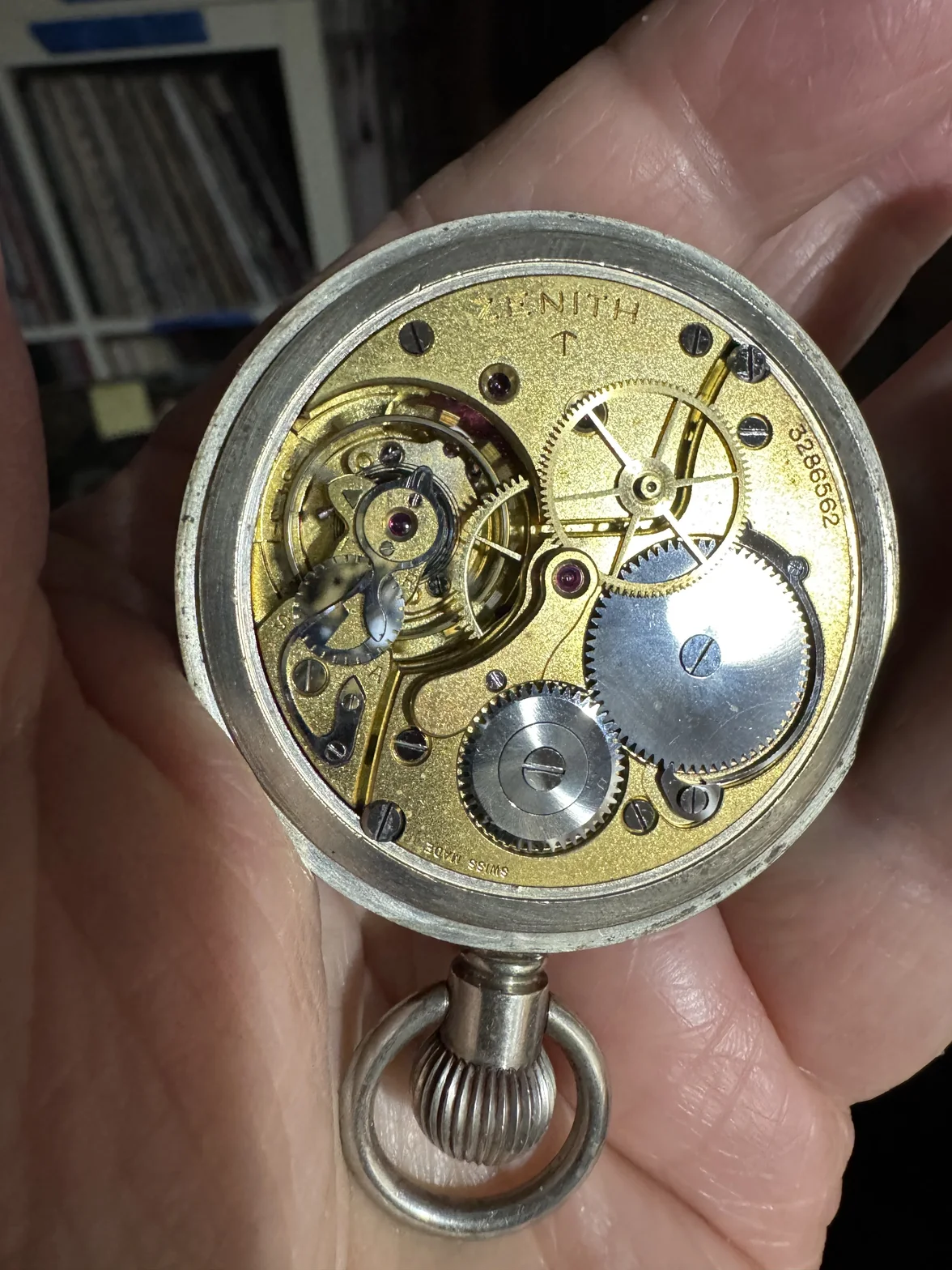
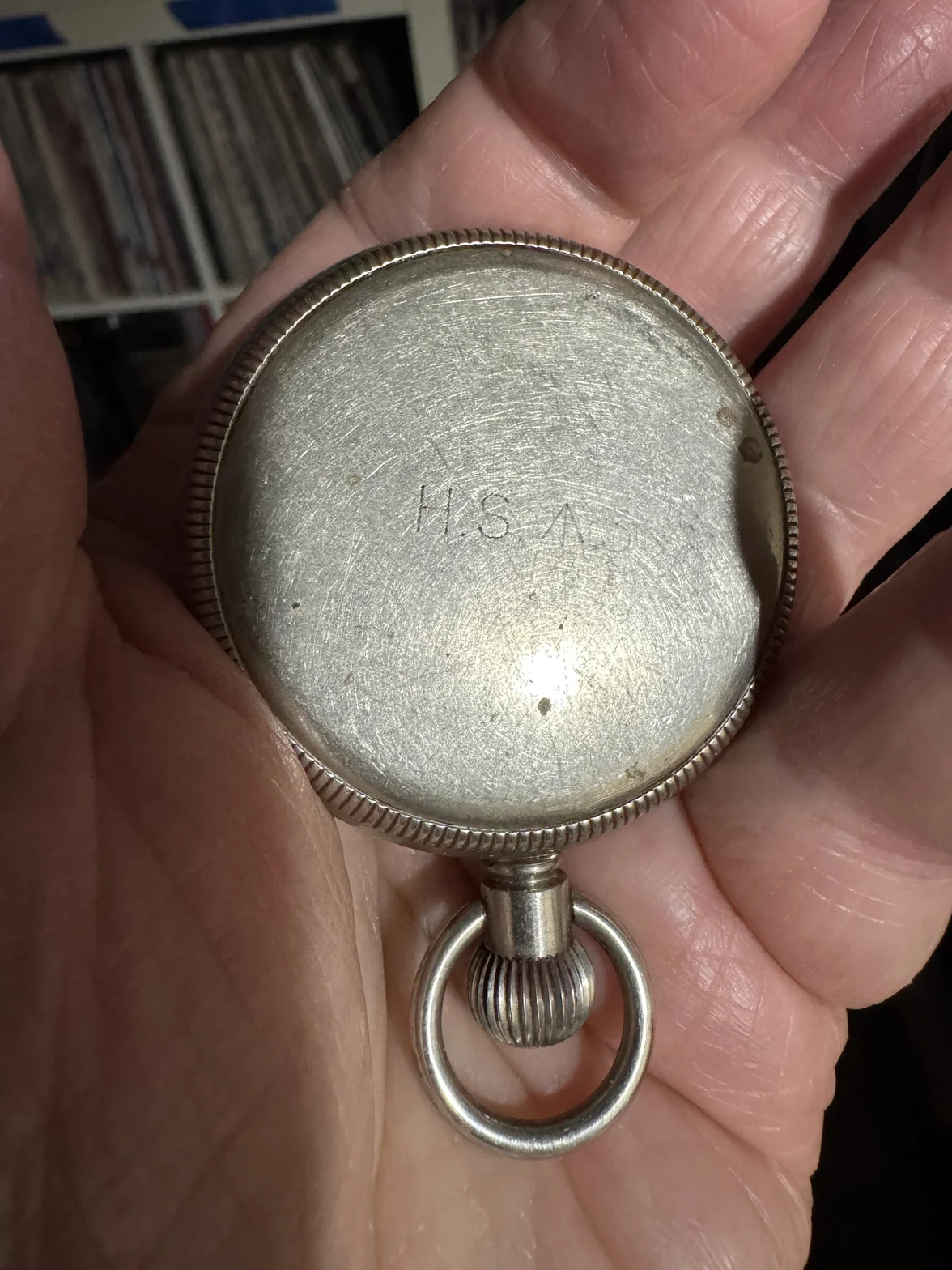
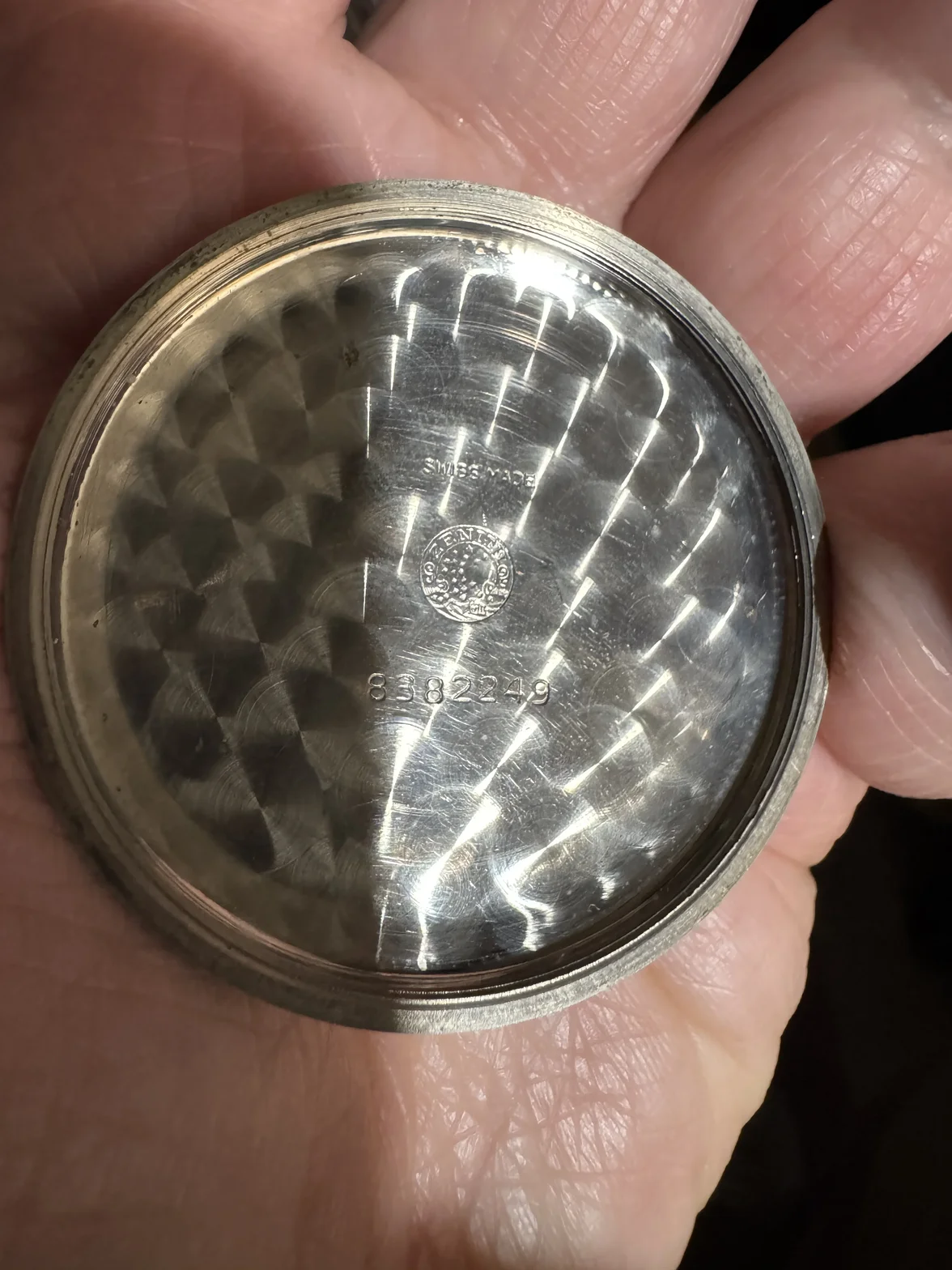
1939-40 Zenith made for British Military HS-3 Navel Deck Watch cal. 19-34-3-T
An early stamping by Zenith indicated by the delicate pheon on each the dial and movement.
4 numbers on the dial matches the last 4 numbers of the movt serial number.
Survived the post war stripping of these dials in favor of the NATO decimal dials.
Correct Zenith base metal case.

 
Posts
105
Likes
262
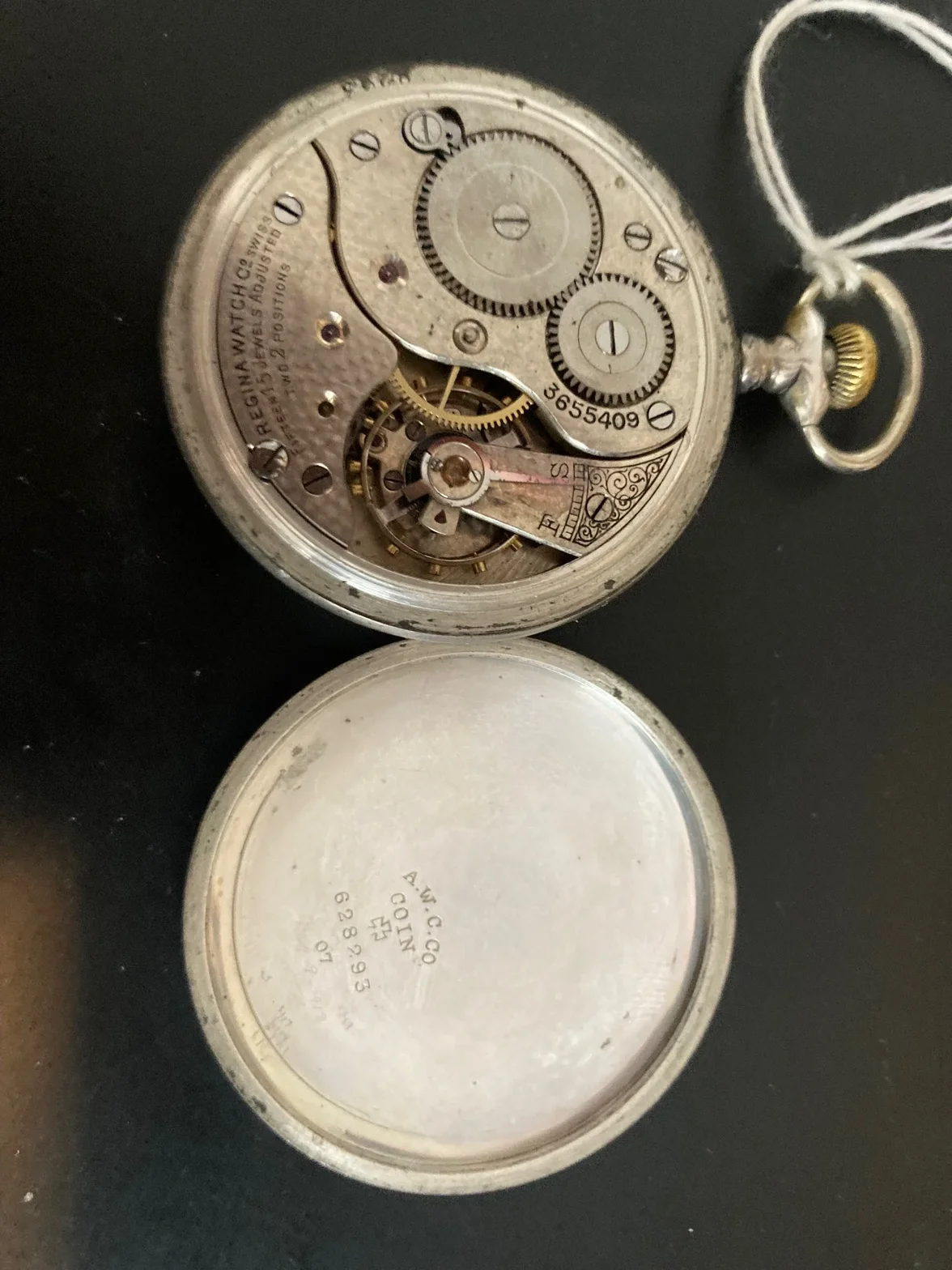
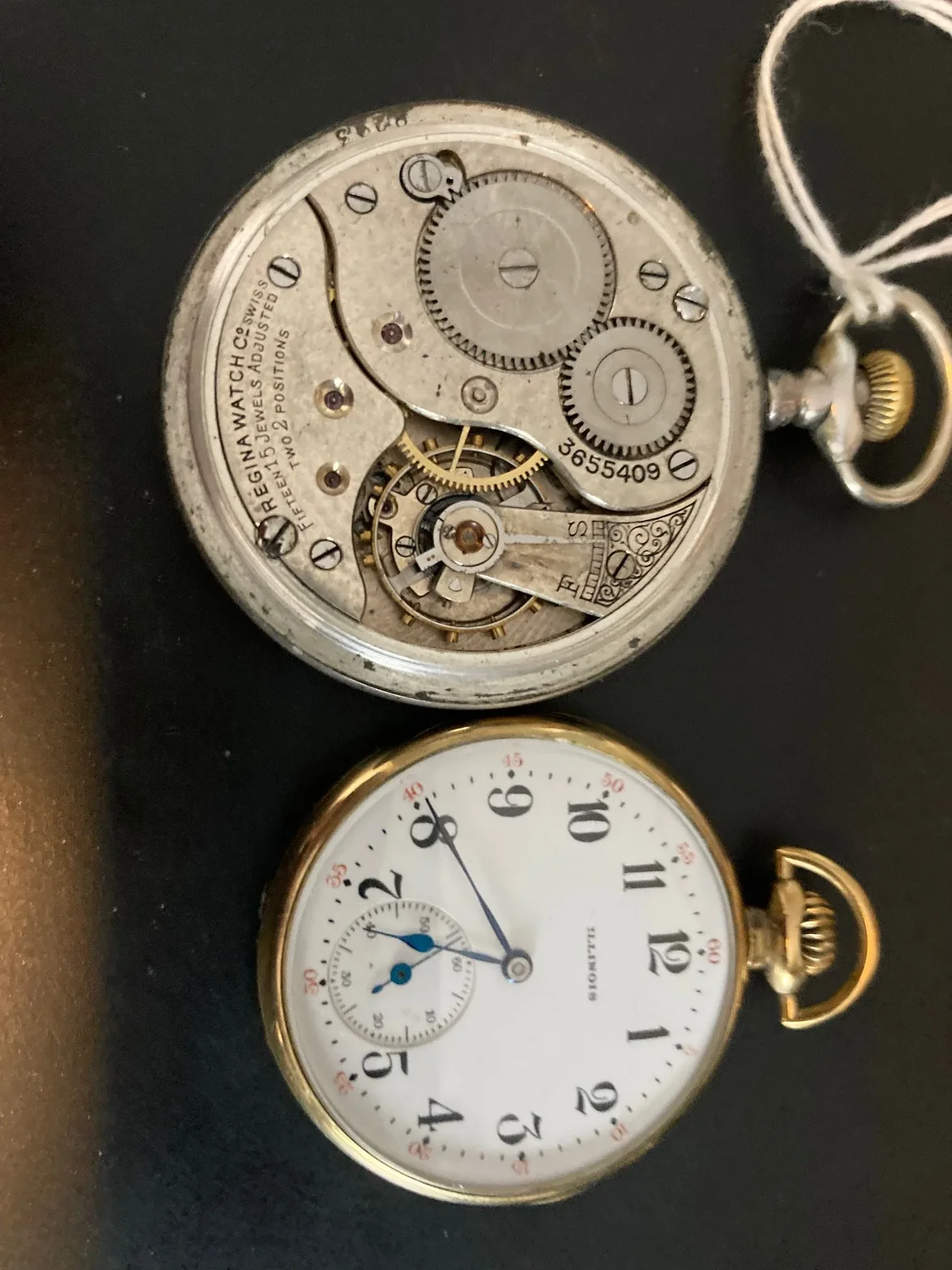
Have any of you folks come across a 14 Size Regina pocket watch? I am restoring a silver Regina private label and I compared it to the two 14 Size Walthams in my collection as confirmed by the PWDB but unfortunately PWDB does not detail Omega or Regina pocket watches by serial. It may be a skinny 16 size but it just doesn't look like that to me. Here are two pics...the watch itself and sitting next to my 12 Size Illinois for comparison.....
 
Posts
15,981
Likes
48,047
Determining the size is done by measuring the diameter of the pillar plate. I don’t recall ever having seen a 14-size Regina movement. There is an exception to this rule. I believe the Waltham Colonial movement is a bit smaller than the measurement of the pillar plate might indicate. The pocketwatchdatabase site it’s it as a 12-size, but I believe that was based on the pillar plate diameter. I believe the watch to measure smaller than that.
 
Posts
105
Likes
262
Determining the size is done by measuring the diameter of the pillar plate. I don’t recall ever having seen a 14-size Regina movement. There is an exception to this rule. I believe the Waltham Colonial movement is a bit smaller than the measurement of the pillar plate might indicate. The pocketwatchdatabase site it’s it as a 12-size, but I believe that was based on the pillar plate diameter. I believe the watch to measure smaller than that.
Thank you a great suggestion. The watch runs fine but its burdened with at least fifty to sixty years of storage and considerable dust and dirt so when my watch maker takes it apart for its bath I will get him to measure the pillar plate and ask him to take a pic of it like he did for my Victoria BC PL.
14 Size watches are really uncommon. I have the two walthams one needing a fair bit of TLC and I have an outstanding Burlington 1929 Henry Moser which I bought advertised as a 16 S RR watch but again it turned out to be smaller and uniquely Canadian but thats maybe a good thing ...thx Bob
 
Posts
8,855
Likes
62,725
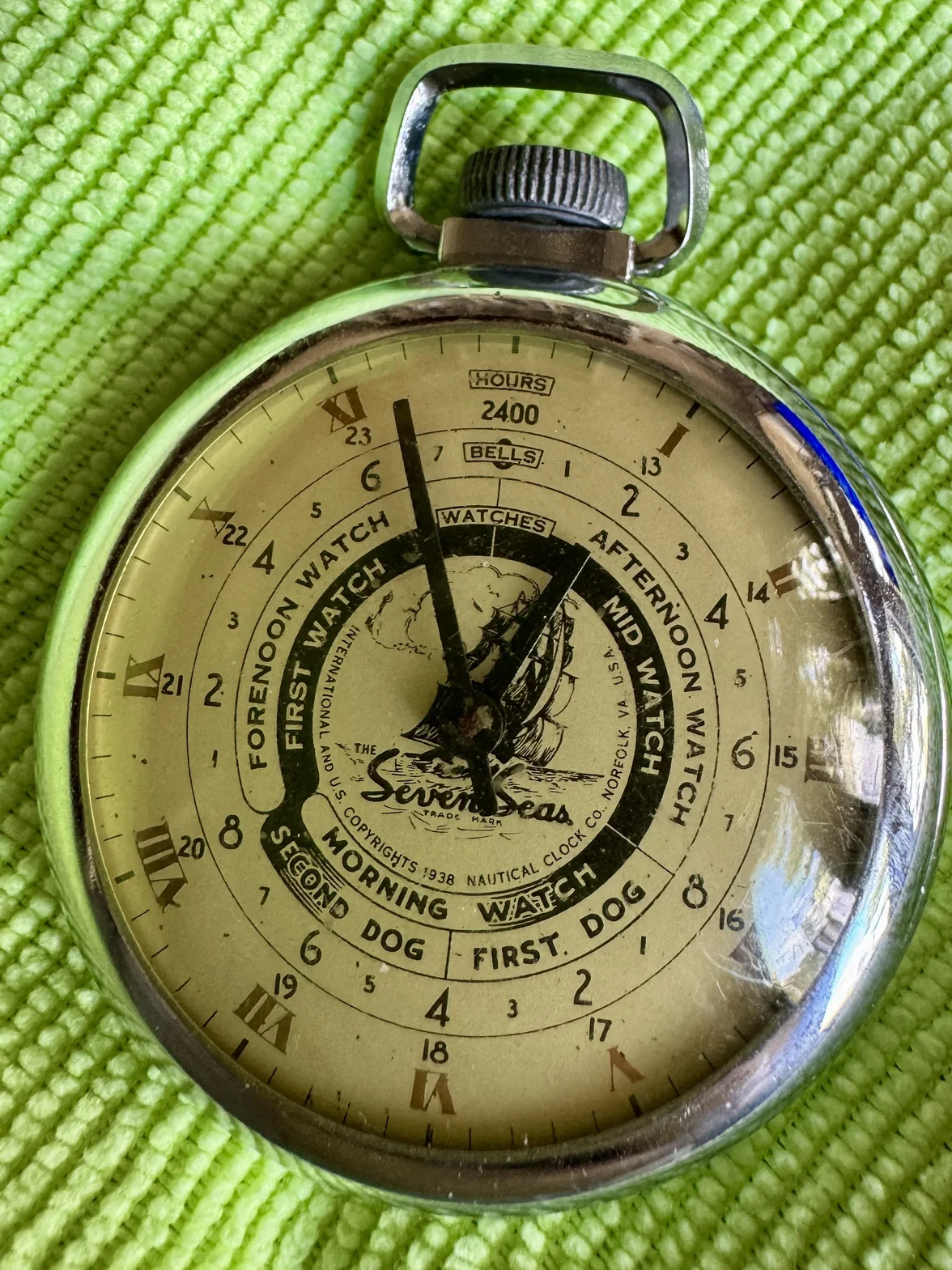
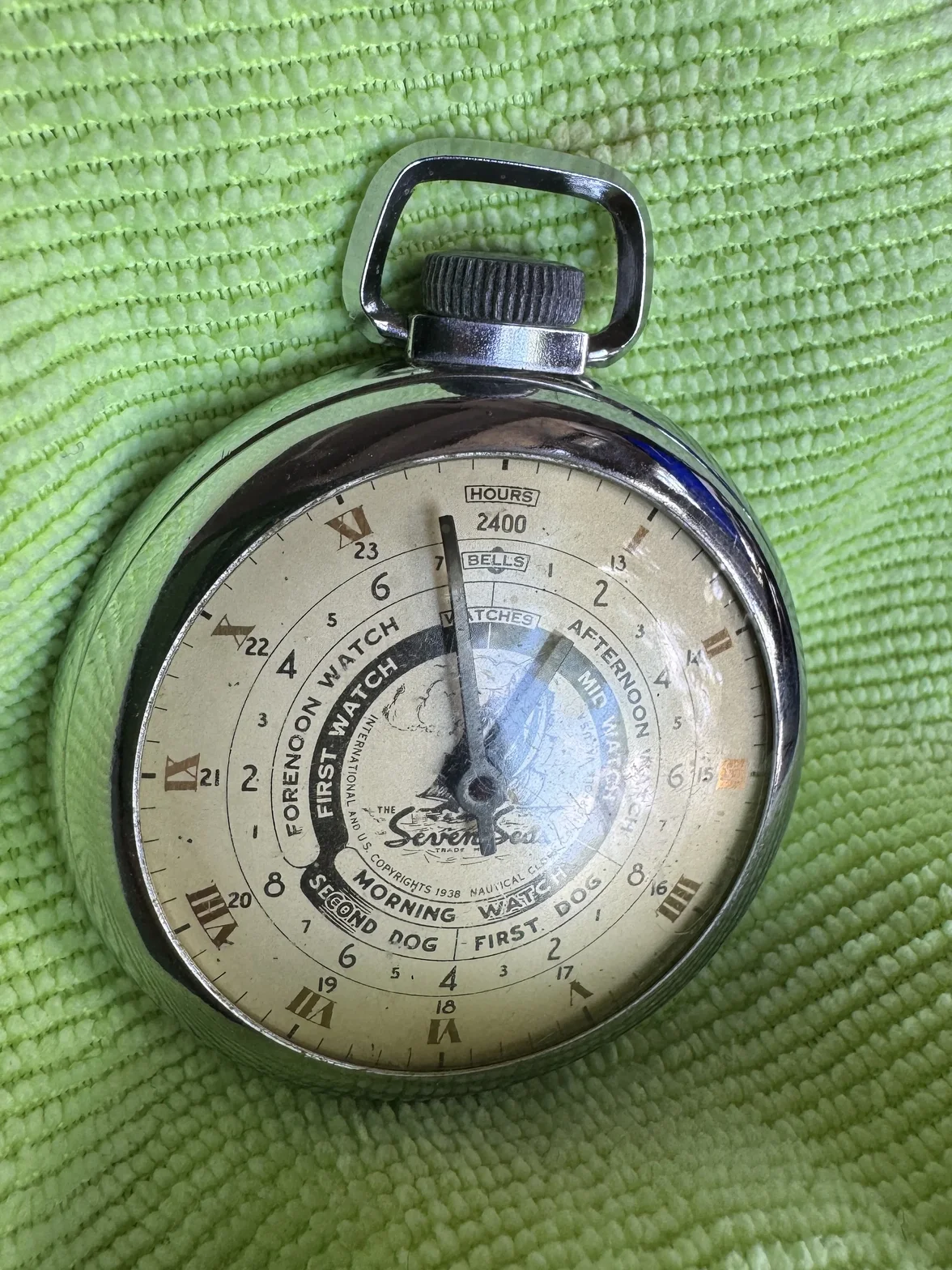
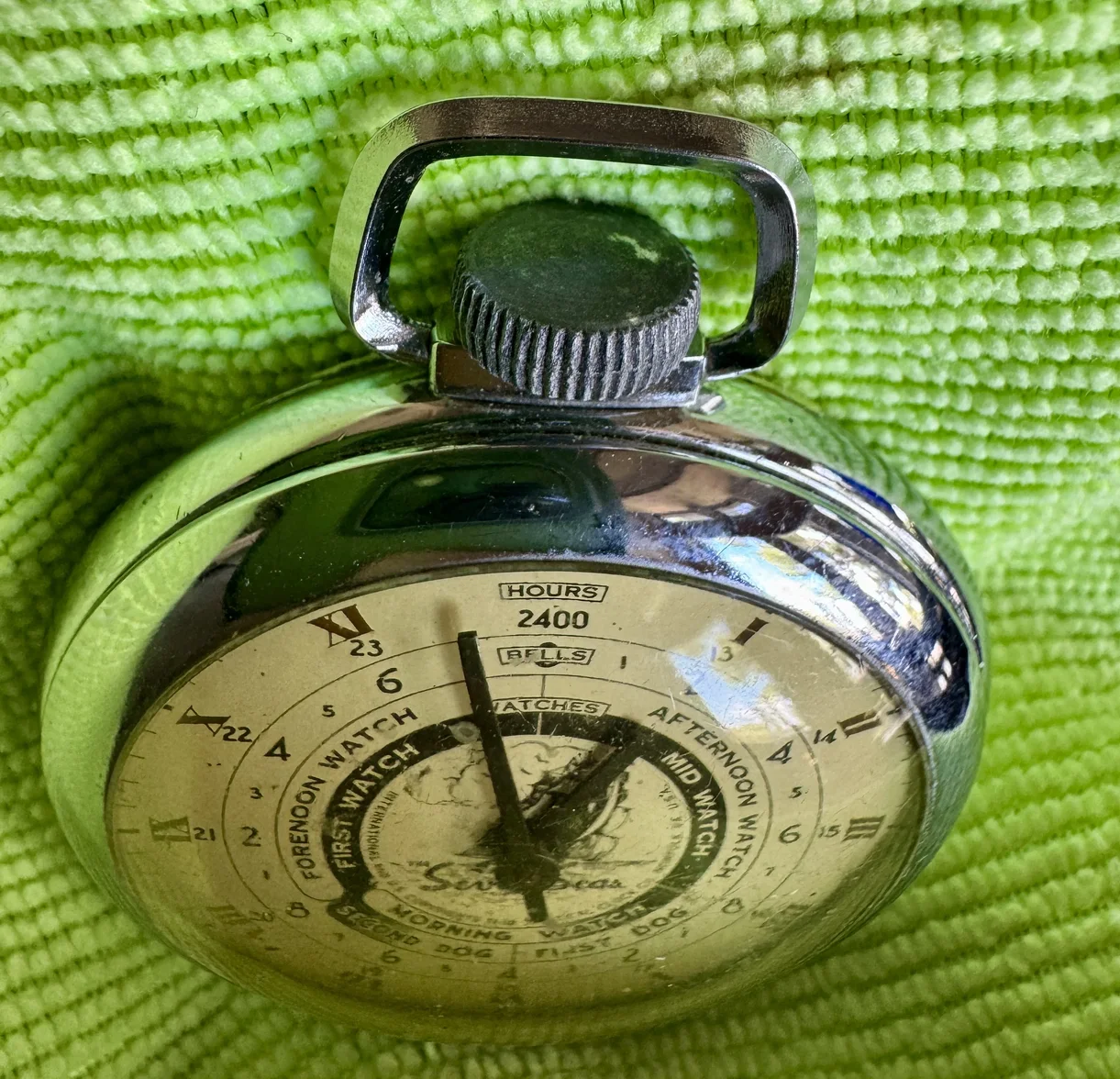
At the other end of the spectrum from my Zenith HS-3 is this "Seven Seas" multi-quadrant maritime naval watch explicitly engineered to translate standard civilian 12-hr schedules into naval watch rotations.
These were designed by Robert Hunter under the Nautical Clock Company banner in Norfolk, Va. and were actually made by E. Ingraham & Co. Bristal, Conn.

This one was made in that cusp of time 1940-41 prior to strict US rationing of metal,(1942) so it has their premium anodized metal not cardboard dial highlighted by gold gilt applied Roman Numerals and baked-on sepia-brown enamel ink writing and logo plus mineral glass crystal and 5mm metal bezel.
Yet, instead of their normal chrome plated brass crown to match the case, this one was constructed of zinc to accommodate the directives restricting brass usage. And eventually, 1942+, Ingraham had to substitute celluloid for glass crystals.

These were marketed to Naval enlistees passing through Norfolk and only really had to be somewhat accurate for a "2 or 4 hr watch" so they are a 0 jewel, pin-lever movement and very lightweight.

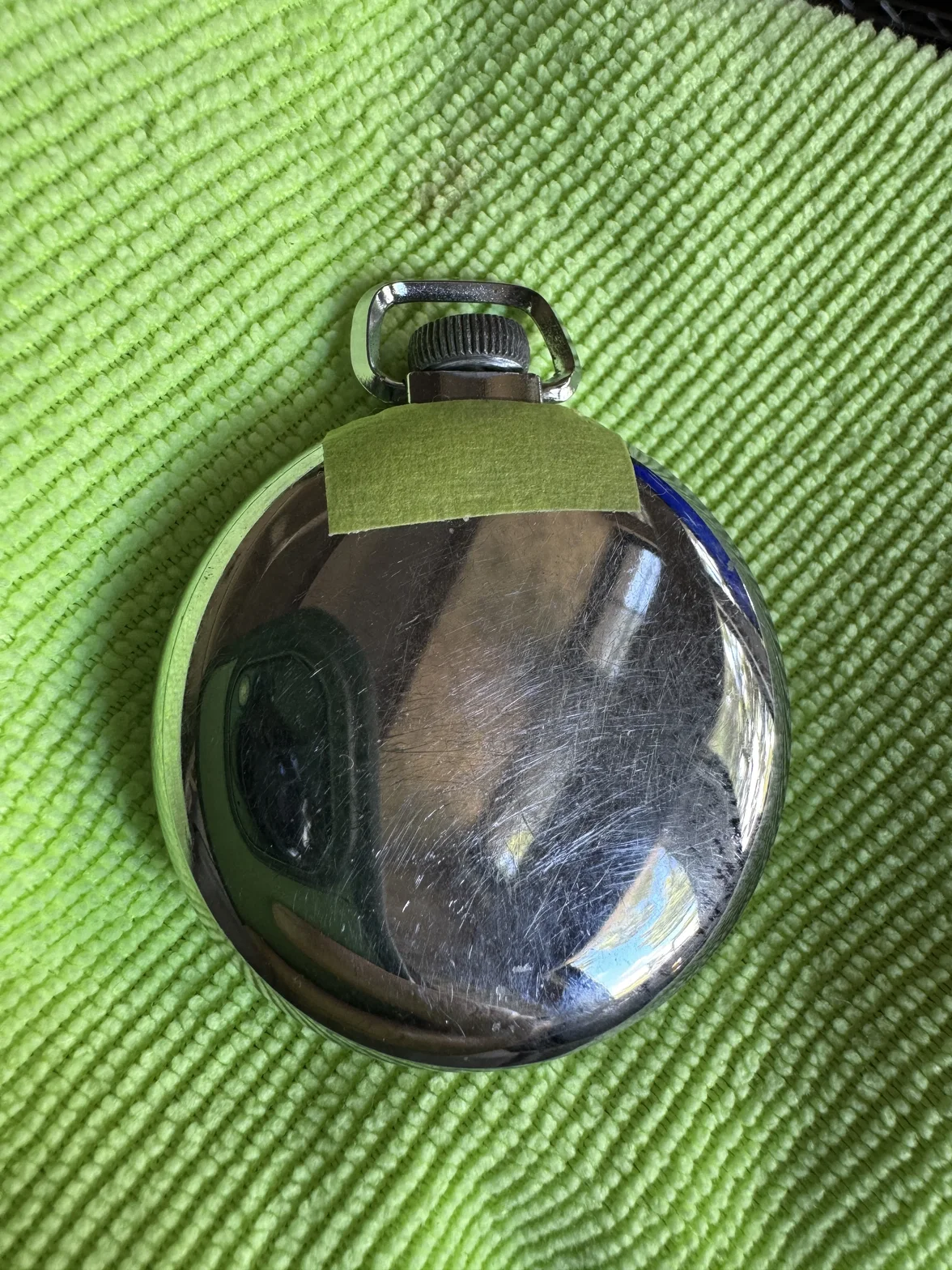
Mine has no "prying" scratches on the chrome and only gently handled from 1941 to 2001 when I bought it as part of a "lot", and I've just stored it away thinking it was a toy or novelty item.....Till doing the research the last month or so.

Since it needs no oil and nobody's been wearing the gears out winding it, it is remarkably accurate for about 24 hrs. You can look at the bow and see it has not been carried. I placed a touch of tape to keep scratches to a minimum going forward.

Relic from our analogue past. There were other deck "watches" in the line-up but this one was the premium example at $4.50, about 2 days pay to the enlistee, who were not issued watches.

 
Posts
6,513
Likes
22,137
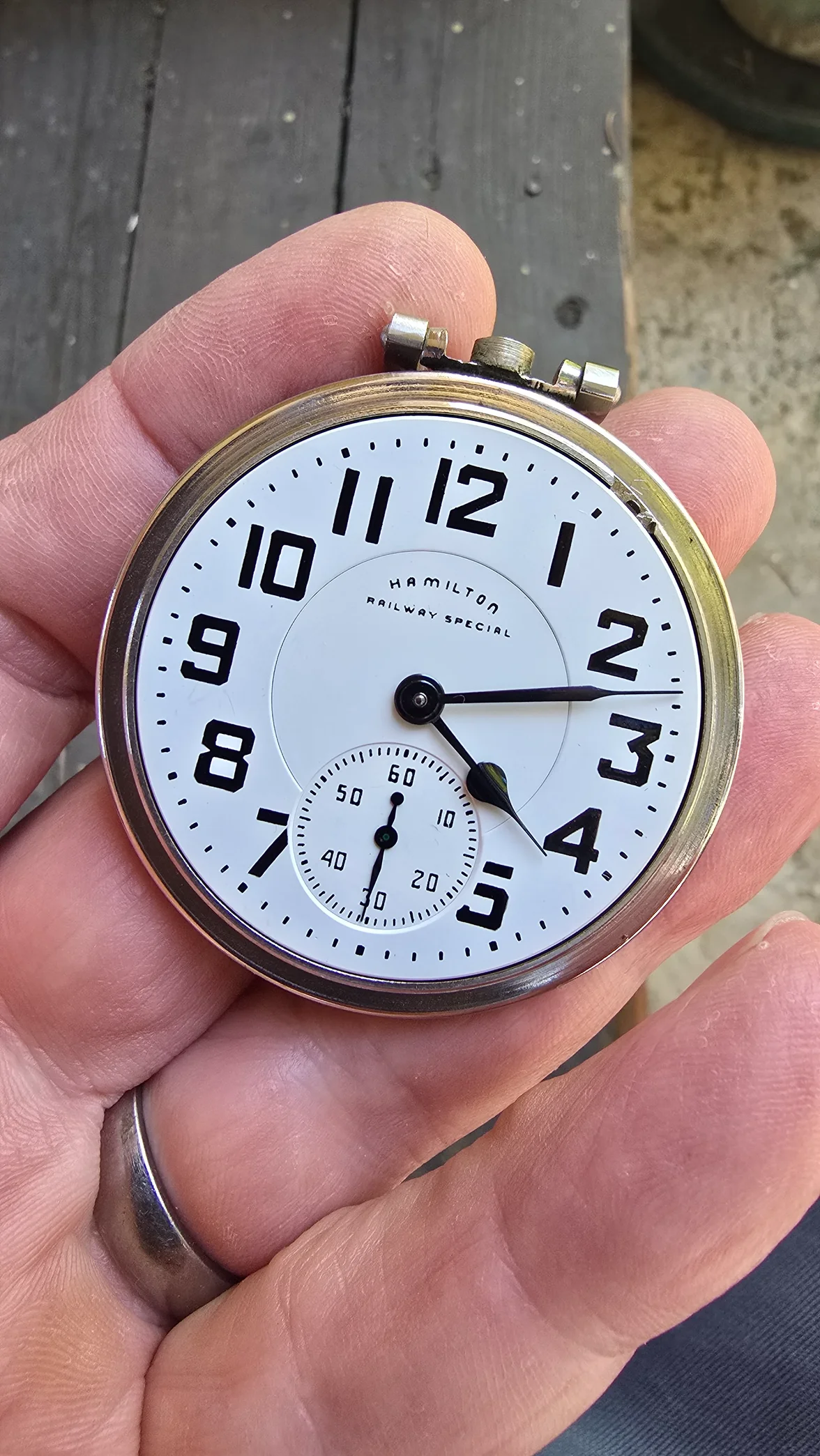
Just arrived.

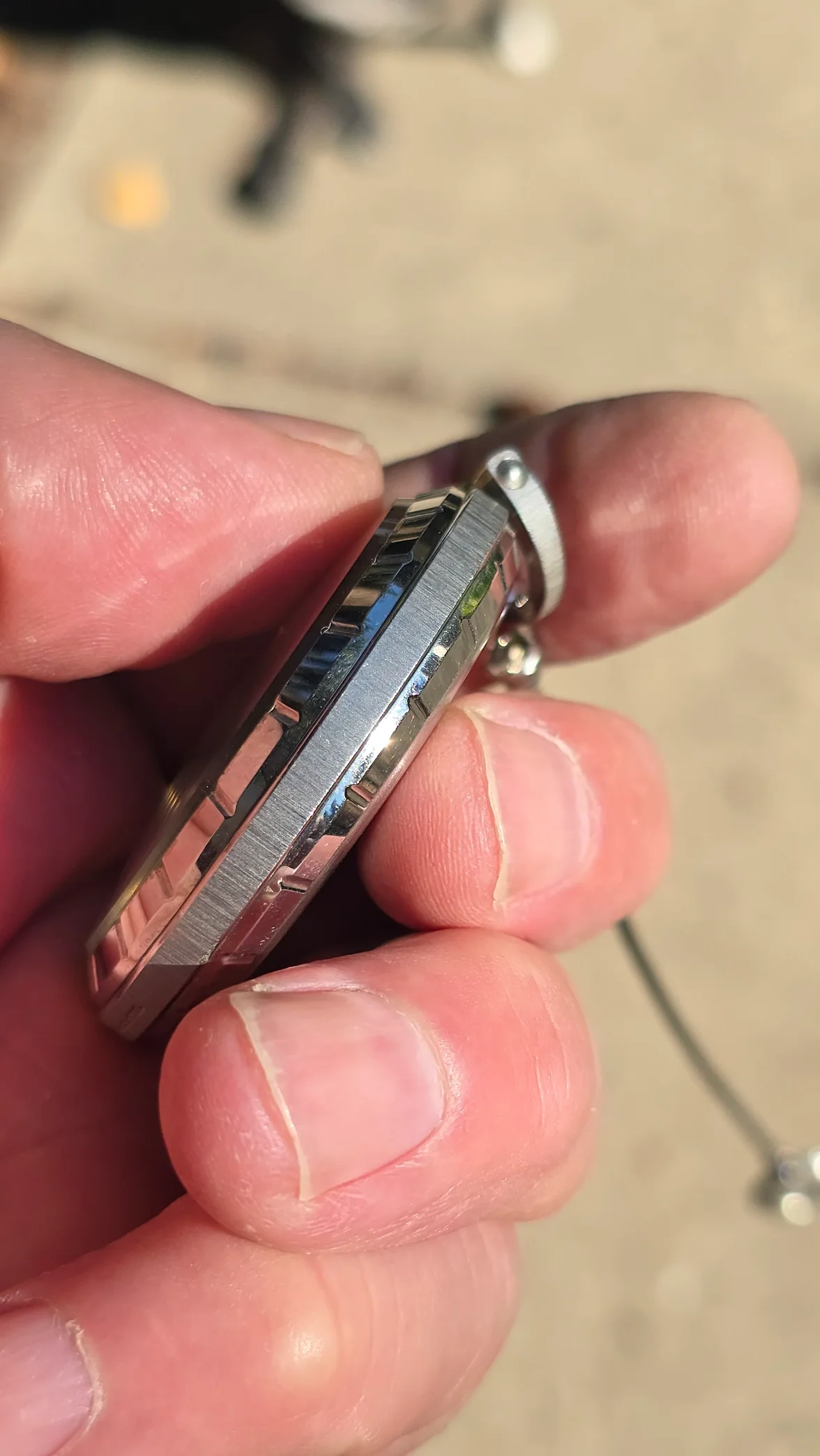
One of the most enjoyable things about a new watch is unwrapping it and finding it in much better condition than expected. It's surprising that sellers still don't understand how to take decent photos.

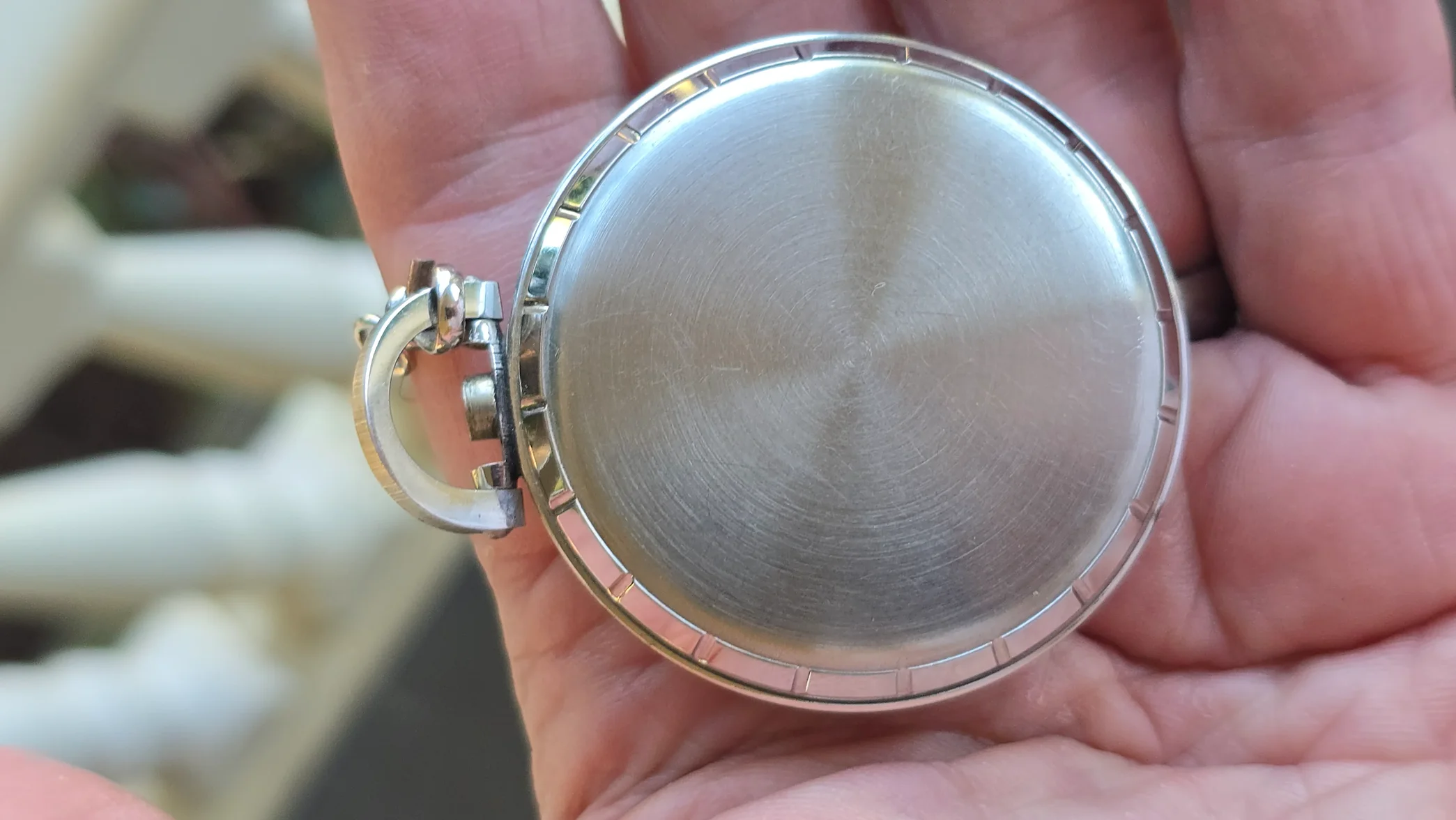
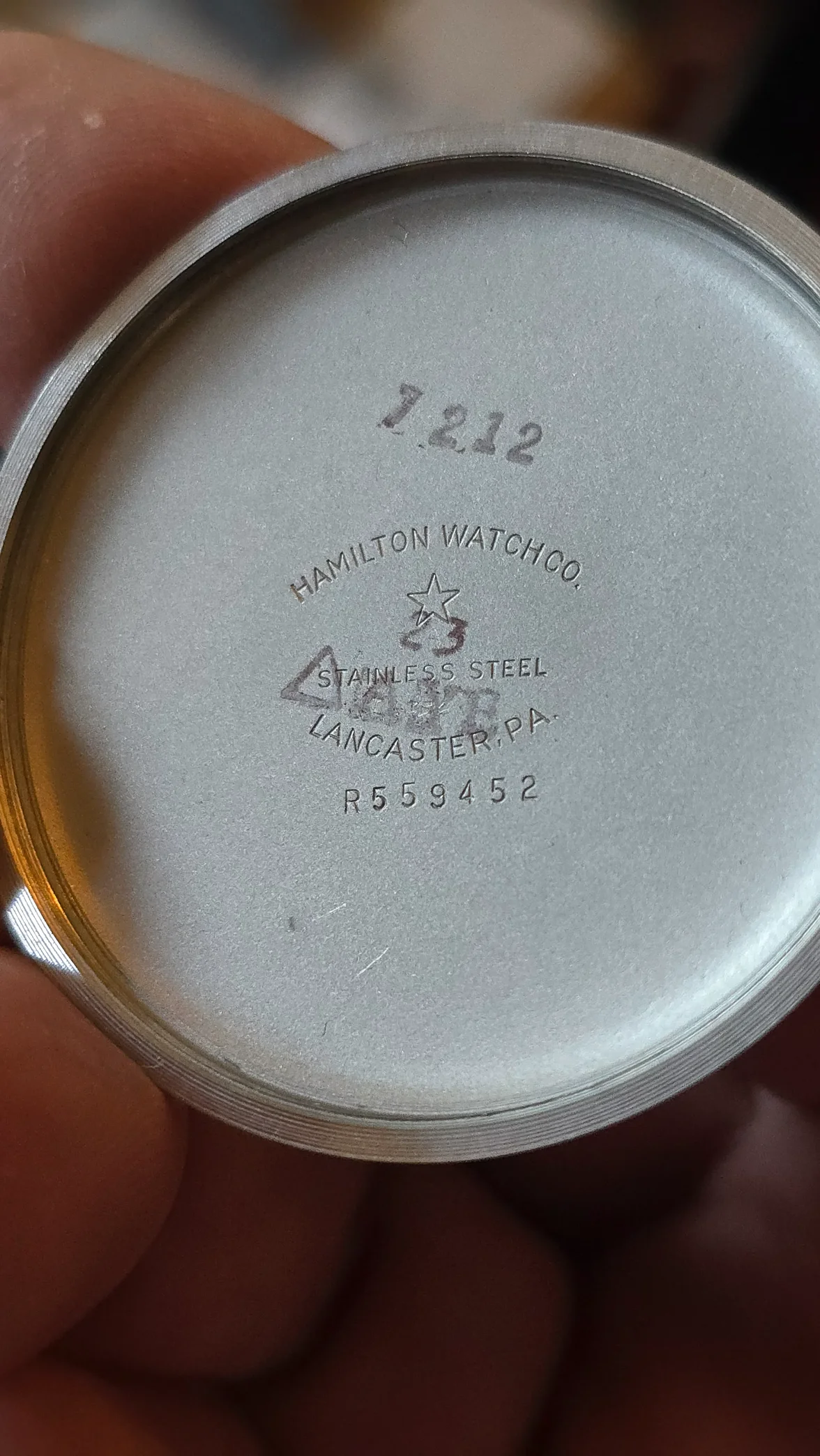
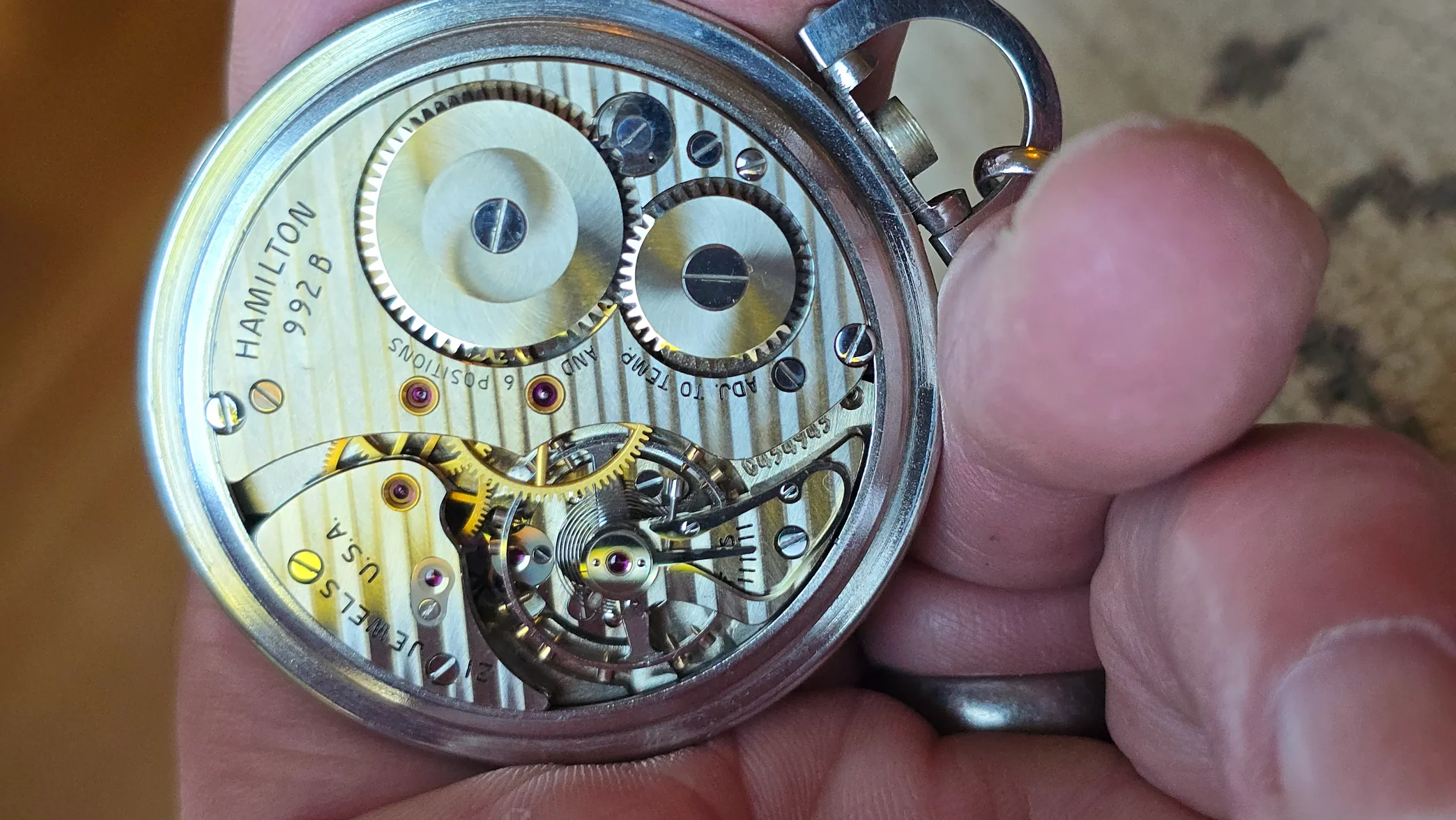
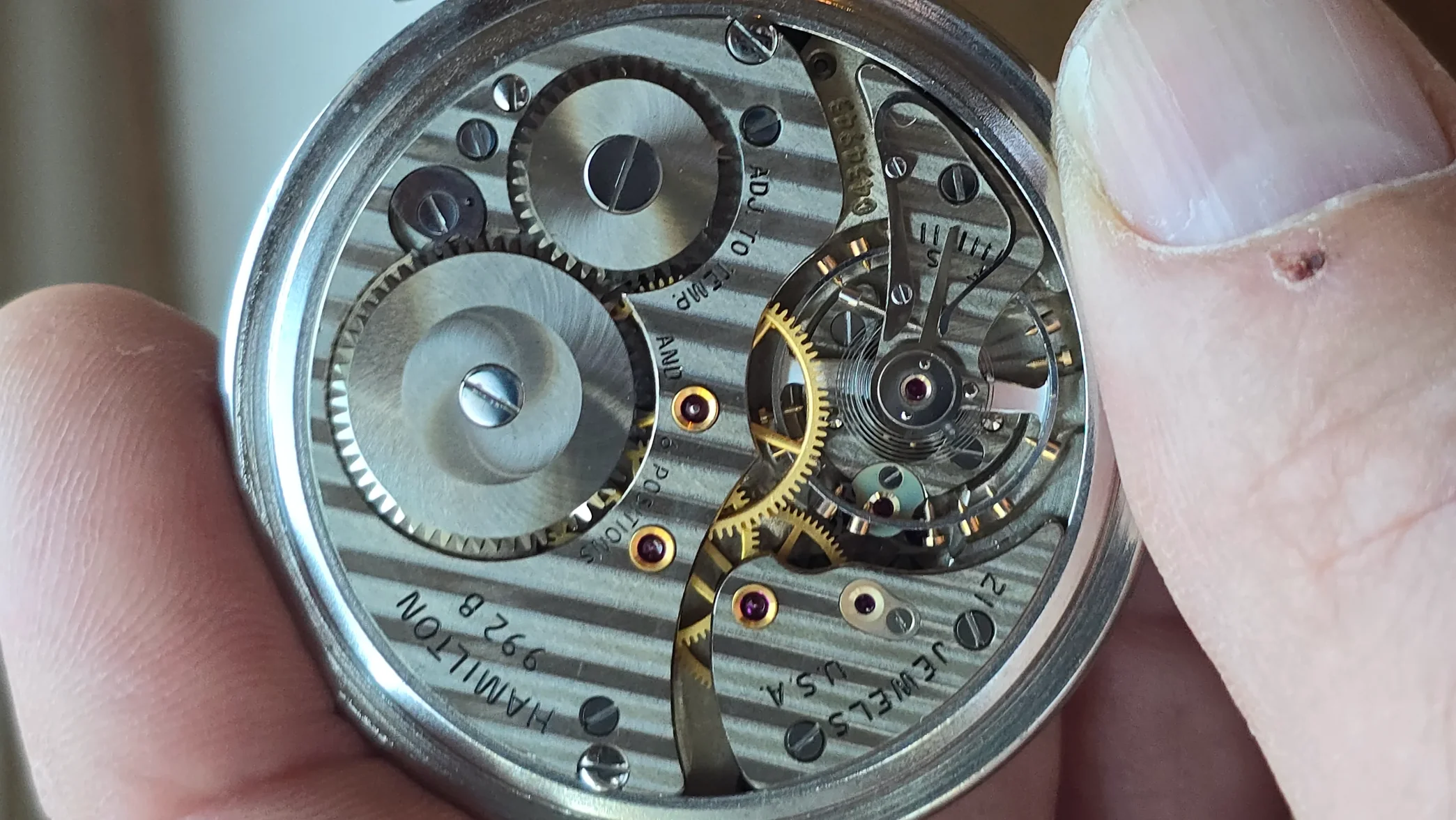
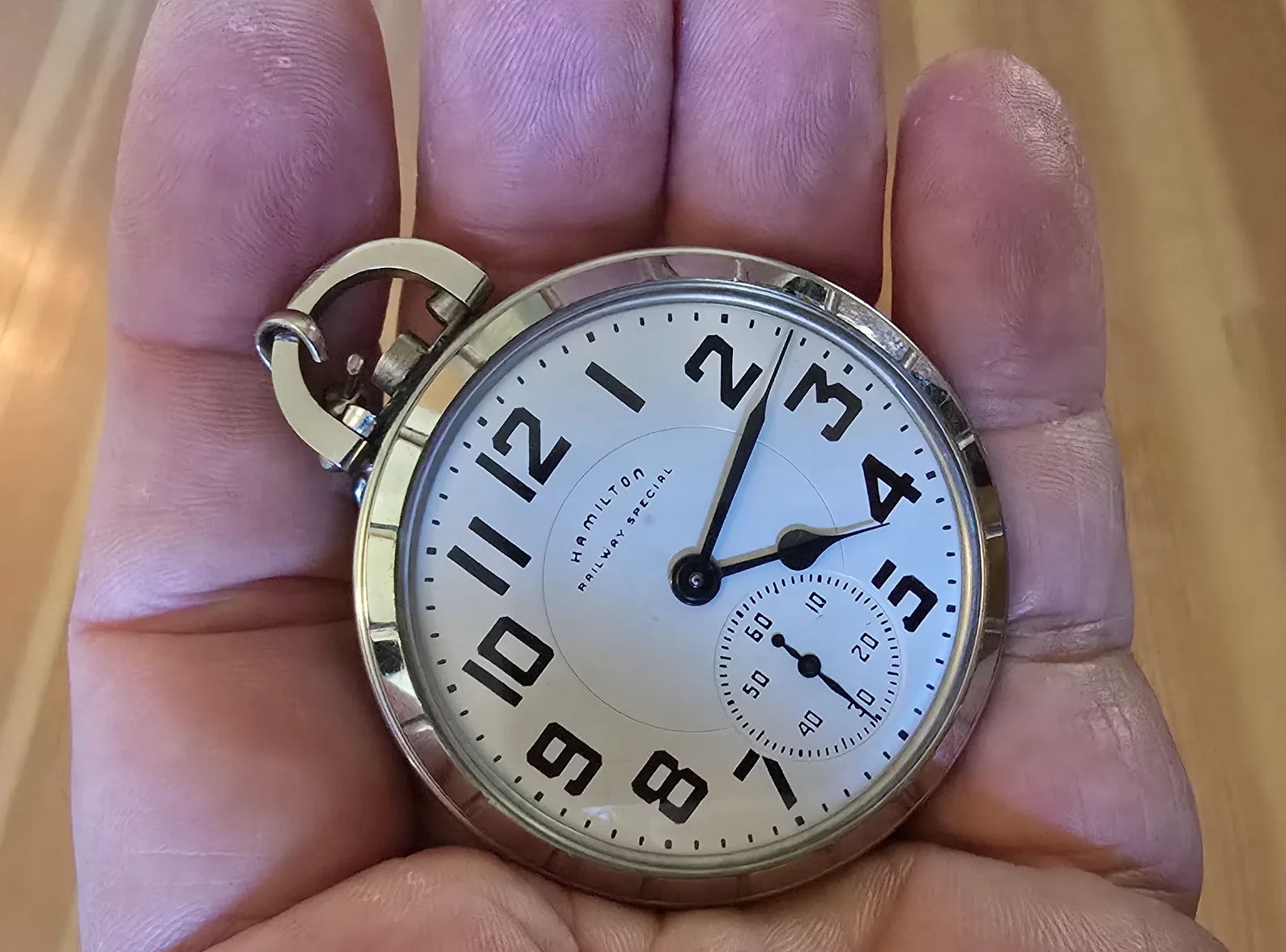
This watch isn't NOS, but it looks barely touched. The edges are sharp and the side brushing looks new. I took a little chance on it, as there was no movement photo, but it should have been a 992B, (which I've wanted, and own one 992 Hamilton. ) The movement is unmarked and the inner caseback looks new. (Anyone know what the stamps identify?)

The pocketwatchdatabase tells me this is a birth year watch for me, which is always fun. It's unbelievable how nice these dials are. They look brand new and pristine 70 years later.

I'm very happy, even though I need to find a crown and stem.


I might need a box soon.

Edit: found a nos crown on the bay. Checking on stem.
Edited:
 
Posts
15,981
Likes
48,047
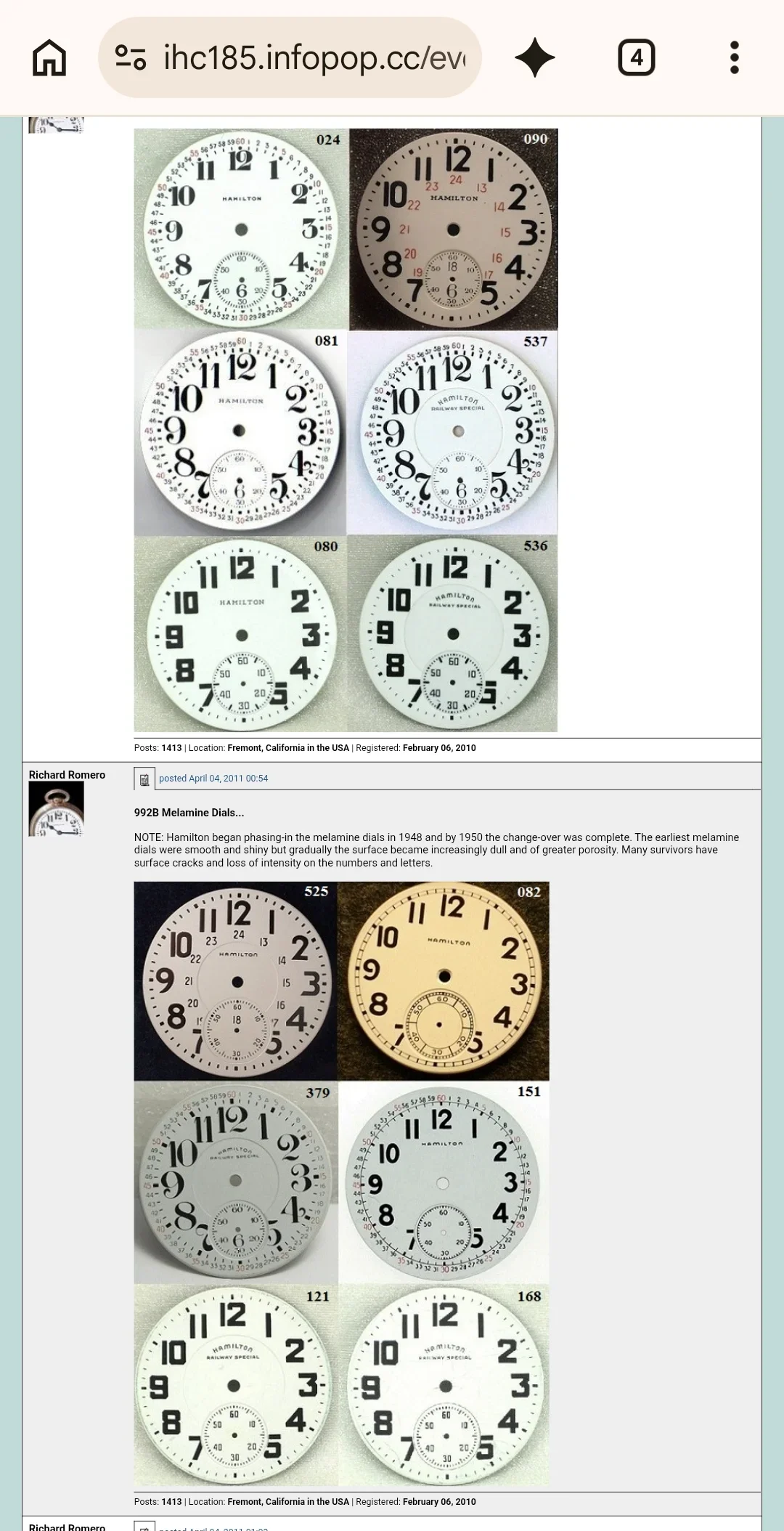
Early melamine dials didn’t seem to survive very well. It was a resin in liquid form applied to the metal substrate. Improvements were
made in the recipe, so later melamine dials lasted better.i have two Hamiltons with melamine dials, both of which are in good condition.

My understanding is that the factories experienced a 40% failure rate in producing vitreous enamel dials. Hence the change to melamine.
 
Posts
4,375
Likes
12,981
My 950B has a melamine dial. It's in such good shape that I've had to go out of my way to show that it's not enamel. It's made in 51 and by that point I think they had the formula figured out. I think that most of the dials that are really badly degraded are earlier ones.
 
Posts
15,981
Likes
48,047
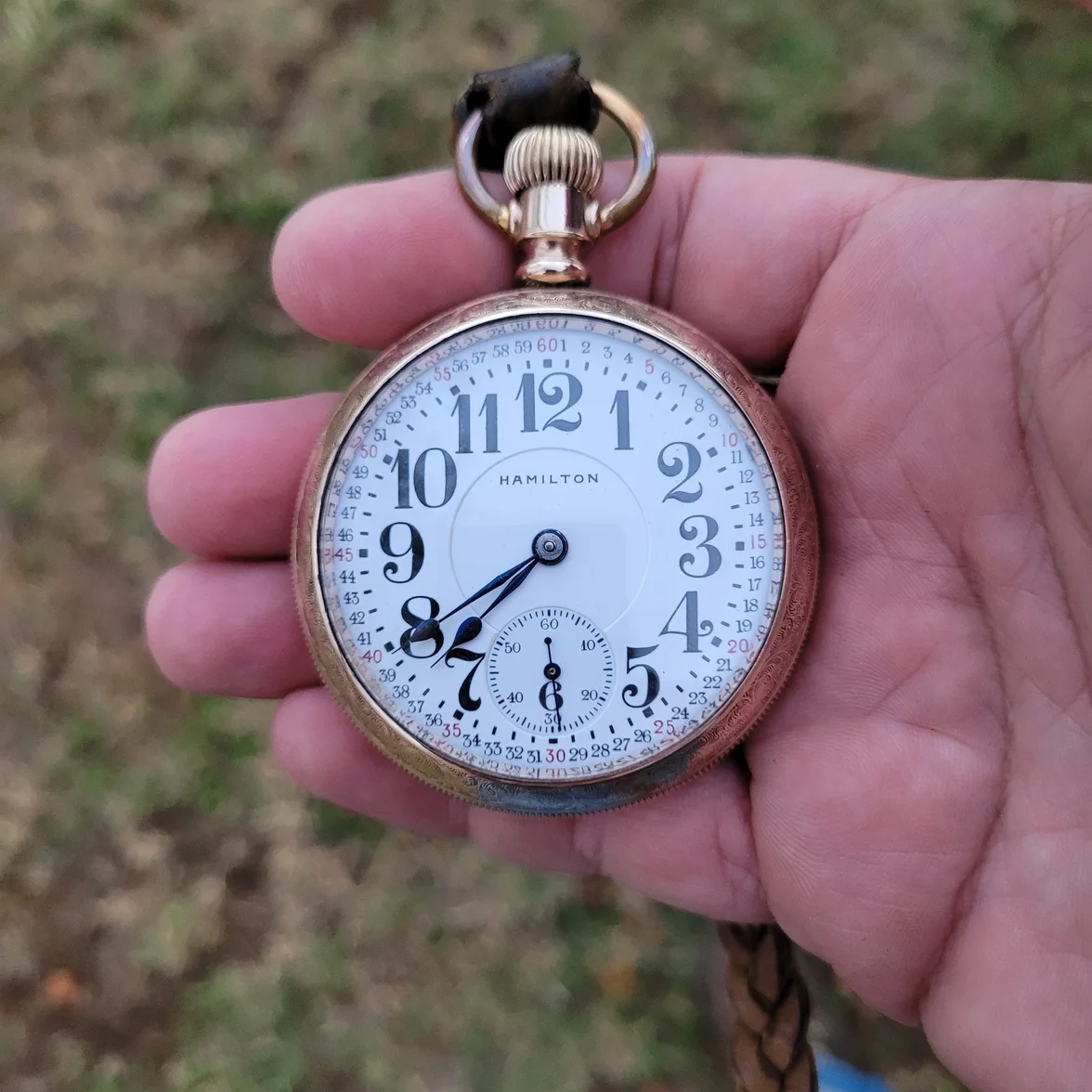
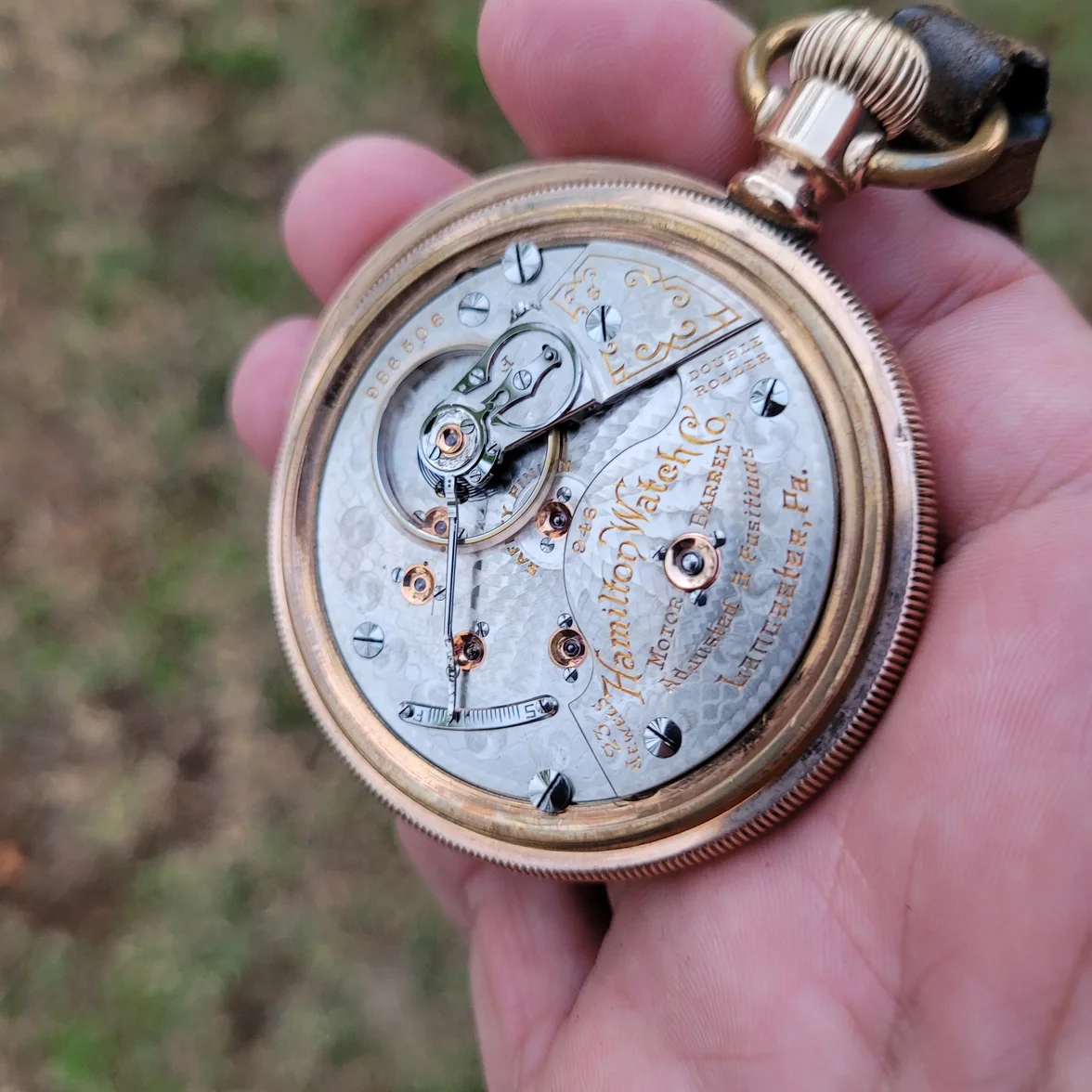
My 950B came to me in about 1985, and it also had a melamine dial. Very soon after I acquired it, a friend who owed me many favours,
presented me with a NOS double sunk vitreous enamel dial. He’d visited a watch material supplier in Vancouver B C, and he enquired about such dials. They had two, and he bought them both. One is now on my 950B. I still have the original melamine dial which is in excellent condition.
 
Posts
4,375
Likes
12,981
My 950B came to me in about 1985, and it also had a melamine dial. Very soon after I acquired it, a friend who owed me many favours,
presented me with a NOS double sunk vitreous enamel dial. He’d visited a watch material supplier in Vancouver B C, and he enquired about such dials. They had two, and he bought them both. One is now on my 950B. I still have the original melamine dial which is in excellent condition.
I'm currently bidding on an enamel dial for my 950B on ebay. As long as the bidding doesn't get stupid (knock on wood), I'll do the same, put the enamel dial on my watch and place the melamine one safely away.
 
Posts
15,981
Likes
48,047
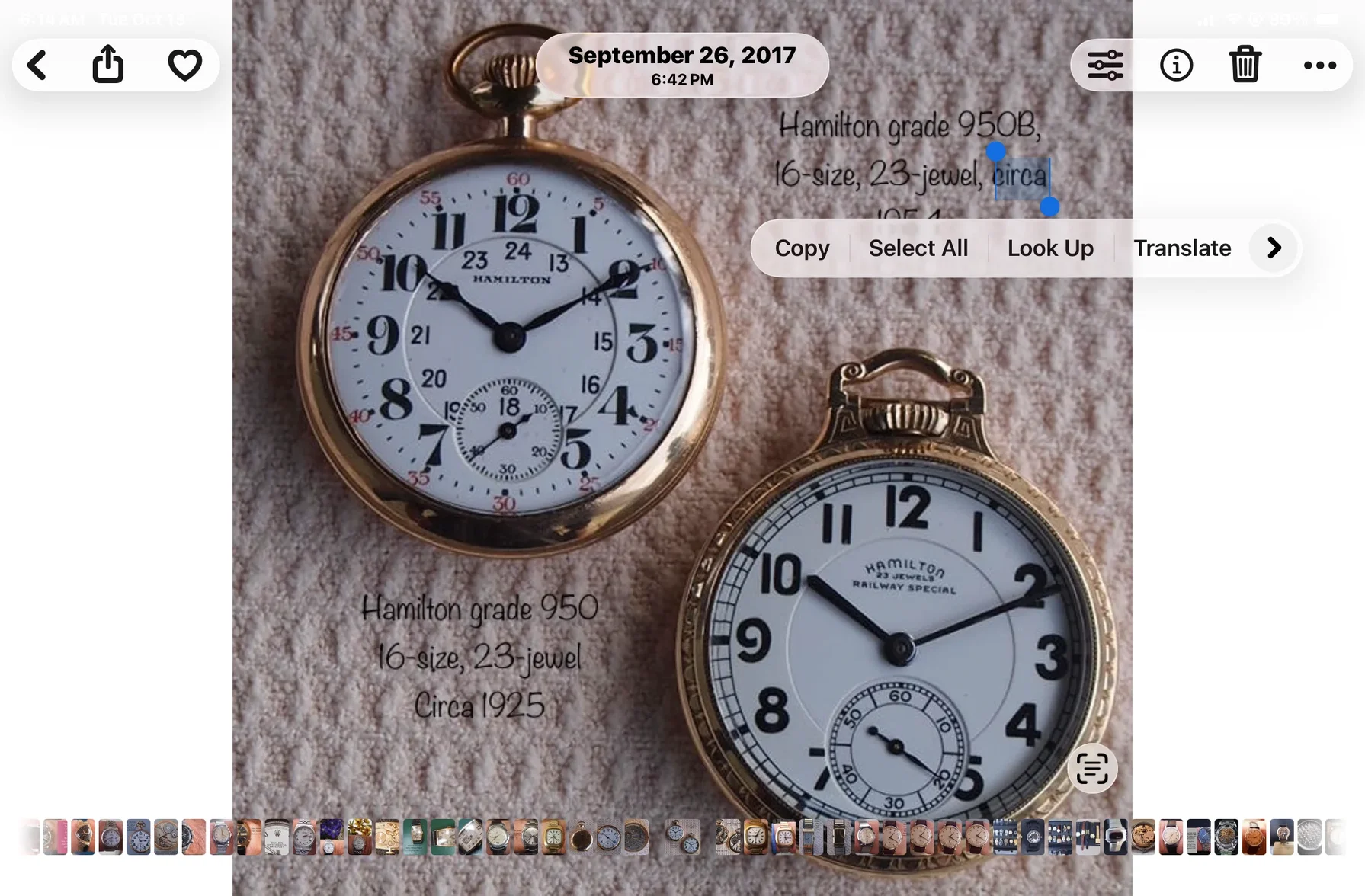
My 950B with the vitreous enamel dial. Along side my Hamilton 950.

 
Posts
4,375
Likes
12,981
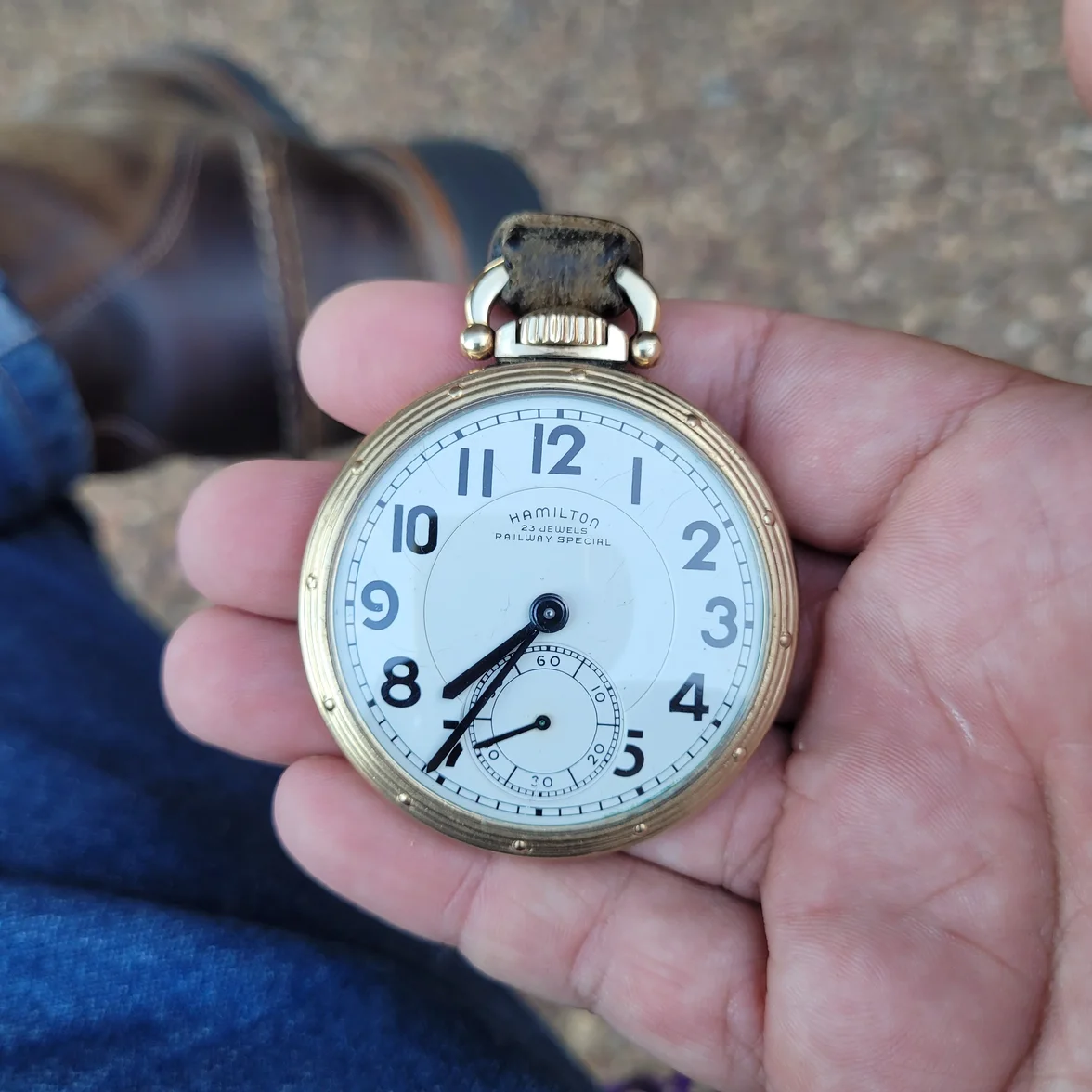
Here are my 950 and 950B, with its melamine dial.


I very nearly wore my 950 today, but I opted for the king of Hamilton railroad standard watches, instead.