Calling all Pocket Watch Buffs

Posts
836
Likes
3,584
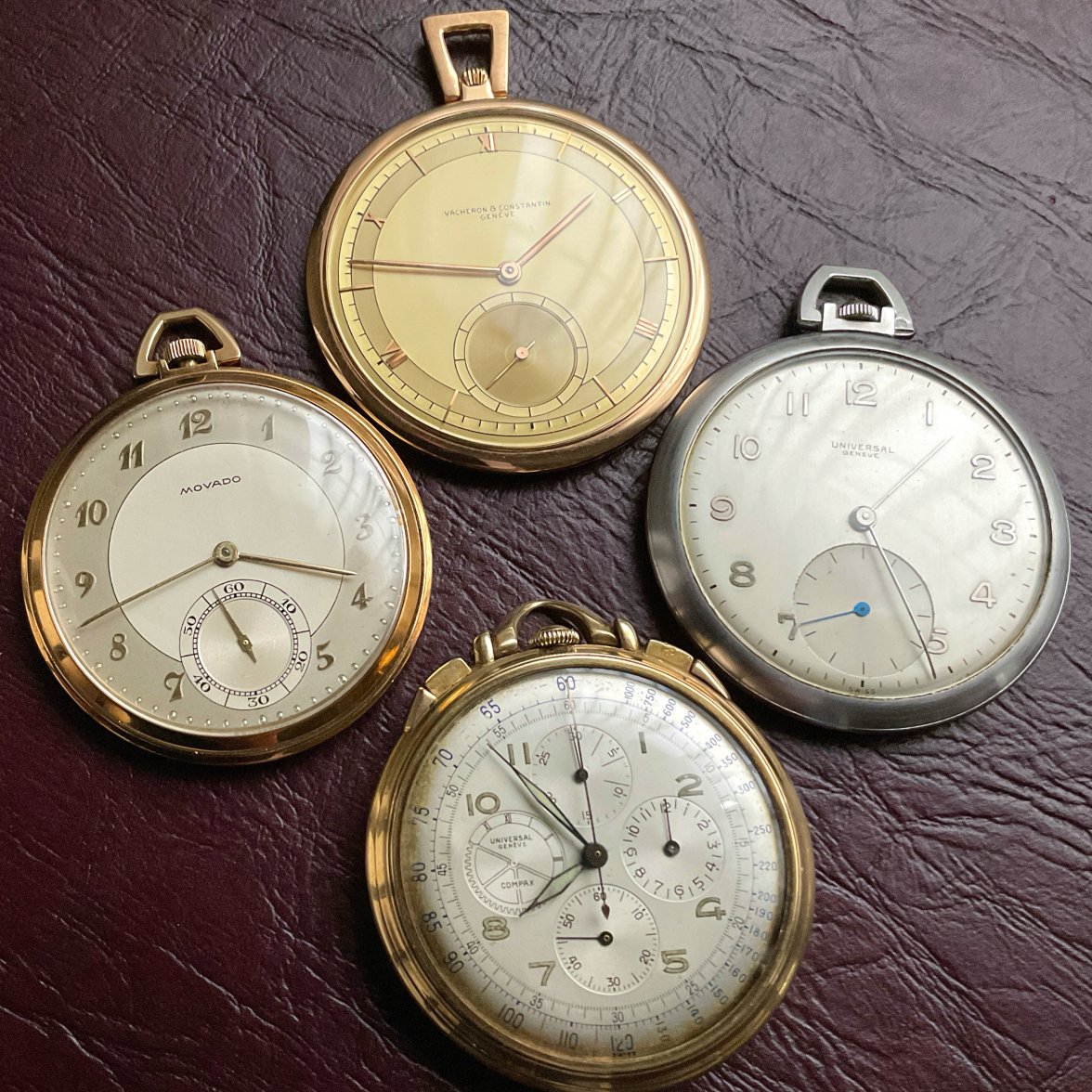
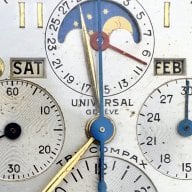
A style of numerals for every vintage pocket watch lover! Breguet (Movado) ✔️ Roman (Vacheron) ✔️Deco ✔️ and Radium✔️ (both Universal Geneve).
 
Posts
17,419
Likes
164,518
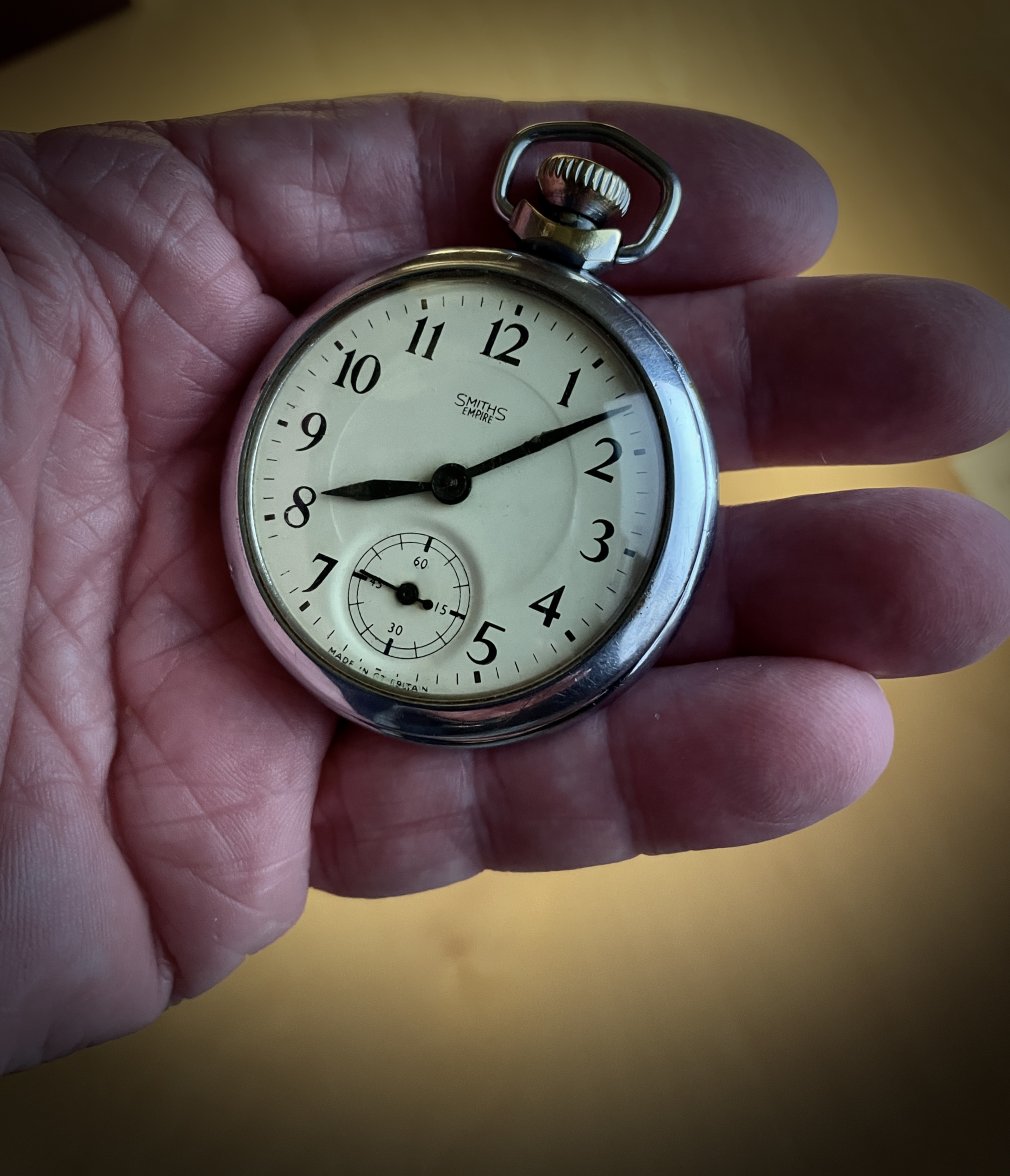
A rare outing for the Smiths today,

 
Posts
3,797
Likes
10,383
A style of numerals for every vintage pocket watch lover! Breguet (Movado) ✔️ Roman (Vacheron) ✔️Deco ✔️ and Radium✔️ (both Universal Geneve).
Stunning watches. The VC and UG Compax are exquisite.
 
Posts
15,242
Likes
44,766
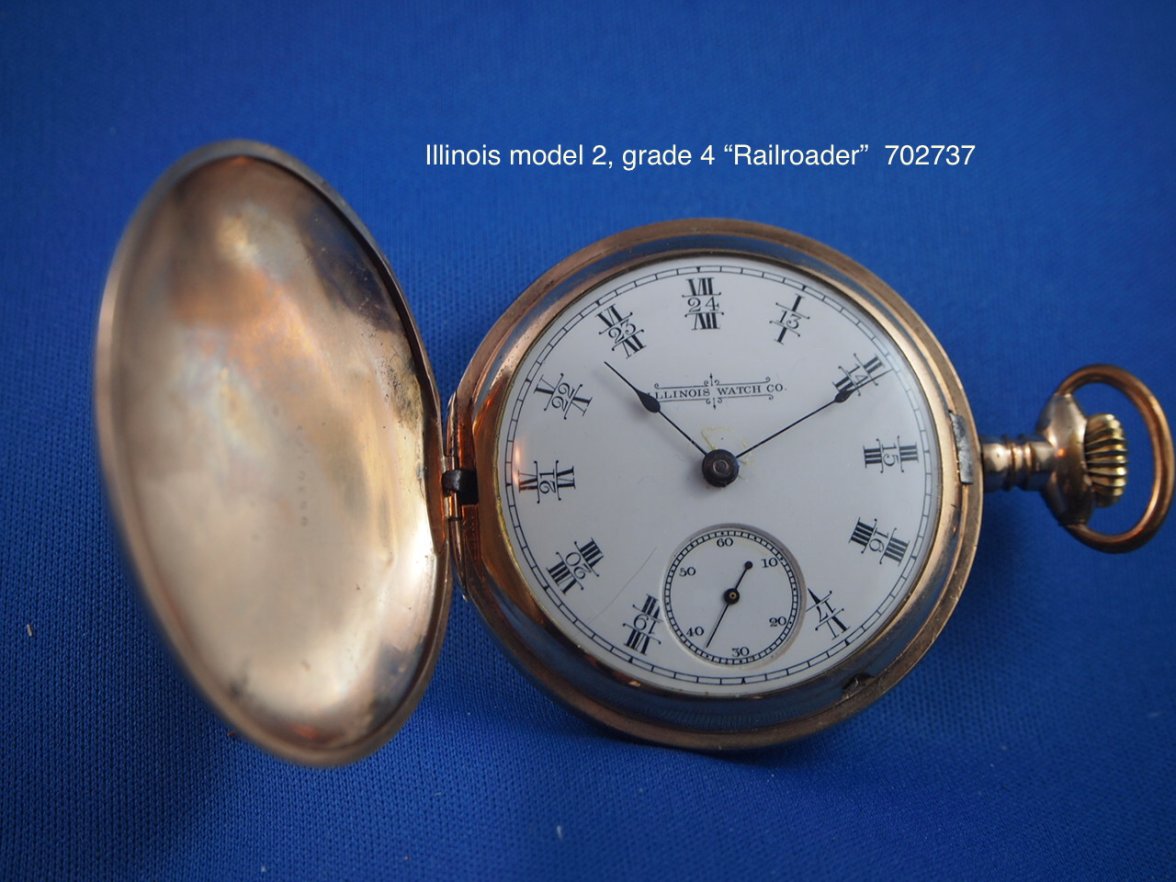
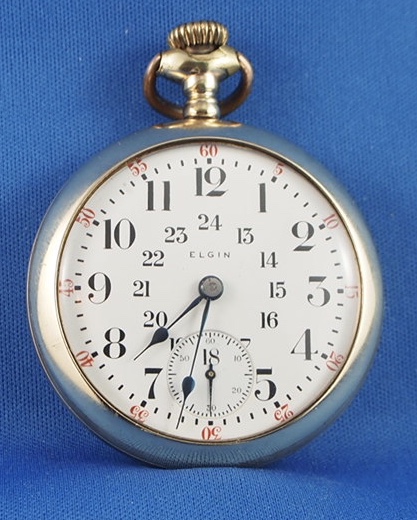
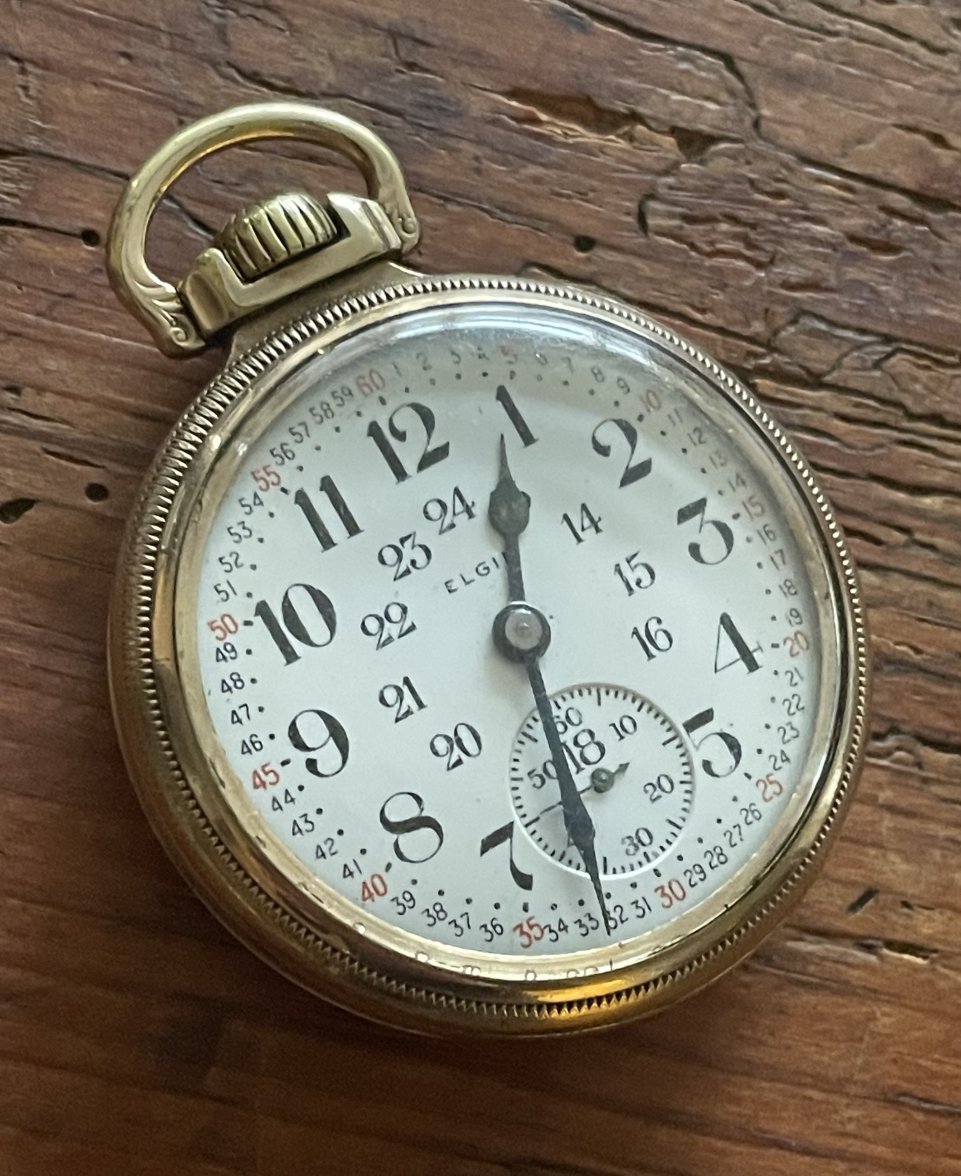
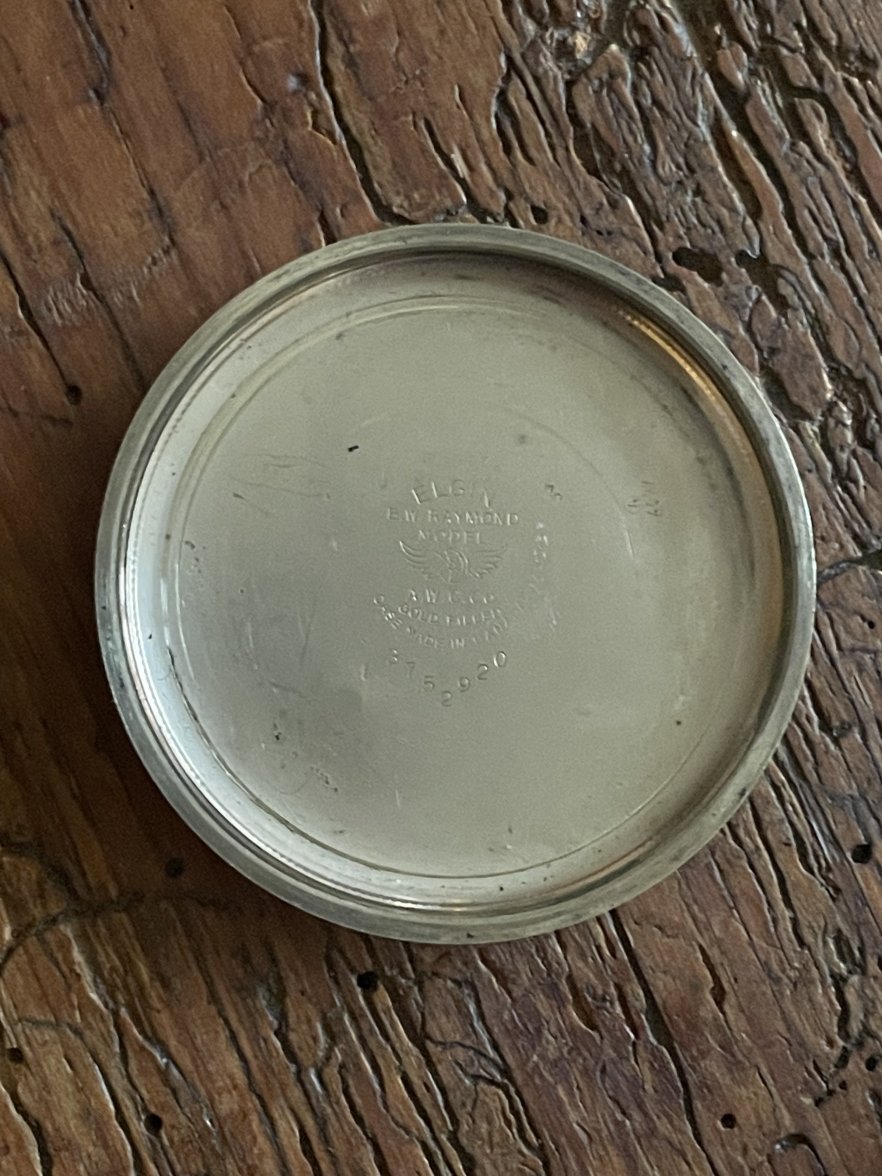
A couple to add to the gallery.

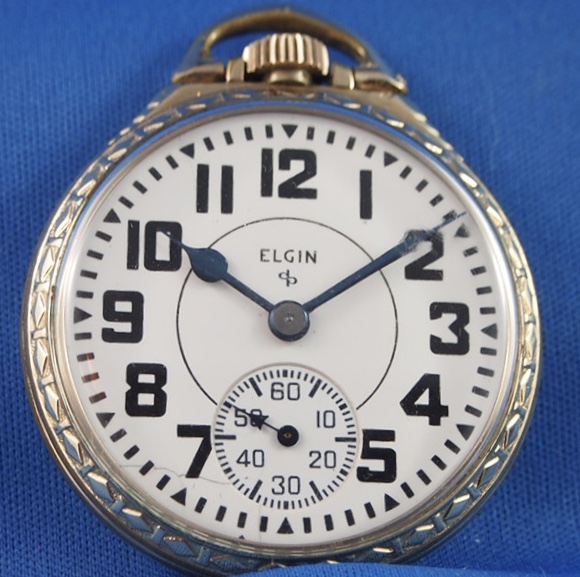
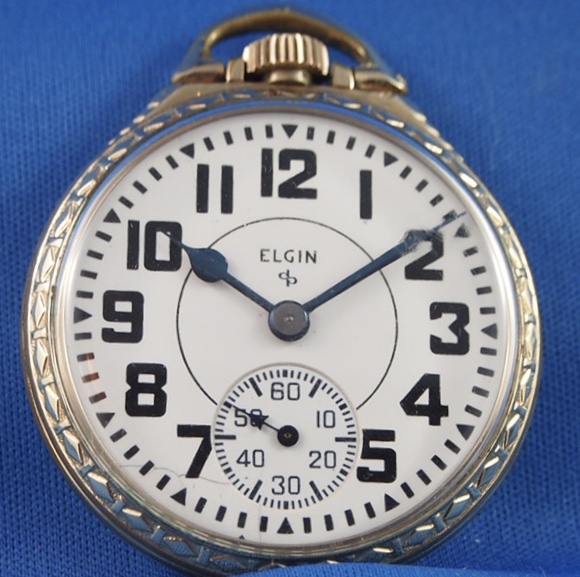
A BOXCAR dial, and a rather unusual 24-hour dial

 
Posts
330
Likes
2,494
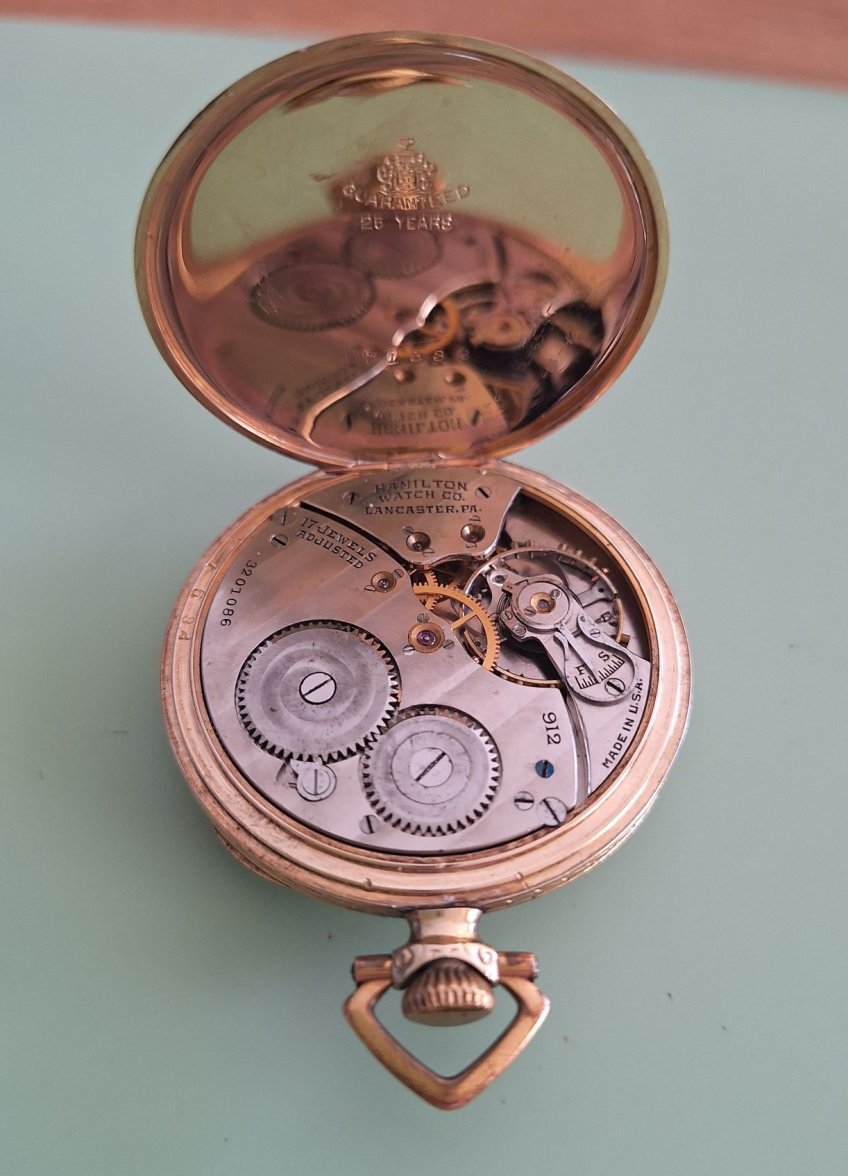
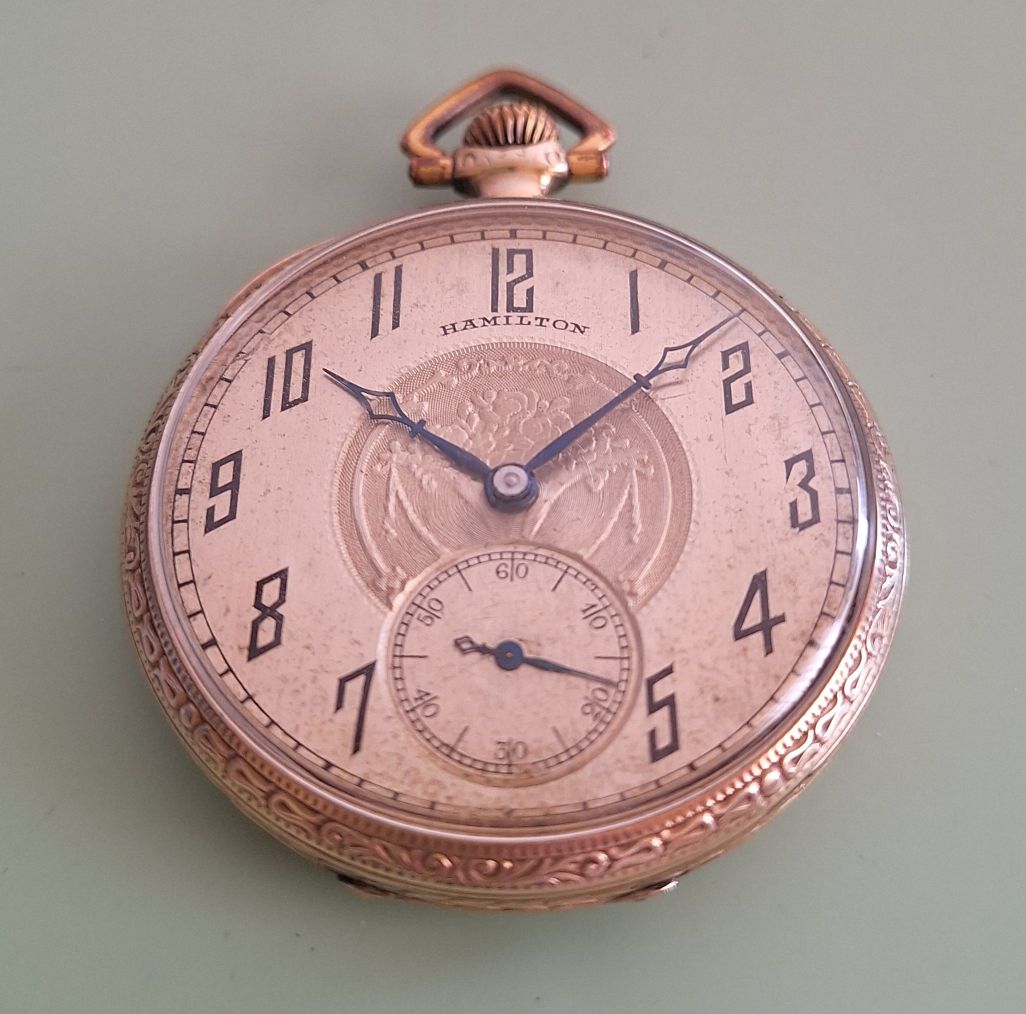
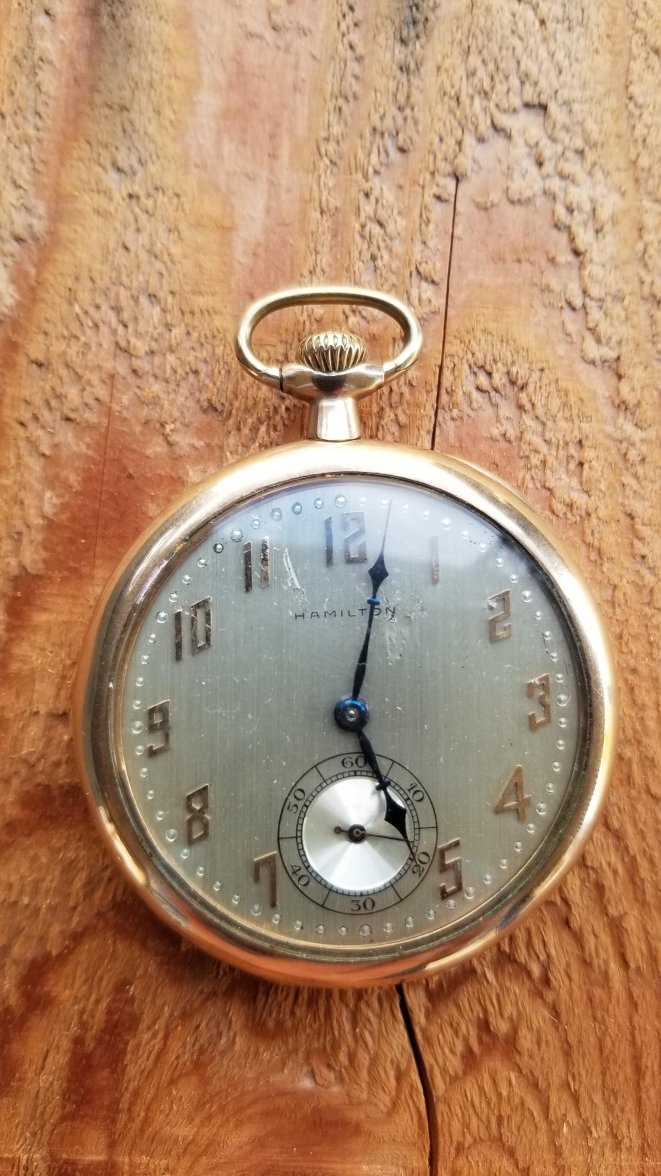
Now that I have just won my second pocket watch in an auction, maybe it's time to present my first ;-)

First off, I love "classic" Hamilton wristwatches (well, from their period in the U.S., anyway) - my oldest working one is a "Clark" from 1938, and the oldest non-runner is a 1930 "Palisade" that I still need to find out if it can be made to run again.

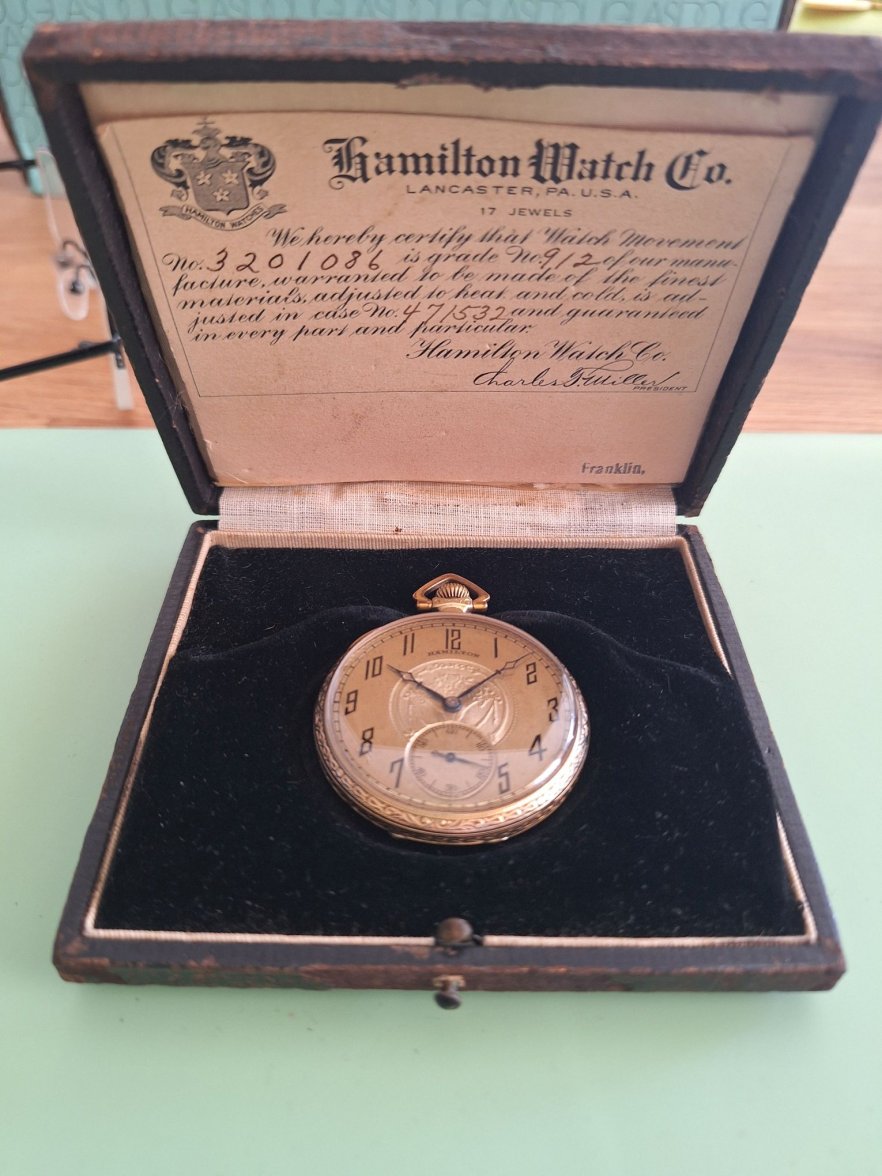
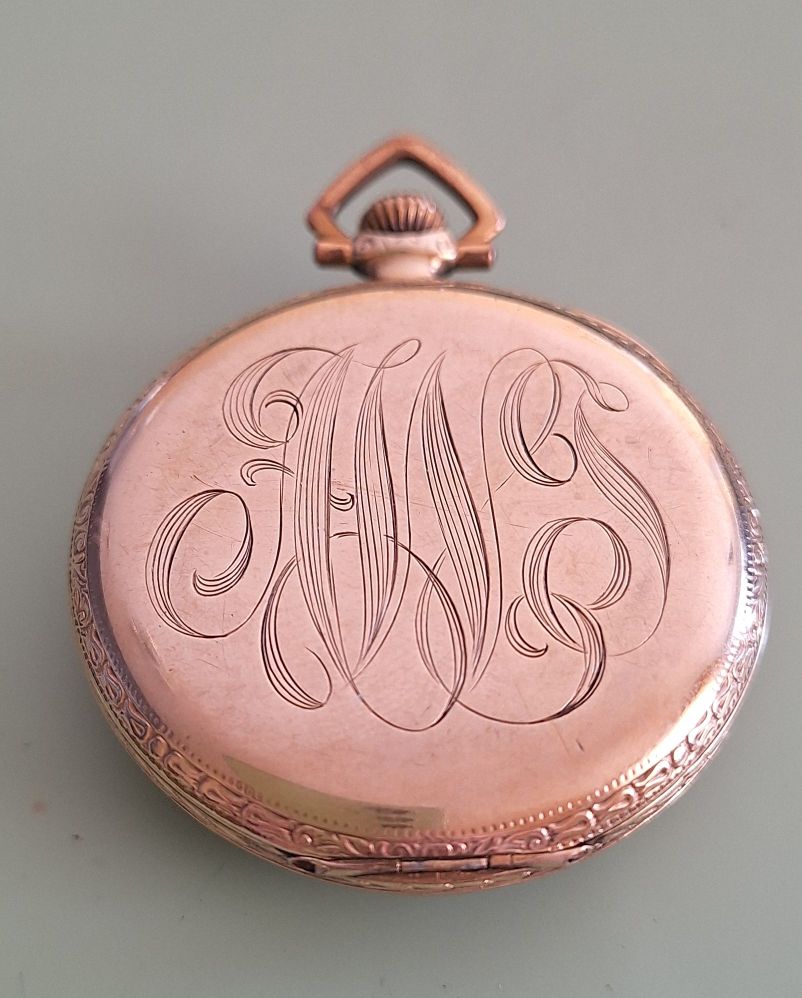
But at some point, I had to have at least one pocket watch from Hamilton, so I was happy to find one here in Germany several months ago. And the best part is, it came with the original box! I'll start the avalanche of photos before I write some more about it:

 
Posts
330
Likes
2,494
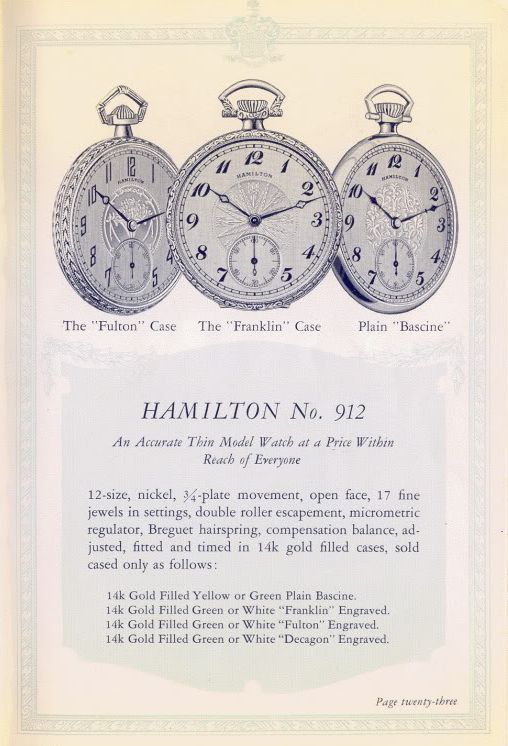
So, I remember reading somewhere that the Hamilton 912 movement is notoriously hard to get a production date for, as the database for it is somewhat off. The pocketwatchdatabase website lists it as "manufactured in 1923", which is close, but not 100% accurate as the movement was only introduced in 1924 (and made up to 1935). However ... this pocket watch has a stamp on the inner case saying "Guaranteed 25 years" - and this form of marking a watch as "gold filled" was no longer legal after 1924.

So, since the case is original to the watch (case number matches the certificate), this is a watch from 1924, making it exactly a hundred years old now. The model was called "Franklin", it's green gold filled and here's a page from the Hamilton 1924 catalogue:


Hope you like that one 😀

Anyways, it's always fun to research these old watches. Hamiltons are particularly fun, because there is just so much data available ... heck, I even found an old price list from April 1924, where it cost $48!
 
Posts
627
Likes
2,095
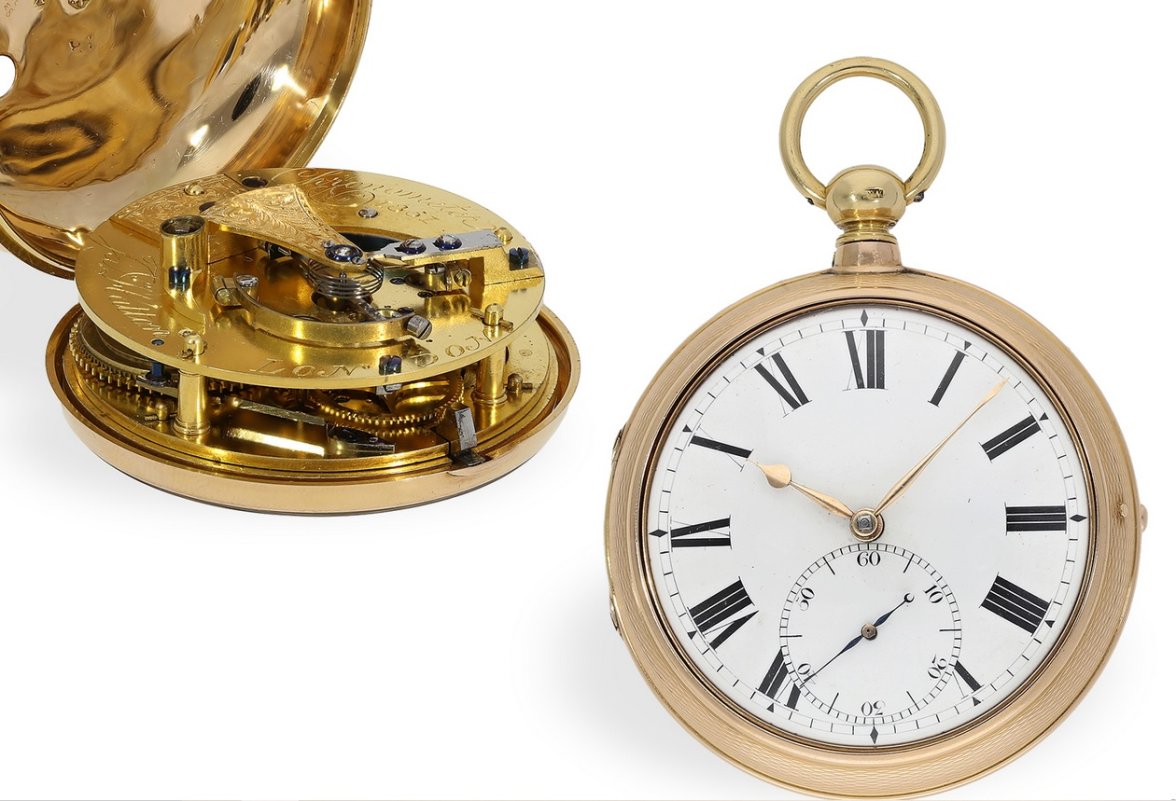
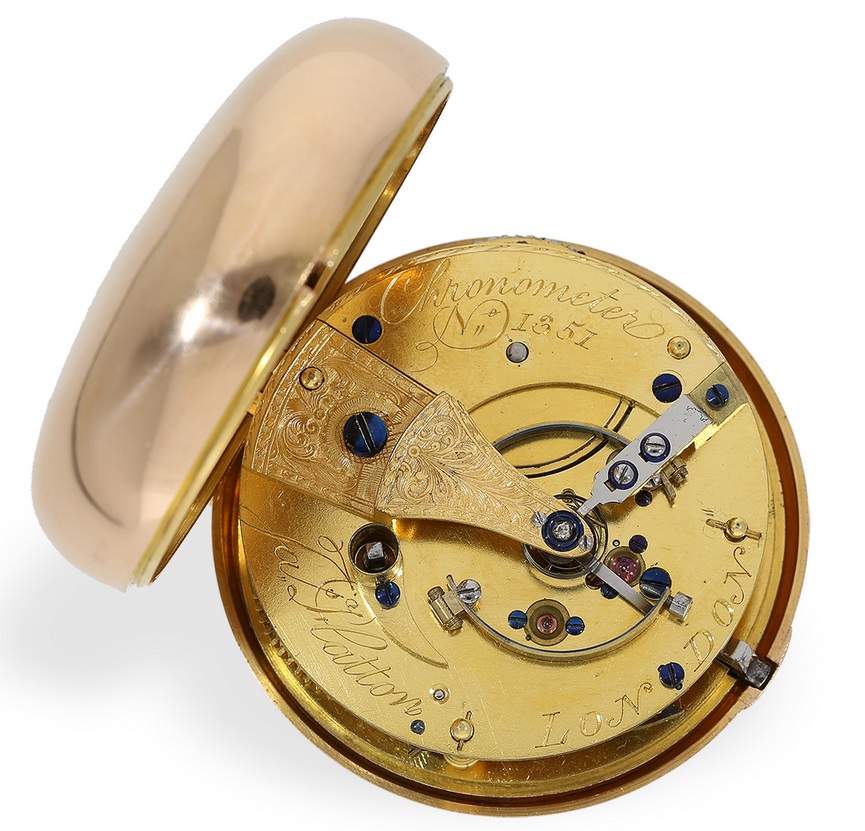
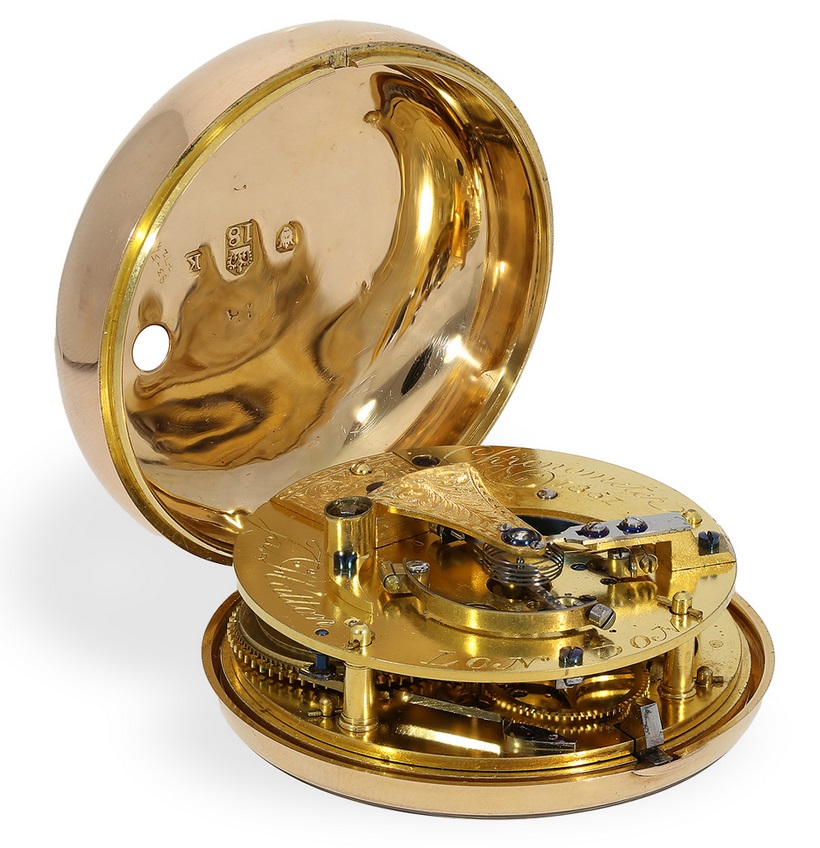
You might like this one (I hope that I did not post it already). Detent chronometer escapement with "S" balance. The weight for regulation of the temperature compensation can be microregulated with a tangential screw. The advantange is that for first regulation of the the weights these are shifted along the circumference of the balance rim in usual manner until compensation is more or less satisfactory. And then the balance is poised. The fine adjustment is done subsequently, using the tangential screws in the compensation weights, thus not needing to release the weights from the balance rim again and, consequently, not needing to poise the balance another time.

Furthermore the upper terminal end of the hairspring is attached to a separate cock, which carries a fixing plate, which can be shifted in radial direction.

Hatton was known for this unusual movement design. Marked 1805, pair case.

 
Posts
15,242
Likes
44,766
Museum quality, @Bernhard J ! The helical hairspring appears to be of a white metal. This likely would be from an era when Palladium was not likely used for hairsprings. It is hard for me to guess what was used. Steel? I see a diamond end stone on the balance cock. Beautiful piece!
 
Posts
830
Likes
6,663
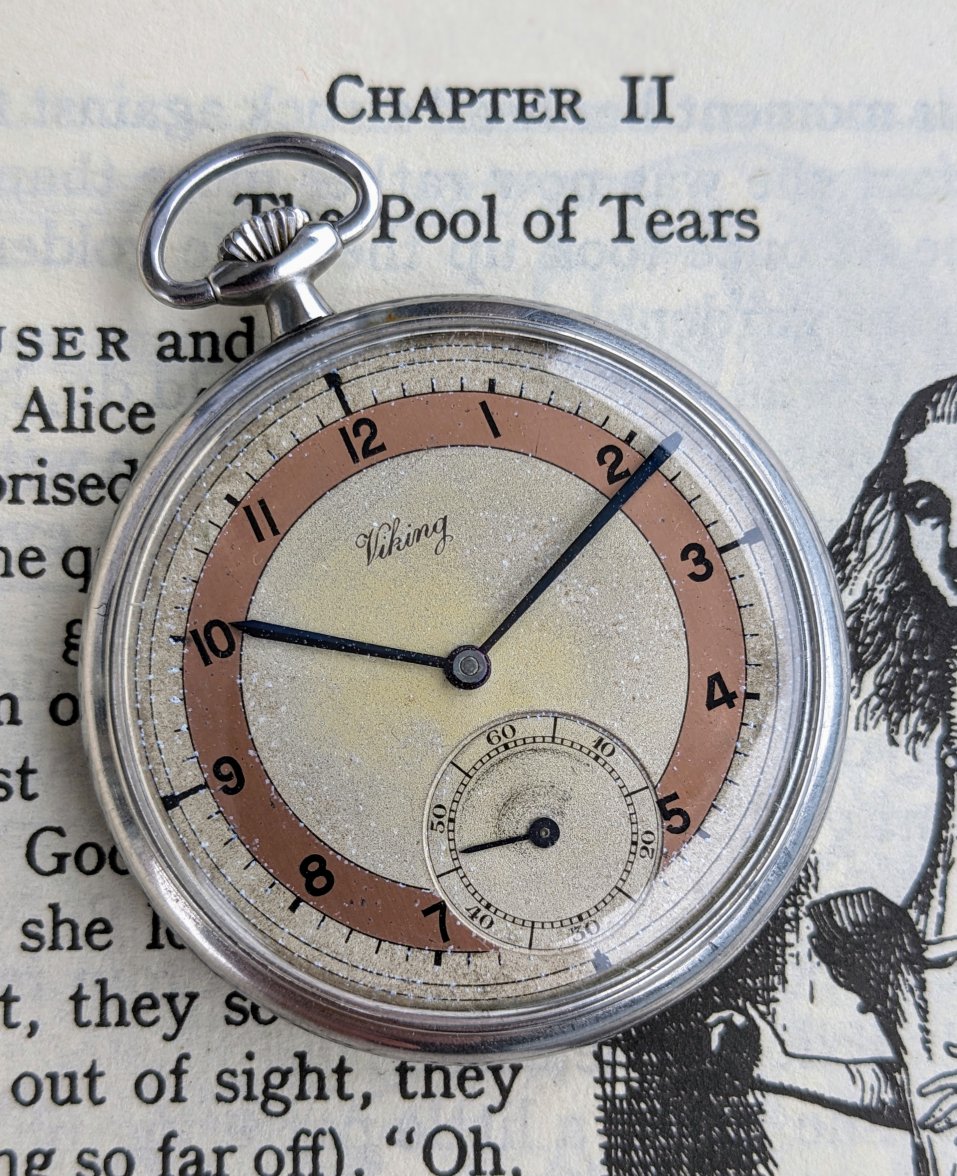
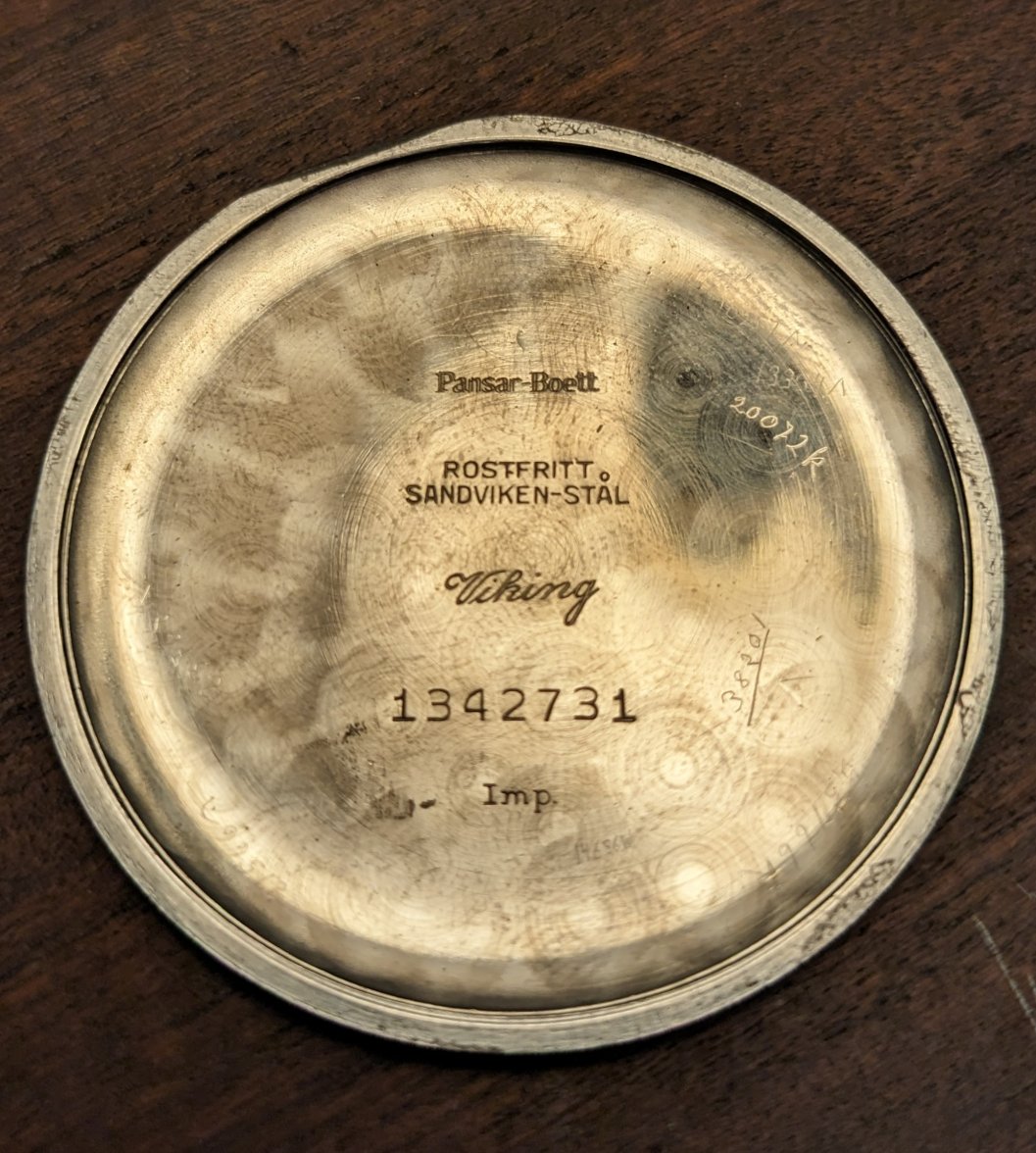
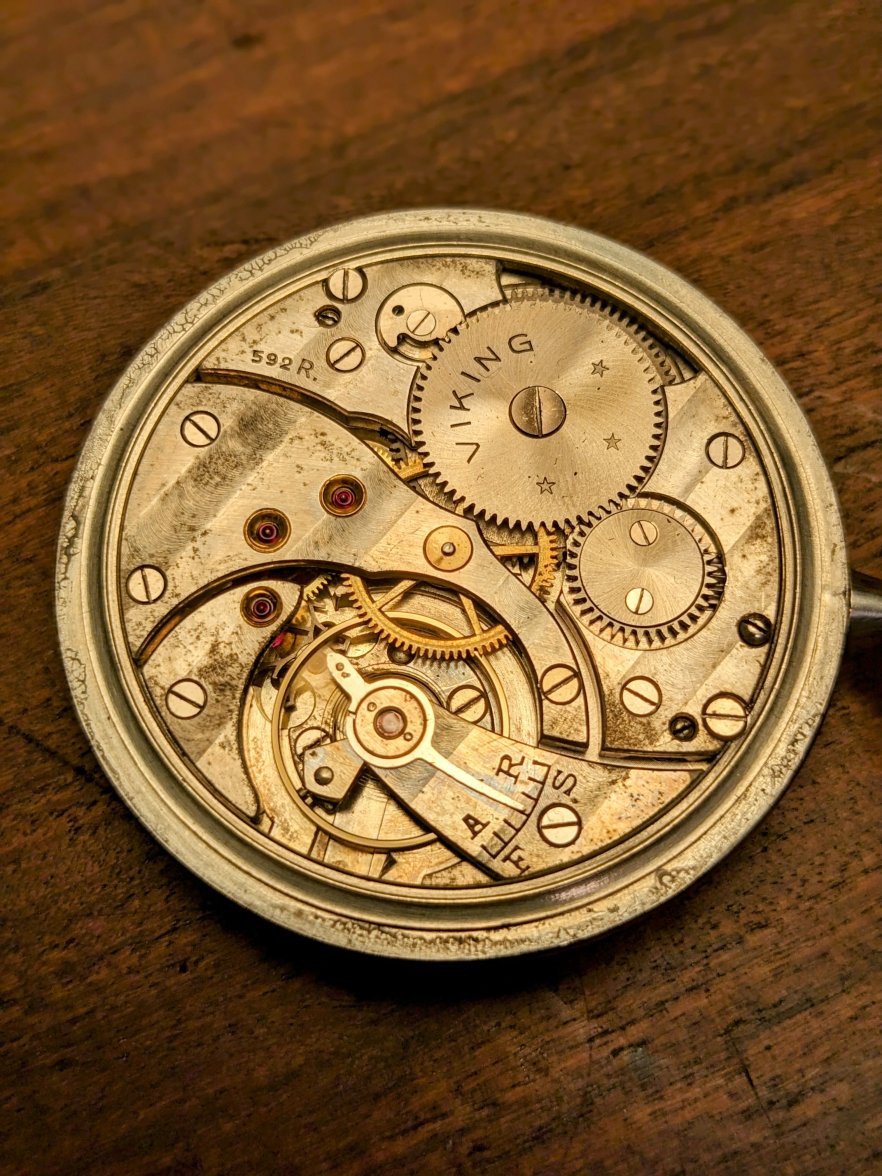
Chapter II: A Cheap European Pocket Watch

SS case, caliber Cortébert 592R. In Sweden Cortébert sold their watches under the name "Viking" so this cheapie has an in-house movement.

 
Posts
15,242
Likes
44,766
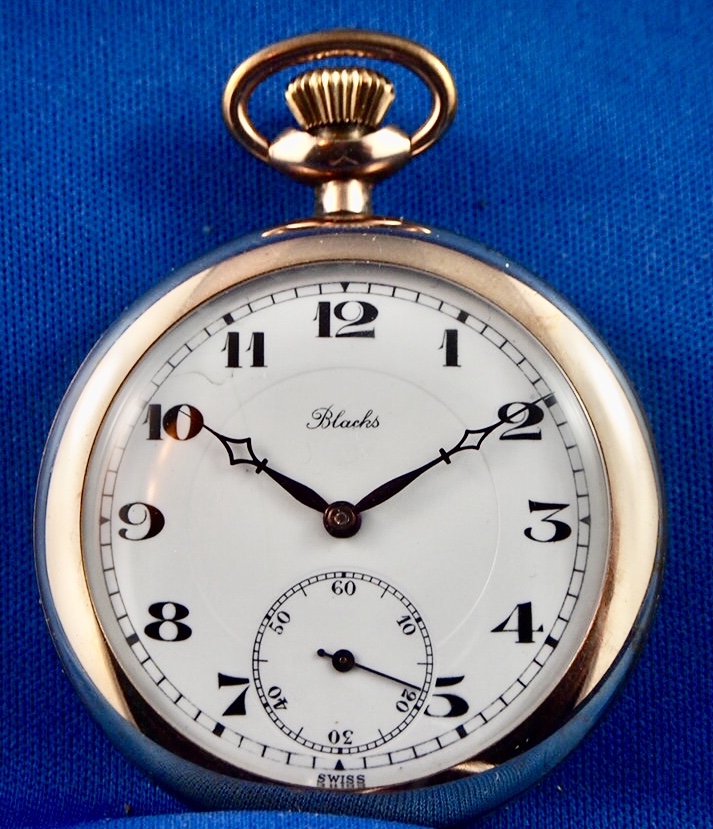
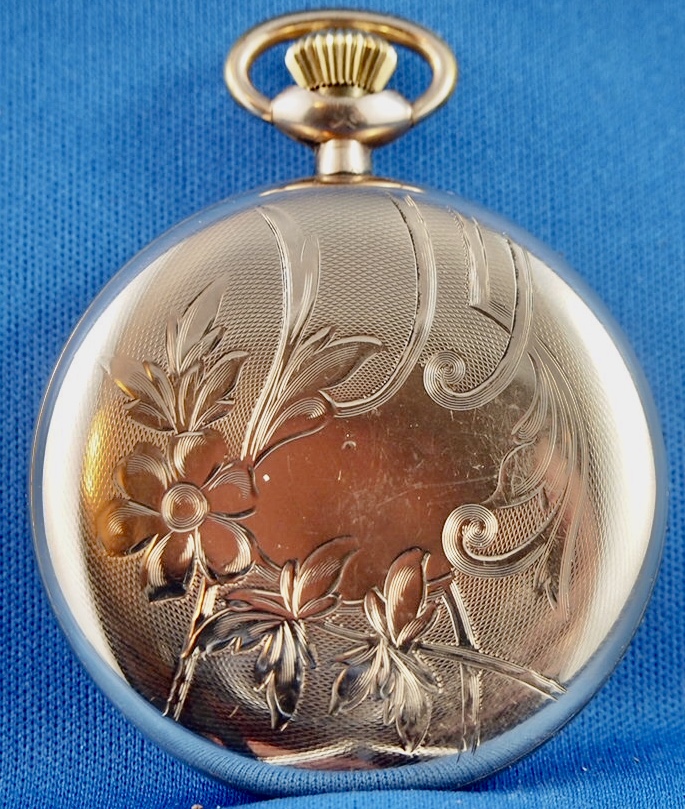
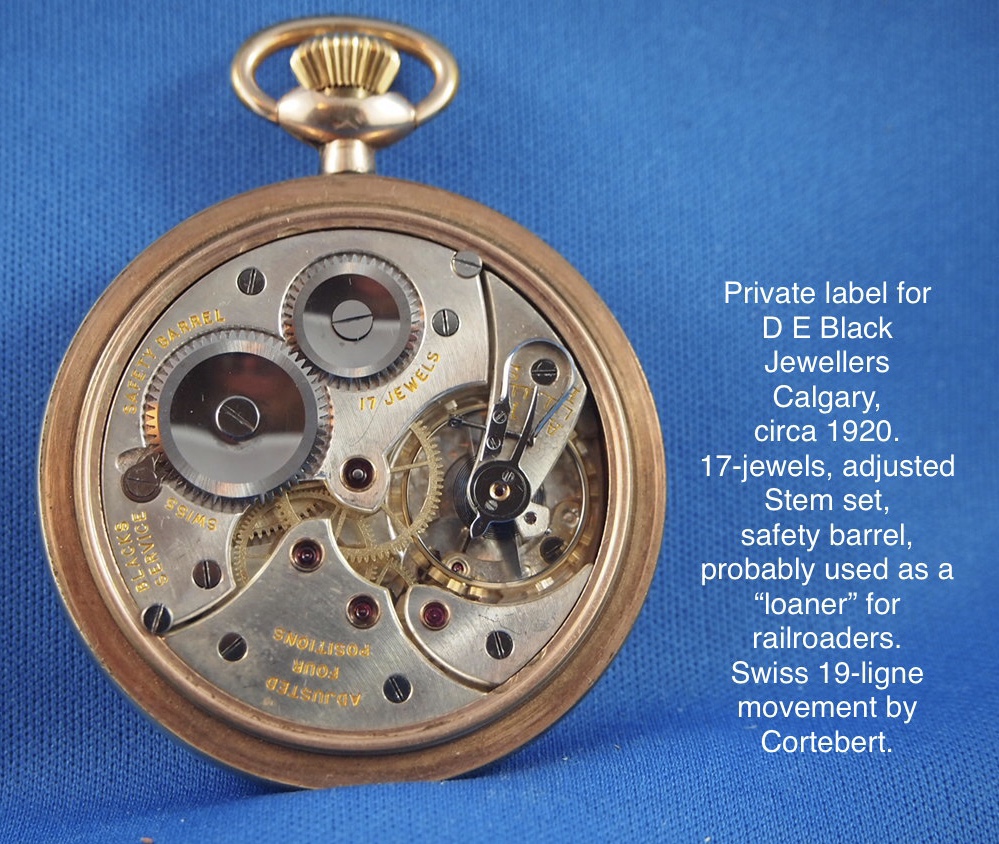
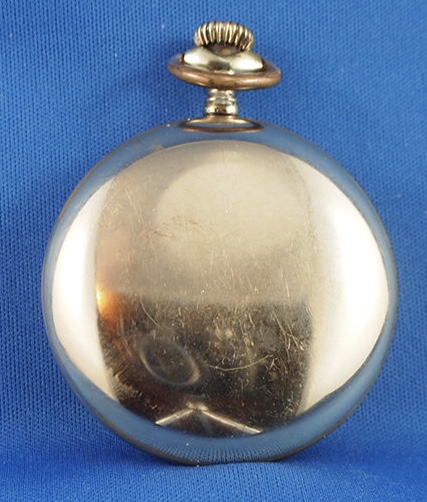
I really like the rose gold colour of the trim on the dial on your Viking. I have only one pocket watch with a Cortebert calibre movement in it. This one is a private label for an early Calgary jeweller, D E Black. This is not its original case. The movement is a different calibre to yours. This one is a bit unusual in that it has a “motor barrel” rather than a typical “going” barrel. The movement is marked “Black’s Service”. D E (David) Black was as watchmaker turned jeweller, and he was a railroad watch inspector. This watch has a patent regulator, and is adjusted to “four positions”. I suspect this watch saw service as a “loaner” which was used by a railroader when his watch was in for servicing. Black sold out to Henry Birks & Sons circa 1929.

 
Posts
3,797
Likes
10,383
You might like this one (I hope that I did not post it already). Detent chronometer escapement with "S" balance. The weight for regulation of the temperature compensation can be microregulated with a tangential screw. The advantange is that for first regulation of the the weights these are shifted along the circumference of the balance rim in usual manner until compensation is more or less satisfactory. And then the balance is poised. The fine adjustment is done subsequently, using the tangential screws in the compensation weights, thus not needing to release the weights from the balance rim again and, consequently, not needing to poise the balance another time.

Furthermore the upper terminal end of the hairspring is attached to a separate cock, which carries a fixing plate, which can be shifted in radial direction.

Hatton was known for this unusual movement design. Marked 1805, pair case.

Absolutely gorgeous Bernhard. That escapement is a work of art all its own.
 
Posts
627
Likes
2,095
The helical hairspring appears to be of a white metal. This likely would be from an era when Palladium was not likely used for hairsprings. It is hard for me to guess what was used. Steel? I see a diamond end stone on the balance cock. Beautiful piece!

Indeed the hairspring is made of steel. It also has an unusually small diameter, compared with the diameter of the balance wheel.

The diamond end stone in English watches was rather a "gimmick", it looks nice and suggests additional value. But actually the diamond does not add significantly to the material value, even in case of watches in silver cases. And does not have an advantage over other end stone materials technically.

Best, Bernhard
 
Posts
15,242
Likes
44,766
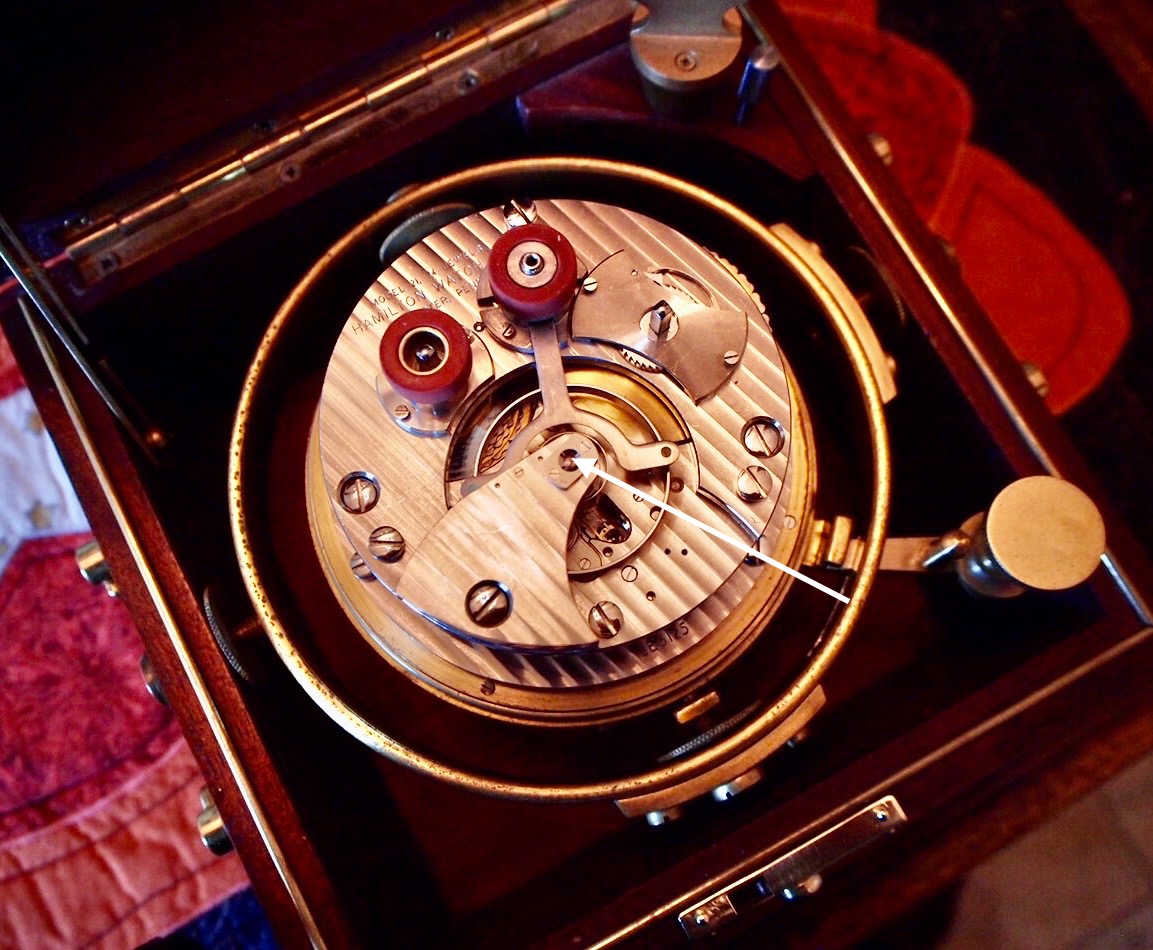
One instance where a diamond end stone has its place is in (for example) the Hamilton model 21 marine chronometer. These chronometers run facing upwards, so the balance cock (being positioned as it is), bears the weight of that large balance wheel. The end stone on the balance cock is a diamond. That may also be the case with many other marine chronometers.

This is my Hamilton model 21 marine chronometer. The arrow points at the diamond end stone on the balance cock.

Edited:
 
Posts
3,797
Likes
10,383
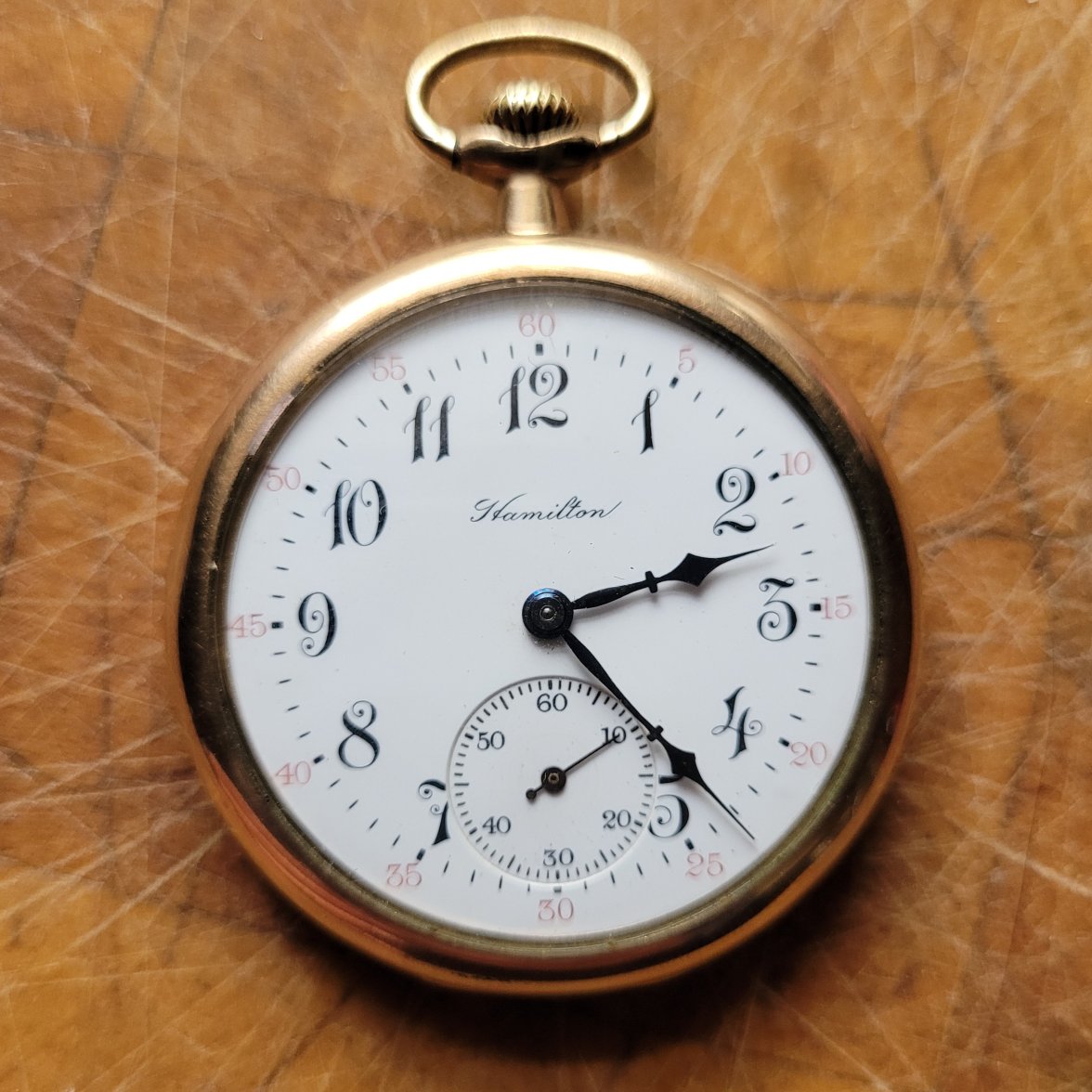
My Hamilton 920's dial was scratched and had two of the dial feet broken off when I acquired it a few years ago. Occasionally, I would hop on ebay looking for a replacement dial, and recently I found a 914 movement with a pristine enamel dial. I bought it and it arrived today. In the first photo you can see it's original metal dial. In the second you can see the new dial. I had not thought about the minute track when I bought it and now it is obvious that the hands and dial are mismatched. Unfortunately, the 914 did not have hands, so I will start looking for a new hand set soon.
Edited:
 
Posts
17,419
Likes
164,518
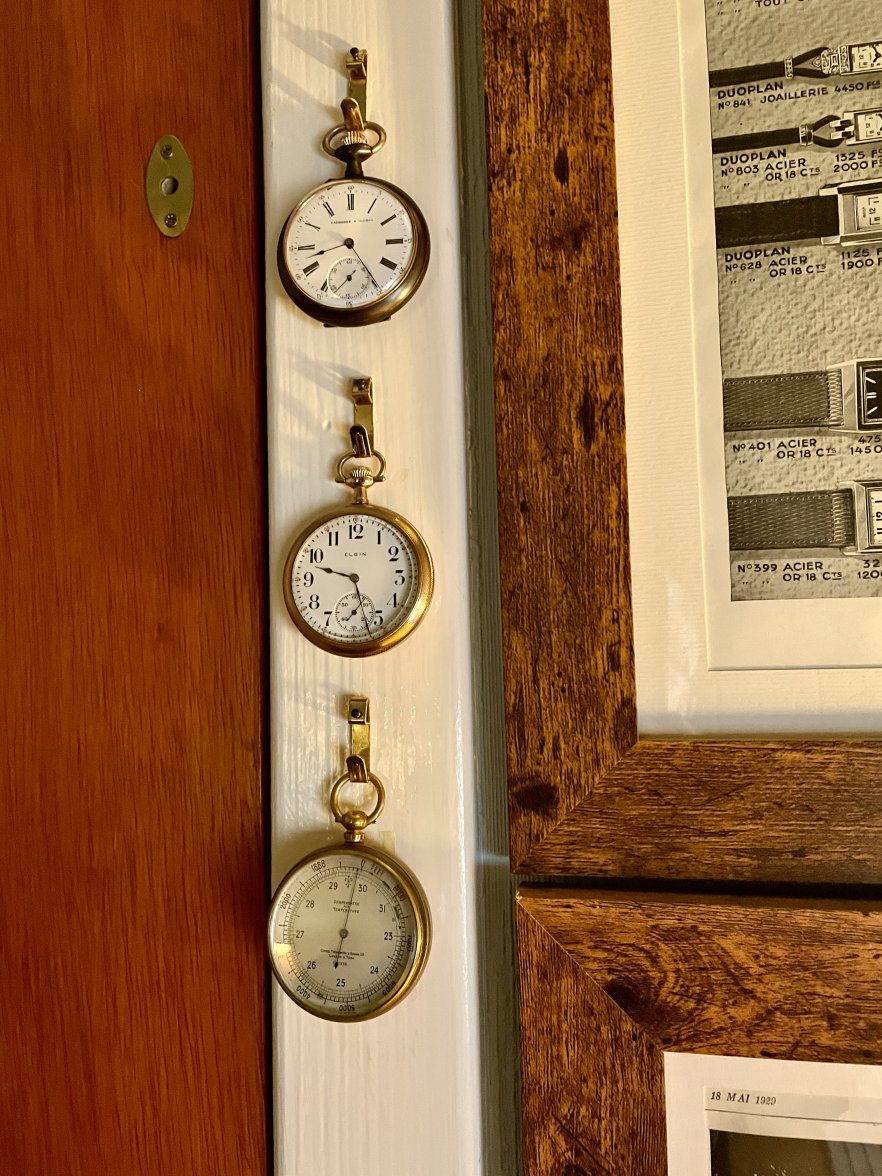
Usual culprits hanging around today 🤦

 
Posts
15,242
Likes
44,766
@Alpha ,

Every time I see your Elgin, I miss the one I sold last year. I fell heir to the watch, in its bad case. It needed a balance staff, a balance staff foot hole jewel in setting, mainspring, crystal (all genuine Elgin parts I had on hand), recondition, seconds hand, and a better case. I did all that, and really enjoyed wearing it. It was keeping railroad standard time when I got an offer I couldn’t turn down. Small consolation. The new owner enjoys it immensely. He is active in a local telegraphy club, and is very active in historic railway activities locally, and loves the Canadian 24-hour vitreous enamel dial.

 
Posts
5,081
Likes
15,687
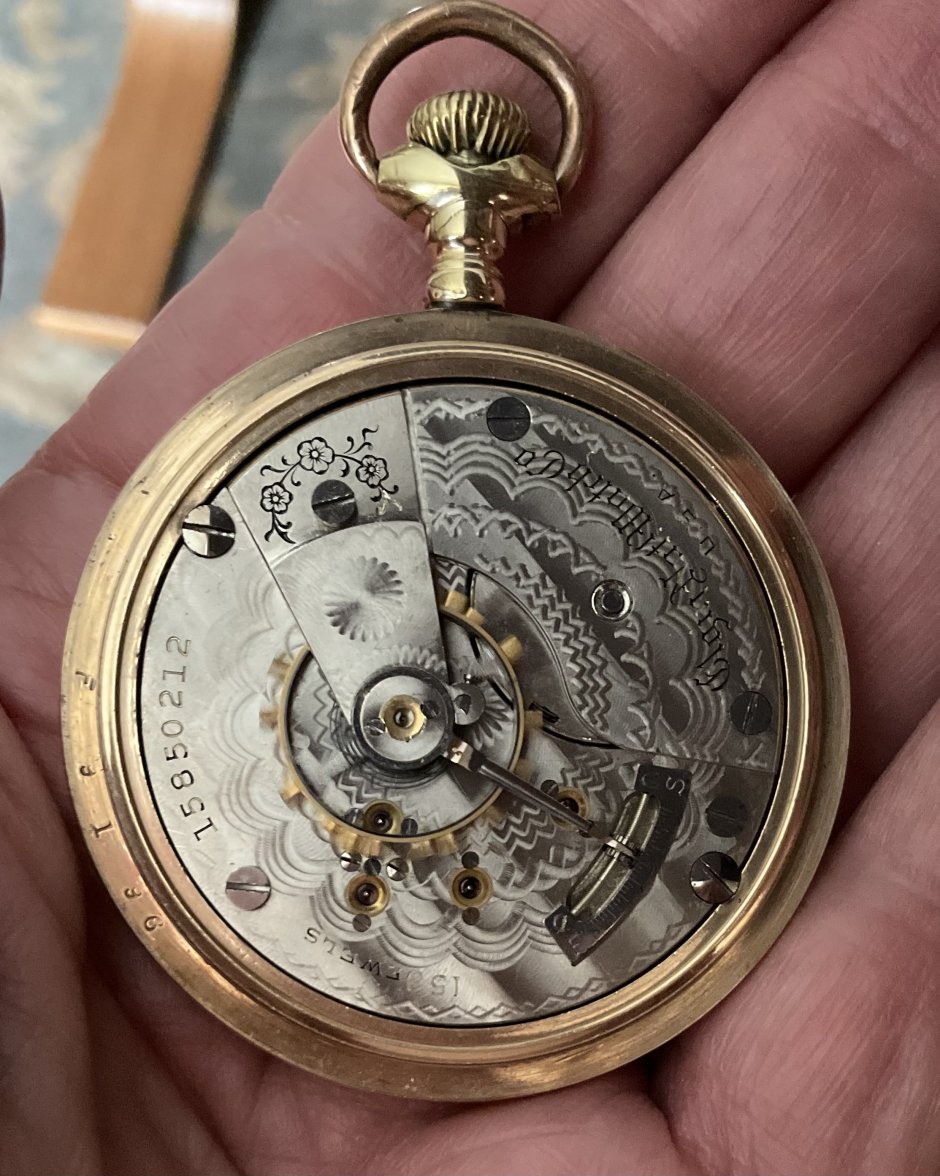
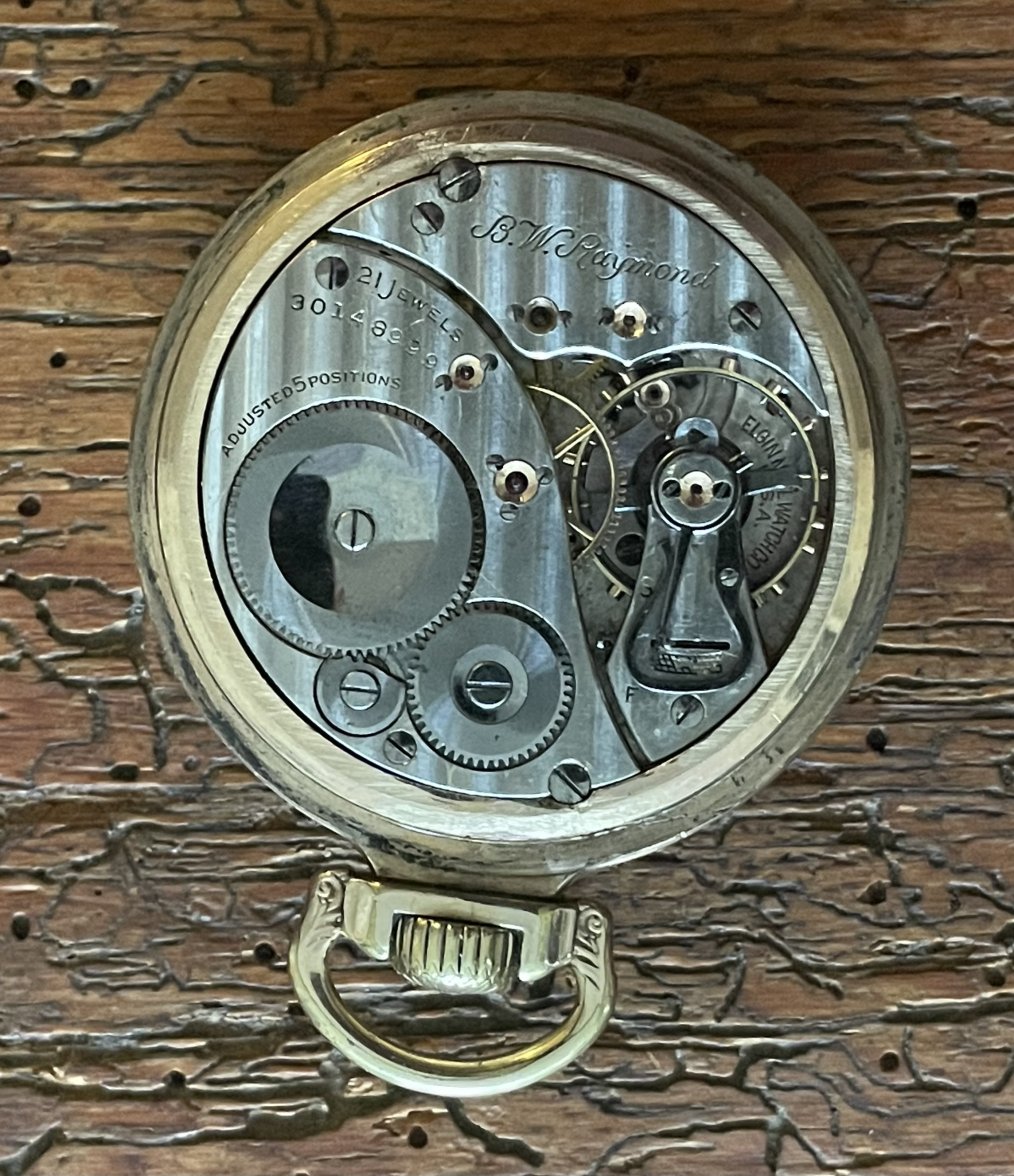
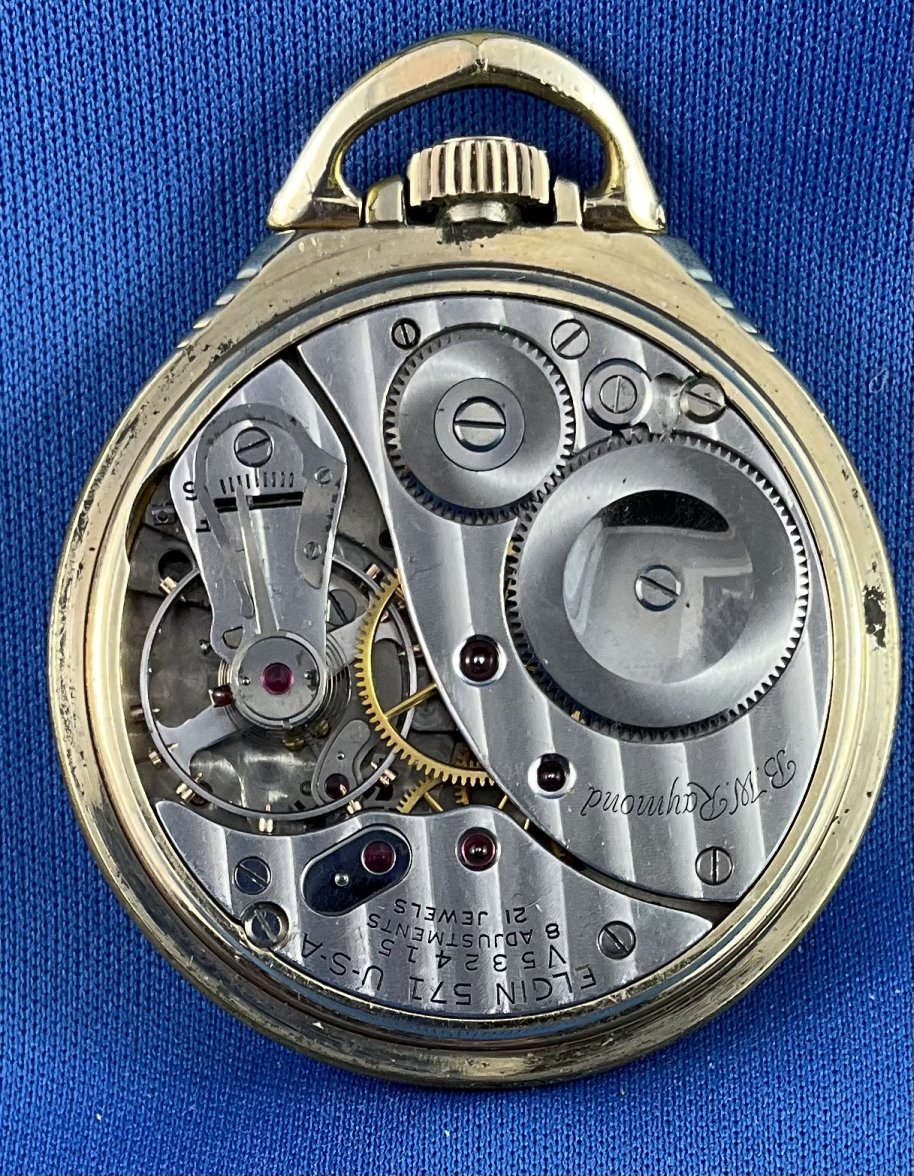
I just realized I didn’t post movement picks of the Elgin I picked up a few weeks ago

 
Posts
15,242
Likes
44,766
I just realized I didn’t post movement picks of the Elgin I picked up a few weeks ago


I said that I didn’t know the difference between @DaveK ‘s Elgin grade 478, and my Elgin grade 571.

https://pocketwatchdatabase.com/search/result/elgin/V531245

I just checked! Major differences! His is a model 15, made in 1928, and it has the upper jewels in gold chatons, each chaton held in place in their milled setting by two retainer screws. It has a bi-metallic, temperature compensating, balance wheel with split rim, and blued steel, Breguet hairspring.

Mine (pictured) looks very much like the grade 478, but mine is model 20, grade 571, and is 18 years newer. On mine, the gold chatons are gone, and the jewels are set the Swiss way, friction fit into the bridges. Also, mine has a mono-metallic alloy, solid rim balance wheel and white alloy Breguet hairspring. IIRC correctly, the alloy Elgin used in these later years was called ELGINIUM, and it is much like the Hamilton alloy called Elinvar Extra. These alloys are non-magnetic, and they are not affected by temperature change. Some Elgin serial numbers have the first two numbers replaced by a capital letter. My S# starts with a V which is for 1946. Not (apparently) for 1949 as shown in the link I posted. The grade 478 is marked adjusted to 5 positions (plus heat, cold, and isochronism), or 8 adjustments. The 571 is marked 8 adjustments. Both watches have equivalent adjustments, it’s just that they are marked differently.

Edited: