Calling all Pocket Watch Buffs

Posts
4,511
Likes
45,230
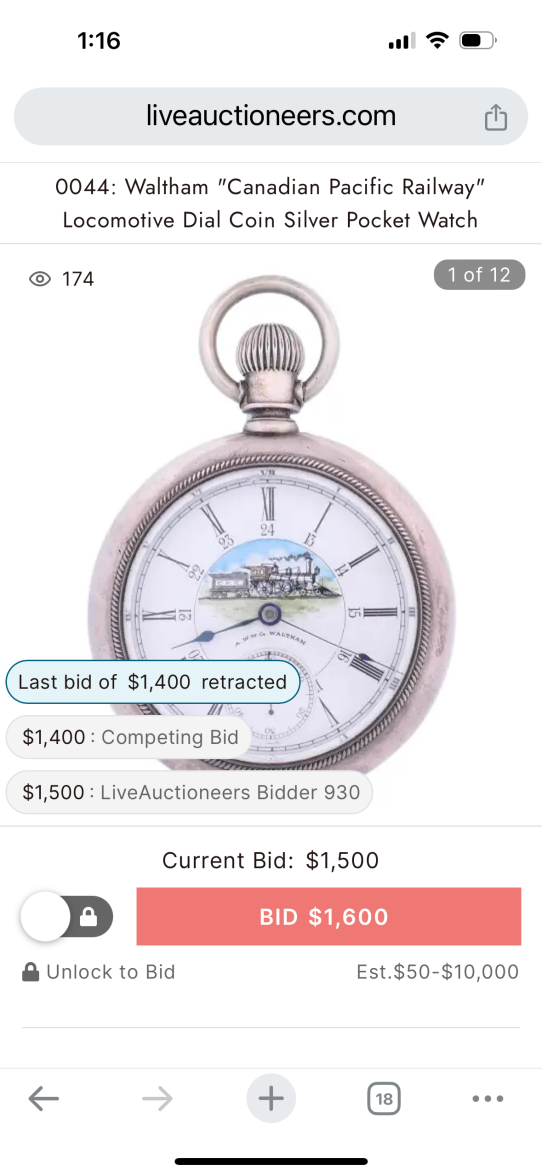
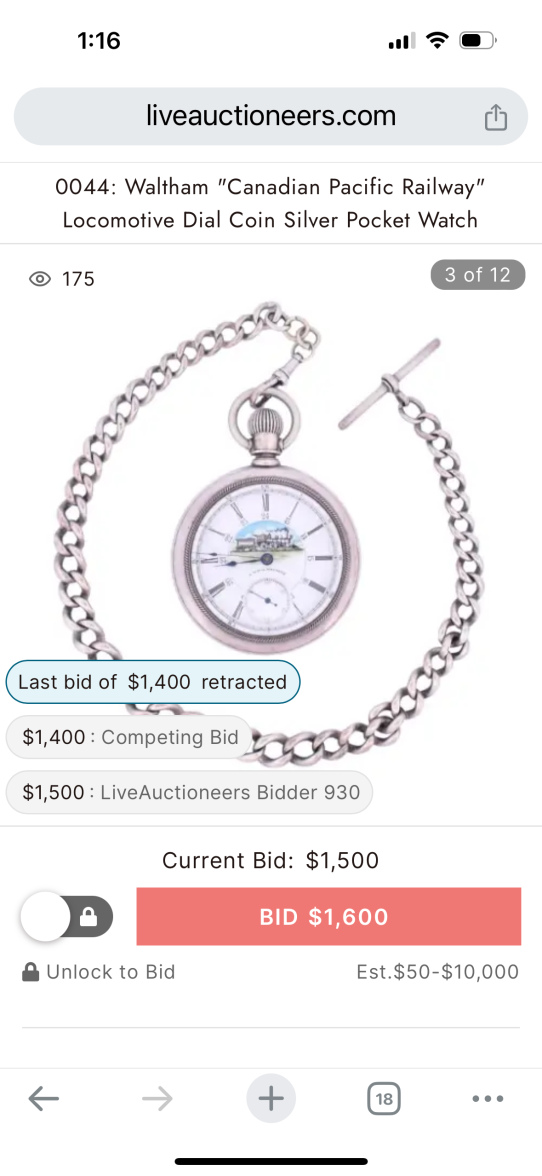
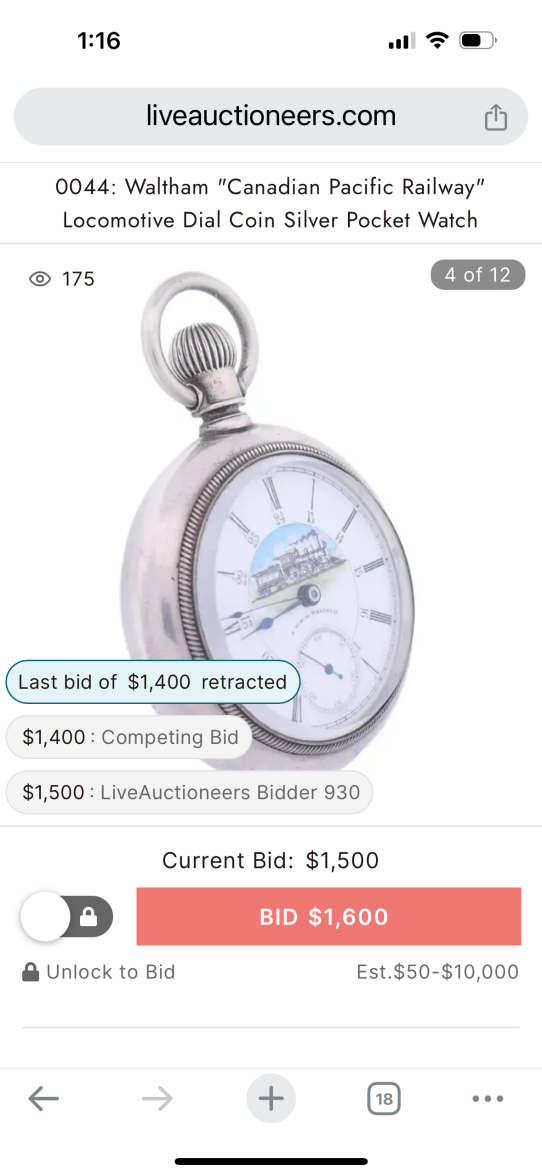
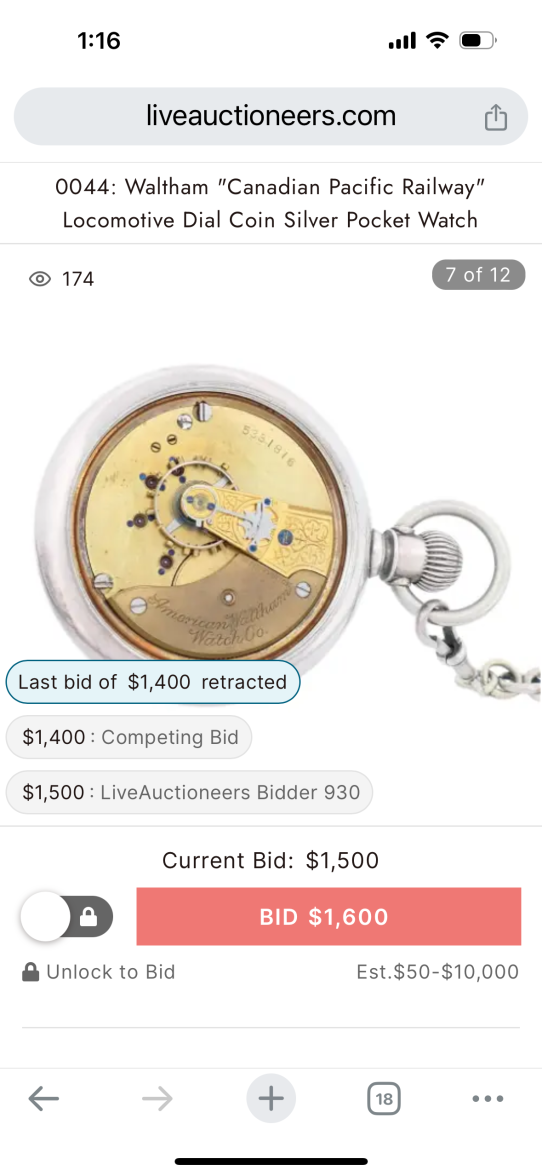
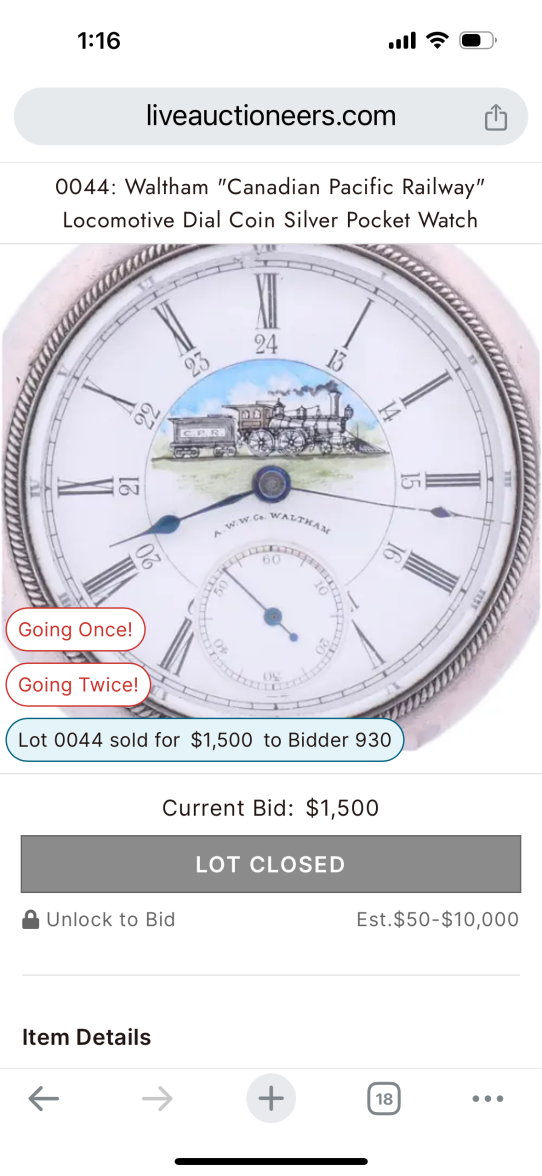
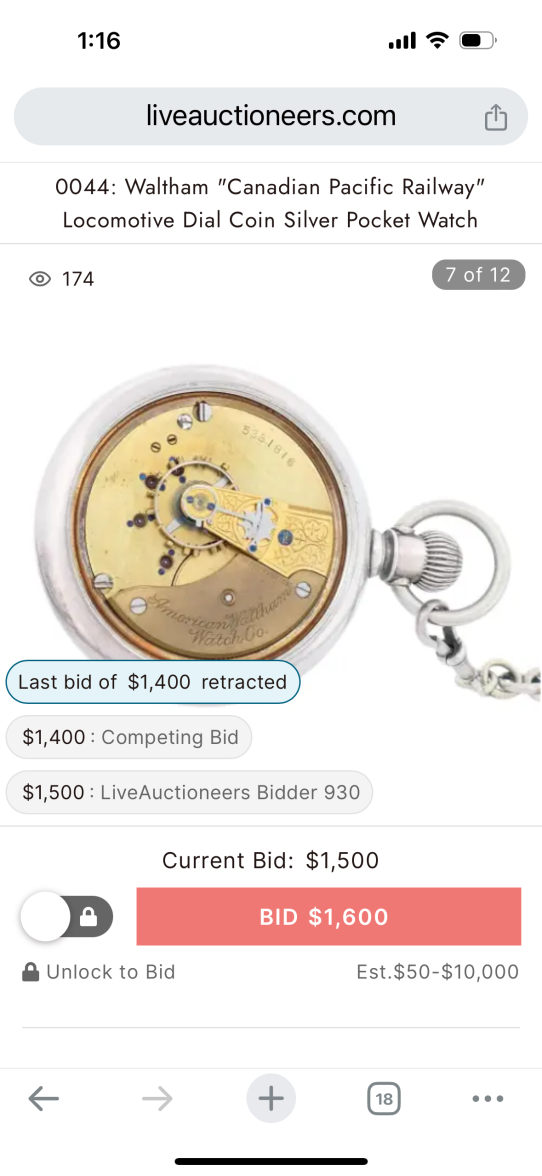
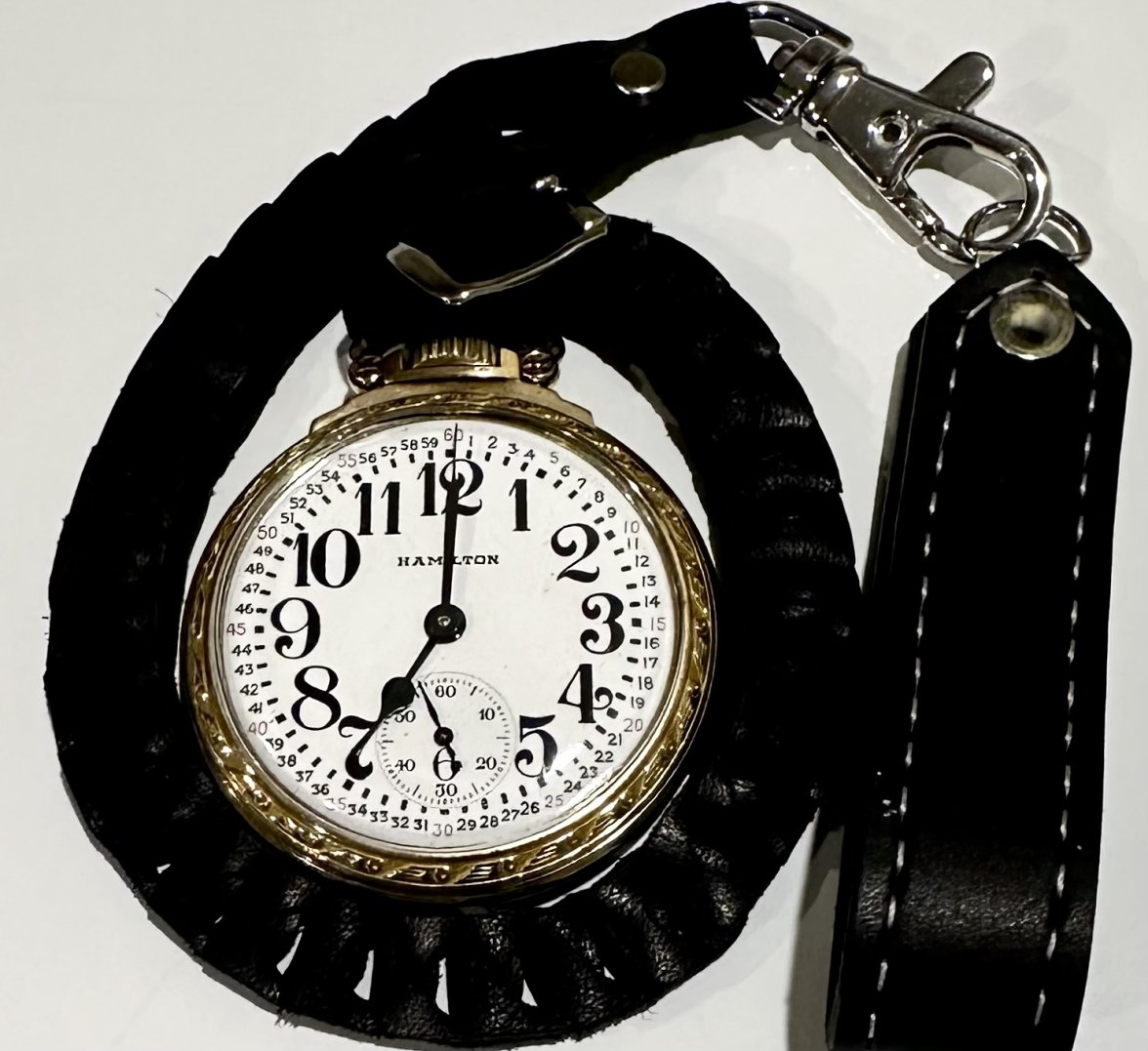
It is important that anybody in future who happens to stumble on the CPR Waltham, not be misled by somebody using the term “cheesy graphic” to describe a work of art! This is a significant watch as might be construed by the fact that somebody shelled out $1,500.00 for the pleasure of owning it! Cudos to them!

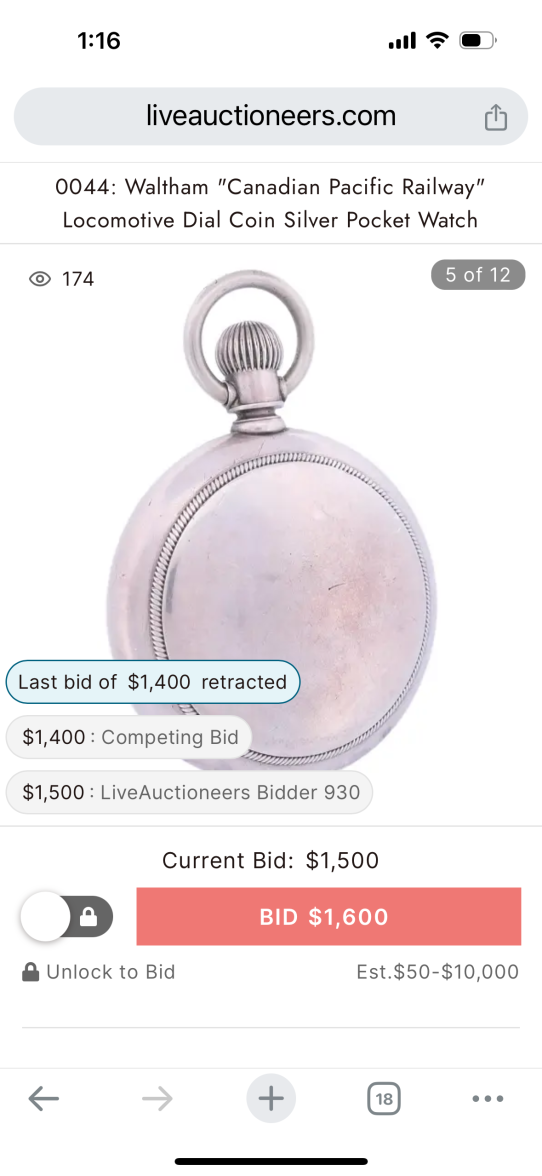
Other than the dial decoration with CPR there seems to be no other CPR identifiers that you often see such as the CPR logo engraved on the movement.
So was this dial available for a range of movements?
 
Posts
15,242
Likes
44,766
Oh my. I did not have that kind of cash but good to know. The movement looks prettier on GHCE’s watch so the dial is the prize. Did the CPR add to the value or collectability?

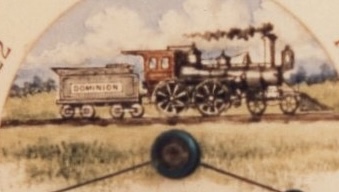
As I stated in an earlier post, that Limoge enamel dial was also done with the tender marked “Dominion” for the Dominion Atlantic (railway). Can you image the artistry necessary to paint D O M I N I O N on that coal tender? CPR was tough enough! That dial was likely done to represent other railroads as well. I would expect that dial (regardless of the railroad) would interest any serious collector with deep pockets! Definitely NOT a “cheesy graphic”!
 
Posts
3,797
Likes
10,382
I watched an auction today and this old watch sold for a high price. Add state tax and 15% commission and it shows there is quite an interest in pocket watches with Canadian Pacific Railway (see dial for that). Hammered for US $1500. I did not buy anything.

That is a seriously beautiful dial on that watch. No wonder it went for so much. I'm not as interested in Canadian rail roads, and I don't have that kind of money to shell out at the moment so I would have also been a non bidder.
 
Posts
3,057
Likes
32,259
That is a seriously beautiful dial on that watch. No wonder it went for so much. I'm not as interested in Canadian rail roads, and I don't have that kind of money to shell out at the moment so I would have also been a non bidder.
Wink wink!
 
Posts
15,242
Likes
44,766
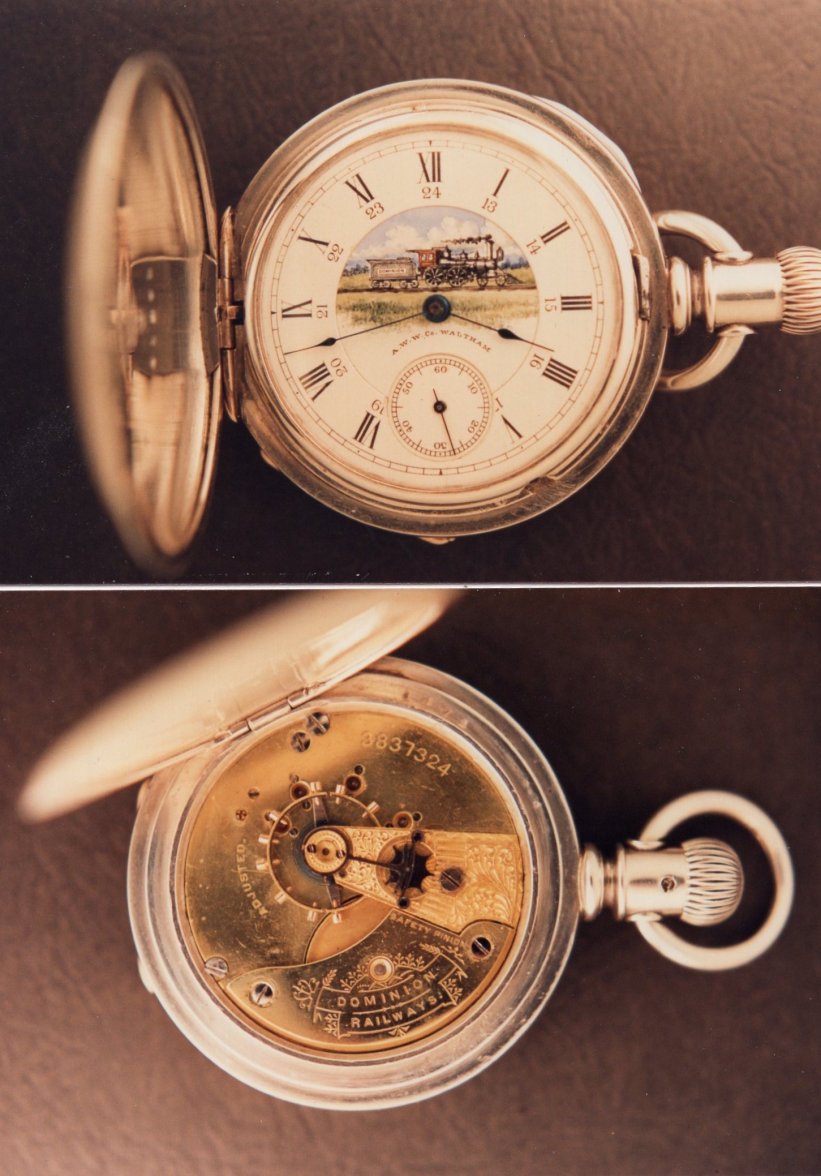
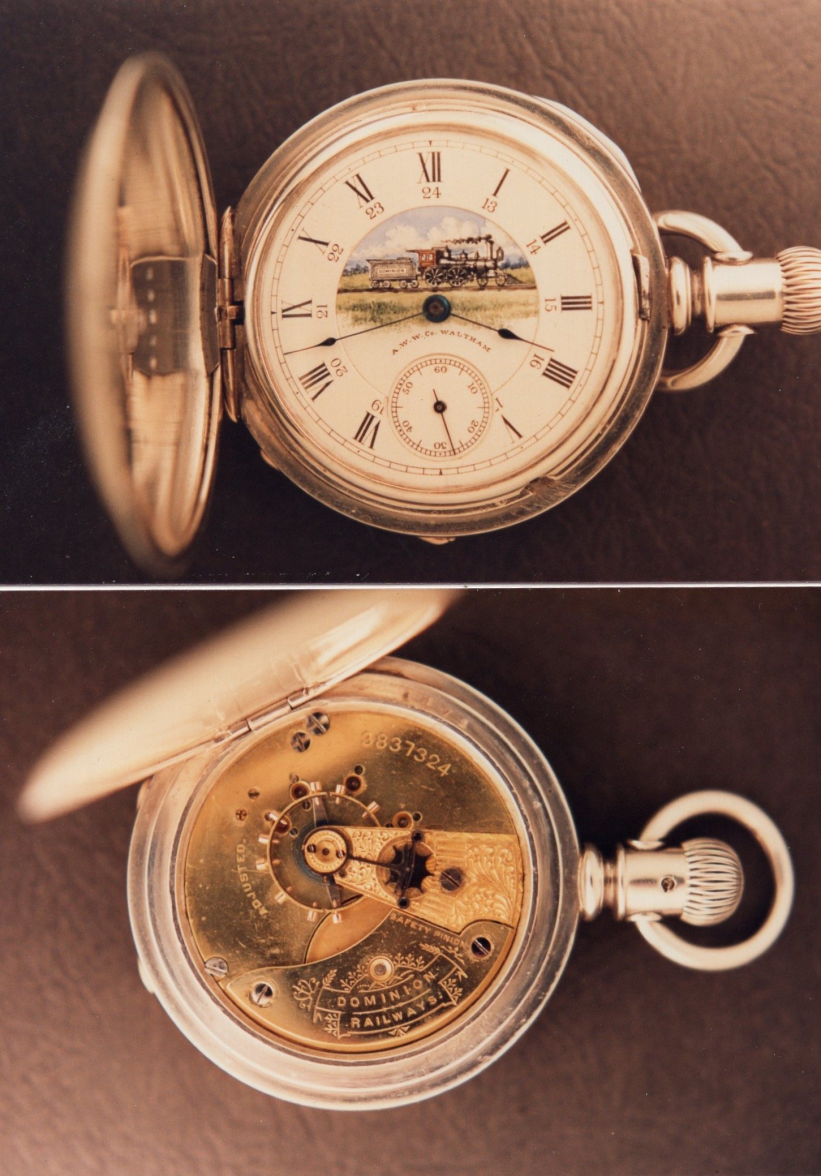
Okay! I mentioned that the dial on the CPR Waltham was done to represent the Dominion Atlantic railroad as well. I show here two pictures of the Dominion Atlantic version of the subject CPR Waltham. One difference is that in these pictures you will see that the watch is cased in a sterling silver hunter case (not open faced). AND, this watch is double-marked in that the movement is also marked Dominion Atlantic! This watch was photographed about 40 years ago, so the pictures aren’t great (sorry). The watch once belonged to a deceased friend of mine, and it was recently auctioned by Jones & Horan. I’d like to know what it brought!

The picture doesn’t show it well, but note the word D O M I N I O N marked on the coal tender in black vitreous enamel. Imagine!

While you’re at it, check this Dominion Railway Waltham that recently sold!

https://www.johnmoran.com/auction-lot/american-waltham-watch-co.-dominion-railways-pock_6FC415EB4D


Edited:
 
Posts
3,057
Likes
32,259
Okay! I mentioned that the dial on the CPR Waltham was done to represent the Dominion Atlantic railroad as well. I show here two pictures of the Dominion Atlantic version of the subject CPR Waltham. One difference is that in these pictures you will see that the watch is cased in a sterling silver hunter case (not open faced). AND, this watch is double-marked in that the movement is also marked Dominion Atlantic! This watch was photographed about 40 years ago, so the pictures aren’t great (sorry). The watch once belonged to a deceased friend of mine, and it was recently auctioned by Jones & Horan. I’d like to know what it brought!

While you’re at it, check this Dominion Railway Waltham that recently sold!

https://www.johnmoran.com/auction-lot/american-waltham-watch-co.-dominion-railways-pock_6FC415EB4D


I am not a watchmaker but the part on your friend’s watch engraved “Dominion” is not as shiny on today’s auction watch as the rest of the movement. It may be that CPR was originally on that part and it was swapped. Perhaps? We’ll never know.
 
Posts
15,242
Likes
44,766
@Duracuir1 is correct. The barrel bridge on the CPR watch is not marked. The barrel bridge on the Dominion watch IS marked DOMINION. That makes the Dominion Waltham, double marked! Translation? Even MORE valuable than the CPR Waltham! Yes, we’ll never know how the CPR one ended up single-marked. It could well have been double marked. OR, a stray CPR marked dial ended up on an orphan garden variety 1883 movement. Conjecture!
 
Posts
4,511
Likes
45,230
I am not a watchmaker but the part on your friend’s watch engraved “Dominion” is not as shiny on today’s auction watch as the rest of the movement. It may be that CPR was originally on that part and it was swapped. Perhaps? We’ll never know.

Now that stands out for me, the lack of engraving on the former CPR PW did not shine for me as per my original post. This one however does.
 
Posts
15,242
Likes
44,766
That is a seriously beautiful dial on that watch. No wonder it went for so much. I'm not as interested in Canadian rail roads, and I don't have that kind of money to shell out at the moment so I would have also been a non bidder.

@Waltesefalcon mentions “not being so interested in Canadian railroads” to the extent that the CPR Waltham would have induced him to bid on it. I know of two railroads which appear on these watches, and I’m almost certain there must be U S railroads found on these are well. So keep your eyes peeled. Further to railroad watches being marked for Canadian railroads. There are probably ten times more serious watch collectors in the U S as there are in Canada. Who else (do you suppose) has bid up prices on Canadian marked railroad watches than American buyers! I’ll bet the collector who shelled out $1,500.00 for the CPR watch is American! In my collection, I have three Canadian private label watches that I bought in the U S. The U S buyers weren’t interested in Canadian private label watches, so I lucked out!
 
Posts
15,242
Likes
44,766
Nice though it is the PWDB tells a conflicting story.

https://pocketwatchdatabase.com/search/result/waltham/5331816

the bridge looks like it should read Bartlett but does not, also note the different gilt color to the rest of the movement.

Can anyone shed some perspective on that.

As I stated in an earlier post. Either the movement came with that dial, and the barrel bridge (maybe marked C P R) was swapped for a generic barrel bridge, or the dial was a stray, mated to a garden variety Waltham movement. I suspect the CPR Waltham would have been double-marked C P R, as is the Dominion Waltham barrel bridge. The run the Dominion watch is from is listed in the Waltham “grey” book as Appleton Tracy grade. The C P R one is listed in the Waltham “grey” book as P S Bartlett grade. So I suspect that the barrel bridge on the C P R Waltham has been swapped.

In the Waltham “grey” book”, if you look up the serial number of a private label Waltham, the run is often identified only as”Special”. That means the watches in that run were marked as private label watches. In some instances, when a private label 1883 model watch was ordered, Waltham would pull a suitable movement from production, and swap the barrel bridge! These private label barrel bridges DO NOT have the movement S# marked on the under side of the bridge for that reason!

In addition, on a private label 1883 model that the factory has replaced the barrel bridge on, the damask finish on the barrel bridge rarely (if ever) matches the damask finish on the movement! My Waltham C P R is a case in point. The damask on the bridge is not the same as the movement!

 
Posts
1,053
Likes
4,264
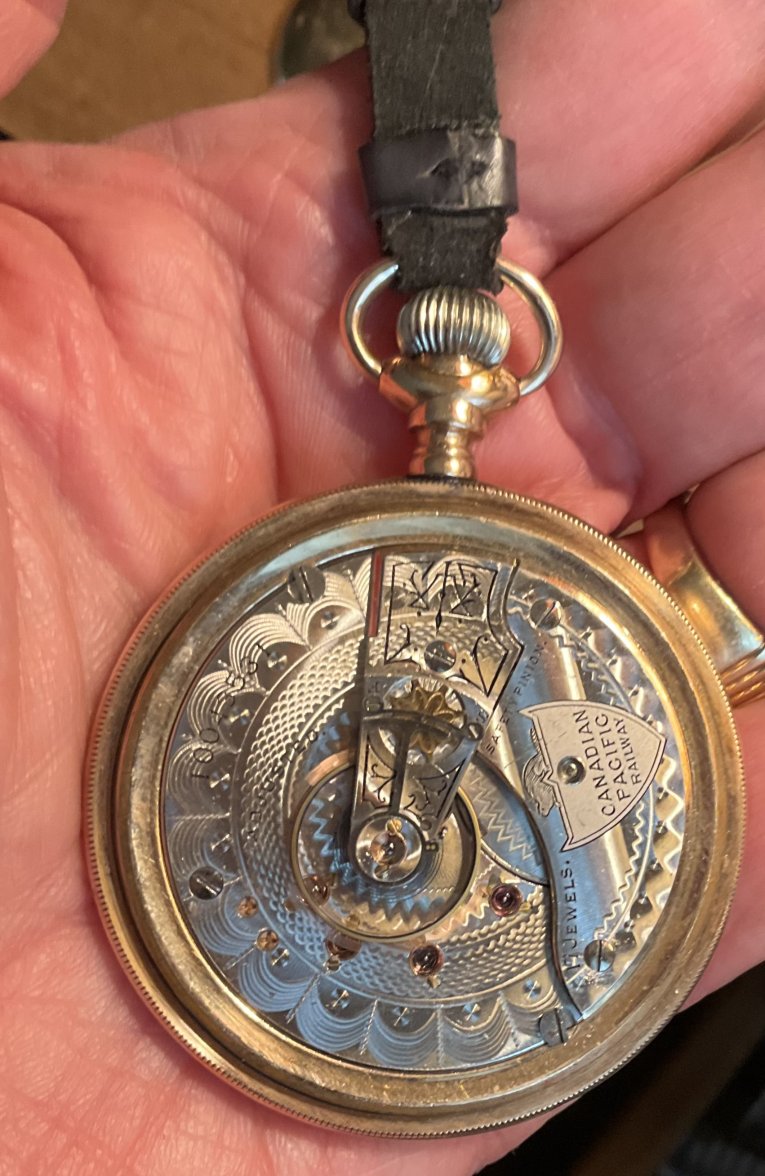
I’m still enamored with this combo. Figured I’d drop another photo of this beauty of a pair.
 
Posts
15,242
Likes
44,766
Here is a better look at the coal tender on the Dominion Atlantic railroad 1883 Waltham dial. On the watch dial, the space on the tender for the word Dominion, might be 4 mm long. For the paintress to be able to use a single sable haired brush, using grains of black vitreous enamel, the print those letters in that space, put the dial into the kiln to fire it, and end up with the result you see is incredible!

 
Posts
5,081
Likes
15,687
That “cheesy” graphic (@ghce ’s words) shows how much he knows about what is probably one of the most collectible 18 size Waltham railroad watches. That dial is decorated in what is known as Limoge enamel. A multi coloured vitreous enamel rendering of a wood burning locomotive circa 1885. That dial alone is the difference between your “cheesy” $90.00 “turnip”, and the $1,500.00 subject watch. That enamel was hand painted in likely four colours, fired in a kiln each time another colour was applied. The paintress used a paint brush that had a single strand of sable hair! That dial was also done in the Dominion Atlantic Railway rendering, and possibly many others. Satisfy yourself with garden variety clunkers, and leave the cognoscenti to collect the cream of the crop! I’m surprised it didn’t sell for more. So there!

I haven’t seen one of these in person, and from the photos I’d have thought it was a fake/homage. Just knowing the skill behind the painting of these dials is fascinating, let alone the railway connection. Always something new to learn (and buy)
Edited:
 
Posts
3,797
Likes
10,382
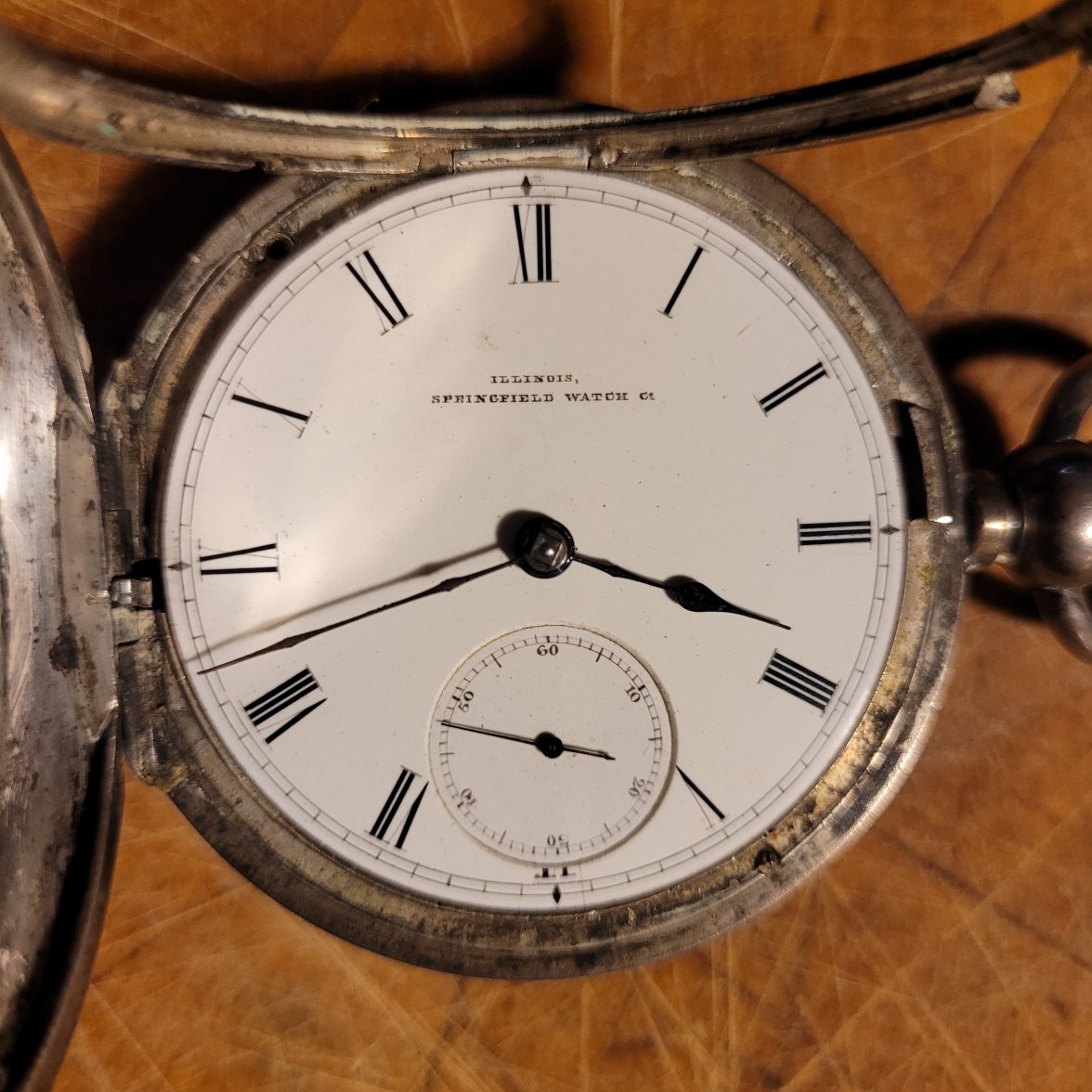
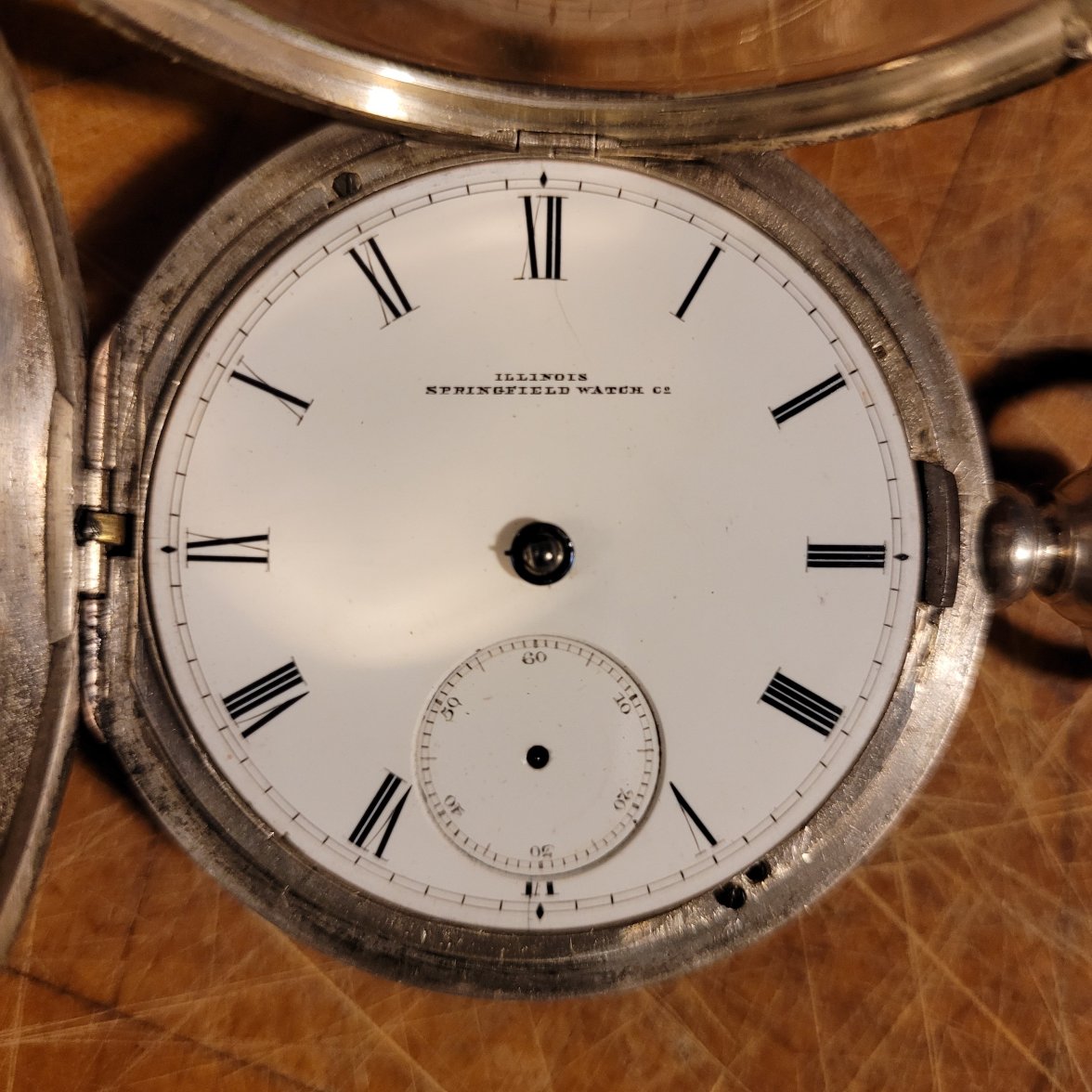
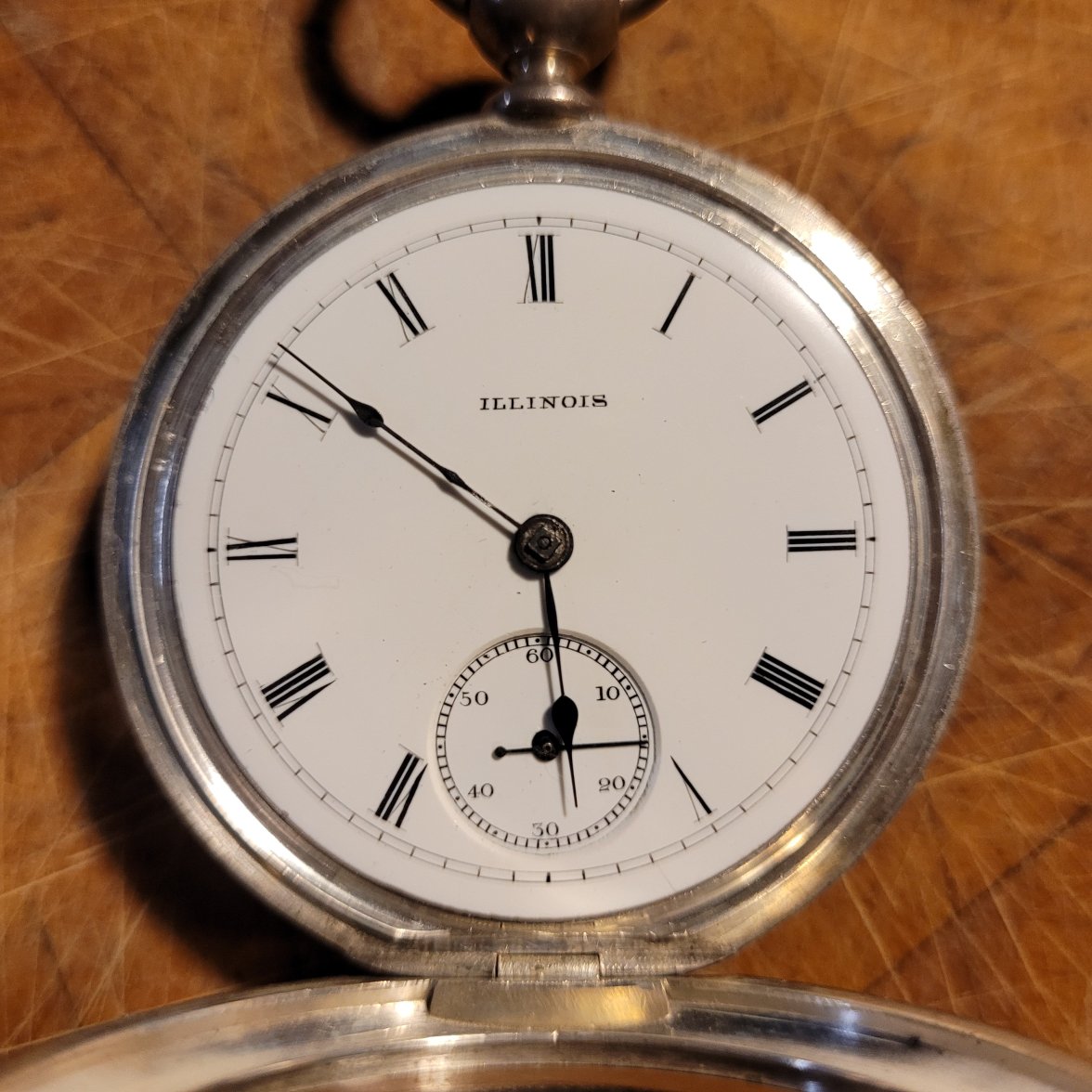
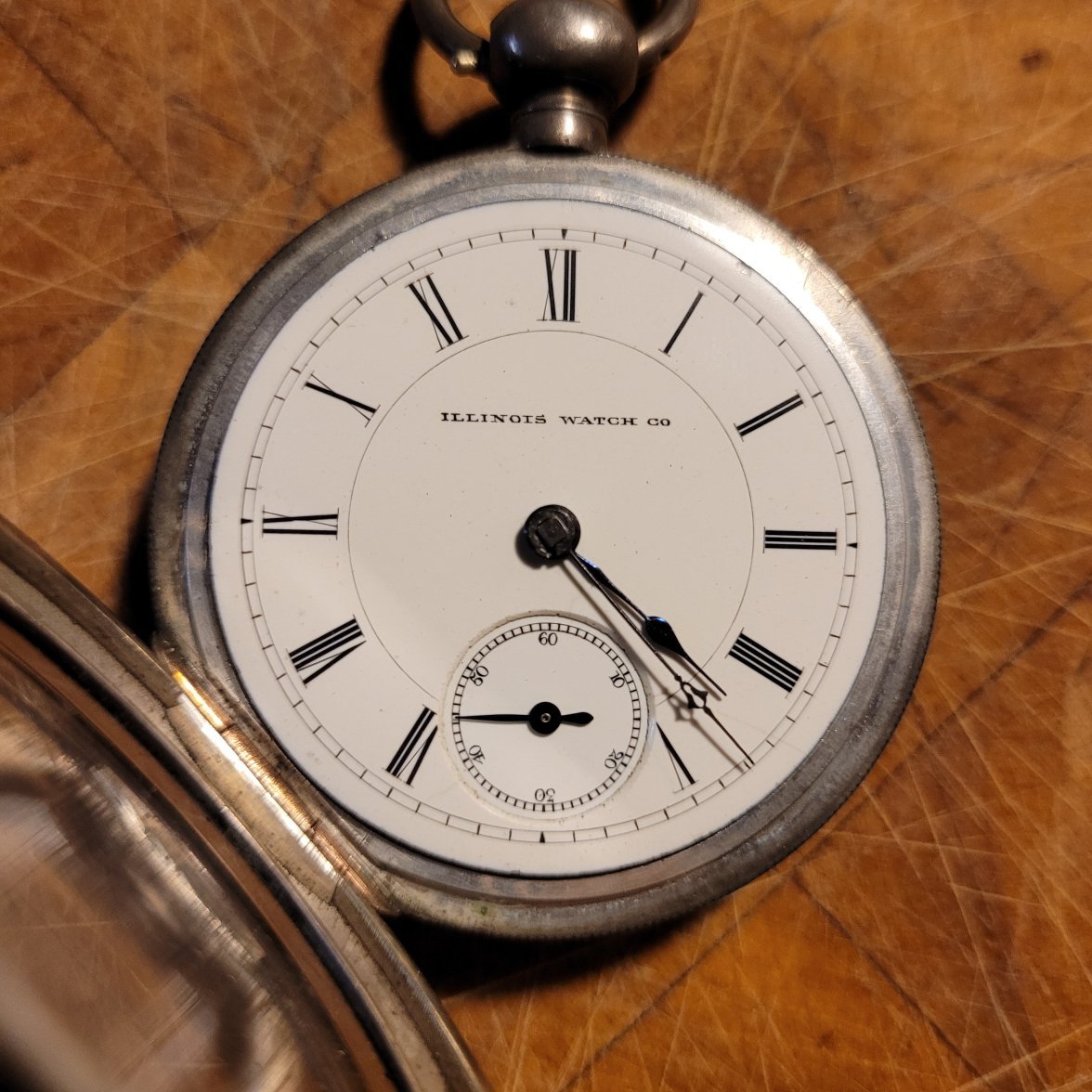
I think that one thing to remember when looking at dials made in the 1800s is that they were hand lettered, replication by transfer did not begin until the 1880s and it took a few years before most companies made the switch. You could potentially see hand painted dials as late as 1890. Here are my Illinois (the original IWC) from the 1870s and 1880s to show the meticulous work of hand painted dials. The first four are all Model 1s, chronologically listed: an 1872, grade Hoyt; an 1874, grade Miller, an 1883, grade 101 (which I purchased from @TexOmega ); an 1887, grade 99. The last watch is an 1887 Model 2, grade 5. If you zoom in on the details you can see the variance in line thickness, the subtle differences in how the script is lettered, as well as differences in the markers at the quarter hours, also note the seconds bits on each.
 
Posts
15,242
Likes
44,766
I haven’t seen one of these in person, and from the photos I’d have thought it was a fake/homage. Just knowing the skill behind the painting of these dials is fascinating, let alone the railway connection. Always something new to learn (and buy)

Homage? Nope! The watch in the picture of the Dominion that I uploaded is the first of three that I have seen. The late owner of the watch in the picture, asked me 40 years ago, to see if I could repair it which the guy who had worked on it previously, had failed to do. He made a hash of it! I took those pictures at that time. Nowadays, such artwork would be a lithographed sticker! It is real!
 
Posts
15,242
Likes
44,766
I think that one thing to remember when looking at dials made in the 1800s is that they were hand lettered, replication by transfer did not begin until the 1880s and it took a few years before most companies made the switch. You could potentially see hand painted dials as late as 1890. Here are my Illinois (the original IWC) from the 1870s and 1880s to show the meticulous work of hand painted dials. The first four are all Model 1s, chronologically listed: an 1872, grade Hoyt; an 1874, grade Miller, an 1883, grade 101 (which I purchased from @TexOmega ); an 1887, grade 99. The last watch is an 1887 Model 2, grade 5. If you zoom in on the details you can see the variance in line thickness, the subtle differences in how the script is lettered, as well as differences in the markers at the quarter hours, also note the seconds bits on each.

Very early watches produced in the U S had vitreous enamel dials that were sourced largely from England. The U S makers hadn’t learned how to do that type of work. I’ve forgotten which watch company it was, sent a fellow to England to learn how to produce enamel dials.
 
Posts
3,797
Likes
10,382
Very early watches produced in the U S had vitreous enamel dials that were sourced largely from England. The U S makers hadn’t learned how to do that type of work. I’ve forgotten which watch company it was, sent a fellow to England to learn how to produce enamel dials.
Aaron Dennison, the founder of the American Watch Company (Waltham), sent a man named John Gold to Britain to learn how to make hard enamel dials. This was in the early 1850s I think.

Henri Focuey, who worked for the American Watch Company, introduced glass enamel dials to the US. I believe he had learned it in Switzerland before immigrating to the US. I don't know for certain what year, but by the early 1880s glass enamel dials were being used by Waltham and Elgin.

Aaron Dennison is notable for being the first person to believe that watches could be mass produced. With the American Watch Company he pioneered the use of mechanization and interchangeable parts where possible in building his watches.
Edited: