Calling all Pocket Watch Buffs

Posts
8
Likes
5
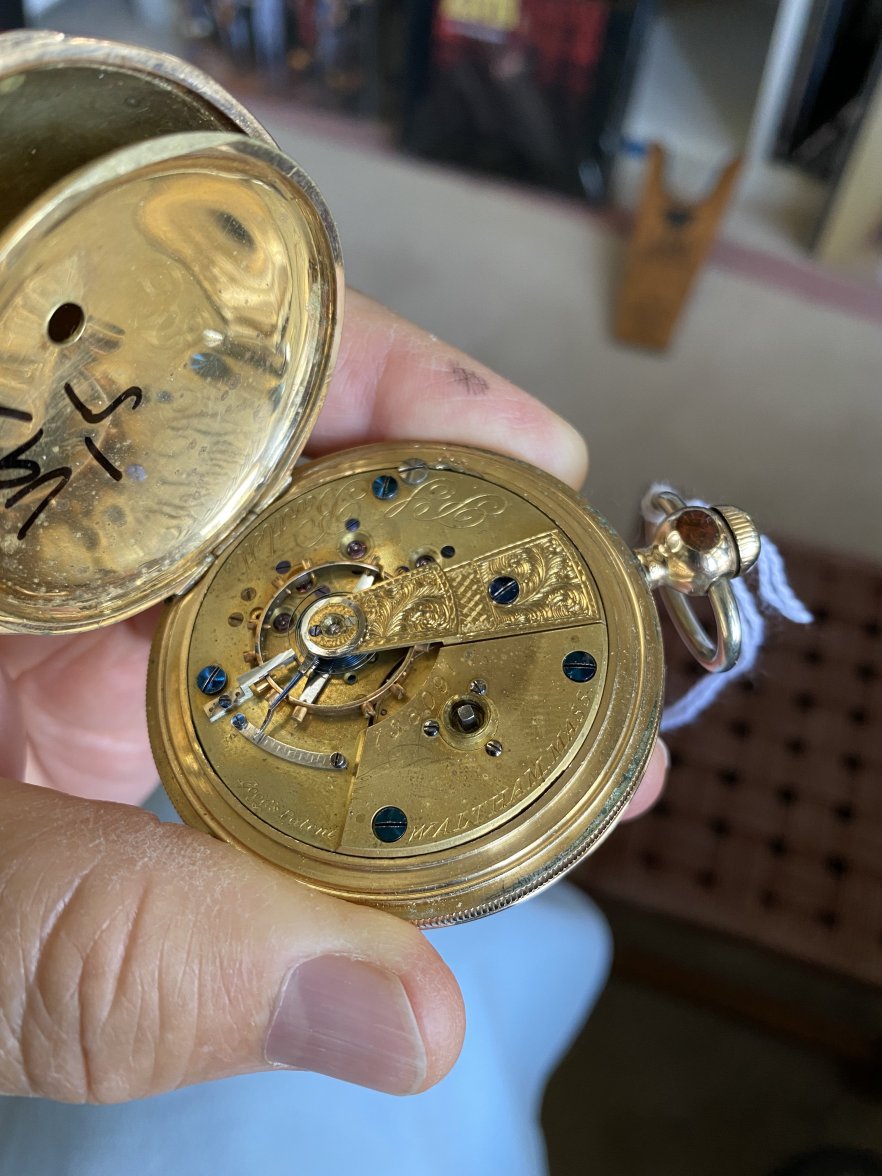
The pocket Watch database website is certainly your friend for finding out the details on your Waltham PW, unfortunately your photo of the movement is too unclear to get the number.
https://pocketwatchdatabase.com/
Plug in your serial number from the movement ( not the case) and the manufacturer and it should tell you all you need to know about the watch.[/QUOTE
 
Posts
8
Likes
5
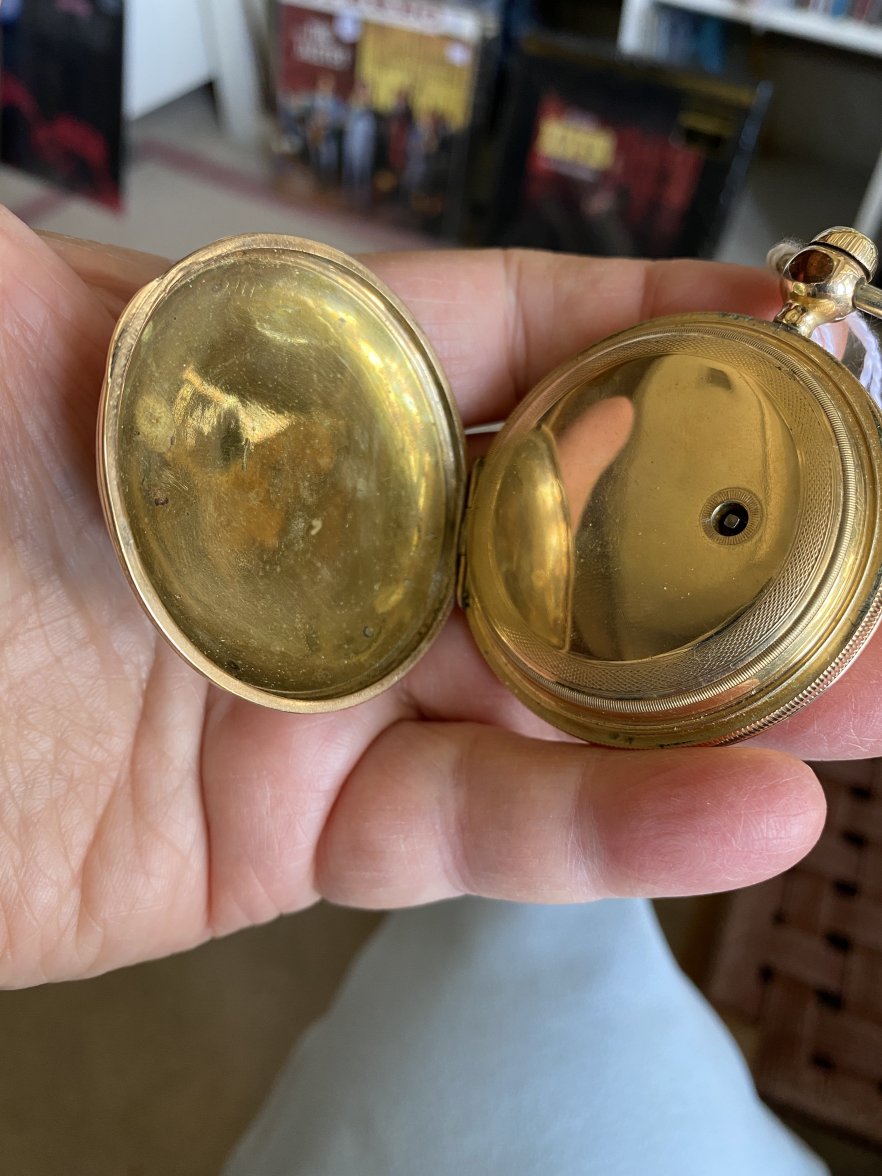
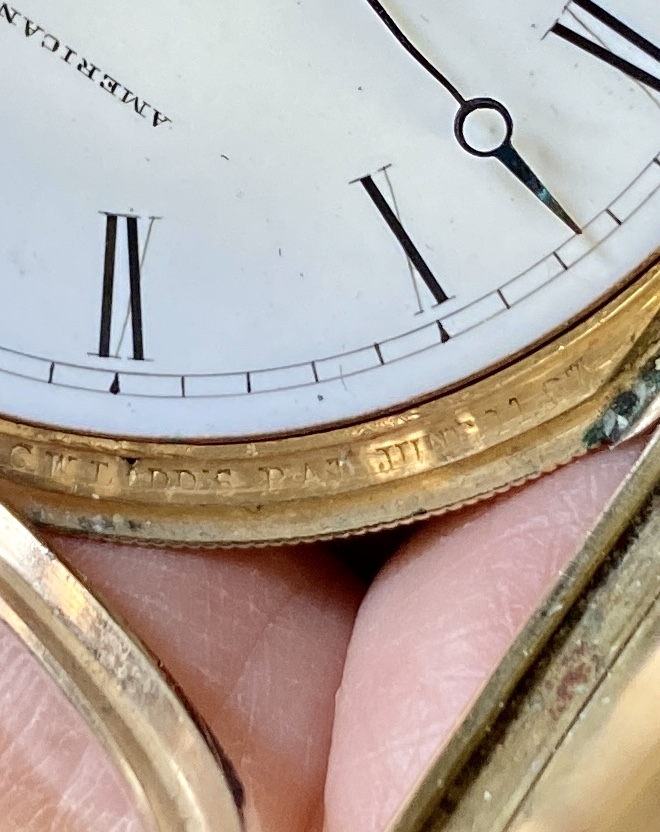
Looks like an 1888 model, 7-jewel Waltham movement (mechanism). The case is marked made in America, but it has all the earmarks of a case made by the English Dennison Watch Case Co. Dennison was the agent in England for the Waltham Watch Co. at about the time your watch was made. The serial number on the mechanism doesn’t show very well in your one picture’s , but it would tell us the year the movement was made. But it was made some time after 1888. The marking on the dial is typical of a watch that was intended for sale in Britain. The A W W Co. on the dial means American Waltham Watch Co., Waltham, Mass.
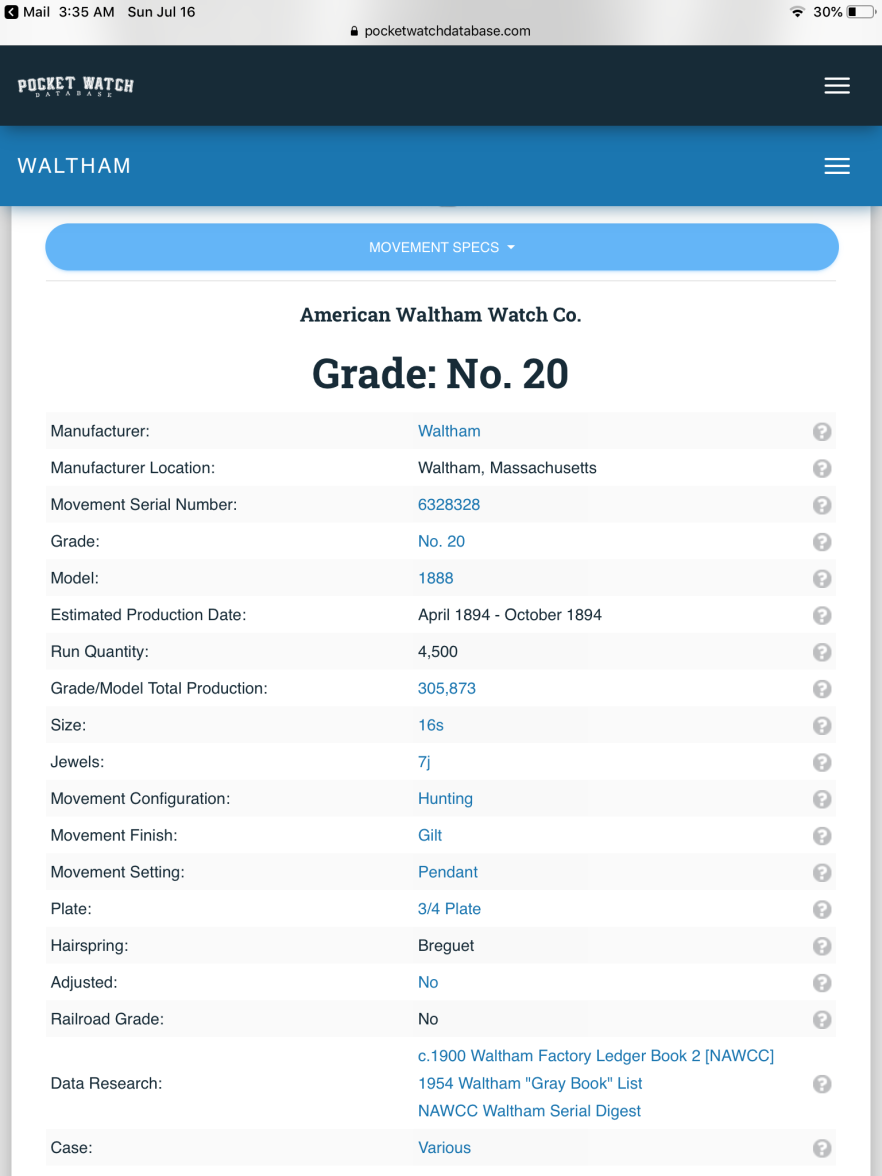
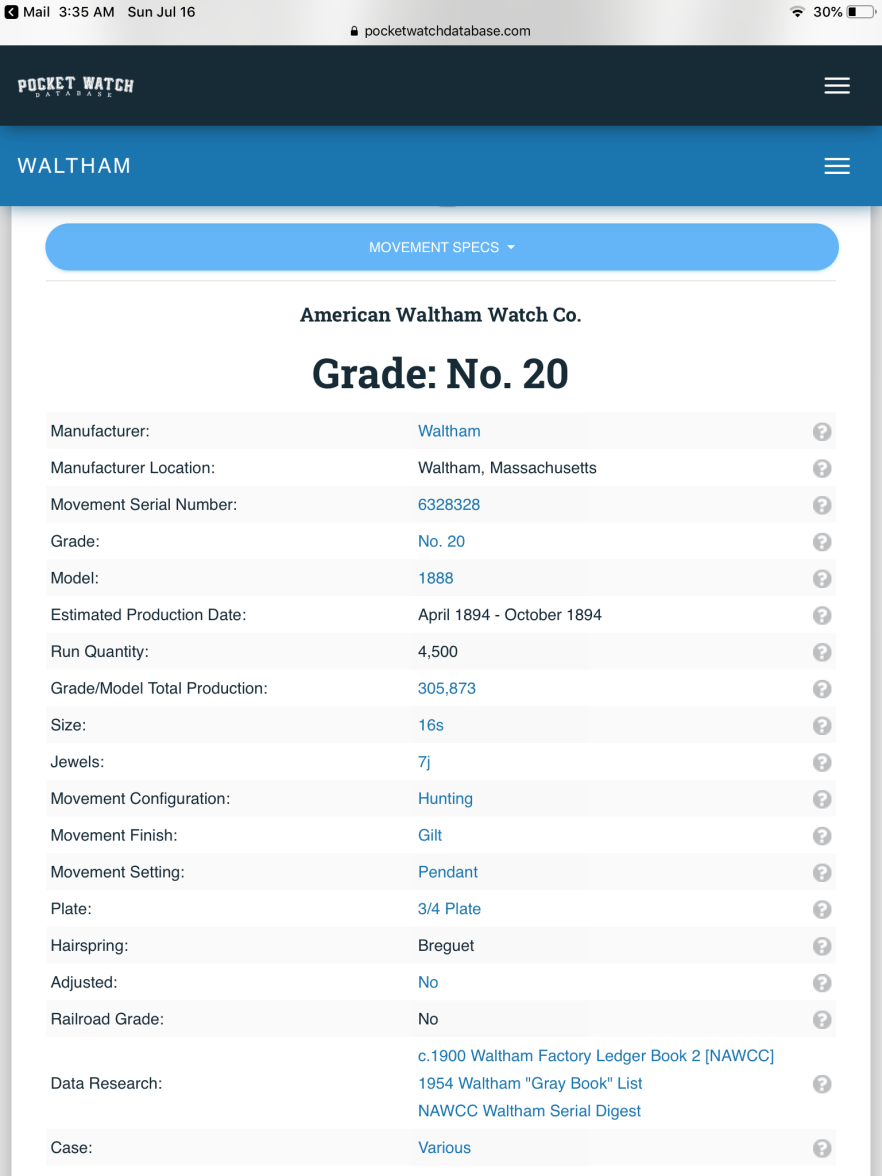
Many thanks, I just entered the serial number (6328328) from the movement on the “Pocket Watch Database” as suggested by ghce (see report) and it confirmed it is an 1888 Model / 7 Jewel but made between April and October 1894 (five years before my dear old grandpa was born.
 
Posts
15,240
Likes
44,756
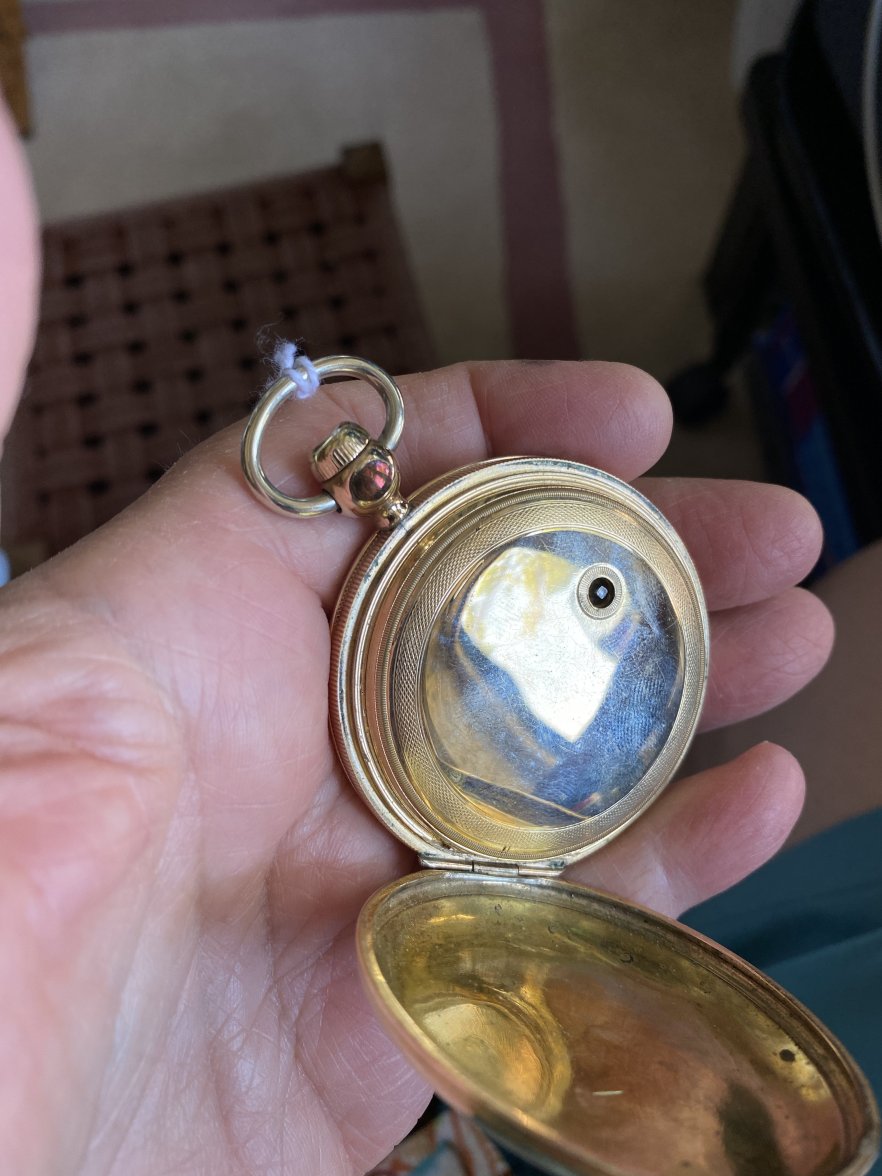
One more thing. I suspect the mechanism in your watch was made to be fitted into a hunter case, one with a cover on both the front of the case, and the back. I think I see a mark on the flange on the inner lip of the case, around the movement, that indicates an alien case screw mark from a previous tenant. The colour of the case has a pink tone which is characteristic of a lot of English made cases.

Since you posted the pocketwatchdatabase info on your watch, it confirms that the movement is an 1888 model, made for a hunter case (not an open faced case). If I am correct about this being an English case (with an American movement), this was done to beat English import duties at the time.
 
Posts
8
Likes
5
View attachment 1635514 View attachment 1635514
The pocket Watch database website is certainly your friend for finding out the details on your Waltham PW, unfortunately your photo of the movement is too unclear to get the number.
https://pocketwatchdatabase.com/
Plug in your serial number from the movement ( not the case) and the manufacturer and it should tell you all you need to know about the watch.
Ah, many thanks - really interesting - here’s the result.
The pocket Watch database website is certainly your friend for finding out the details on your Waltham PW, unfortunately your photo of the movement is too unclear to get the number.
https://pocketwatchdatabase.com/
Plug in your serial number from the movement ( not the case) and the manufacturer and it should tell you all you need to know about the watch.
 
Posts
8
Likes
5
View attachment 1635514 View attachment 1635514
Ah, many thanks - really interesting - here’s the result.
One more thing. I suspect the mechanism in your watch was made to be fitted into a hunter case, one with a cover on both the front of the case, and the back. I think I see a mark on the flange on the inner lip of the case, around the movement, that indicates an alien case screw mark from a previous tenant. The colour of the case has a pink tone which is characteristic of a lot of English made cases.

Since you posted the pocketwatchdatabase info on your watch, it confirms that the movement is an 1888 model, made for a hunter case (not an open faced case). If I am correct about this being an English case (with an American movement), this was done to beat English import duties at the time.
Please excuse my ignorance but does a hunter case mean that the watch face would be covered?
 
Posts
15,240
Likes
44,756
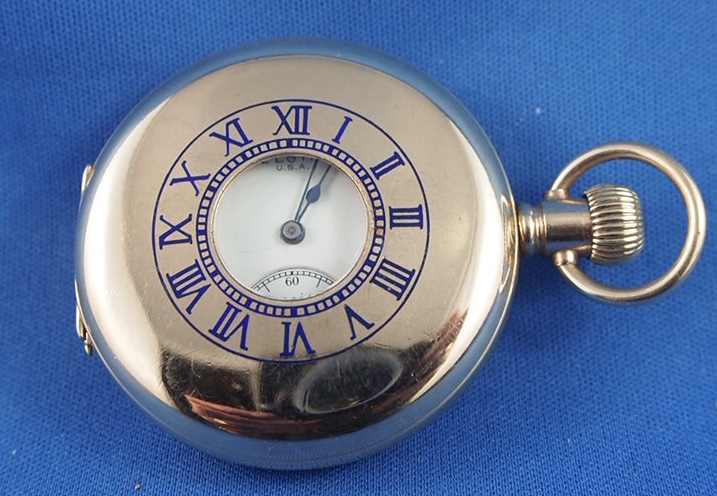
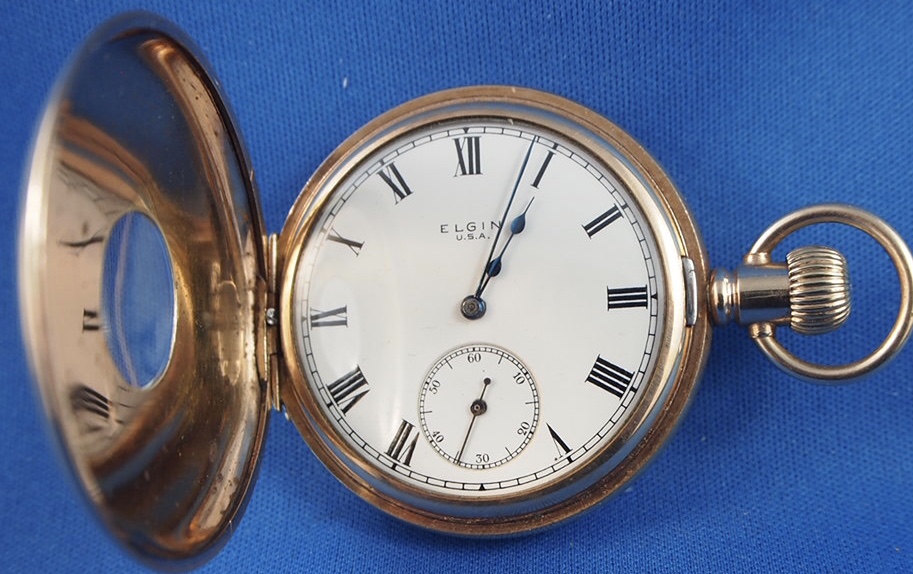
These pictures are of a type of hunter cased watch called a Demi hunter. In the first picture, notice the face is covered, and you can see the dial through the window. That cover flips open. The second picture shows the same watch with the cover open. Hunter cased watches have the winder at the 3:00 position as shown here. Open faced watches mostly have the winder at the 12:00, unless they are an open faced watch with the winder at the 3:00. Watches like yours end up this way generally because a hunter case movement has been re-cased in an open faced case. To accomplish this, the movement must be rotated 90° counter clockwise.
 
Posts
15,240
Likes
44,756
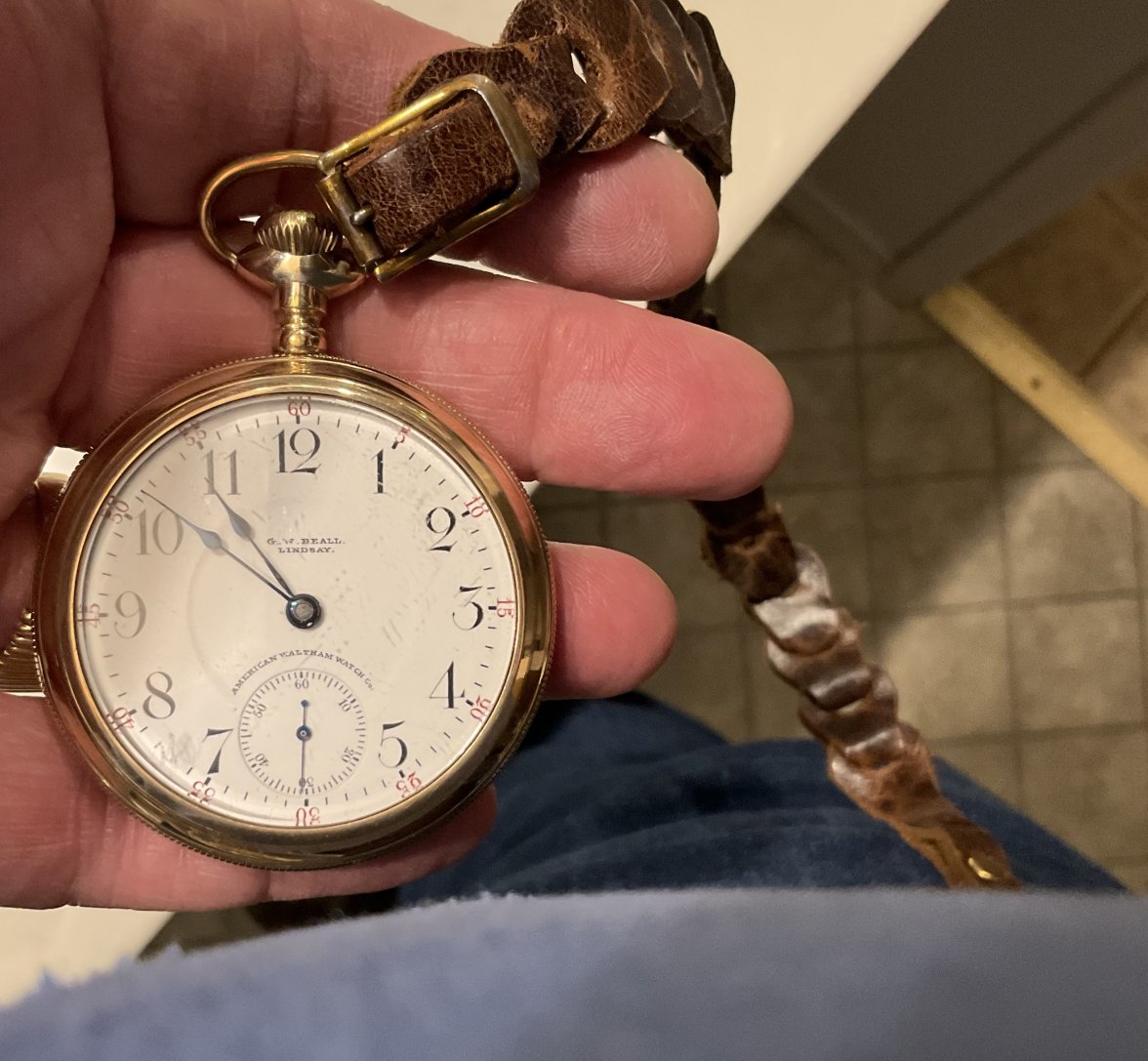
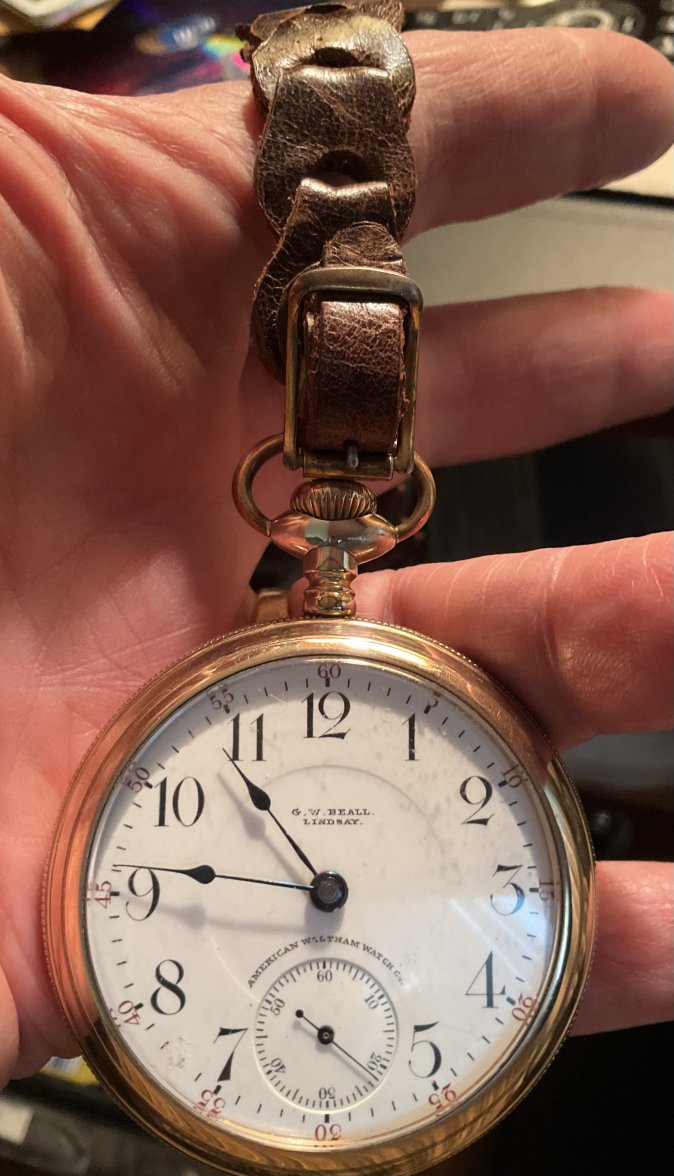
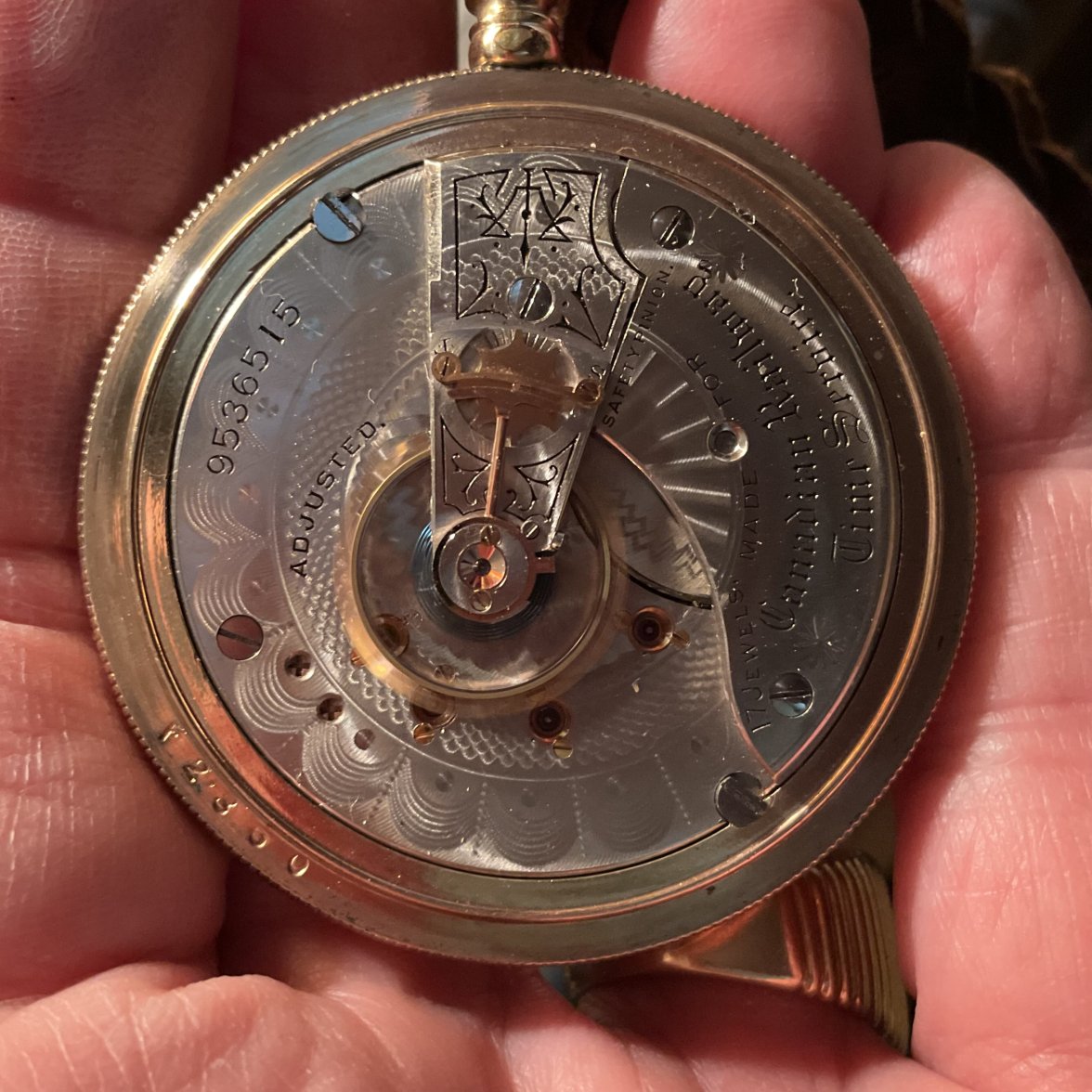
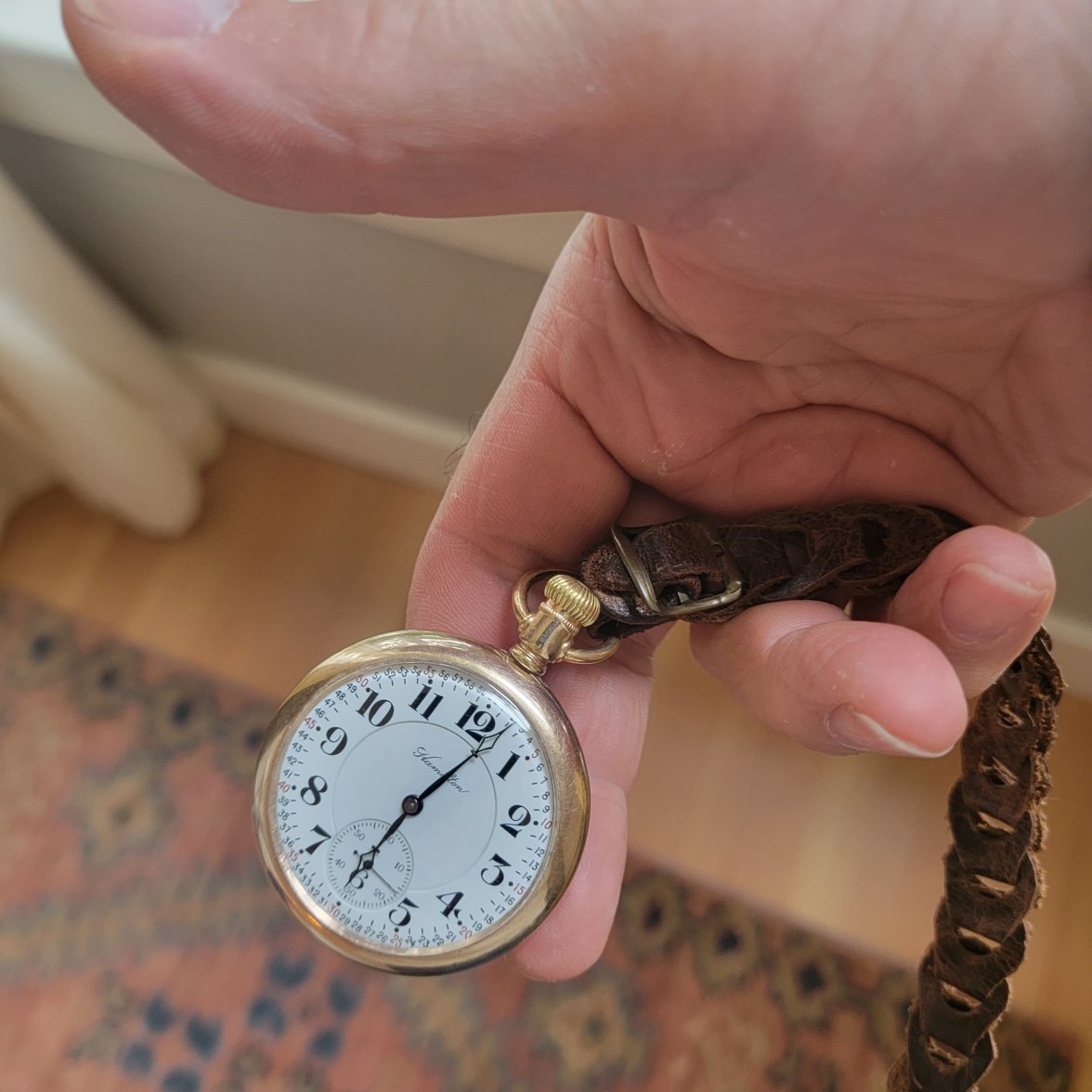
Omega Board member @Duracuir1 is a frequent poster. His side gig is leather work, and many of you have leather watch straps of his manufacture. On a recent tour of garage sales, he came upon a leather lanyard that seemed to him to make sense as a lanyard for a pocket watch. In today’s mail, he was kind enough to send me an early production model of his new lanyard. He lives in Strathroy Ontario. In looking for a suitable watch to fit the lanyard to, I decided upon a private label, Waltham 1883 model, 17-jewel watch for the jeweller George Washington (G W) Beall of Lindsay, Ontario. Lindsay and Strathroy are 360 kms apart. My G W Beall pocket watch movement is marked for the Canadian Railway Time Service. IIRC, CRTC watches were retailed by the T Eaton Co. and other watch inspectors in Canada (Eaton’s is now defunct). Thanks muchly to @Duracuir1 for his generosity and kind consideration.


Edited:
 
Posts
4,509
Likes
45,208
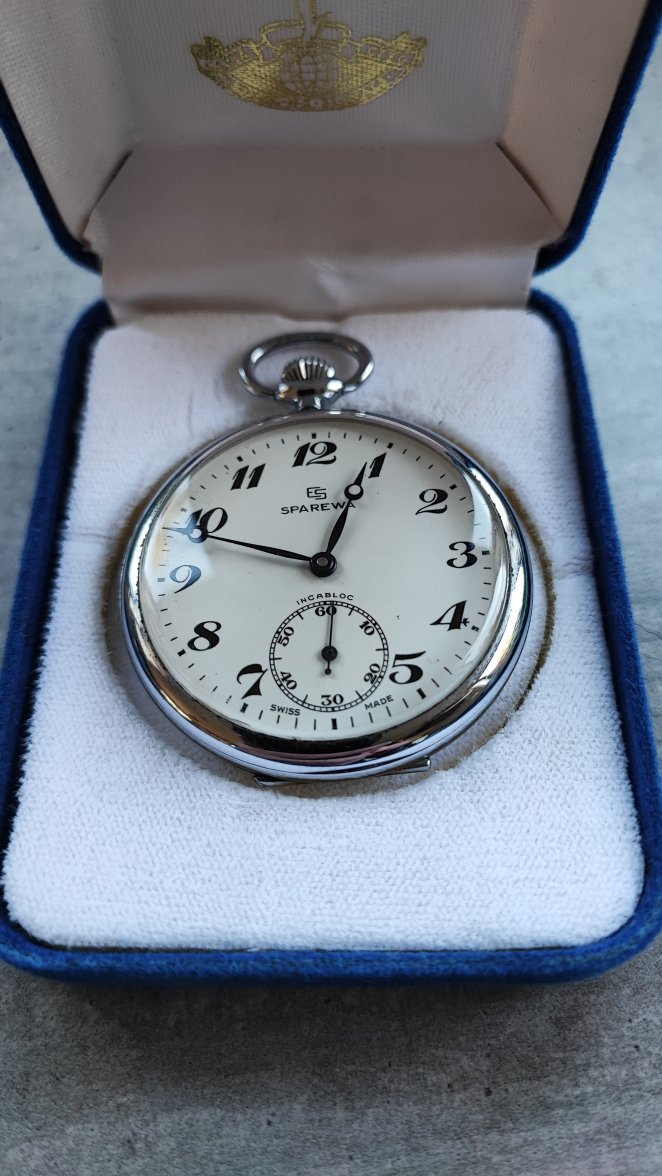
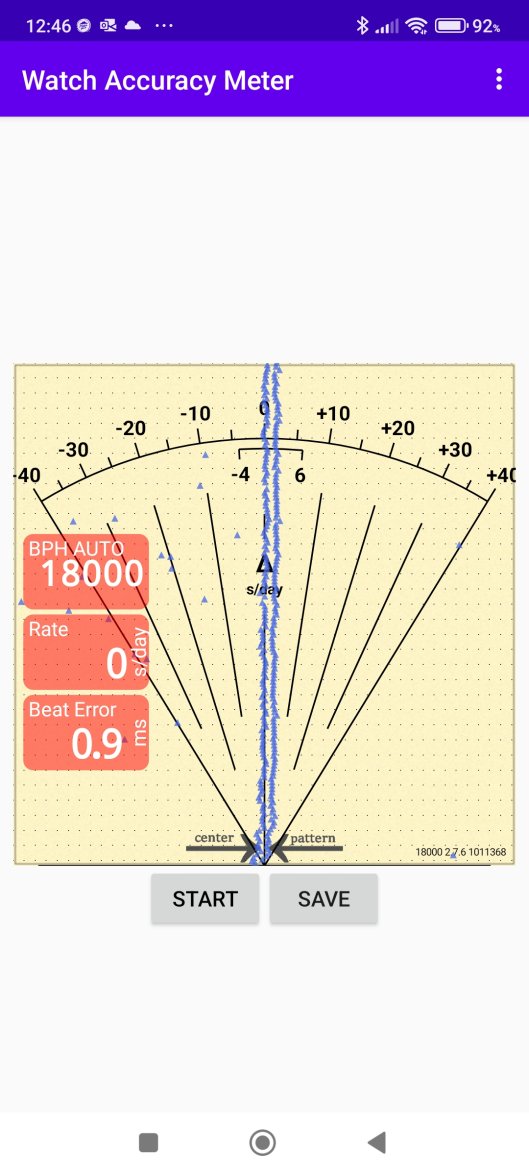
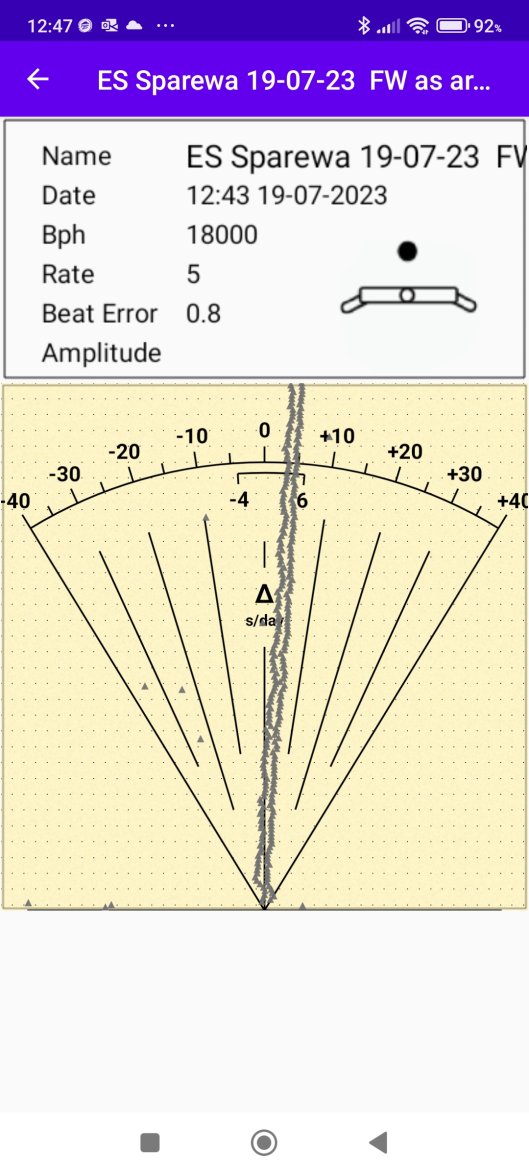
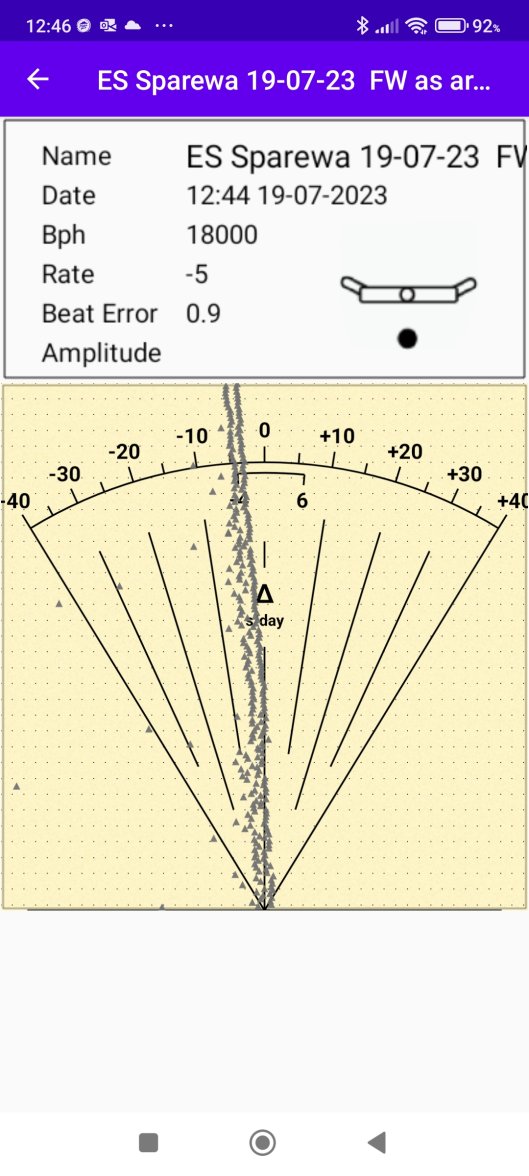
The ES Sparewa arrived in this morning.

For US$30.00 I am not complaining, mint!


Pendant up

 
Posts
6,025
Likes
20,717
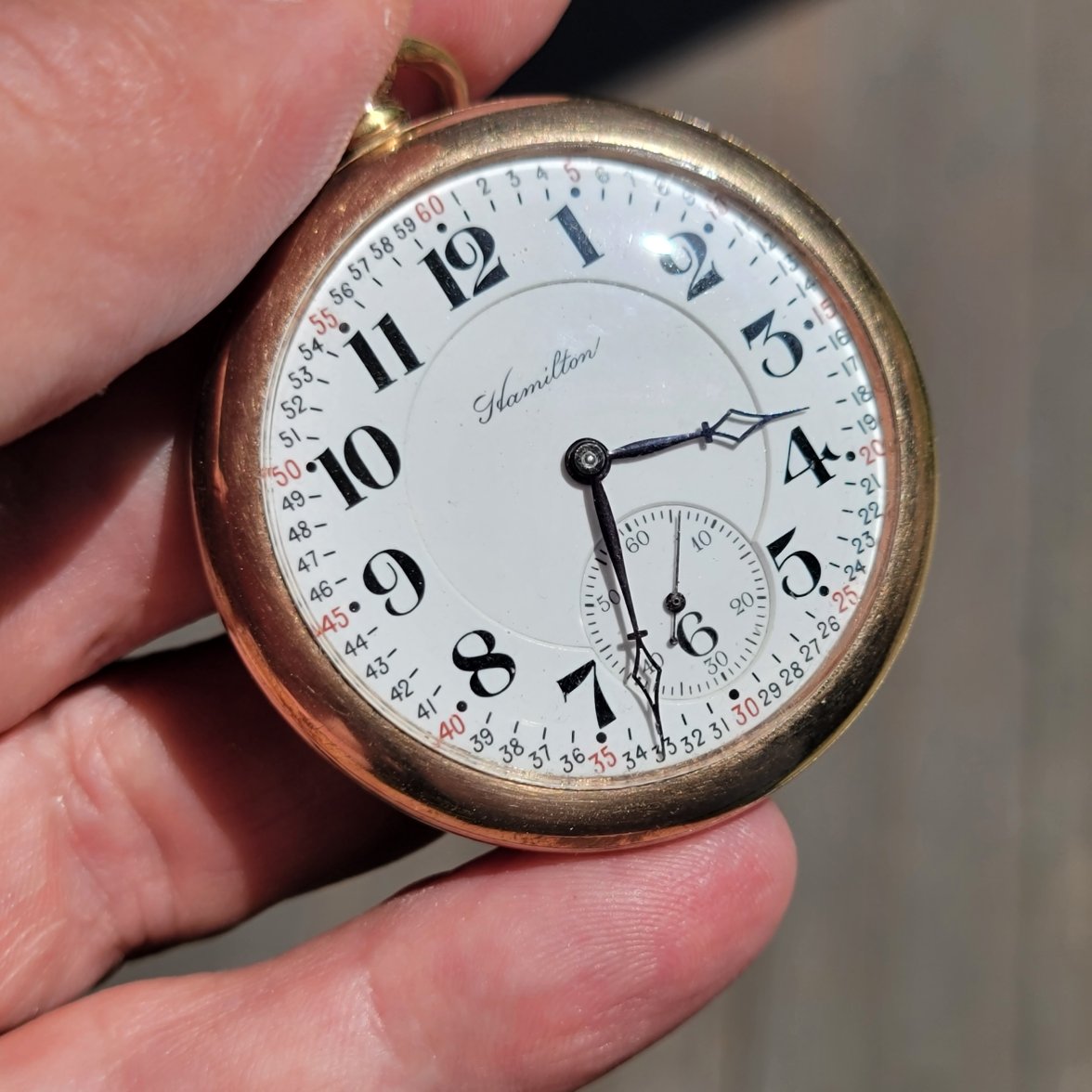
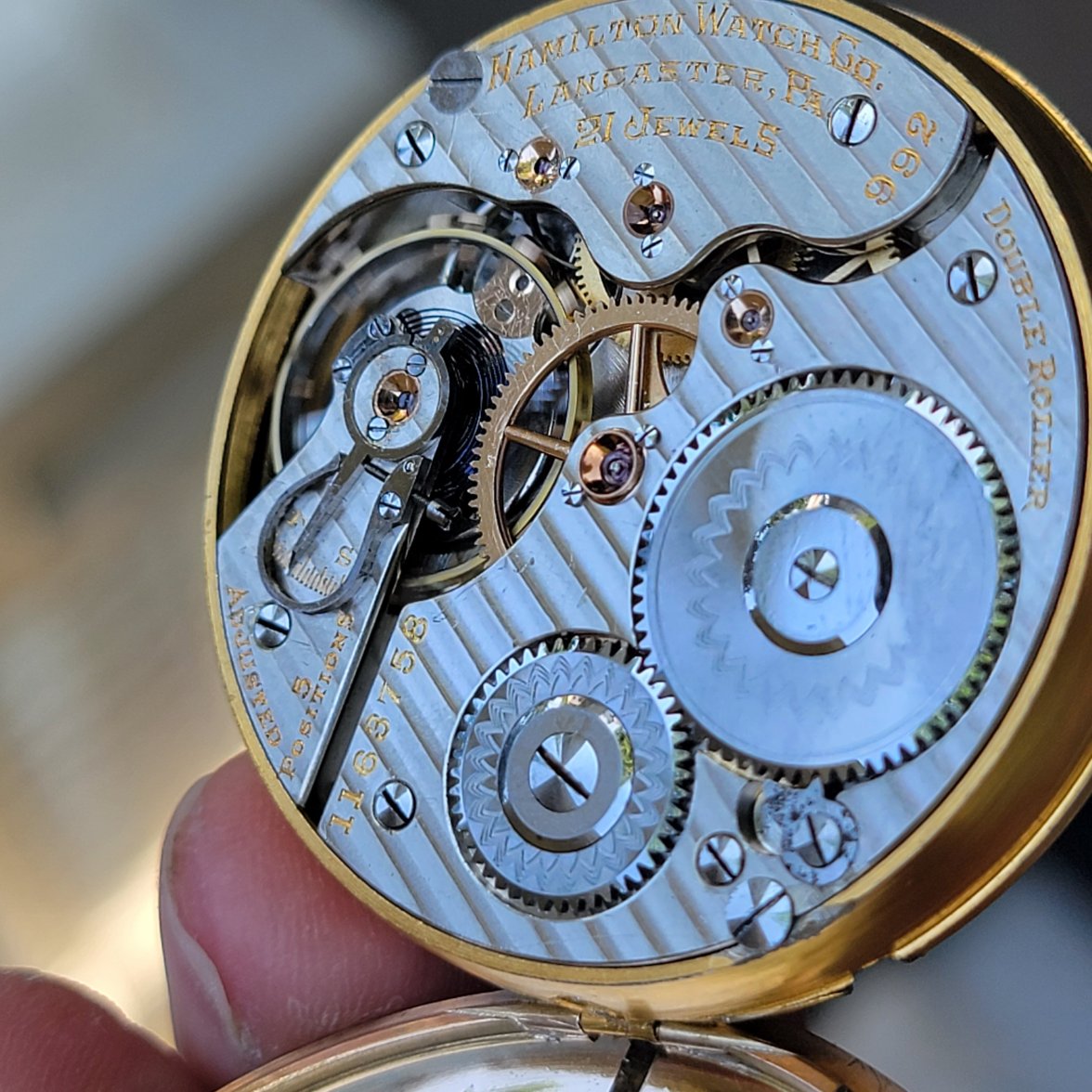
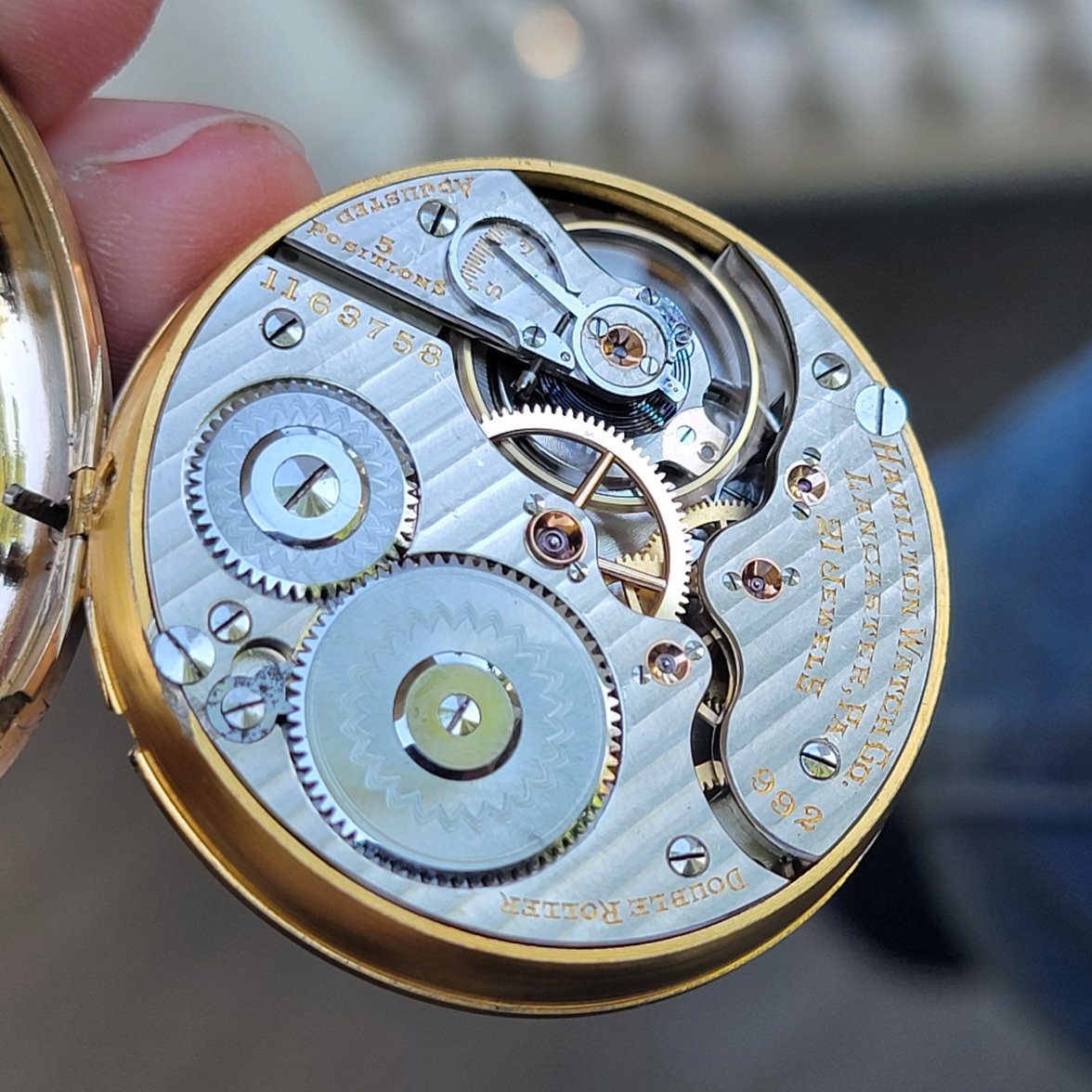
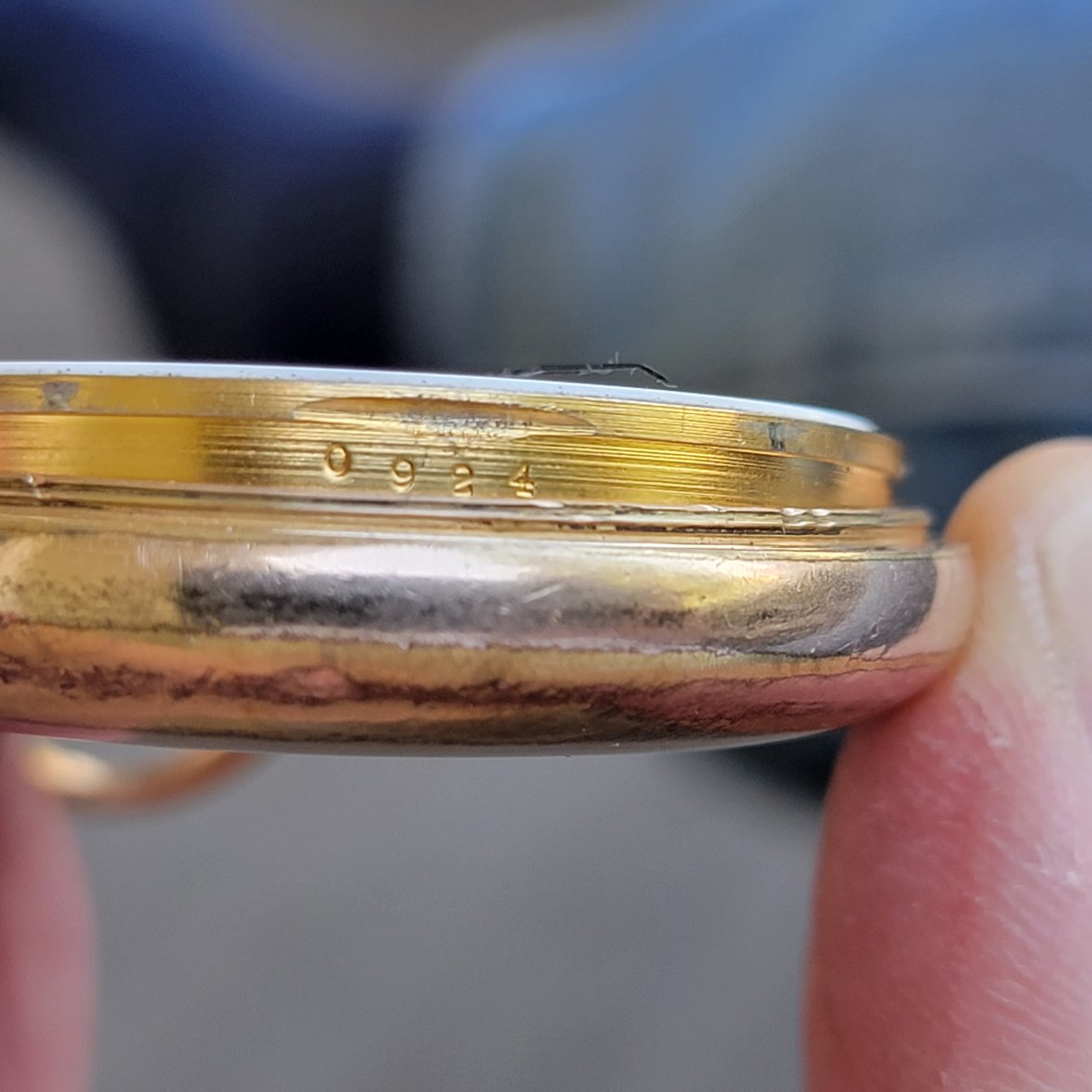
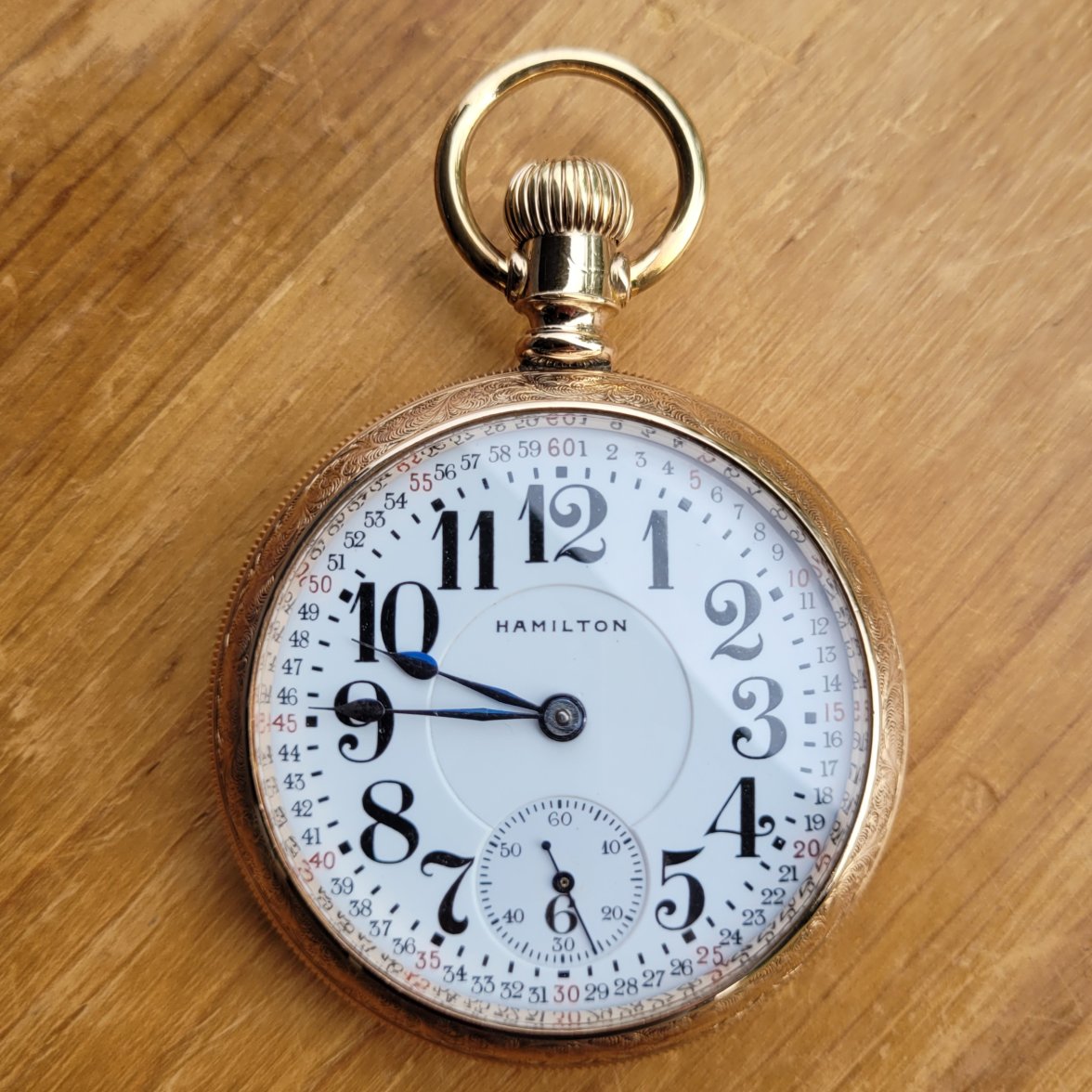
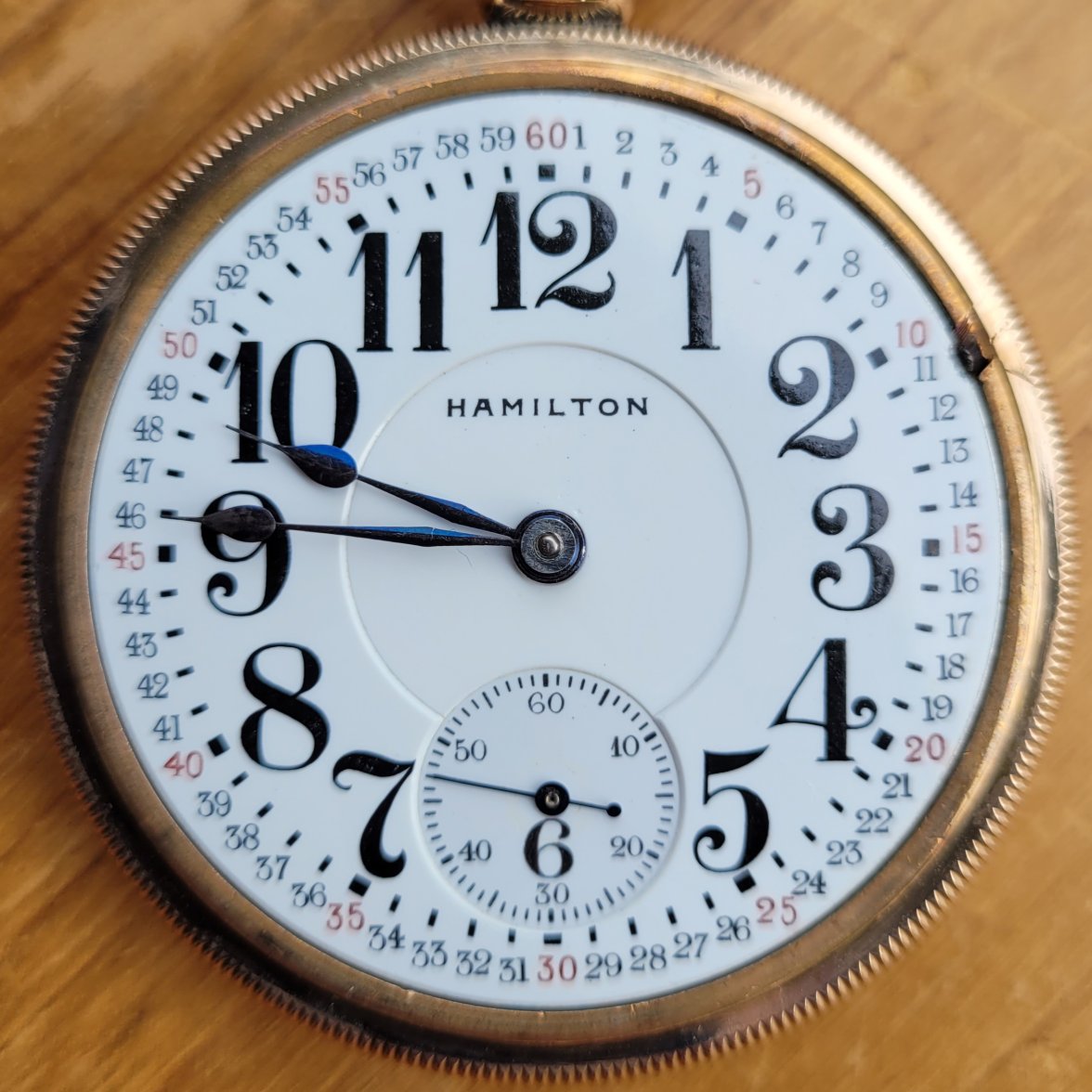
Finally in the club. Just arrived from a service by Dan Keefe of HamiltonChronicles.com, a great fan of and resource for Hamiltons. He replaced the main spring and glass crystal as part of the ohl. Dan thinks the open skeleton hands and swing out case were not railroad grade?

I didn't get the white balance right, as the pics are a bit bluer than real life. The dial is snow white.

It's the first edition Montgomery dial with slightly smaller script. The dial is immaculate. It's easy to read and fun to watch the minute hand creep up to the next minute as the seconds register ticks away.

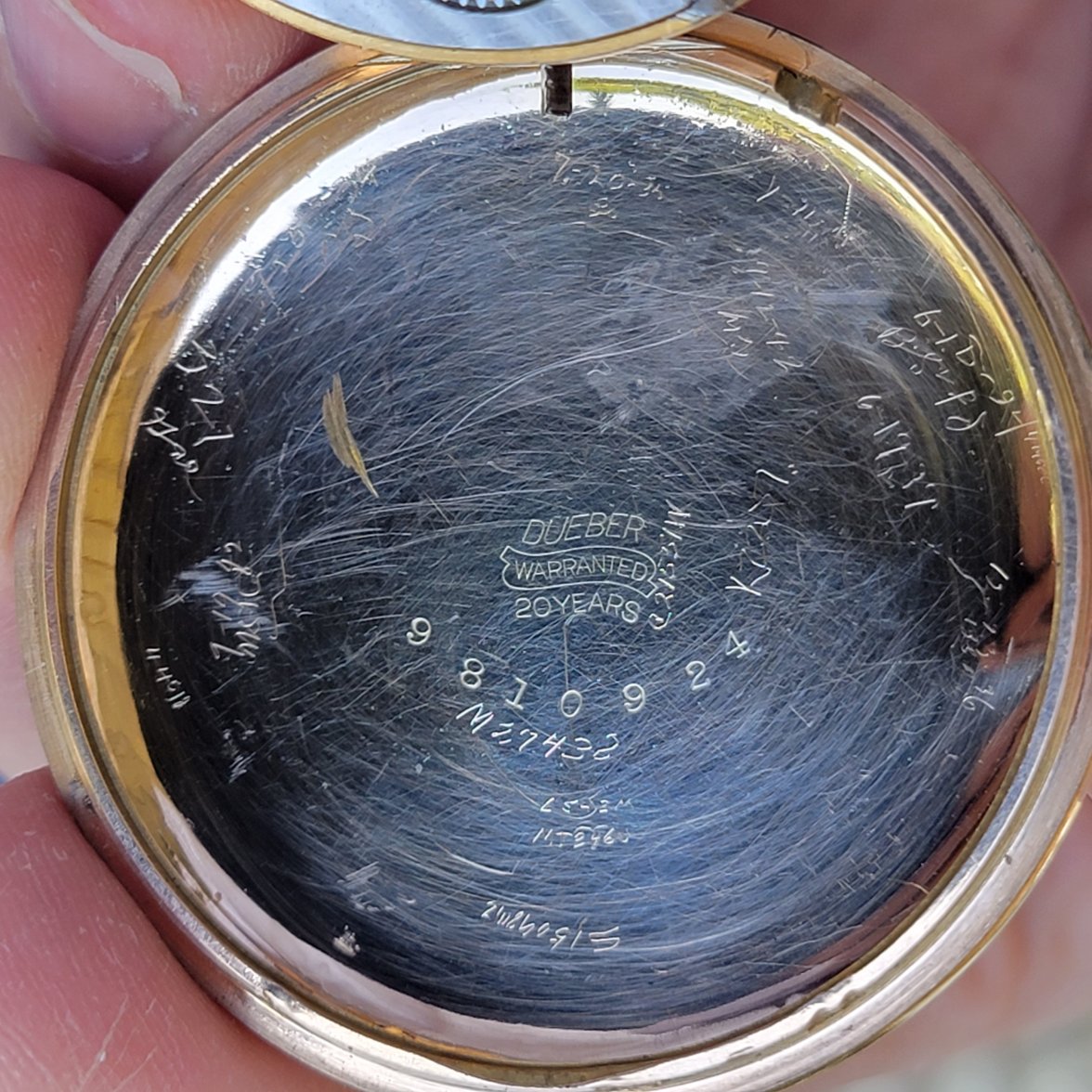
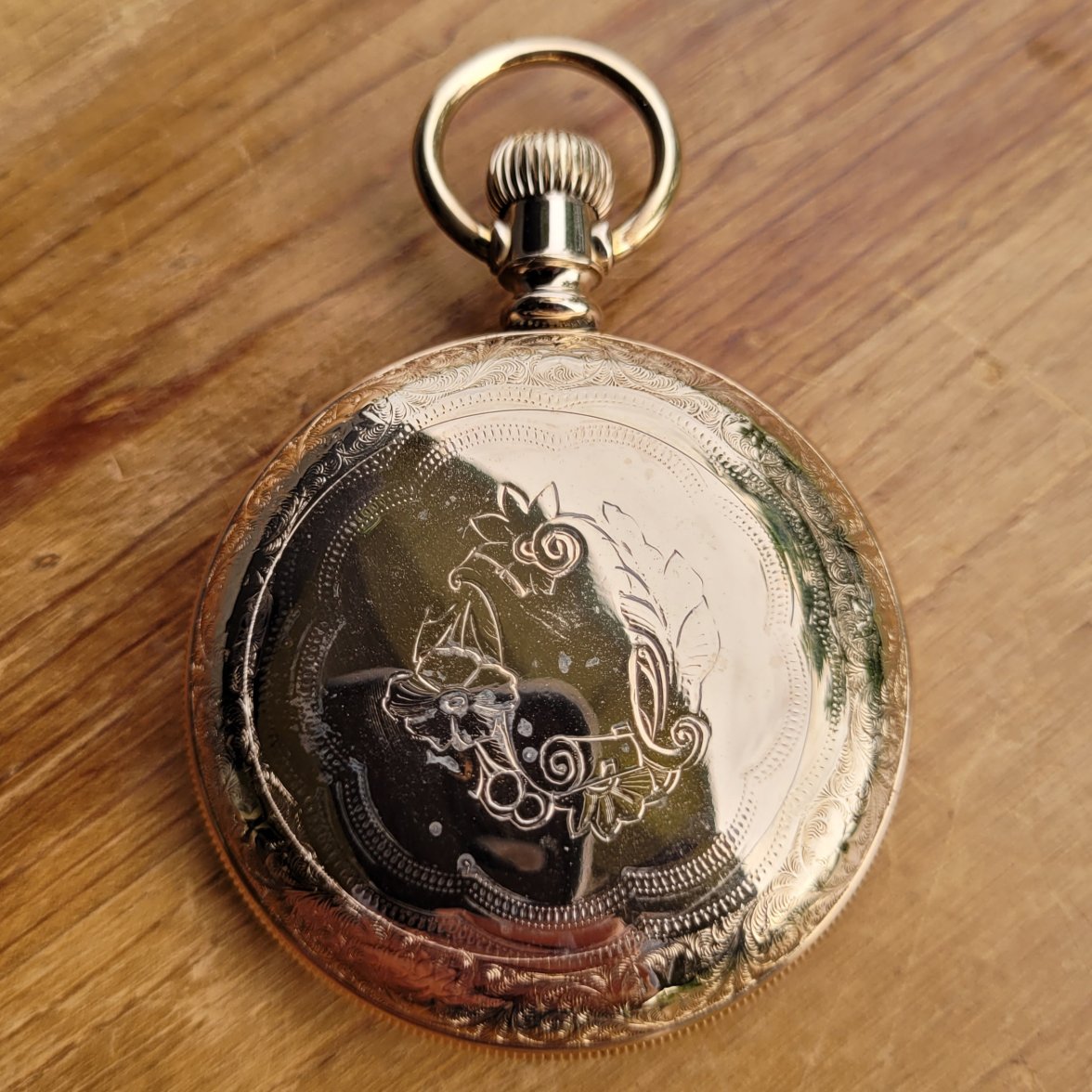
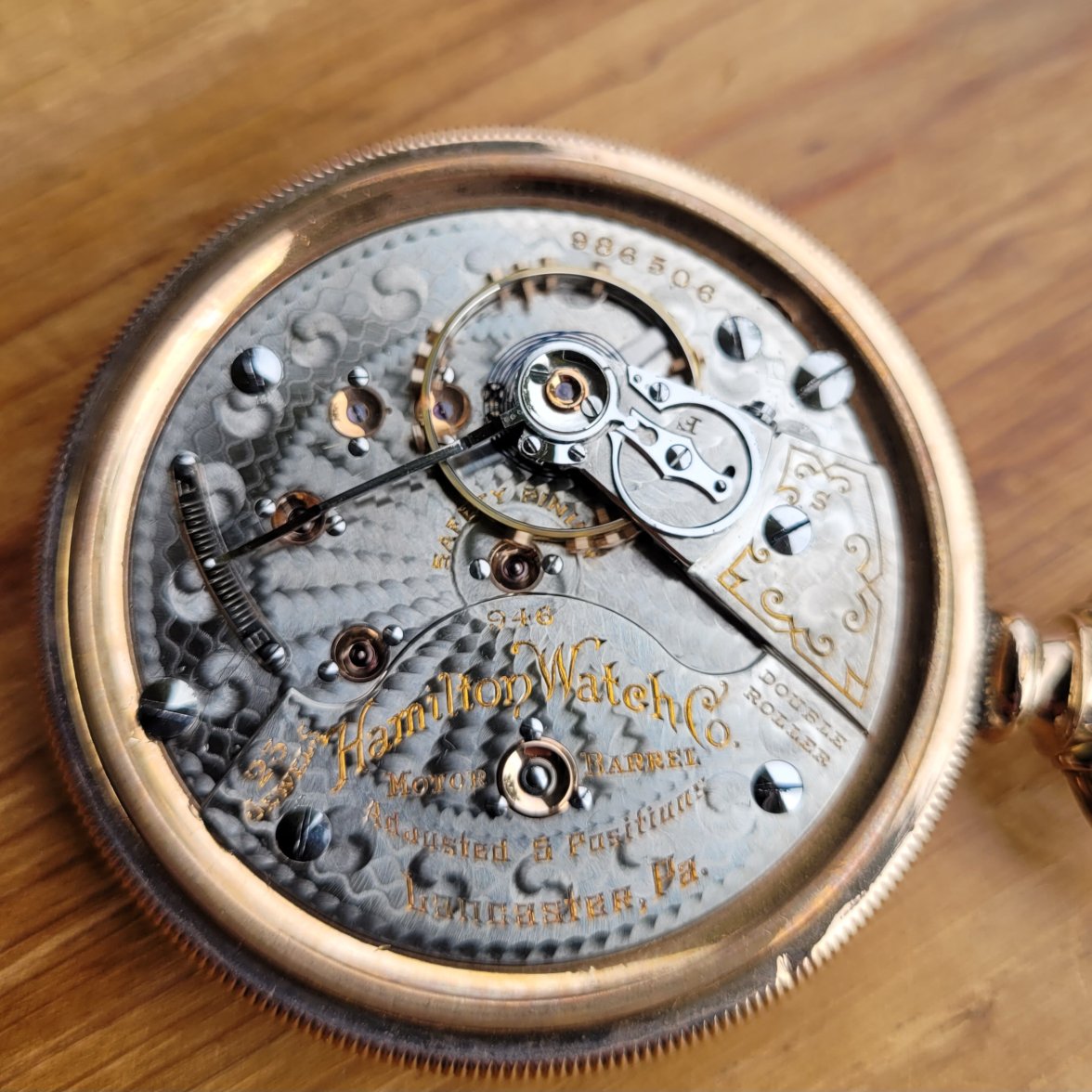
The inner caseback has a lot of watch maker marks, which indicates this watch saw a lot of life. The GF case has brassing, as expected for a watch from about 1914 to 1916. I really like the idea that this had an active life.

It's about 17 seconds behind NIST so I'll get to monitor it for accuracy.

Just waiting on Steve's lanyard to arrive, which is due to arrive Monday.

Pretty stinking fun I gotta say.

 
Posts
3,797
Likes
10,380
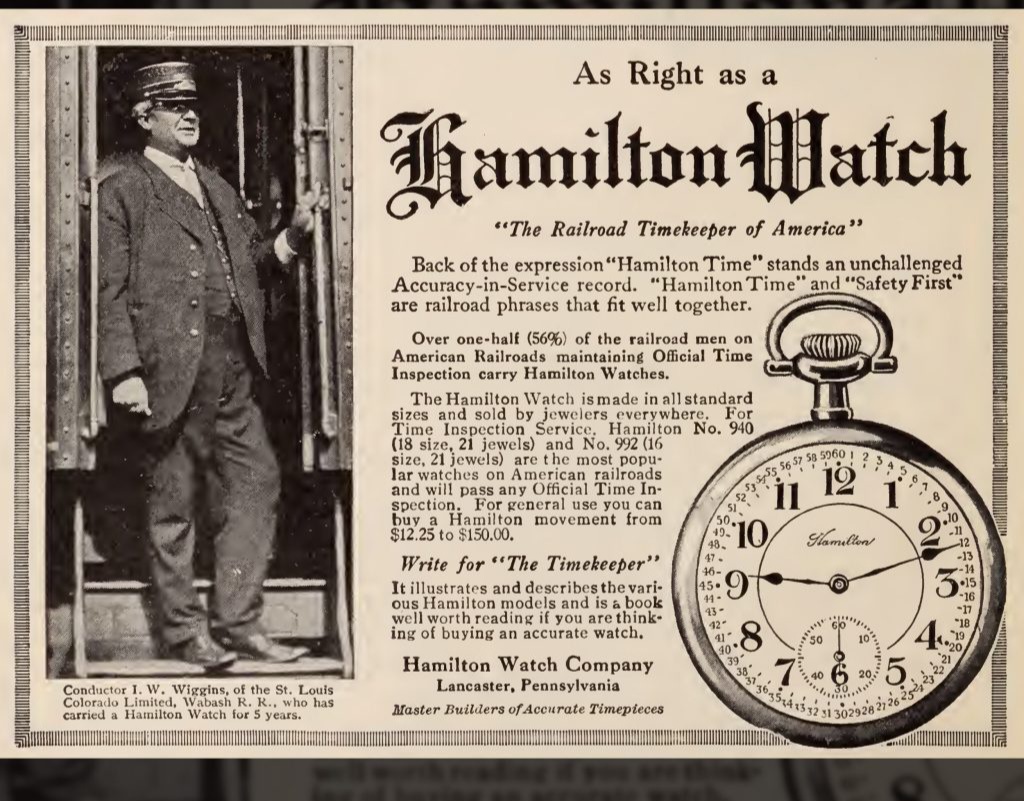
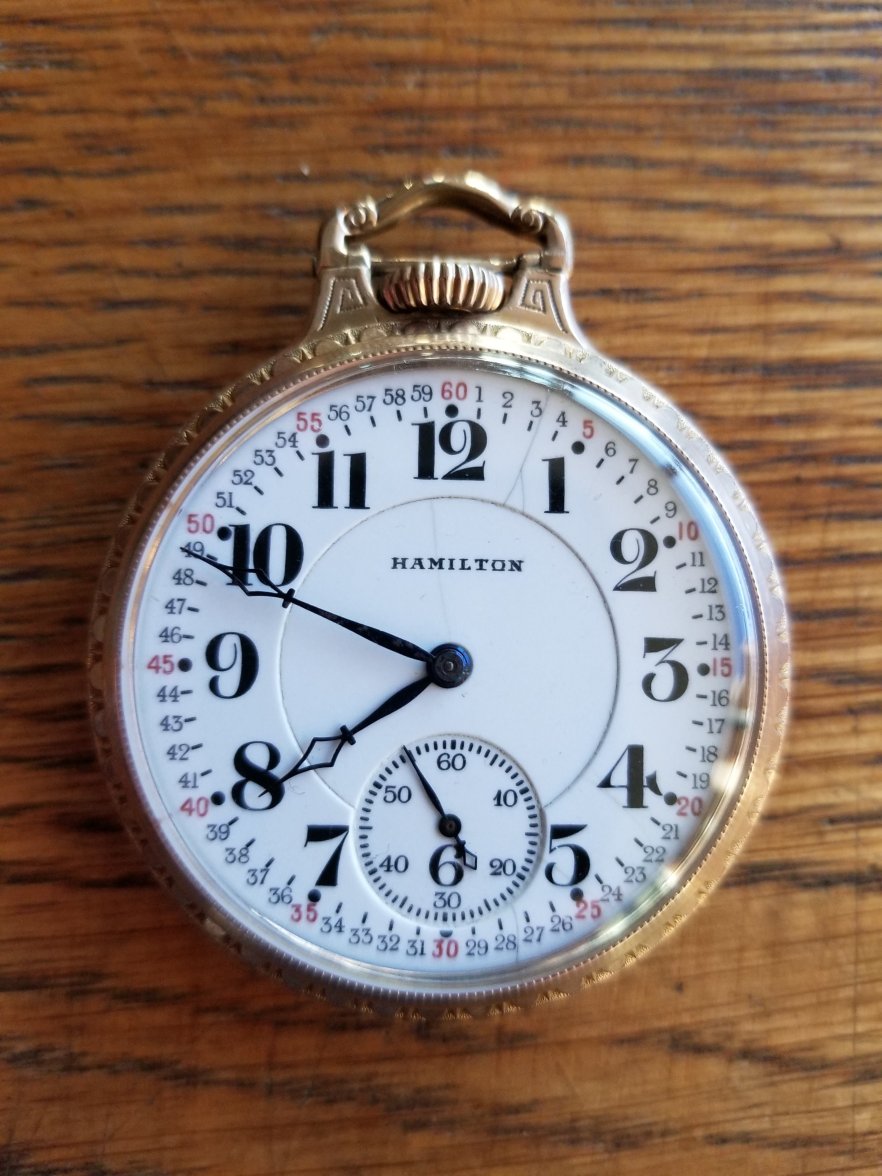
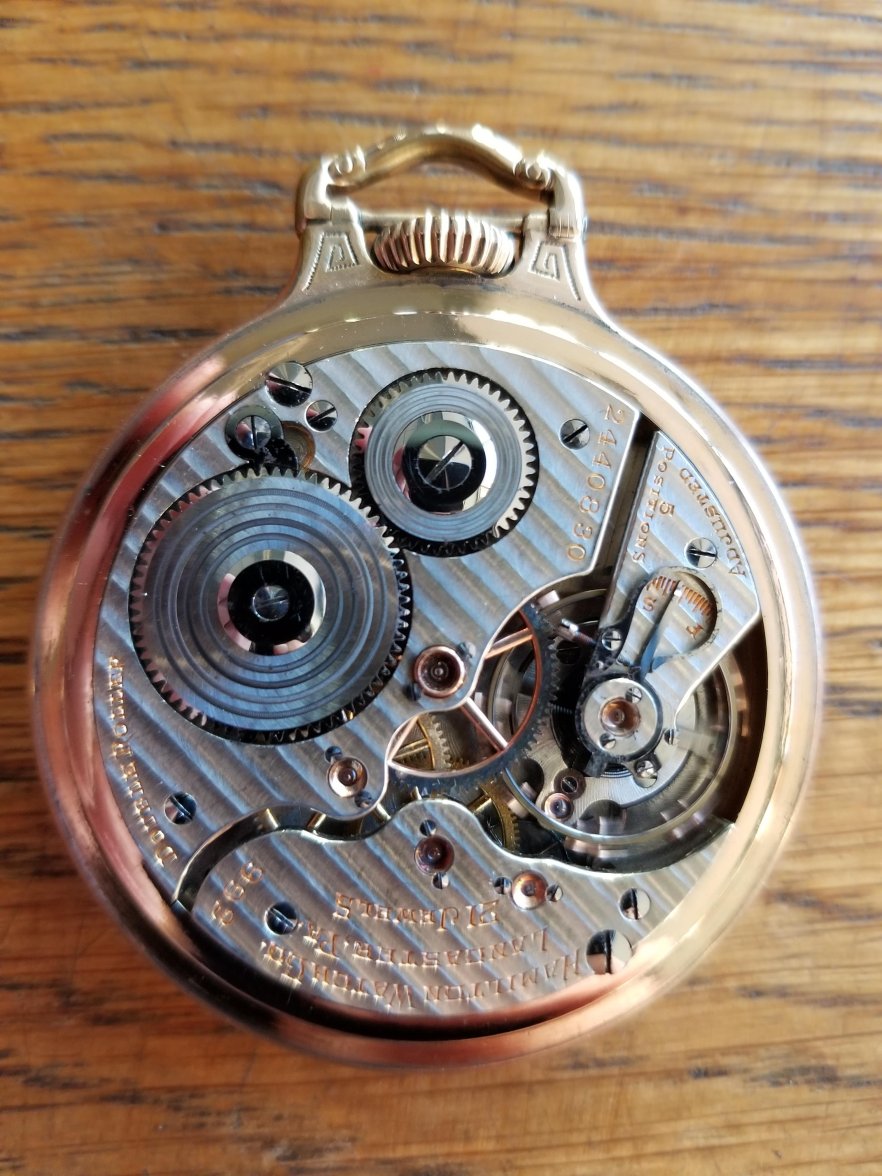
Congratulations on your Hamilton, a 992 is an excellent way to start off a pocket watch collection. Here's mine:
Edited:
 
Posts
6,025
Likes
20,717
Congratulations on your Hamilton, a 992 is an excellent way to start off a pocket watch collection. Here's mine:

Thanks for sharing yours. Nice to see the same hands. Gives a little more comfort in originality.

Also, I didn't know squat about PWs. Thanks to you all and the internet I learned what to look for. The rest was serendipity.

Edit: my seconds hand might be wrong...
 
Posts
3,797
Likes
10,380
Thanks for sharing yours. Nice to see the same hands. Gives a little more comfort in originality.

Also, I didn't know squat about PWs. Thanks to you all and the internet I learned what to look for. The rest was serendipity.

Edit: my seconds hand might be wrong...
Handsets were often picked when the watch was bought. Back when your 992 was made (1916), it was pretty common for the customer to pick the movement, case, hands, and sometimes even the dial. So, when it comes to wrong, that is much more subjective in old pocket watches than in wrist watches. Now I agree, that your second hand is mismatched to the other two. That's not all that big of a deal though.
 
Posts
4,509
Likes
45,208
Thanks for sharing yours. Nice to see the same hands. Gives a little more comfort in originality.

Also, I didn't know squat about PWs. Thanks to you all and the internet I learned what to look for. The rest was serendipity.

Edit: my seconds hand might be wrong...

I dont think your seconds hand is wrong at all, the rear of the hand matches the Hour and minute hands pointers so I am guessing with the seconds hands in the same style as the longer hands would look wrong in the seconds hand.
 
Posts
6,025
Likes
20,717
I dont think your seconds hand is wrong at all, the rear of the hand matches the Hour and minute hands pointers so I am guessing with the seconds hands in the same style as the longer hands would look wrong in the seconds hand.

That's my story and I'm sticking to it 😁

Thanks for this.
 
Posts
3,797
Likes
10,380
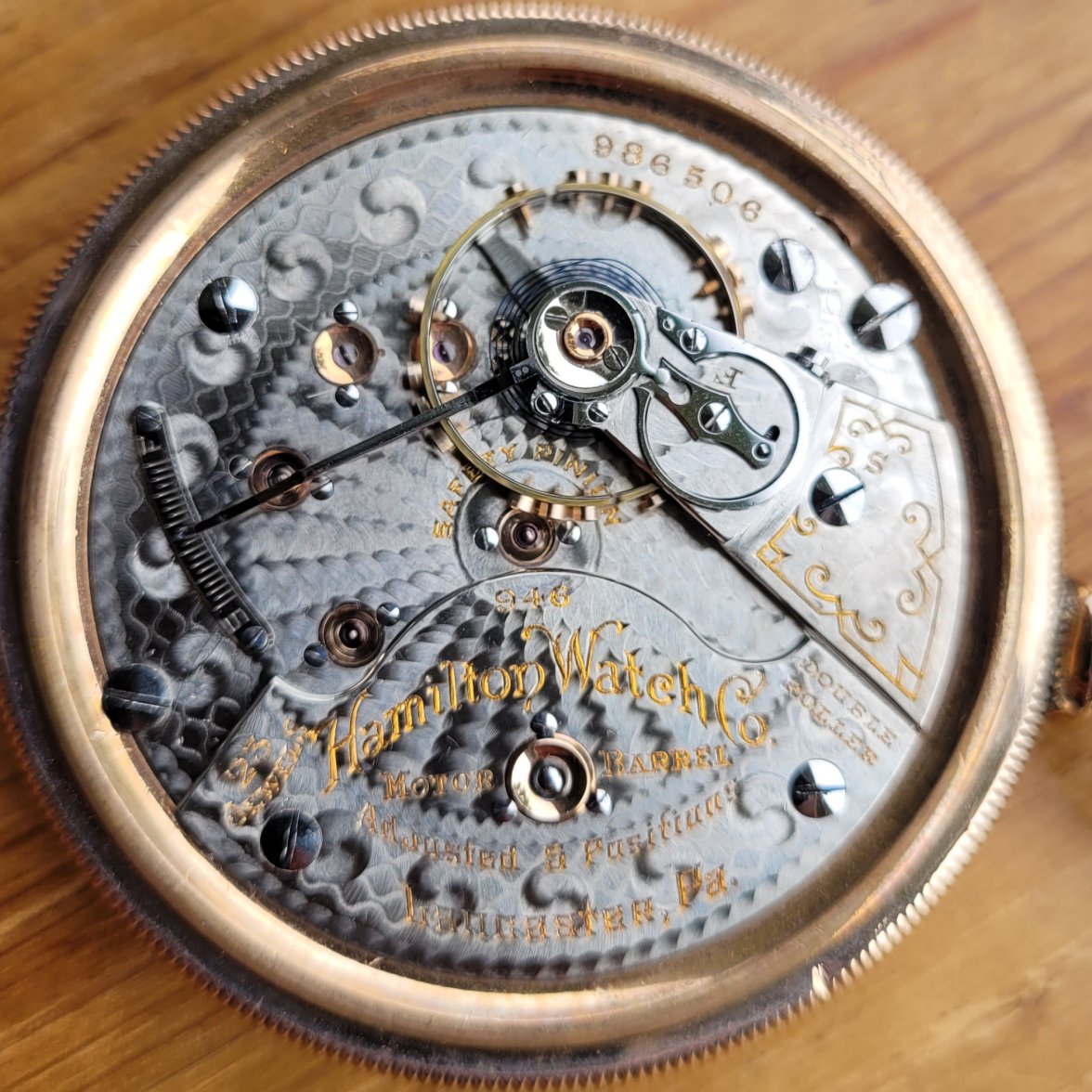
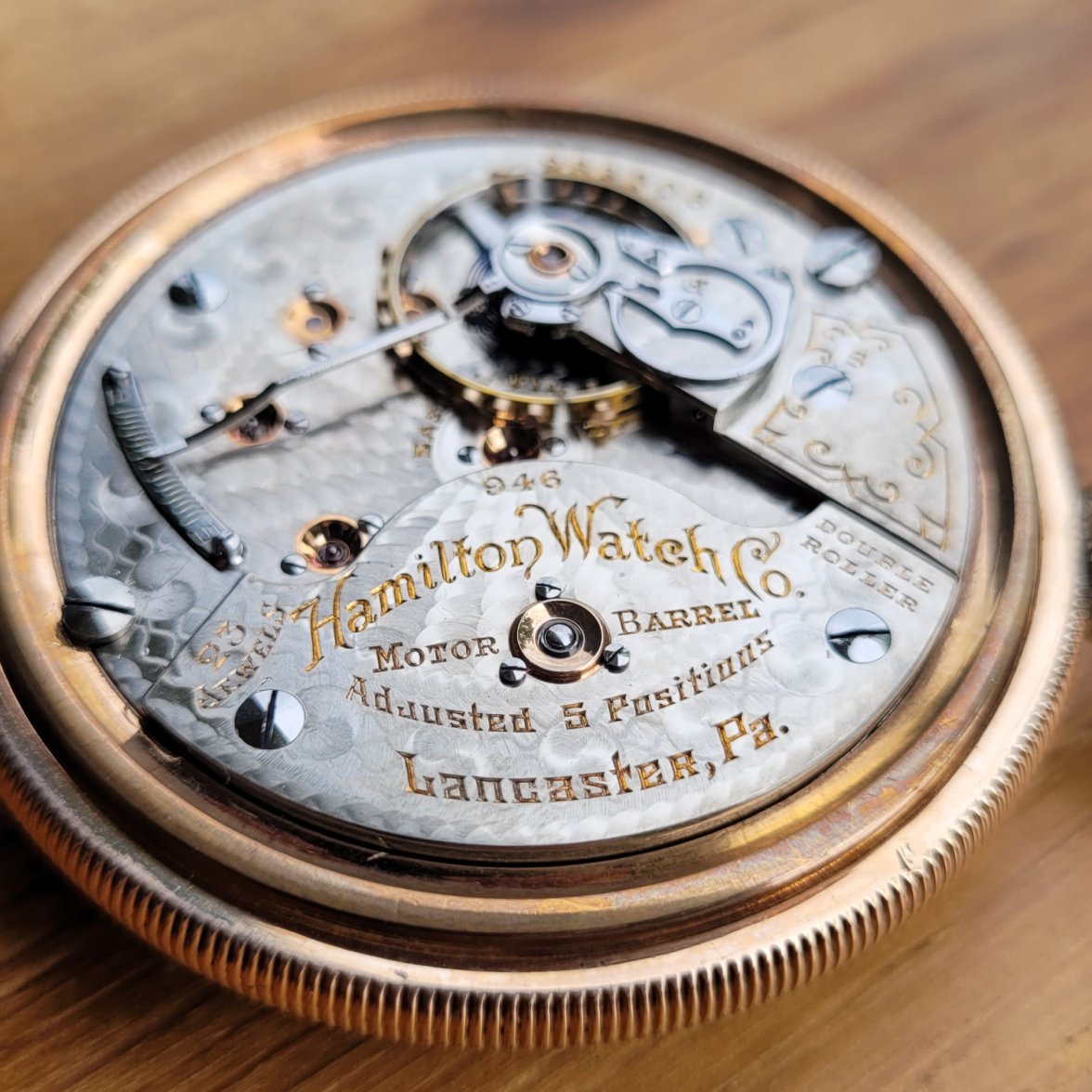
After getting my budget Sangamo sorted with a decent dial and case, I decided that I'd send it out for a service instead of handling it myself. When he received it my watchmaker told me he had a pair Hamilton 946s for sale. Obviously I couldn't pass up a watch I have been hunting for a couple of years now, so I bought it. It's a late production 946, made in 1917. The case is a Fahys Montauk case with no signs of brassing. The discoloration in the back is due to the presence of a vinyl case protector, that was on it. I've removed it and the case shows no signs of discoloration. The damaskeening on these 946s is pretty much unrivaled in my opinion.
 
Posts
17,419
Likes
164,518
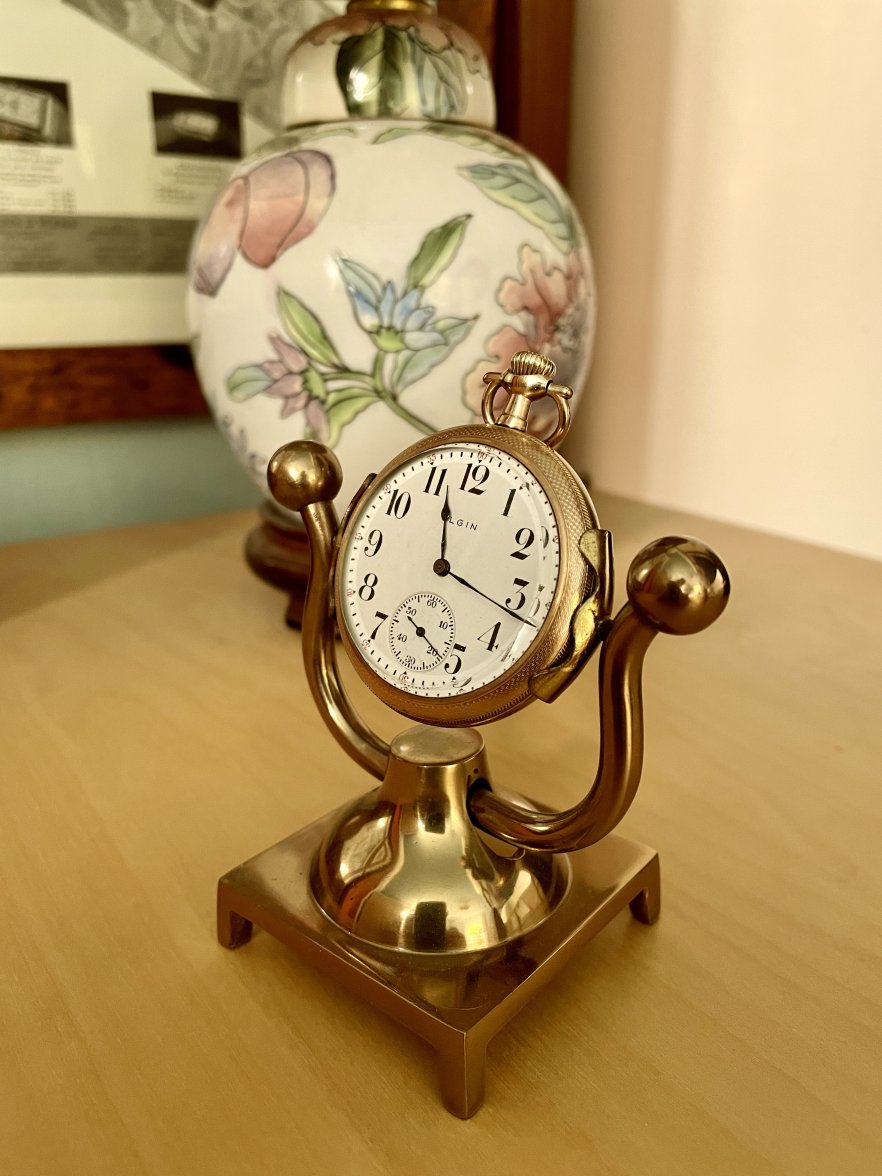
Elgin on desk duty today 😀

 
Posts
6,025
Likes
20,717
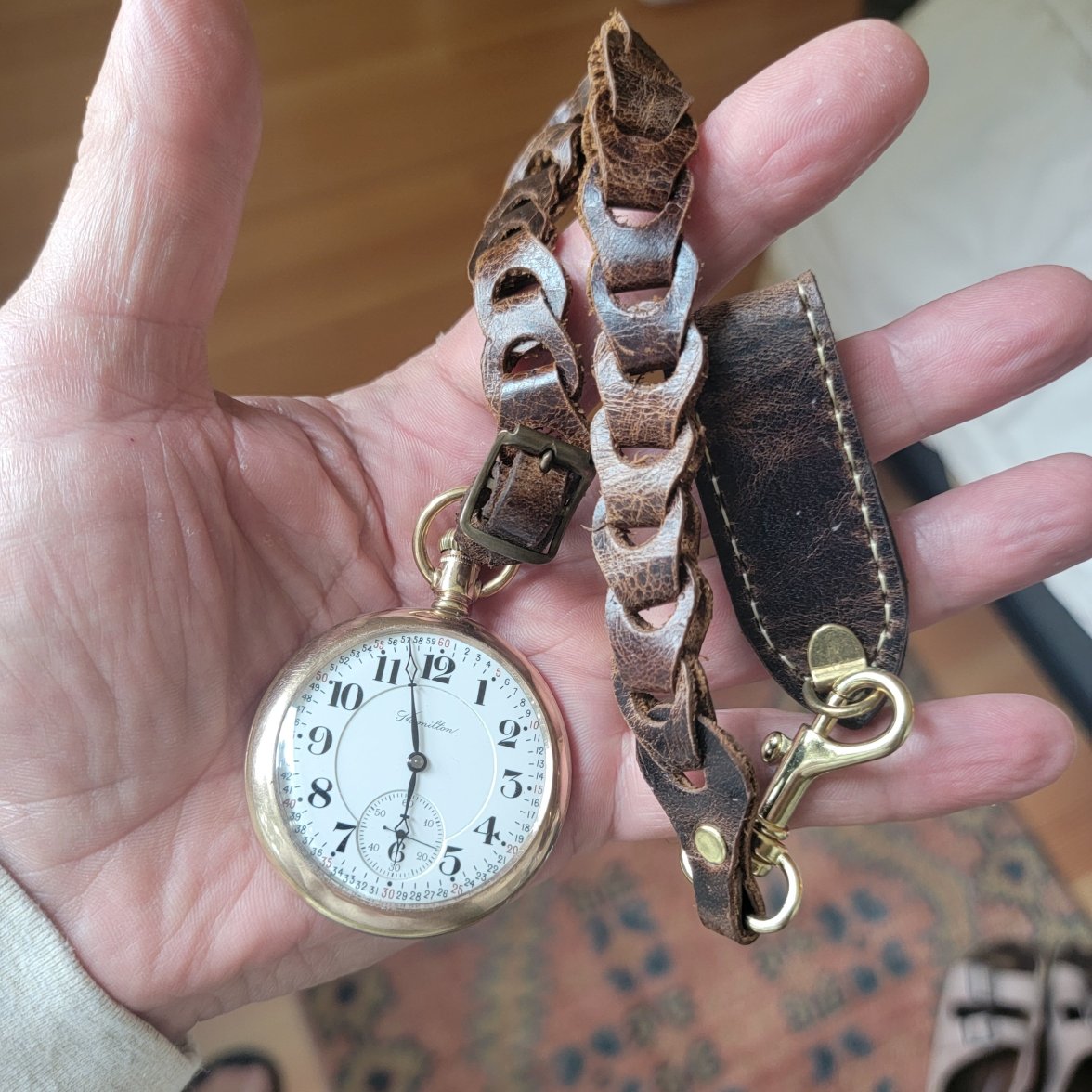
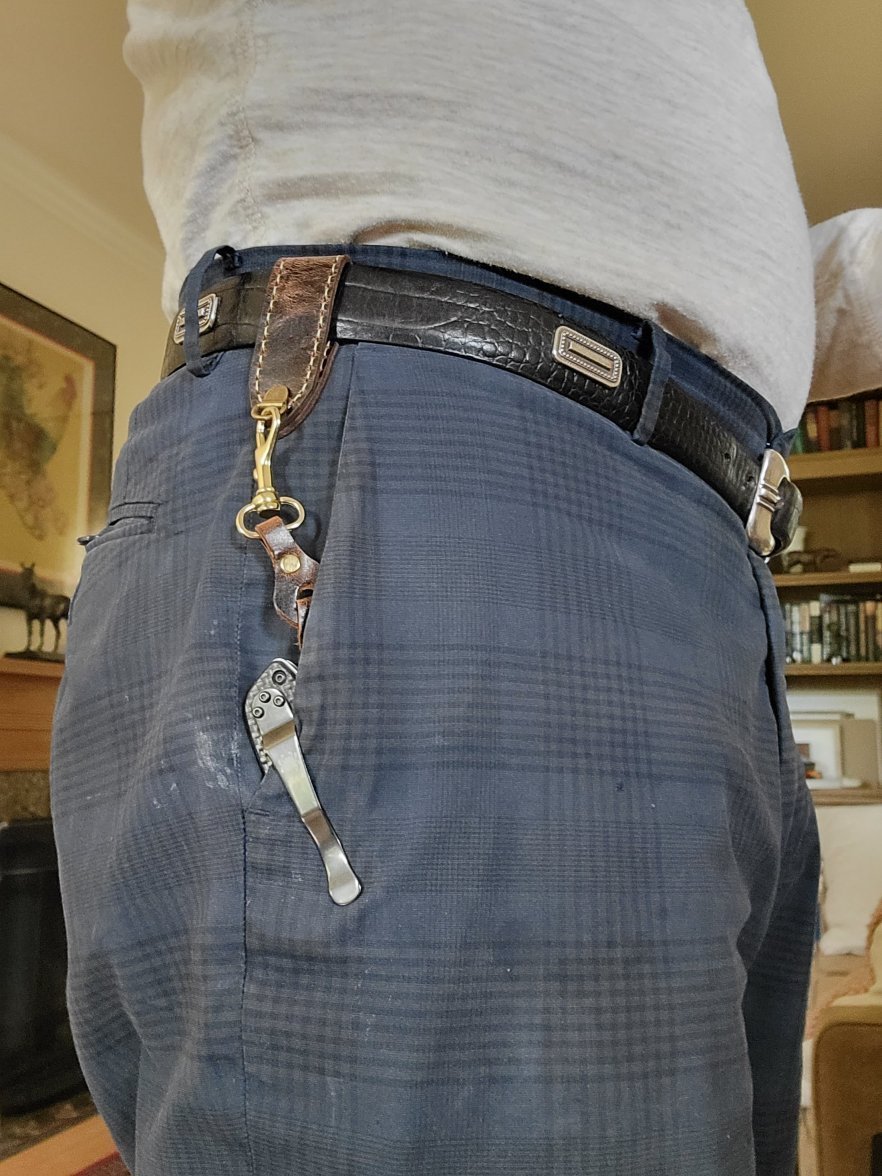
Just arrived. Beautiful leather, feels like a natural fit.


Thanks a heap, @Duracuir1. You've managed to make the world feel a bit more civilized.

Dave
 
Posts
8,355
Likes
59,778
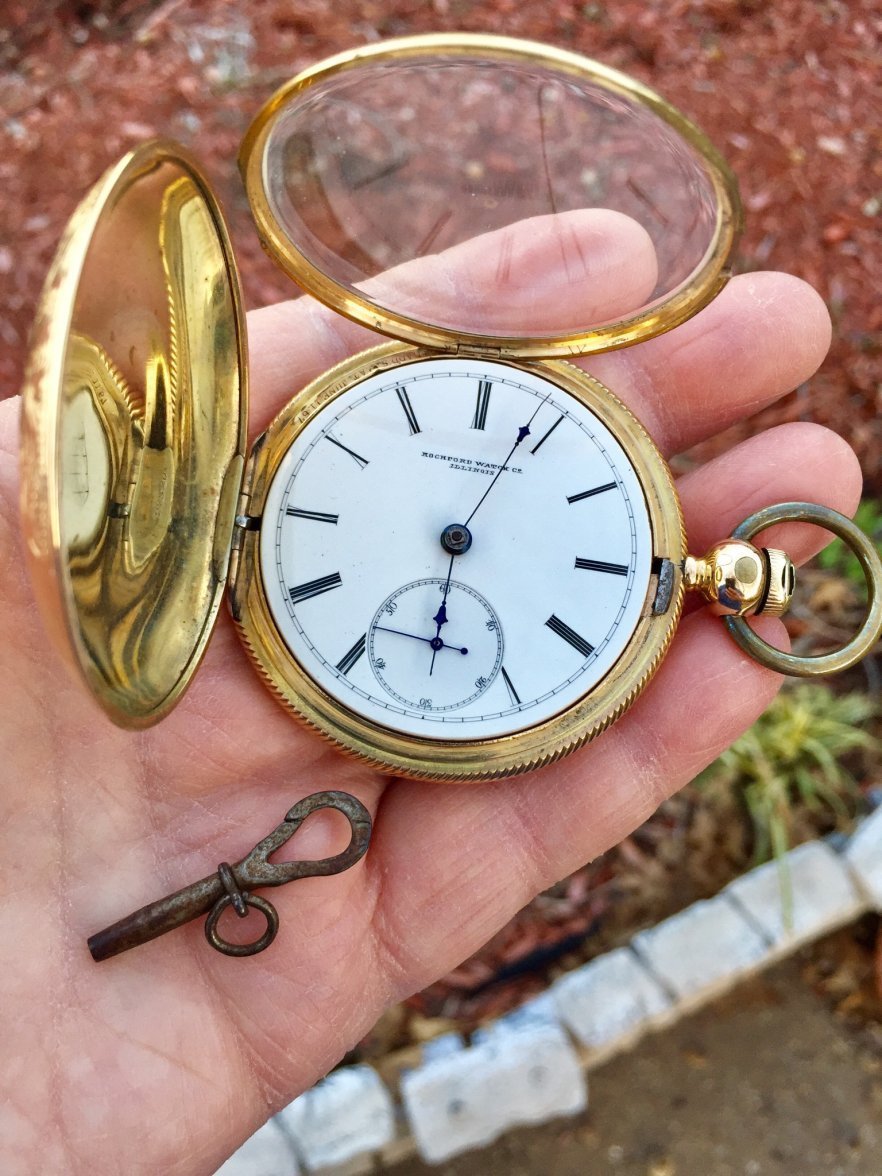
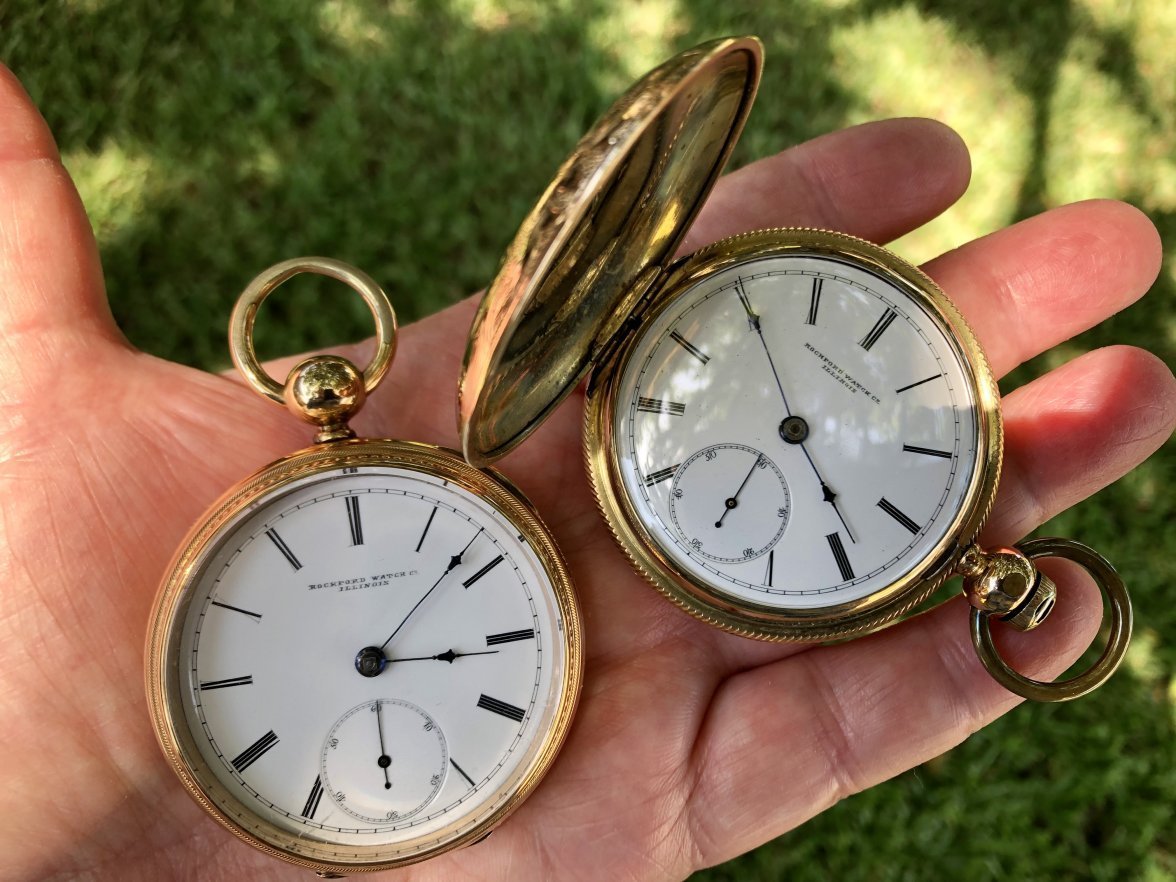
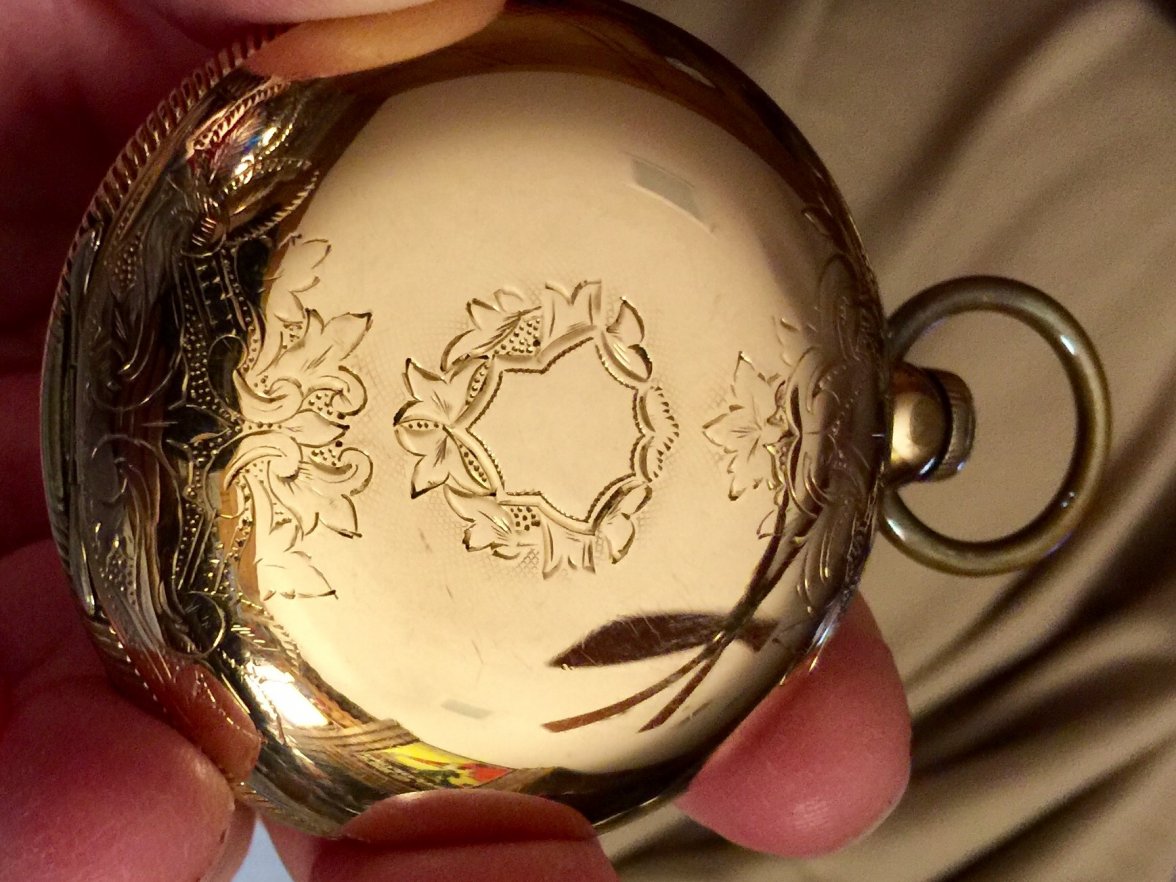
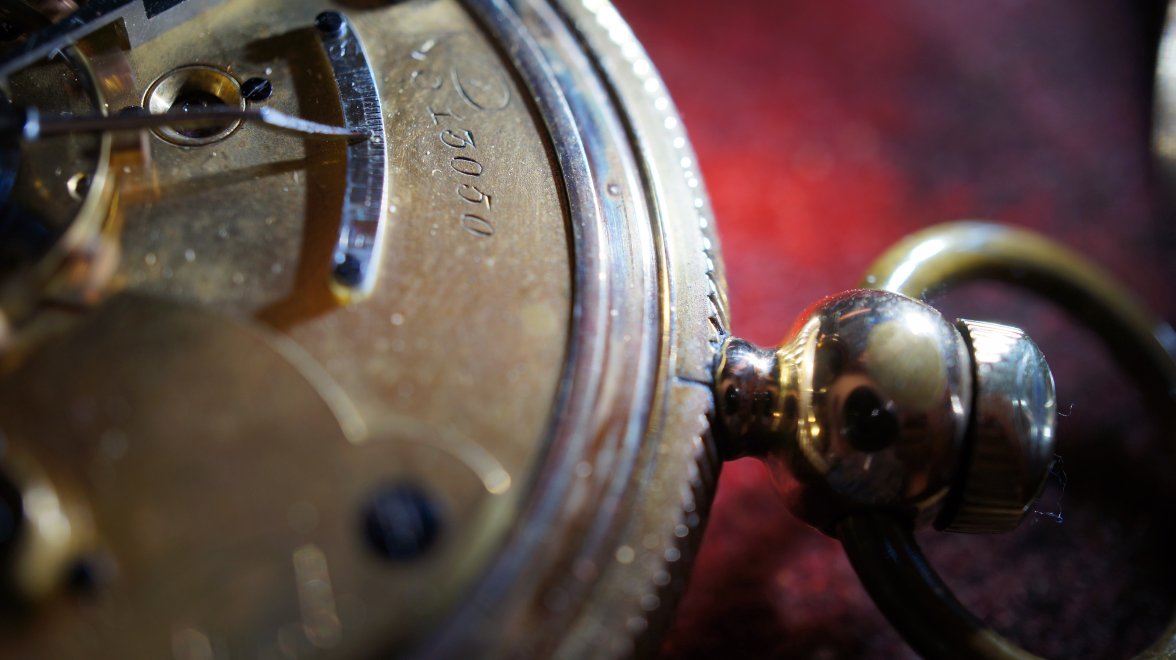
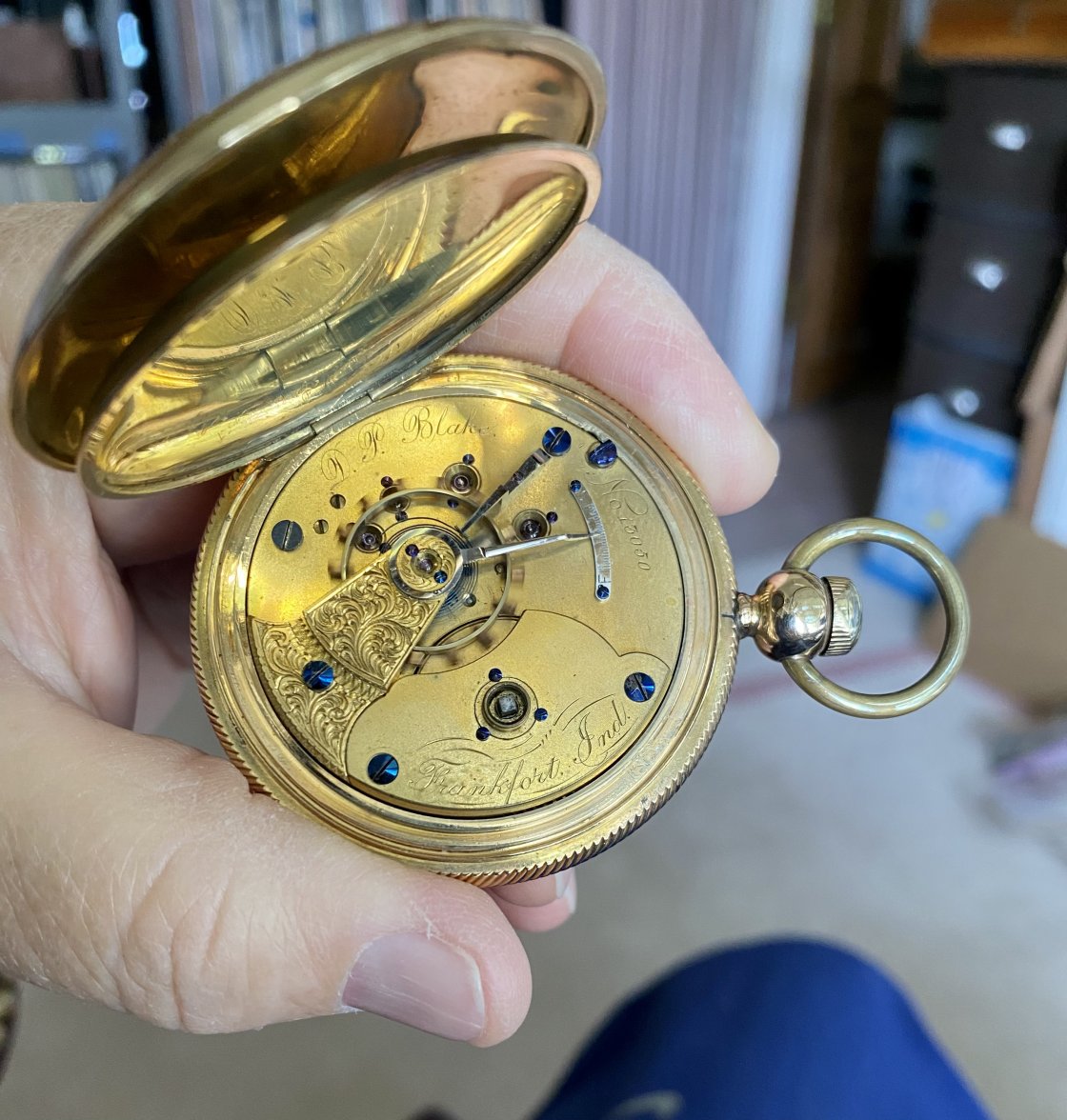
My Hunter Cased version
18s Rockford KWKS
Circa 1876
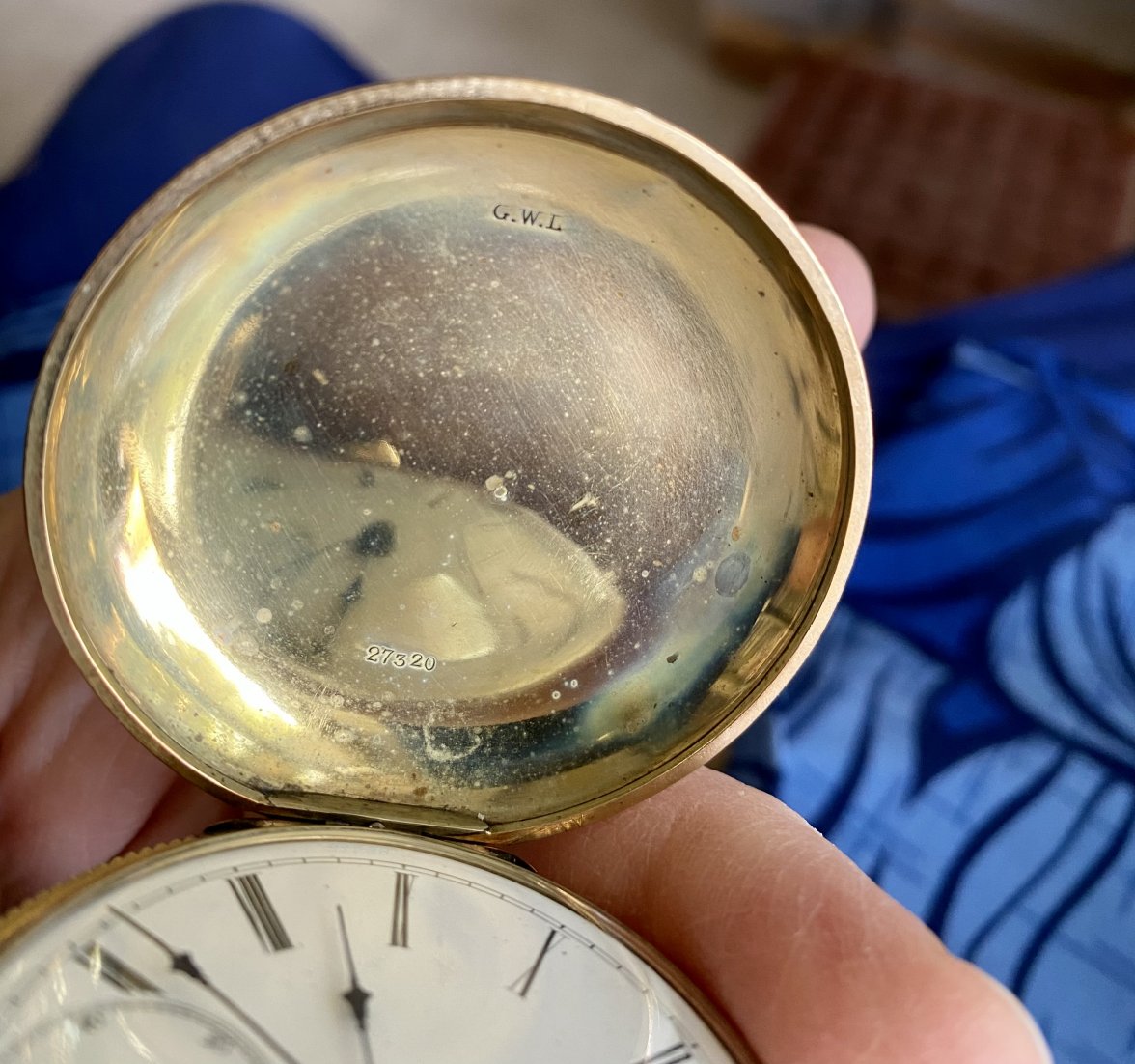
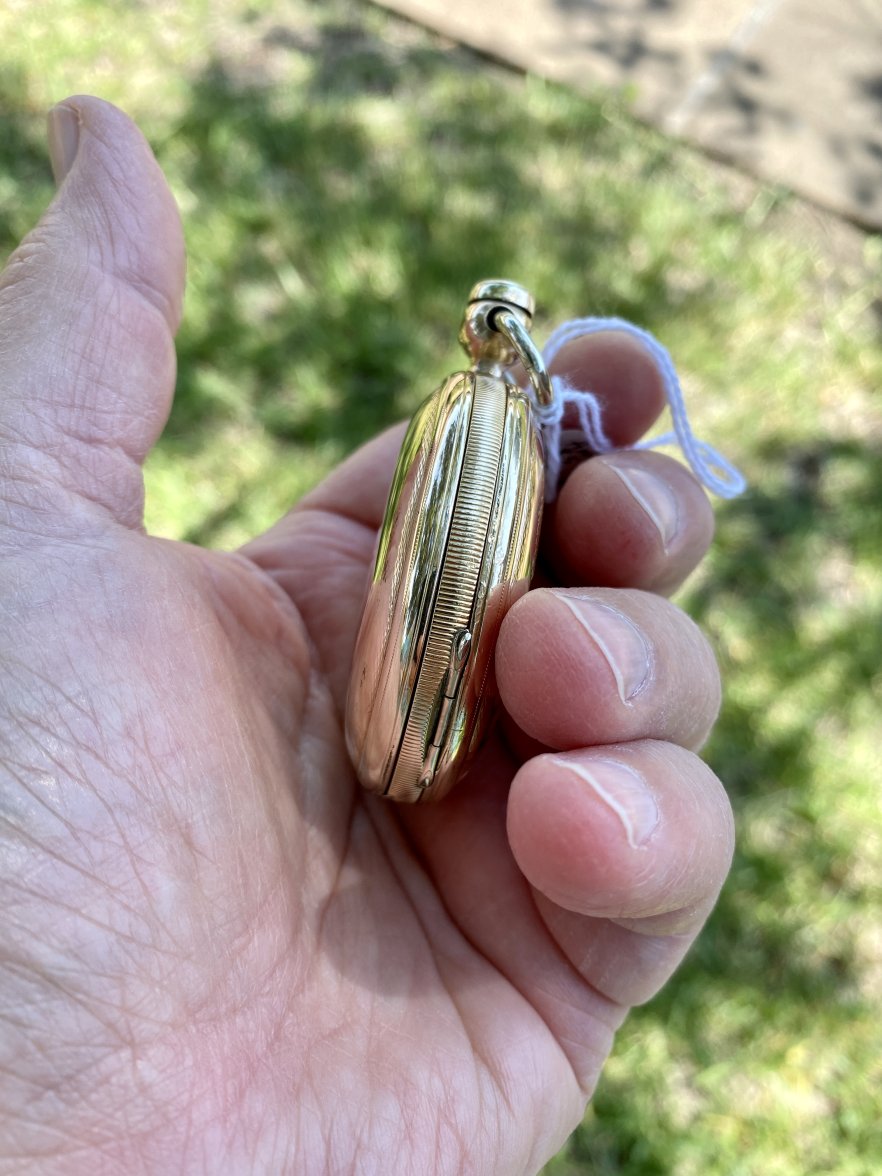
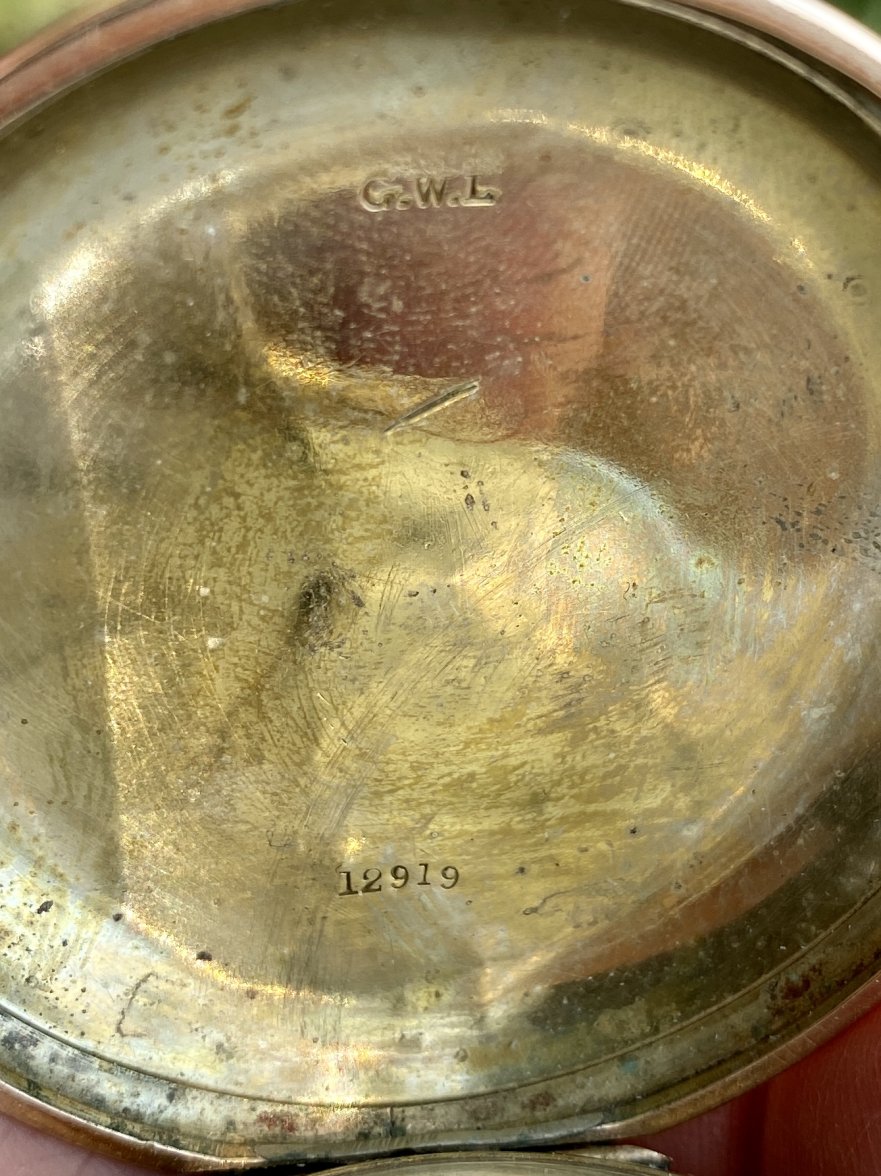
GW Ladd 4 hinge GF case
DP Blake Jewelry


Doesn't have the micro-regulator as the Open Face example shows.


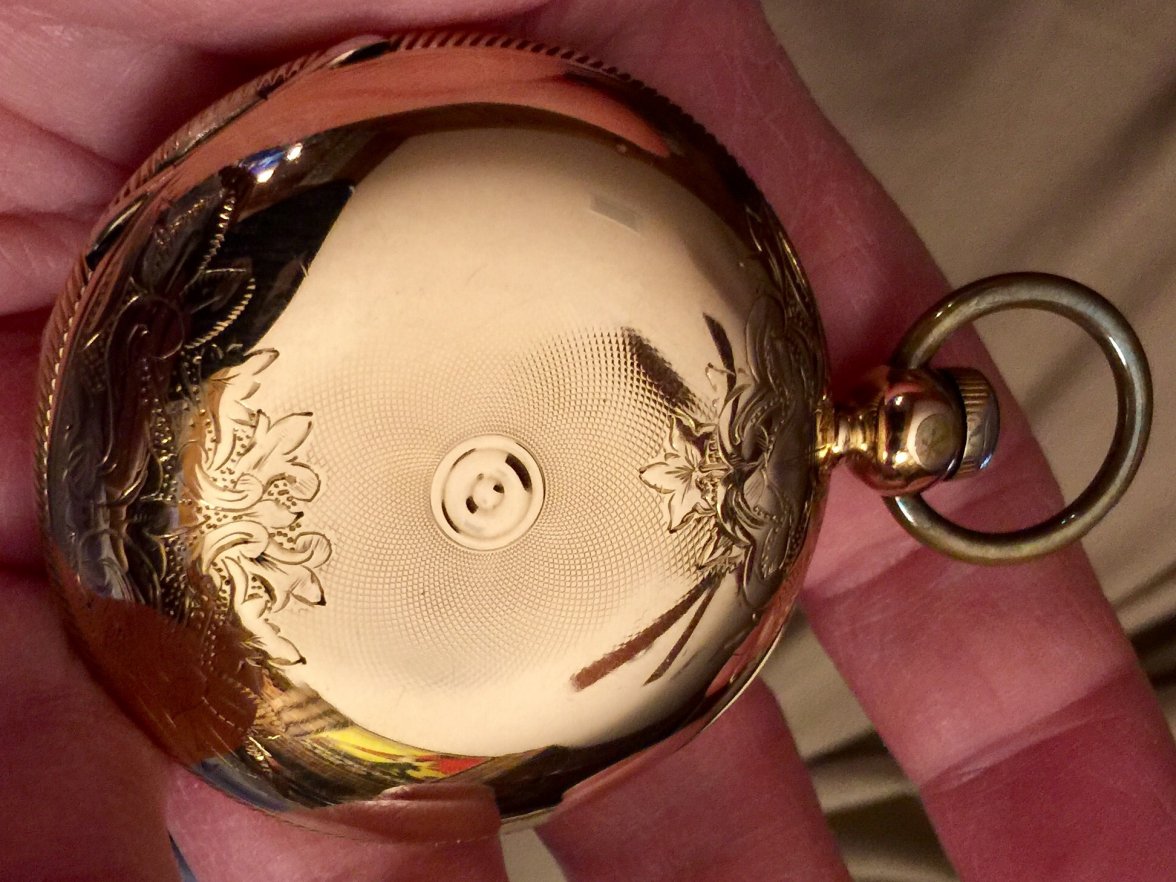
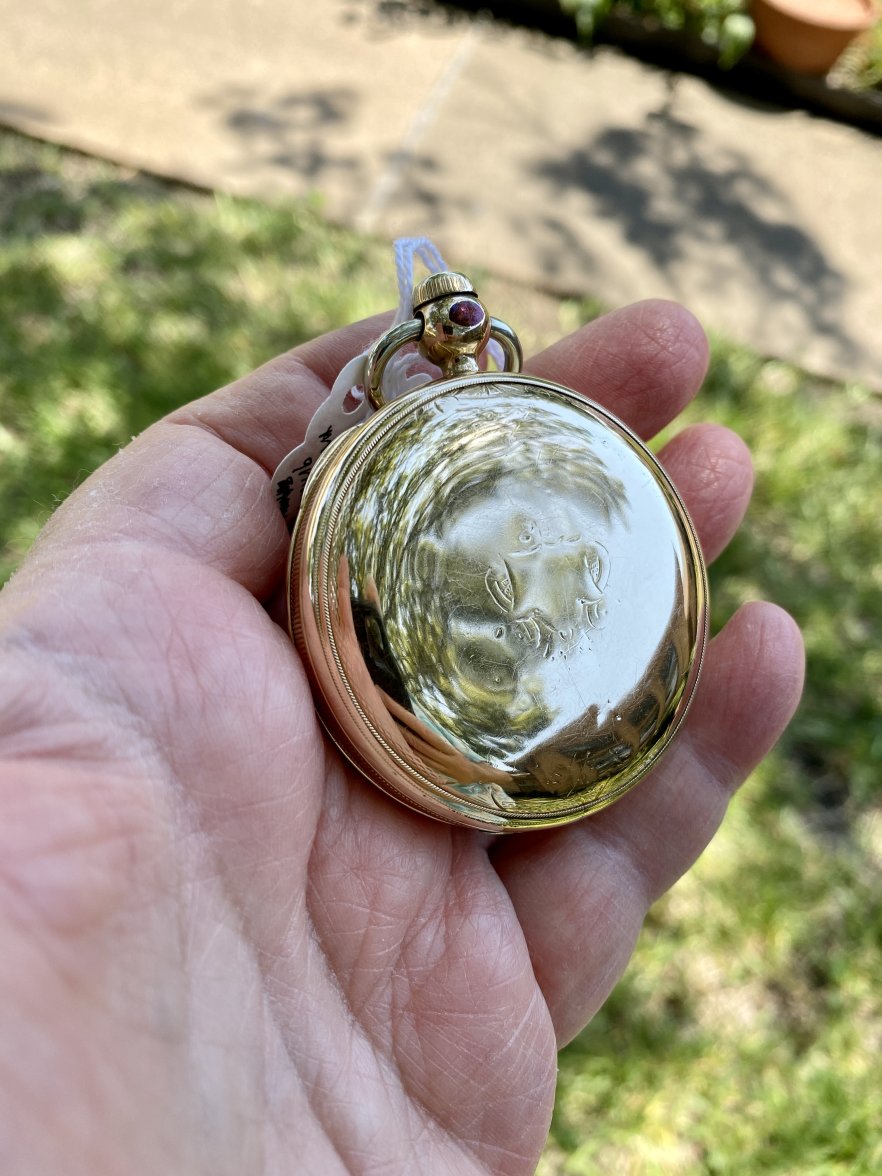
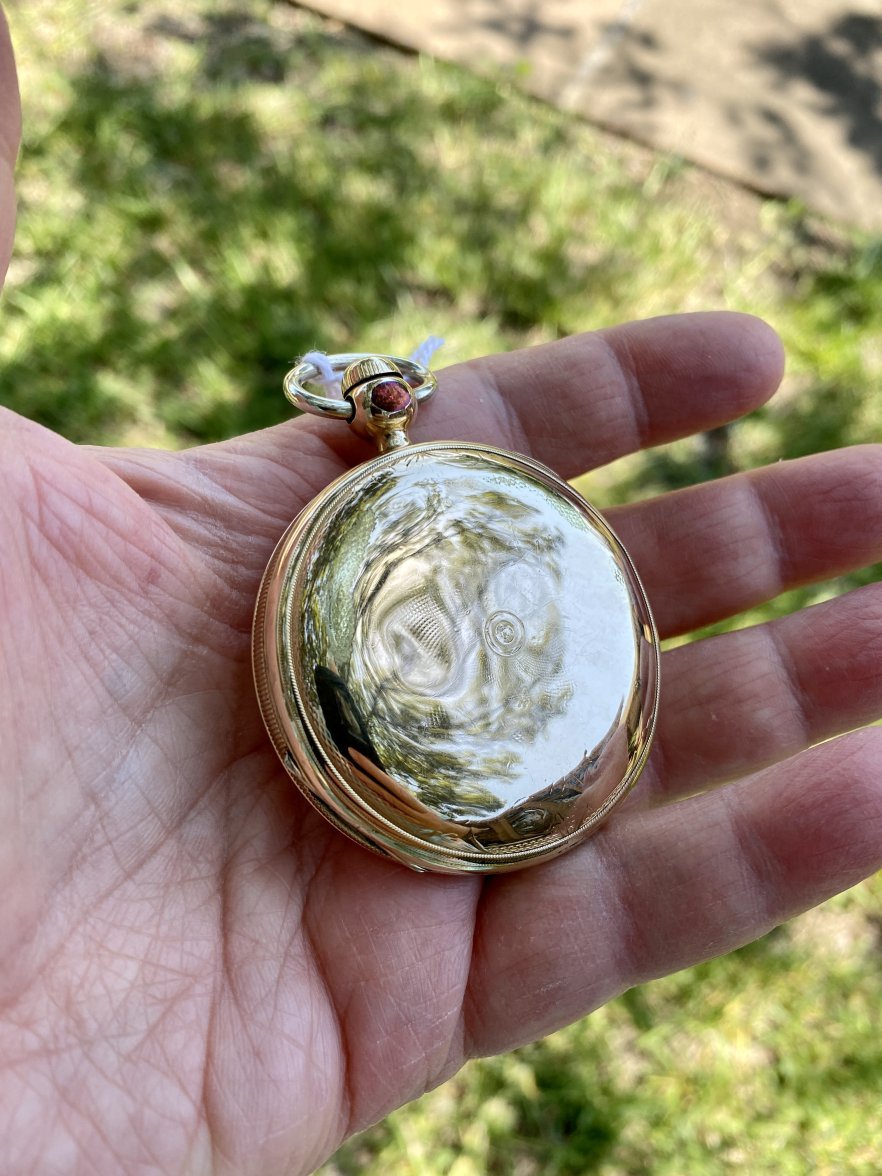
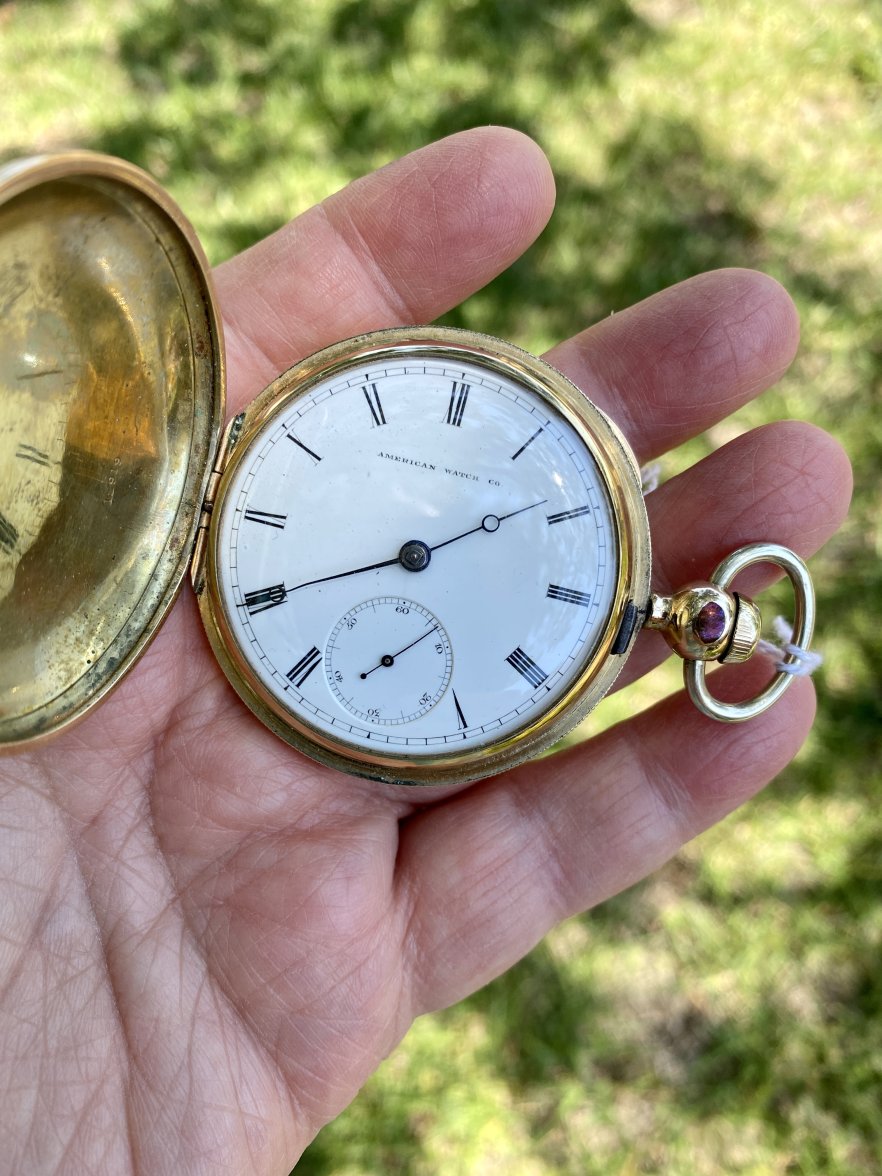
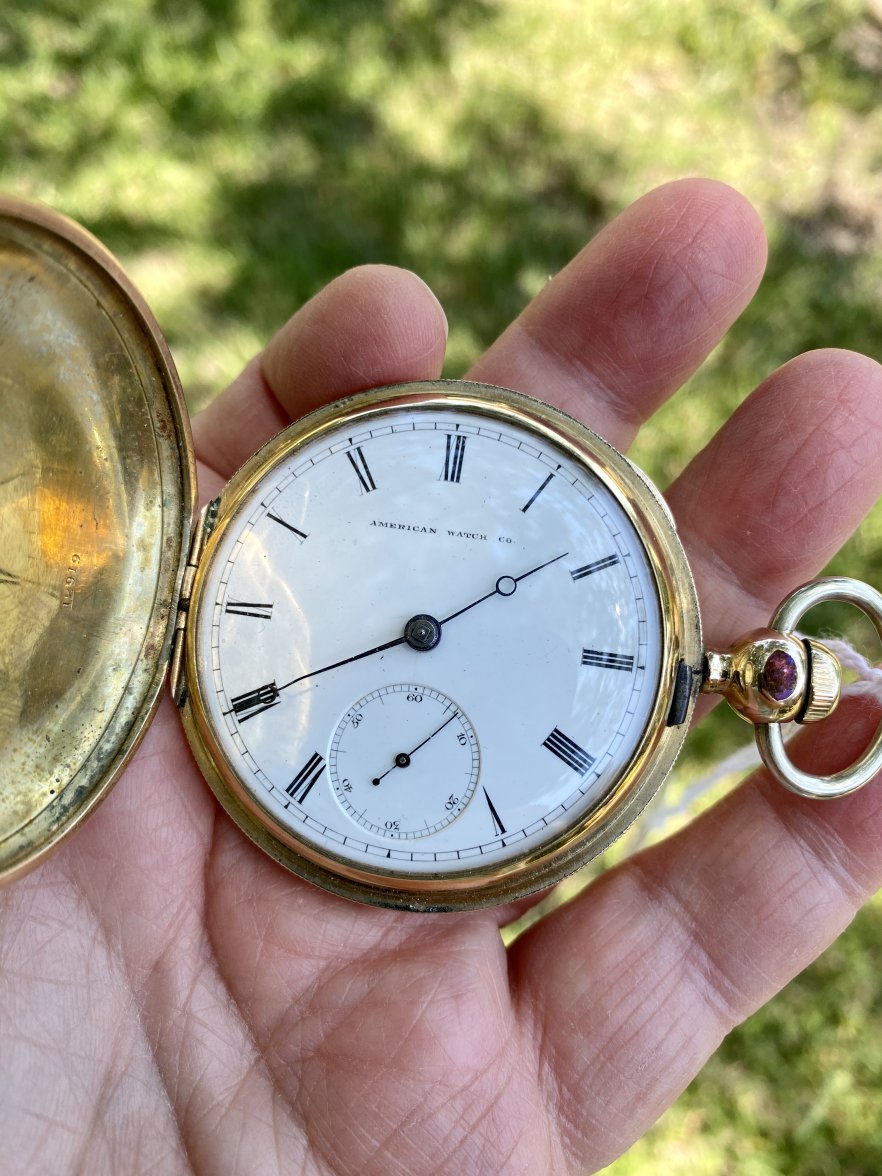
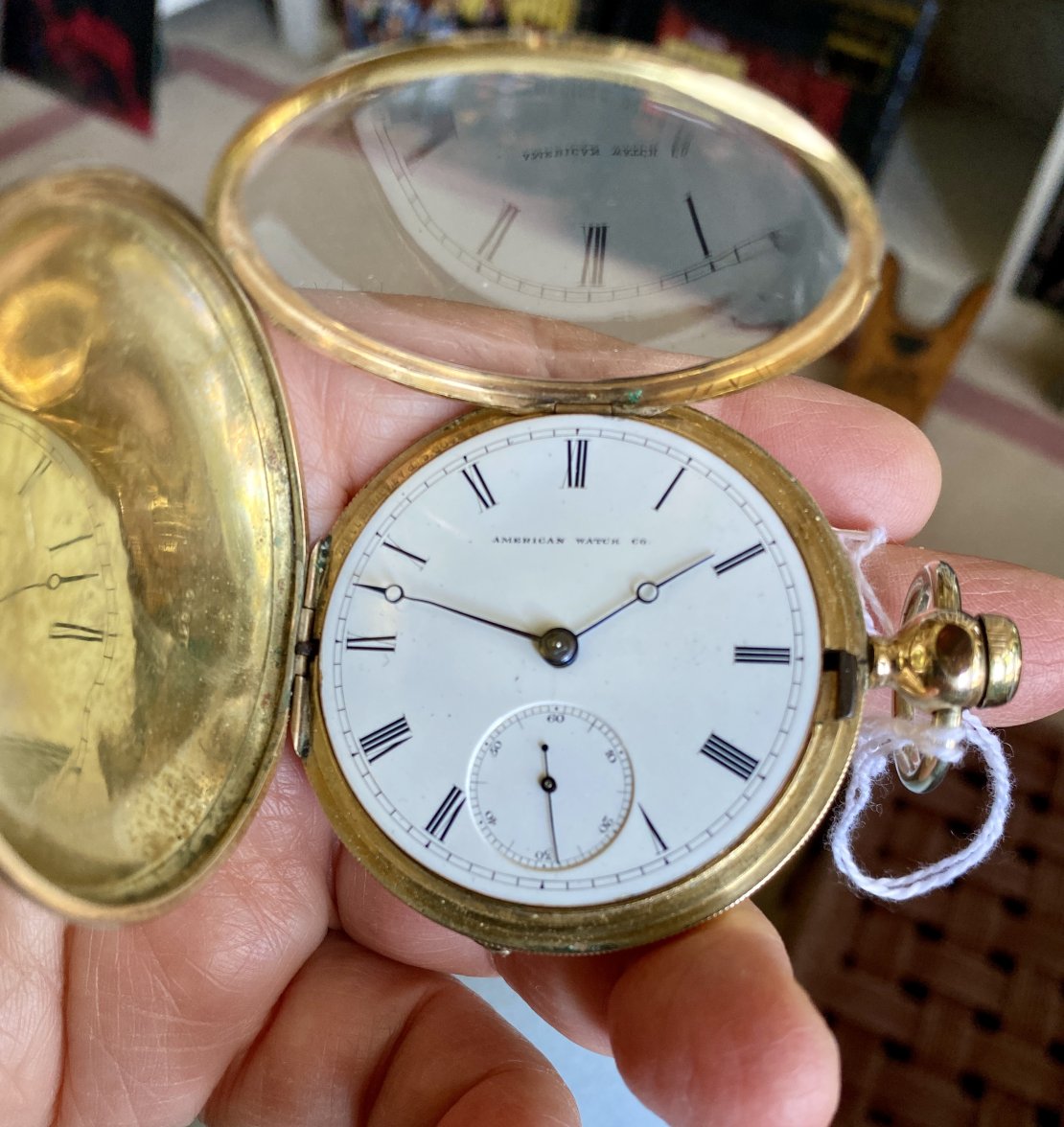
Well, I just picked up my latest PW and it has two main features I covet, an early American Watch Co. movement, Plus, an extremely early 4-hinge Hunter G.W. Ladd watch case in great condition.

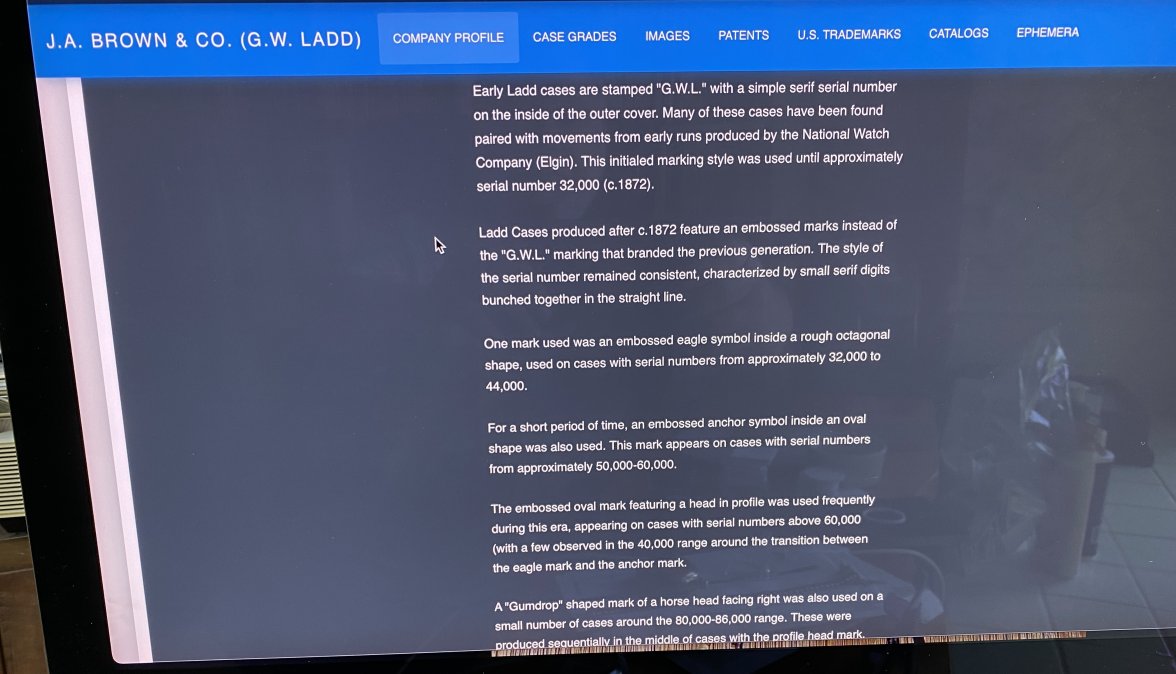
As seen, one notices another movement occupied the case prior to this Model 1857(addition markings for a case screw), and with the GWL marking plus the case #12919, was made in the late 1860's.

American Watch Co.
18s 11j KWKS with key
Grade: PS Bartlett
Circa 1875
Moon hands
Proper markings under the bezel identifing GW Ladd's 1867 Patent engraving
Coin edge, engine turned