Burn all the Clichés

Posts
16,856
Likes
47,864
Pull the trigger has always sounded rather odd to my British ears.

Even for countries where firearms are more prevalent, it still sounds a bit of an odd way to say "bought something"?

Is there a contextual reference that I'm missing? 🤔

Pull the trigger. was originally referring to a starters pistol ie nothing starts/ happens or go,s until he pulls the trigger.
" he was ready and set to throw he's job in but he couldn't pull the trigger "

It morphed into the buying of something over time. 😉
 
Posts
62
Likes
107
I am not sure if this counts but I cannot take it when the following words are used to describe watches:

1) Minty
2) Crispy

😗

I do think that a lot of the "cliches" are really just terms of art that people keep misusing. Or, they start making up new words because their watch doesn't actually fit the term of art but they want it to appear to.

Example: Mint is a real term of art, "minty" is something that sounds like a bro in SoCal made it up, but people think it sounds good when marketing a watch that is in nice condition.

This is something actually minty:

 
Posts
6,514
Likes
50,379
"Mint" and "minty" are terms derived from numismatics describing the condition of coins. It is a term that has been appropriated for everything from collectible watches, art, automobiles, firearms, to even Barbies and Beanie Babies. "Mint" and the cloying "minty" are much overused in the collecting world.

A "mint" coin has not circulated and has no wear. A coin in its mint state remains in the condition in which it originally came from the mint. The uncirculated coin will still be subject to additional grading within its mint state. Bag marks, staining, storage or handling degradation, or even a poorly struck example can yield a coin with a lower grade of "Mint State 60" while the "Mint State 70" coin of perfection is mostly an unobtainable fantasy within coinage produced for circulation rather that for collecting. The grading system is known as the Sheldon Scale.

Coins are minted. Beanie babies are not minted. "Mint" is a tempting adjective to use but is meaningless outside of numismatics. Sellers abuse the term by offhandedly throwing it about in descriptions.


1880-s-morgan-lead.jpg
Edited:
 
Posts
62
Likes
107
"Mint" and "minty" are terms derived from numismatics describing the condition of coins. It is term that has been appropriated for everything from collectible watches, art, automobiles, firearms, to even Barbies and Beanie Babies. "Mint" and the cloying "minty" are much overused in the collecting world.

A "mint" coin has not circulated and has no wear. A coin in its mint state remains in the condition in which it originally came from the mint. The uncirculated coin will still be subject to additional grading within its mint state. Bag marks, staining, storage or handling degradation, or even a poorly struck example can yield a coin with a lower grade of "Mint State 60" while the "Mint State 70" coin of perfection is mostly an unobtainable fantasy within coinage produced for circulation rather that for collecting. The grading system is known as the Sheldon Scale.

Coins are minted. Beanie babies are not minted. "Mint" is a tempting adjective to use but is meaningless outside of numismatics. Sellers abuse the term by offhandedly throwing it about in descriptions.


1880-s-morgan-lead.jpg
Hahaha "beanie babies aren't mint." (Also, sorry my photos posted 3 times? I am having connectivity issues).
 
Posts
252
Likes
749
Those that form a 'bond' with their watch. What’s that all about? I thought you only 'bonded' with other people.

Also - 'wears big' = a small watch that someone is trying to convince others that it’s not small at all when you wear it. Ditto 'wears small'.
 
Posts
1,698
Likes
1,653
Yes. Some rare and collectible book dealers use the term "mint" also, and it's just as improper for books as they aren't minted either. There is a condition scale for books adopted by the American Booksellers Association, in which the top of the scale is "fine", so use of the term "mint" means the bookseller is probably an amateur who is making up his own condition scale.
 
Posts
45
Likes
256
I know mint is an actual collector term for really, really, really, really close in quality to what came off the production line (like a coin that is fresh from the mint), but I wonder if "minty" has more modern connotations as well that come from urban slang. Like minty is probably fresh, yo.
 
Posts
29,259
Likes
75,673
Also - 'wears big' = a small watch that someone is trying to convince others that it’s not small at all when you wear it. Ditto 'wears small'.

To me this means a watch that appears bigger on your wrist than the measured diameter would suggest. I don't consider it a cliché at all, as there are several factors that make a watch appear bigger or smaller that are not directly related to the diameter. For example watches with narrow bezels that are almost "all dial" tend to look much bigger than a watch of the exact same diameter that has a very wide bezel.
 
Posts
252
Likes
749
Perhaps it’s subjective? I bought one described as 'wears big'. It didn’t on me!
 
Posts
29,259
Likes
75,673
Perhaps it’s subjective? I bought one described as 'wears big'. It didn’t on me!

It's a comparison, not an absolute. Something that is 33 mm and "wears big" can still be quite small. But that doesn't negate the fact that for 33 mm, it wears big compared to other 33 mm watches...
 
Posts
23,539
Likes
52,325
To me this means a watch that appears bigger on your wrist than the measured diameter would suggest. I don't consider it a cliché at all, as there are several factors that make a watch appear bigger or smaller that are not directly related to the diameter. For example watches with narrow bezels that are almost "all dial" tend to look much bigger than a watch of the exact same diameter that has a very wide bezel.

Exactly. Although some sellers will try to apply whatever twisted logic they think will make their watch more attractive, e.g. "wears big due to the large chunky bezel". 🙄
 
Posts
4,857
Likes
31,781
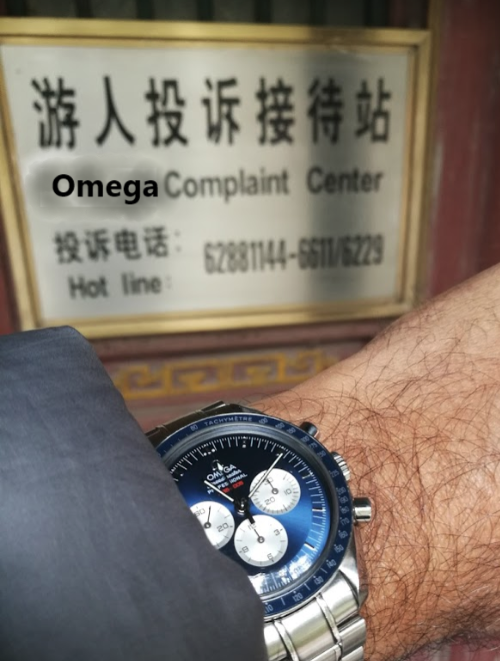
The Best Limited Edition Speedmaster.

Given the recent rash of Speedmaster LE releases. Burn it!!

 
Posts
499
Likes
1,052
"Mint" and "minty" are terms derived from numismatics describing the condition of coins. It is term that has been appropriated for everything from collectible watches, art, automobiles, firearms, to even Barbies and Beanie Babies. "Mint" and the cloying "minty" are much overused in the collecting world.

A "mint" coin has not circulated and has no wear. A coin in its mint state remains in the condition in which it originally came from the mint. The uncirculated coin will still be subject to additional grading within its mint state. Bag marks, staining, storage or handling degradation, or even a poorly struck example can yield a coin with a lower grade of "Mint State 60" while the "Mint State 70" coin of perfection is mostly an unobtainable fantasy within coinage produced for circulation rather that for collecting. The grading system is known as the Sheldon Scale.

Coins are minted. Beanie babies are not minted. "Mint" is a tempting adjective to use but is meaningless outside of numismatics. Sellers abuse the term by offhandedly throwing it about in descriptions.

Yes, I have no problems with a watch being described as "mint" as this is a commonly used word outside of numismatics for collectors (think comic books, baseball cards, etc.)

However, usage of the word "minty" just seems ambiguous.
 
Posts
6,514
Likes
50,379
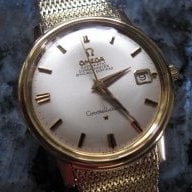
Hah! The Omega mint at Bienne.

1a8964697b6ec267f2e306946a0d94f2.jpg