Body's Static Electricity

Posts
55
Likes
39
Hi,

New owner here and just wanting to find more info on how to properly care for my watch.
Can your body's static electricity damage an Omega Watch? Sometimes when my GF touch me or when opening the door of my car I can get a small shock of electricity. Really small and only happens maybe 2 or 4 times a months if any.

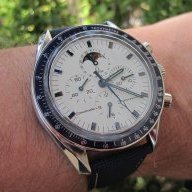
BTW the watch is Speedmaster Racing

Thank you all
 
Posts
7,725
Likes
14,300
Will absolutely, positively have ZERO effect on the running of a watch.
 
Posts
2,845
Likes
9,198
It may short the battery of your speedmaster. Be cautious.

(It won't do anything.)
 
Posts
15,646
Likes
46,709
Antique ones with bi-metallic, steel and brass temperature compensating balance wheels with steel hair springs can most certainly be affected by static electricity. Modern watches with non-ferrous balance and hairsprings won’t be affected.
 
Posts
3,788
Likes
20,212
Tell us more about this electricity between you and your girlfriend.
 
Posts
55
Likes
39
Antique ones with bi-metallic, steel and brass temperature compensating balance wheels with steel hair springs can most certainly be affected by static electricity. Modern watches with non-ferrous balance and hairsprings won’t be affected.

Thank you
 
Posts
2,327
Likes
2,542
I've met several people who claimed no wristwatch would run after they wore it for awhile, saying it was their body's natural electric field.
For whatever reason watches just didn't work for them.

The human nervous system has a tiny electric component , measured in micro volts.
Probably could cause minor variations in timing from one wearer to another.
Most vintage mechanical watches run from one to three minutes fast per day for me till I adjust them.
My new Orient ran about 10 seconds fast but I've read that Orient watches are expected to slow down that much after a few months wear so they factory adjust them with that in mind.
I sometimes have to demagnetize a watch as it will suddenly begin gaining about 15 seconds per day. Afterwards it returns to +/- 1 or 2 seconds per day accuracy.