Best practice for mixing movement parts

Posts
631
Likes
788
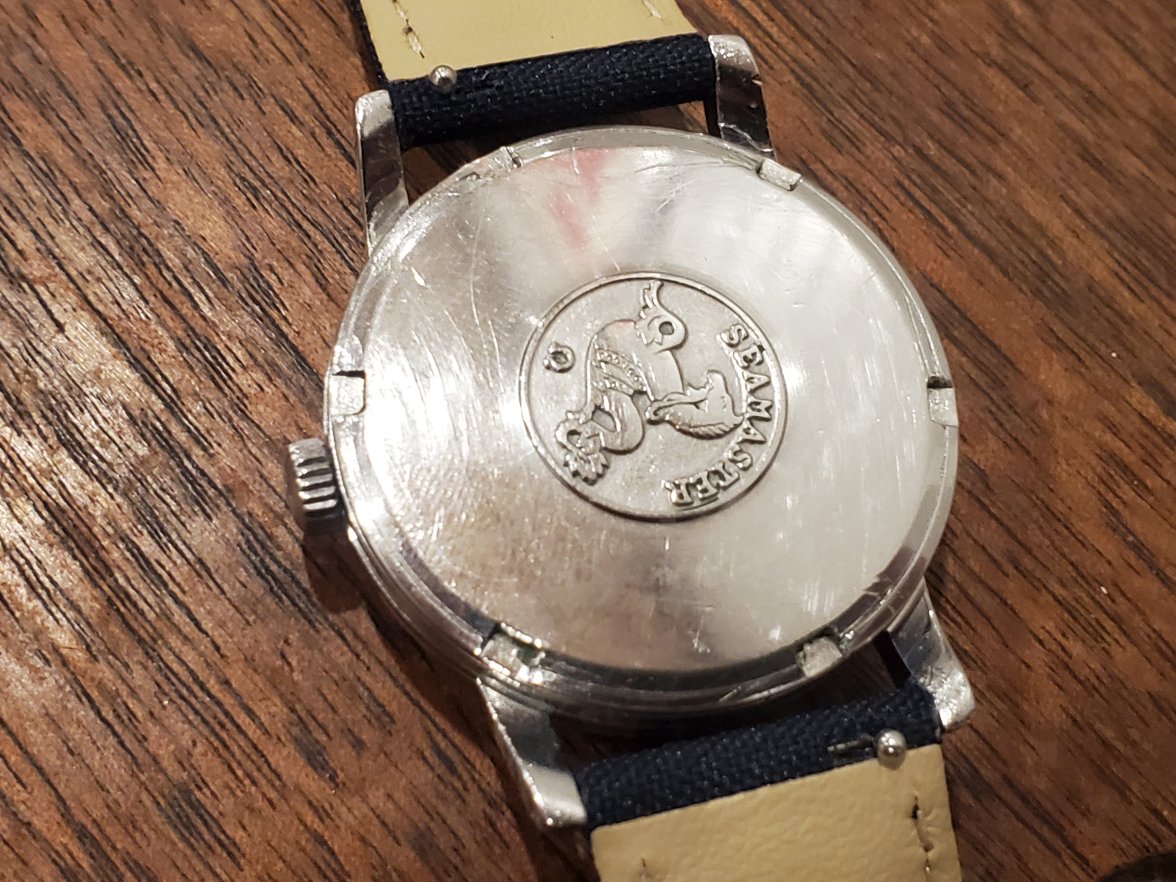
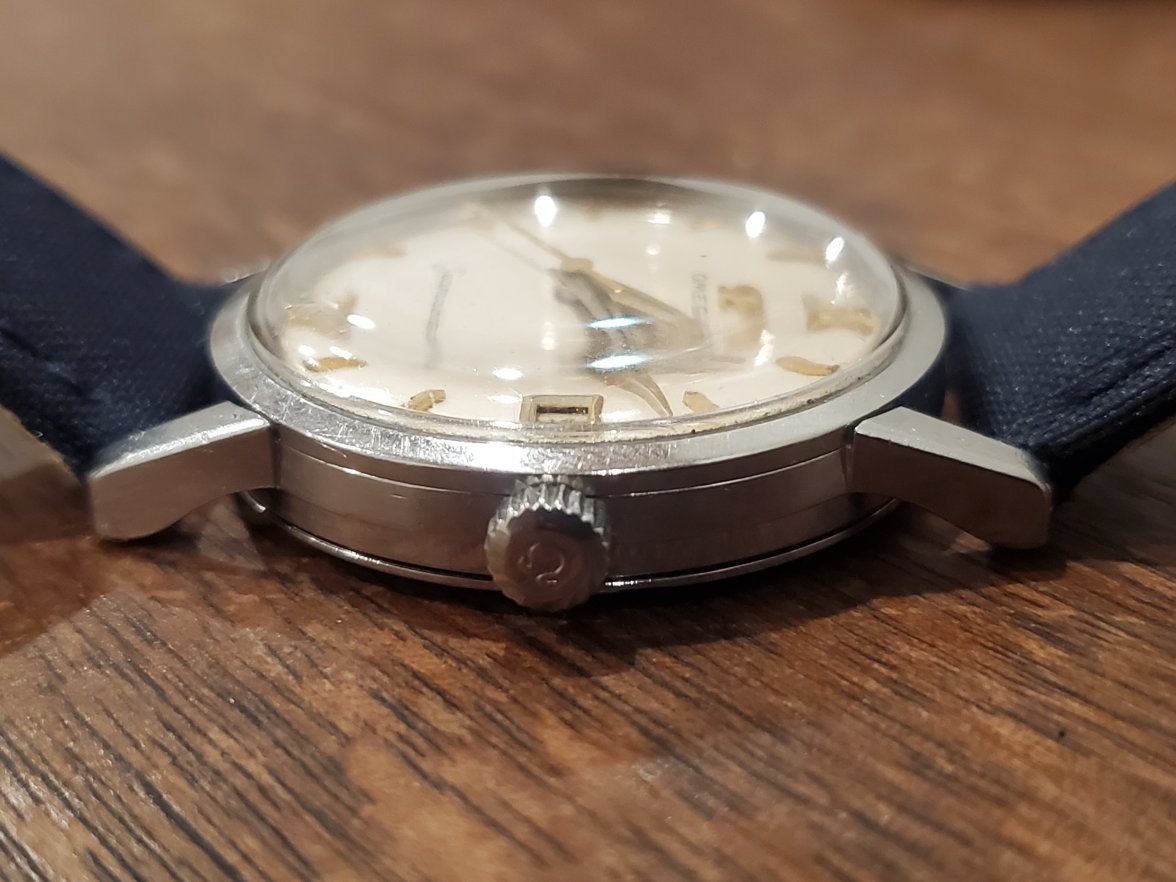
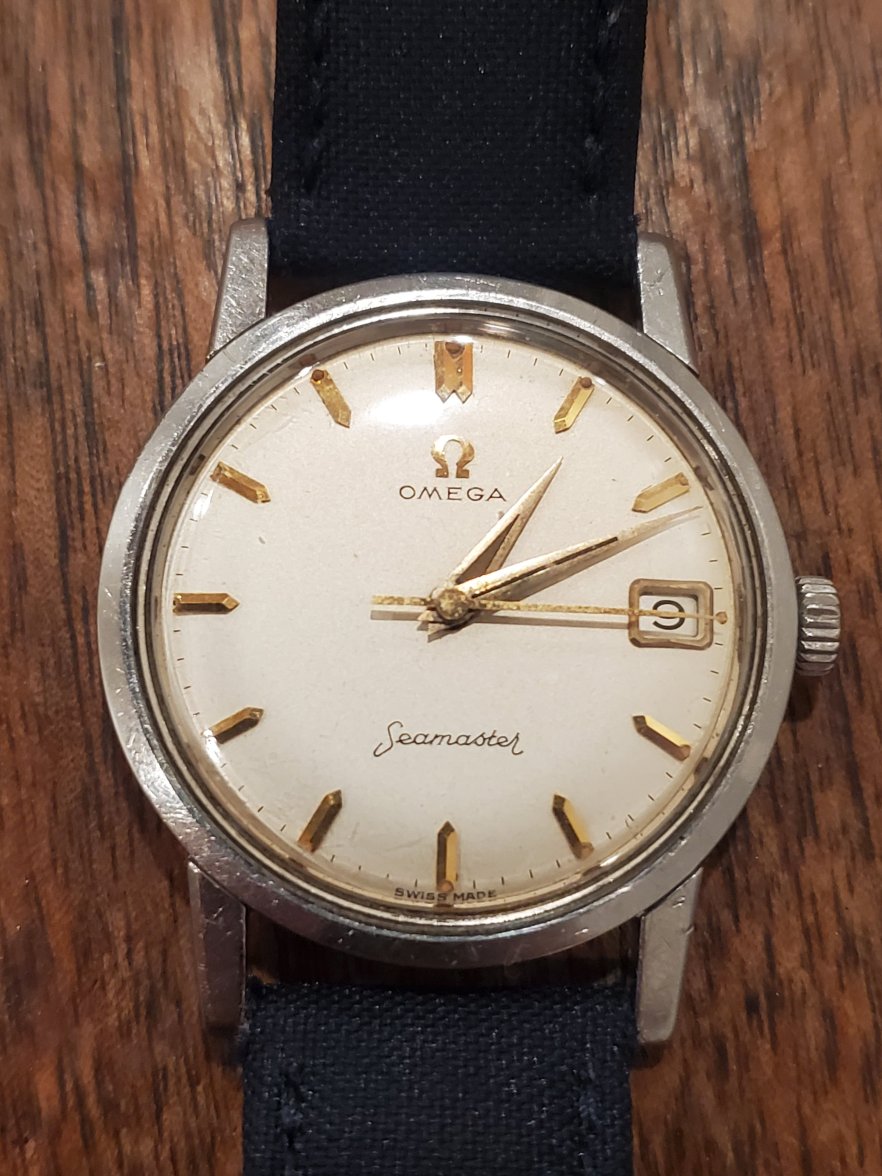
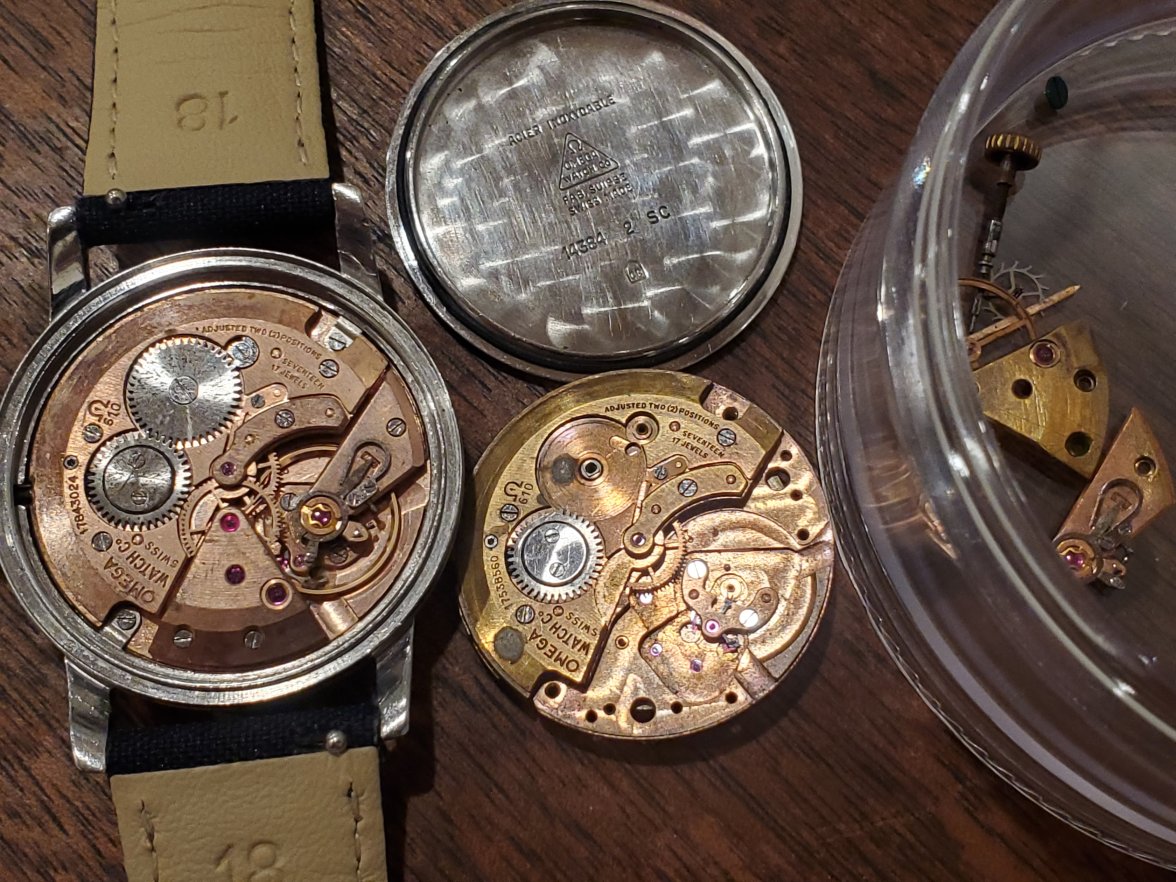
I made a low ball offer on this Seamaster (ref. 14384) with an incomplete movement on eBay somewhat impulsively, way too late at night, based on blurry photos, as a noob does. I was confused a couple of days later when I was notified that my offer was accepted because I didn't even remember making it. After weeks of regret, the watch arrived, and I was pleasantly surprised by the dial and most of the case. I meanwhile purchased another working but incomplete cal. 610 movement, and thankfully the parts it lacked (setting lever spring and sweep second pinion) were present in the original movement. After a few hours of work I now have a complete working watch that I'm really enjoying plus about 3/4 of another movement.

I will soon clean and lubricate it, and I wonder what is the best practice for deciding which movement parts to use when reassembling it? Should I use as much of the original movement as possible, or try to select the best part available? If I use all of the original movement, the mix will definitely be apparent because the colors differ, and at least one bridge, the balance cock, and most of the train of wheels needs to be replaced.

I'm leaning towards using mostly the replacement movement and making that clear if I ever sell it, but I thought it was best to ask the experts. Thanks as always for any advice.
 
Posts
17,603
Likes
36,814
Use the best looking / most serviceable parts for the keeper.
Try to keep the original barrel bridge (serial no).
At the end of the day it doesn't really matter as long as all parts are the correct caliber and made by Omega.

Disclosure upon selling would be comforting to a buyer knowing that worn/broken parts in the watch had been replaced with correct OEM items.
 
Posts
16,856
Likes
47,859
Use the best parts would be the most obvious... As once you change one or two colours it doesn't really matter...

And what @JimInOz above says
 
Posts
631
Likes
788
Try to keep the original barrel bridge (serial no).
Thanks for the advice. Do you mean that I should try to keep the original barrel bridge as part of the reassembled movement, or just that I should hang onto it to keep with the watch if I ever sell it?
 
Posts
17,603
Likes
36,814
Thanks for the advice. Do you mean that I should try to keep the original barrel bridge as part of the reassembled movement, or just that I should hang onto it to keep with the watch if I ever sell it?

Depends on its condition.
If there are bad wear areas the donor may be better, but keeping the original serial number with the watch would be preferred.

If you sold it and the new owner wanted an EOA, they would have to quote the original SN, so if it is in the watch, or provided as info/actual item it would prevent any misunderstanding.
 
Posts
2,114
Likes
1,302
If the reason for swapping the balance bridge is due to the semi rusted metal parts.

Just swap the metal parts from the other bridge

Is there a reason to swap out parts of the going train?

If you try to sell it with mis-matched colored bridges. People will spot it and most like not read anything written. Will write it off as a frakenwatch

Only time is when a part is damaged enough to be un-useable

DON
 
Posts
631
Likes
788
The only reason I had to consider mixing the movements was to use parts that were original to the case and dial as much as possible - all but two small parts currently in the case were from another movement. But if I did try to use original parts for the sake of originality, then it would be an obvious mix of movements. Same caliber and OEM, but nonetheless it would set off alarm bells like you say.
 
Posts
1,636
Likes
6,608
To me, you saved a watch from oblivion. That is the most important issue. As others have said, preferably keep the barrel bridge so that s/n and case match.
 
Posts
32
Likes
33
The only reason I had to consider mixing the movements was to use parts that were original to the case and dial as much as possible - all but two small parts currently in the case were from another movement. But if I did try to use original parts for the sake of originality, then it would be an obvious mix of movements. Same caliber and OEM, but nonetheless it would set off alarm bells like you say.
I think that some of the answer here depends on your goal for the piece. If you are going to wear and enjoy it, the answer might be different than if you are going to put it up for sale right away. Since the donor you bought is the same caliber, but was more complete, I personally would use it as you have already, but swap out all the best individual components. You could keep the original incomplete movement, now also minus the setting lever spring and sweep second pinion, with it if you sell it.