Beat error on swan neck regulation

Posts
44
Likes
7
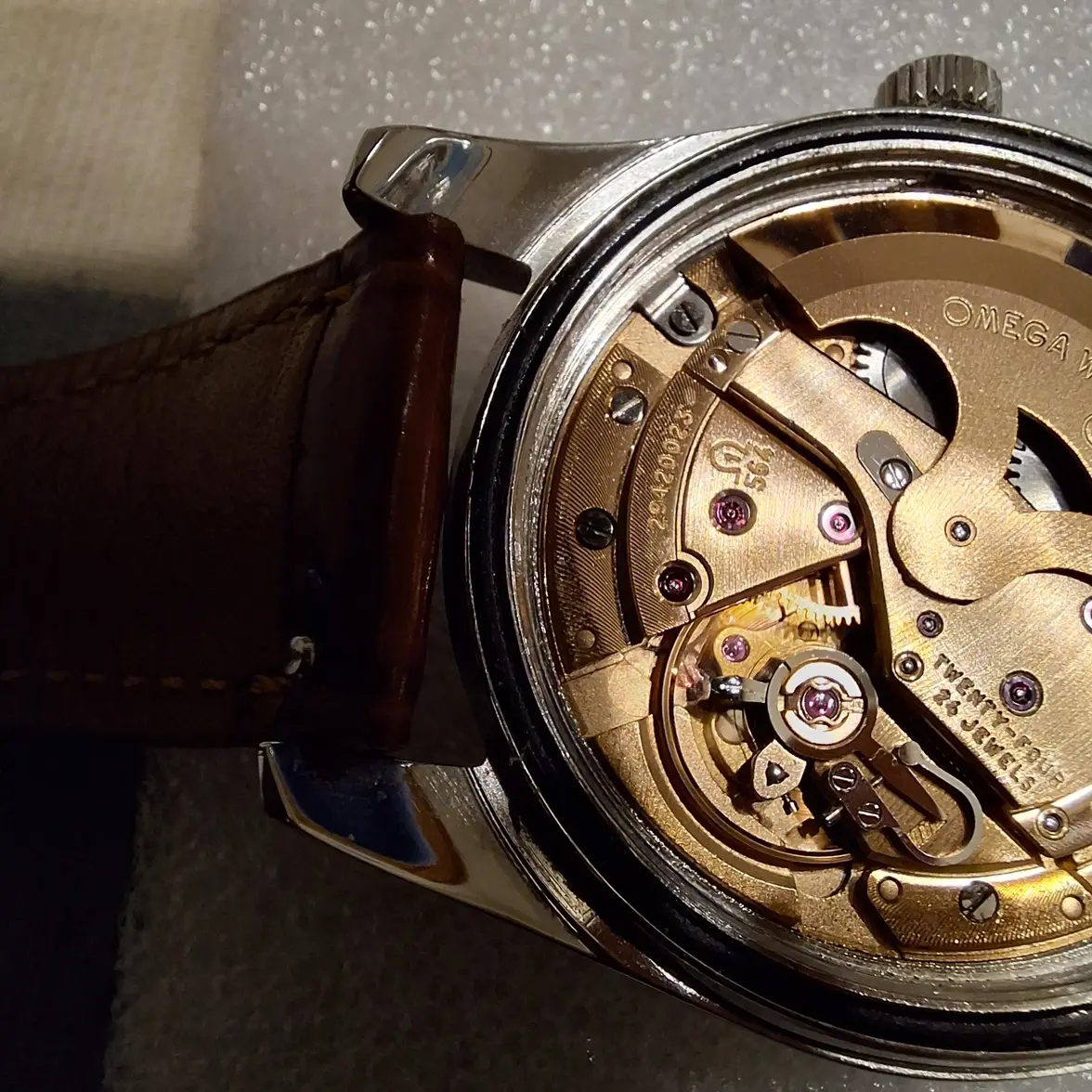
Can any watch makers shed a light and advise me of this
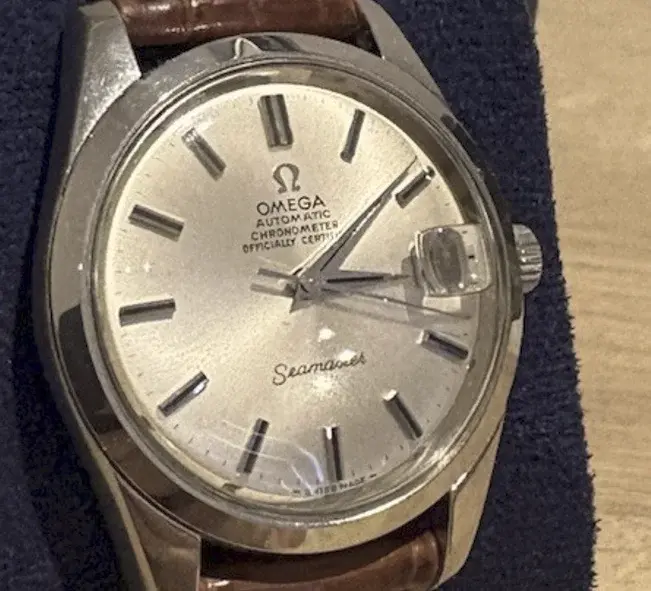
Just bought this Seamaster looked in great condition previous owner assured me it had been serviced 6 months ago
and the condition of the movement seem to bear this out
But was loosing 21 secs a day,so started adjusting the swan neck
it was over to one side with the screw virtually undone
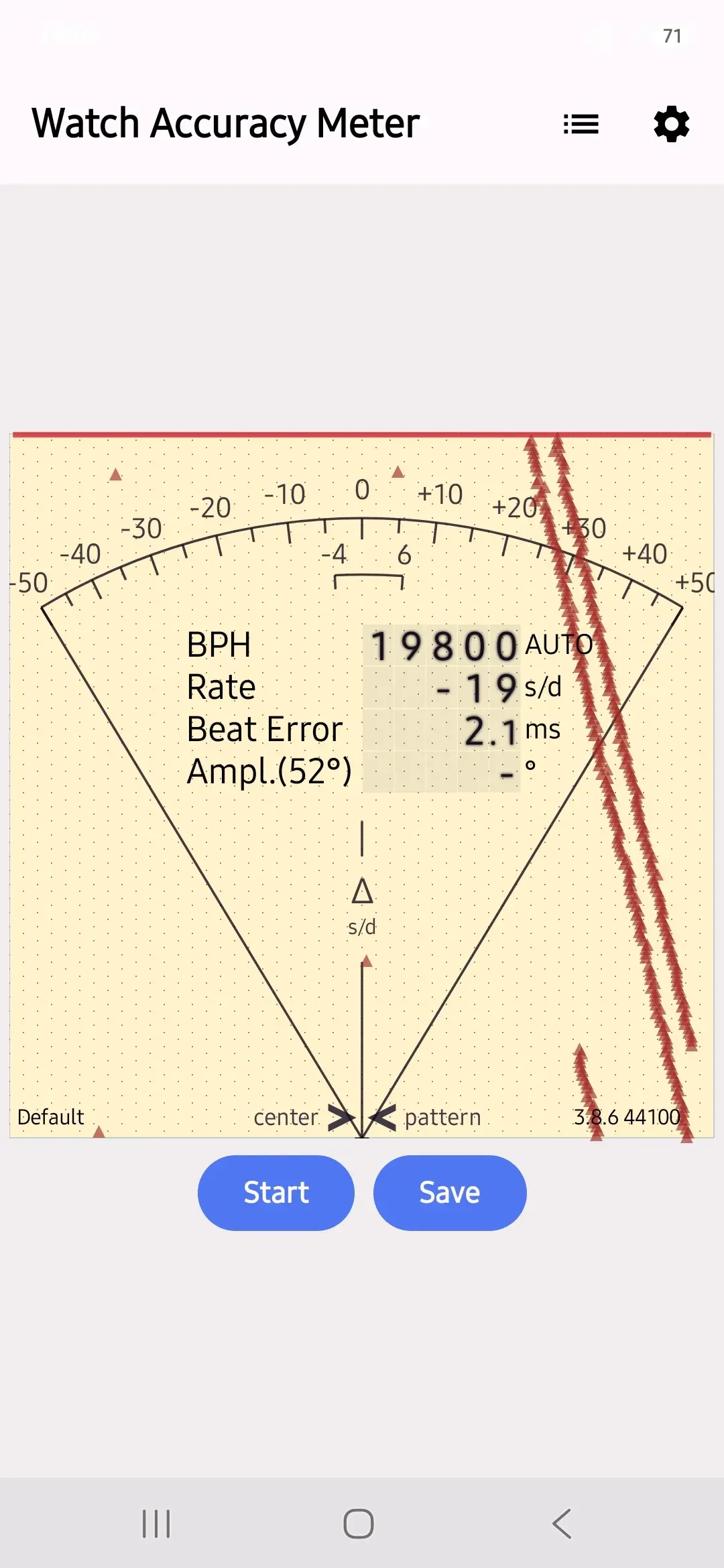
The timegrapher displayed -21 secs bear error .2 msec before I started
so started to screw in the adjusting screw on the swan neck at first it bought it down to -17 secs but as i got further to the mid point
it started to loose again to -21 but the beat error has risen to 2 msec (see picture

So could anyone explain this and offer a remedy or does it mean there is something fundamentally wrong with the movement
 
Posts
30,027
Likes
77,541
Note that the Swan's neck regulator does not affect beat error - beat error is the difference in time between the swing of the balance in one direction, compared to the other direction. So the difference between the "tik" and the "tok"....

The regulator is for fine adjustments of the rate only, and sometimes on these calibers the screw ends up being loose when you try to adjust the rate faster (turning the screw CCW). So what you do in this case is move the regulator arm directly to make it run fast (move it away from the stud carrier), then turn the screw on the regulator in (CW) to slow it down to where you want it to be, and in the end the screw will hopefully have tension on it, and the rate will be where you want it to be. This may take a few attempts to get it just right.

To correct he beat error, you need to move the stud carrier itself.

Note that there is risk in doing this, so if you are not experienced you may want to take it to a watchmaker.
 
Posts
44
Likes
7
Note that the Swan's neck regulator does not affect beat error - beat error is the difference in time between the swing of the balance in one direction, compared to the other direction. So the difference between the "tik" and the "tok"....

The regulator is for fine adjustments of the rate only, and sometimes on these calibers the screw ends up being loose when you try to adjust the rate faster (turning the screw CCW). So what you do in this case is move the regulator arm directly to make it run fast (move it away from the stud carrier), then turn the screw on the regulator in (CW) to slow it down to where you want it to be, and in the end the screw will hopefully have tension on it, and the rate will be where you want it to be. This may take a few attempts to get it just right.

To correct he beat error, you need to move the stud carrier itself.

Note that there is risk in doing this, so if you are not experienced you may want to take it to a watchmaker.
Thank you so much for your reply, if I understand what you are saying is I need to move the regulator arm and then use the swan neck screw

but what I cannot understand is when I moved the swan neck screw adjuster 3 turns to a more central position the beat error went from .2 ms to 2.1 ms if as you say it should not affect the beat error
any thoughts, thats why I was wondering if there might be another issue,say with the balance spring itself
 
Posts
30,027
Likes
77,541
Thank you so much for your reply, if I understand what you are saying is I need to move the regulator arm and then use the swan neck screw

but what I cannot understand is when I moved the swan neck screw adjuster 3 turns to a more central position the beat error went from .2 ms to 2.1 ms if as you say it should not affect the beat error
any thoughts, thats why I was wondering if there might be another issue,say with the balance spring itself
If the curve of the balance spring on the outer coil that goes through the regulator is not concentric to the balance, it can cause a change in beat rate as the regulator moves around that curve.
 
Posts
44
Likes
7
If the curve of the balance spring on the outer coil that goes through the regulator is not concentric to the balance, it can cause a change in beat rate as the regulator moves around that curve.
Thanks again,would it be possible to do me a little sketch as an example so I know what to look for.
And if that’s the case would it be task I could do, or a fairly easy undertaking for a watch maker
I have posted some pictures but that’s as close as my phone macro will go,also the watch is still running,Regards

 
Posts
30,027
Likes
77,541
Thanks again,would it be possible to do me a little sketch as an example so I know what to look for.
And if that’s the case would it be task I could do, or a fairly easy undertaking for a watch maker
I have posted some pictures but that’s as close as my phone macro will go,also the watch is still running,Regards

You need to observe the balance when it is stopped for the best results.

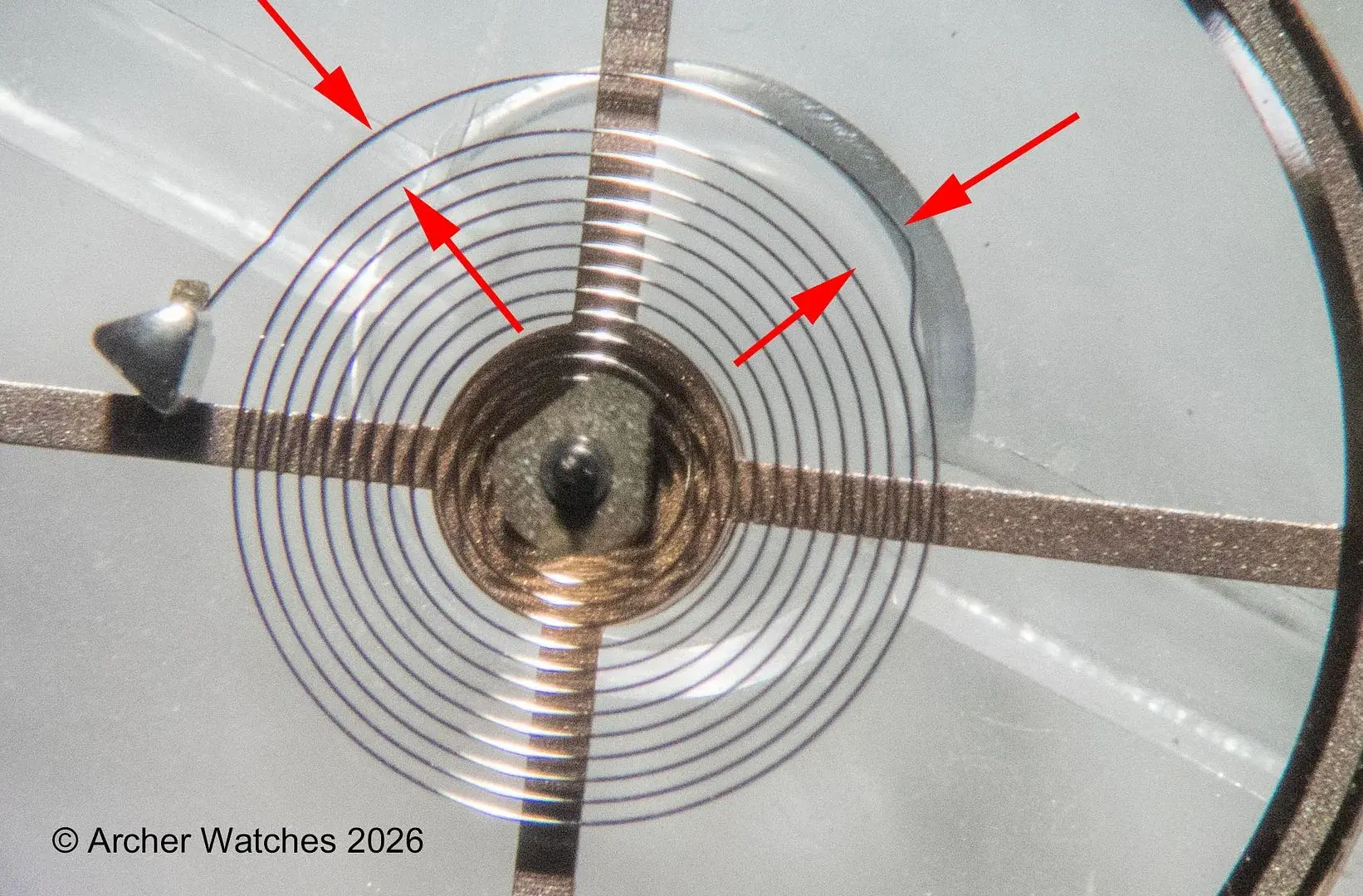
Here is a photo I just took of a brand new balance complete for this caliber series:


The first thing is that as you see here, the inner coils are all evenly spaced and centered on the entire balance - if that is not the case that is job #1 to correct that.

Next when the balance is installed in the watch, the outer coil needs to be spaced away from the closest inner coil an even amount along it's length. In this case the stud is loose and just sitting there so the gap is not the same at one end as it is at the other, but when installed it needs to be.

Unless you regularly work on balance springs, I would not recommend you do this yourself. This would be routine work for any competent watchmaker though...we do this kind of thing all the time.
 
Posts
3,596
Likes
7,670
I would not recommend you do this yourself
^^ This! I have been there... its definitely not for any hobby-watchmaker, for pros only