- Posts
- 7,033
- Likes
- 12,993
SpeedyPhill
·85 years ago, Swiss engineer George de Mestral got the idea of sticking stuff together as he was annoyed that burrs/seeds stuck to his jacket.
Taking a look under the microscope to these seeds he discovered tiny hooks & loops, and bingo the idea for a quick & strong fastener was born!
In 1951, the hook-and-loop fastener idea, using nylon thread, was patented as Velcro a combination of Velours (Velvet) and Crochet (hook).
It soon got applications in the aerospace industry, even for SCUBA equipment... but when was it adopted by NASA?
☕
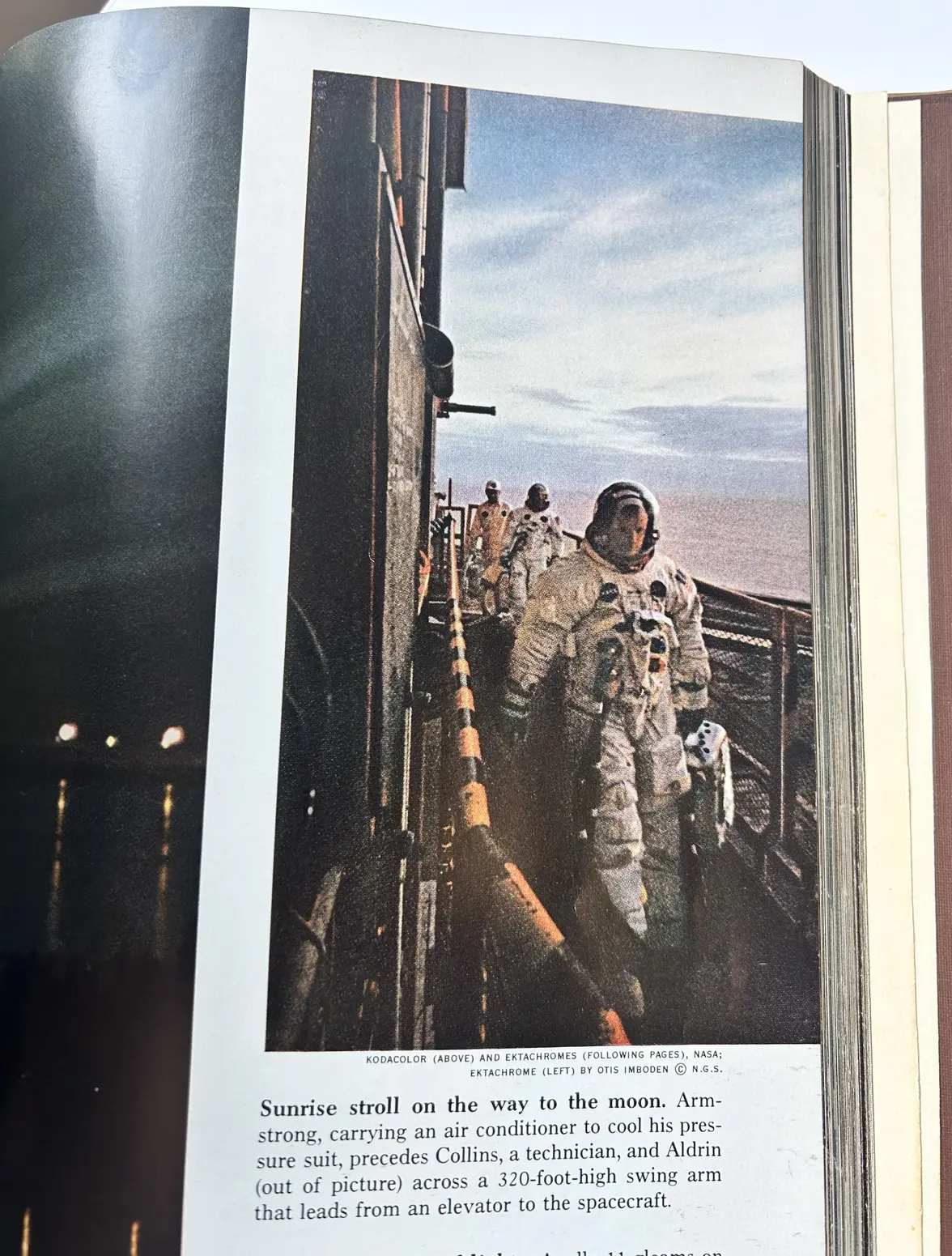
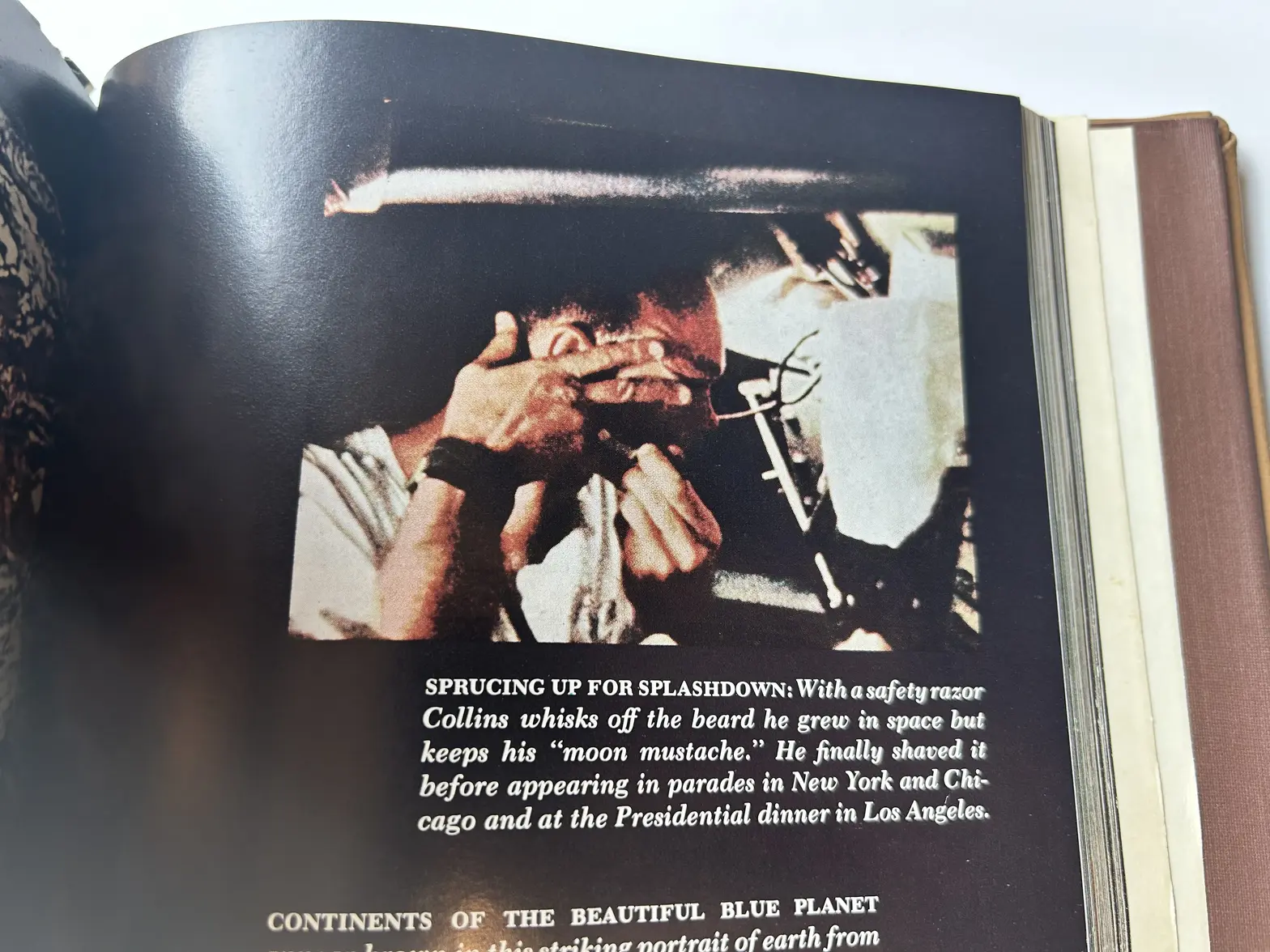
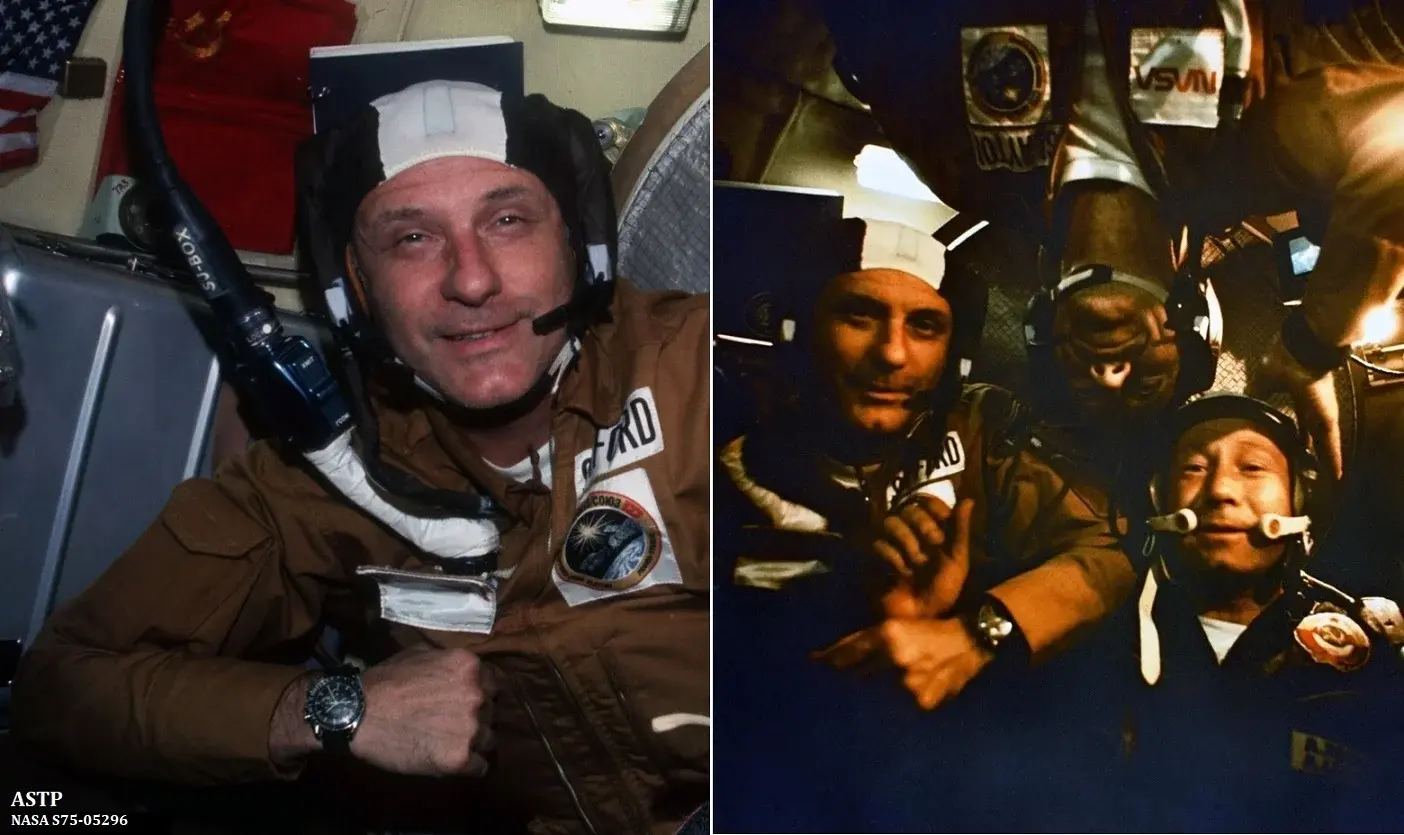
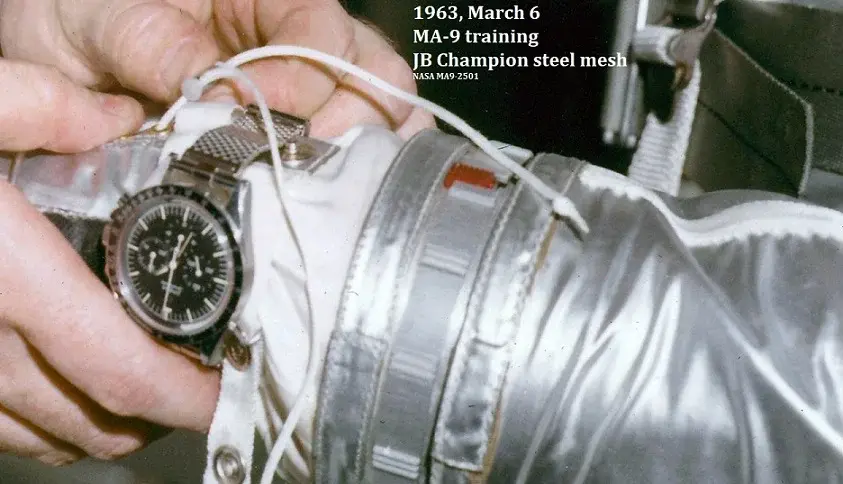
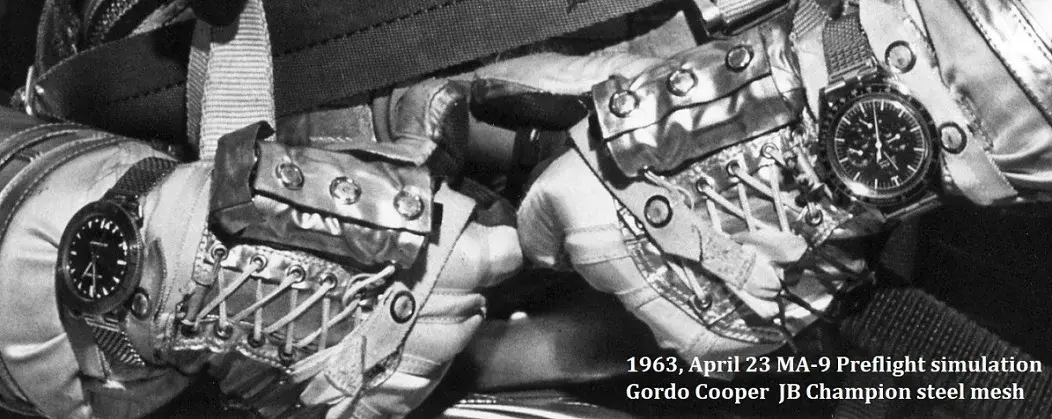
NASA saw great potential in Velcro for sticking items inside spacecraft as in near zero-gravity everything floats around but it took until June 1965 to see Velcro straps on the wrists of astronauts. During their orbital spaceflights, the "Mercury 7" astronauts Scott Carpenter, Wally Schirra and Gordo Cooper used regular stretchy wrist bracelets and we saw the first use of the lightweight & breakable Forstner Komfit, later Jacoby Bender Champion steel mesh bracelet.
(Photos: NASA)
 .
.
 .
.
☕
By the end of February 1965, NASA had completed the rigorous wrist chronographs testing and already on February 29, 1965 we saw John Young training wearing an Omega Speedmaster 105.003-63. This watch must have been as "tests-survivor" as Omega only delivered the first batch of Speedmaster chronographs on April 23, 1965.
March 23, 1965, both Gemini III astronauts Virgil Grissom & John Young wore two wrist watches (Accutron Astronaut & Omega Speedmaster 105.003-63) on steel mesh JB-Champion bracelets.
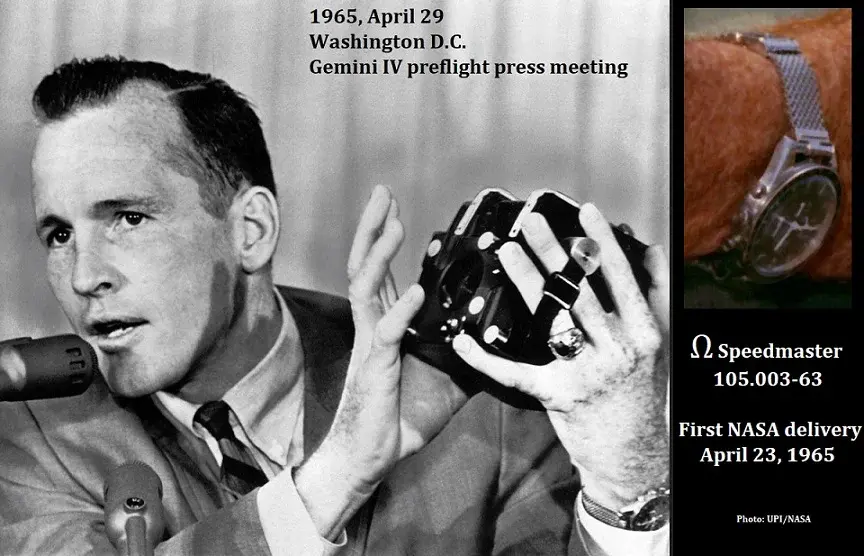
Thusfar, April 29, 1965 Gemini IV preflight press briefing Washington D.C. photos are the earliest images showing the NASA-issued Omega Speedmaster chronograph on the wrists of NASA astronauts as both James McDivitt and Edward White wore their Speedmaster 105.003-63 on a steel mesh JB-Champion bracelet. So less than a week after NASA received the first batch!
On June 1, NASA announced the Omega Speedmaster as the official flight-qualified chronograph for all manned spaceflight missions.
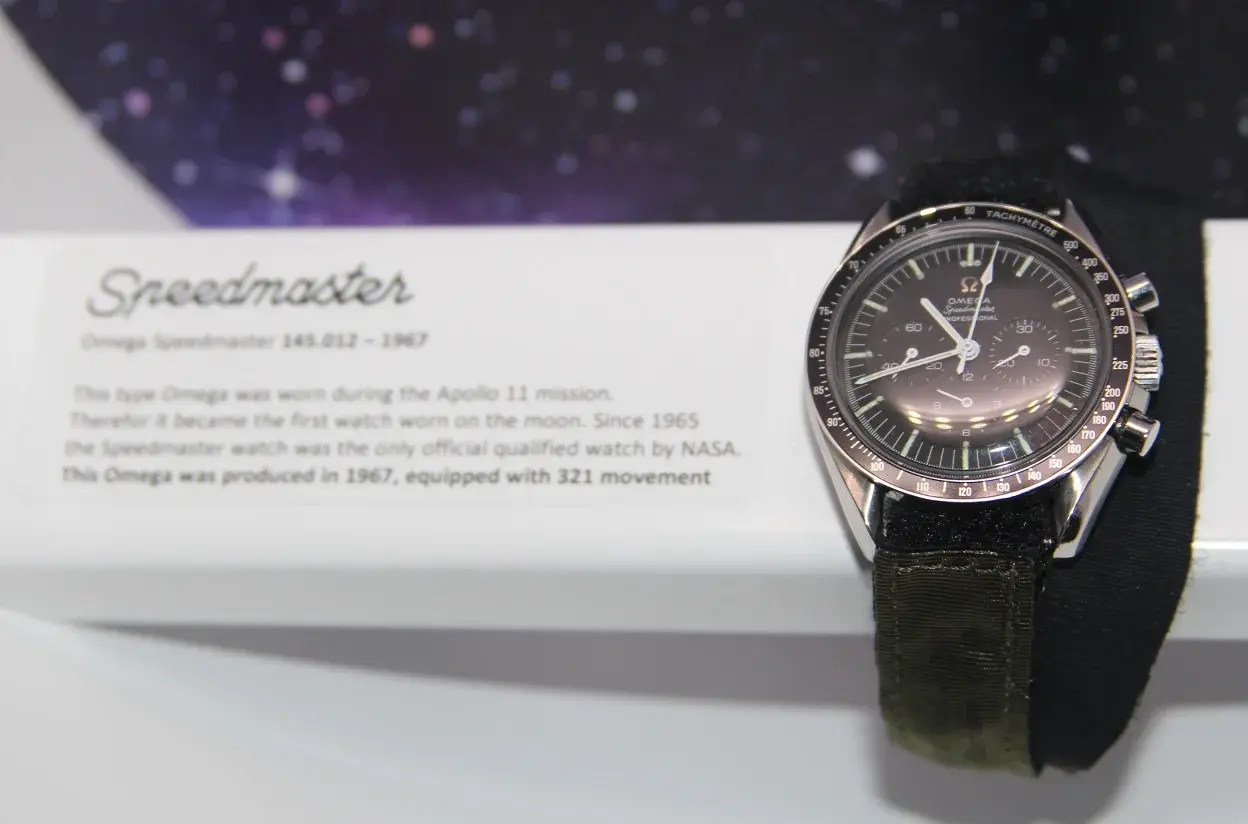
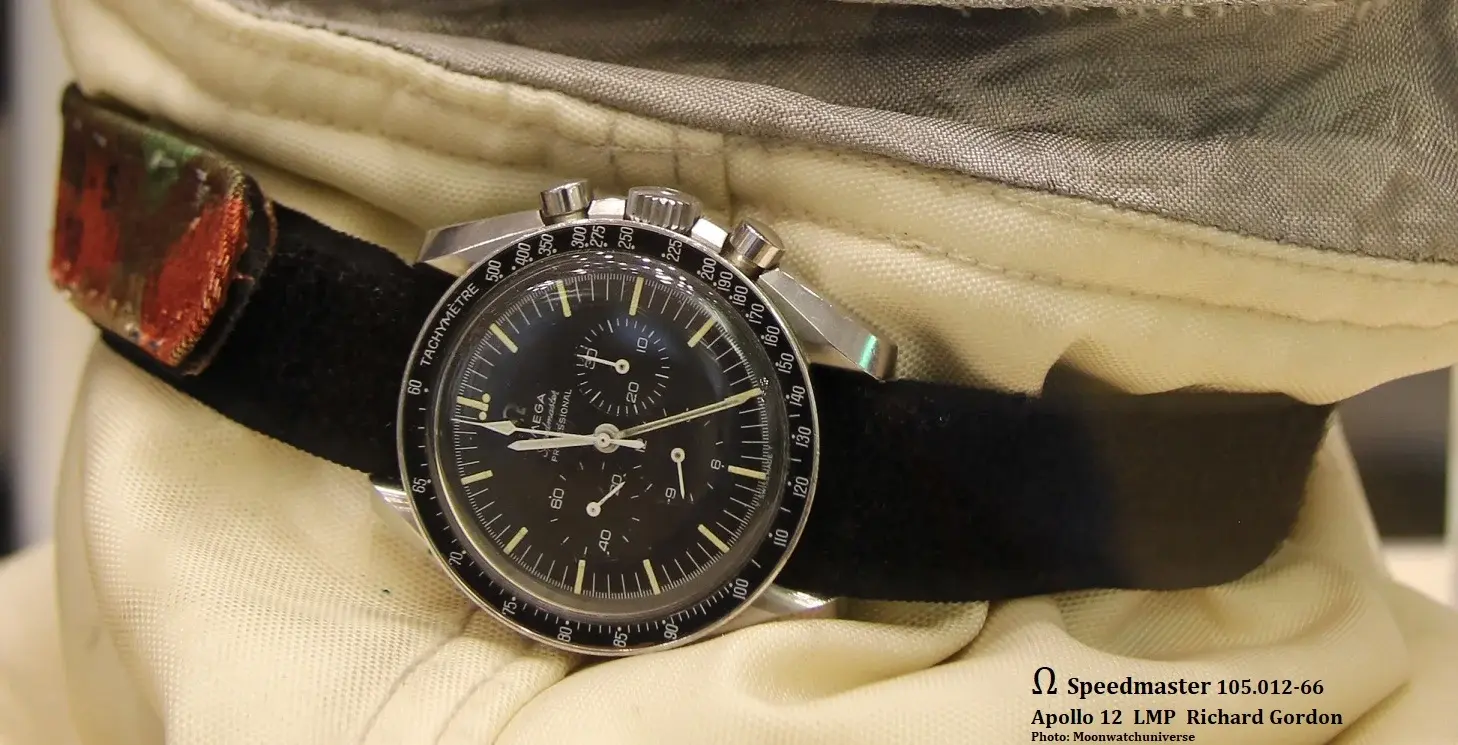
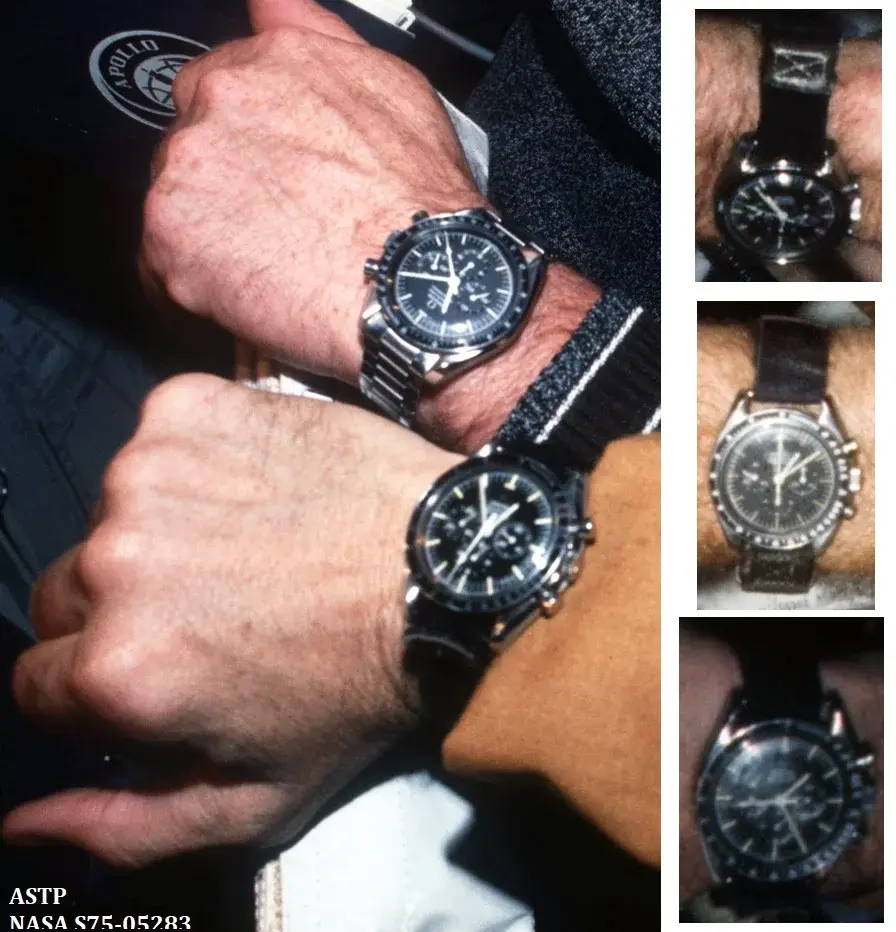
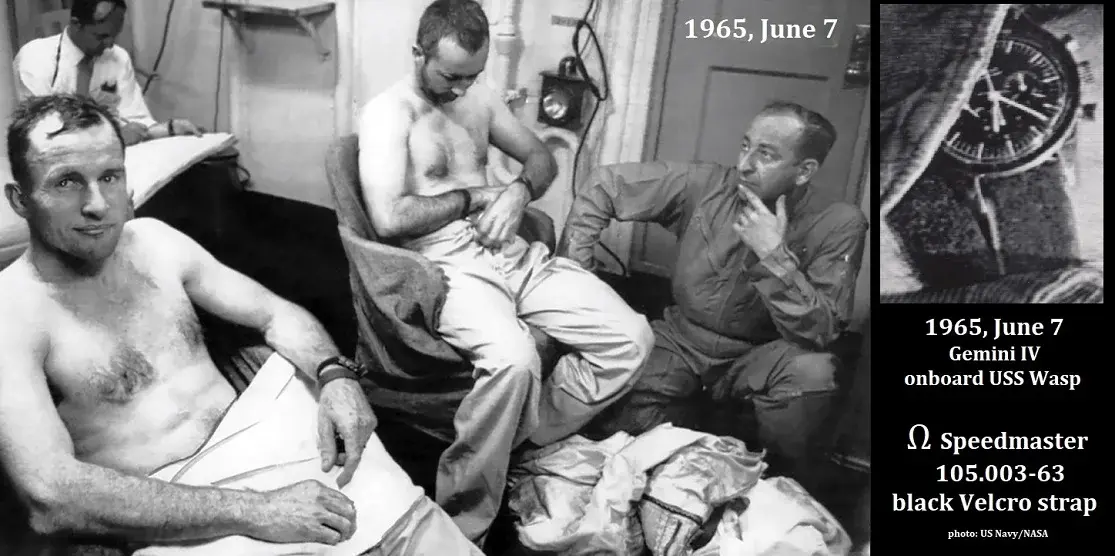
The Gemini IV astronauts trained using the Omega Speedmaster on steel mesh bracelet, the very first time we saw the Speedmaster on a Velcro strap was Gemini IV launchday, June 3, 1965... with both astronauts each wearing two Omega Speedmaster 105.003-63
(Photos: NASA/UPI/USN)
 .
.
 ☕
☕
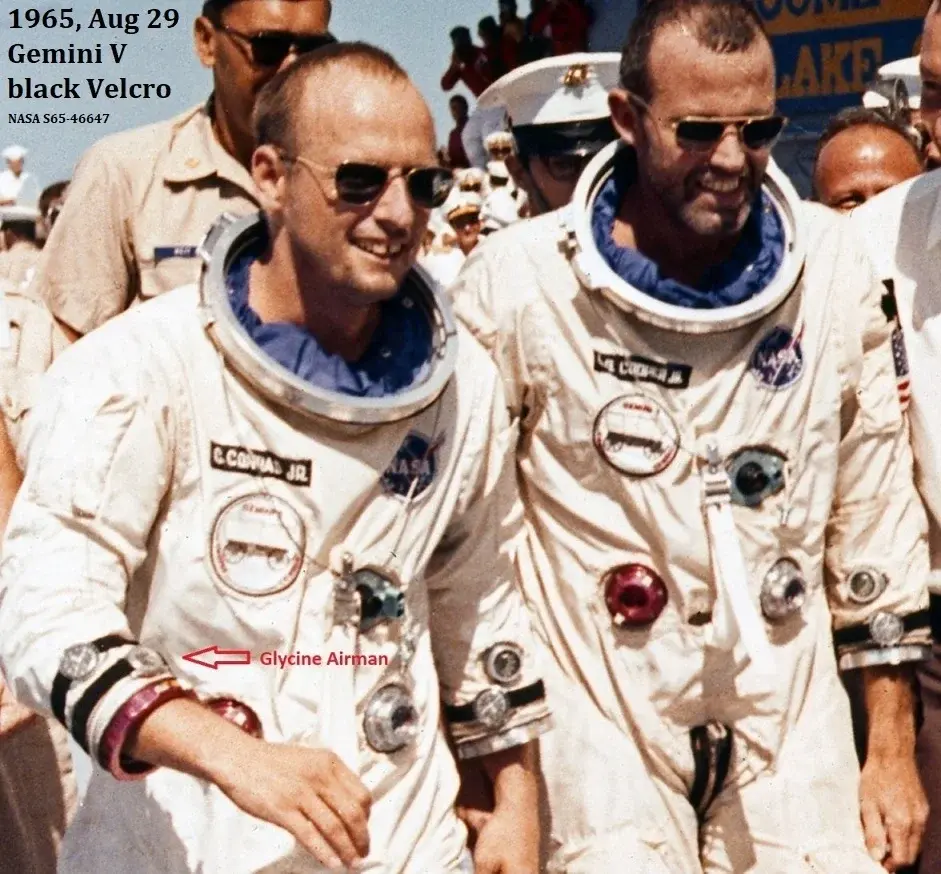
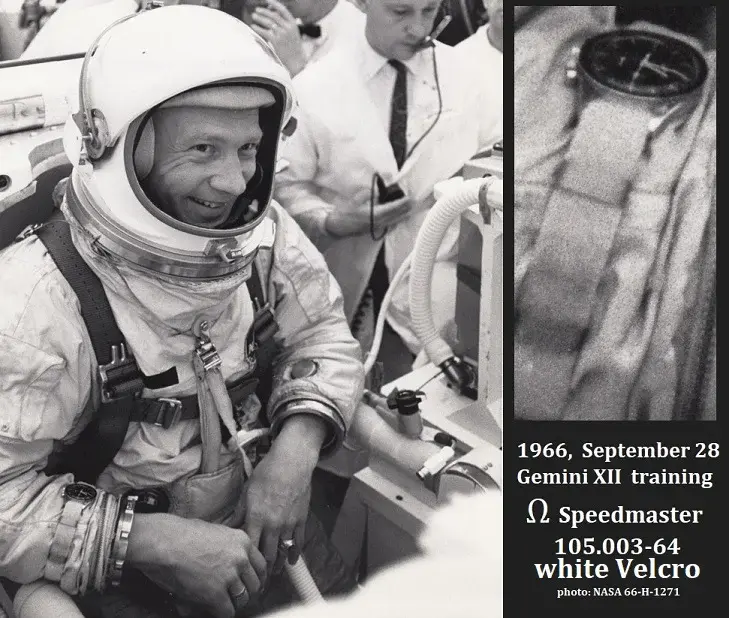
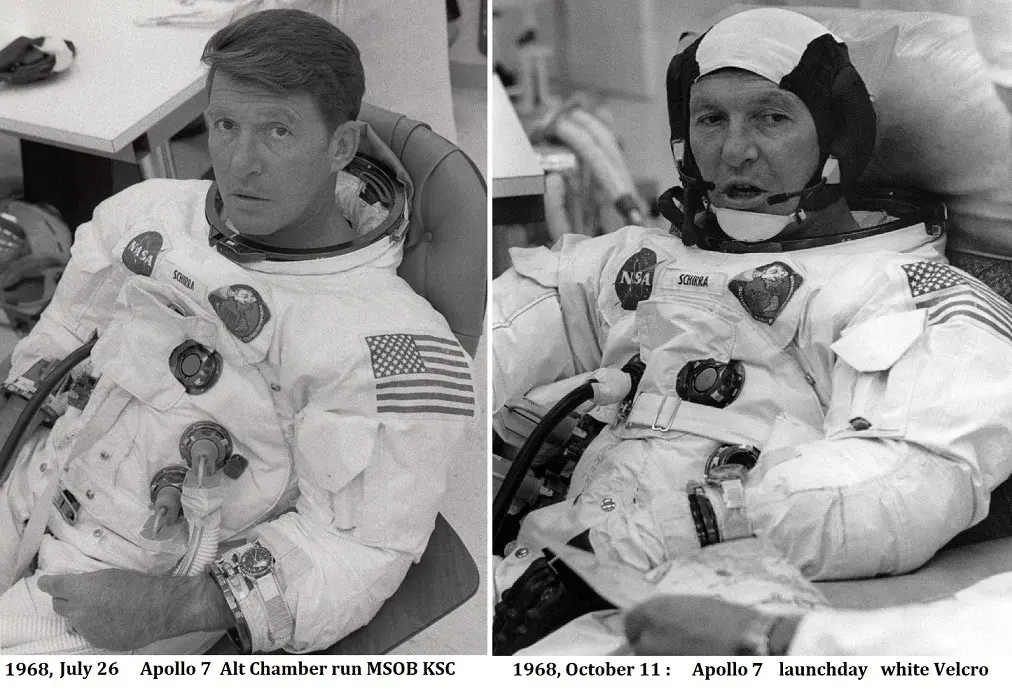
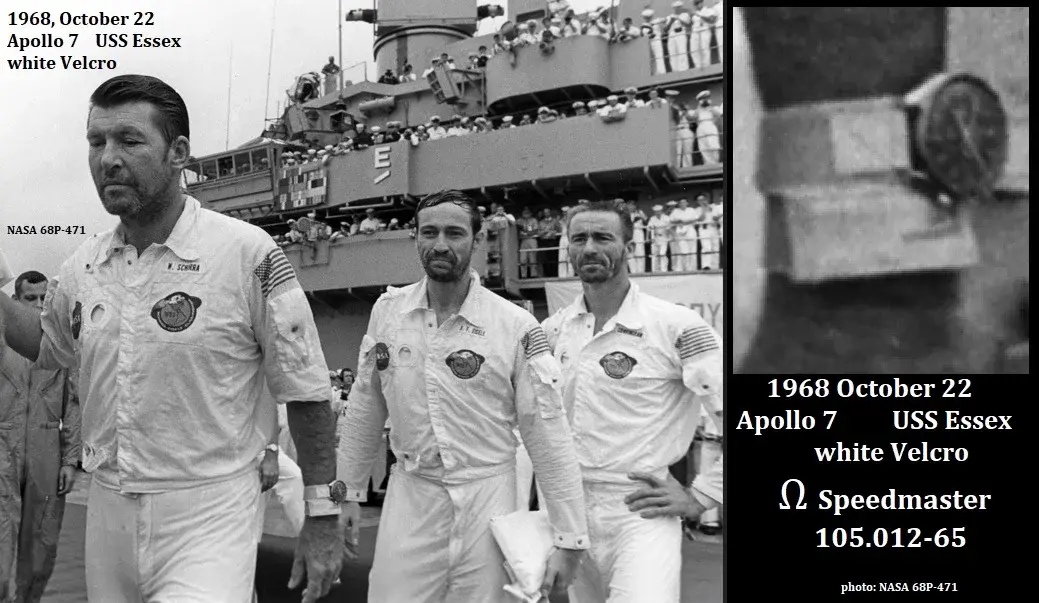
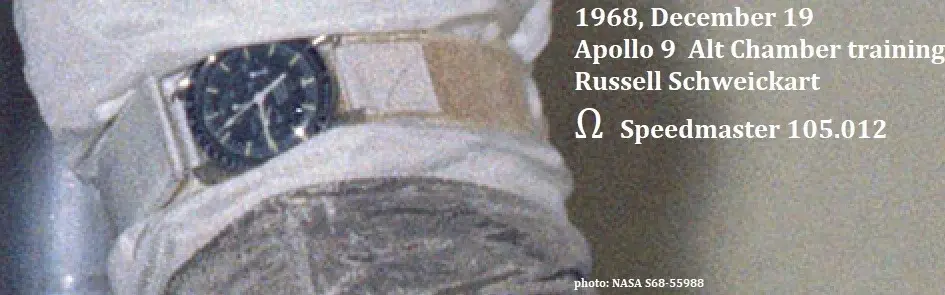
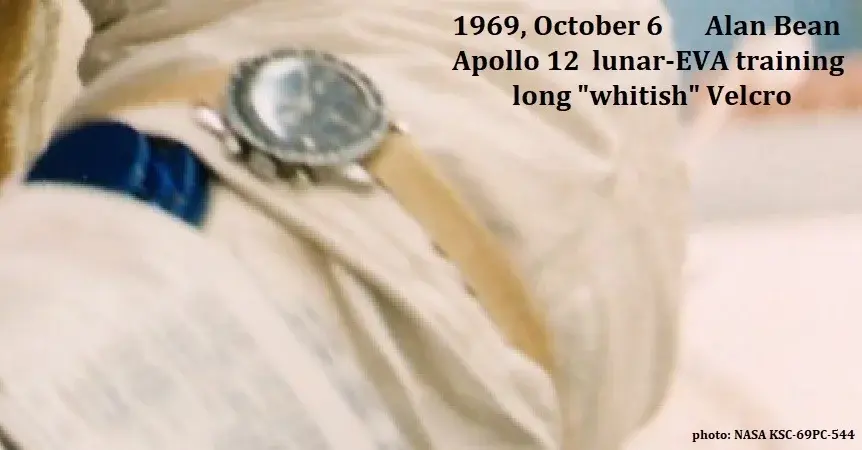
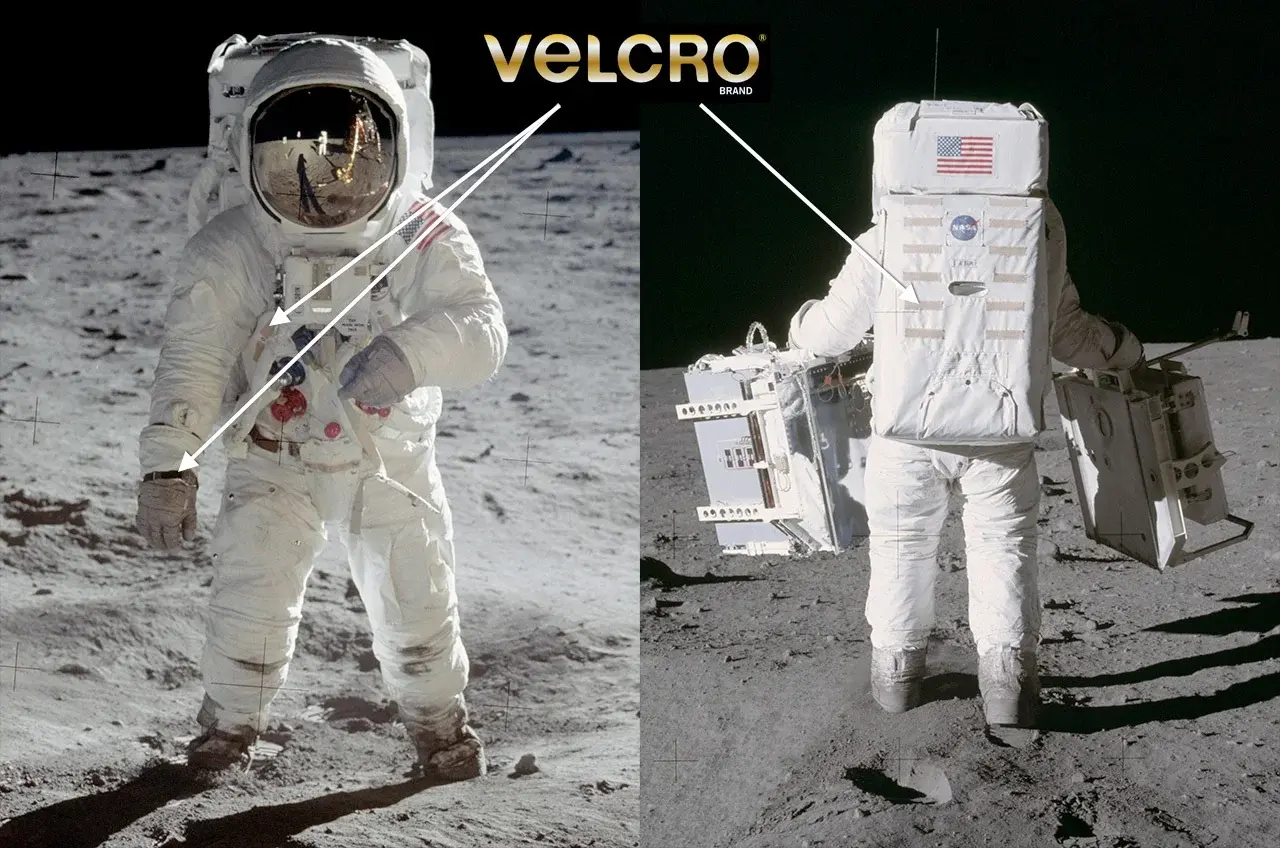
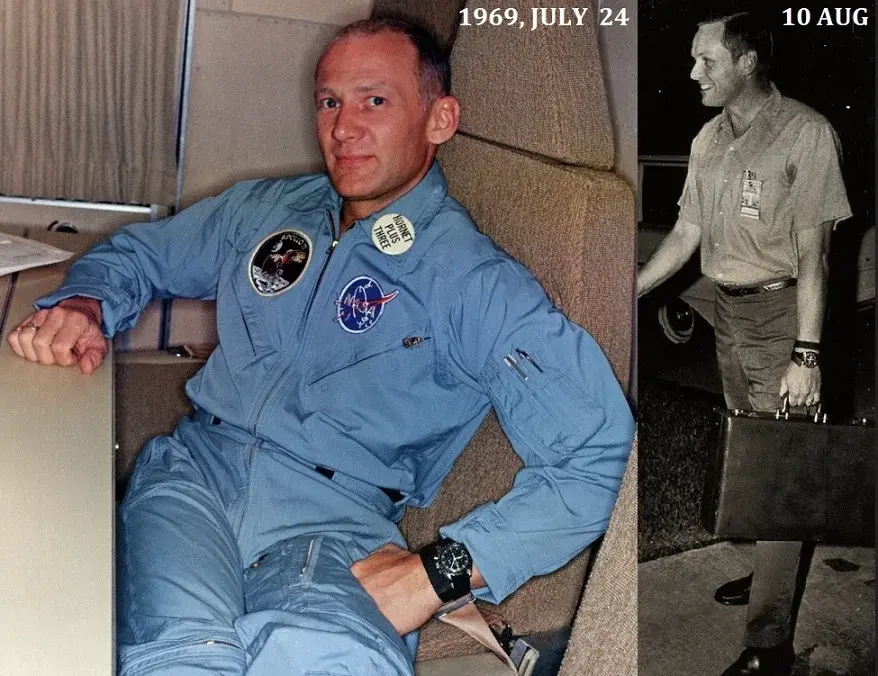
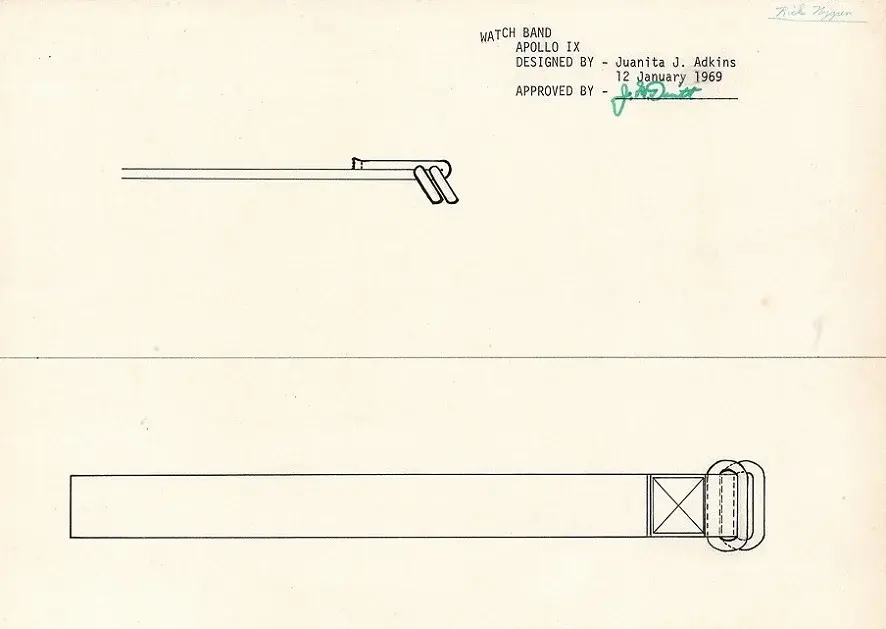
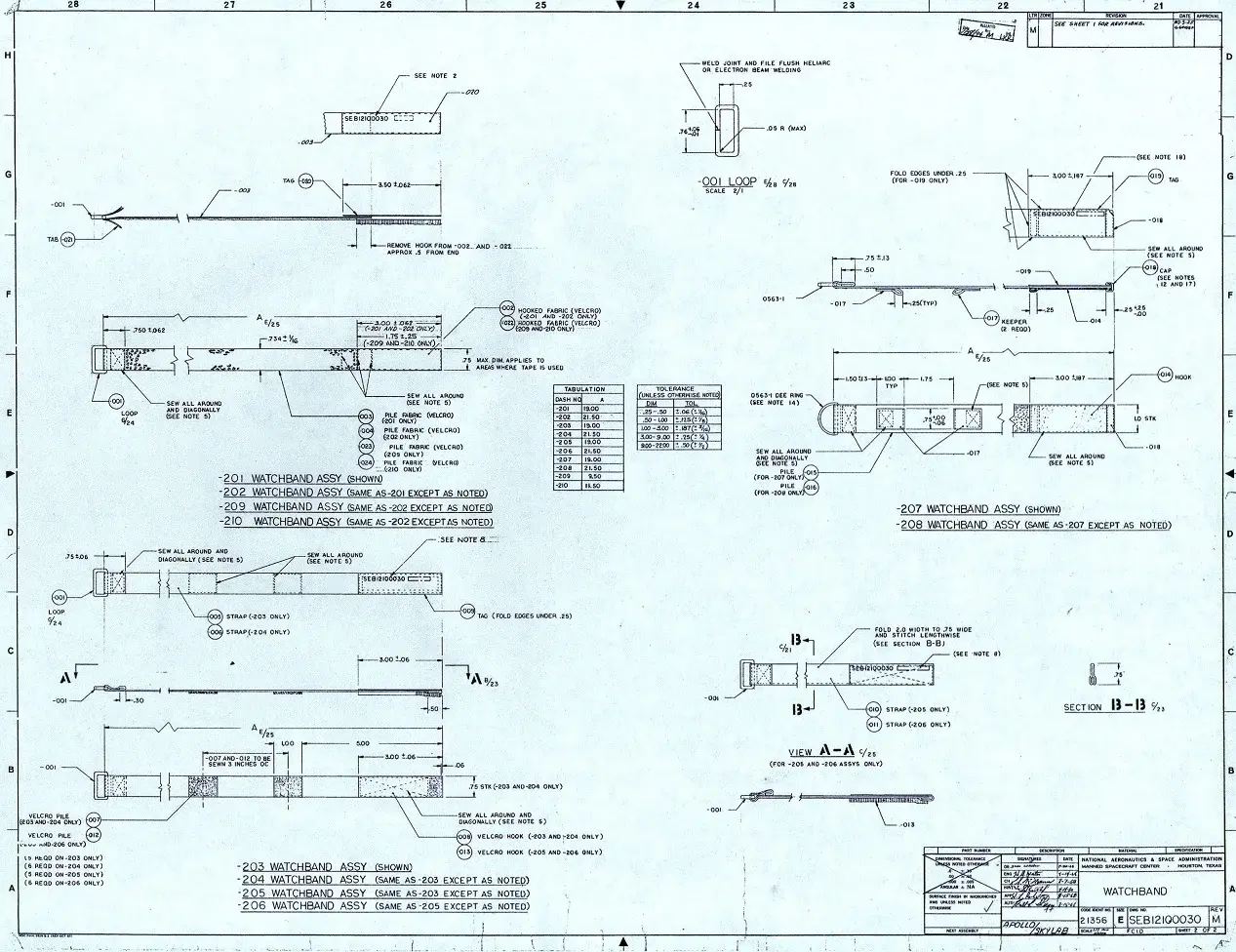
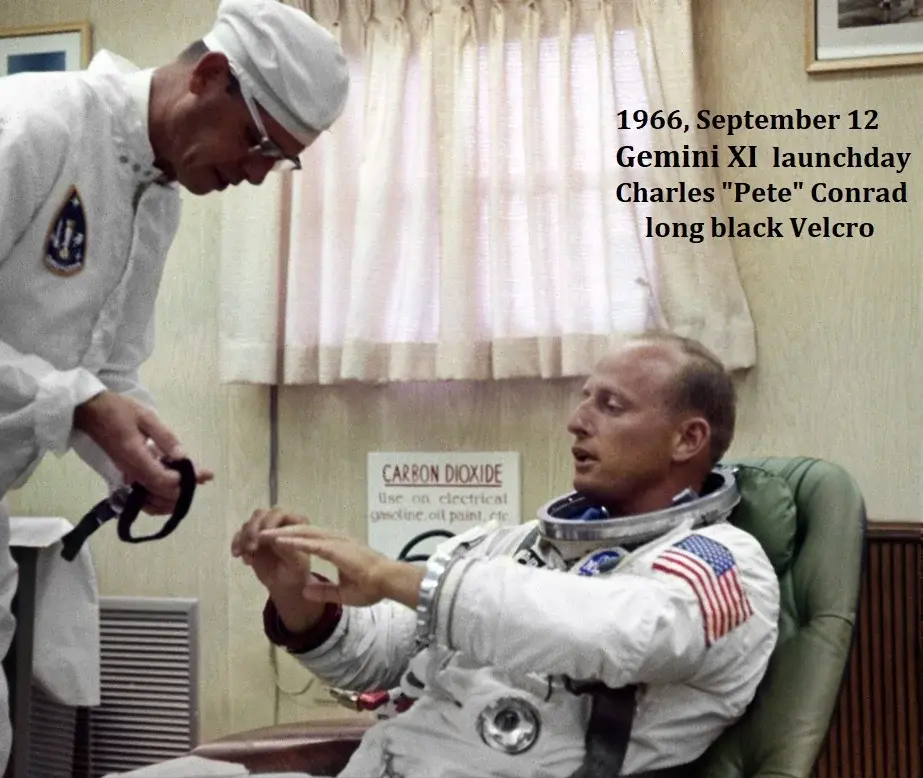
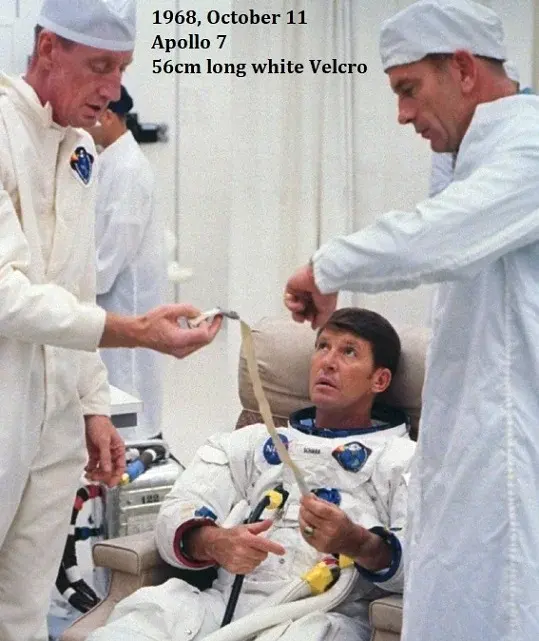
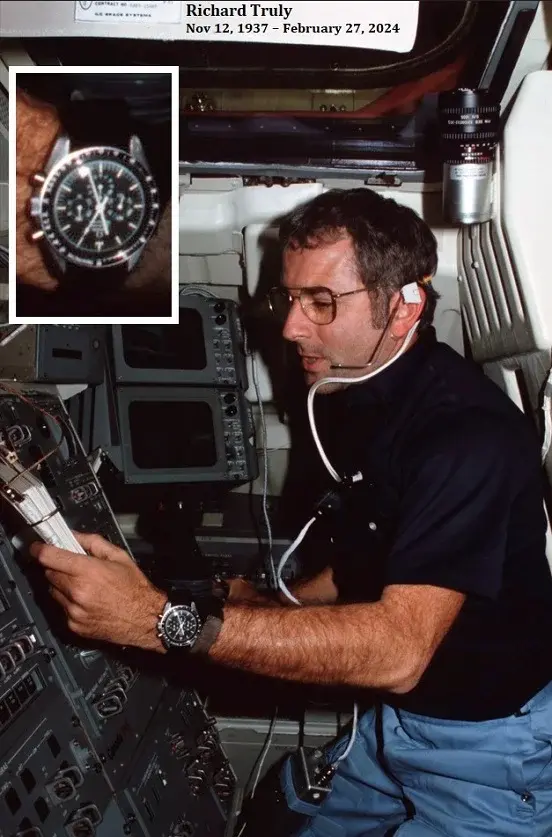
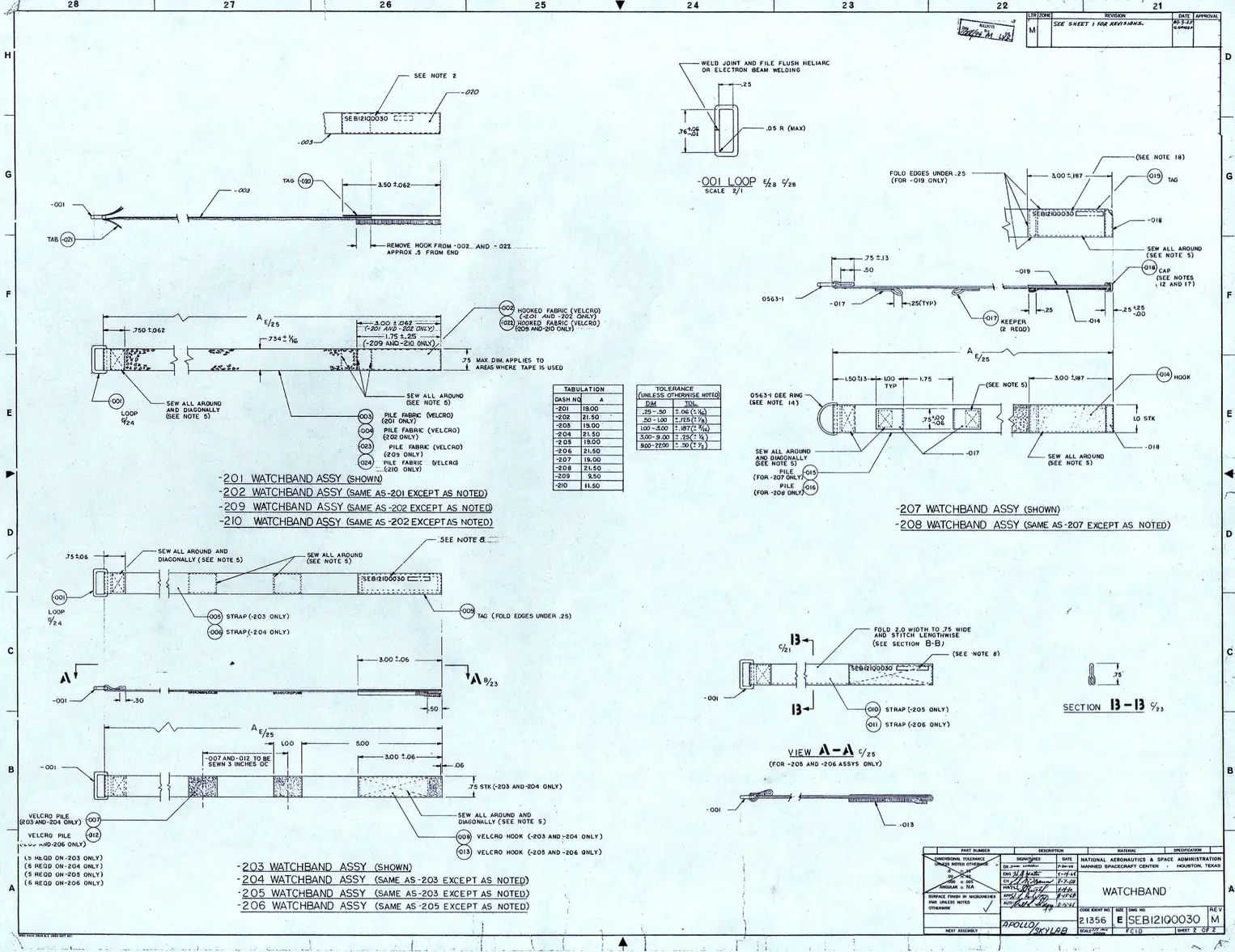
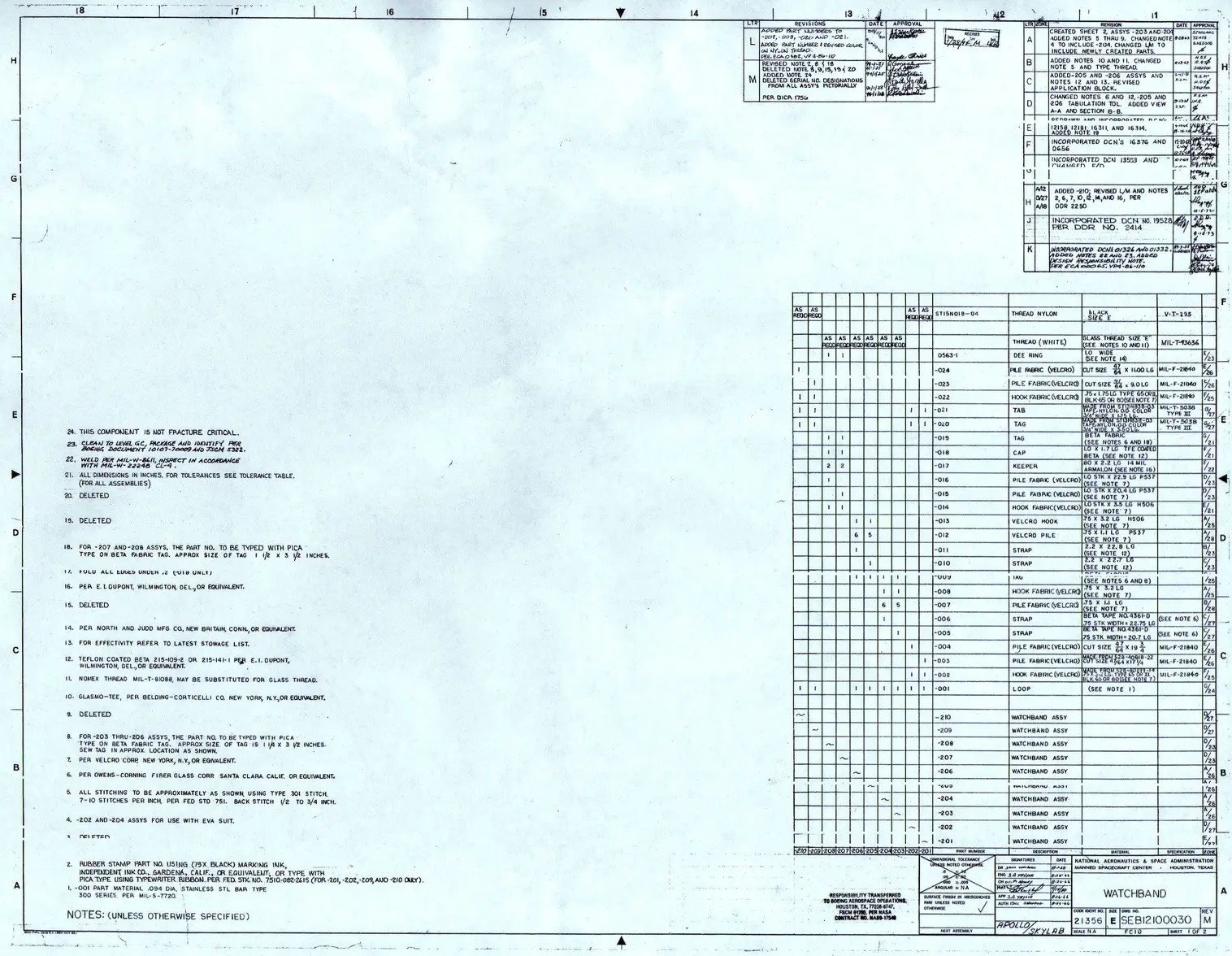
Velcro worked flawlessly, but NASA still had one question.... black or White Velcro ?
Taking a look under the microscope to these seeds he discovered tiny hooks & loops, and bingo the idea for a quick & strong fastener was born!
In 1951, the hook-and-loop fastener idea, using nylon thread, was patented as Velcro a combination of Velours (Velvet) and Crochet (hook).
It soon got applications in the aerospace industry, even for SCUBA equipment... but when was it adopted by NASA?
☕
NASA saw great potential in Velcro for sticking items inside spacecraft as in near zero-gravity everything floats around but it took until June 1965 to see Velcro straps on the wrists of astronauts. During their orbital spaceflights, the "Mercury 7" astronauts Scott Carpenter, Wally Schirra and Gordo Cooper used regular stretchy wrist bracelets and we saw the first use of the lightweight & breakable Forstner Komfit, later Jacoby Bender Champion steel mesh bracelet.
(Photos: NASA)
☕
By the end of February 1965, NASA had completed the rigorous wrist chronographs testing and already on February 29, 1965 we saw John Young training wearing an Omega Speedmaster 105.003-63. This watch must have been as "tests-survivor" as Omega only delivered the first batch of Speedmaster chronographs on April 23, 1965.
March 23, 1965, both Gemini III astronauts Virgil Grissom & John Young wore two wrist watches (Accutron Astronaut & Omega Speedmaster 105.003-63) on steel mesh JB-Champion bracelets.
Thusfar, April 29, 1965 Gemini IV preflight press briefing Washington D.C. photos are the earliest images showing the NASA-issued Omega Speedmaster chronograph on the wrists of NASA astronauts as both James McDivitt and Edward White wore their Speedmaster 105.003-63 on a steel mesh JB-Champion bracelet. So less than a week after NASA received the first batch!
On June 1, NASA announced the Omega Speedmaster as the official flight-qualified chronograph for all manned spaceflight missions.
The Gemini IV astronauts trained using the Omega Speedmaster on steel mesh bracelet, the very first time we saw the Speedmaster on a Velcro strap was Gemini IV launchday, June 3, 1965... with both astronauts each wearing two Omega Speedmaster 105.003-63
(Photos: NASA/UPI/USN)
Velcro worked flawlessly, but NASA still had one question.... black or White Velcro ?