?

Posts
6,574
Likes
78,068
The answer I'm waiting for is how did Mad Dog do compared to Hannah?

What was the issue with lubricating the jewels? (to go for a joke on this would be too easy so I will take the high road) Was the problem using the proper amount? Did you lubricate the balance? Pallet?
There were some issues with Hannah's issued watch [the ETA 6497-1]...these watches had been used by previous classes...so her's required extra attention and work. Mine timed out better in the end, but her's looked better...I slipped on a plate screw [because I was rushing] and put a pretty hefty scratch on my movement.

Regarding lubrication, I didn't know "how to see" as well as I tended to over lubricate. We lubricated the balance and the pallet stones.
 
Posts
6,574
Likes
78,068
Thanks for the answers. So the most challenging part for you was the actual watchmaking part - that's not surprising for someone who hasn't done any before.

As much as this is not rocket science by any means, not everyone is cut out to do this kind of work. Requires a lot of patience, and at first a lot of persistence. You have to be willing to do things over and over again until you get it done correctly. While at co-axial training a few years back there were 5 watchmakers in my class - one spent the entire 5 days just trying to get the escapement oiled correctly once. He didn't finish the assembly of that watch, or complete the co-axial chronograph that was the second watch we were all supposed to finish that week. The instructor would not let him move on until he got it right. These weren't noobs but trained watchmakers.

1 - Not rushing is something that in a class setting is hard to do if you are falling behind. I have been there myself, and you have to force yourself not to rush. Self discipline is key!

2 - Your eyes don't come trained, so it takes a lot of time at the bench for them to see things that are out of place. Small thing here or a shiny spot there - only time will train your eyes to see those things without even really looking for them.

3 - Adjusting the regulator pins on the watches equipped with ETACHRON is actually pretty easy. Doing so with the straight pins found on older watches is much more difficult for people to grasp. Was there a particular part of this that was problematic? Having good optics is a must.

4 - You are not alone in having difficulty with lubrication. Next to problems with cleanliness it is the most common fault I see when I am sent watches that another watchmaker has been involved in. Often enough oil for several watches is applied to just one.

5 - Mounting hands can be tricky, but it helps if you have good equipment. I'm not sure if you used a hand press or not, and although you can do it using the small hand held tools, the press helps with ensuring everything is parallel to the dial. But now you can talk about things like hand division and know what to look for on watches.

I recall that you said Tom would not be teaching this one, but if in fact he did you are fortunate. He is very knowledgeable and patient, and overall one of the best instructors of any kind I've ever had (and I've had quite a few in my life).

So you mentioned you started day 1 with Seagull movements, and then switched to the ETA versions for day 2. Curious what you ended up doing on each version of the movement. Were the Seagulls the sacrificial lambs that you did a lot of the work to, and the ETA's only received final adjustment and casing?

Cheers, Al

Good words, sir. 👍

I'll attempt to answer/provide explanations to some questions/statements which are quoted from above and in bold below...

----------
3 - Adjusting the regulator pins on the watches equipped with ETACHRON is actually pretty easy. Doing so with the straight pins found on older watches is much more difficult for people to grasp. Was there a particular part of this that was problematic? Having good optics is a must.

I had a hard time minimally manipulating the ETACHRON tool on the gold colored nut on the regulator tail...I tended to manipulate it too much. I also had a hard time seeing the hairspring centered [or not centered] between the regulator pins. Also, Tom eventually realized that my Omega loupe was about a 2X [I thought it was a 4X or 5X...it's not marked that I can see]...and then he graciously gave to me [to keep] a new Bergeon loupe that is a higher power.

----------
5 - Mounting hands can be tricky, but it helps if you have good equipment. I'm not sure if you used a hand press or not, and although you can do it using the small hand held tools, the press helps with ensuring everything is parallel to the dial. But now you can talk about things like hand division and know what to look for on watches.

We did use a hand press...but I didn't know how far to push the hands down or what tips to use...AND I was extremely nervous that something would slip and I'd ding the dial. I also had problems with getting the hands parallel to the dial...they looked parallel to me...nope...not even close.

----------
I recall that you said Tom would not be teaching this one, but if in fact he did you are fortunate. He is very knowledgeable and patient, and overall one of the best instructors of any kind I've ever had (and I've had quite a few in my life).

Tom was not the primary instructor...he was helping out the primary instructor since the class was large (12 students). The head of the AWCI was also helping out.

-----------
So you mentioned you started day 1 with Seagull movements, and then switched to the ETA versions for day 2. Curious what you ended up doing on each version of the movement. Were the Seagulls the sacrificial lambs that you did a lot of the work to, and the ETA's only received final adjustment and casing?

On day 1 we started with the Seagulls although I thought we were going to be starting [and finishing] with the ETA 6497-1s...we were briefed on the first day that the AWCI would be experimenting for the first time with the Seagulls starting with our class. Many problems were encountered that first day with the Seagulls...specifically regarding the balance cap jewel spring which isn't supposed to come out. We were breaking and losing those springs like crazy. Starting on day 2 we were briefed that we would be using the ETA 6497-1s due to the problems encountered with the Seagulls the previous day.

On day 1 we did disassembly and balance work on the Seagulls. On day 2 we lubricated and assembled the ETA 6497-1s to a running state. On day 3 we did ETA 6497-1 timing, adjusting, timing again, more adjusting if necessary, more timing if necessary, casing, pressure testing and one final timing.
Edited:
 
Posts
214
Likes
286
Thanks, Al...overall, it was extremely challenging for me.

The parts I liked the most:

1. Doing the course with our oldest child, Hannah...that was amazing.

2. Listening to CMW21 Tom Schomaker talk...I could listen to that man for a whole year.

3. The PowerPoint presentations and lectures prior to doing the work...super-dooper.

4. The high level of equipment available to us for use during the course...wowser.


The parts that were the most challenging for me:

1. Not rushing...I was the slowest student in the class and I often fell behind...then I would rush to attempt to catch up to the other students...and when I would rush, I would make mistakes.

2. Seeing...learning “how to see” by using different light angles.

3. Adjusting regulator pins.

4. Lubricating jewels.

5. Installing hands.

So basically you didn’t like the parts of a watch repair course that involved repairing watches, but enjoyed everything else?
 
Posts
13,505
Likes
53,068
@Mad Dog ... thanks for sharing! Might want to take a crack at this myself.
 
Posts
6,574
Likes
78,068
So basically you didn’t like the parts of a watch repair course that involved repairing watches, but enjoyed everything else?
No, sir...I greatly enjoyed the entire course...all parts of it...the parts of the course that involved repairing watches I found to be the most challenging and stressful...but I still greatly enjoyed those parts because it was such a great learning experience. 👍
 
Posts
29,249
Likes
75,647
I had a hard time minimally manipulating the ETACHRON tool on the gold colored nut on the regulator tail...I tended to manipulate it too much. I also had a hard time seeing the hairspring centered [or not centered] between the regulator pins. Also, Tom eventually realized that my Omega loupe was about a 2X [I thought it was a 4X or 5X...it's not marked that I can see]...and then he graciously gave to me [to keep] a new Bergeon loupe that is a higher power.

As I said good optics are a must. I had no idea that the Omega Loupe was only 2X, but I guess if you are using it to inspect an Omega watch, they would not want to give you too much magnification, eh? 😉

j/k

Honestly for setting the regulator pins, I use 10X so 2X is certainly not going to cut it. Likely one reason you were turning the pins too much is because you had to in order to even see the gap change. As you likely have discovered, a very small adjustment to the pin spacing using that tool makes a very large difference in the rates, and the Delta. Just fully opening to fully closing the regulator pins makes a pretty huge difference in rate, without even moving the regulator at all.

Glad you enjoyed it all, and got a small look into what is done on a watch during service.

Cheers, Al
 
Posts
6,574
Likes
78,068
As I said good optics are a must. I had no idea that the Omega Loupe was only 2X, but I guess if you are using it to inspect an Omega watch, they would not want to give you too much magnification, eh? 😉

j/k

Honestly for setting the regulator pins, I use 10X so 2X is certainly not going to cut it. Likely one reason you were turning the pins too much is because you had to in order to even see the gap change. As you likely have discovered, a very small adjustment to the pin spacing using that tool makes a very large difference in the rates, and the Delta. Just fully opening to fully closing the regulator pins makes a pretty huge difference in rate, without even moving the regulator at all.

Glad you enjoyed it all, and got a small look into what is done on a watch during service.

Cheers, Al
Good words again, sir. 👍

Regarding your last statement, it really did give me a much greater appreciation for what is done on a watch during service. In essence, I was able to walk a few yards in the watchmaker’s shoes and have an even greater appreciation for their craft by attending the course...similar to when I was able to walk a couple of miles in the law enforcement officer’s shoes when I was a Cincinnati Police Officer while on pilot furlough at Delta Air Lines. Also, it was interesting to note that while I was at AWCI for this course, I was told [because I asked] that the pass rate for the CW21 exam is about 30%. Holy smokes...that’s much lower than I had anticipated. 😲
 
Posts
2,675
Likes
7,487
What’s the next step @Mad Dog ? More watchmaking classes in the future or did this satisfy the curiosity for now? How about your daughter, does she have any plans to do something more or were the few days of showing up her father enough for her?
 
Posts
2,408
Likes
6,951
1. Not rushing...I was the slowest student in the class and I often fell behind...then I would rush to attempt to catch up to the other students...and when I would rush, I would make mistakes.

When I serviced my first watch (a 1930's pocket watch I purchased cheap for practice) I think I took 50 hours to do everything. It wasn't in a course like you did and everything was new and mysterious. There were several problems with that watch (rubbing hairspring, cracked jewel, etc) that extended the service time. I wasn't rushed because I was alone in my basement (I should get a life!), and didn't felt I was behind the group like you did. Like Al said, this hobby is one of patience and perseverance; this is especially true with vintage watches.
 
Posts
2,408
Likes
6,951
As I said good optics are a must. I had no idea that the Omega Loupe was only 2X, but I guess if you are using it to inspect an Omega watch, they would not want to give you too much magnification, eh? 😉

Goodness! 2x! I use a stereo microscope with a 5x - 30x zoom for pretty much everything. Never use a loupe.
 
Posts
6,574
Likes
78,068
What’s the next step @Mad Dog ? More watchmaking classes in the future or did this satisfy the curiosity for now? How about your daughter, does she have any plans to do something more or were the few days of showing up her father enough for her?
If anything, I would repeat the course I just completed at the AWCI...the introduction to watchmaking course. I was pretty beat for a few days after that course...sort of a "watchmaking hangover" so-to-speak. Don't get me wrong, I enjoyed the course immensely! Also, I'm interested in possibly taking a case refinishing course at the AWCI.

Regarding our daughter Hannah, it was interesting to note that the more sweat equity she put into her generic flieger during the course, the more she enjoyed the course and the more she wanted to purchase her watch. Immediately following the course and upon her request, we went to Cas-Ker Co. and she picked out a stainless steel mesh band for her generic flieger since the leather band that came with our generic fliegers irritates her skin. At this time, I don't believe she has a desire to take additional courses but that could change in the future.
 
Posts
2,675
Likes
7,487
If anything, I would repeat the course I just completed at the AWCI...the introduction to watchmaking course. I was pretty beat for a few days after that course...sort of a "watchmaking hangover" so-to-speak. Don't get me wrong, I enjoyed the course immensely! Also, I'm interested in possibly taking a case refinishing course at the AWCI.
I sometimes struggle removing and installing a strap/bracelet, I cannot imagine having the courage to even try the course. Well done for your willingness to give it a go! As is the case with many skills where we mere mortals watch in awe as professionals display their abilities, watchmaking is something I have the utmost respect and admiration for (as do many on this forum).

Regarding our daughter Hannah, it was interesting to note that the more sweat equity she put into her generic flieger during the course, the more she enjoyed the course and the more she wanted to purchase her watch. Immediately following the course and upon her request, we went to Cas-Ker Co. and she picked out a stainless steel mesh band for her generic flieger since the leather band that came with our generic fliegers irritates her skin. At this time, I don't believe she has a desire to take additional courses but that could change in the future.
This connection you formed with your daughter is even cooler than you taking the course. Our daughter recently turned 13 and the topics she and I share a common interest in few and far between. We both took up guitar lessons last summer and have been learning simple chords and picking songs. While in Hawaii 2 weeks ago she bought a Ukulele as a fitting souvenir and on our return she and I have had a few simple 'jamming sessions' while she plays her Ukulele and I strum the chords on my acoustic. We must sound rather terrible to anyone listening (only our 11 year old mini-poodle...) but it makes me very happy to have something special she and I can share. I can only imagine you might feel similarly about sharing your interest in watchmaking with Hannah and if so it must be rather neat!
 
Posts
6,574
Likes
78,068
I was just thinking it looks on the correct side to me 😉

How the hell is that coffee suspended in mid air in the second pic though! ?!
It's an official Dunkin' Donuts "Hot Cup" Christmas ornament...it's hanging from the rear view mirror in my beloved '07 Ford Police Interceptor...and since the official Dunkin' Donuts "Hot Cup" ornament has a removable top, it stores the cigarette lighter which is not used since there is always some sort of electrical charger [for some sort of electrical gizmo] plugged into the cigarette lighter receptacle. 👍
 
Posts
6,574
Likes
78,068
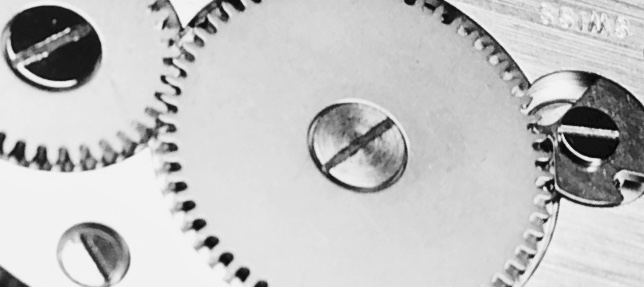
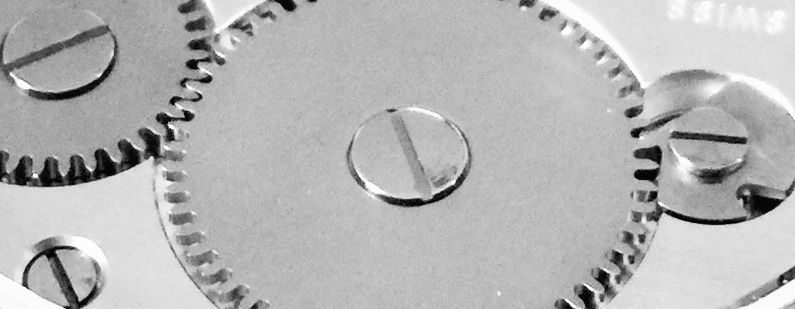
For the record, the dorking continues even after AWCI watchmaking school with my generic flieger ETA 6497-1...the ratchet wheel screw originally had a non-polished finish on it as opposed to the semi-polished finish on the crown wheel screw and click screw...and that was bugging me since the watch has a display back. So...on Saturday, I removed the ratchet wheel screw and spent about an hour polishing the screw head with a Cape Cod cloth to achieve a more matching semi-polished appearance to the two previously mention screws...I think it looks much better now...more “matchy-matchy”...

Before: Non-polished ratchet wheel screw...


After: Semi-polished ratchet wheel screw...

Edited:
 
Posts
2,408
Likes
6,951
Before: Non-polished ratchet wheel screw...


After: Semi-polished ratchet wheel screw...


Soon you'll be an apprentice for Philippe Dufour!