321 service in US

Posts
14
Likes
5
Hello forum, any recommendations?

Archer is not taking new clients. Nesbit doesn't service 321 in house...

Thanks!
 
Posts
532
Likes
347
I'm relatively new to the 321 movement. Are those the two most reputable servicers? I recall seeing the name Nesbit before.
 
Posts
13,518
Likes
53,087
Where do you live? Most reputable restoration watchmakers can service a vintage 321.
Edited:
 
Posts
9,556
Likes
52,794
Maybe TM Watch Company (Tanner Morehouse) in North Dakota?
 
Posts
5,636
Likes
5,804
Nesbit's won't do it because it is now a Bienne-only caliber and they can't get parts for it.
 
Posts
9,556
Likes
52,794
Nesbit's won't do it because it is now a Bienne-only caliber and they can't get parts for it.
That’s ALL 321s now, not just the new Ed White?
 
Posts
3,998
Likes
9,015
That’s ALL 321s now, not just the new Ed White?

the 321 and 321A (the vintage movements) have long been Bienne only

the 321B only continued the “rule” of also being Bienne only
 
Posts
29,263
Likes
75,674
Nesbit's won't do it because it is now a Bienne-only caliber and they can't get parts for it.
It's been a Bienne only caliber for a very long time...at least 10 years...
 
Posts
2,889
Likes
11,946
It's been a Bienne only caliber for a very long time...at least 10 years...
Well you learn something new every day - didn’t realise that applied to vintage…,
 
Posts
9,556
Likes
52,794
Well you learn something new every day - didn’t realise that applied to vintage…,
Nor did I. Not exactly a huge incentive to pick up something with that caliber.

 
Posts
5,636
Likes
5,804
Nor did I. Not exactly a huge incentive to pick up something with that caliber.
If it were better than the 861, they wouldn't have changed. But some people seem to put significance on some older things.
 
Posts
13,518
Likes
53,087
Soooooooo
It's been a Bienne only caliber for a very long time...at least 10 years...
So basically no one can work on these but the factory and someone like Simon T., who have parts and parts network outside of Omega? I had mine serviced in Chicago seven years ago, guess I was lucky it didn’t need parts.
 
Posts
29,263
Likes
75,674
Soooooooo

So basically no one can work on these but the factory and someone like Simon T., who have parts and parts network outside of Omega? I had mine serviced in Chicago seven years ago, guess I was lucky it didn’t need parts.

Nope, anyone who wants to work on one can. I work on them regularly, but very limited parts are available from Omega, so you have to get them on the open market.
 
Posts
13,518
Likes
53,087
Nor did I. Not exactly a huge incentive to pick up something with that caliber.
Looking at Al’s response, really no different than any old Chronograph. Your watchmaker needs the skills and a strong parts network. Plus the factory can also do it at great cost and risk of a miscommunication.
 
Posts
23,553
Likes
52,347
How many parts are available for vintage Valjoux, Excelsior Park, Venus, Angelus, Lemania, Martel, etc. chronograph movements from their respective factories? It's unfortunate that Omega won't provide movements for a cal 321, but it's a fairly standard scenario for a vintage collector.

Edit: Larry beat me to it.
 
Posts
250
Likes
713
I tend to find a lot of people are very concerned with finding parts as the main problem with this kind of work, and it’s just not. Watchmakers might have access to parts, but they really need to understand how to correctly service a vintage watch. You can find a lot of parts that you will need on the open market, and most people can with a simple google search. But a true watchmaker who knows how to restore vintage watches will have the ability to burnish worn pivots, make and install bushings for worn plates and bridges, etc. So a lot of times - they won’t need new parts when watchmakers who are more ‘parts replacers’ may need them.

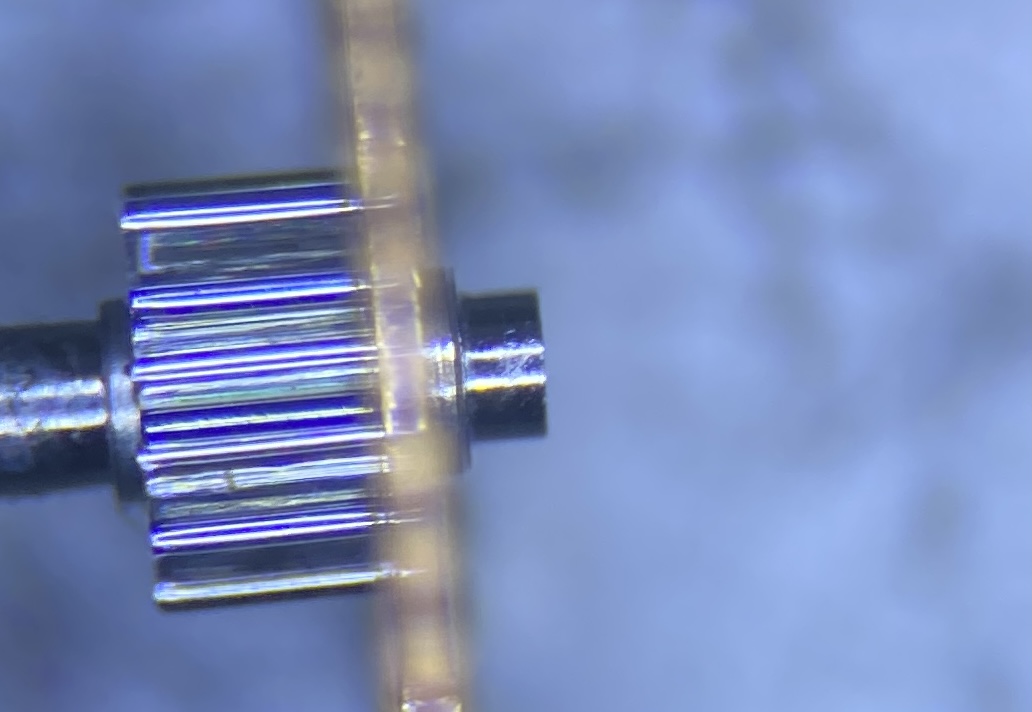
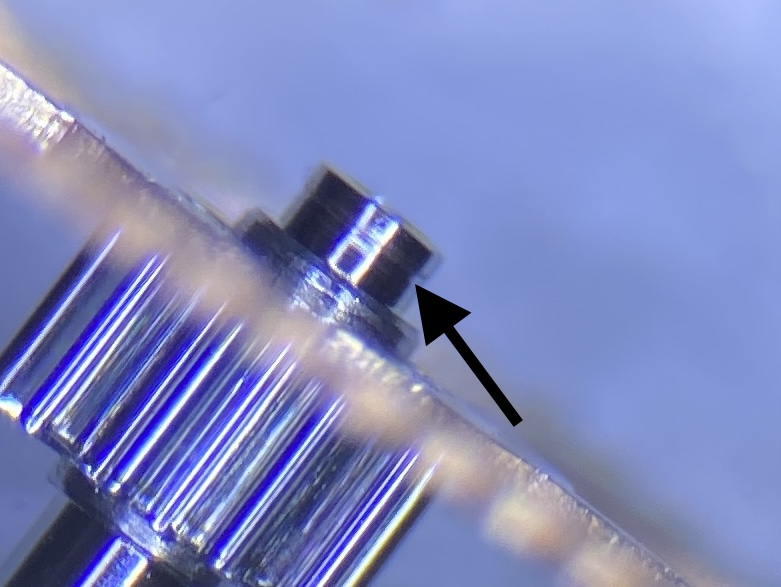
I’ll give an example. Here is a centre wheel from an Omega 354. A difficult part to find. Can you see the ring cut in it? That’s a groove that’s basically been cut in the pivot of the wheel. A new wheel isn’t necessarily needed in this case, we can burnish the pivot.


Here is the wheel after the pivot has been burnished. It hasn’t been cleaned yet so you can see residue.


Now, the wear could be too much so that the pivot is now too small and the fit in the jewel/bushing/bridge is too sloppy, but we would cross that bridge when we came to it.

Here is another example. The same movement had a worn barrel arbor hole in the bridge and mainplate. Here we can see how sloppy the hole has become.


A custom bushing is made on the lathe, the bridge is bored out and the new brass bushing is installed. Here’s the result.


The only other option in the scenario would be to
A) Leave it as is (quite common)
B) Punch it up (there are 2 ways of doing this - 1 is acceptable, the other is not, but the bushing here was so far gone that it could only be punched up the unacceptable way)
3) Find a new bridge - and mainplate as both were worn.

So I hope that helps to explain vintage watch repair a little better. This doesn’t really apply to servicing modern watches, but vintage watch repair is its own beast - when done correctly.
 
Posts
307
Likes
444
I tend to find a lot of people are very concerned with finding parts as the main problem with this kind of work, and it’s just not. Watchmakers might have access to parts, but they really need to understand how to correctly service a vintage watch. You can find a lot of parts that you will need on the open market, and most people can with a simple google search. But a true watchmaker who knows how to restore vintage watches will have the ability to burnish worn pivots, make and install bushings for worn plates and bridges, etc. So a lot of times - they won’t need new parts when watchmakers who are more ‘parts replacers’ may need them.

I’ll give an example. Here is a centre wheel from an Omega 354. A difficult part to find. Can you see the ring cut in it? That’s a groove that’s basically been cut in the pivot of the wheel. A new wheel isn’t necessarily needed in this case, we can burnish the pivot.


Here is the wheel after the pivot has been burnished. It hasn’t been cleaned yet so you can see residue.


Now, the wear could be too much so that the pivot is now too small and the fit in the jewel/bushing/bridge is too sloppy, but we would cross that bridge when we came to it.

Here is another example. The same movement had a worn barrel arbor hole in the bridge and mainplate. Here we can see how sloppy the hole has become.


A custom bushing is made on the lathe, the bridge is bored out and the new brass bushing is installed. Here’s the result.


The only other option in the scenario would be to
A) Leave it as is (quite common)
B) Punch it up (there are 2 ways of doing this - 1 is acceptable, the other is not, but the bushing here was so far gone that it could only be punched up the unacceptable way)
3) Find a new bridge - and mainplate as both were worn.

So I hope that helps to explain vintage watch repair a little better. This doesn’t really apply to servicing modern watches, but vintage watch repair is its own beast - when done correctly.
Good info. Thanks for sharing.
So, for vintage watch repair you need a dude who can be a repair tech, a bit of a mechanical engineer to manuf specialty parts in his back-room, have a strong parts network & actually have a brain to understand the subject matter.
Hmmmm…….that’s almost zero population !
 
Posts
9,556
Likes
52,794
If it were better than the 861, they wouldn't have changed. But some people seem to put significance on some older things.
Agreed. Both of my Speedmasters (1971 and 1996) are caliber 861 and they've been very reliable and accurate. The 1996 3590.50, in particular, runs anywhere from +1 to +3 SPD, day in, day out.