1976 Speedmaster first service, newbie questions

Posts
101
Likes
43
Hi All,
My 1976 Speedy Pro Cal.861 has just come back from it's first (for me) service. I've had the watch 8 years and stopped wearing it around 5 years ago for various reasons, one being that I knew it should be serviced or I'd risk wearing down and/or damaging the moving parts. Anyway, now it's back and looking splendid I'm actually not sure how to wind it correctly and without damaging it.

I believe winding clockwise only is correct and I had it in my head that it should only be wound 20 times a day but may require 40 winds when it's completely 'unwound'? Is this right or should it be wound until resistance is felt? Alternatively, will resistance never be felt so it can be wound indefinitely but has a mechanism to prevent overwinding?

My other question relates to the chrono movement. If the watch is fully wound and I activate the chrono timer, how quickly would you expect the watch to lose all of it's power i.e. completely stop and need to be rewound? I'm assuming it uses more power for the chrono mechanism but I think mine loses all power too quickly. I'm experimenting now just to see how quickly but I think it only lasts an hour or two with the chrono activated.

Many thanks in advance,
CH

 
Posts
2,828
Likes
4,722
I'm experimenting now just to see how quickly but I think it only lasts an hour or two with the chrono activated.
If that turns out to be the case you'll need to find another watchmaker.
 
Posts
101
Likes
43
If that turns out to be the case you'll need to find another watchmaker.

I'd be surprised as it's a very well known and recommended, on here, watchmaker. I'm 2 hours into my test and it's going strong.
 
Posts
5,991
Likes
28,676
Regarding the winding; wind it till you can wind it anymore, you'll know when you reach that point.

Did you already check with the watchmaker the issues your experiencing?
 
Posts
77
Likes
100
Just wind it. There is no over-winding protection, however you’ll easily feel the resistance when it’s fully wound.

I believe I read somewhere on this forum that the thought of chrono ‘power’ consumption was tested. I does not matter if the chrono runs or not - maybe an unmeasurable amount but nothing more.
 
Posts
29,674
Likes
76,836
I believe winding clockwise only is correct and I had it in my head that it should only be wound 20 times a day but may require 40 winds when it's completely 'unwound'? Is this right or should it be wound until resistance is felt? Alternatively, will resistance never be felt so it can be wound indefinitely but has a mechanism to prevent overwinding?

Wind it until you can't wind it any longer. You will feel it when you are there.

My other question relates to the chrono movement. If the watch is fully wound and I activate the chrono timer, how quickly would you expect the watch to lose all of it's power i.e. completely stop and need to be rewound? I'm assuming it uses more power for the chrono mechanism but I think mine loses all power too quickly. I'm experimenting now just to see how quickly but I think it only lasts an hour or two with the chrono activated.

Many thanks in advance,
CH

The watch doesn't use more power when the chronograph is running. It's not like a tank of gas, or a battery where an additional load will drain it faster. The level of torque coming from the mainspring is not affected by the chronograph being on or not. However that torque drops off over time as the watch unwinds. Once the torque is no longer sufficient to overcome the loads in the watch due to friction, the watch will stop. The higher the load on the movement, the sooner in the unwinding process that will happen.

So the watch will stop sooner with the chronograph running, but not because it uses more power, but because it applies more load. If you let it run until the chronograph stops, then remove that additional load (by stopping the chronograph) the watch will start running again.

If it's only running for an hour or two, based on your first question you simply may not have wound it fully. If it is fully wound and only lasts an hour or two, then you need to contact your watchmaker.

Cheers, Al
 
Posts
101
Likes
43
Many thanks for your replies.

I had wound it 60 times this morning and still felt no resistance so I stopped and worried I may have wound too much. Does this sound normal?

It's now 4 hours since I started my 'experiment' and it's still keeping perfect time so, if there is an issue, it's certainly not as bad as I'd thought. I will abort this experiment and start again tomorrow morning having wound the watch until I "feel resistance". That way I can be sure it's fully wound before testing that it works normally with the chrono activated.
 
Posts
29,674
Likes
76,836
How many "winds" is difficult to say, since everyone may turn the crown in a slightly different way - all you need to know is you turn it until it won't turn anymore, and you know you are there. If you want to count the number of your turns that is for future reference, that's not a bad idea.

If it never stops turning, you have a broken mainspring, but right after a service that's unlikely.
 
Posts
101
Likes
43
How many "winds" is difficult to say, since everyone may turn the crown in a slightly different way - all you need to know is you turn it until it won't turn anymore, and you know you are there. If you want to count the number of your turns that is for future reference, that's not a bad idea.

If it never stops turning, you have a broken mainspring, but right after a service that's unlikely.

Sorry for the dumb questions but....

If the mainspring was broken I'm assuming the watch would not work at all? So, as it's working now, the mainspring must be okay, right?

Do you mean that if I wind it tomorrow, and somehow overwind it, then that would break the mainspring and allow me to keep winding at which point the watch would not work at all until the mainspring was replaced.

Thanks again, CH
 
Posts
5,636
Likes
5,810
If your watch was freshly serviced and you can wind it until it stops, your mainspring isn't broken.
 
Posts
29,674
Likes
76,836
If the mainspring was broken I'm assuming the watch would not work at all? So, as it's working now, the mainspring must be okay, right?

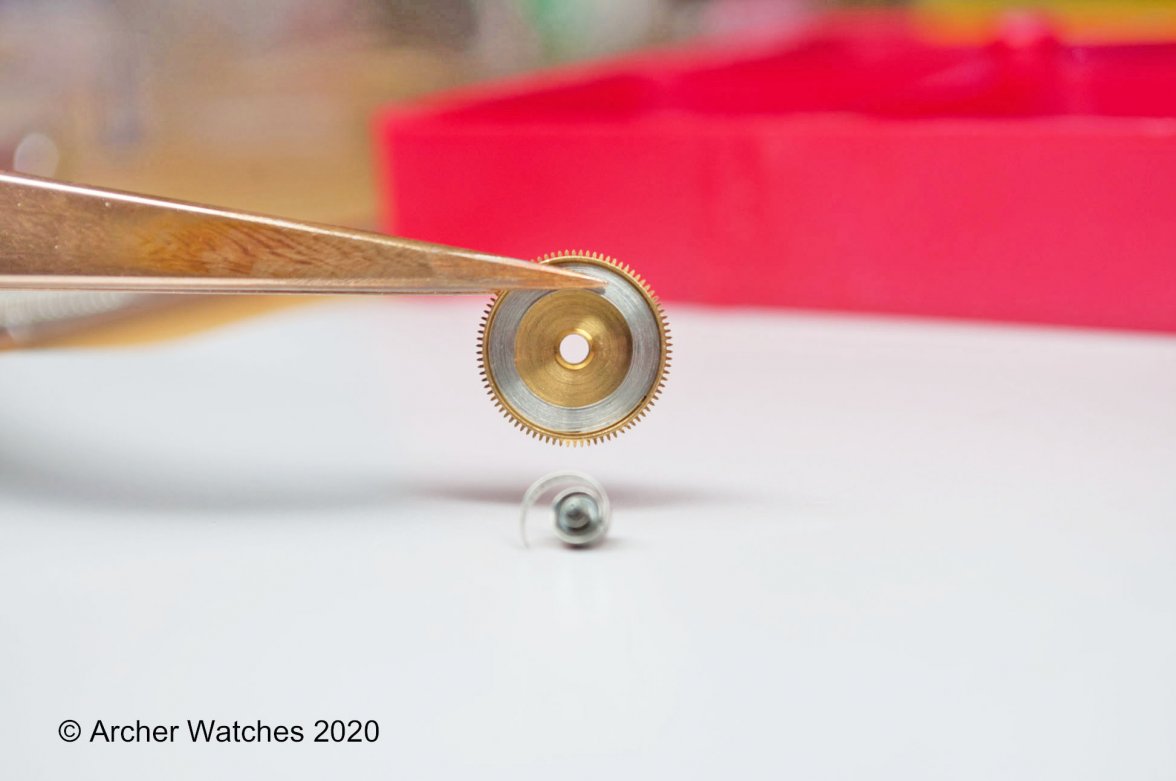
Not necessarily. Mainsprings break typically in 2 locations on the spring. One is in at the barrel arbor, so like this:


If it breaks near the inner coil as shown above, the watch will stop running. However if it breaks at the other end of the spring, where the welded tang is that anchors the spring to the barrel, it will continue to run, and often they run quite well, and the power reserve may drop only by a couple of hours. The spring will slip when you wind it, so it will never stop winding when you turn the crown.

Again, as I said, this would be unusual right after a service, provided that your watchmaker replaced the mainspring with a new one, which is standard practice. If they used the old spring again, then the chances of there being a problem go up.

The way to find out without any additional speculation is to simply wind the watch until it stops...you don't have to wait until tomorrow morning, as you won't hurt it winding it now and then again tomorrow.

Cheers, Al
 
Posts
101
Likes
43
Not necessarily. Mainsprings break typically in 2 locations on the spring. One is in at the barrel arbor, so like this:


If it breaks near the inner coil as shown above, the watch will stop running. However if it breaks at the other end of the spring, where the welded tang is that anchors the spring to the barrel, it will continue to run, and often they run quite well, and the power reserve may drop only by a couple of hours. The spring will slip when you wind it, so it will never stop winding when you turn the crown.

Again, as I said, this would be unusual right after a service, provided that your watchmaker replaced the mainspring with a new one, which is standard practice. If they used the old spring again, then the chances of there being a problem go up.

The way to find out without any additional speculation is to simply wind the watch until it stops...you don't have to wait until tomorrow morning, as you won't hurt it winding it now and then again tomorrow.

Cheers, Al

Thanks for this explanation. I just wound it again and after 18 winds I felt resistance and stopped. I must have been pretty close to fully winding it earlier then.
I’m going to see how long it lasts before needing to be wound again. I believe it should be 40 hours but are know to last longer. I’ll do the same with chrono activated to check it’s working okay.
Love having to wind a watch!
 
Posts
101
Likes
43
Stopped after 50 hours and 31 minutes. That’s impressive for a 44 year old watch.

I will fully wind and see how long it lasts with the chrono activated. Hopefully it’s similar or, from information posted previously by OF members in this thread, I have an issue. Fingers crossed.
 
Posts
101
Likes
43
No surprise to the experts but I’m both impressed and relieved. 44 hours in with the chrono running and still keeping accurate time. It’ll stop sometime around midnight if it makes it to 50 hours.

The service was carried out by Simon Freese here in the UK. Thanks to members of OF for the recommendation.
 
Posts
101
Likes
43
For completeness of this thread, my watch stopped at 46.5 hours with the chrono running in comparison to 50 hours without.
 
Posts
18,202
Likes
27,531
For completeness of this thread, my watch stopped at 46.5 hours with the chrono running in comparison to 50 hours without.


Pictures of the watch?
 
Posts
101
Likes
43
Pictures of the watch?

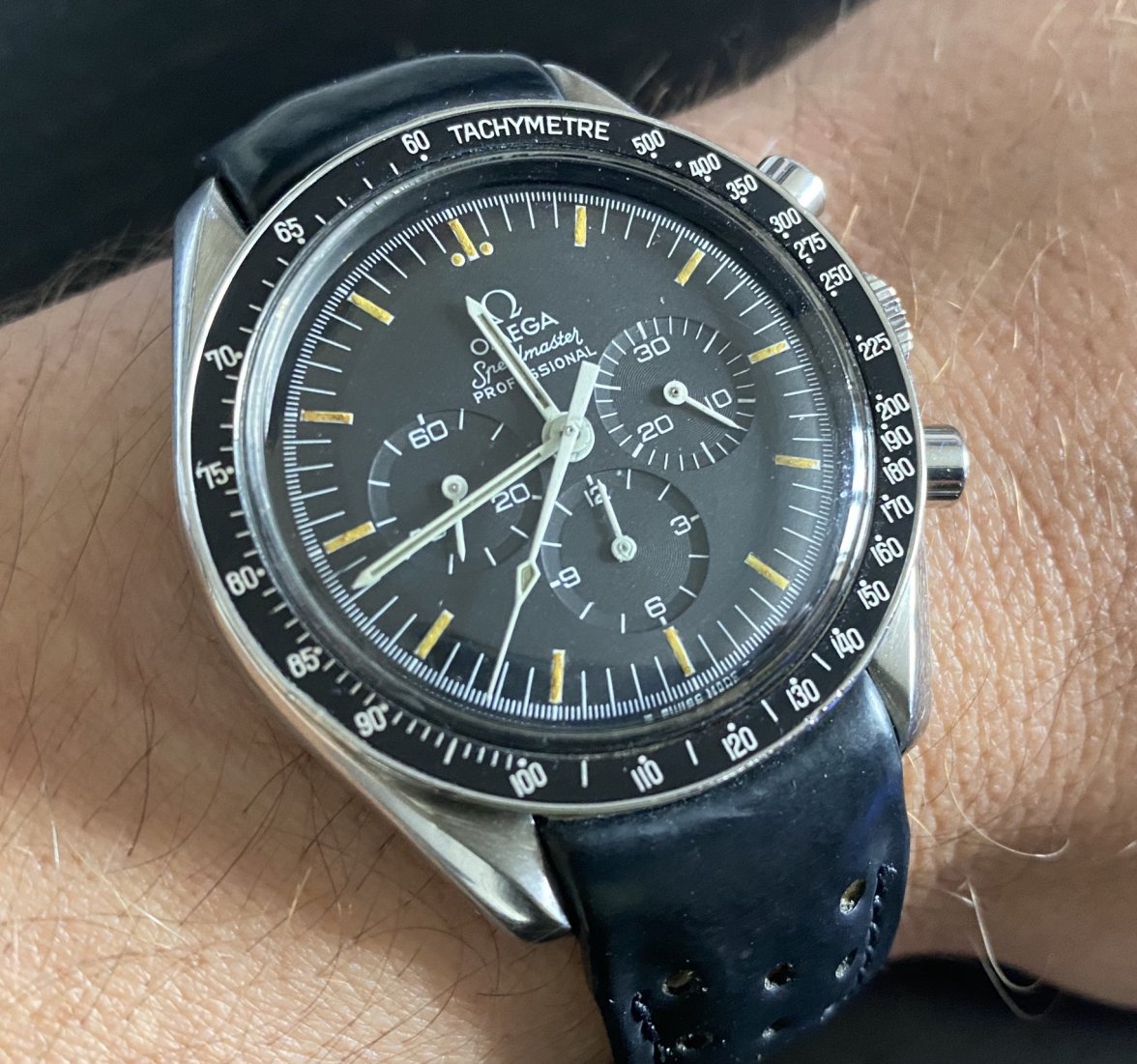
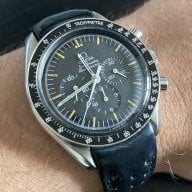
Here you go...

My birth year watch purchased 8 years ago. 1171 bracelet is stored away as I love the look of the rally strap. Wearing daily again and loving it.
 
Posts
77
Likes
100
Here you go...

My birth year watch purchased 8 years ago. 1171 bracelet is stored away as I love the look of the rally strap. Wearing daily again and loving it.

Beautiful piece. Happy that it all worked out for you!