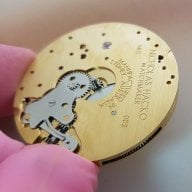
1969 Moon watch restoration video [cal 861 145022]

Posts
37
Likes
294
Four days of disassembly, cleaning, polishing, reassembly and adjustment compressed in 26 minutes.


Have fun,
Nick Hacko
 
Posts
37
Likes
294
Can we have that saved as a sticky, please? Kind regards. Achim

If admin decide to make this post sticky, that would be a huge compliment - and I'll return it by posting two more Omega restoration videos 1967 moonwatch with cal 321 and 1969 18K gold Speedy, never overhauled. Otherwise I'll move onto Zenith Cal 400 which is already half done... Seriously - thank you for watching, your feedback is appreciated.
 
Posts
521
Likes
410
fascinating to watch, beautiful restoration, thank you for posting.
just a question, i noticed you weren't wearing gloves... is finger oil a concern for the dial or movement?
 
Posts
37
Likes
294
fascinating to watch, beautiful restoration, thank you for posting.
just a question, i noticed you weren't wearing gloves... is finger oil a concern for the dial or movement?
hi Joe - I don't wear them during disassembly because parts go through cleaning process, only while assembling. Dial is handed 'side only'.
 
Posts
1,177
Likes
4,963
fascinating to watch, beautiful restoration, thank you for posting.
just a question, i noticed you weren't wearing gloves... is finger oil a concern for the dial or movement?

 
Posts
6,725
Likes
12,356
May I point out, that again that the lower push button was missing on this Speedmaster 😗
 
Posts
1,541
Likes
3,352
All those tiny parts spread out on the cloth made me so nervous! What if you sneezed or accidentally knocked the table?

I love watching videos like this but, as someone who is not a watchmaker, I wonder what the convention is for keeping the components of the sub-assemblies with each other, not mixing up screws, etc. Is there a standard method or do different watchmakers have their own preferred way of doing things?

 
Posts
521
Likes
410
I wonder what the convention is for keeping the components of the sub-assemblies with each other, not mixing up screws, etc. Is there a standard method or do different watchmakers have their own preferred way of doing things?
yeah, right? i didn't see the cardboard template like we do with motorcycles or fishing reels....
 
Posts
237
Likes
487
Great video, very interesting and instructive, thanks for sharing
 
Posts
7,111
Likes
23,095
Fabulous.

A few thoughts: it really is quite amazing that all these little parts work together to effectuate the actions of this watch, and further, that someone figured out how to make all those functions happen in such a relatively small space.

In addition, I think from an aesthetic standpoint, the cal 861 gets short shrift - it really is a very decent looking movement on its own.
Edited:
 
Posts
391
Likes
334
How long does it take to put everything together? Is there a chart to follow for assembly? So many parts.
 
Posts
37
Likes
294
How long does it take to put everything together? Is there a chart to follow for assembly? So many parts.

An Omega 861 would be 3/10 in difficulty of servicing. A third year watchmaker apprentice should be able to do complete diagnostic and overhaul, as well as adjustment. The next level of complication would be an automatic chronograph with date function like Zenith ElPrimero. Beyond that perpetual calendar and then repeaters. Assuming all spare parts are at hand, complete overhaul should take no more than 6-8 hours. This particular project took 4 days mainly to my inability to keep the watch in focus. Also, this is a first attempt by my young assistant to edit the video if this length and we had to retake number of shots. Overall, it was fun. Already working on another project, to be released mid next week.

Re assembly charts: yes, charts are available but watchmaking is based on a few fundamentals: understanding the function of the mechanism (what happens when start pusher is pressed?), sequencing (if A causes B then...) , freedom of movement (radial / axial) , ability to identify worn out component (experience) proper cleaning / lubricating technique, final adjustment. Not difficult to anyone with attention to detail.