1960s Seamasters?

Posts
6
Likes
1
I love the timeless, elegant look of Seamasters from the '60s, but I've read that some of them have more than the usual issues with reliability. Can anyone steer me towards any particular references/movements from that era that are reliable? Thanks!
 
Posts
6
Likes
1
Btw, not looking for a chronograph. Interested in 3-handers. Date complication optional.
 
Posts
13,054
Likes
22,642
Anything with a 5xx or 6xx in good conditions and serviced should be fine
 
Posts
23,702
Likes
52,669
And certainly any hand-winding Seamaster, e.g. with cal 420 or 601, would be reliable IMO.
 
Posts
1,513
Likes
1,555
IMO the 550 family is the best there is.

550 is the base 17 jewel automatic movement ,552 is the 24 jewel, and the 551 is a 24 jewel chronometer qualified(that is, more accurate, not a stop watch) version.

With a date, 560, 562, and 561 are the equivalents of those respectively but that series doesn't have quickset date. So I'd suggest 563, 565, or 564 (17, 24, 24-chronometer).

For daydate I'd love a 751, with 750, 752, an 751 being the 17/24/24-chronometer versions.

The 600/601/602 (3 hander: 602 being a chronometer) and 610, 611, 613 (613 is quickset date, other two just date) are also fantastic movements, manual wind very much like the 550.

The 1000 series is cheaper made, but tend to be pretty good work-horses as well. I really liked the 1012 I worked on (date, 23 jewel, chronometer), with the 1010 being the 17 jewel, and the 1011 being the 23 jewel chronometer.

The day/date versions are 1020(17 jewel) 1022(23), 2021(chronometer), and 1030/1035 being manual winds.

So those are all my favorite pre-coaxial 3 hander/3 hander + date movements.

 
Posts
23,702
Likes
52,669
I'd be curious to know which 1960s movements the OP thinks are problematic. In many ways, that was the peak of Omega's mechanical prowess, with top-notch movements being used even in entry level watches.
 
Posts
6
Likes
1
I'd be curious to know which 1960s movements the OP thinks are problematic. In many ways, that was the peak of Omega's mechanical prowess, with top-notch movements being used even in entry level watches.
I don't know enough to name a specific reference. I've just seen a few random comments in watch forums saying they had reliability issues with them. Not exactly scientific, but that's why I'm asking.
 
Posts
1,513
Likes
1,555
I'd be curious to know which 1960s movements the OP thinks are problematic. In many ways, that was the peak of Omega's mechanical prowess, with top-notch movements being used even in entry level watches.
I'm kinda the same. Some of the bumper movements have questionable design decisions, but those are earlier. The 'lowest' quality Omega movements are the 1000 series, but they are absolutely fantastic movements, if cheaper made.

Omegas are the ones I ALWAYS find as non-runners/in 'bad' shape, that a quick clean-only service and run good as new! Vs the Seikos/others Ive worked on which show up in 'better' run condition, but are worse off after service.

IMO that speaks to the longevity/reliability. The 60s Omegas stop because the oils/greases turn to glue well before the parts themselves have problems. The other manufacturers I've worked on have damage to the movement before the oils/greases go bad.
 
Posts
1,513
Likes
1,555
I don't know enough to name a specific reference. I've just seen a few random comments in watch forums saying they had reliability issues with them. Not exactly scientific, but that's why I'm asking.
REO Speedwagon had a song about this... "Heard it from a friend who, heard it from a friend who, heard it from a friend who..."

IF you buy the cheapest 60s Omega watch you can find, it has likely not been serviced or cared for in 40+ years (despite 5-7 year service intervals!), so I can definitely see folks having trouble with them. BUT because what I said above (they usually just need some TLC and are good as new!), the 'cheap' ones are usually still pretty expensive, so I imagine that a number of watch forum folks are buying cheap ones, finding they don't run as well as an equally priced brand new Seiko (again, on account of them having oils older than the purchaser!), and complaining.
 
Posts
1,395
Likes
6,545
The 286 hand-winding movement is excellent. A local watchmaker once told me it was his favourite manual. It powers my 1963 Seamaster 30. For automatics, I have a 550 in a Seamaster Geneve from the late 1960’s and can attest to its reliability.

And yes: service, especially after many years or even decades, is key.
Edited:
 
Posts
793
Likes
2,480
60s era Omegas have great movements. To find a similar movement made today, you are looking at real money.
 
Posts
6,536
Likes
50,684
Any of the manual wind Omega 30mm movements are first rate and trouble free for regular use. They are accurate and unfussy. The Omega watches having these movements are very handsome and elegant. Any Omega 30mm manual wind movement that has shock protection should be given consideration.

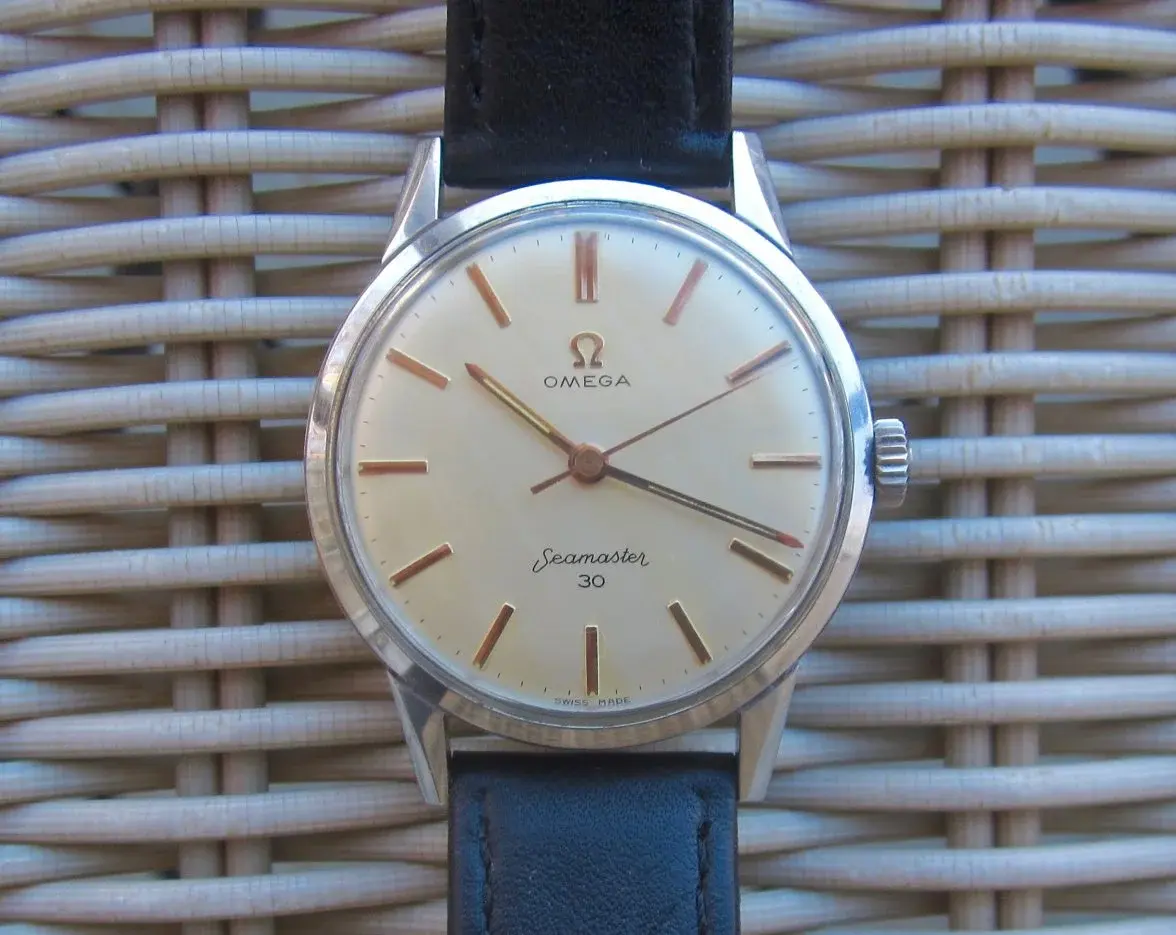
My 1962 Omega Seamaster 30 with 30mm 286 manual wind movement.

 
Posts
551
Likes
364
Big fan of the older Omegas. I have three 1960 era Seamasters that were dad's so very sentimental and started me into watches.. I've had them for 40 years now Both run flawlessly and have survived without any service.

Going to get both serviced next week and hope my son will want to keep them : +)
 
Posts
69
Likes
98
Any of the manual wind Omega 30mm movements are first rate and trouble free for regular use. They are accurate and unfussy. The Omega watches having these movements are very handsome and elegant. Any Omega 30mm manual wind movement that has shock protection should be given consideration.
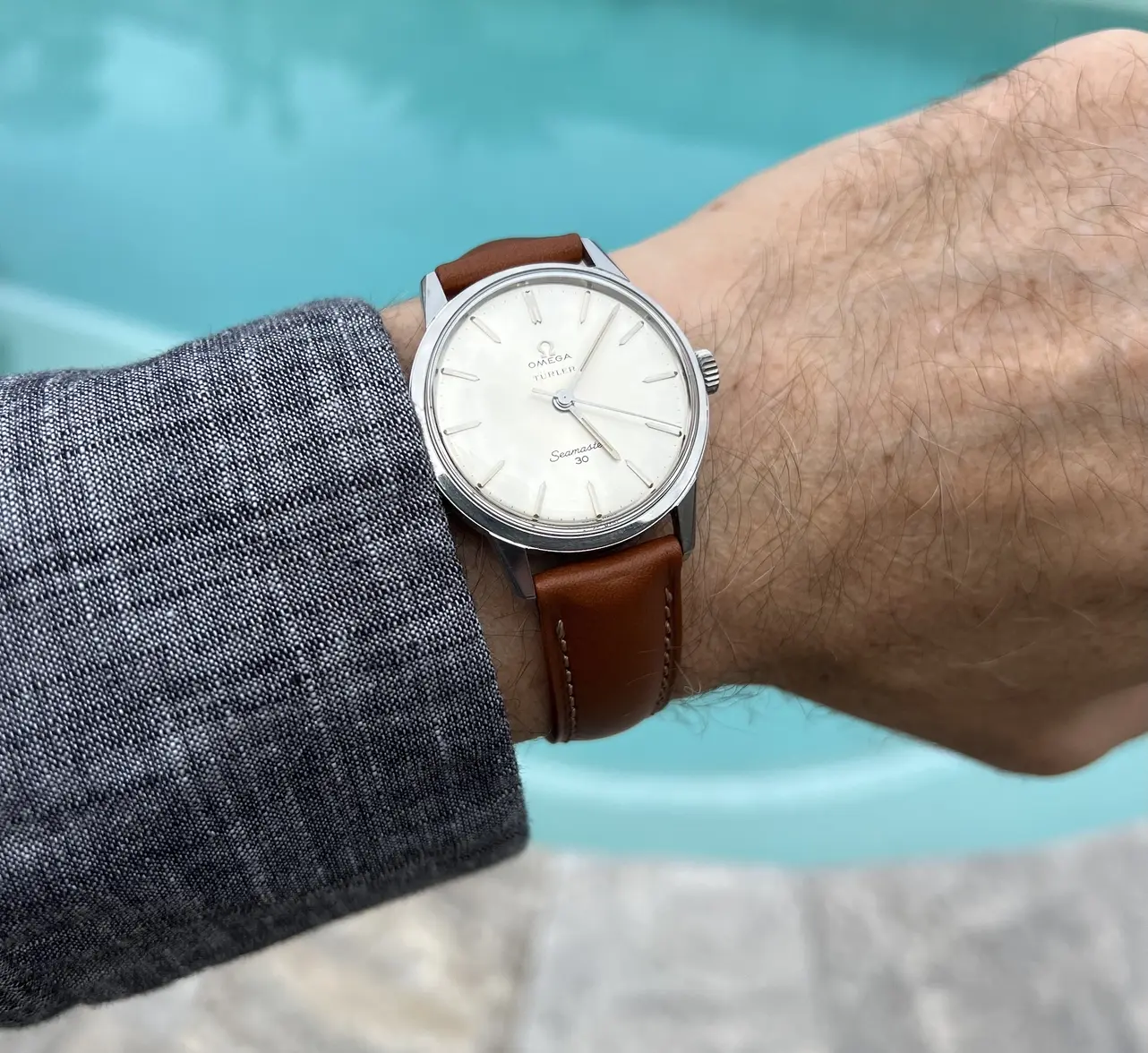
I'll put in another vote for the Calibre 286 in a Seamaster 30. Mine (also from 1962) is still incredibly accurate. I also like to think it's very attractive on the wrist: