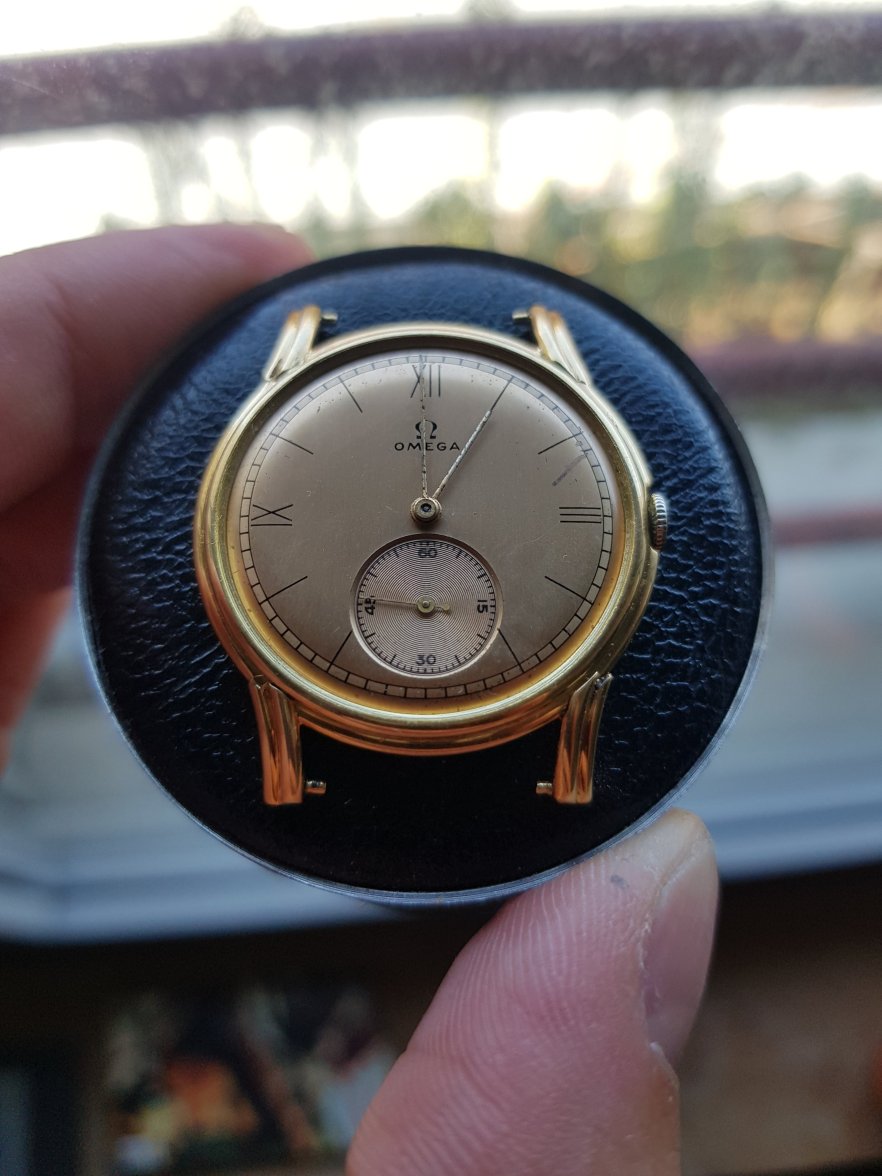
1939 gold Omega redial or not redial

Posts
9
Likes
3
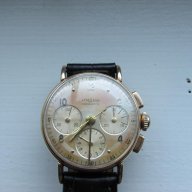
Hello, i have this Omega in 18k gold from 1930, is this a redial ? I have concern with the 25 index that is too long.
 
Posts
553
Likes
2,760
I think it is a redial. No Swiss markings and fonts appear too thick and off. I could be wrong they are far more knowledgeable members here to answer this.
 
Posts
9
Likes
3
I think it is a redial. No Swiss markings and fonts appear too thick and off. I could be wrong they are far more knowledgeable members here to answer this.
I read that lot of Omega gold case from this era where made in us, so swiss movement but no swiss made.
 
Posts
870
Likes
2,386
Without holding it in hand it's hard to tell for sure but I would lean to it being a legit factory dial from the photo.
It looks pretty cool either way 🥰
 
Posts
24,263
Likes
54,031
The lug pins are interesting, I haven't seen many Omega watches that take female spring-bars. I would be interested to see more information about the case.
 
Posts
3,554
Likes
7,591
IMO its fine - forget the 25-marker... this is often seen (low or no QC at that time)
 
Posts
13,310
Likes
18,424
I vote original dial:

1. The fonts and logo are correct for late 1930’s Omega models.

2. Watches of that era did not necessarily have Swiss Made on the dial. Some did and some didn’t.

3. Subseconds dial has strong circular guilloche. On redials, this is usually painted over or very weak.

gatorcpa

PS - I would want to see inside of case to determine if that was original Omega.
 
Posts
553
Likes
2,760
Vintage is a minefield. This is why over the years I learned in my situation best stick with modern.
 
Posts
3,554
Likes
7,591
Vintage is a minefield. This is why over the years I learned in my situation best stick with modern.
Thank you very much - so more left for us...😀 👍
 
Posts
9
Likes
3
I vote original dial:

1. The fonts and logo are correct for late 1930’s Omega models.

2. Watches of that era did not necessarily have Swiss Made on the dial. Some did and some didn’t.

3. Subseconds dial has strong circular guilloche. On redials, this is usually painted over or very weak.

gatorcpa

PS - I would want to see inside of case to determine if that was original Omega.
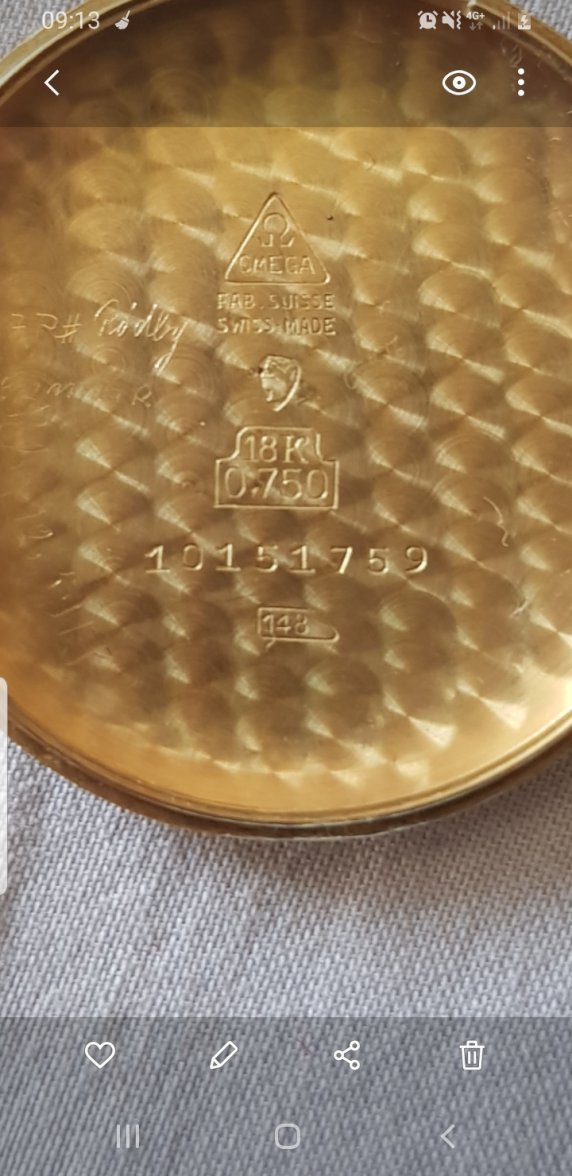
Here the back case
 
Posts
17,942
Likes
37,522
18 carat case dating to approximately 1943/1945. Case was made for Omega by Vuilliomenet &Cie SA in Biel/Bienne.
 
Posts
9
Likes
3
18 carat case dating to approximately 1943/1945. Case was made for Omega by Vuilliomenet &Cie SA in Biel/Bienne.
Thanks, the serial number on the R17.8 indicate 1939
 
Posts
17,942
Likes
37,522
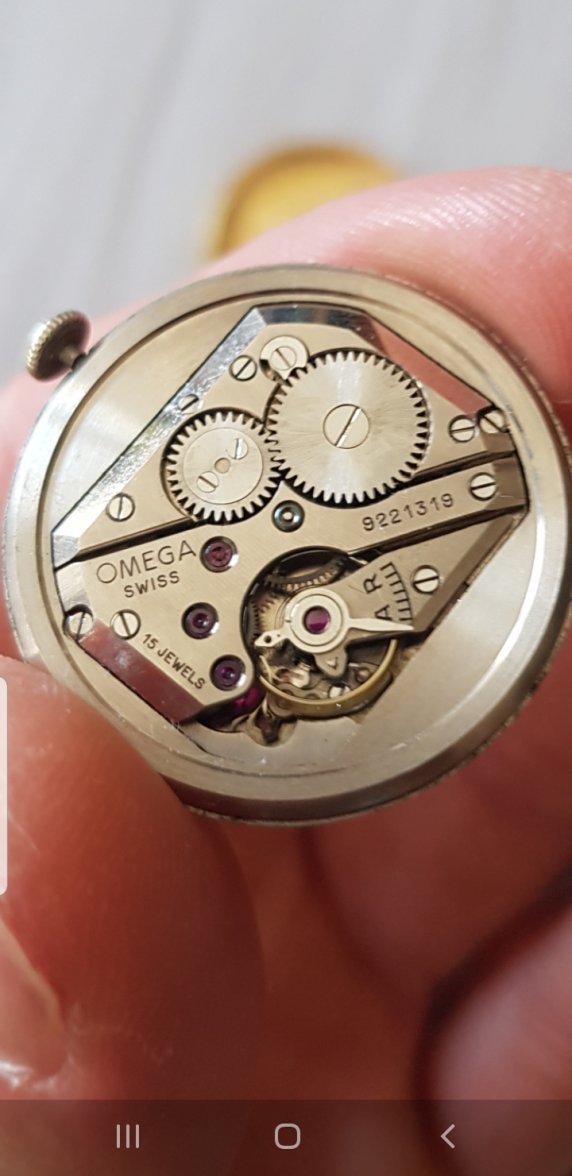
Nice looking movement.
Probably needs a service though (regulator set to fully advanced?).
 
Posts
9
Likes
3
Nice looking movement.
Probably needs a service though (regulator set to fully advanced?).
Already done 😉 originally buy in non working condition to restore and sell but i think i will Keep it.
 
Posts
9
Likes
3
All good. Movement number can be early 1940's . Enjoy. Nice example.
Thank you, i believed that we could tell the exact year of manufacture with the serial number, it is not so ?
 
Posts
13,310
Likes
18,424
Thank you, i believed that we could tell the exact year of manufacture with the serial number, it is not so ?
It is not unusual for there to be 2 years or more between the time a movement was produced and the time a finished watch was delivered to a retailer to be sold.
gatorcpa
 
Posts
17,942
Likes
37,522
The R17.8 15P was introduced in 1940 and continued up to 1961.
So, as @gatorcpa noted, serial numbers could vary by two (or more) years if referring to internet lists.

My serial number references show the 9 million serials starting in 1936 and even being used in low production items up until 1950.

An extract from Omega archives could confirm the actual movement production date if in fact, they kept records of movements shipped to the UK during that period, but I don't know if they have those records.