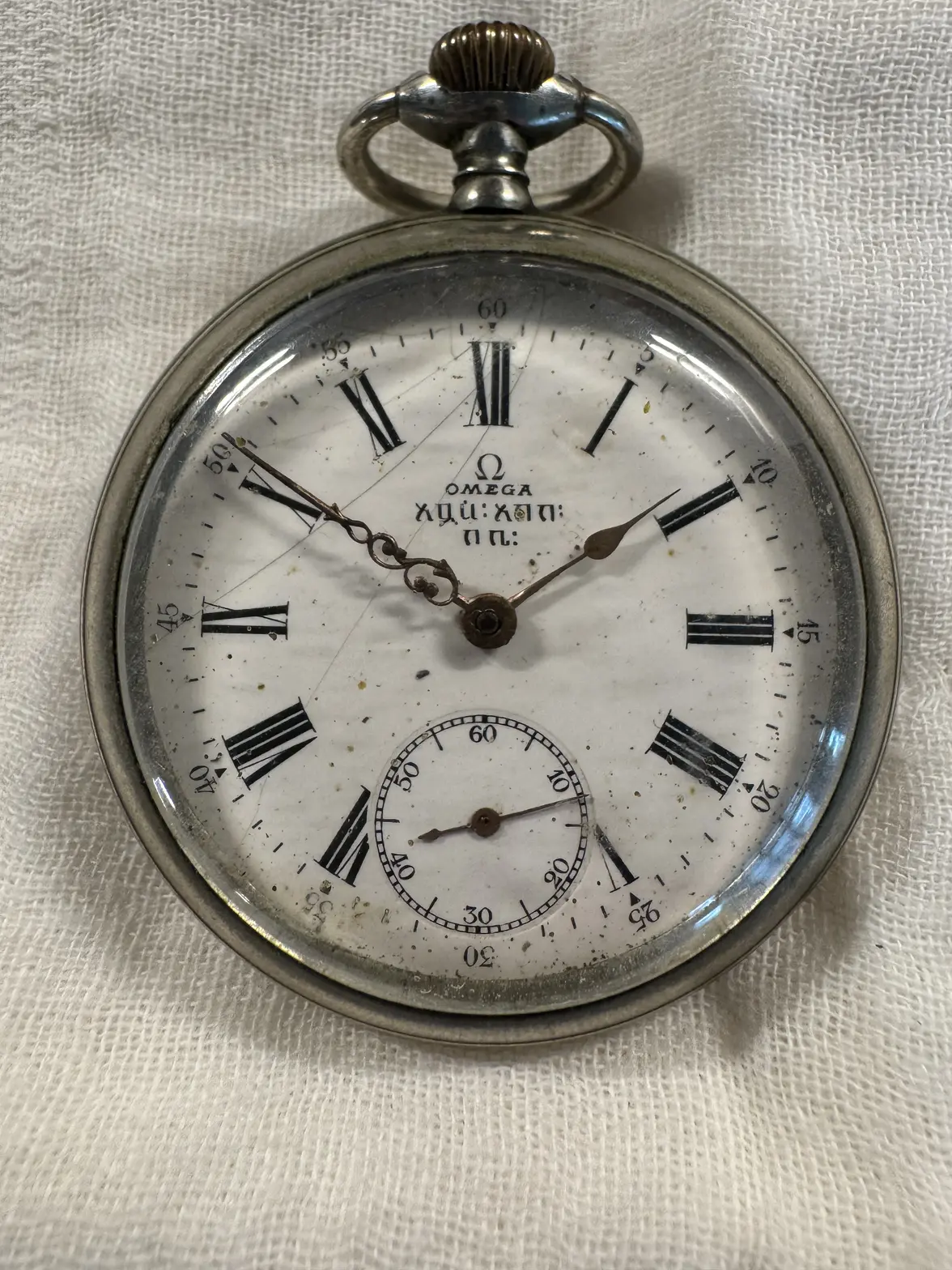
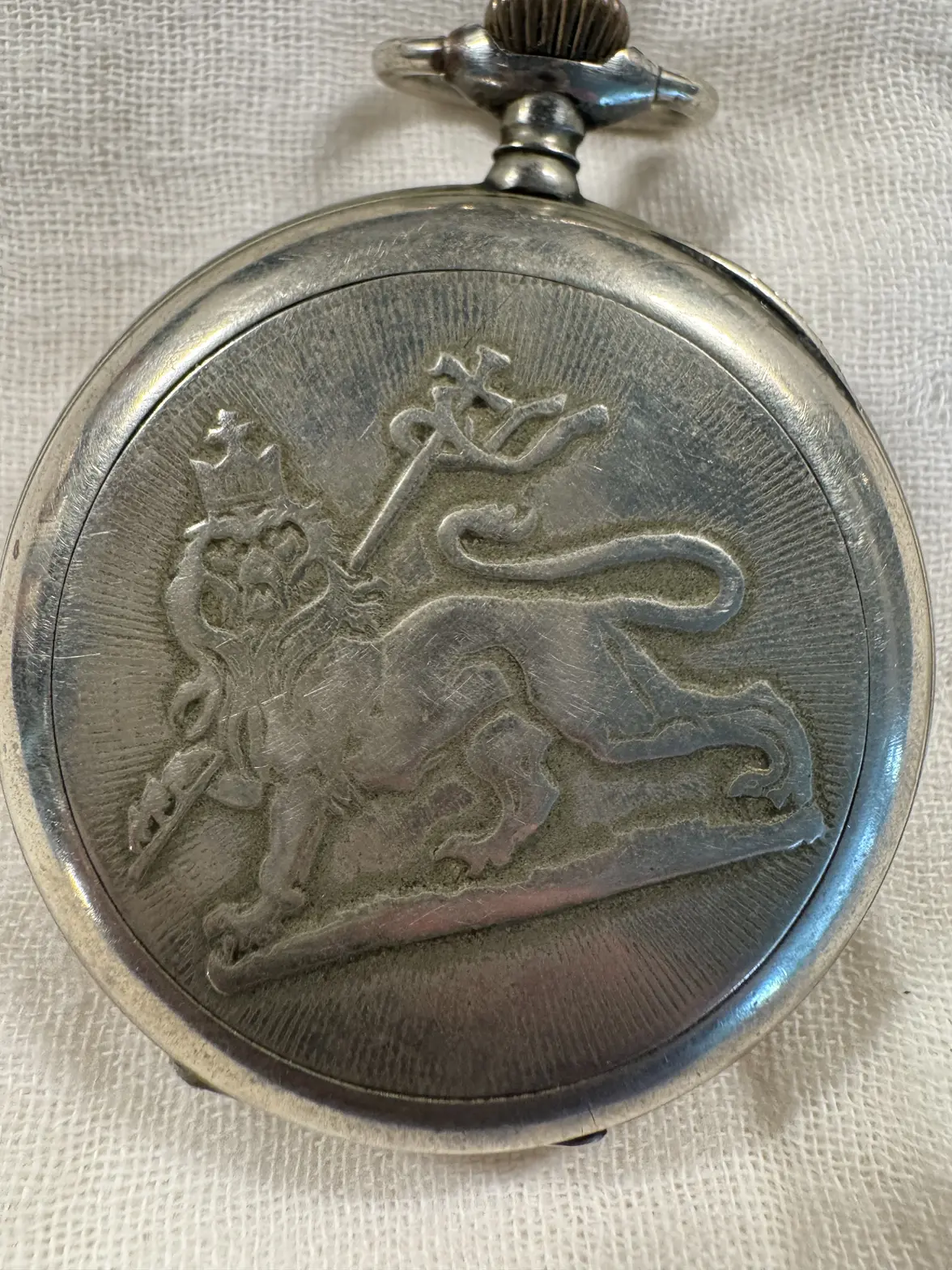
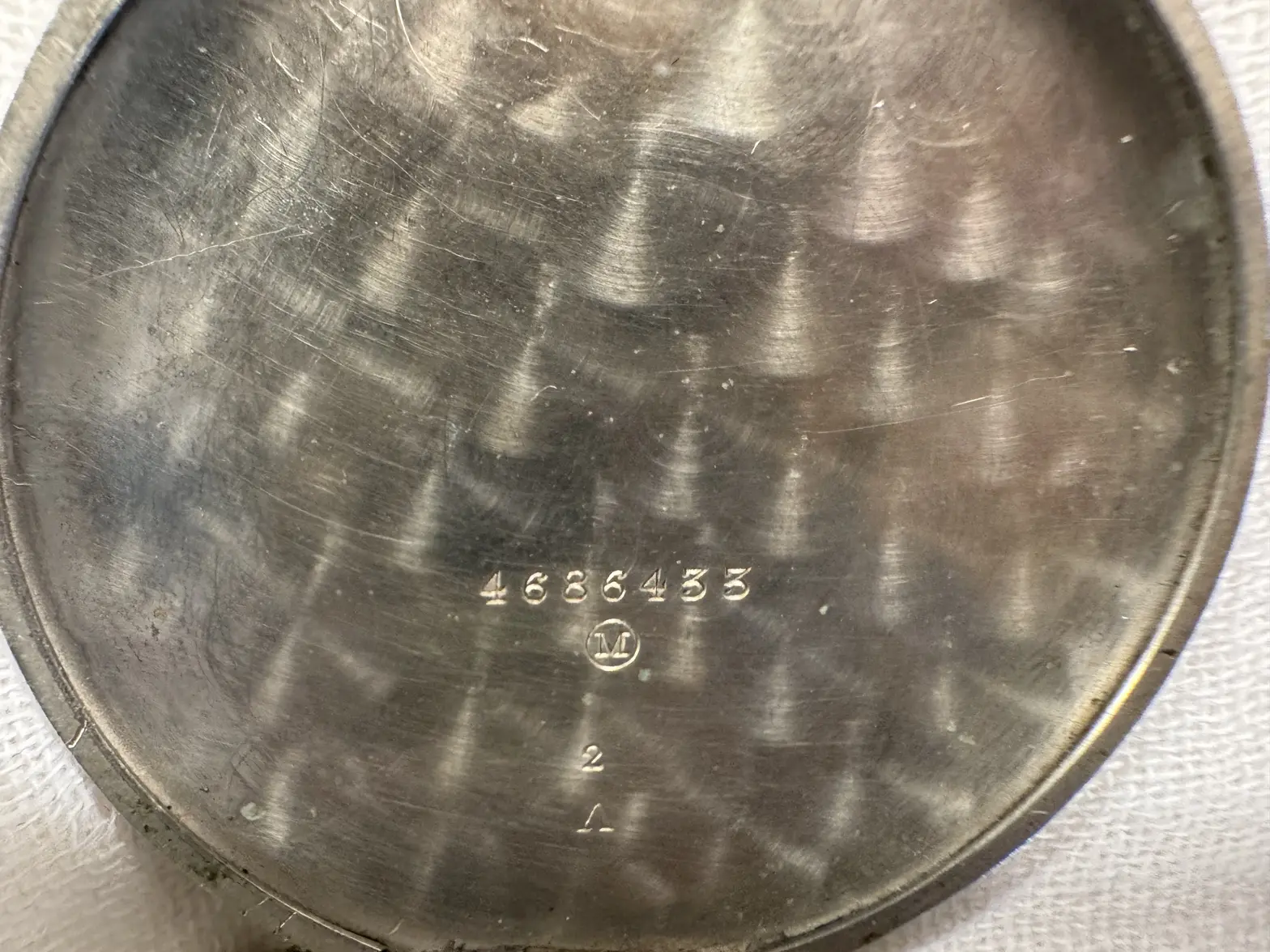
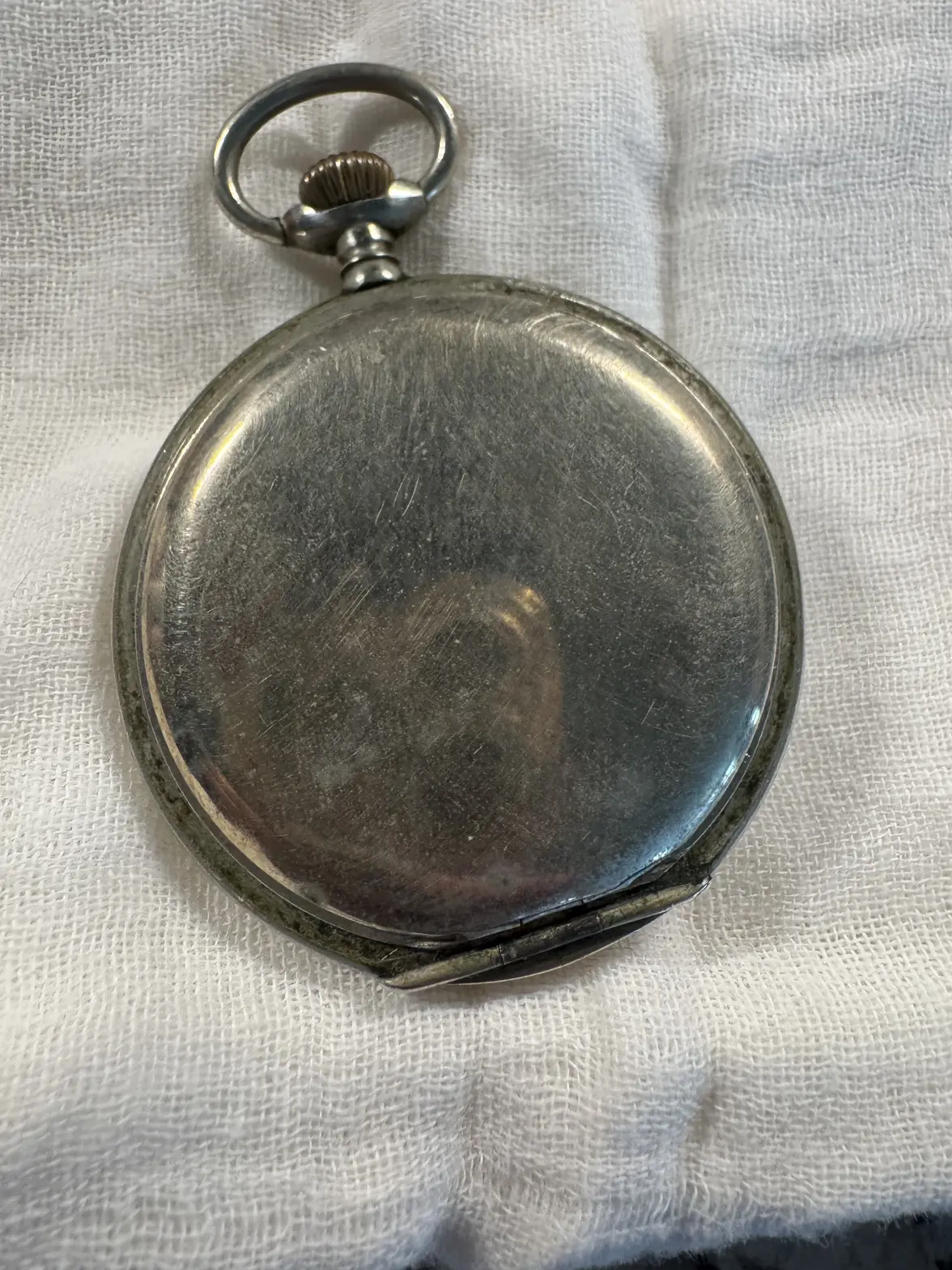
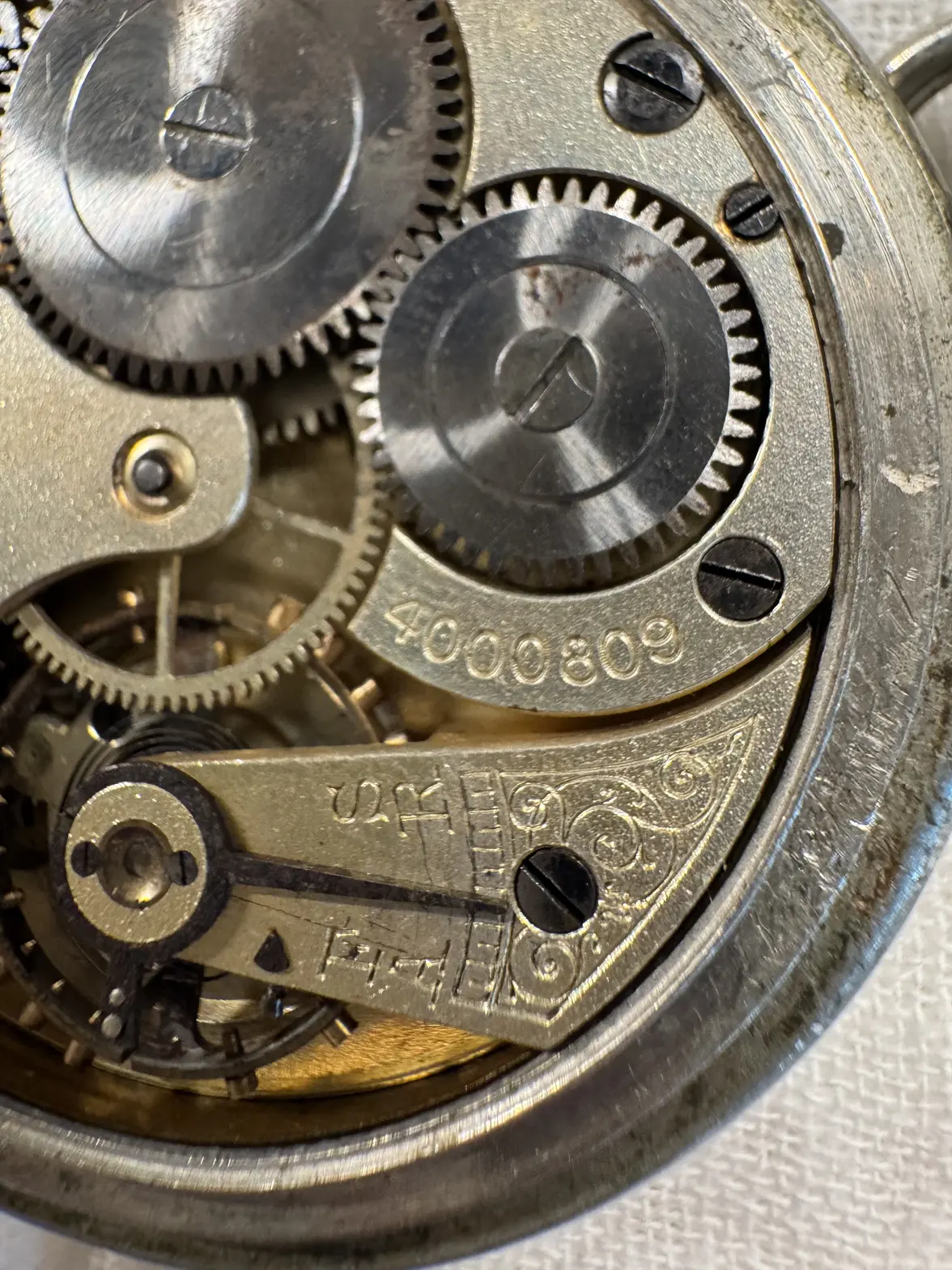
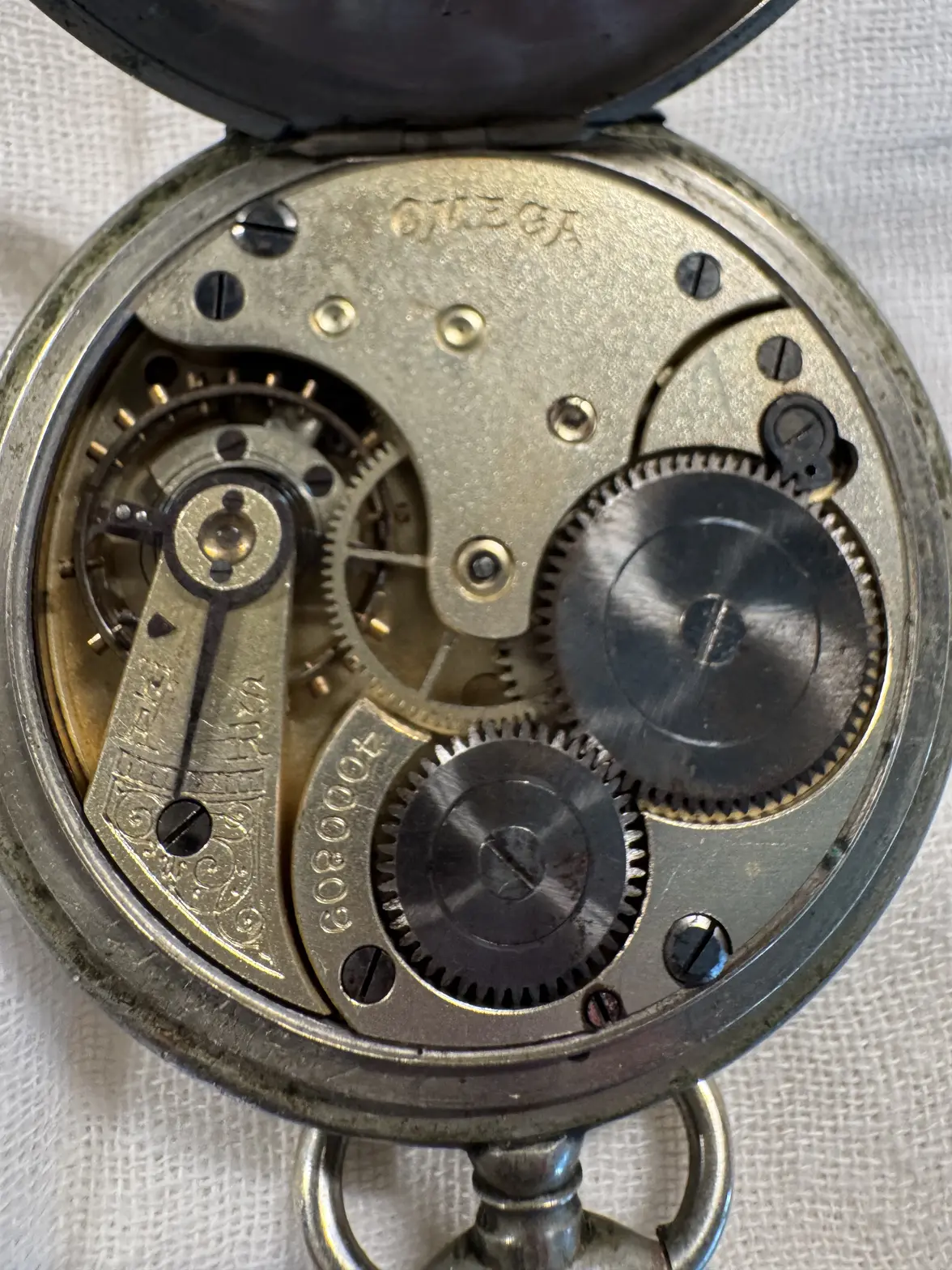
Greek grandfather’s pocket watch. Found in a storage box when going through mom’s things. Has not been serviced, does not tick or work but the winding mechanism feels like it is functional. Would like more information to assist with either eventually selling or restoring.
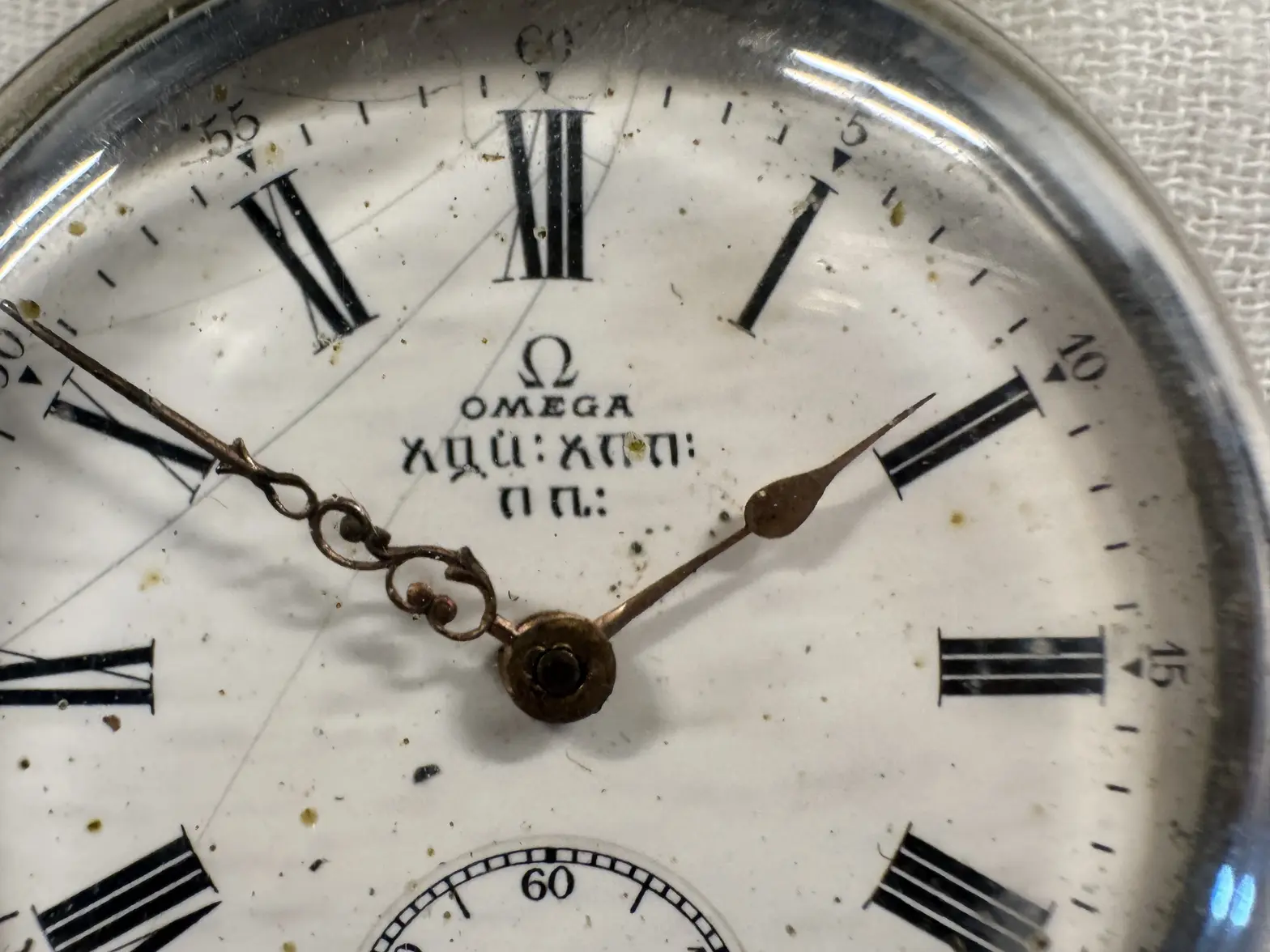
The "Abyssinian" puzzle in your title deserves an answer, because it's the most interesting thing about the watch: if those unusual dial markings are non-Latin numerals or script, that's almost certainly an
export-market dial. Omega sold hard into the Eastern trade in that era - dials were made up for the Ottoman, Arabic, and yes, Abyssinian markets with local numerals and retailer markings. It won't add much money, but it adds a chapter: a Swiss watch, dialed for the Eastern trade, that ended up in a Greek family - that's a trade-routes story on a wrist chain. Post a straight-on photo of the dial markings and someone here can likely place the script.
On the money decision, the honest arithmetic since you asked with selling in mind: as-is it sells for very little, as Canuck says - and a proper service costs more than the watch would ever bring back. Which actually makes the decision
easier, not harder: this watch is worth nothing to the market and something to your family, so the market's opinion no longer matters. If you want to hear it tick for sentiment's sake, a basic clean-and-oil from an independent watchmaker is the whole spend. Until then, one practical thing:
don't keep winding it - a century-old movement with dried oils grinds itself when forced. Let it sit still until it's cleaned.
A storage box-to-display stand is a great way to showcase a grandfather's watch.