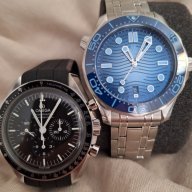
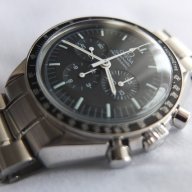
Why don't watch companies (like Omega) post online digital copies of their annual catalogs through the years?

Posts
1,064
Likes
1,072
I have a number of things in storage right now, pending a future move. I own several Omega catalogs from the 2000's but they are in storage and I can't access them right now. And then I got to thinking, why don't watch companies post pdf's or other digital copies of their annual catalogs on their websites?

I would have to think the cost would be minimal. It's not like they are selling them and it would cannibalize hard copy sales. What it would do is create additional avenues for people to research and enjoy the back catalog of a watch company like Omega.

It seems so obvious but I don't think anyone does it.

What am I missing?

Edit - actually I know one company does--TAG Heuer. But they don't cover every year. You would think Rolex and Omega would do this. As well as companies like Breitling, JLC, Longines, and the like.
 
Posts
749
Likes
3,932
I guess I'm old fashion. I prefer a paper catalog that I can hold in my hands, but I acknowledge the benefit of an electronic copy.
 
Posts
1,470
Likes
2,944
Paper copies are cool, for sure. I very much prefer paper technical manuals and drawings in my job, but years ago when I got an e-mail offering the entire Playboy and Hustler library in PDF, I bought it. I don't know why, it just seemed cool to have an iconic publication in its entirety in such a small footprint. It would be cool if they could offer back catalogs in PDF.
 
Posts
1,720
Likes
3,361
I think that's a great idea. I love having hard copy catalogues featuring the watches that I own. Sadly I've lost a couple, so having a digital copy that I can look back on (and hopefully download) would be the next best thing.
 
Posts
1,064
Likes
1,072
I guess I'm old fashion. I prefer a paper catalog that I can hold in my hands, but I acknowledge the benefit of an electronic copy.

I agree. But for back catalogs it's pretty much digital or nothing. Unless you scour ebay.

Digital just seems like a cheap and easy way for watch companies to further publicize their products. I'm guessing they see no value in promoting older models that they no longer offer for new sale, which I think is shortsighted.
 
Posts
2,641
Likes
2,955
If catalog shows prices then I’m guessing companies don’t want ppl going back and comparing prices from previous years. Think of the price a the Sedna gold Speedmaster when first released until now. Same watch but probably like $20k increase.
 
Posts
1,064
Likes
1,072
If catalog shows prices then I’m guessing companies don’t want ppl going back and comparing prices from previous years. Think of the price a the Sedna gold Speedmaster when first released until now. Same watch but probably like $20k increase.

I don't think the red Omega books have pricing in them. Usually the price list was a separate document.
 
Posts
2,835
Likes
4,524
I’m guessing companies don’t want ppl going back and comparing prices from previous years

At the moment such things would be fodder for AI data mining.

Then there are questions of copyright. Besfit is long gone. Yet one of the material houses claims copyright, so the digital copies are few and far between.

There are companies, what simply vacuum up copyrighted works. Often in the old days there would be hobbyist who spent their time as book and ephemera dealers. Sometimes acting as small press publishers with sort runs of 500 or 1000. I am aware in several cases when the couple got old, a young enthusiast would show up and express interest. Then when the couple gave the young person the control. Said person flipped it for profit, and the clearing houses get the control. Then the information disappears behind a paywall.

Other times the rights to these smaller works are sold to pay medical bills, or provide the children with an inheritance.

I have shelves full of old magazines and other ephemera. Some of it is auction catalogs, many which do include the sale price sheets. These were also used to create the price guides, what the dealers at shows used.

Much digital data that is more that 6 to 10 years old can not be opened on modern machines. To read the older stuff means using the old programs and searching out hardware or emulators. This is not notice too much as so much 'entertaining' content has been created, that the distraction is just part of living in this era.

One of the more interesting pieces of ephemera I collected was from Tissot. A CD of sales and marketing literature, including a 'History' of the brand as an interactive multimedia show. No one now has a player to view it. (Well I still do, since I collect vintage electronics.) I did pull some of the data apart. The images are stored in a form of JPEG. Not a way a modern reader can view them. The player ran on a 1990s era windows machine. Windows 95 or so.

What was interesting was that part of the driver data was encoded using the floppy disk format that was pretty much only used on macs. I did some more investigating of the multimedia, and found a macintosh reader. The CD was windows only, but the video would play on a mac. A mac also needed to create the windows boot floppy disk.

The JPEG images however show up with low res dithered color, as the program only could do 16 bit which were indexed colors.

Tissot probably spent a million or so producing this CD. The video used some pretty cutting edge CGI. The CD had tracks of the techno funk soundtrack what was composed to go with it.

The product was a dead end. Called Autoquartz, it used a rotor to charge up a battery capacitor. These batteries are hard to find now. I did get the watch for under 150 USD. Since it has a display back, it looks like the battery has not leaked. (Yet.) Replacing the battery involves rebuilding the watch.

I suspect most of this is forgotten. What probably is remembered is that using this tech was a disaster.
 
Posts
104
Likes
726
Have you considered dumping that Tissot CD into an ISO file so that when the CD eventually succumbs to a bitrot, there is an actual digital copy left? And then one could just mount the ISO on a loopback on modern operating systems and use what ever tools to enjoy the content (or mount it to Dosbox or other emulator that runs 95 etc.).
 
Posts
2,835
Likes
4,524
Yes I did that. The CD tracks make it a bit complex since it is a hybrid disk. So the final result needs to be a BIN/CUE archive.

Dosbox Is something I use a bit for the pipe organ stuff. Interesting how well the old stuff continues to work. Have not tried to run W95 on it.

I'd post the video to You Tube but for the copyright.

If I can figure out how to get the JPEG out of the database, then I could see what they look like non dithered. There is a section which is supposed to be for internal use. I suspect that is not actually recorded on the consumer CD.
 
Posts
104
Likes
726
But back to the topic at hand, as per OP, it frustrates me to no end that watch manufacturers don't make their back catalogs available as PDFs. Pricing as pointed out often isn't there to begin with, or could be easily redacted. And really the only good reason I can think of is that thinking goes something like 'no one has done that so probably we shouldn't spend time|money doing it either because maybe they know something we don't and publishing back catalogs might hamper sales'.

But imagine having over 100 years of Omega and other catalogs digitally searchable.
Edited:
 
Posts
104
Likes
726
The CD tracks make it a bit complex since it is a hybrid disk. So the final result needs to be a BIN/CUE archive.
Have you looked into MAME tools chdman ( https://docs.mamedev.org/tools/chdman.html )? I used it a while back to convert all my .cue/bin pairs to .CHD images (single file, compressed (data ztsd or lzma, audio flac). DosBox-X and some other modern DOsbox derivatives can then use the CHDs directly. On the downside, I don't think LInux or OSX still can mount them on loopback so you may have to convert back to bin/cue sometimes).
 
Posts
2,835
Likes
4,524
But imagine having over 100 years of Omega catalogs digitally searchable.
Probably scares them the most. That we have most of the technical sheets in PDF format I find most amazing of all. Yet when I can, I opt for the print versions, as the graphics are so much clearer.

The company exist to sell new product (watches) to new people. Of course few realize that companies like Apple and Microsoft are over 50 years old. At Apple we used to hide the prototypes and older stuff from Steve Jobs. The man had no sense of the value of history.

When Coca Cola turned 100 they came out with something called 'New Coke.' Business students do not forget that marketing fiasco.

I suspect if the Swiss could figure out a way to lease watches they would do so.

As for putting out stuff on PDF, that would take labor and people resources to do so. I probably know as much about the internals of PDF as anyone (since it is a subset of postscript.) So there is more than just scanning the old docs. When color images are printed they use halftone screens. This forms little dots or rosettes. These do not compress well. Scaling them causes all sorts of aliasing frequencies to pop in and out of the image.

One company I worked for between Apple contracts tried to solve this. They failed and I went back to Apple. Given the crap in an image search. I do not think this was ever done.

It was the century or more year old catalogs that did sell me on Omega though. We had a lecture on the tour bus, where they came and gave us a bunch of the ephemera. It was really high quality. Guess they were successful. I started collecting since the dealers only wanted rolex. I think some had been burned by fakes. I was constantly warned that there were a lot of Omega fakes. (most were pretty easy to spot.)

No one in the valley was wearing watches much. So it was a bit daring for me to wear vintage and mens stuff at that. We used stop watches to time some of the test. So the chronograph was useful. Printers went from minutes per page to pages per minute.

As for the original argument. I think corporate would see giving away PDF as giving away valuable assets. Advertising only exists in the moment to catch the attention NOW!.

I don't think LInux or OSX still can mount them on loopback so you may have to convert back to bin/cue sometimes).
Apple has made it really difficult to get into the kernel to mount the older stuff. At the moment I am finding a lot of this to be not worth the effort. Apple also removed support for the HFS format since it was mainly for floppy disks and small hard drives. Now none of my floppy disk and hard drive images will mount on the newer systems. Converting them to individual files kacks the date codes and other metadata.

Apple's disk directory format is really hard to understand. The file names and indexes are not stored in one place. Like PDF they use B trees to make it fast to access the data. In some ways not unlike a hologram. So to read the name of a file one has to travel the tree.

I wrote a bunch of postscript scripts to parse this a few years back. With both Jobs and Warnock dead, Apple removed the postscript to PDF distiller from preview in the name of 'Security.' At least Ghostscript still works and I can run it in NOSAFE mode to access the disk files. So as long as I have a working interpreter I can access the data.

This includes the mars mariner 9 data tapes, that NASA can not read. Then no one really cares, becouse it is not their department. Or having someone from the outside do it makes them look bad.

Such may also be in line with the theme of this thread. Why companies will not release the old catalogs in electronic readable format.

The data can be scanned and virtual models created. More fakes, more counterfeits. So releasing such could cause jobs to be lost. So staying the course and doing things the old ways is the safest way to move forward. Or even stay in the same place.

The value does however remain in the product designs. The presentation. I flipped through one of the old 1996 or so catalogs. Seems a bit dated now. It is 30 years old. I am now considering perhaps listing it and some of the IWC an AP catalogs.

 
Posts
160
Likes
258
Looking at it from a watch enthusiast perspective rather than a technical or copyright point of view, I think making all the old catalogues available would be more of a boost to the second hand market than to Omega.

Imagine somebody sees a Railmaster in the boutique window and wonders what they used to look like.

Sure, some will still buy a brand new model, but almost as many might go on an internet journey to buy an anniversary edition, a 2000s release, or even a vintage one, all with not a penny going to Omega.
 
Posts
16
Likes
16
Looking at it from a watch enthusiast perspective rather than a technical or copyright point of view, I think making all the old catalogues available would be more of a boost to the second hand market than to Omega.

Imagine somebody sees a Railmaster in the boutique window and wonders what they used to look like.

Sure, some will still buy a brand new model, but almost as many might go on an internet journey to buy an anniversary edition, a 2000s release, or even a vintage one, all with not a penny going to Omega.
Agreed. And there are some logistical challenges:

  • Access and preservation: For older catalogs, the files may exist only on a retiree's hard drive, or they never been digitized at all. Some sit in storage formats or software that's no longer supported. That problem probably fades out in the early 2000s, when production shifted to formats that are still accessible today.
  • Language and regional versions: Do you publish the English version? The Cantonese? Switzerland has four national languages. Many catalogs could have been produced as market-specific releases, with different models (like Japanese models). Deciding what to publish, and what to leave out, is its own project.

But yes, the core issue is that catalog archives support collectors and the secondary market, but none of that revenue flows back to Swatch. Without a clear business case, this stays at the bottom of the "good idea!" list but probably does not get done.
 
Posts
104
Likes
726
I agree that the 'a clear business case' is not entirely clear here.

But since no one(?, tag heuer?) has done it, we're just second guessing all the reasons why this might be difficult, or not such a good idea or why it shouldn't be done.

I dare some watch brand to do it and publish their back catalogs. All. Of. Them.

And ok, if someone from Swatch is reading, maybe don't start with Omega, and do for example Tissot back catalogs as an experiment. And then either nothing much happens but they've made a horological contribution that might still pay dividends long time in to the future. Or all goes to poop and somehow it ends up hurting brand in a measurable way. Or somehow in some ways no one could have anticipated this move brings so much love that the future sales are through the roof.

Fact is that for example Seiko catalogs /w pricing info are available from multiple sources[1][2][3][...] and I don't think they are much affecting sales in any ways. But they sure come handy sometimes.

[1] https://www.watchhunter.org/reference/seiko-watch-catalog-pdf-library
[2] https://www.plus9time.com/seiko-catalogs
[3] https://archive.org/details/seiko-watch-catalogs
[...] https://www.google.com/search?q=seiko+catalogs
Edited:
 
Posts
123
Likes
1,555
I agree that the 'a clear business case' is not entirely clear here.

But since no one(?, tag heuer?) has done it, we're just second guessing all the reasons why this might be difficult, or not such a good idea or why it shouldn't be done.

I dare some watch brand to do it and publish their back catalogs. All. Of. Them.

And ok, if someone from Swatch is reading, maybe don't start with Omega, and do for example Tissot back catalogs as an experiment. And then either nothing much happens but they've made a horological contribution that might still pay dividends long time in to the future. Or all goes to poop and somehow it ends up hurting brand in a measurable way. Or somehow in some ways no one could have anticipated this move brings so much love that the future sales are through the roof.

Fact is that for example Seiko catalogs /w pricing info are available from multiple sources[1][2][3][...] and I don't think they are much affecting sales in any ways. But they sure come handy sometimes.

[1] https://www.watchhunter.org/reference/seiko-watch-catalog-pdf-library
[2] https://www.plus9time.com/seiko-catalogs
[3] https://archive.org/details/seiko-watch-catalogs
[...] https://www.google.com/search?q=seiko+catalogs
Junghans has put their digital archive on their webpage.

https://junghansarchiv.de/en
 
Posts
6,854
Likes
12,596
Swatch group decided no more paper copies... only paper copies of their Business Annual Reports
🤨
 
Posts
622
Likes
1,473
Honestly I'd just rather a better quality archive of historic references on the website in lieu of
uploaded catalogue PDFs. A few years ago they did a site migration and screwed up the quality of much of the old reference images, and they never fixed many of them. The tech data is also all over the place. For example, the 2531.80 doesn't list a diameter at all, while the 2541.80 lists an incorrect diameter of 43.75 mm.