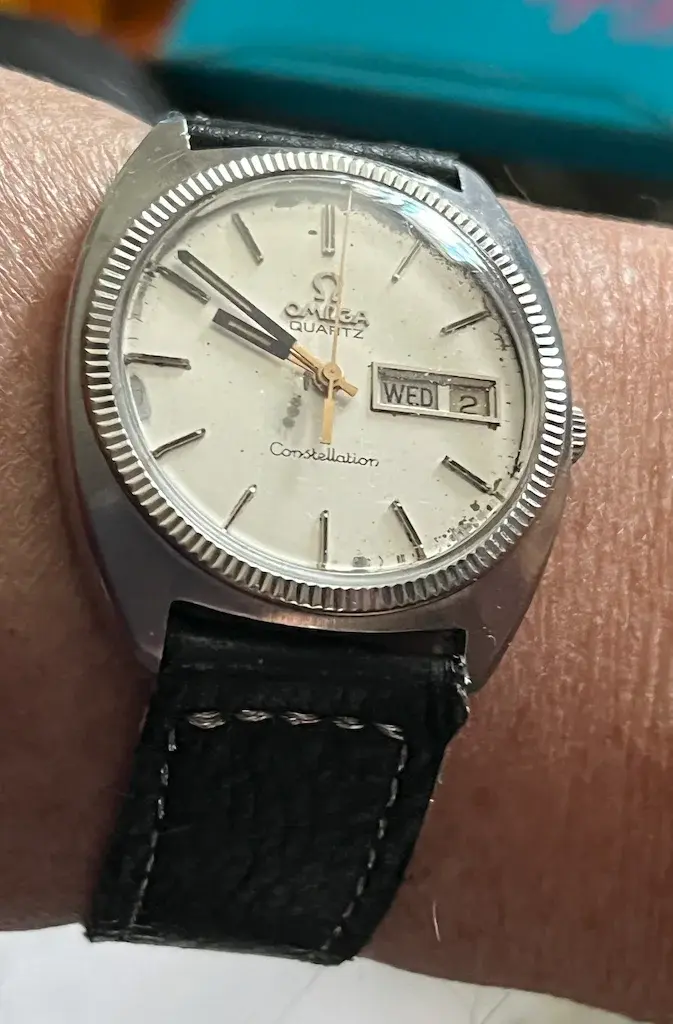
Why are vintage Omega Quartz watches looked down upon?

Posts
211
Likes
686
Yup, its all about repairness of the watch. I've seen lots of quartz watches from Omega which i really like, but my watchmaker really demotivates me to buy them, if they stop running its only usable as a paperweight.
 
Posts
2,838
Likes
4,530
Interesting to revisit an old thread.

Quartz watches are repairable. Any watch will take time and expense to work on.

Often enjoy my ratquartz which this thread inspired.

 
Posts
211
Likes
686
Interesting to revisit an old thread.

Quartz watches are repairable. Any watch will take time and expense to work on.

Often enjoy my ratquartz which this thread inspired.
It's not totally true. In some movements, Omega used plastic parts and they are out of stock. The plastic wears out, and its impossible to find replacements.
 
Posts
1,975
Likes
2,137
One of the bigger issues seems to be the coil and stepper motor. For obvious reasons, manufacturers often put the battery near the coil, to the point that even a mildly leaking battery will hit the coil, and corrode away the wire pretty quickly. AND most watchmakers don't have the ability to re-wind it and want to be part-swappers (though, IMO, if quartz watches WERE actually shown to be valuable enough, I suspect we'd see people re-winding coils).

Second: the ICs used are often pretty esoteric by the time they break. Manufacturers don't seem to make them swappable and change packages for them pretty consistently. So finding a replacement for a acid-ed away IC becomes difficult. And re-making these things without spec sheets is near impossible.

However, I think the biggest problem is that quartz watches, even back in the 80s were seen as a reduction in quality as the race-to-the-bottom made even better manufacturers try to cut costs. Though older Seiko has made a resurgence (despite hitting 'disposable movement' prices), I don't see us getting there with quartz, at least until after people start consistently fixing Timex automatics 馃榾

And frankly, watches in general are in a troublesome spot: the market is even smaller now than 20 years ago. The "oh wow is that a Rolex!" bit isn't nearly as much of a thing (even to me, a '90s kid it was a vague thing), and "Oh wow, is that the latest Apple Watch?!" is their jam.
 
Posts
211
Likes
686
One of the bigger issues seems to be the coil and stepper motor. For obvious reasons, manufacturers often put the battery near the coil, to the point that even a mildly leaking battery will hit the coil, and corrode away the wire pretty quickly. AND most watchmakers don't have the ability to re-wind it and want to be part-swappers (though, IMO, if quartz watches WERE actually shown to be valuable enough, I suspect we'd see people re-winding coils).

Second: the ICs used are often pretty esoteric by the time they break. Manufacturers don't seem to make them swappable and change packages for them pretty consistently. So finding a replacement for a acid-ed away IC becomes difficult. And re-making these things without spec sheets is near impossible.

However, I think the biggest problem is that quartz watches, even back in the 80s were seen as a reduction in quality as the race-to-the-bottom made even better manufacturers try to cut costs. Though older Seiko has made a resurgence (despite hitting 'disposable movement' prices), I don't see us getting there with quartz, at least until after people start consistently fixing Timex automatics 馃榾

And frankly, watches in general are in a troublesome spot: the market is even smaller now than 20 years ago. The "oh wow is that a Rolex!" bit isn't nearly as much of a thing (even to me, a '90s kid it was a vague thing), and "Oh wow, is that the latest Apple Watch?!" is their jam.
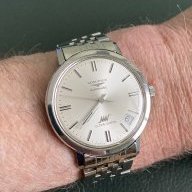
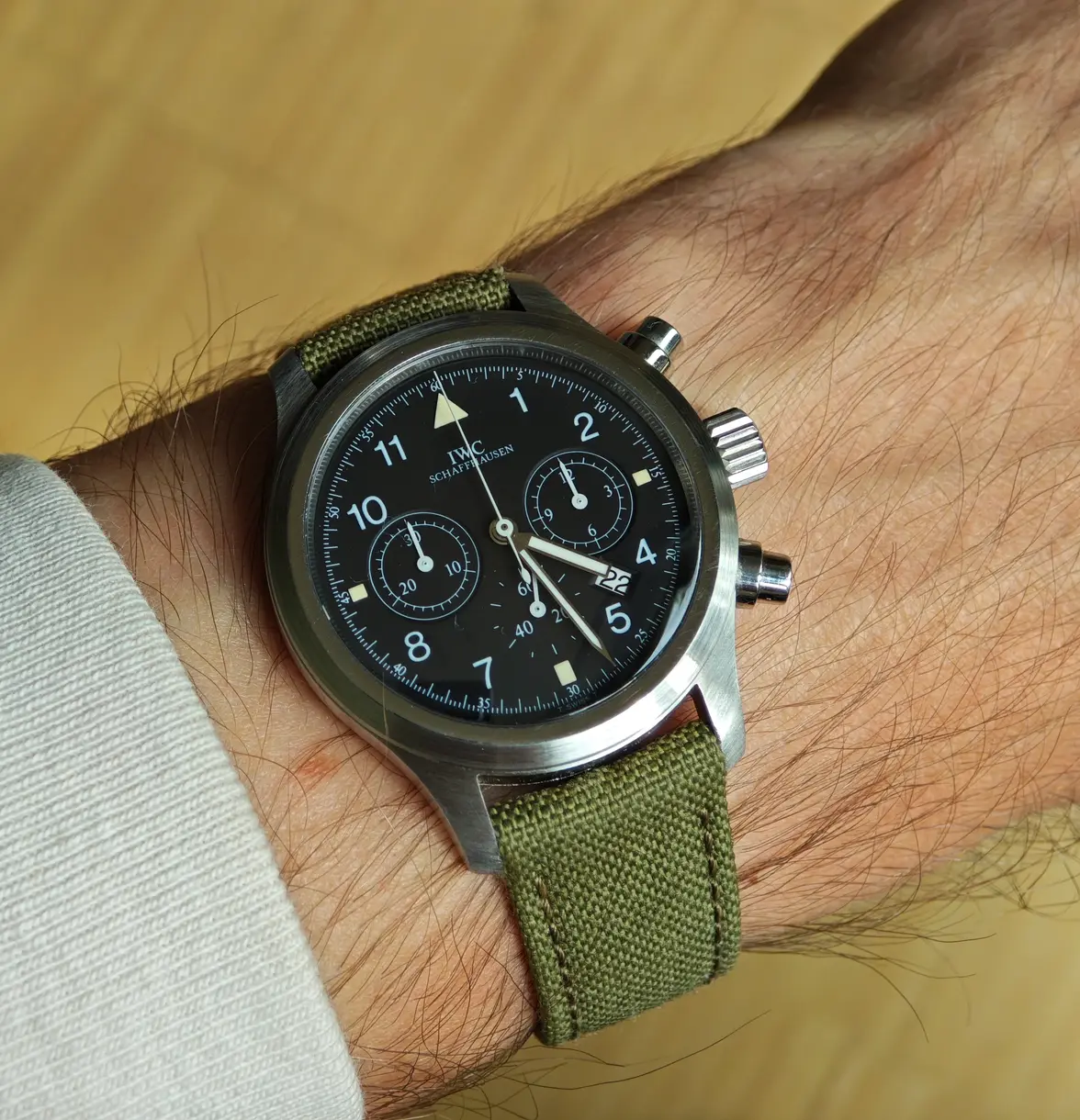
I agree. Then there is the more niche market, the meccaquartz for example. I have this watch:


Beautiful. But if it needs a service from IWC it will cost 960 euro. Thats half the value. Another watch i was keen to get my hand on but didn't but it is the JLC Master Quartz cal 352. Lovely watch, but with a plastic wheel inside the movement, almost impossible to get a good one because the wheels dry out.

Lots of the old Omega quartz watches need to return to Omega HQ for a service, so almost every time the quartz watches will cost a lot, no ordinary watch maker will service them.

This is from what i have heard from my watchmaker, but @Archer (if you don't like being tagged, let me know, i will not do it again) can tell more about these cases, if he feels like.

 
Posts
1,975
Likes
2,137
I agree. Then there is the more niche market, the meccaquartz for example. I have this watch:


Beautiful. But if it needs a service from IWC it will cost 960 euro. Thats half the value. Another watch i was keen to get my hand on but didn't but it is the JLC Master Quartz cal 352. Lovely watch, but with a plastic wheel inside the movement, almost impossible to get a good one because the wheels dry out.

Lots of the old Omega quartz watches need to return to Omega HQ for a service, so almost every time the quartz watches will cost a lot, no ordinary watch maker will service them.

This is from what i have heard from my watchmaker, but @Archer (if you don't like being tagged, let me know, i will not do it again) can tell more about these cases, if he feels like.

Yeah, cost of servicing is really terrible on watches unfortunately. The watchmakers DESERVE as much as they do, but frankly it makes a lot of watches kinda valueless, and quartz ones are getting caught pretty hard. I see a ton of really beautiful vintage mechanical/automatic Omegas on this forum (or even just well-loved ones) that need a service, but are only worth ~$750. At that point, even a cheap clean-service is almost 1/2 the value, and the instant you need to replace a part, makes it a total.

Frankly, we're hitting the point where if you can't service it yourself, or it isn't a particularly valuable vintage watch, its a lost-cause which is really sad. Quartz watches just have it that much worse with fewer having 'particularly valuable' status, and being harder to repair.
 
Posts
24,228
Likes
53,954
@Archer (if you don't like being tagged, let me know, i will not do it again) can tell more about these cases, if he feels like.
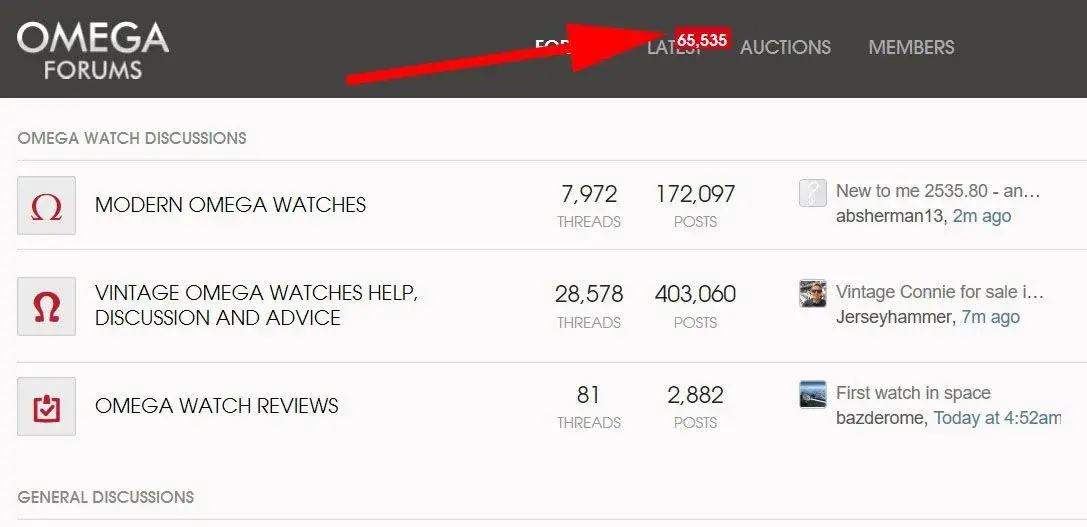
I doubt Al will care about being tagged. At one point he shared a screenshot showing that he had thousands of alerts that he never looked at.
 
Posts
29,659
Likes
76,805
I doubt Al will care about being tagged. At one point he shared a screenshot showing that he had thousands of alerts that he never looked at.
Well, would you read all 65,535? 馃槈

 
Posts
24,228
Likes
53,954
That is 2^16 - 1, so I'm guessing the counter maxed out at some point and you actually have more.
 
Posts
29,659
Likes
76,805
Lots of the old Omega quartz watches need to return to Omega HQ for a service, so almost every time the quartz watches will cost a lot, no ordinary watch maker will service them.

This is from what i have heard from my watchmaker, but @Archer (if you don't like being tagged, let me know, i will not do it again) can tell more about these cases, if he feels like.
Lots of the old quartz are Bienne only service, so for me they are not something I do a lot of. There are some calibers that can be serviced locally , but the list gets smaller all the time for quartz.

Some watches might just need a clean and oil, but the difficulty is that you don鈥檛 necessarily know what the movement might need until you get into it, and if you find it needs a part Omega won鈥檛 sell, you either have to eat the cost of whatever time you have put in, or charge the customer for nothing.
 
Posts
1,975
Likes
2,137
That is 2^16 - 1, so I'm guessing the counter maxed out at some point and you actually have more.
What sort of 1970s-esque software would use an unsigned short for that?!?
 
Posts
29,659
Likes
76,805
That is 2^16 - 1, so I'm guessing the counter maxed out at some point and you actually have more.
Yep. After I cleared it, it was back up in the 30,000 area before the last software update, and now the system works completely different, so they don鈥檛 accumulate like they used to.
 
Posts
2,838
Likes
4,530
It's not totally true. In some movements, Omega used plastic parts and they are out of stock. The plastic wears out, and its impossible to find replacements.
I have access to a fiber laser and microelectronics rework. As usual I am being abstract here. I did not say that they were cost effective to repair. Only that they could be repaired. It is basically a mater of motivation.

Edit: feel free to send me gratis any unrepairable worthless Omega, Heuer or Tissot watches or movements 馃槈 I can always use the practice.
 
Posts
211
Likes
686
That is 2^16 - 1, so I'm guessing the counter maxed out at some point and you actually have more.
How, how, how... How do you know this??

 
Posts
211
Likes
686
I have access to a fiber laser and microelectronics rework. As usual I am being abstract here. I did not say that they were cost effective to repair. Only that they could be repaired. It is basically a mater of motivation.

Edit: feel free to send me gratis any unrepairable worthless Omega, Heuer or Tissot watches or movements 馃槈 I can always use the practice.
Well yeah, for you it's an option to repair but for 99,9% of the world it isn't. So that's why vintage quartz isn't appealing for the most of the people, I what I am trying to answer to the original question.
 
Posts
1,975
Likes
2,137
How, how, how... How do you know this??
Guessing he is in software, a few of the powers of 2 are pretty obviously/frequently observed by us software guys. 2^16-1 is the maximum value of an unsigned integer stored in 16 bits. Same as why computer folks recognize 127, 255, 32767, 2147483647, and 4294967295 when they pop up 馃榾
 
Posts
1,454
Likes
2,054
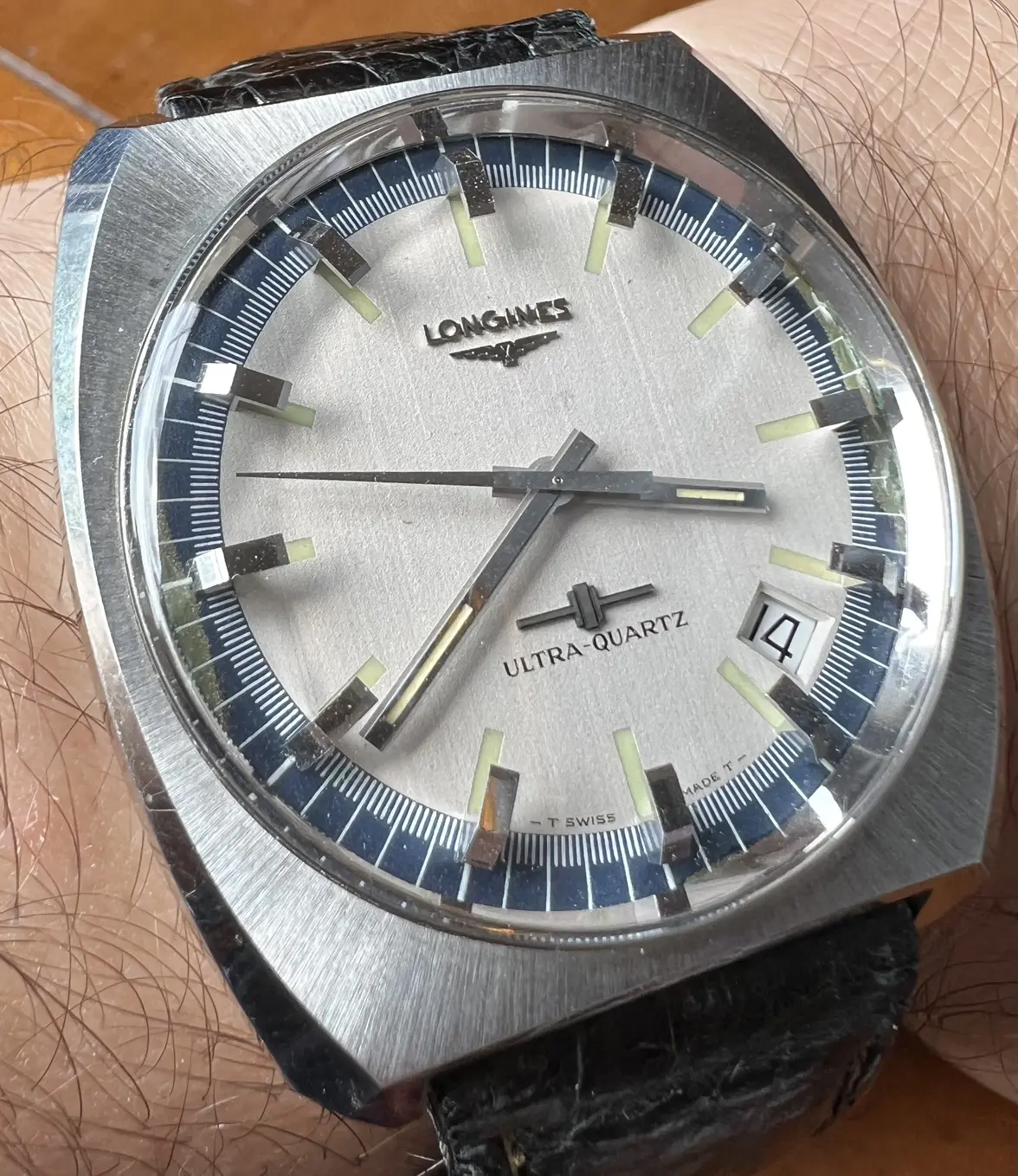
Early quartz calibers such as the one below tell a story of horological history at least as moving as any El Primero, 321, etc. I鈥檓 sure @Tom Dick agrees in the great GTG in the sky.