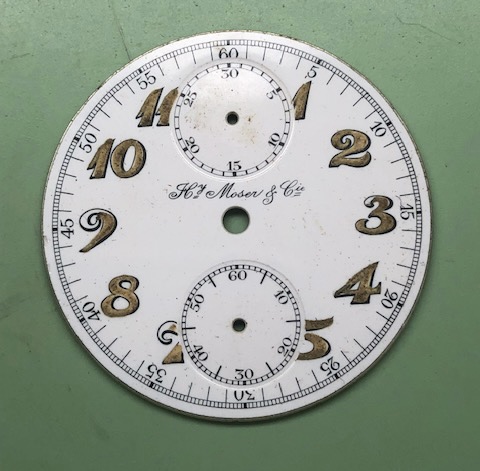
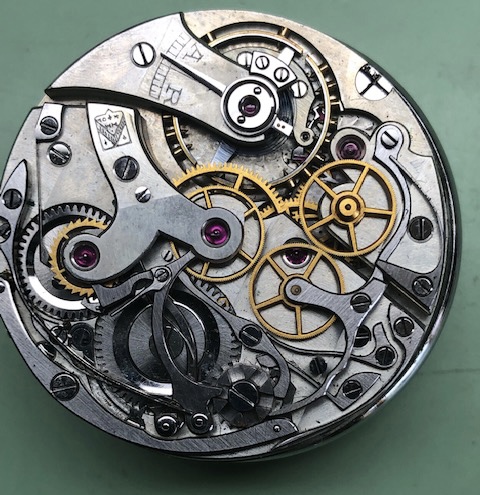
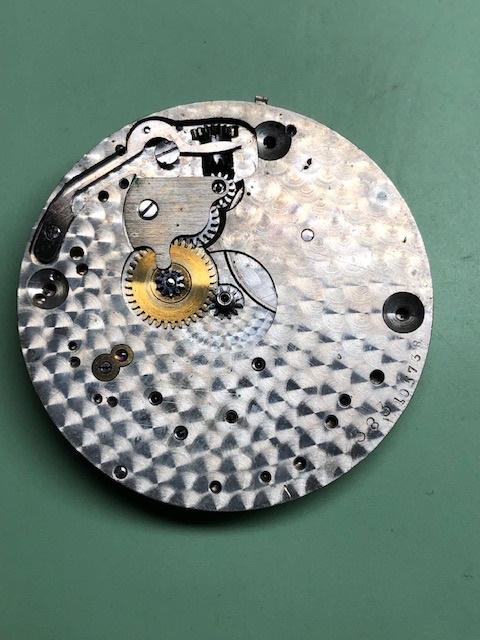
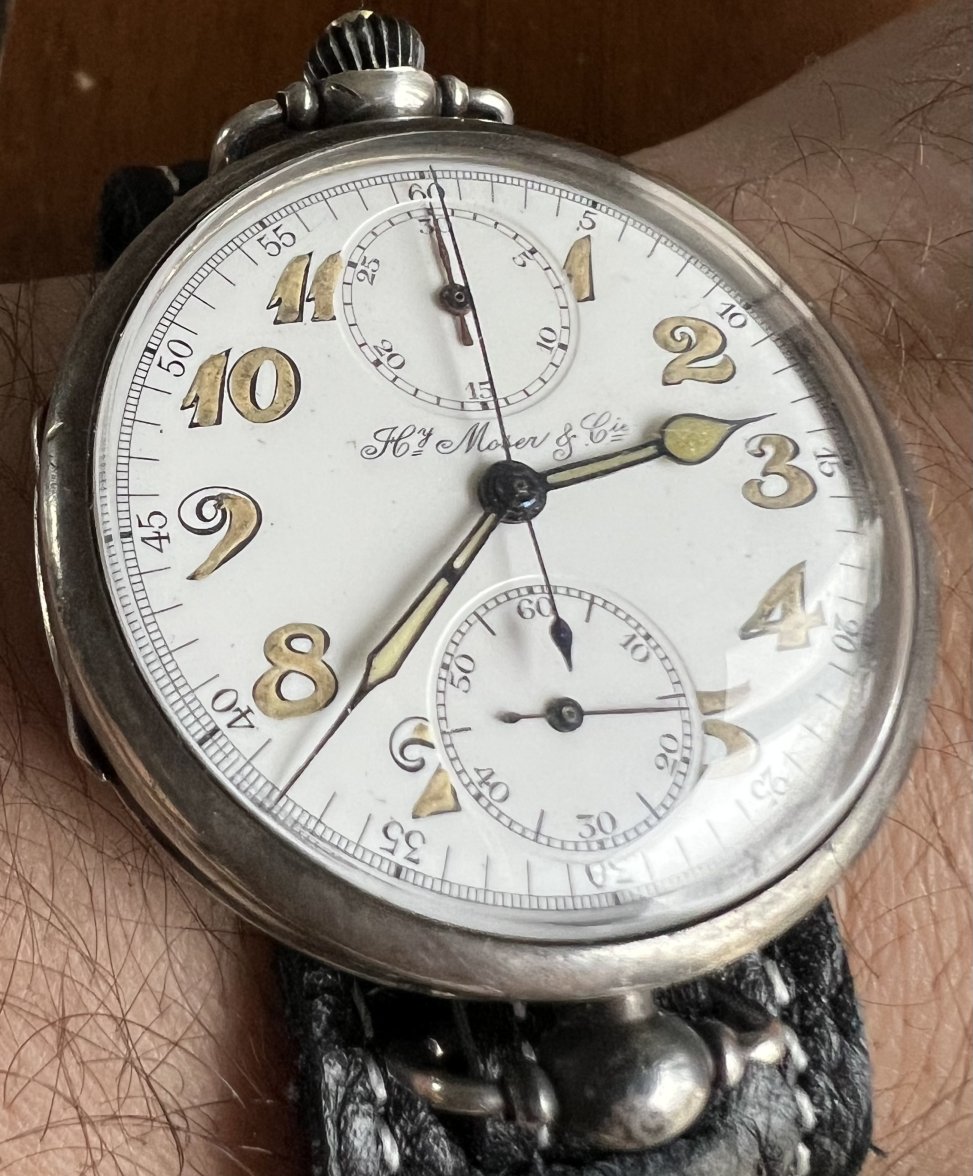
It is hard to get a sense of scale. I have been researching my chronographs and stopwatch timers. I may have 25 in various states of existence, with a case and a timer on the way from eBay. I have been falling asleep the last few evenings with B Humbert's 'The Chronograph.' And will do so again shortly.
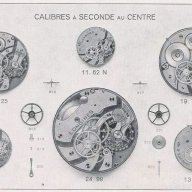
The plate layout would suggest as
@Foo2rama suggests Venus. Unlike the calendar watch book the chronograph book does not give caliber numbers. Instead it just shows plate layouts.
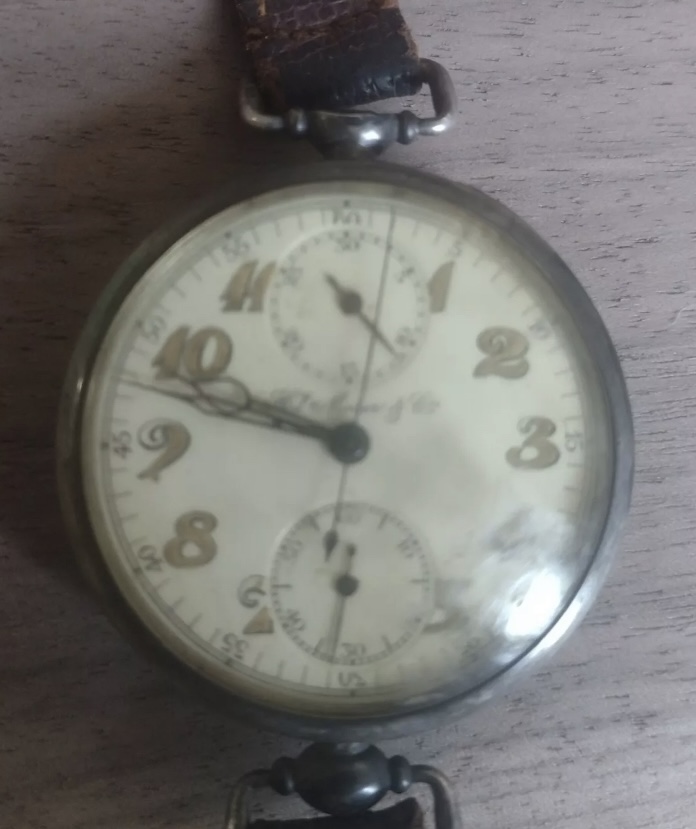
My first impression this was a large pocket watch object. I now seem to see a second lug at the 6 o'clock position. One would really need to look at the set bridge and any marks on the under dial side of the plate. There should be a base caliber somewhere on the movement, but it could be covered by a bridge.
Ranfft does seem to have a few gaps like the Valjoux 24 or the Venus 203. Possibly because these have different base calibers. A website called the watchguy has the Bestfit catalogs scanned, 1000 pages of movement refs (indexed by the set bridge shape) I just discovered half my Landeron 48s were actually Landeron 51s. Many of the parts are interchangeable. One of my Landeron 48s is actually a Valjoux 23, so it takes a bit of work to figure out the sub variants.
For the most part these chronos follow pretty much the B. Humbert and F. Lecoutre textbooks. Most of the differences seem to be in the hammer piece. B. Humbert states that these change a lot due to patents and attempts to make them easy to regulate. (Other than forging them on blocks of brass and lead with a wooden mallet, or filing the angles to a few hundredths of a millimeter.
-j