- Posts
- 15,907
- Likes
- 47,700
Canuck
·Thirty years or so ago, I was at an NAWCC mart in Portland, Ore. Things have changed a bit since those days, and the NAWCC marts are generally a lot smaller today that they were back then. The internet has pretty well looked after that! If there was a “hot” item or two in the room back then, you had to be prepared, and act quickly. Like the time a friend was at an NAWCC mart, and he spotted Hamilton 992B, serial number TWO! The second one made! He sat on his pocket book! He went back later to buy it, and the vendor was gone! For all the years I have attended these marts in the Pacific North West, our Canadian dollar has generally been discounted, so I have always tended to buy cautiously, and to look for “sleepers”.
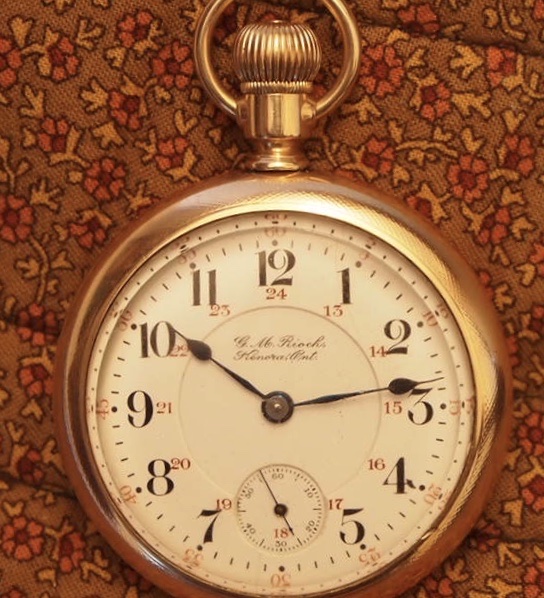
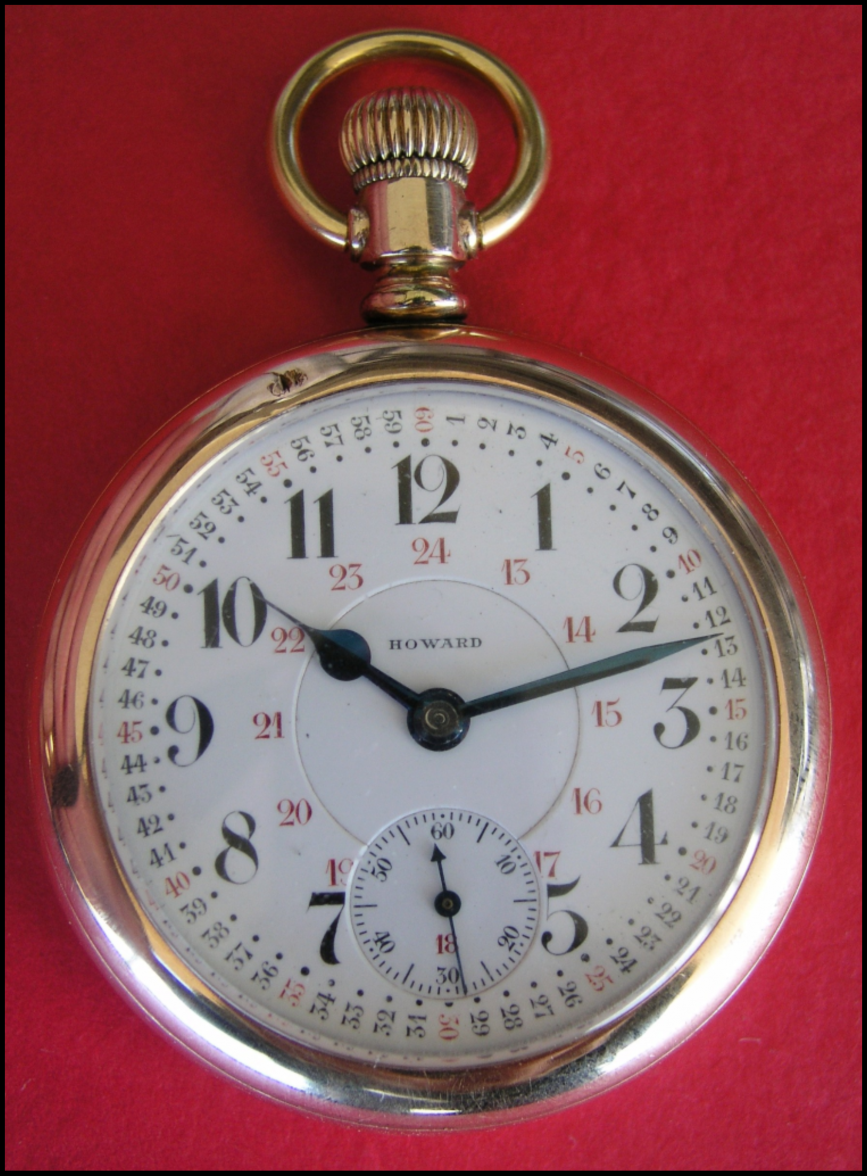
This watch, I acquired at one of those marts, in Portland. I had scoped out most of the huge mart room, and was still sitting on my Canadian bankroll when I happened upon the table of a dealer who only had a few watches. One particular watch caught my eye because of its condition, the price, and the name on the dial. It was D R Dingwall, Limited. There was no place name. Well, success is preparation met with opportunity. Nobody else in the room knew the Dingwall name, and thus was disinclined to check out the watch to see what it was. I recognized the name immediately. Score one for me!
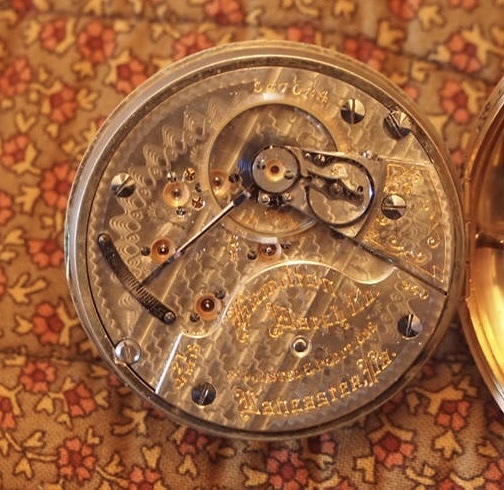
D R Dingwall was a Winnipeg, Manitoba, manufacturing jeweller who had a factory, and two retail stores in Winnipeg. In his factory he had a watch repair shop that employed many watchmakers, and a contingent of goldsmiths producing jewellery for his stores. Years ago, I met a watchmaker who had trained at Dingwall, and he indicated the shop had about 20 watchmakers. Dingwall was a railroad watch inspector, and Winnipeg was a major divisional point for the railroads at the time. Dingwall was a major supplier of railroad standard watches to those employed by the railroads. I had the advantage when I spied that watch. Canadian, railroad standard pocket watch collector, and I like Canadian private label watches. I knew the Dingwall name the moment I spied it! I asked to look at the watch. This one is in a “swing ring” case, so it is not simply a matter of unscrewing the case back to view the movement. I opened it up to spy one of the nicest Hamilton 19-jewel, grade 944 watches I had ever seen. And the price was only $250.00, I jumped on that like a duck on a June bug. There was another watch right beside this one that I bought as well, but that is a topic for another instalment!
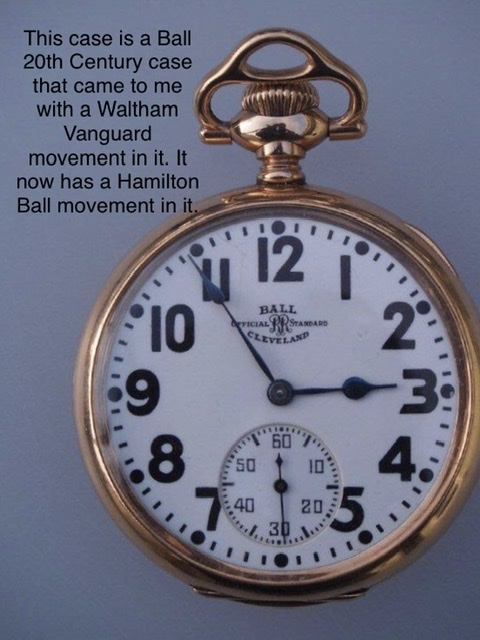
As time went on, railroad time standards changed, and the era of the private label railroad standard watch came to an end. While private label dials on railroad standard watches had been popular, when the standard changed, railroad standard watches had to have the actual watch manufacturer’s name on the dial. Except for the Ball Watch Co. While Ball didn’t make watches, they finished and adjusted watches made for them by numerous watch manufacturers.
In 1933, in the depths of the Great Depression, Dingwall sold out to the Henry Birks and Sons chain, thereafter called Birks Dingwall.
Now the watch:
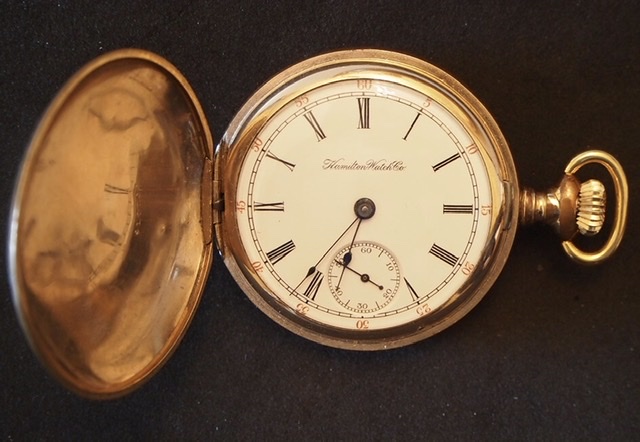
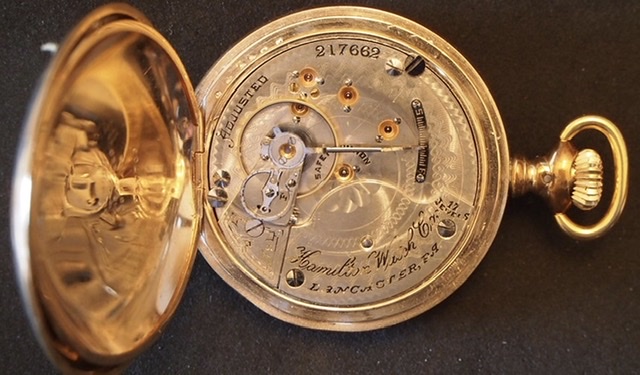
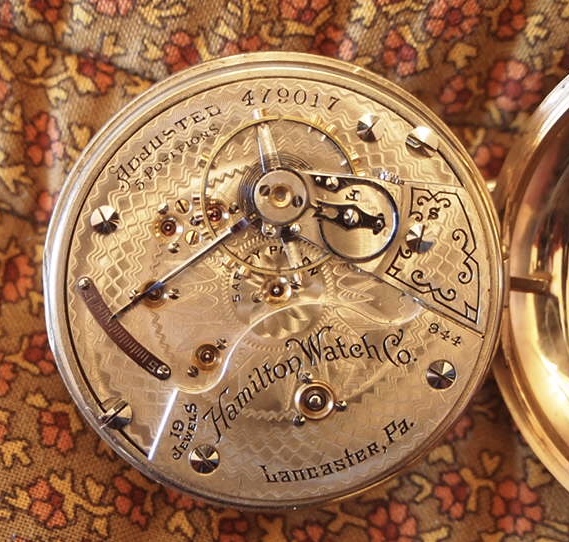
Hamilton, 18-size, grade 944, 19 ruby jewels, adjusted to 5 positions, lever set, double roller, full plate, jewelled motor barrel arbor, patent Goldthwaite regulator, double-sunk vitreous enamel, 24-hour dial, Canadian made gold filled case, made circa 1906. Made by the Hamilton Watch Co. of Lancaster, P A. This was an era before watch manufacturers over-used the term “limited edition”. There were only 6,590 grade 944 Hamilton’s made. Its brother, the Hamilton grade 940 was probably the most popular 18-size railroad standard pocket watch produced by Hamilton, but I like the 944. If this watch had been fitted with a Hamilton marked dial rather than the name of a Canadian retailer, it would have been snagged long before I got to it.
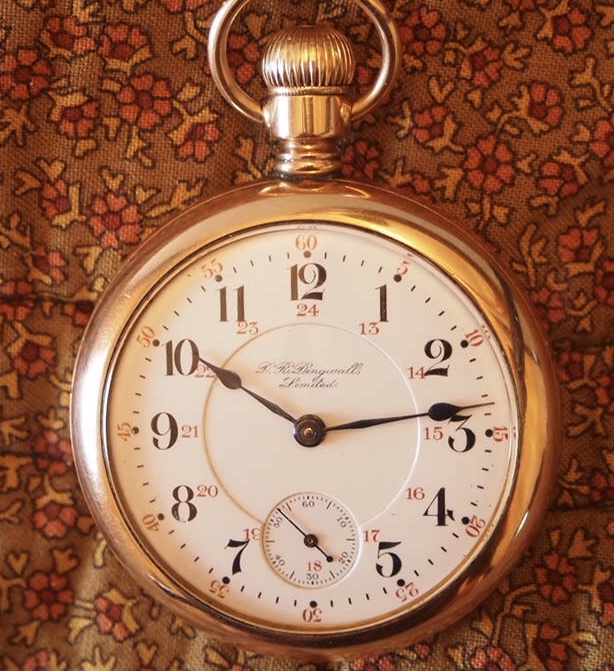
This watch, I acquired at one of those marts, in Portland. I had scoped out most of the huge mart room, and was still sitting on my Canadian bankroll when I happened upon the table of a dealer who only had a few watches. One particular watch caught my eye because of its condition, the price, and the name on the dial. It was D R Dingwall, Limited. There was no place name. Well, success is preparation met with opportunity. Nobody else in the room knew the Dingwall name, and thus was disinclined to check out the watch to see what it was. I recognized the name immediately. Score one for me!
D R Dingwall was a Winnipeg, Manitoba, manufacturing jeweller who had a factory, and two retail stores in Winnipeg. In his factory he had a watch repair shop that employed many watchmakers, and a contingent of goldsmiths producing jewellery for his stores. Years ago, I met a watchmaker who had trained at Dingwall, and he indicated the shop had about 20 watchmakers. Dingwall was a railroad watch inspector, and Winnipeg was a major divisional point for the railroads at the time. Dingwall was a major supplier of railroad standard watches to those employed by the railroads. I had the advantage when I spied that watch. Canadian, railroad standard pocket watch collector, and I like Canadian private label watches. I knew the Dingwall name the moment I spied it! I asked to look at the watch. This one is in a “swing ring” case, so it is not simply a matter of unscrewing the case back to view the movement. I opened it up to spy one of the nicest Hamilton 19-jewel, grade 944 watches I had ever seen. And the price was only $250.00, I jumped on that like a duck on a June bug. There was another watch right beside this one that I bought as well, but that is a topic for another instalment!
As time went on, railroad time standards changed, and the era of the private label railroad standard watch came to an end. While private label dials on railroad standard watches had been popular, when the standard changed, railroad standard watches had to have the actual watch manufacturer’s name on the dial. Except for the Ball Watch Co. While Ball didn’t make watches, they finished and adjusted watches made for them by numerous watch manufacturers.
In 1933, in the depths of the Great Depression, Dingwall sold out to the Henry Birks and Sons chain, thereafter called Birks Dingwall.
Now the watch:
Hamilton, 18-size, grade 944, 19 ruby jewels, adjusted to 5 positions, lever set, double roller, full plate, jewelled motor barrel arbor, patent Goldthwaite regulator, double-sunk vitreous enamel, 24-hour dial, Canadian made gold filled case, made circa 1906. Made by the Hamilton Watch Co. of Lancaster, P A. This was an era before watch manufacturers over-used the term “limited edition”. There were only 6,590 grade 944 Hamilton’s made. Its brother, the Hamilton grade 940 was probably the most popular 18-size railroad standard pocket watch produced by Hamilton, but I like the 944. If this watch had been fitted with a Hamilton marked dial rather than the name of a Canadian retailer, it would have been snagged long before I got to it.