- Posts
- 4,812
- Likes
- 9,381
Bill Sohne
··Bill @ ΩFHi everyone....
For your consideration..another clock from my personal collection. An original surface finish Vanderbilt Ship's Bell desk clock this one was produced early apprx 1937. I am really taken back on the case condition that the tu-tone is killer , there is the slightest about of loss ( dots ..) but it does not distract at all. If have typically seen these w a restored case all in bright yellow brass. But this is a early most likely a first year production example in original finish. This is the smallest case factor that can accommodate the Chelsea Ship's Bell movement ( American made , 8 day wind includes key) , dial diameter is 3 3/4 inches. Runs and strikes Ship's Bell....serviced last year. If you have any questions or concerns please dm me...
THE SHIPS BELL STRIKE SEQUENCE IS AS FOLLOWS INCLUDING A BRIEF HISTORY.
Mariners have used a unique bell code to tell time at sea for hundreds of years. The code is based on the crew's typical workday routine while the vessel is under way. A ship at sea requires constant attention throughout the day's twenty-four hours. The day is therefore divided into six four-hour periods, each called a "watch." Similarly, the crew is segmented into three divisions. Division members then stand their individually assigned duties on two watches per day, with eight hours off duty between watches. To rotate each division's watch times, the Evening Watch is periodically divided into two watches. These are called Dog Watches because they "dog" the watch schedule for all divisions ahead by one watch period.
Since 1915, all U.S. Merchant vessels over 100 gross tons have, by law, divided the crew into three watches, working four hours on and eight hours off, and turning the dog watches into one evening watch.
799 USD plus shipping...
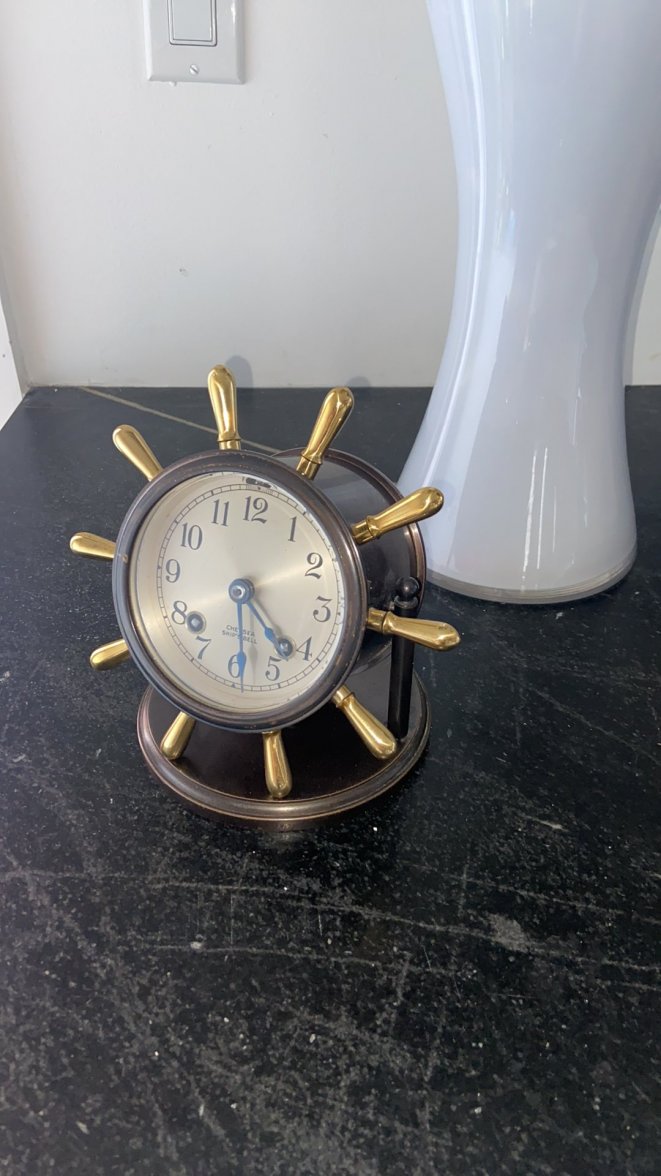
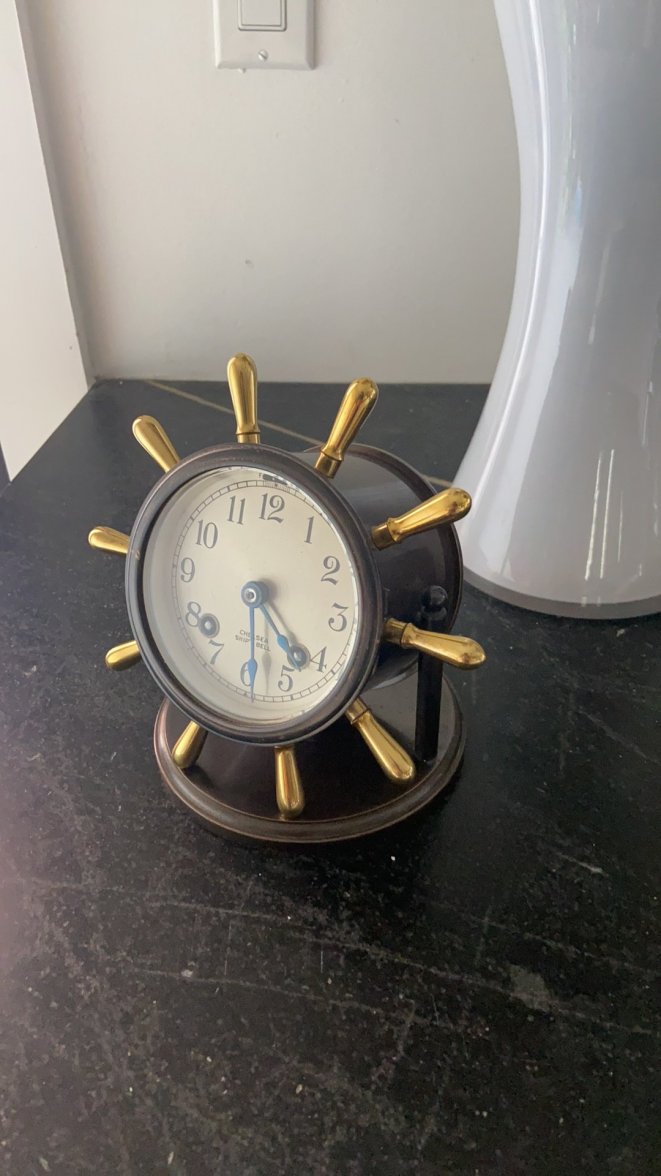
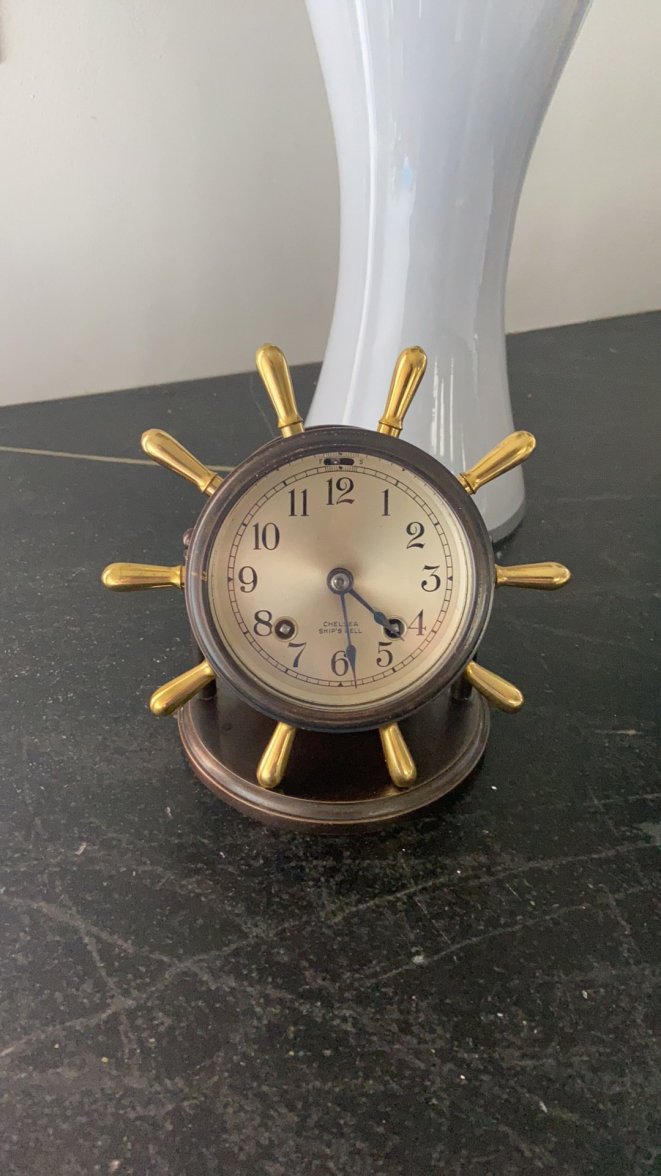
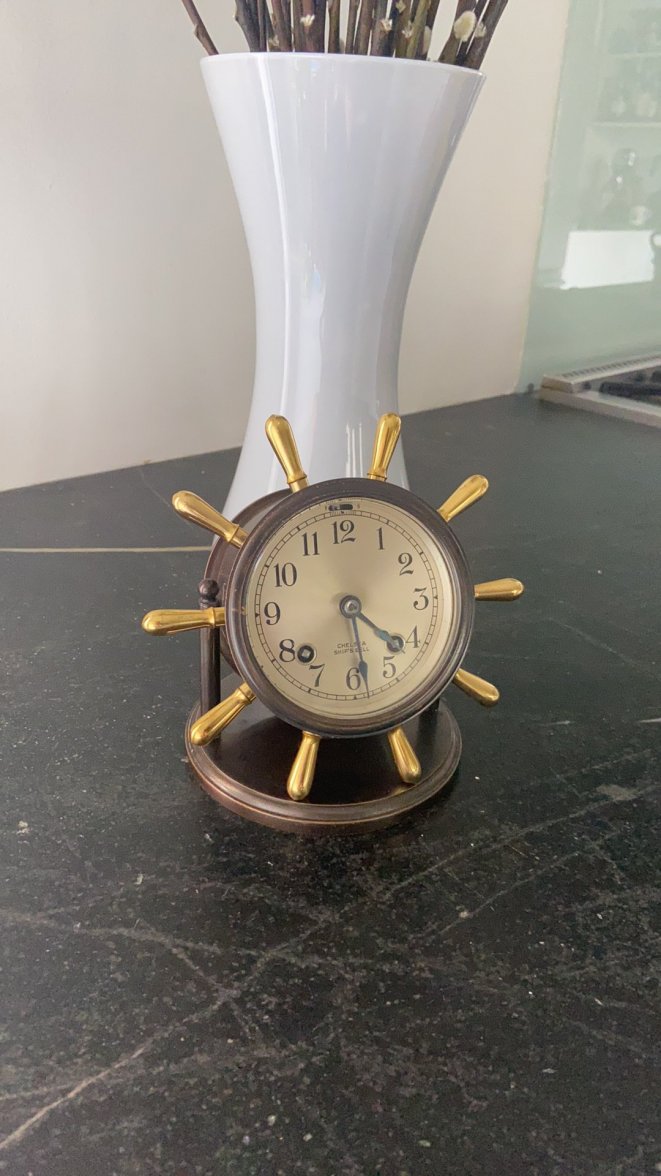
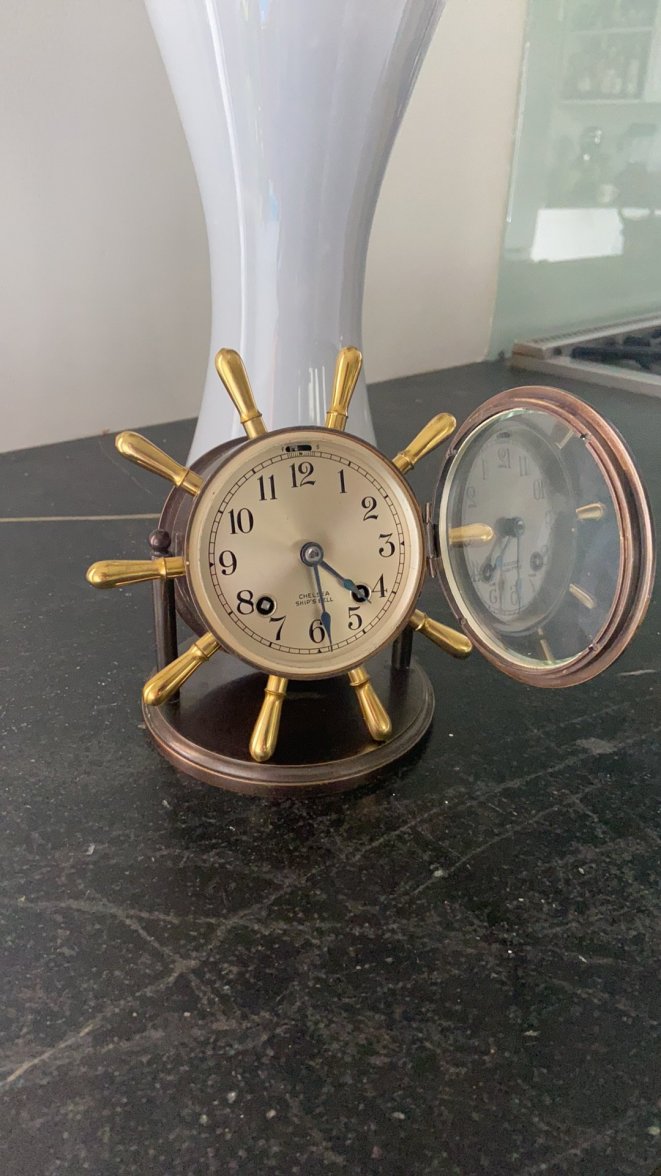
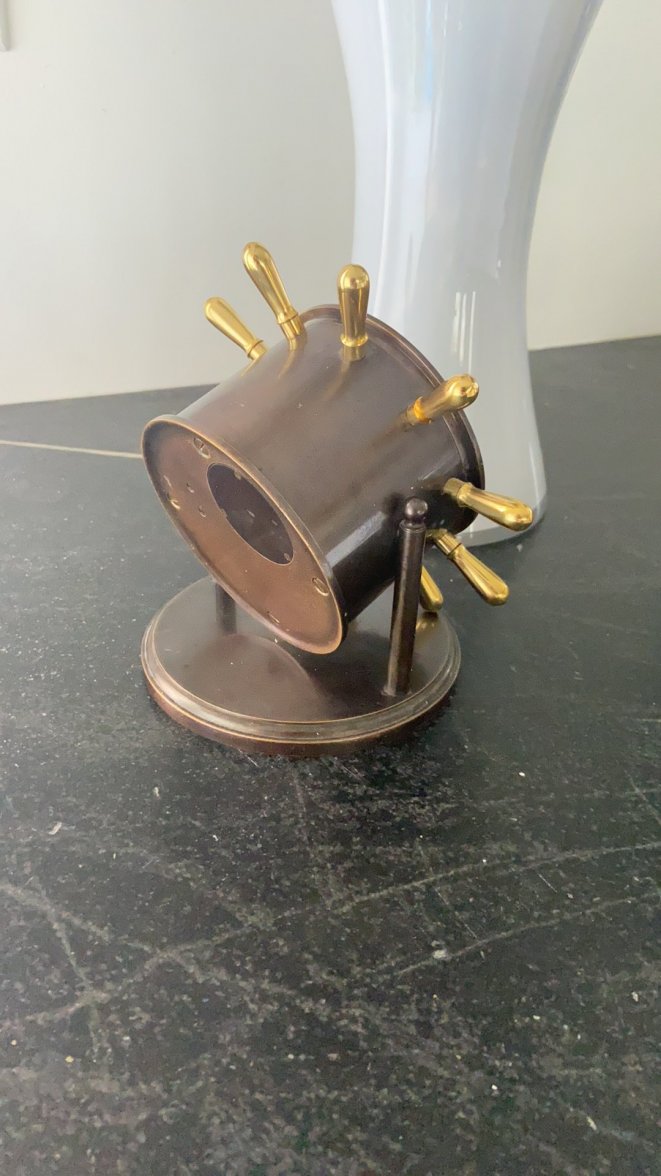
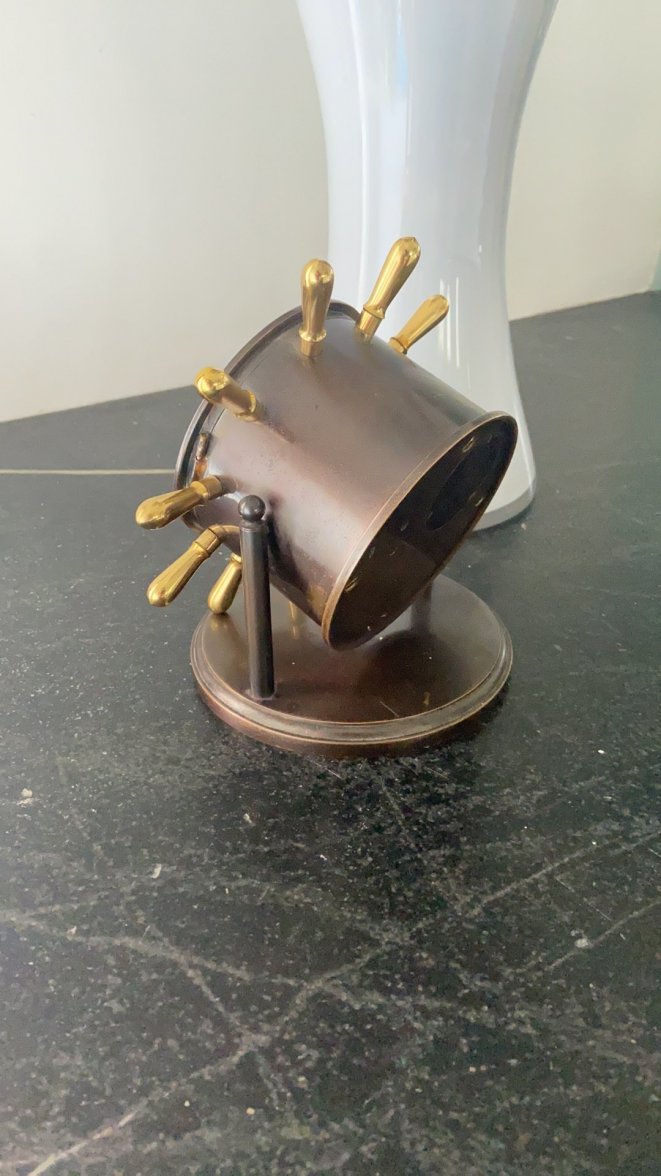
For your consideration..another clock from my personal collection. An original surface finish Vanderbilt Ship's Bell desk clock this one was produced early apprx 1937. I am really taken back on the case condition that the tu-tone is killer , there is the slightest about of loss ( dots ..) but it does not distract at all. If have typically seen these w a restored case all in bright yellow brass. But this is a early most likely a first year production example in original finish. This is the smallest case factor that can accommodate the Chelsea Ship's Bell movement ( American made , 8 day wind includes key) , dial diameter is 3 3/4 inches. Runs and strikes Ship's Bell....serviced last year. If you have any questions or concerns please dm me...
THE SHIPS BELL STRIKE SEQUENCE IS AS FOLLOWS INCLUDING A BRIEF HISTORY.
Mariners have used a unique bell code to tell time at sea for hundreds of years. The code is based on the crew's typical workday routine while the vessel is under way. A ship at sea requires constant attention throughout the day's twenty-four hours. The day is therefore divided into six four-hour periods, each called a "watch." Similarly, the crew is segmented into three divisions. Division members then stand their individually assigned duties on two watches per day, with eight hours off duty between watches. To rotate each division's watch times, the Evening Watch is periodically divided into two watches. These are called Dog Watches because they "dog" the watch schedule for all divisions ahead by one watch period.
- First Watch 8:00 p.m. to 12:00 a.m.
- Mid-Watch (also Black Watch) 12:00 a.m. to 4:00 a.m.
- Morning Watch 4:00 a.m. to 8:00 a.m.
- Forenoon Watch 8:00 a.m. to 12:00 p.m.
- Afternoon Watch 12:00 p.m. to 4:00 p.m.
- Evening Watch 4:00 p.m. to 8:00 p.m.
Since 1915, all U.S. Merchant vessels over 100 gross tons have, by law, divided the crew into three watches, working four hours on and eight hours off, and turning the dog watches into one evening watch.
799 USD plus shipping...