Unusual Mainspring Barrel Configuration

Posts
17,694
Likes
37,004
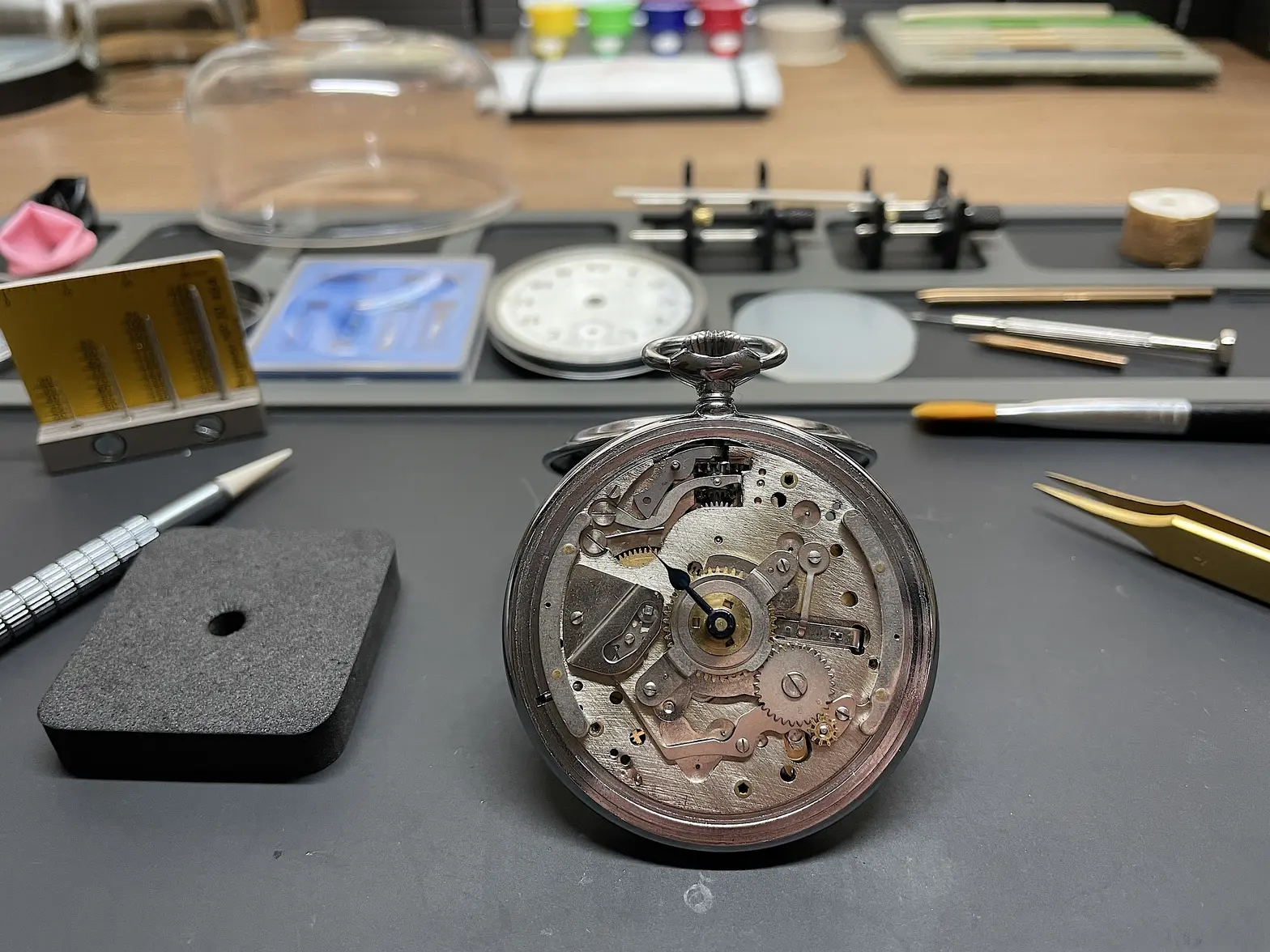
Anybody come across one of these?

Some time ago I got an alarm pocket watch from a friend of a friend who needed to get it fixed as it wasn't working properly.
I explained that a 75 year old pin lever, stamped plate movement wasn't exactly designed to last as long as a quality Swiss movement.
However, I did my best and got it running/functioning.

Some months later, I got a call, "the hands are not turning, can you fix it"...........
This is despite telling the owner that while it worked when I finished it, the watch should not be used as a reliable timekeeper but put on the display shelf as a vintage curio.

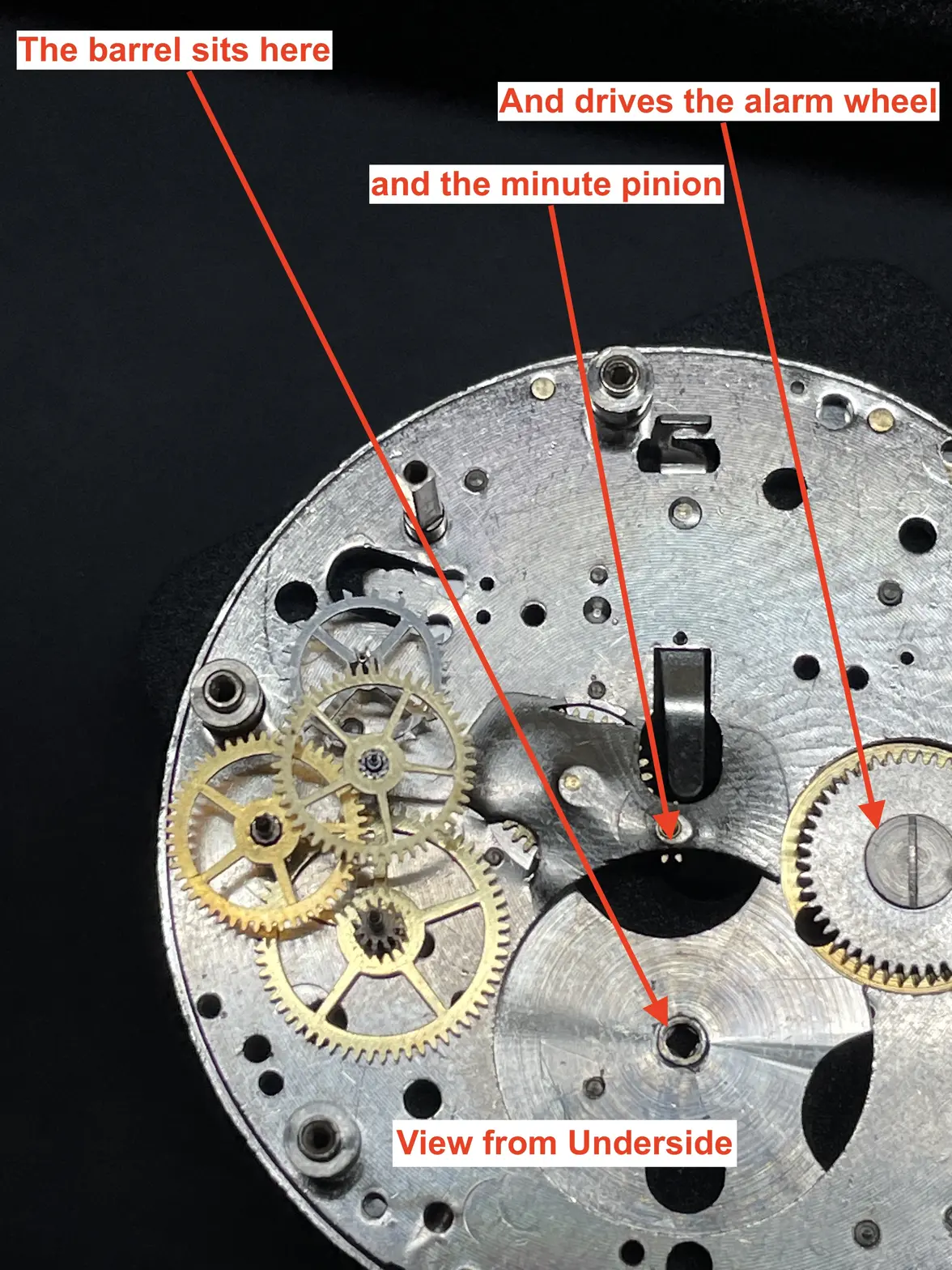
Anyway, it's back. The problem is the method of drive from the mainspring barrel to the hands.

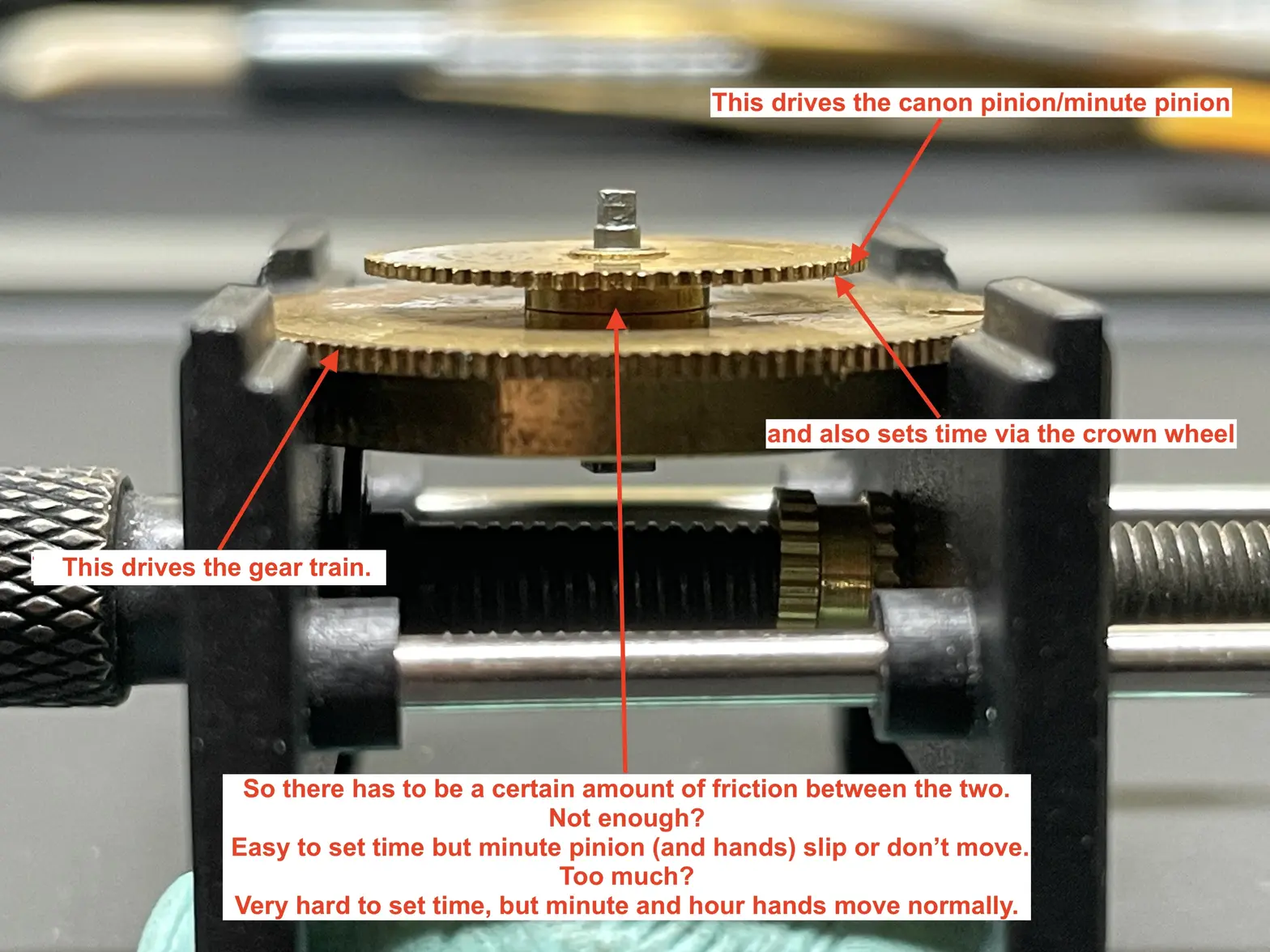
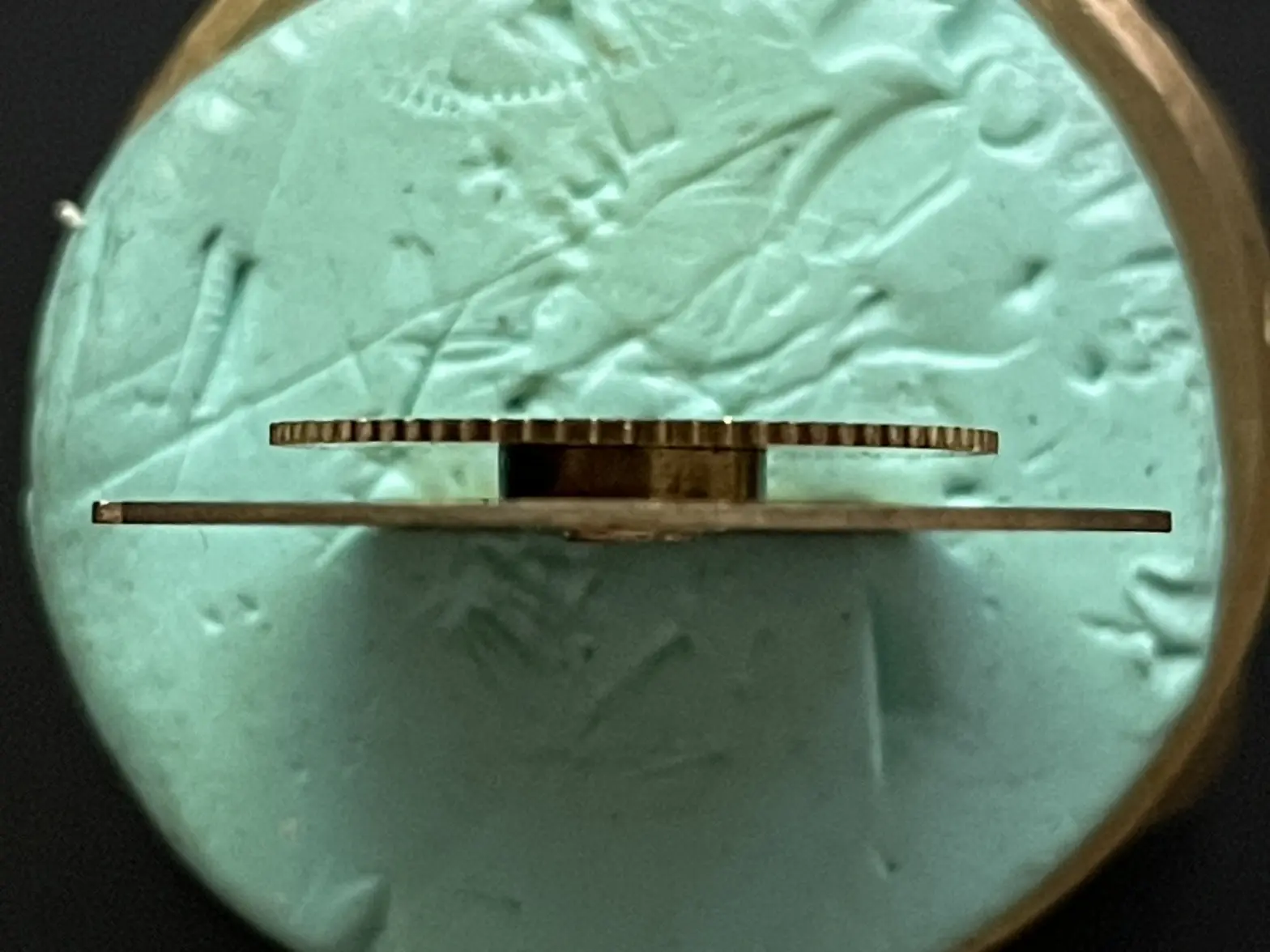
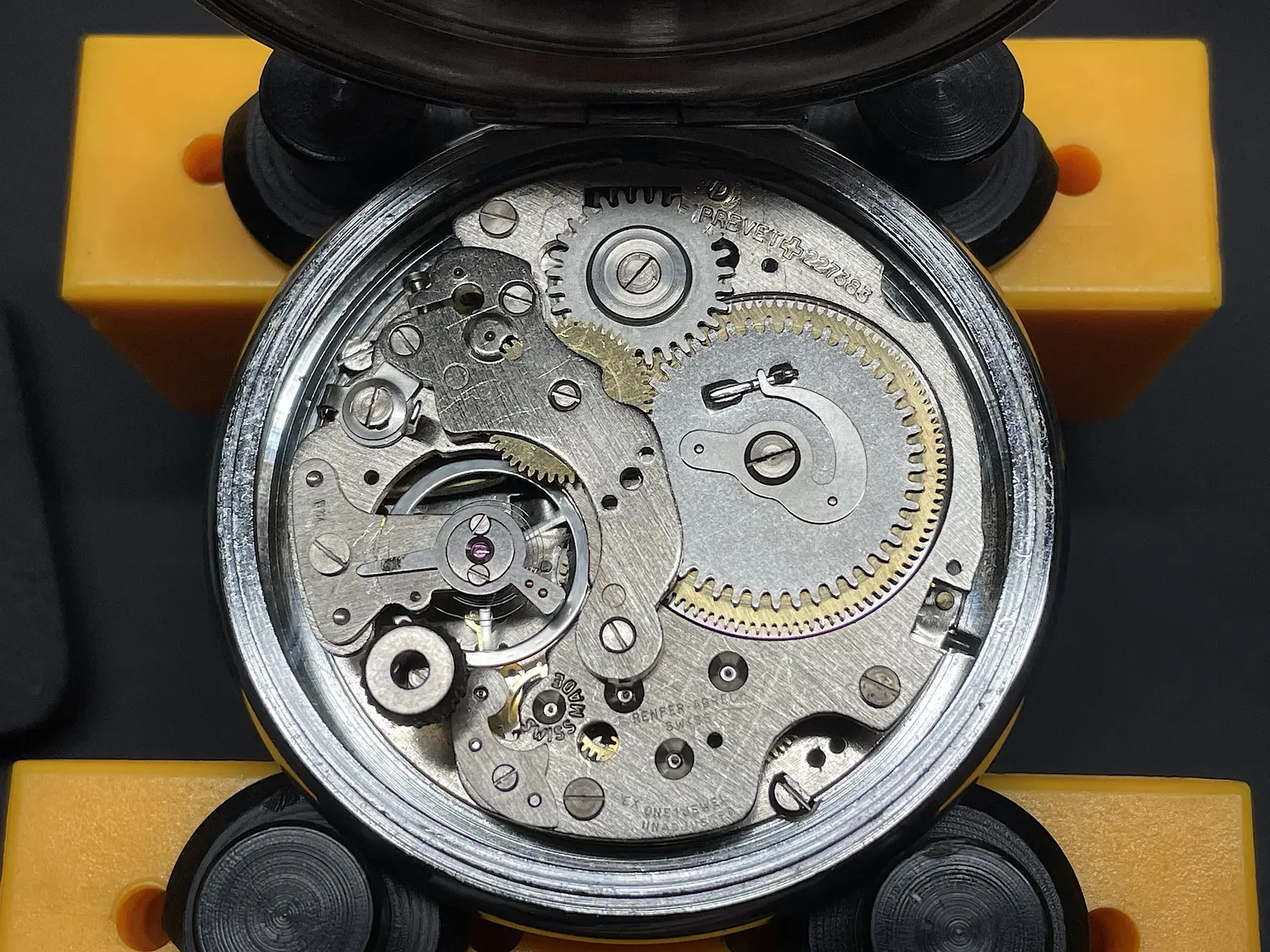
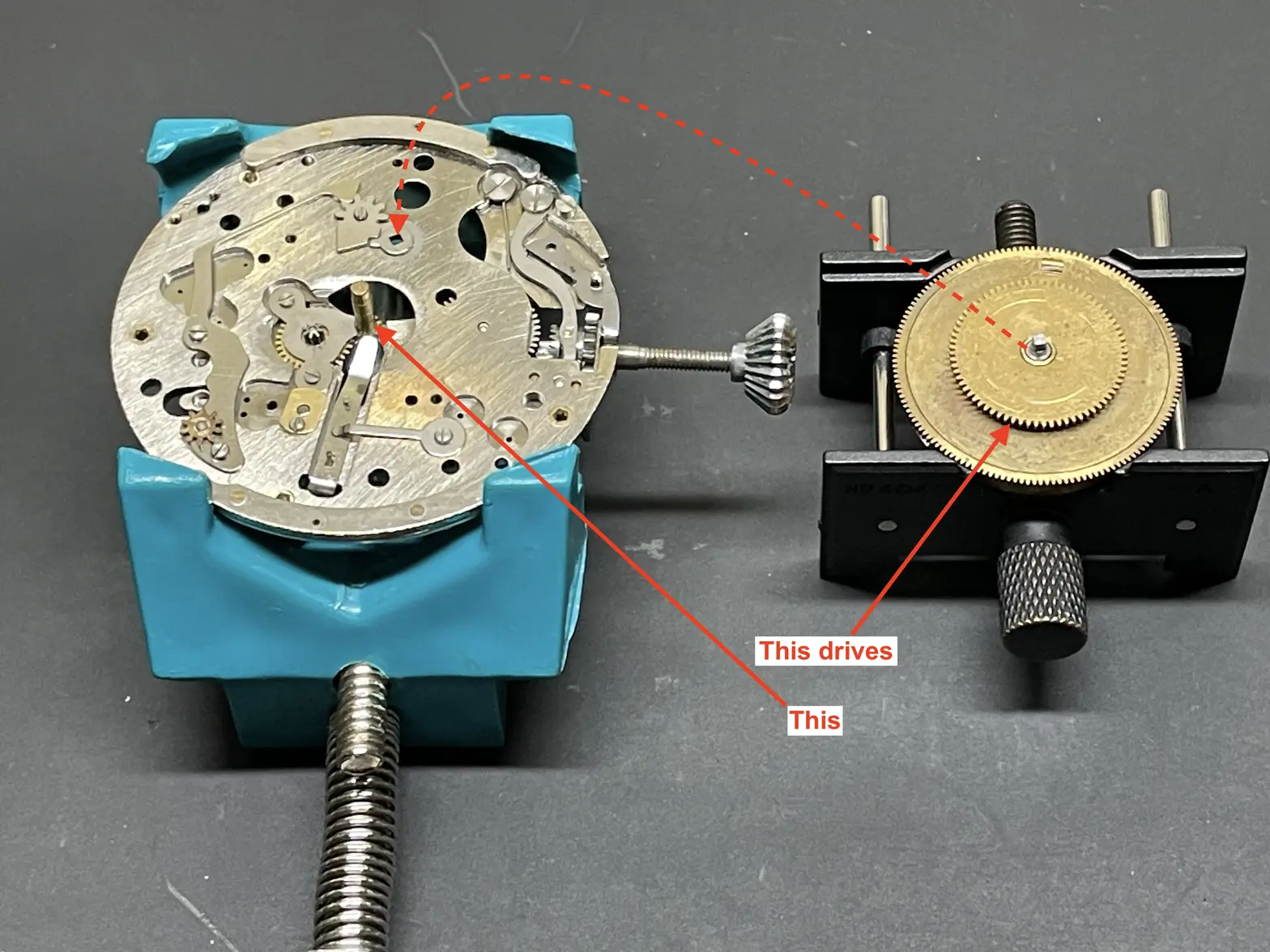
Unlike a standard gear train, the mainspring barrel only drives the gear train from the barrel to the escape wheel and the time keeping/setting is driven by a friction wheel fitted to the top of the main barrel.

Over time, the "friction" that was between the two components has deteriorated due to wear, primarily because the time setting from the crown wheel to the minute pinion must turn the "friction wheel".

I think I can restore the friction by using a dome punch on an anvil and hopefully strike a balance between 50/50 friction, enough to drive the hands against the drag of the alarm wheels and enough to allow setting the time without twisting the stem into a liquorice stick.

Photos follow to explain things.

Any hints or tips as to resolve this issue?
Edited:
 
Posts
36
Likes
32
What a wacky design but interesting. Only clean way I could imagine is to remove the "friction wheel" and make a new brass bushing for it on the lathe that will serve enough friction (for a limited amount of time until the design ultimately fails again). Punching it down, as you suggest, might also work but even more short term.
 
Posts
3,881
Likes
6,595
Remember reading about using a hair from your head to add friction to cannon pinions.
 
Posts
29,319
Likes
75,837
So a free cannon pinion in the middle of the watch, and an offset cannon pion mounted to the barrel. I can't say I've ever seen that specific configuration before, but as I've indicated previously...


Have you removed the friction wheel from the barrel? That would be the first thing in order to see the condition of the parts and what might be done to tighten them. Typically you wouldn't leave these dry, so normally I would say they need to come apart to be cleaned, then lubricated before assembly. But maybe this was intended as a throw away and not meant to ever be repaired.

Once you get it apart you may see a way of tightening it. Difficult to know what really is required until you see if there is just a small portion of the bushing that provides the friction (like the small indent in a typically CP) or if it's some sort of slight press fit along the entire length. I wouldn't be bushing or punching anything until I knew exactly how this functions.
 
Posts
1,452
Likes
1,490
Well, THAT is cursed... What in the thunder sort of demon juice were they drinking when they designed that?

So am I to get this right: You wind the spring, and it unwinds from BOTH sides of the spring (outside for alarm, center for motionworks?)? So when you wind it, the friction-wheel there slips as well? That would be clever if it weren't so insane.

As another throw-away idea: you could perhaps add silver-solder to the center of the friction surface then ream it to a size that provides a good amount of friction.

Else as said above, press out the bushing and replace it/remake one, or peening the brass bushing might help. IF it were a little bigger, I'd suggest center-punching INSIDE (basically a poor-man's knurl). You MIGHT be able to take a close fitting reamer and do a 'less than 1 tooth' cut to rise a burr but not break it. But that could just as easily make it worse rather than better.
 
Posts
17,694
Likes
37,004
Have you removed the friction wheel from the barrel?
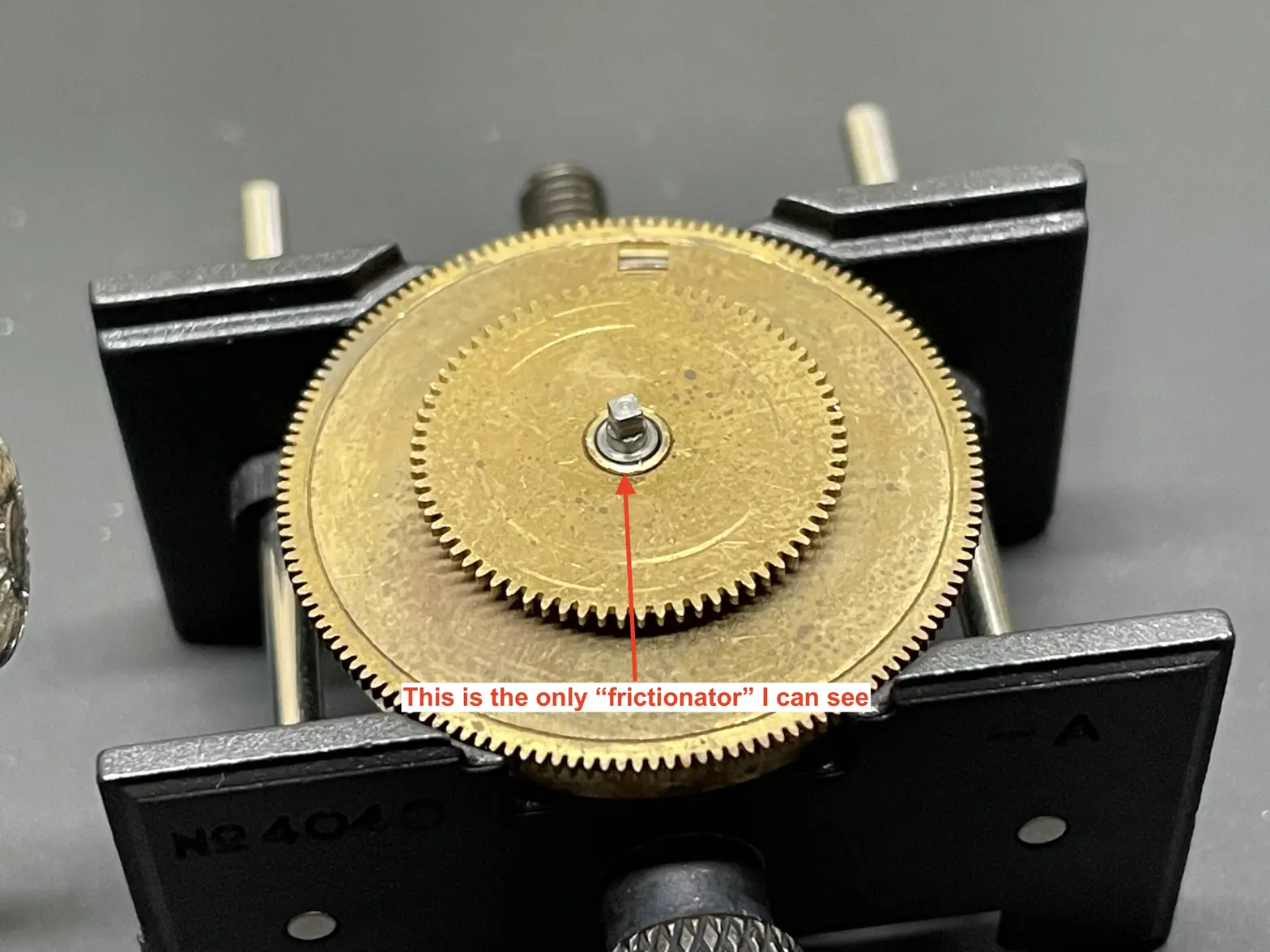
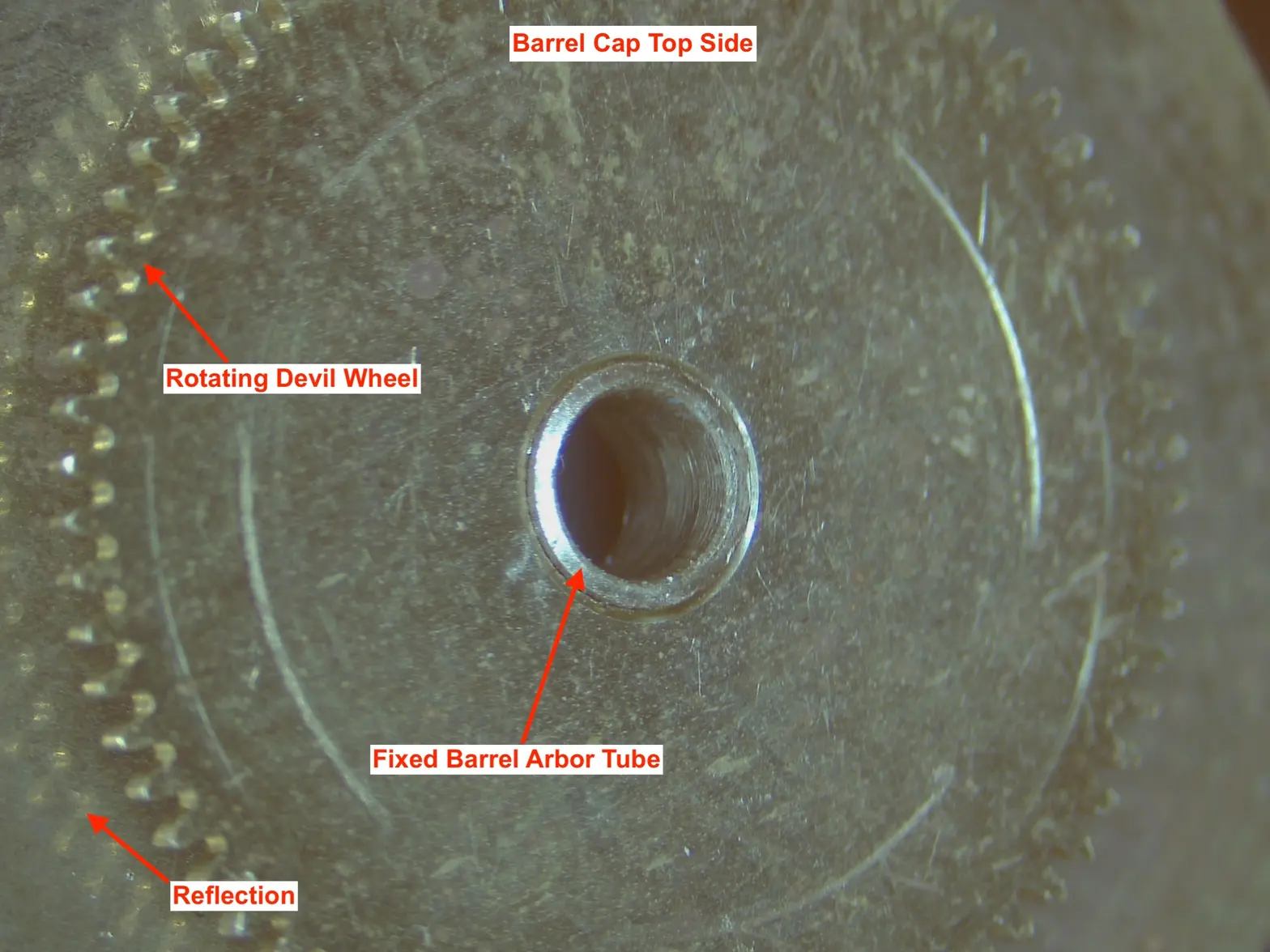
The friction wheel, or as I now call it, the Devil's Wheel, is an integral part of the barrel cap.


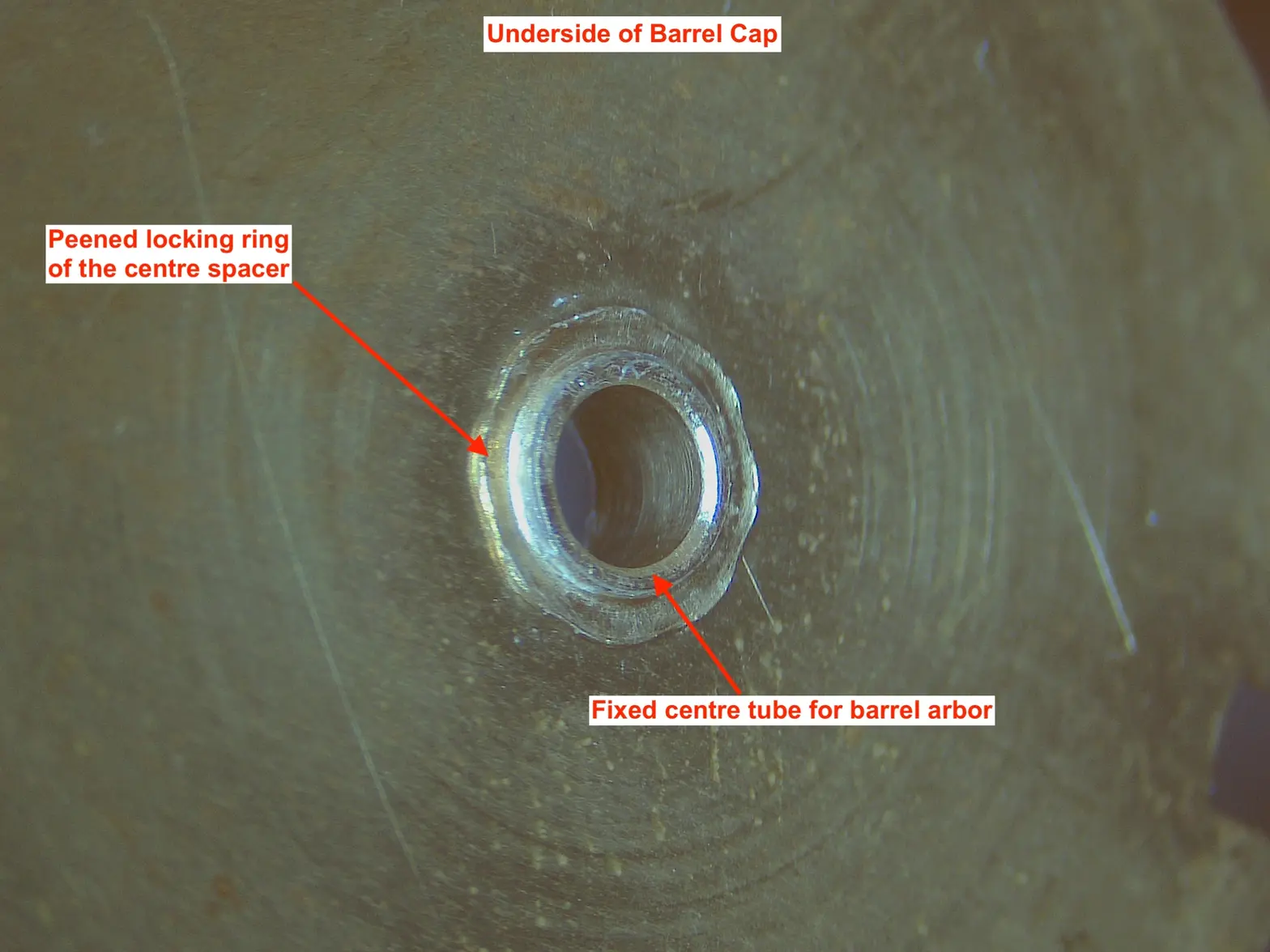
From the underside of the barrel cap you can see where the spacer disc that sits between the barrel cap and the Devil's wheel is peened onto the cap. There is a fixed centre tube pressed into the cap/disc for the barrel arbor.


The top view shows the inseperable parts.


The only way I can see to restore some friction is to expand the top end of the arbor tube. Removing and replacing anything would be a fool's errand I feel.
 
Posts
17,694
Likes
37,004
Here is a short video showing how loose the Devil's Wheel is.
 
RM APW Slipping Wheel Demo.MOV - 11.5 MB
Posts
1,452
Likes
1,490
Thats actually easier, it looks like you just have to tighten the rivet? Perhaps just use a staking set to tighten the rivet?
 
Posts
17,694
Likes
37,004
I would say they need to come apart to be cleaned, then lubricated before assembly.
Being unable to seperate the components without permanent damage I decided to leave it intact.
Maybe I could get a super fine grease gun and inject some braking grease? <joke>
After much thought, I figured out the only solution was to go with a minor expansion of top of the arbor tube.
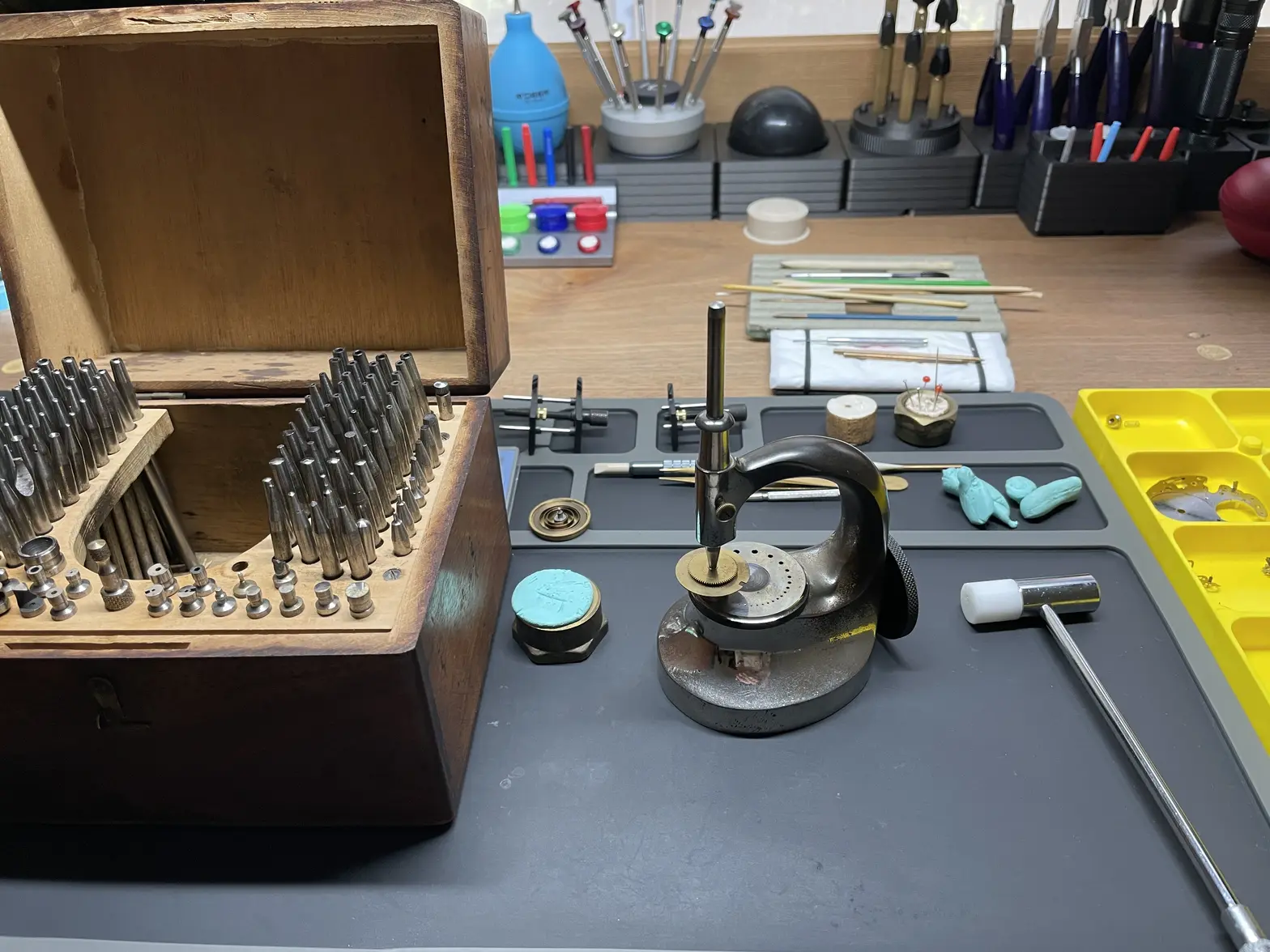
A tapered dome stake and some gentle taps, with some friction checking between hammering seems to have improved things.


Off to put all back together.
 
Posts
17,694
Likes
37,004
But maybe this was intended as a throw away and not meant to ever be repaired.
I think you're right Al.

Anyway, all back together and running. So much going on under the dial!


The rear side isn't to be outdone in complexity either. The click and the ratchet wheel sitting on top of the alarm driving wheel. When the alarm goes off, every wheel you see there is spinning 🤪.


I'll give it a couple of days to see how it performs before returning it.

Note, temporary minute hand fitted just so I could see it still running.
 
Posts
36
Likes
32
Anyway, all back together and running.
Well done. I think you made the right call.
The first pictures you posted let me believe the devils wheel could be separated and refitted. The riffet solution they chose is even more devilish.

Did you do a close up picture of how the barrel arbor is sitting in the now slightly extended center tube?
 
Posts
17,694
Likes
37,004
Well done. I think you made the right call.
The first pictures you posted let me believe the devils wheel could be separated and refitted. The riffet solution they chose is even more devilish.

Did you do a close up picture of how the barrel arbor is sitting in the now slightly extended center tube?
No, the stake was only expanding the top couple of millimetres and there is a significant amount of the tube unaffected as it's constrained by the spacer disc and the lid.
 
Posts
29,319
Likes
75,837
Being unable to seperate the components without permanent damage I decided to leave it intact.
Maybe I could get a super fine grease gun and inject some braking grease? <joke>
After much thought, I figured out the only solution was to go with a minor expansion of top of the arbor tube.
A tapered dome stake and some gentle taps, with some friction checking between hammering seems to have improved things.


Off to put all back together.
Having seen it in more detail, you absolutely made the right choice Jim. Any other intervention was going to be a lot of work, potentially cause damage, and be no more effective than what you have done here.