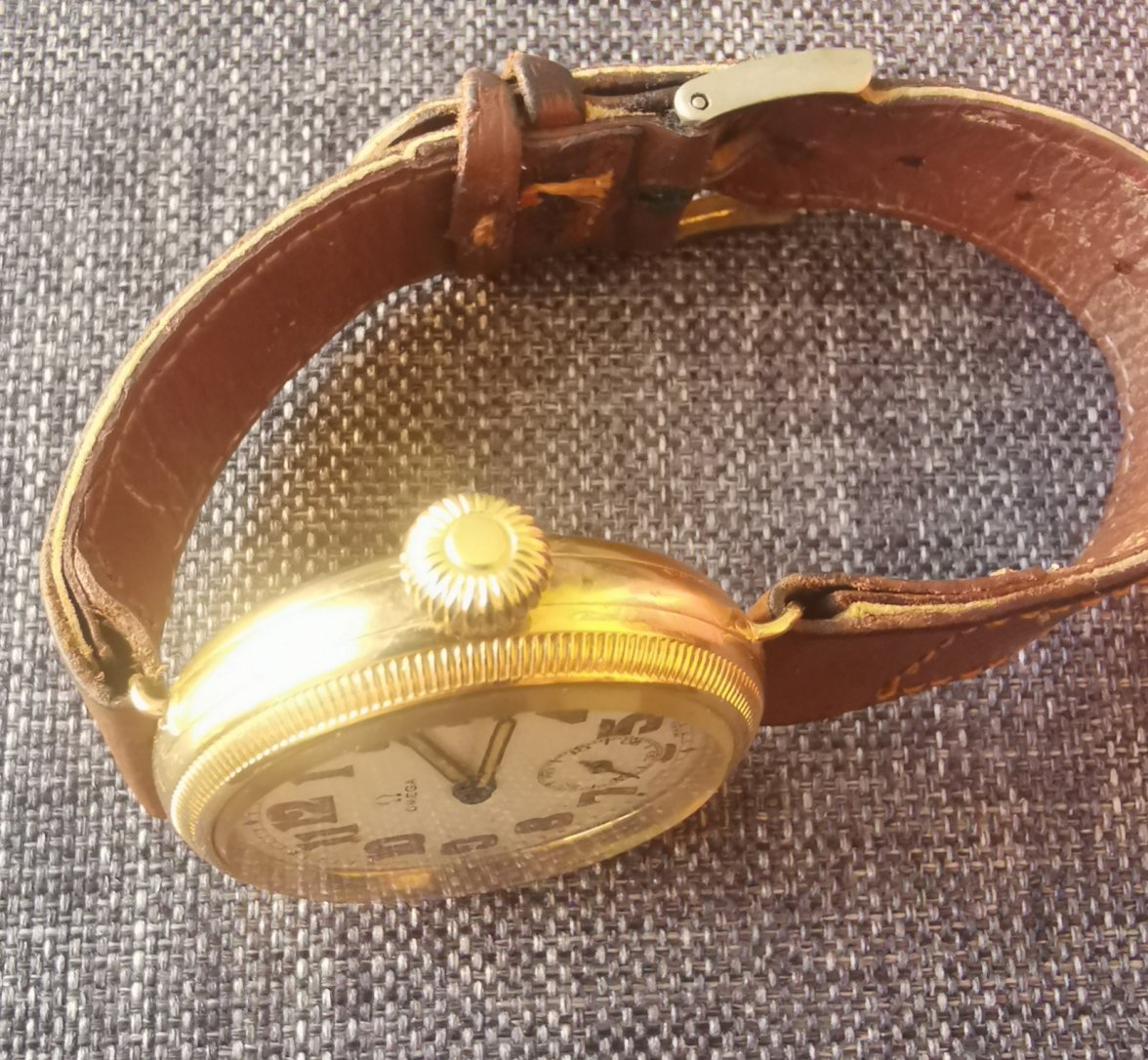
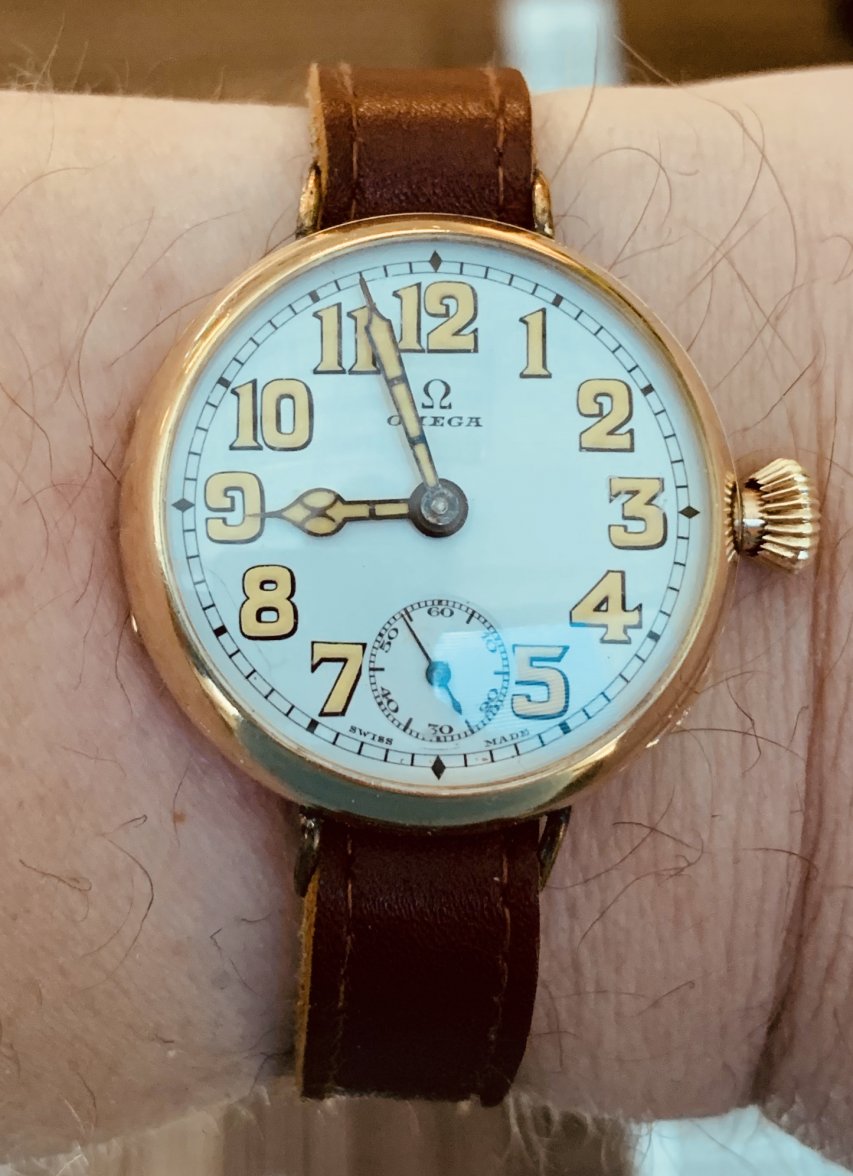
Unknown omega.. 1950s or earlier military?

Posts
1
Likes
1
Good afternoon all,

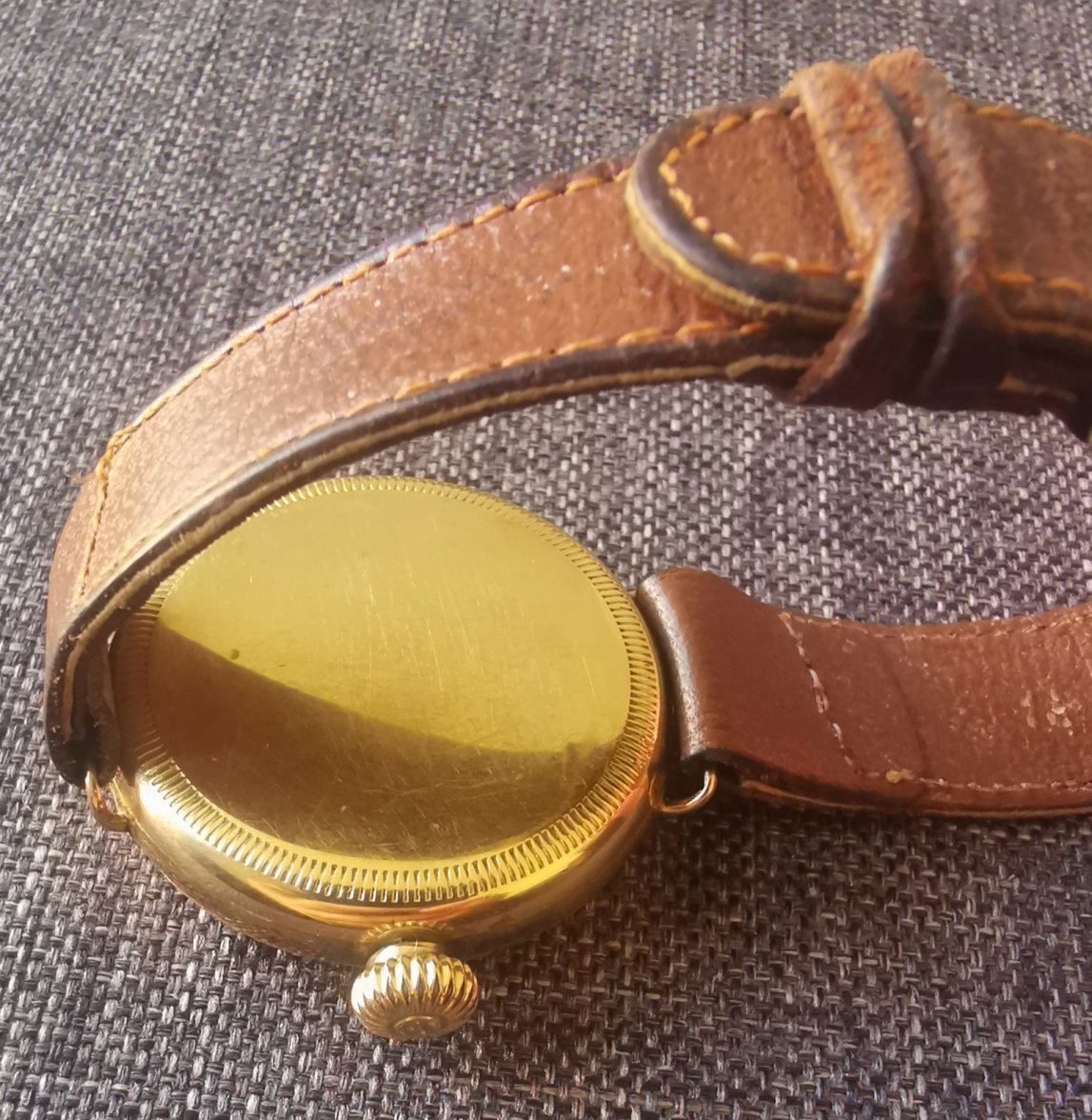
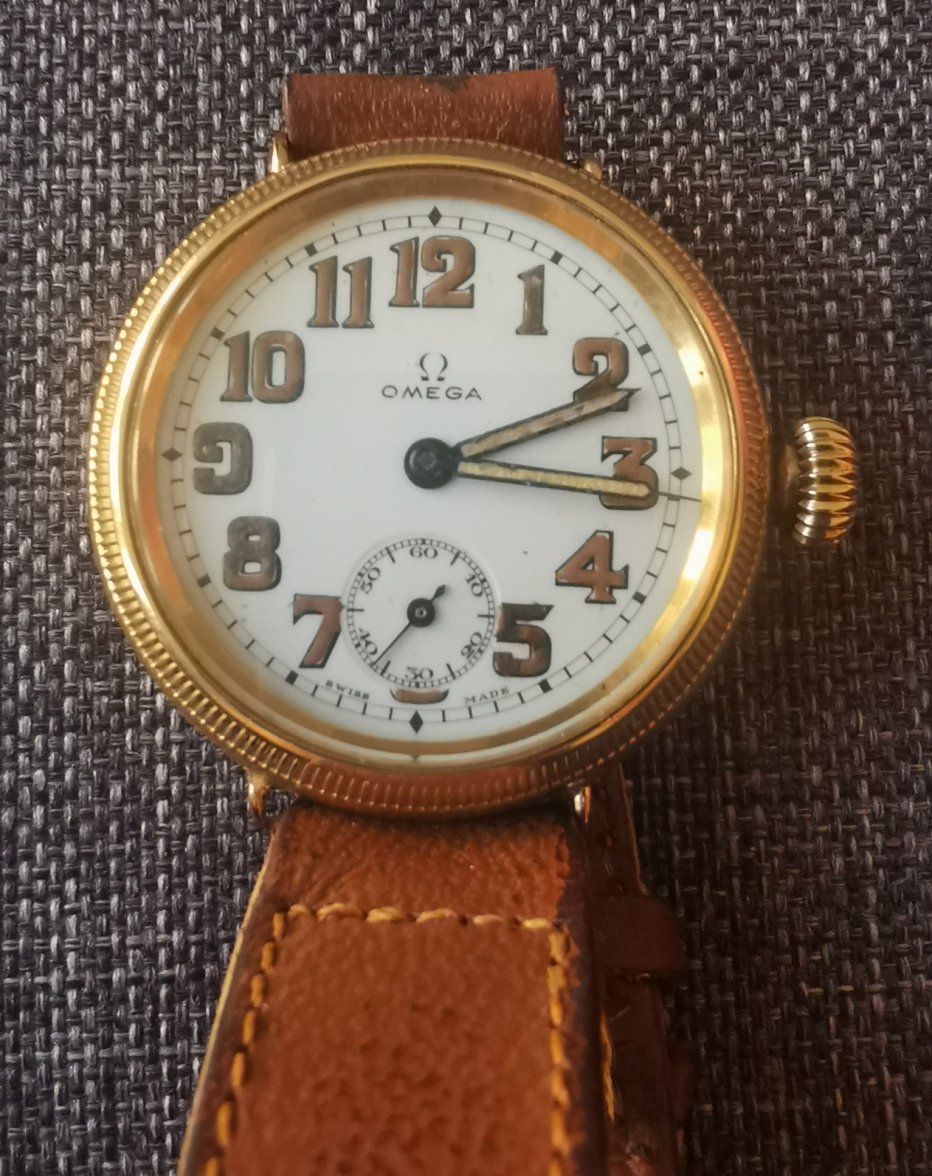
I've tried looking for information about this watch.. It was my great grandfather's apparently.. I know the band was replaced according to my grandmother but it has no markings on the back casing nor on the dial?
Looking around I believe it's war era as some apparently didn't have serial numbers or marked crown or it's simply eroded over time?

It could well be fake with the inaccurate colouring etc and/or a redial but from family history they said it's genuine.

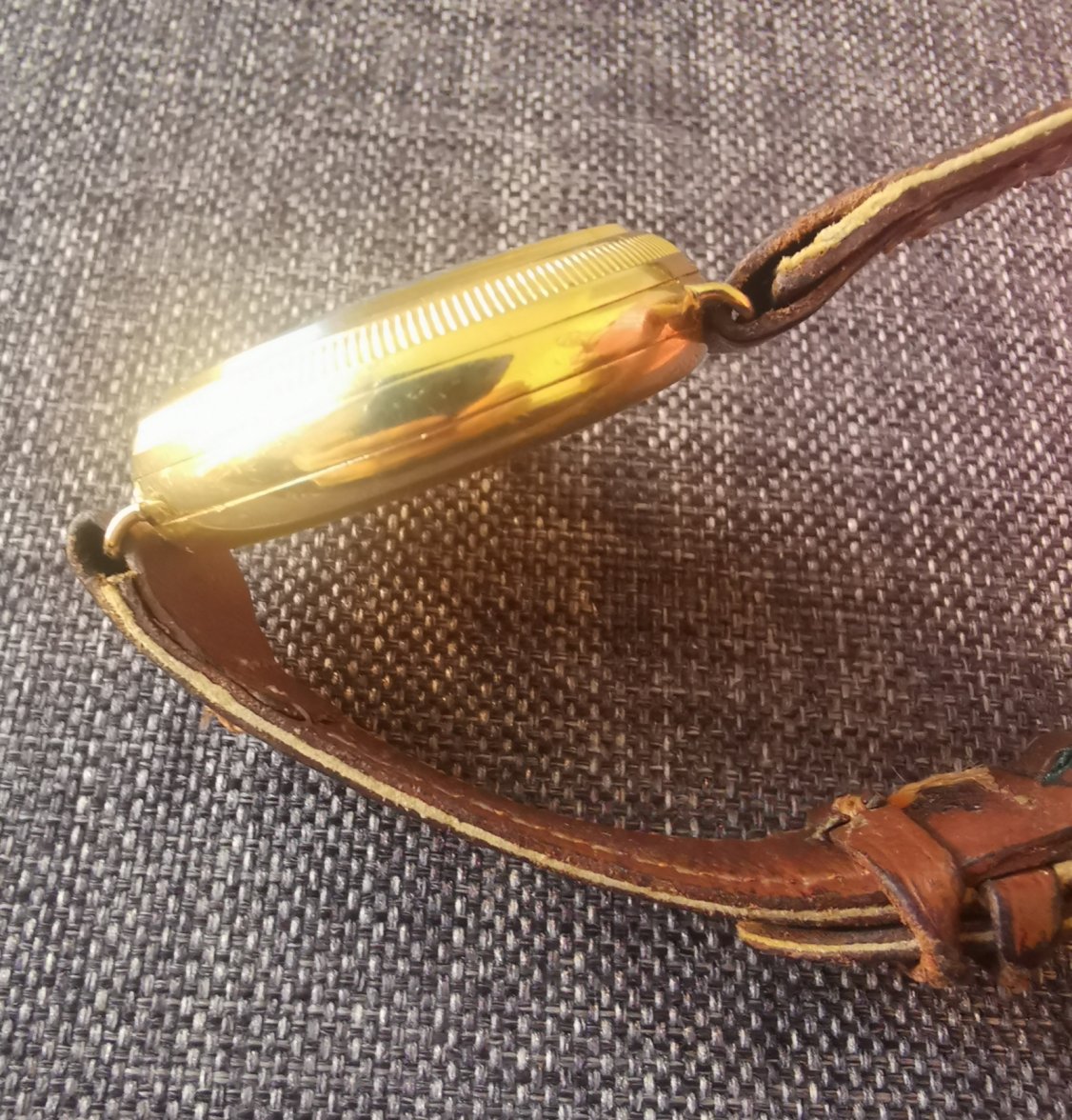
Edit: looking at the pictures the lugs don't look promising.. They almost look welded on.

It is going to be kept irrelevant of the findings I just wanted to know more.

Thanks in advance!
Edited:
 
Posts
2,086
Likes
2,897
Not necessarily a fake, but redialed at least. I think it might be from the 1930s.

Have it opened by a good watchmaker to find what's inside.
 
Posts
291
Likes
1,109
Could this have been born as a pocket watch and converted to a wrist watch at some point?
 
Posts
2,166
Likes
1,351
It is marked on the dial. However

It appears to be early 1900's. 3 piece case. Looks to be screw top and back. Did you remove the back at all? If Omega. It should be signed.

Dial looks to be enamel. Numbers 1, 5, 8, 9 and part of 2 look to be repaired or touched up based on the 9 not looking clean.

Hands are replacements (hour and minute too long)

Get the back off to check and to also check caliber of the movement

DON
 
Posts
2,845
Likes
9,197
Not necessarily a fake, but redialed at least. I think it might be from the 1930s.

Have it opened by a good watchmaker to find what's inside.
2/2 on redials today?

I would reserve judgment on it being a redial. Most suspect are the hands. My trench watch dates to the 1910's and has the same font as yours - and mine is not a redial... Get it opened up and wait for some experts to comment on dial originality.
 
Posts
2,086
Likes
2,897
2/2 on redials today?

I would reserve judgment on it being a redial. Most suspect are the hands. My trench watch dates to the 1910's and has the same font as yours - and mine is not a redial... Get it opened up and wait for some experts to comment on dial originality.

I am open for discussion. This refers to everything I say here. Otherwise this wouldn't be a forum.
 
Posts
2,086
Likes
2,897
It appears to be early 1900's.

Yes. It's most likely an earlier watch. 1910's to 1920's. Looks a bit similar to George Mallory's watch he wore on the Everest.

GLM_EQ_027.jpg
 
Posts
2,326
Likes
1,884
Numbers 1, 5, 8, 9 and part of 2 look to be repaired or touched up based on the 9 not looking clean.

Hands are replacements (hour and minute too long)

These dials were hand-painted, don't expect perfection. Agree that the hands are replacements.

Tom
 
Posts
17,969
Likes
37,559
Very nice. Dial is original IMO, hands are replacements but proper style ones can be found. Could it be a Borgel case? Lugs are most likely original and it was produced as a wrist watch.

Can you provide pics of the inside of the caseback and of the movement and diameter of the movement.

Edit, Agree with Tom on all points.
Guessing from your name you are UK based. In that case, the case may be a Dennison, possibly 9CT gold.

PS: Much much earlier than the 1950s, maybe 1915 to 1920 give or take a few years.
Edited:
 
Posts
2,326
Likes
1,884
These are the hands it should have.

Tom

Edited to add: relumed by Kent Parks at Everest Watch Works.
Edited:
 
Posts
2,326
Likes
1,884
By the way, I am rather impressed with your original strap. I like Allen Edmonds "Leather Lotion" for treatment but you want to get some moisture into that strap because dry rot is a concern.

Tom
 
Posts
2,086
Likes
2,897
Nonsense. No one refinishes a porcelain dial, they last forever.

Tom

Hi Tom, regardless of what you are saying, I'll never call it "nonsense", because this makes no sense to me.
 
Posts
2,326
Likes
1,884
Hi Tom, regardless of what you are saying, I'll never call it "nonsense", because this makes no sense to me.

OK, what doesn't make sense? Porcelain enamel is the baking of glass onto the dial. This is how a stove, for example, is finished. It is so durable that pocket watches from the 1700s have mostly intact dials. Because they do not wear like more modern dials, there is no need to "refinish" them. Because there is no need to "refinish" them, no one does.

Does this help?

Tom
 
Posts
2,086
Likes
2,897
OK, what doesn't make sense? Porcelain enamel is the baking of glass onto the dial. This is how a stove, for example, is finished. It is so durable that pocket watches from the 1700s have mostly intact dials. Because they do not wear like more modern dials, there is no need to "refinish" them. Because there is no need to "refinish" them, no one does.

Does this help?

Tom

In general, I was referring to your way of discussing on a topic.

In specific, I'd recommend you compare the dial of the OP to the one you posted yourself.
 
Posts
2,326
Likes
1,884
In general, I was referring to your way of discussing on a topic.

In specific, I'd recommend you compare the dial of the OP to the one you posted yourself.

You have been pretty acerbic yourself at times.

And yes, his dial is newer than mine. It's possible, I suppose, that it's fake. We'd need to see the movement and its serial to know more.

But I stand by my statement. NO ONE refinishes porcelain enamel dials.

Tom
 
Posts
2,326
Likes
1,884
You have been pretty acerbic yourself at times.

And yes, his dial is newer than mine. It's possible, I suppose, that it's fake. We'd need to see the movement and its serial to know more.

But I stand by my statement. NO ONE refinishes porcelain enamel dials.

Tom

In the past. There are people who do now at great expense.

Tom
 
Posts
2,086
Likes
2,897
In the past. There are people who do now at great expense.

Tom

Makes more sense to me now...😉
 
Posts
24,333
Likes
54,154
The porcelain dial is original IMO, some of the lume plots may have been touched up, as I think @DON was suggesting.