
- Posts
- 342
- Likes
- 1,169
WestCoastTime
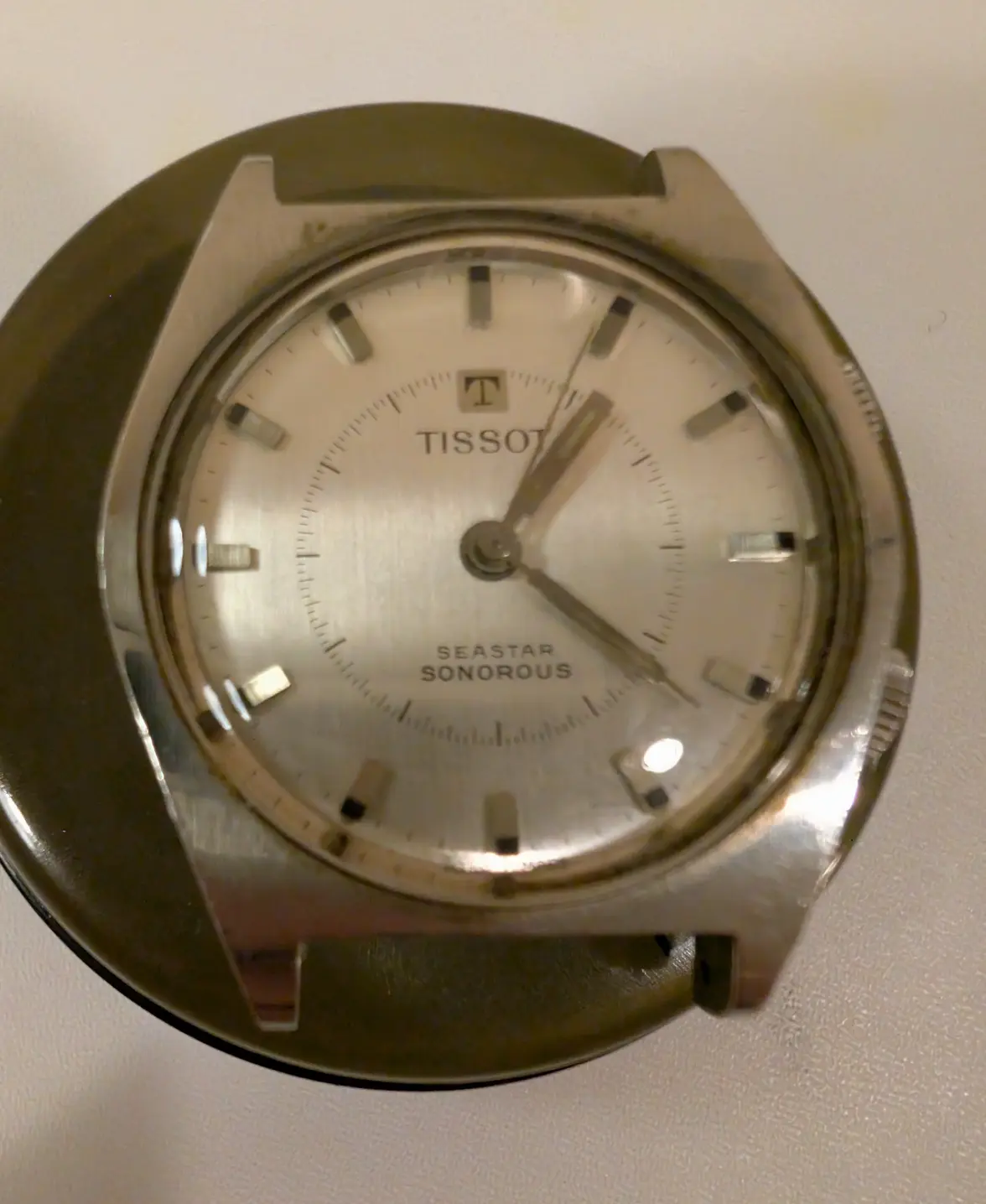
·Someone wore this watch for a long time.
It looks a little bit scruffy now, but we'll get it cleaned up & singing just like back in the old days.
(Alarm time hand is hiding underneath the hour hand)
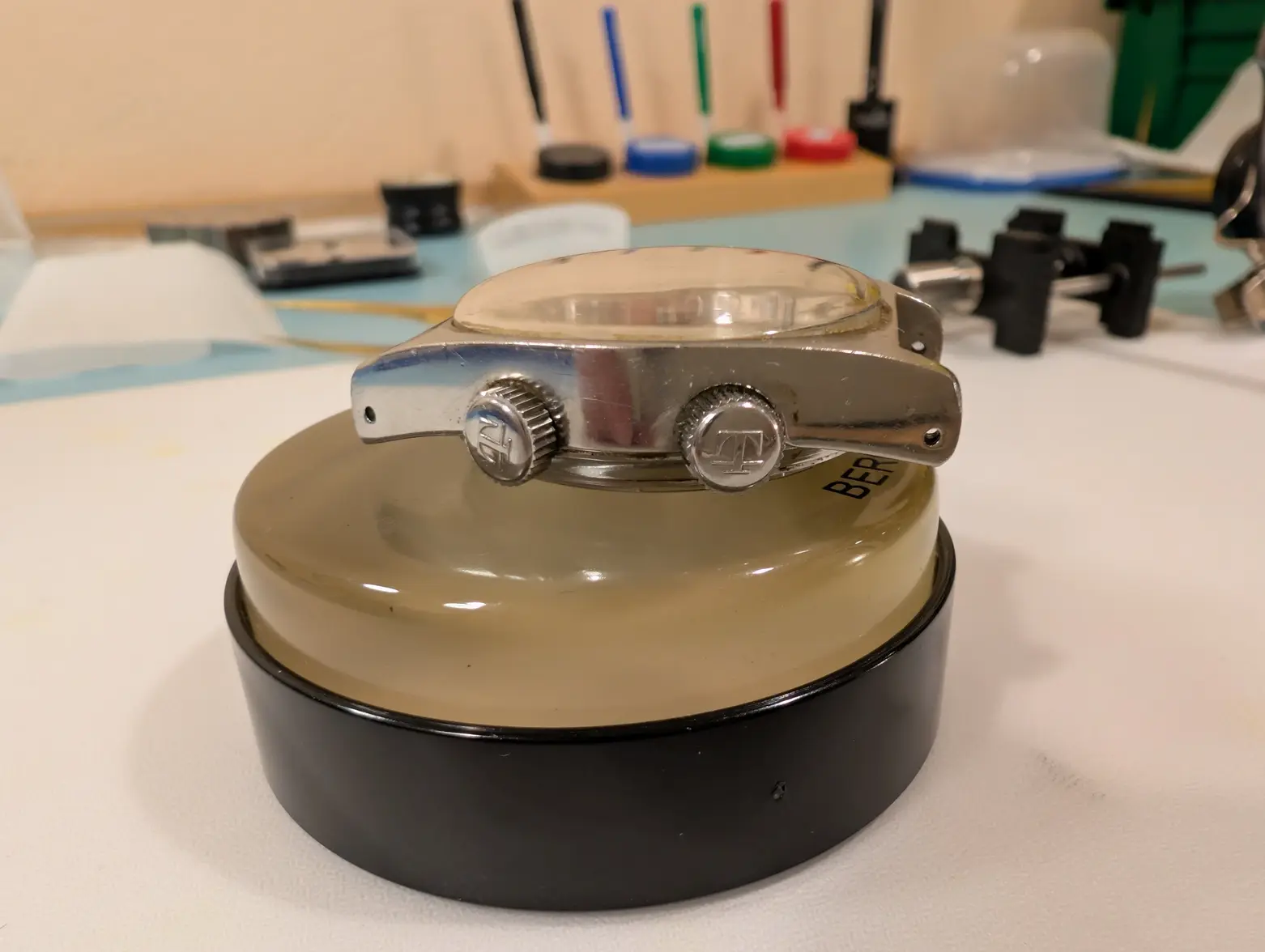
Two crowns. One for winding & setting the watch, one for winding & setting the alarm.
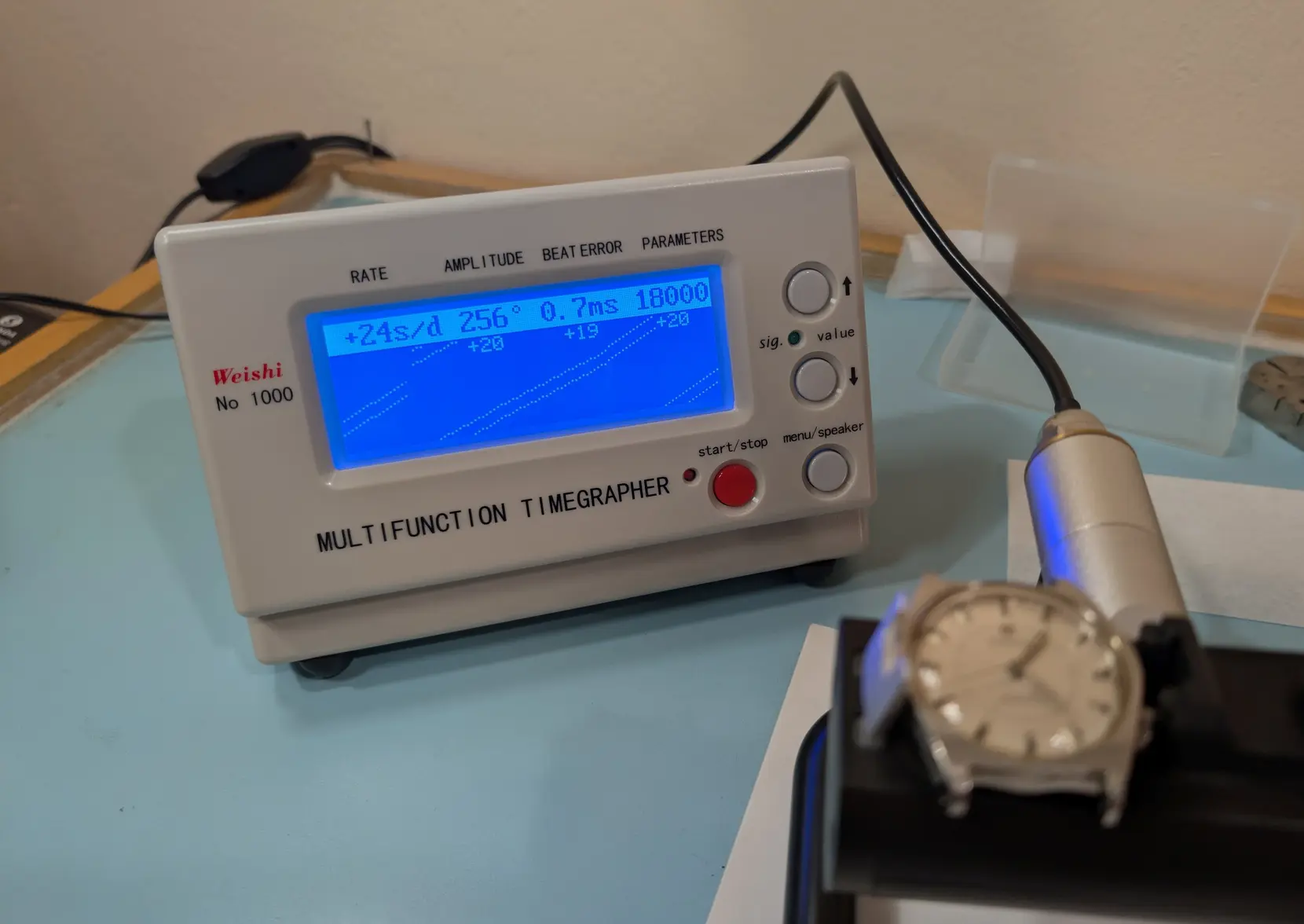
The timekeeping is not great but the watch is running, so that's an encouraging starting point for us.
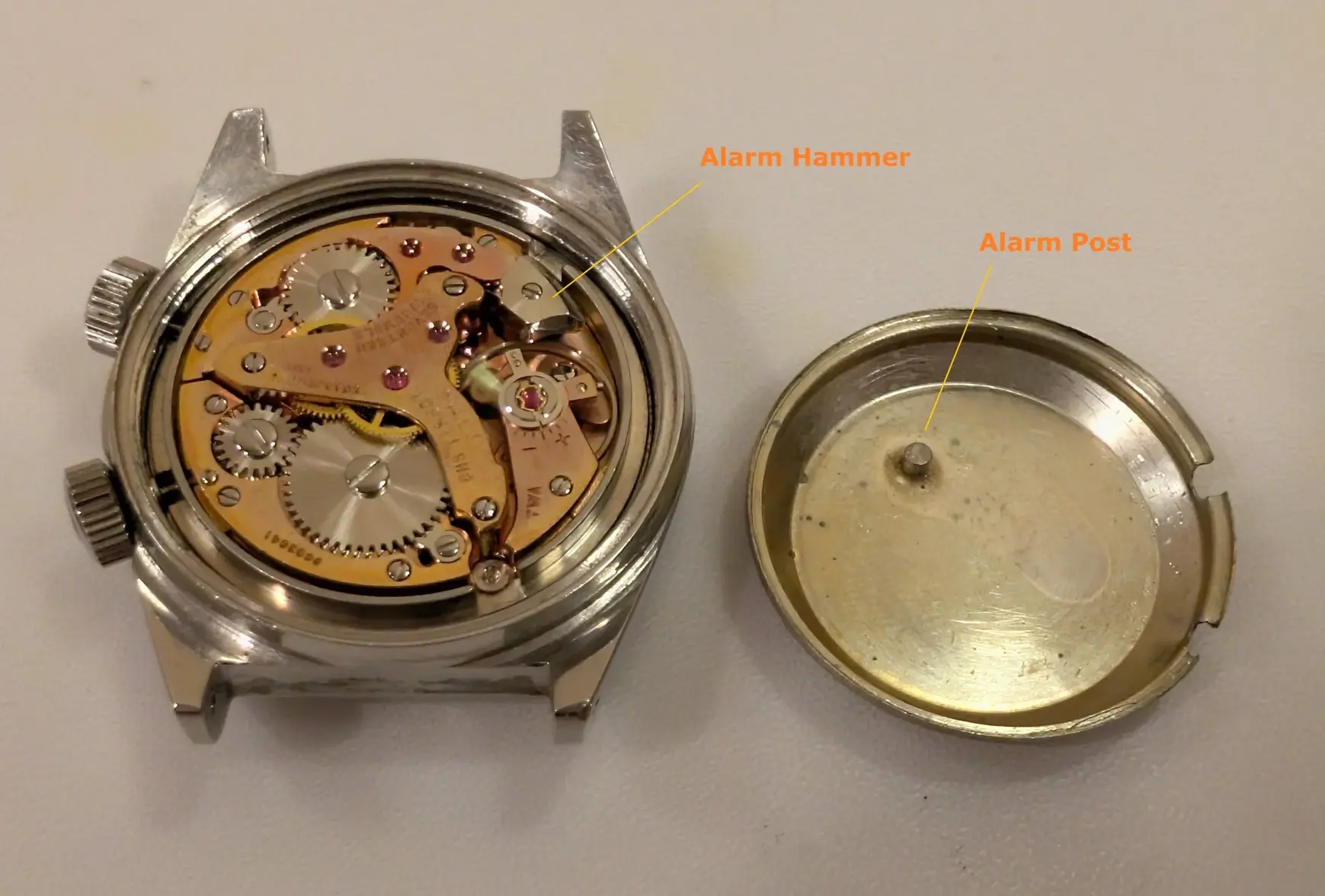
The Resonator Plate has a post that the Alarm Hammer bangs on, all in service of getting the most/best sound out of the alarm.
Breakdown process starting on the dial side.
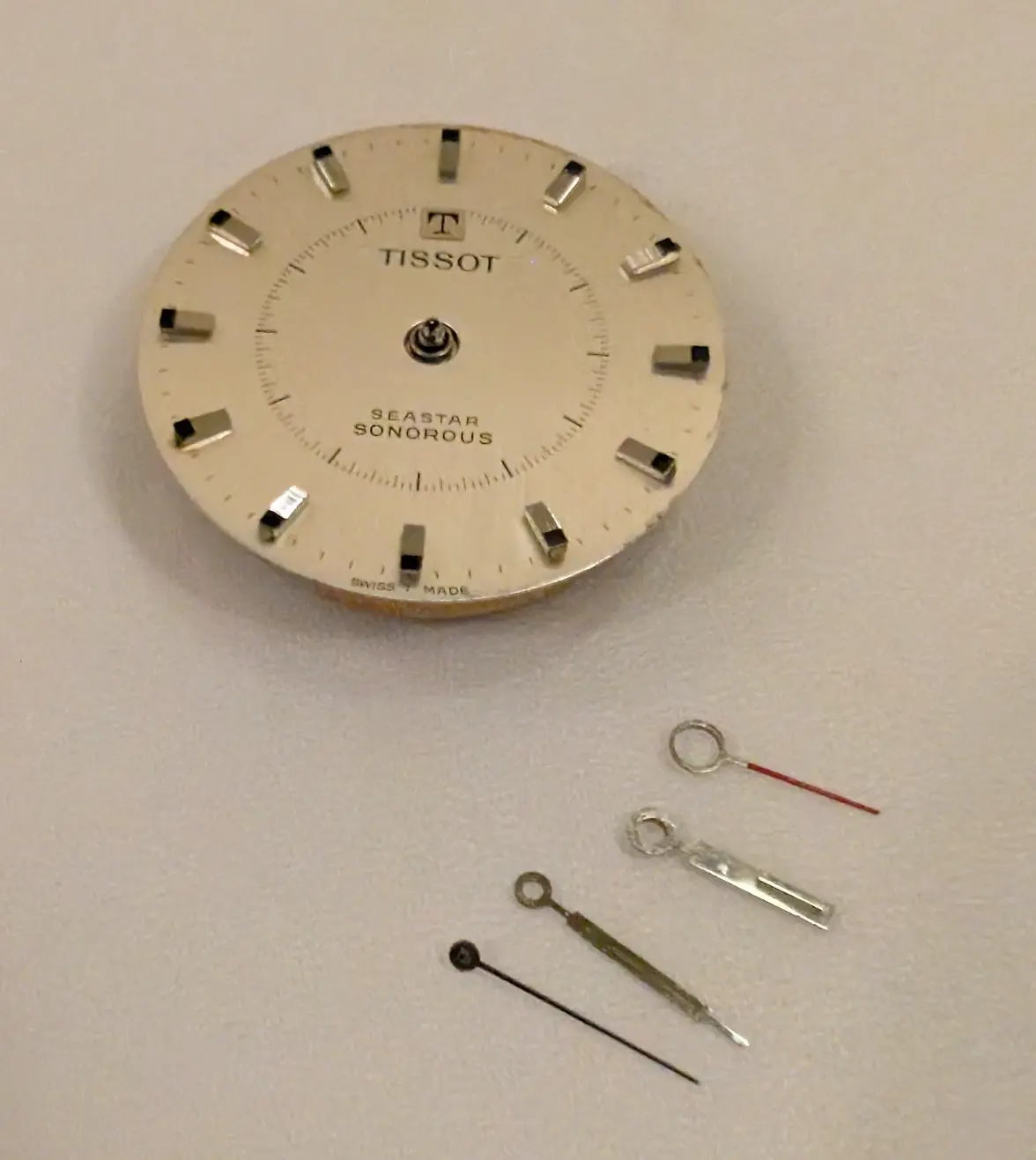
Looks like it has two of everything compared to a regular watch, & that's not far off from the truth...
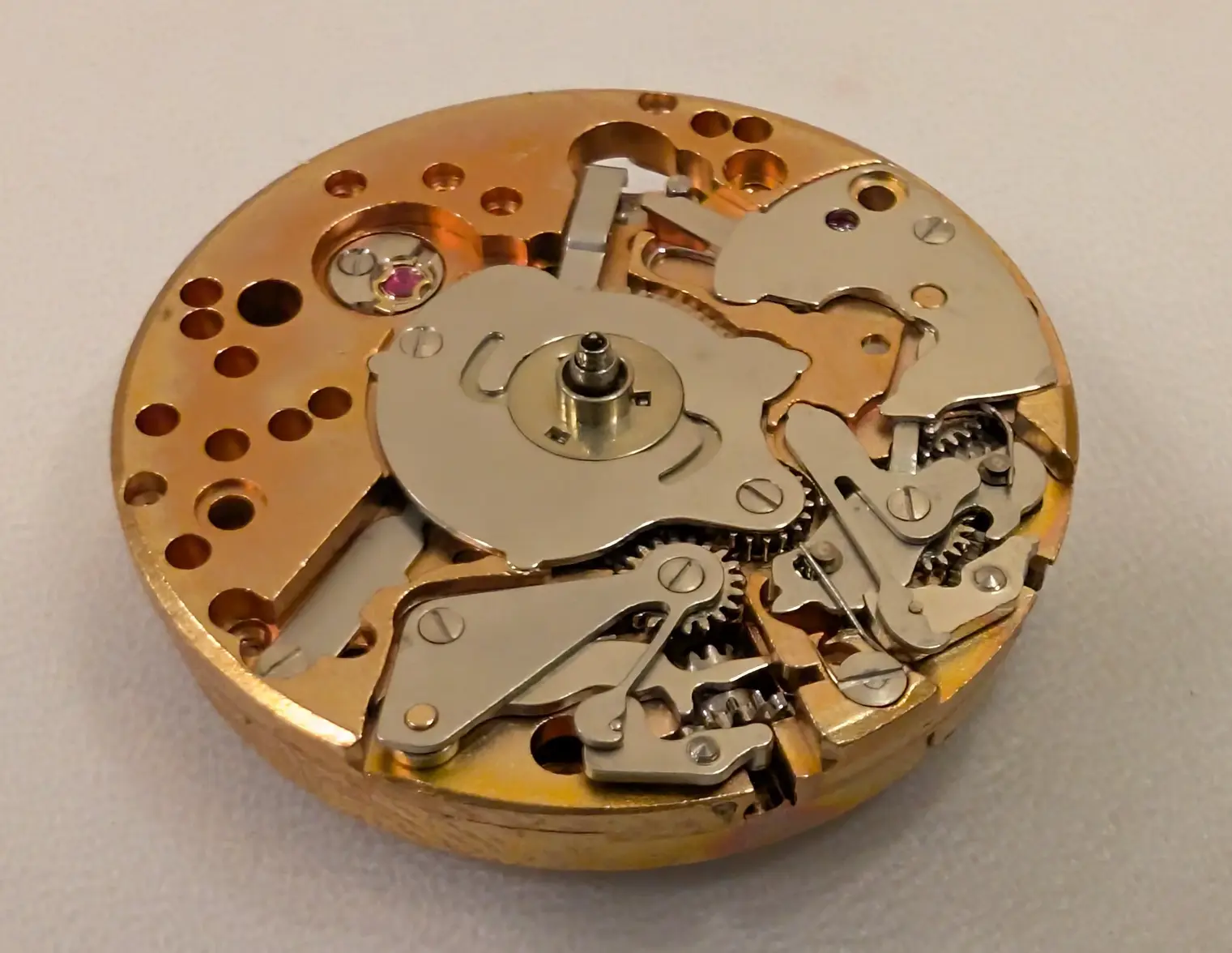
For the alarm function, the Alarm Wheel (and Alarm Hand) remains fixed at the user's chosen alarm time. The Alarm Wheel has three recesses that will wait on the three detents of the Hour Wheel to align.
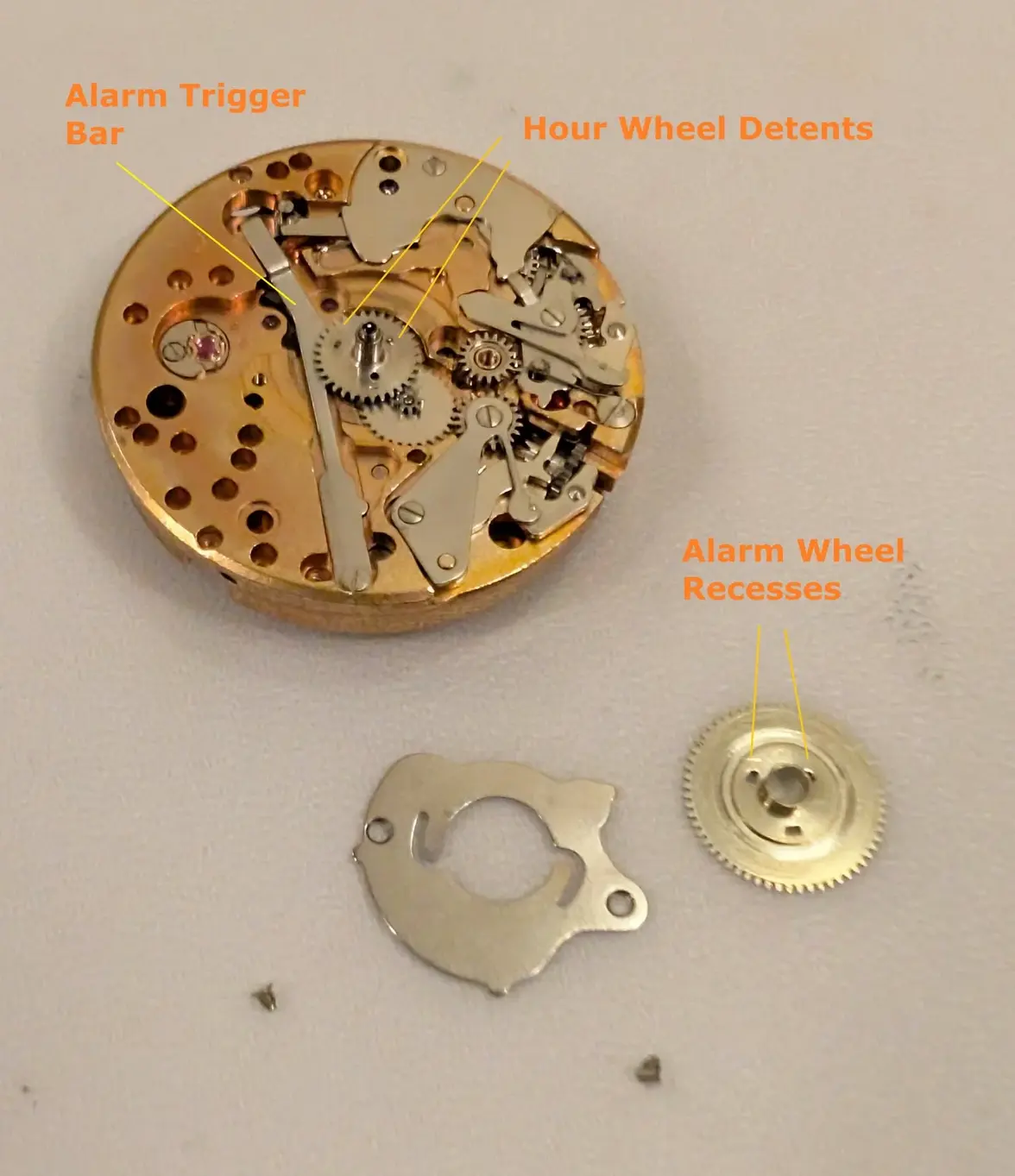
The Alarm Trigger Bar is under tension, & will assert a light lifting pressure from underneath the Hour Wheel. The added height of the detents cause the Hour Wheel to press down on the Alarm Bar, & the Alarm Bar being in the down position inhibits the alarm.
When the Hour Wheel time comes around to lining up with the Alarm time, the Hour Wheel detents then slip into place in the Alarm Wheel recesses.
The detents aligning with the recesses allow for the Hour Wheel to get lifted up slightly by the Alarm Bar, & this action of the Alarm Bar lifting up serves to activate the alarm which will then start sounding.
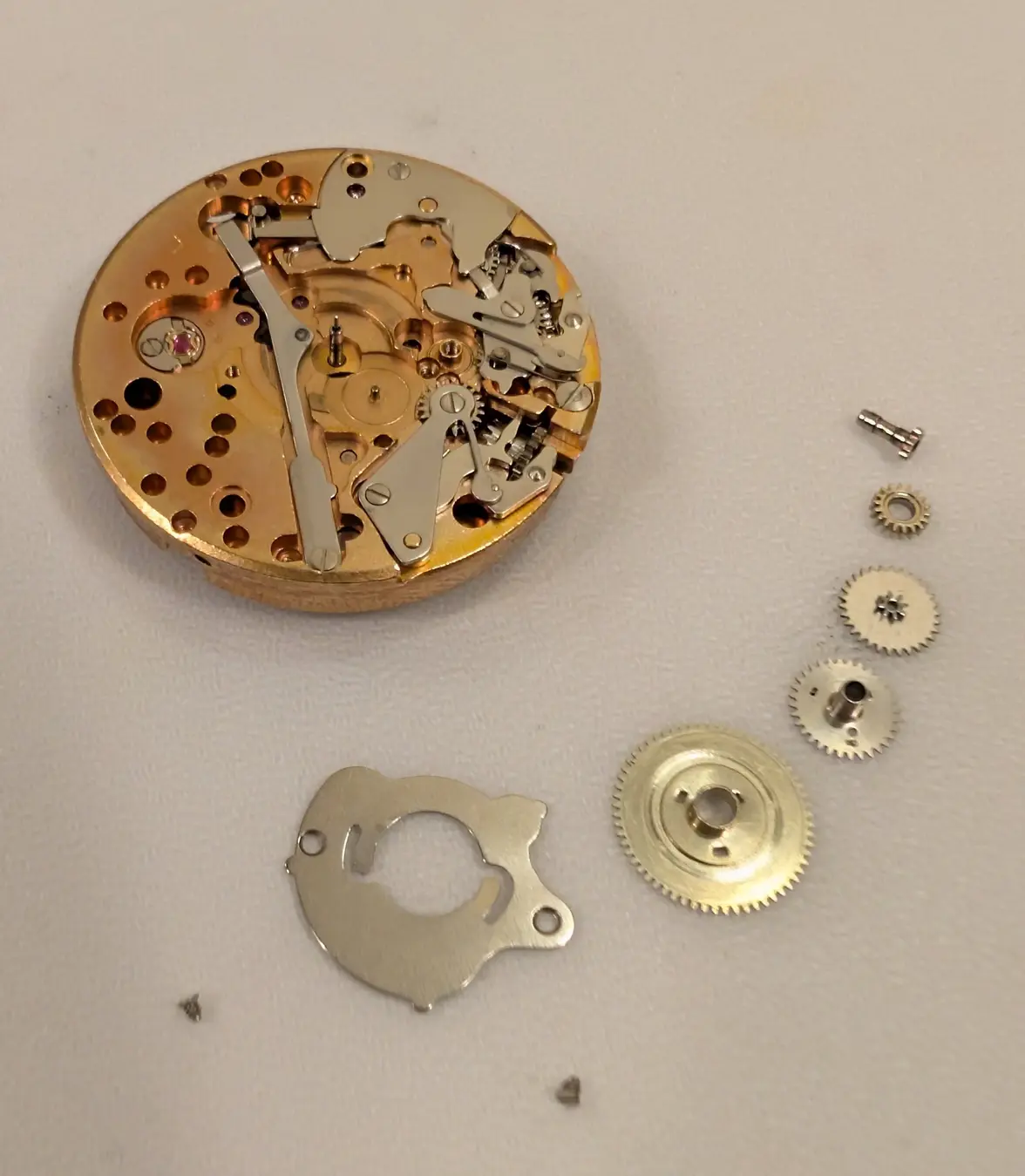
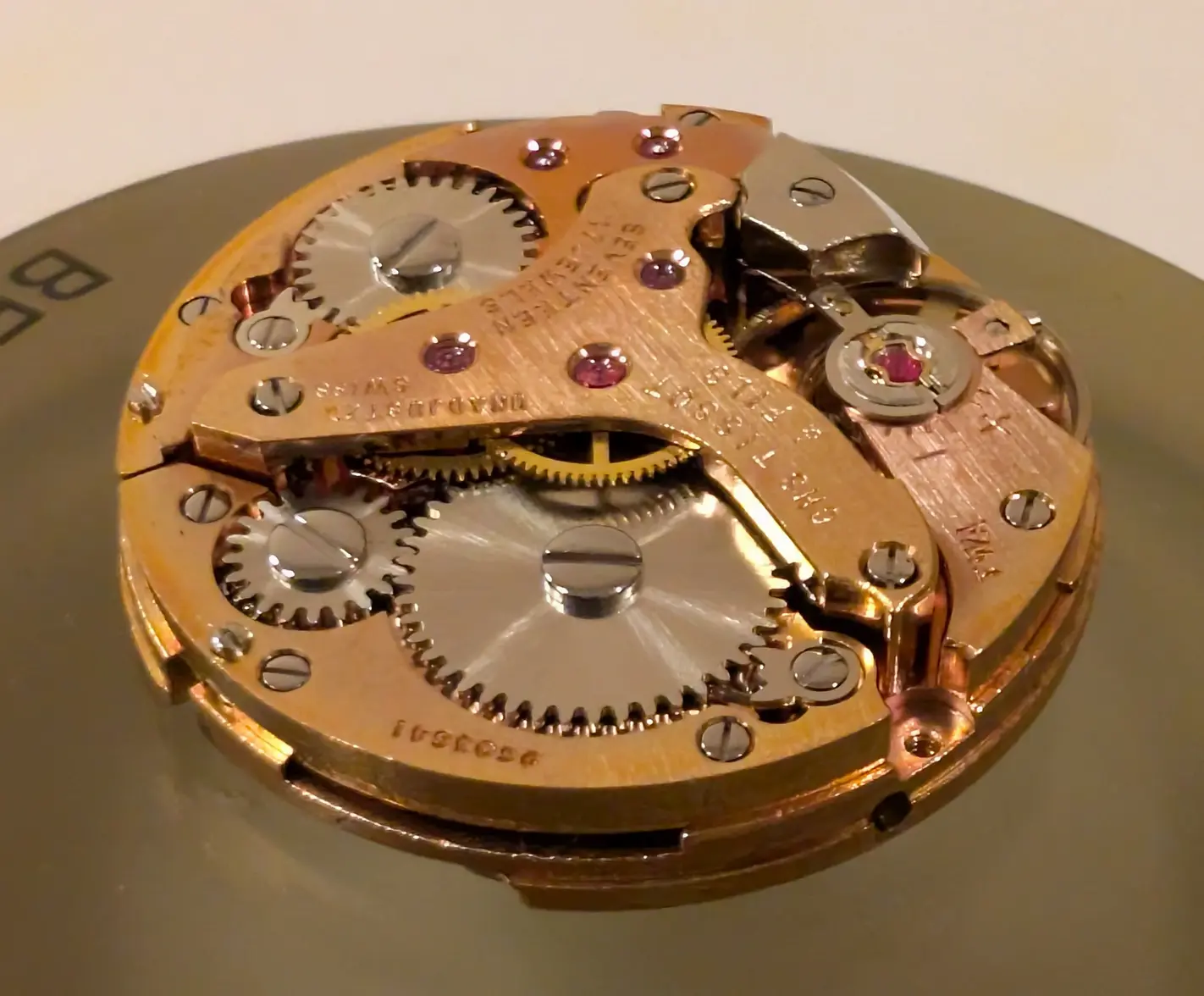
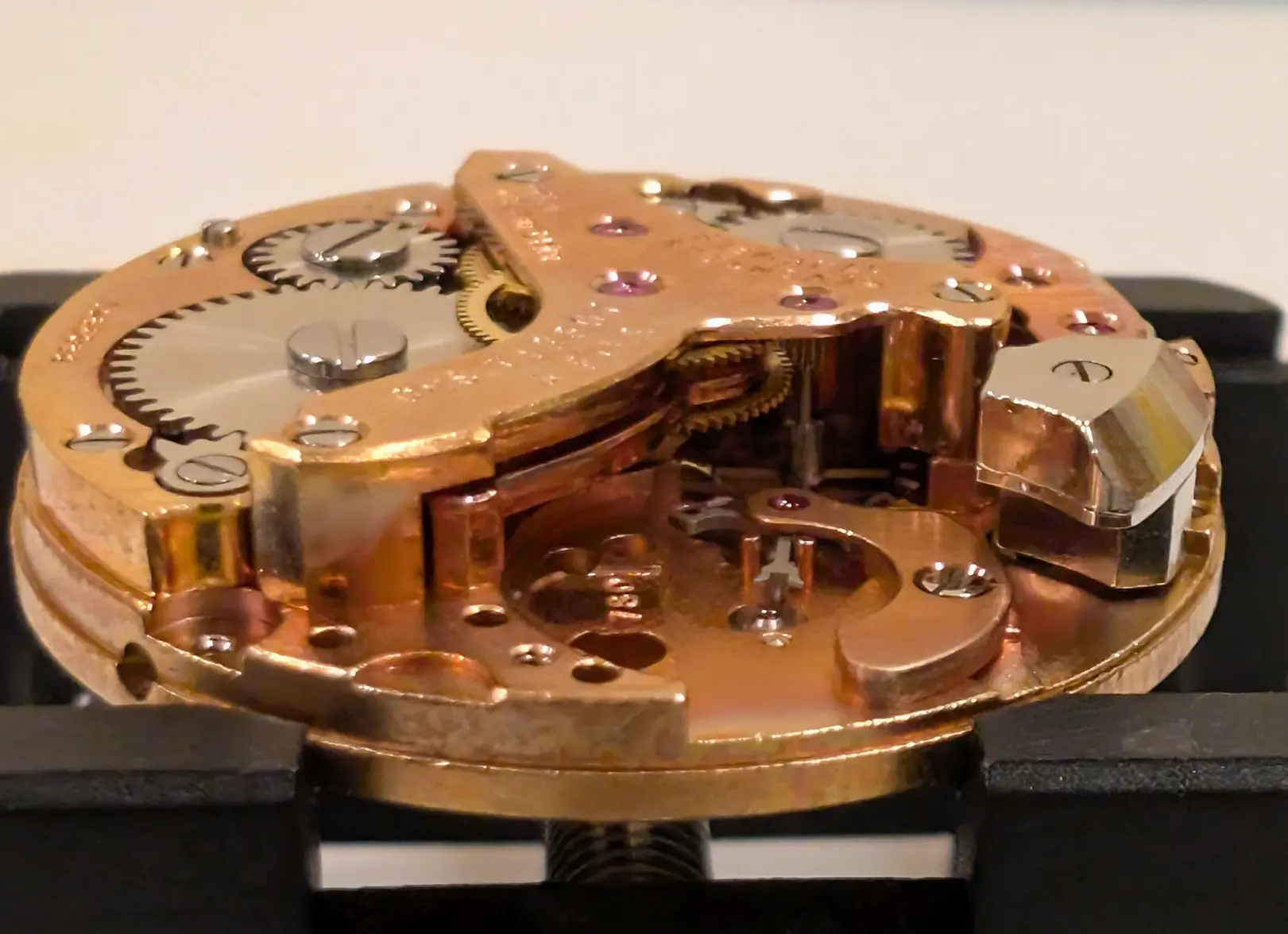
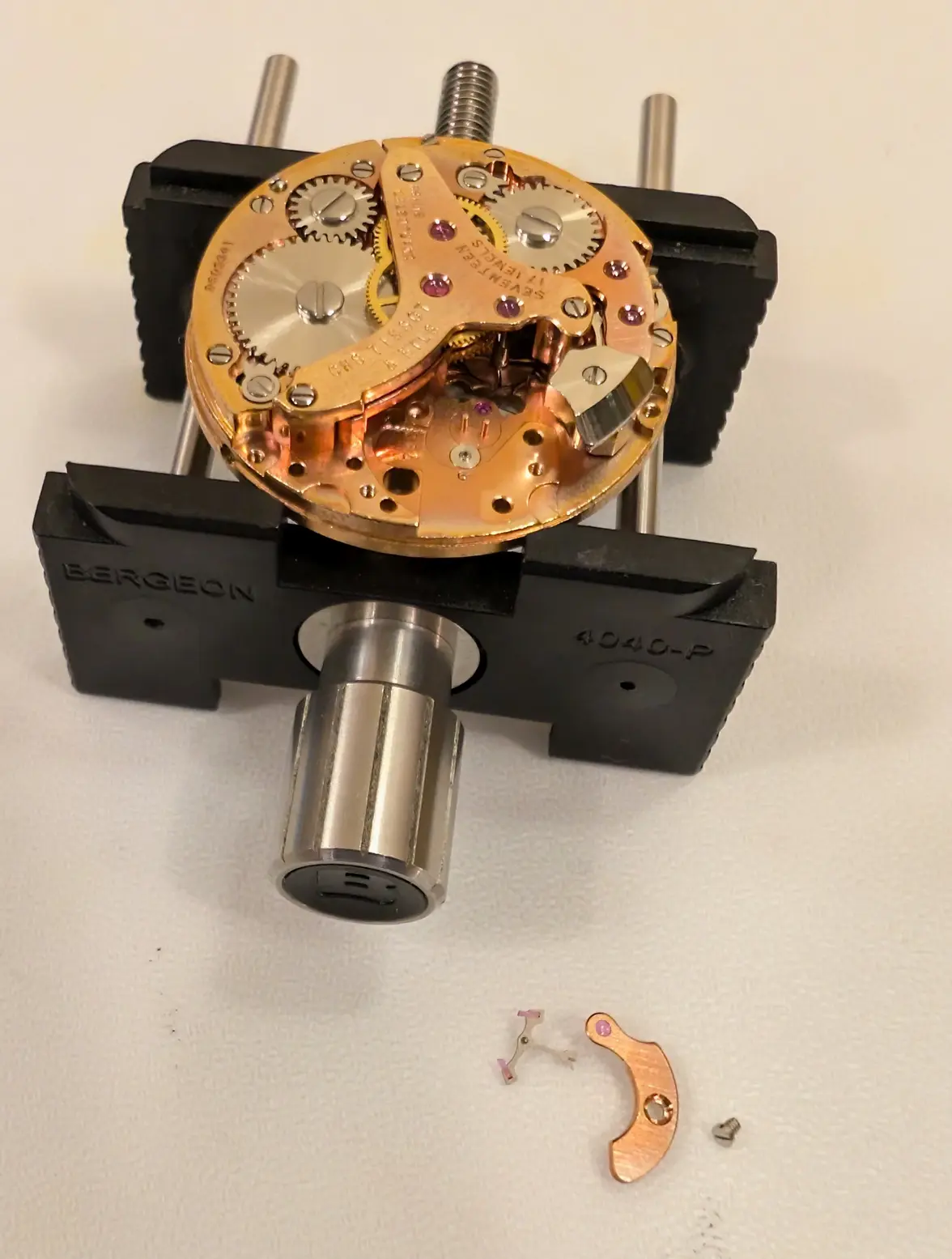
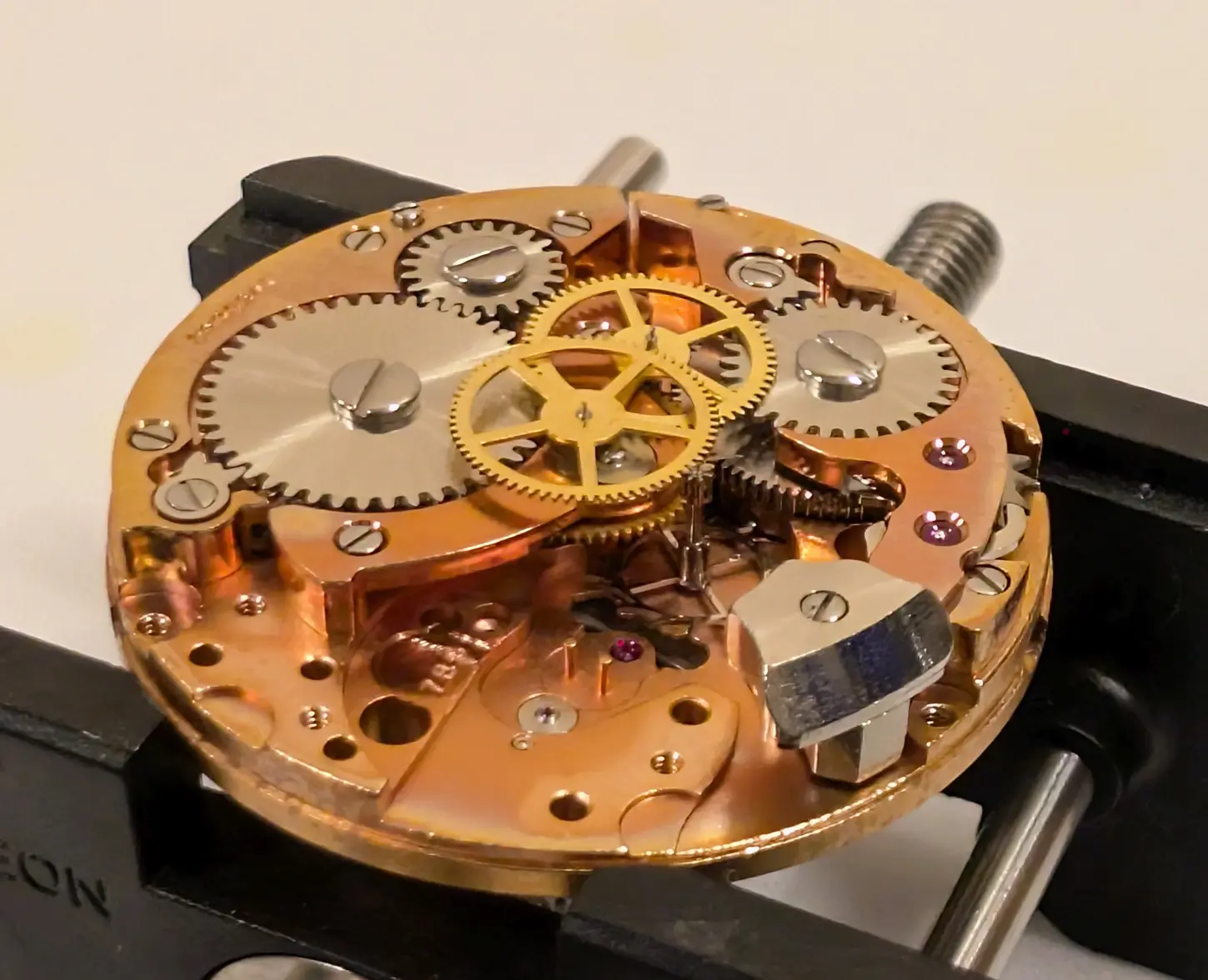
Over to the watchmaker side, & continuing with the breakdown.
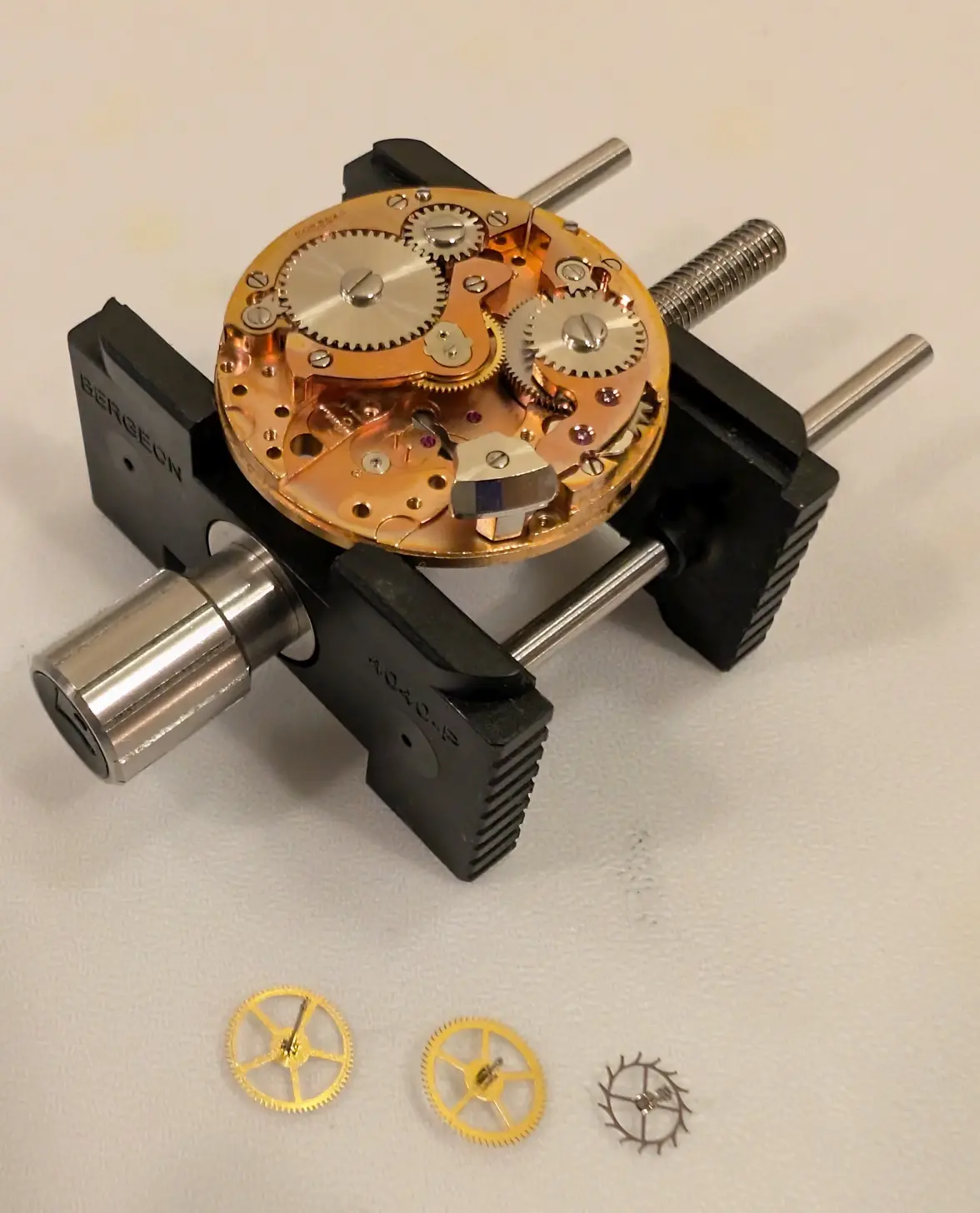
Back over to the dial side for the 2 sets of keyless works.
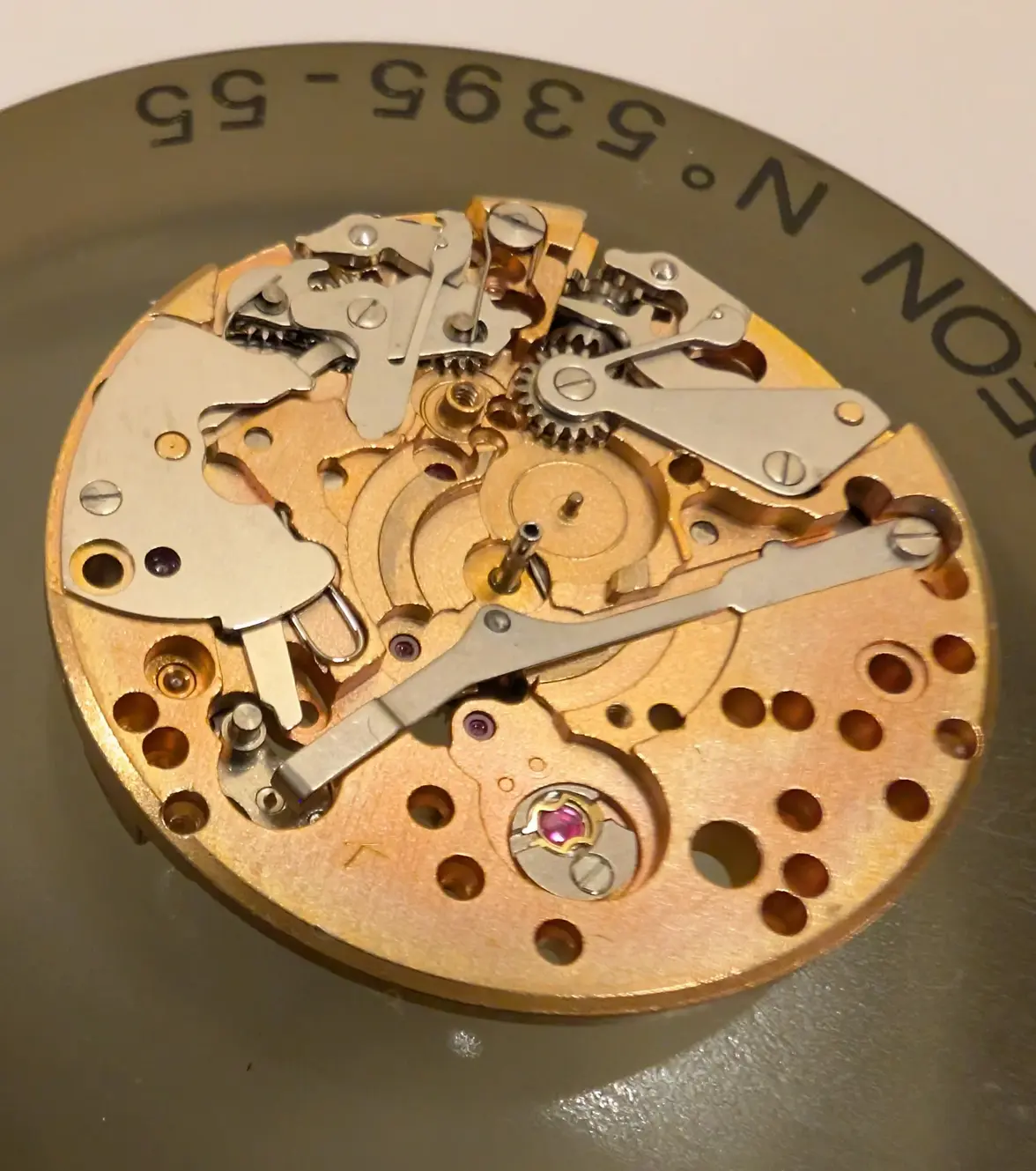
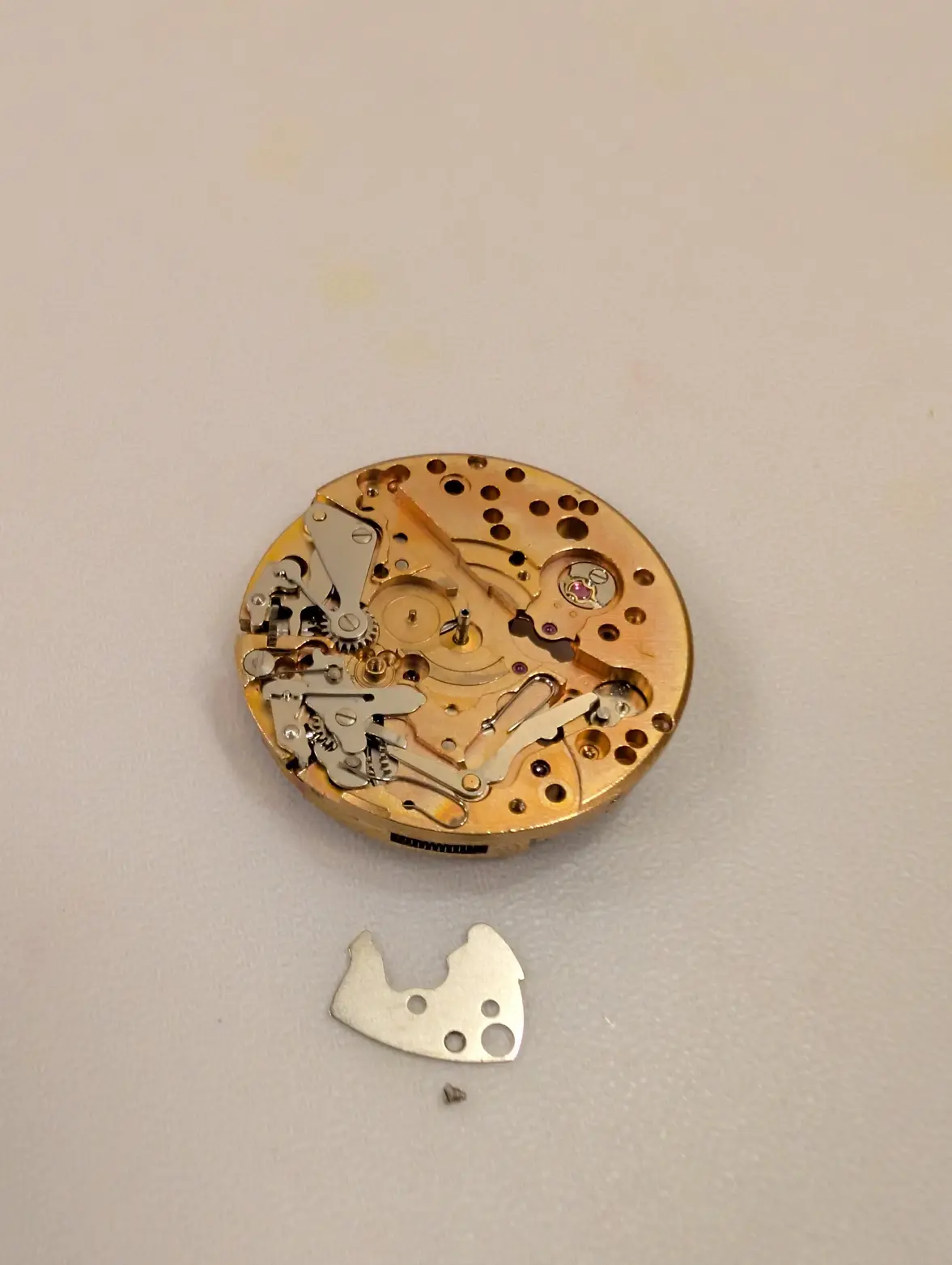
The Alarm Setting Wig-wag moves with the Alarm Crown. This will alternately engage or disengage with either the Alarm Wheel for setting the alarm time (crown out), or with the Alarm Crown Wheel to wind power into the Alarm Mainspring (crown in).
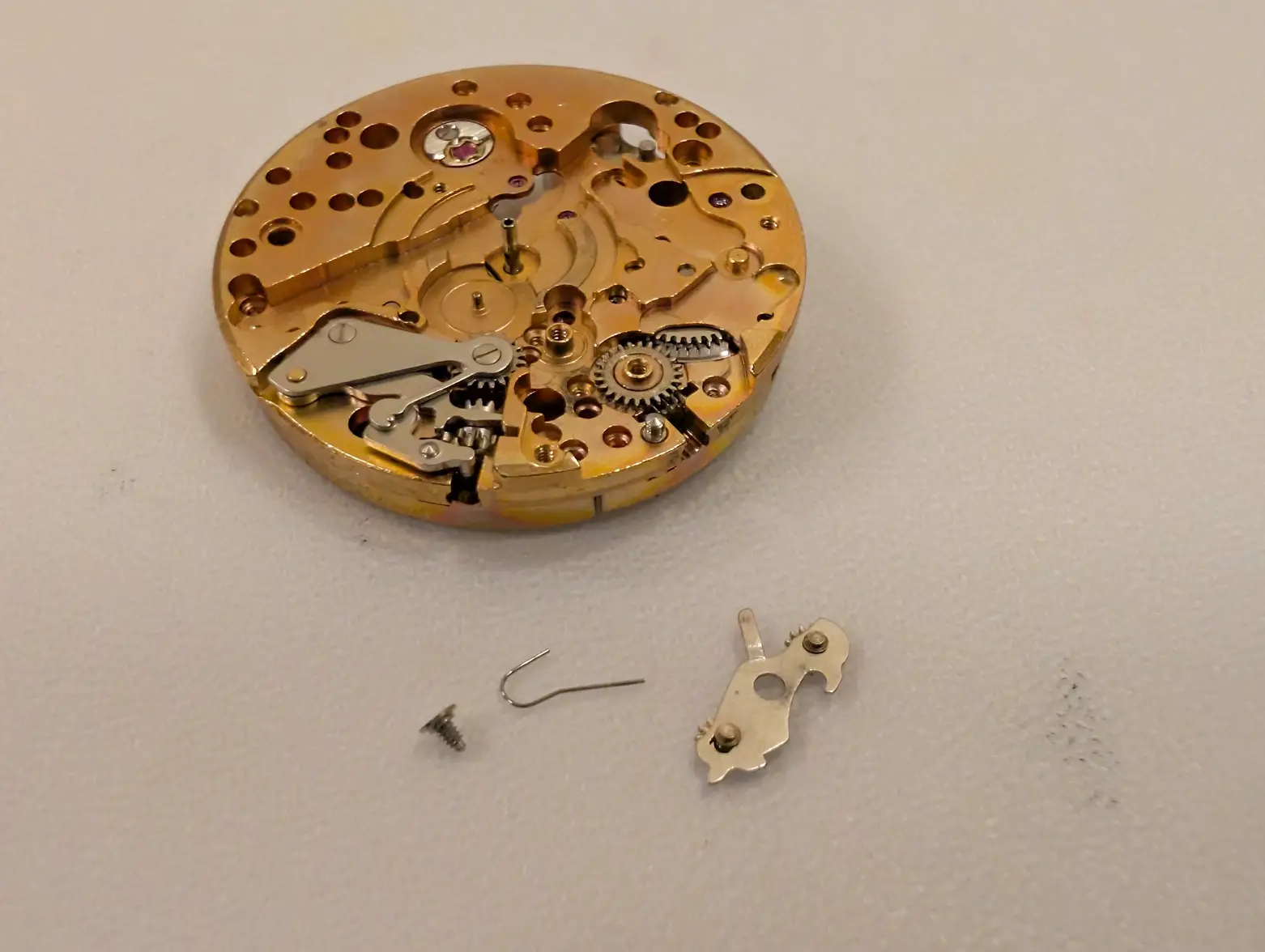
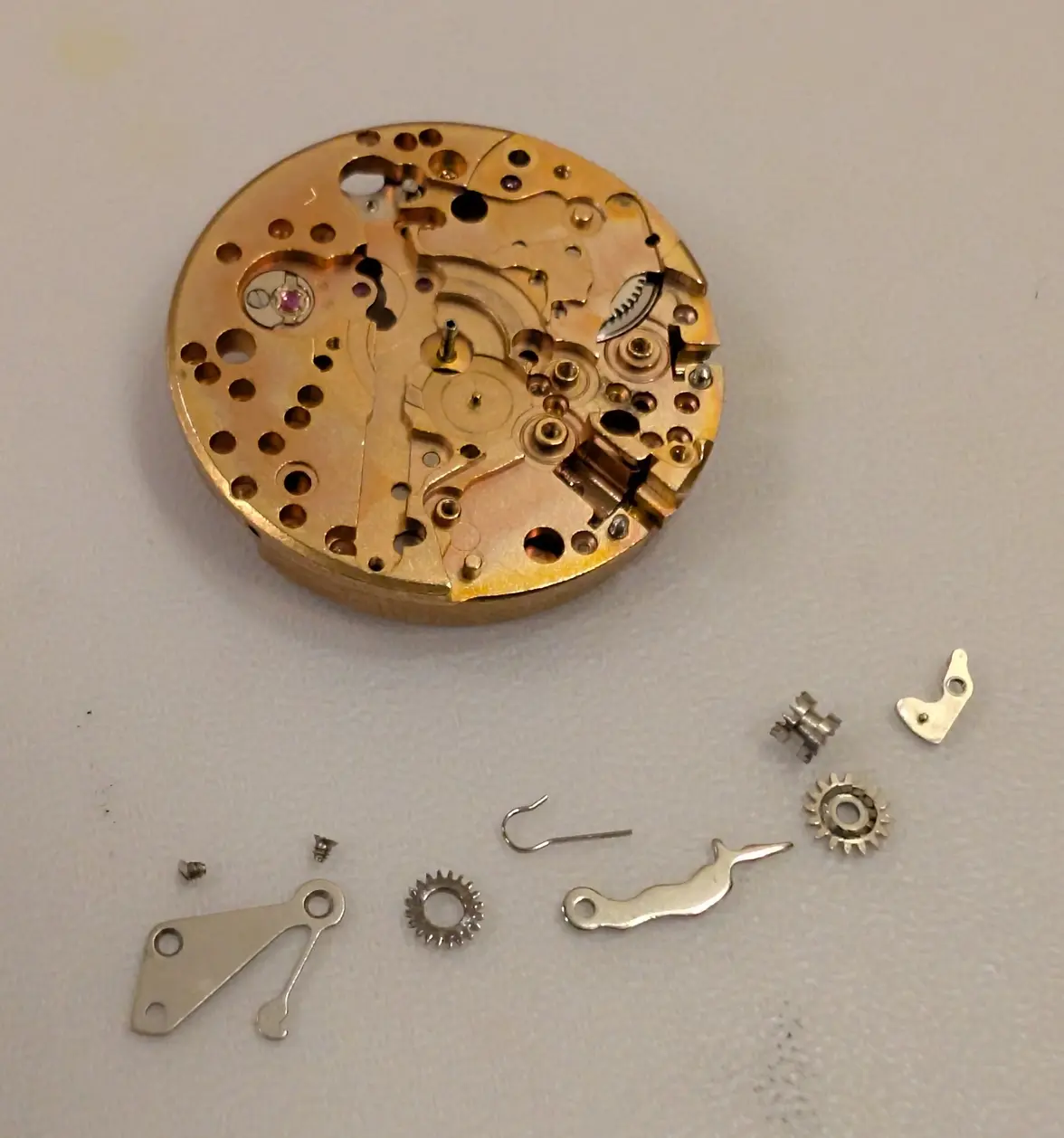
Back over to the watchmaker side to finish up the breakdown.
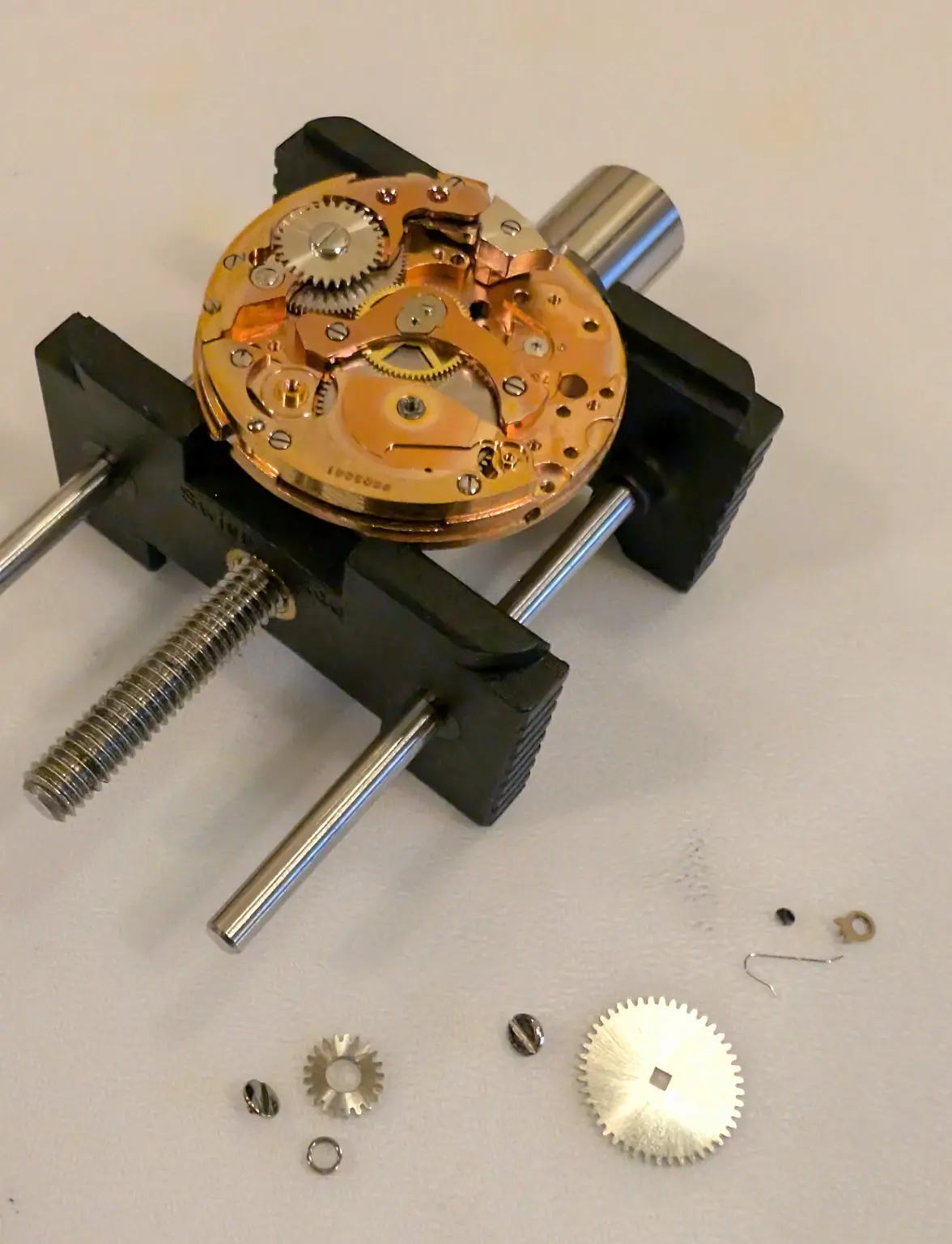
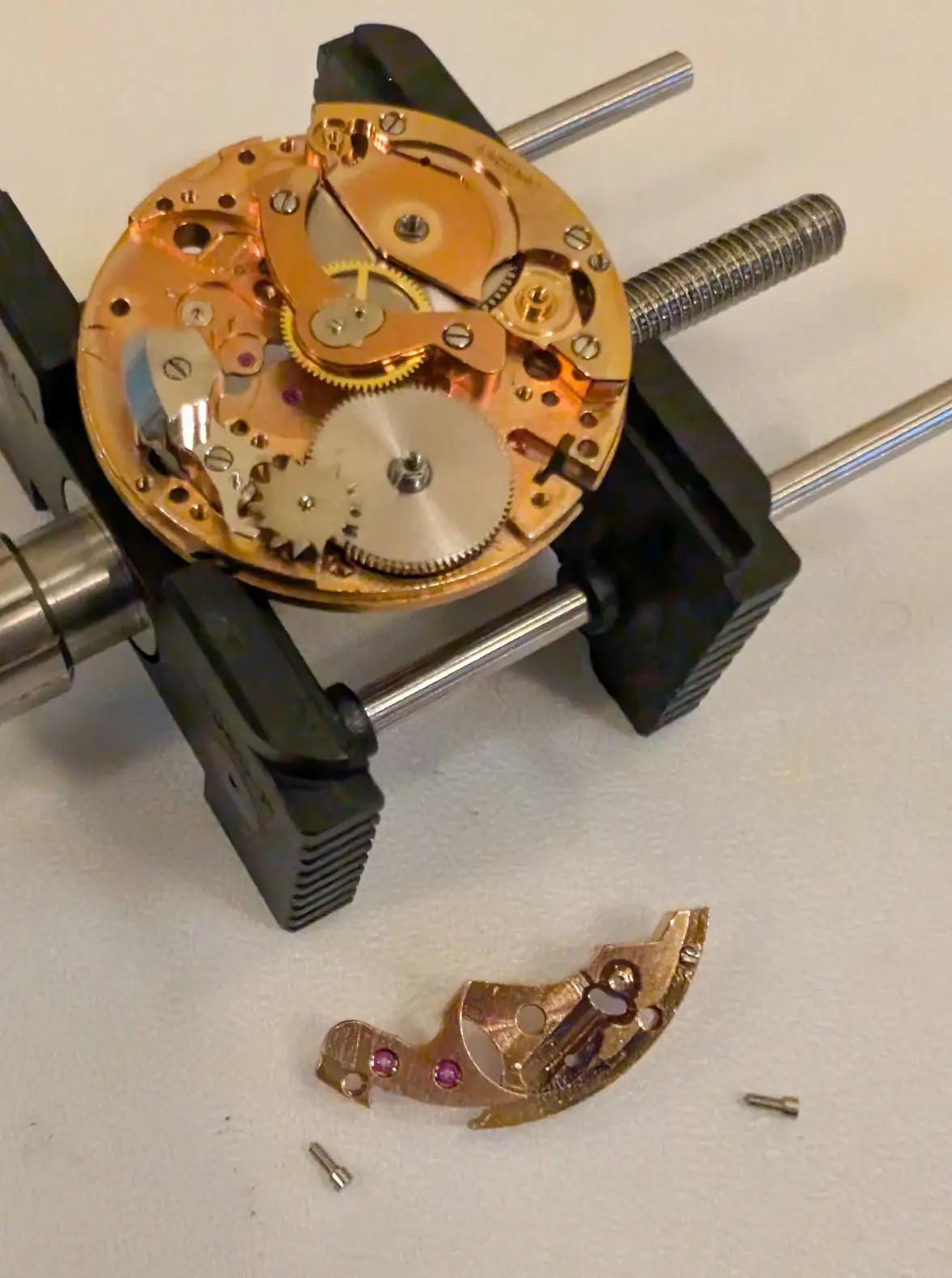
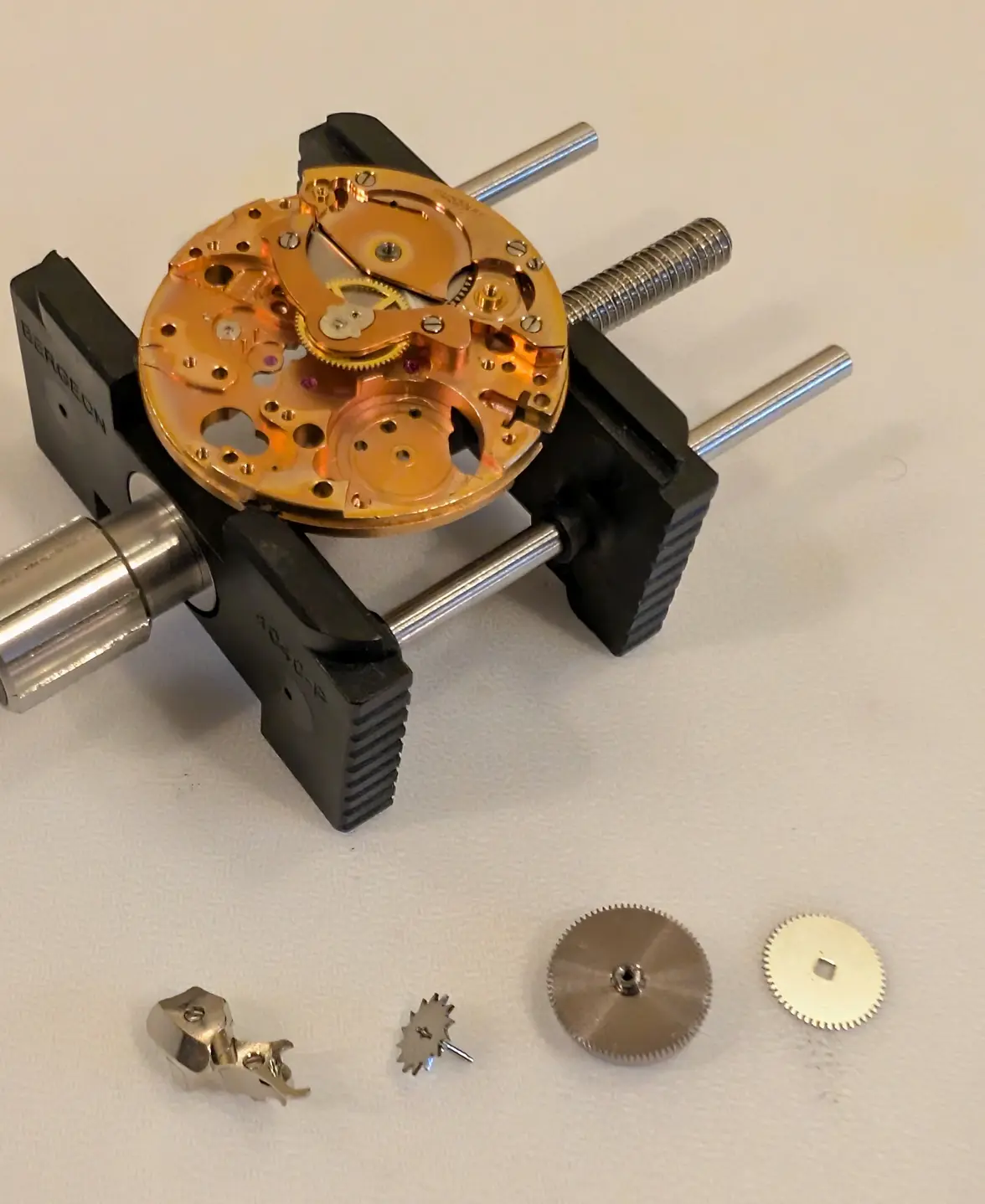
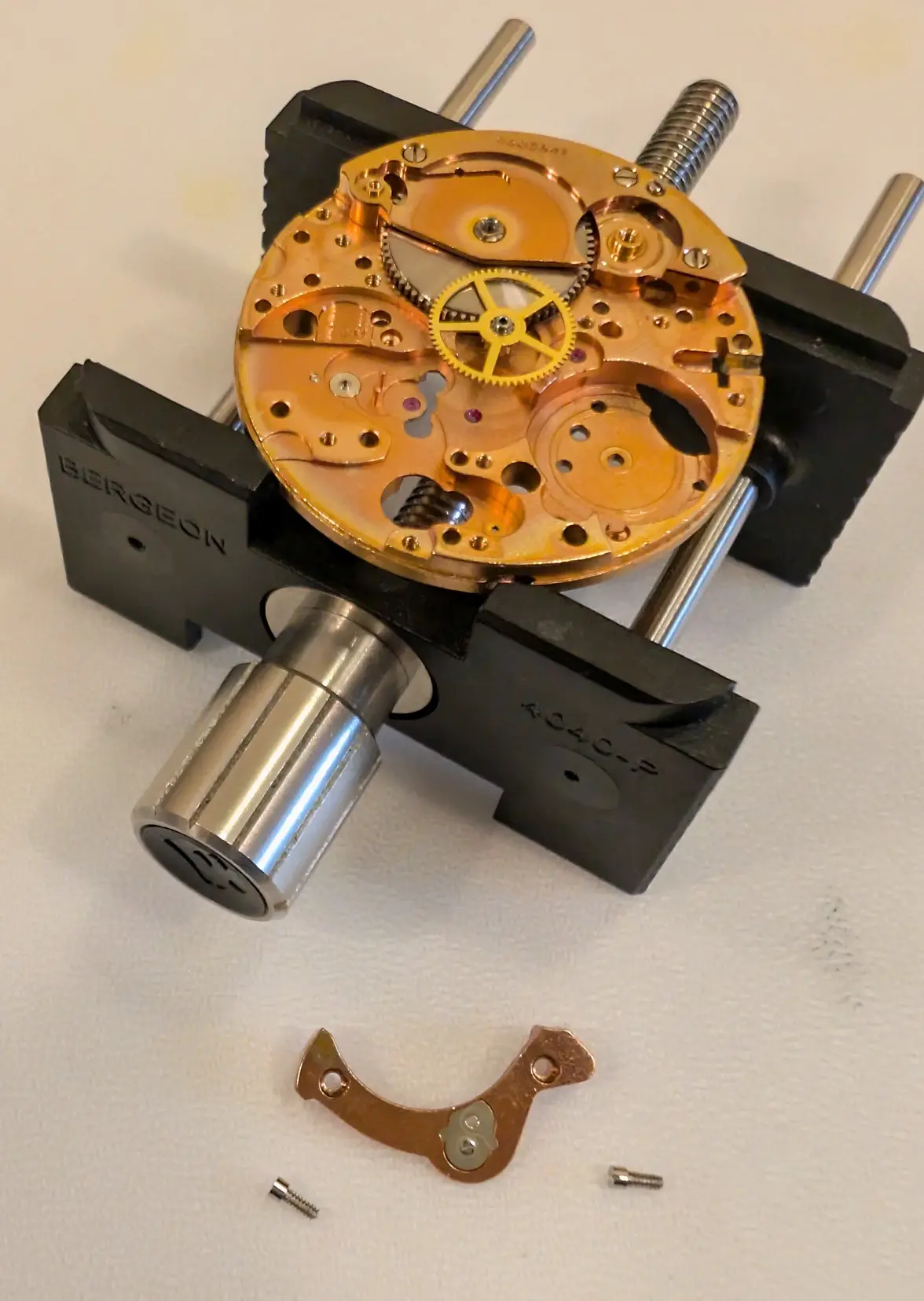
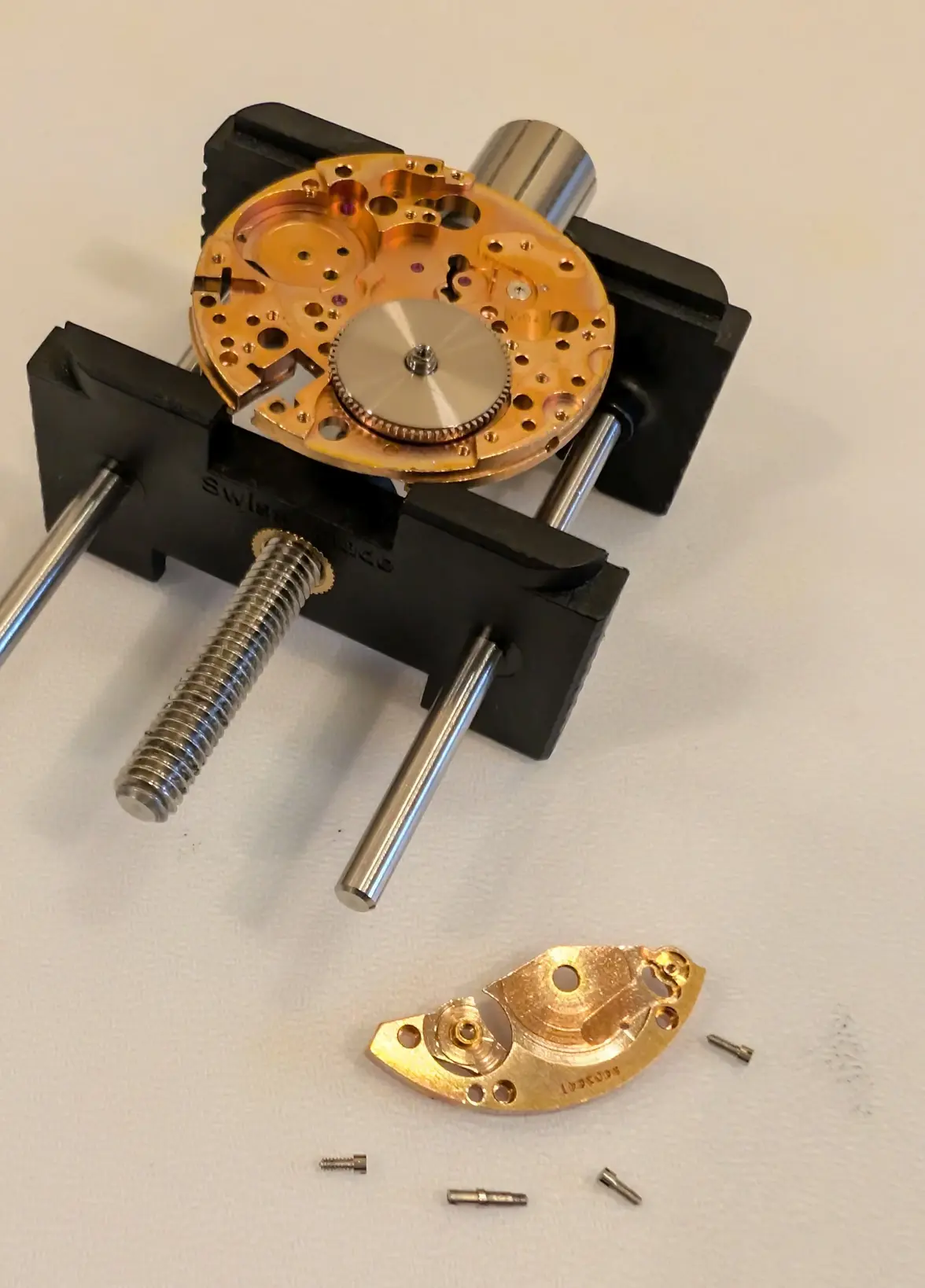
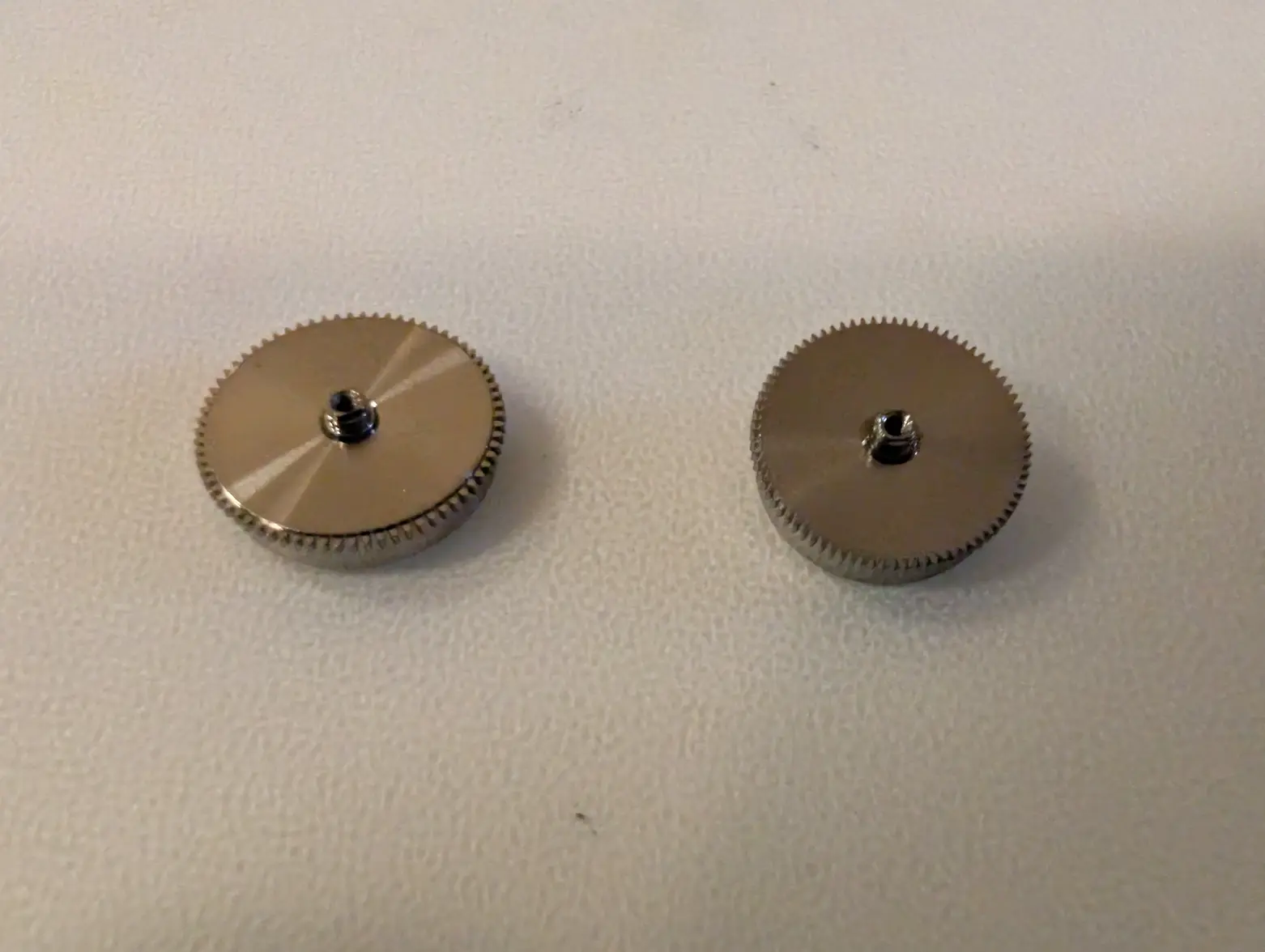
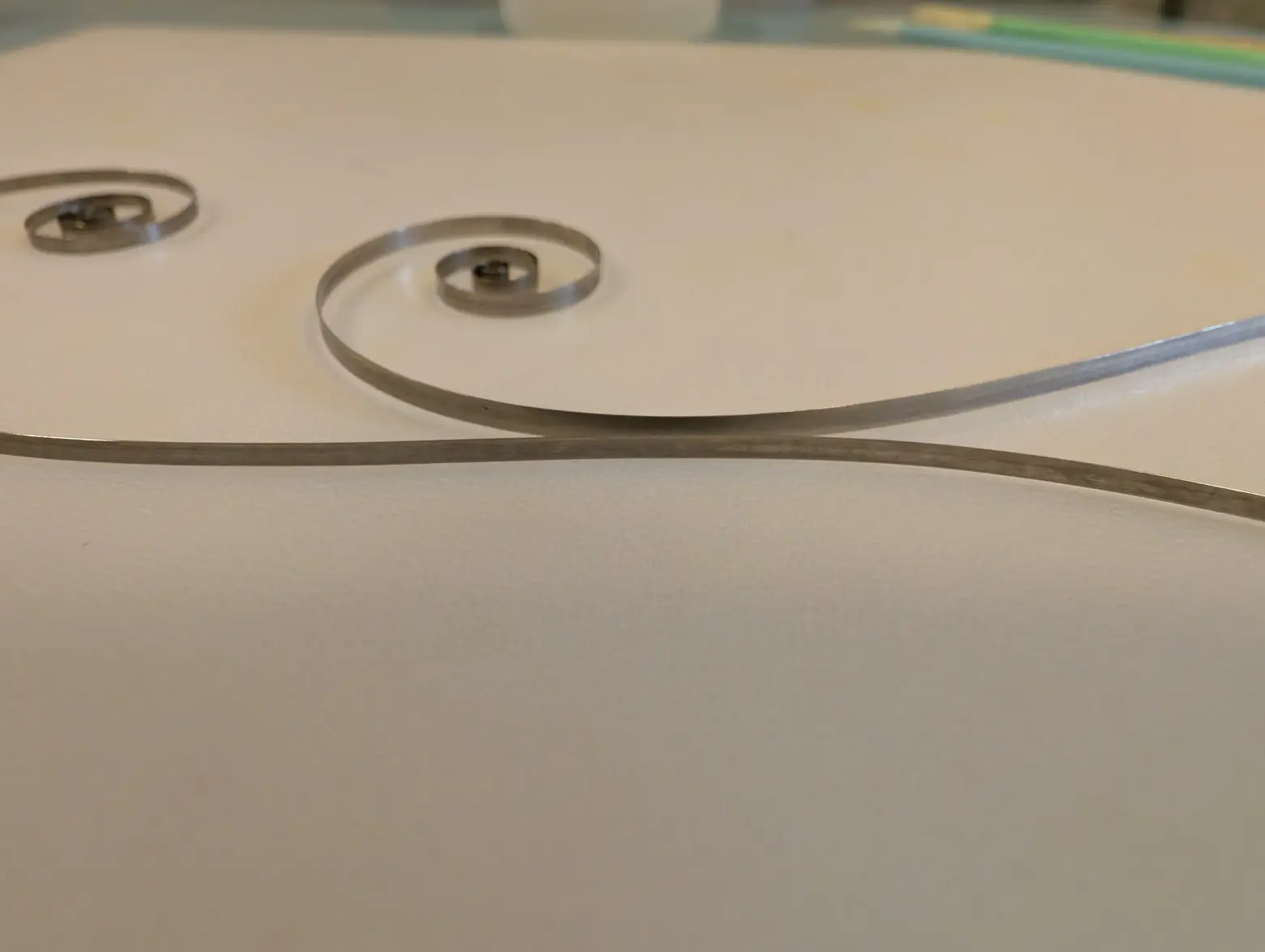
The two Mainspring Barrels are different size & shape. The timekeeping side (l) needs long duration, even & steady power delivery, the alarm side (r) needs high power, short duration discharge.
 Aids in the packaging for the movement component layout, & in the addressing the different power requirements for the two side of the movement.
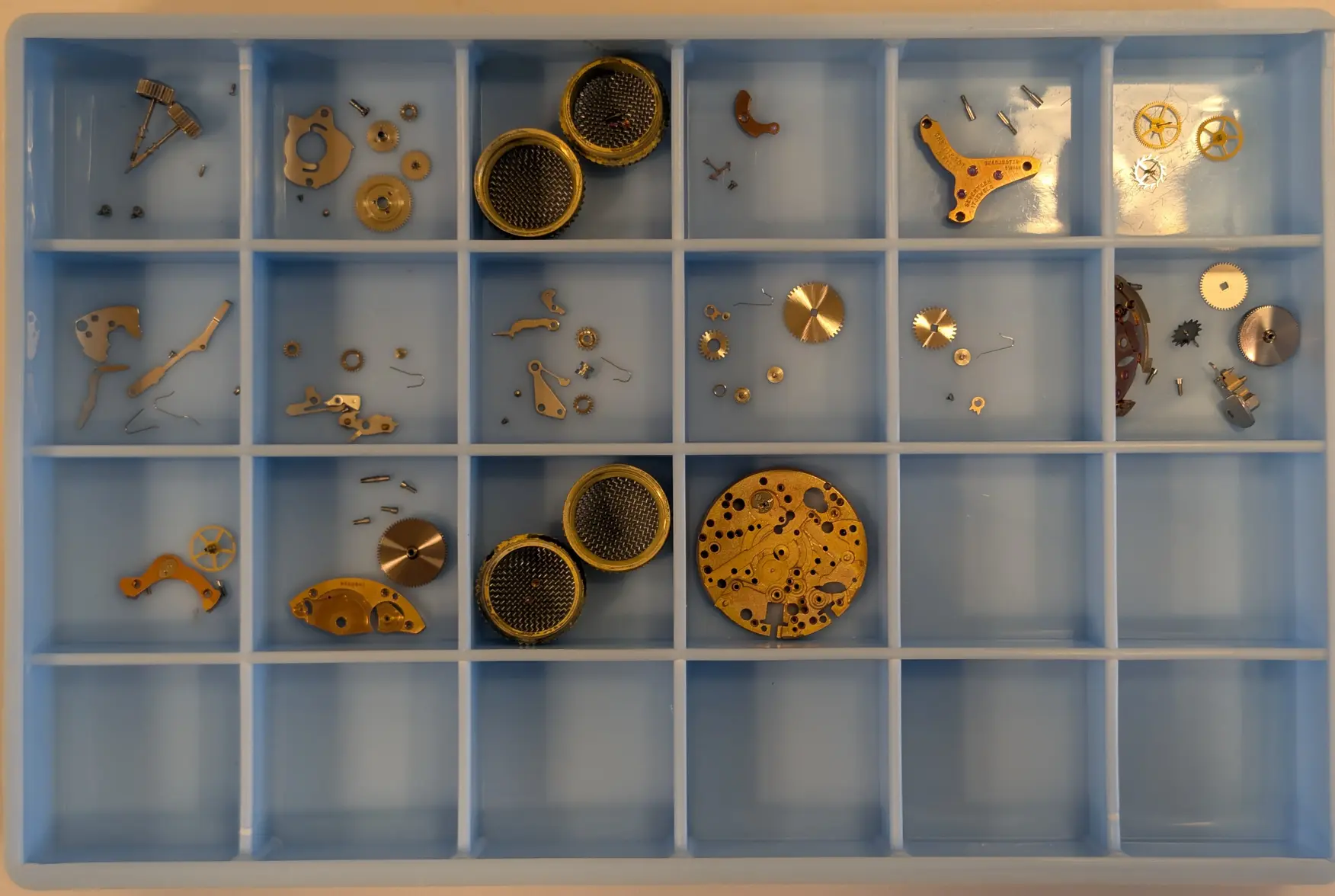
Substantially higher number of individual components compared to your typical time-only watch movement.
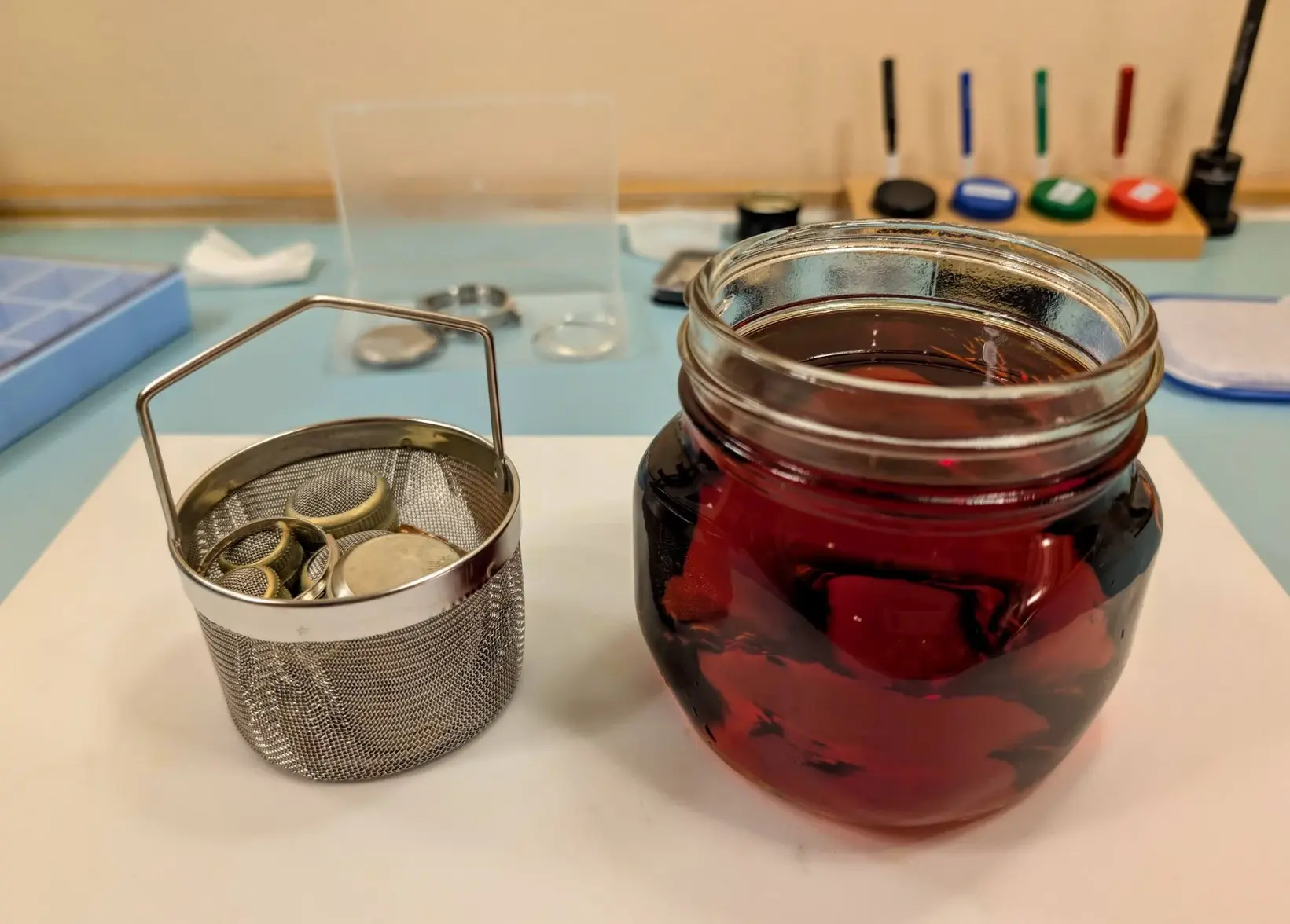
Off to the cleaner
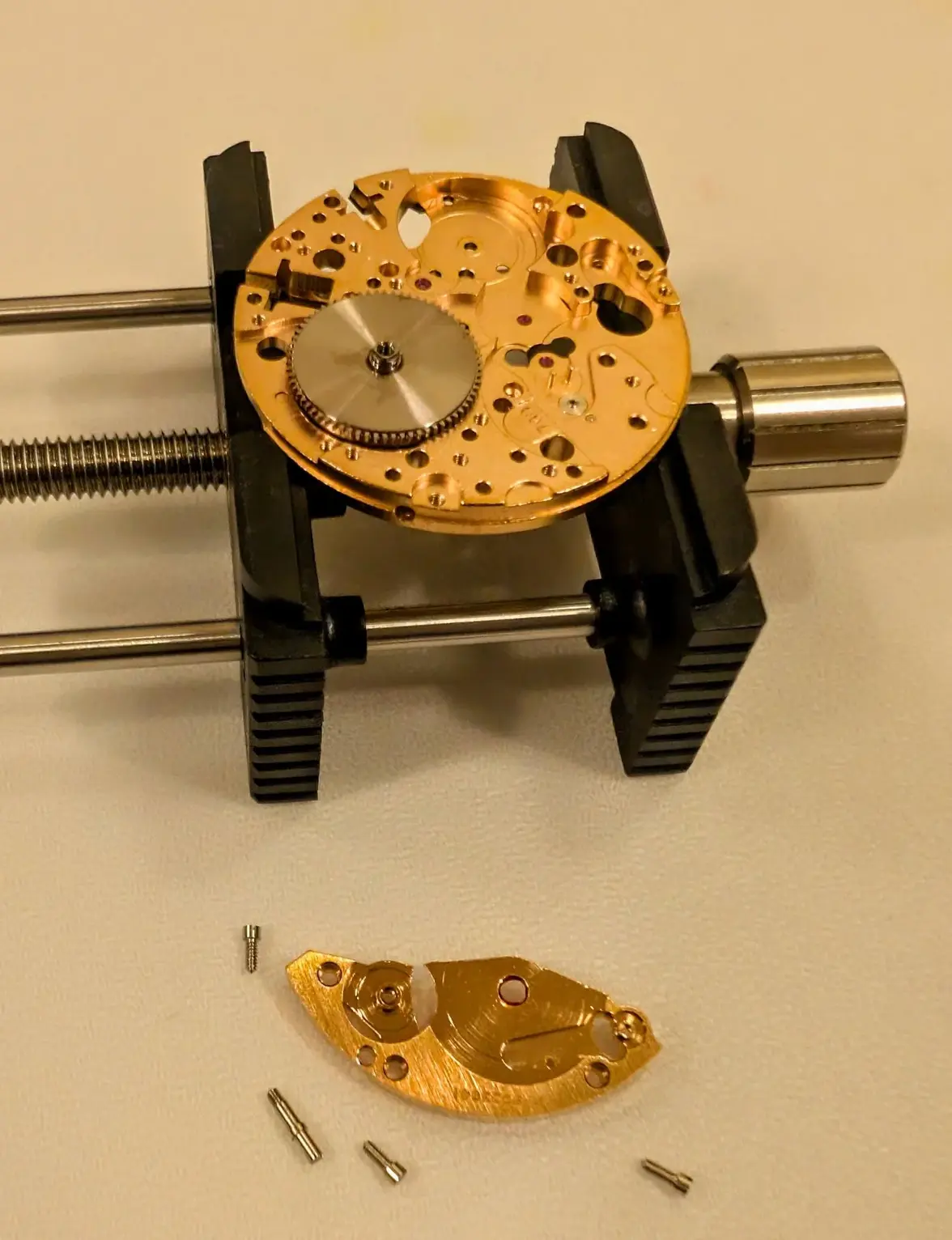
And now on to the reassembly, starting on the watchmaker side with the Timekeeping Mainspring Barrel and Barrel Bridge.
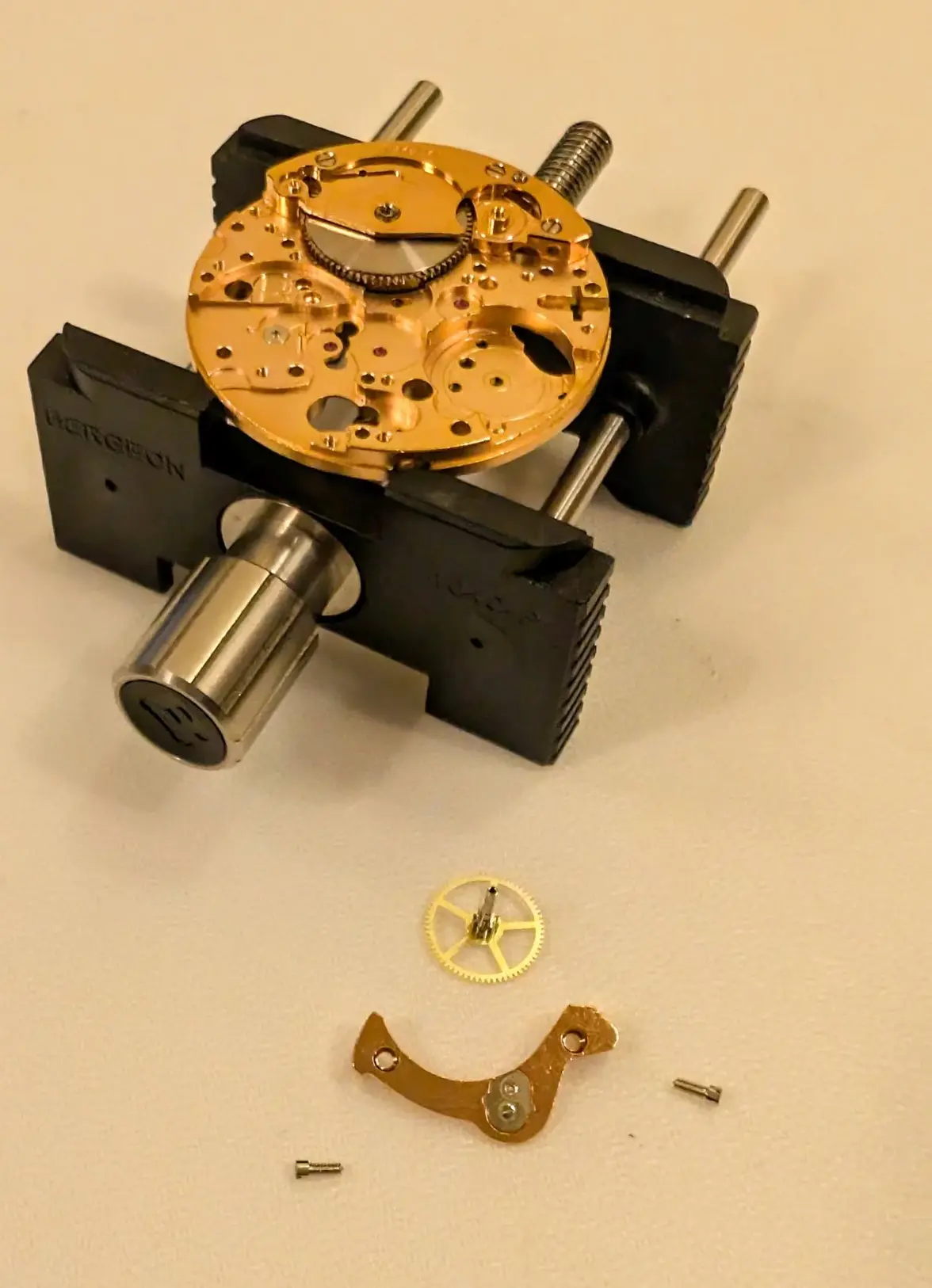
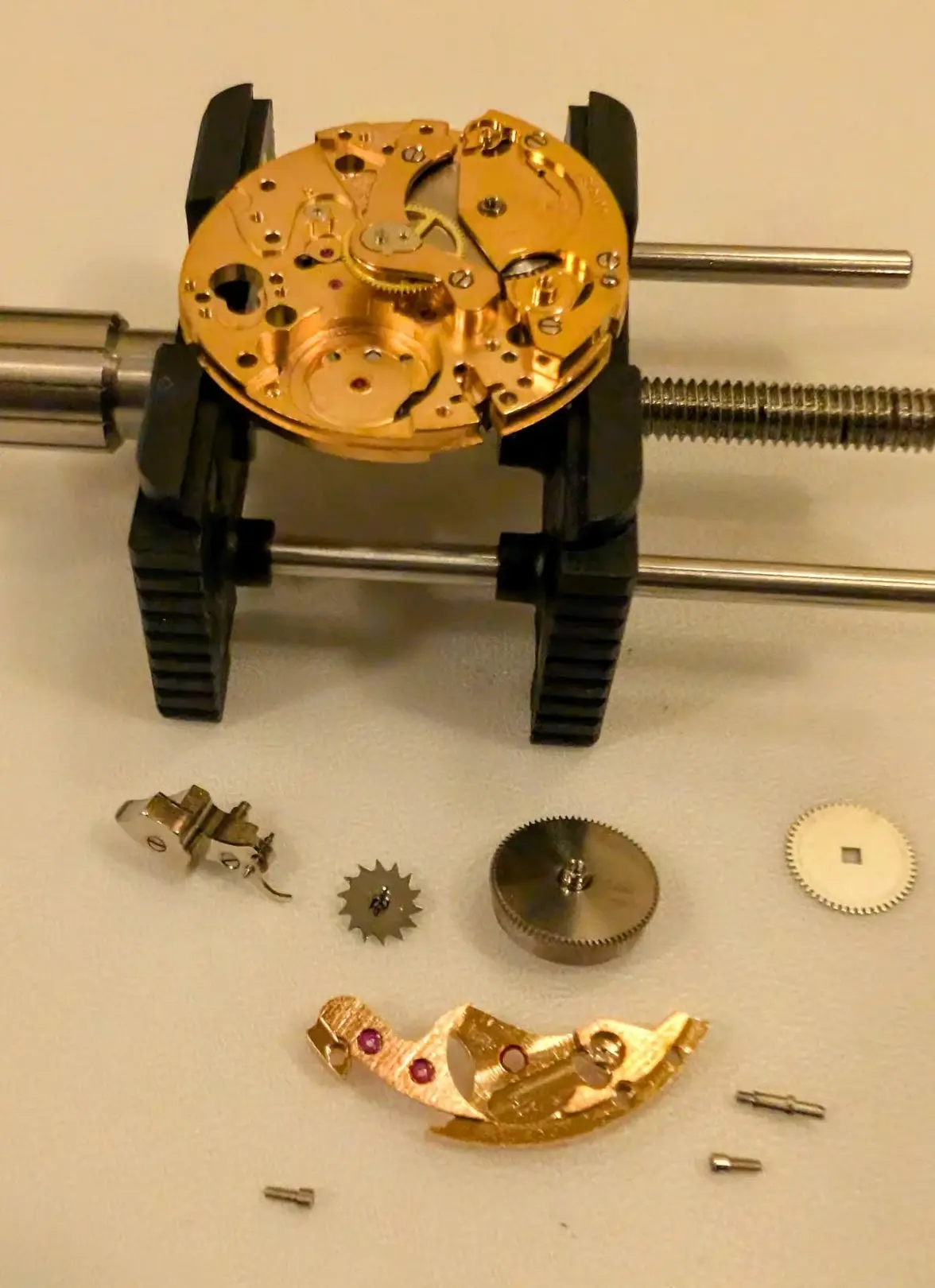
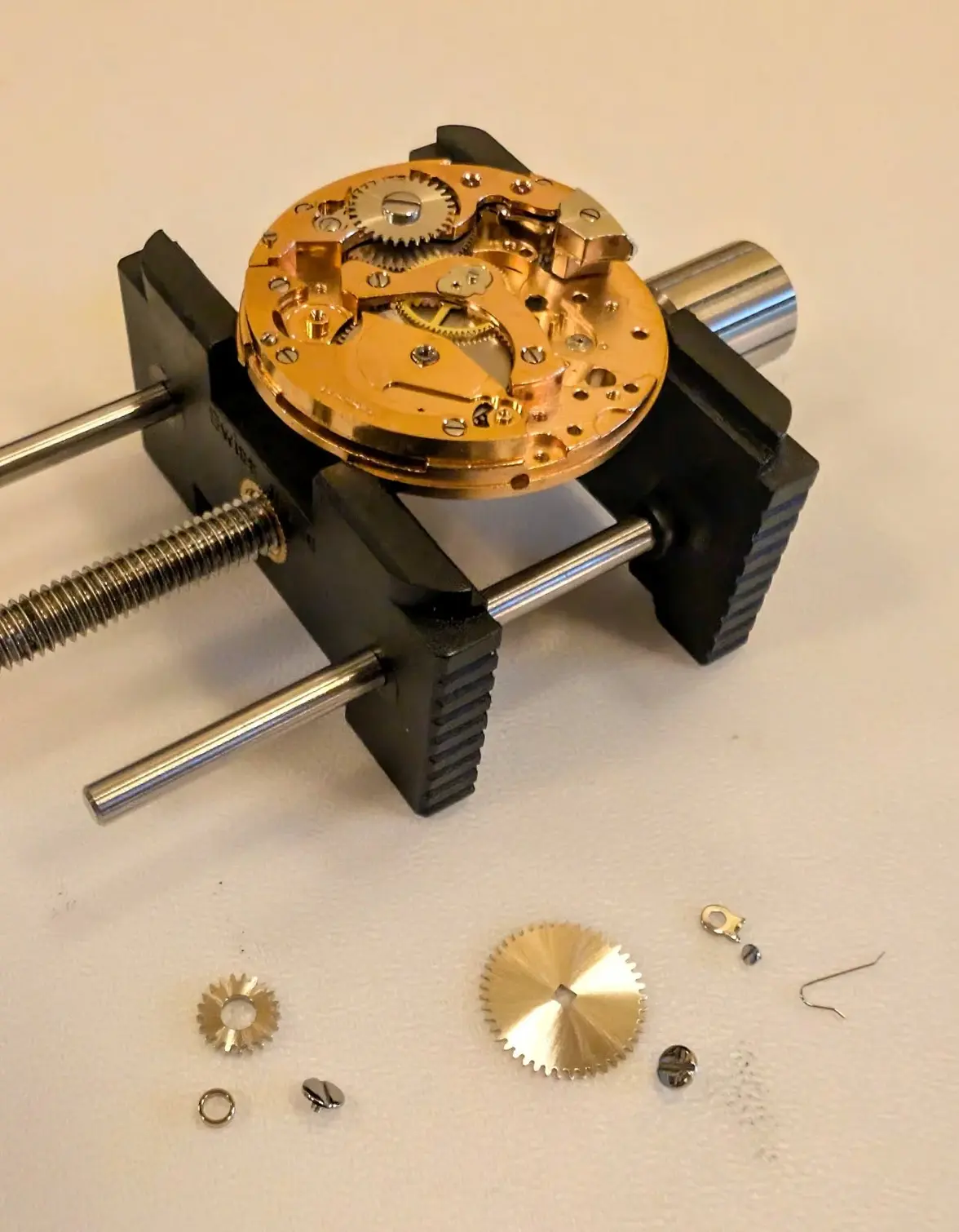
Both sets of winding works back in place.
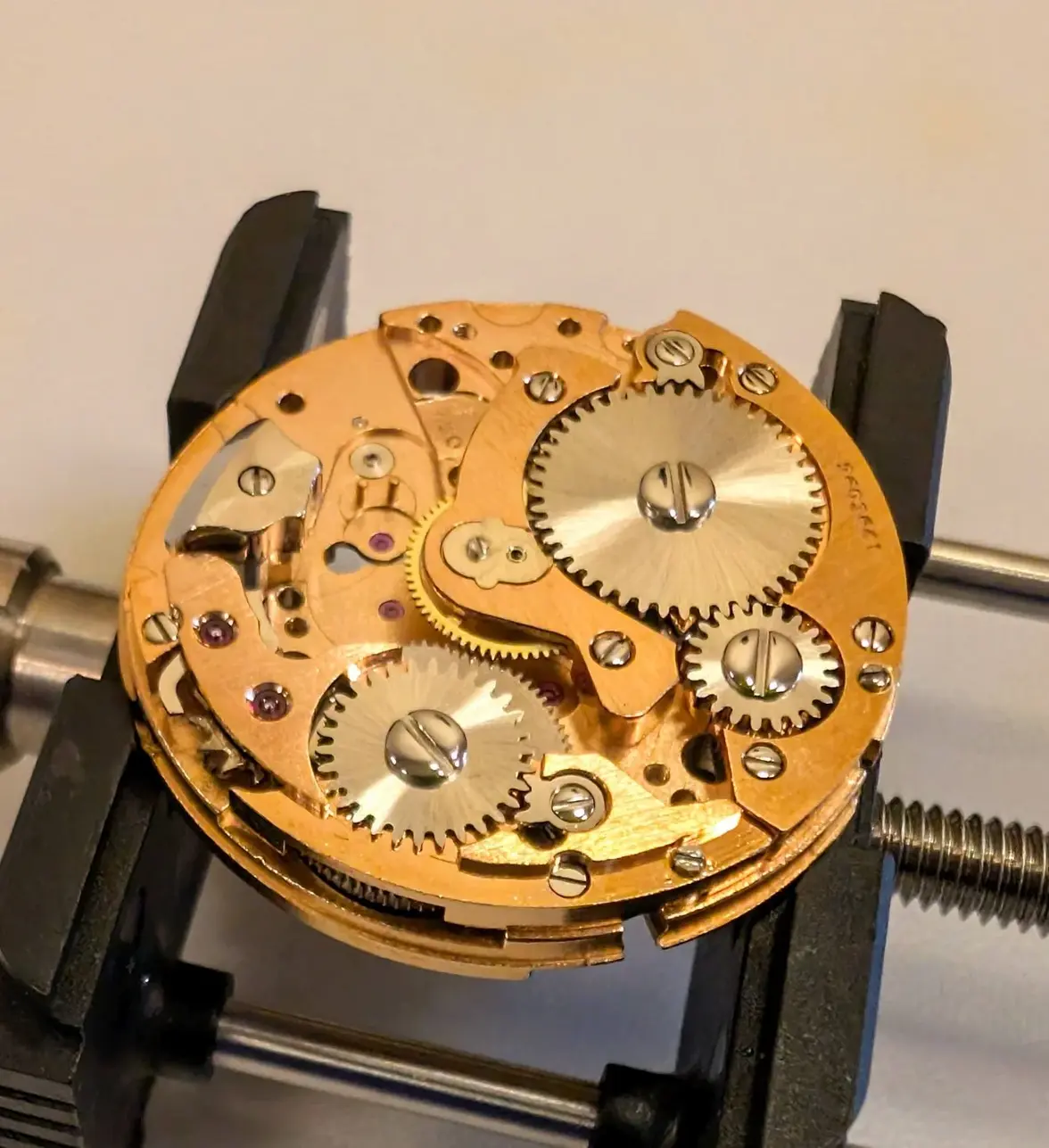
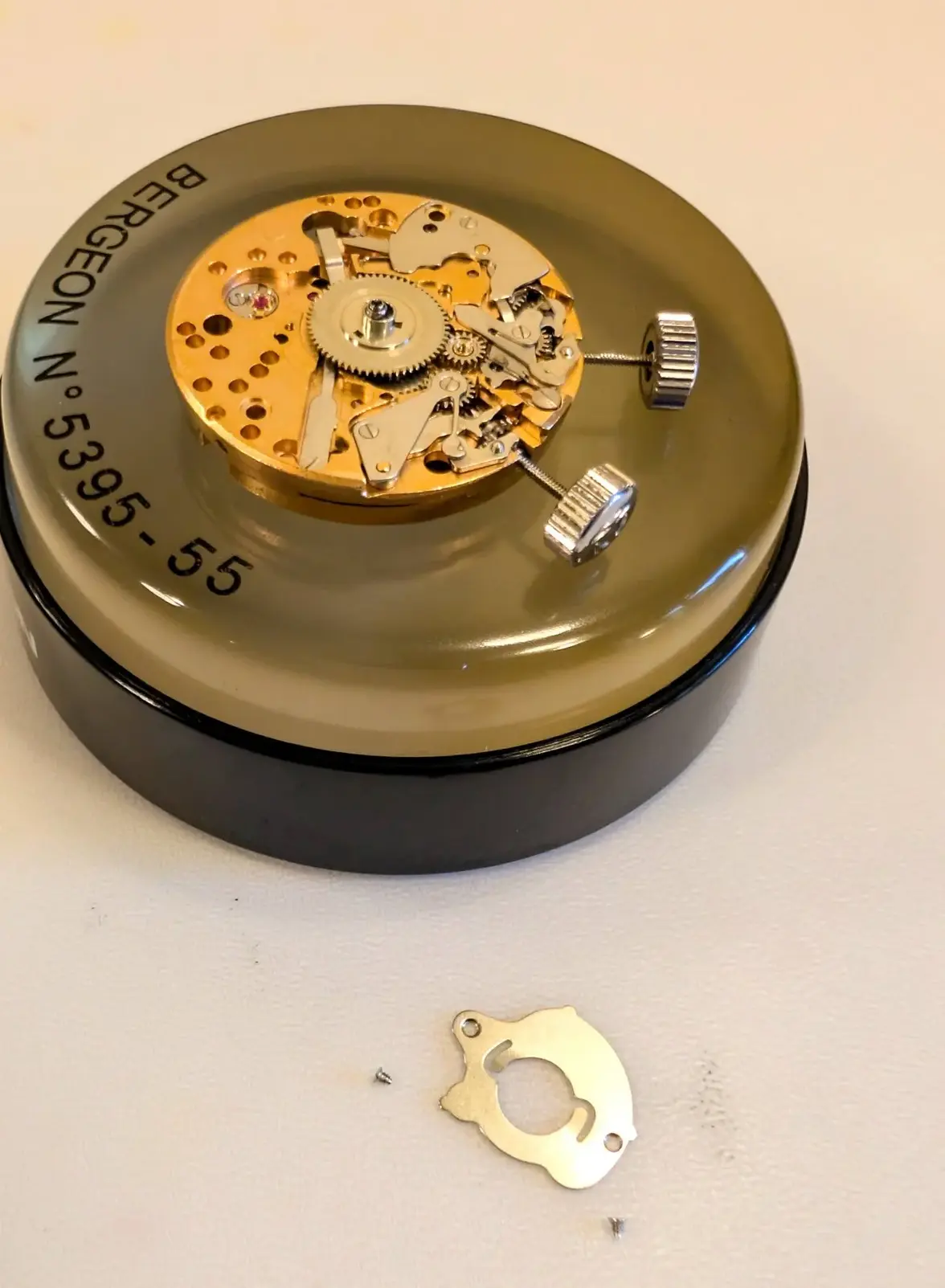
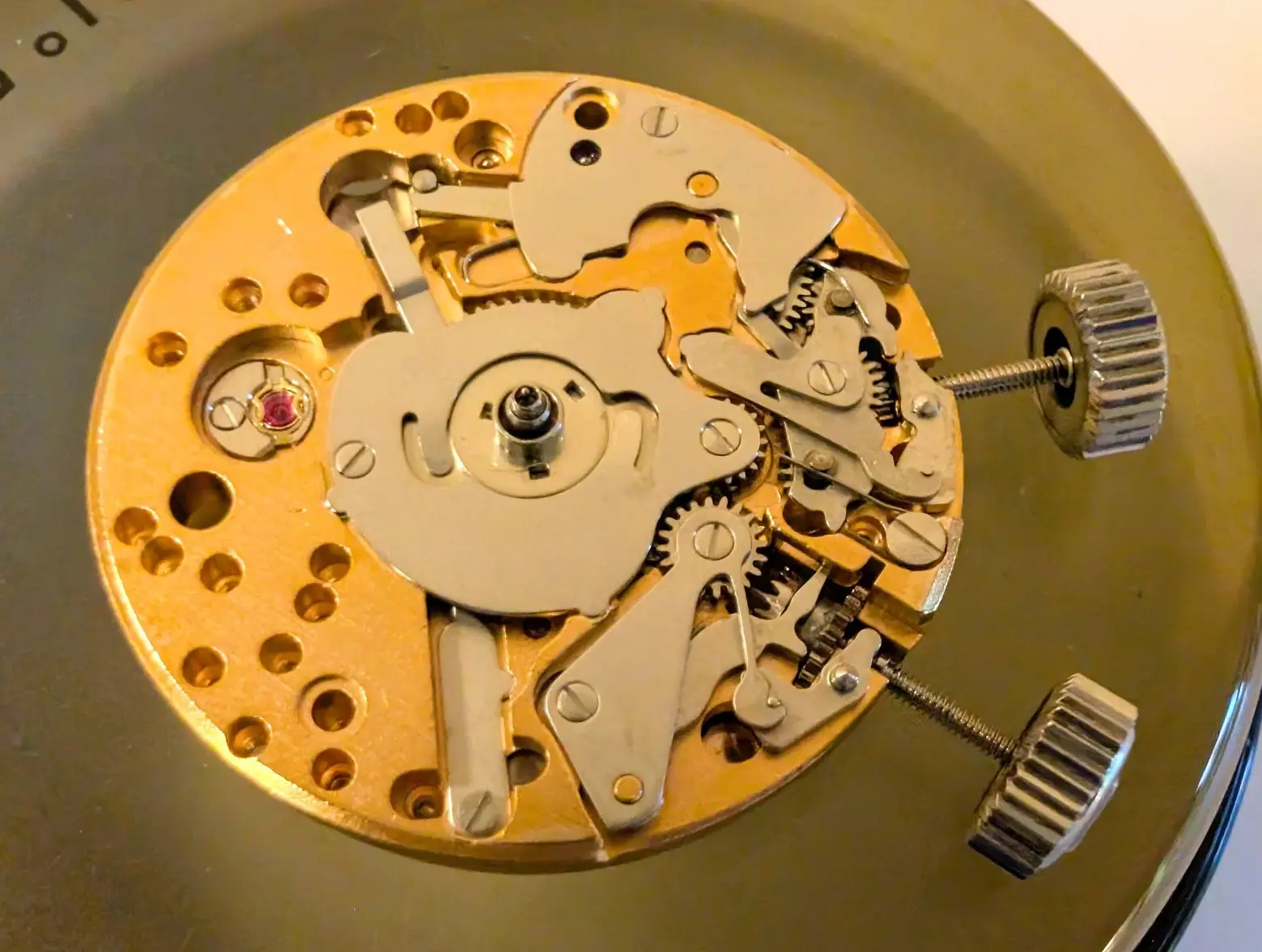
Over to the dial side and continuing the keyless works reassembly.
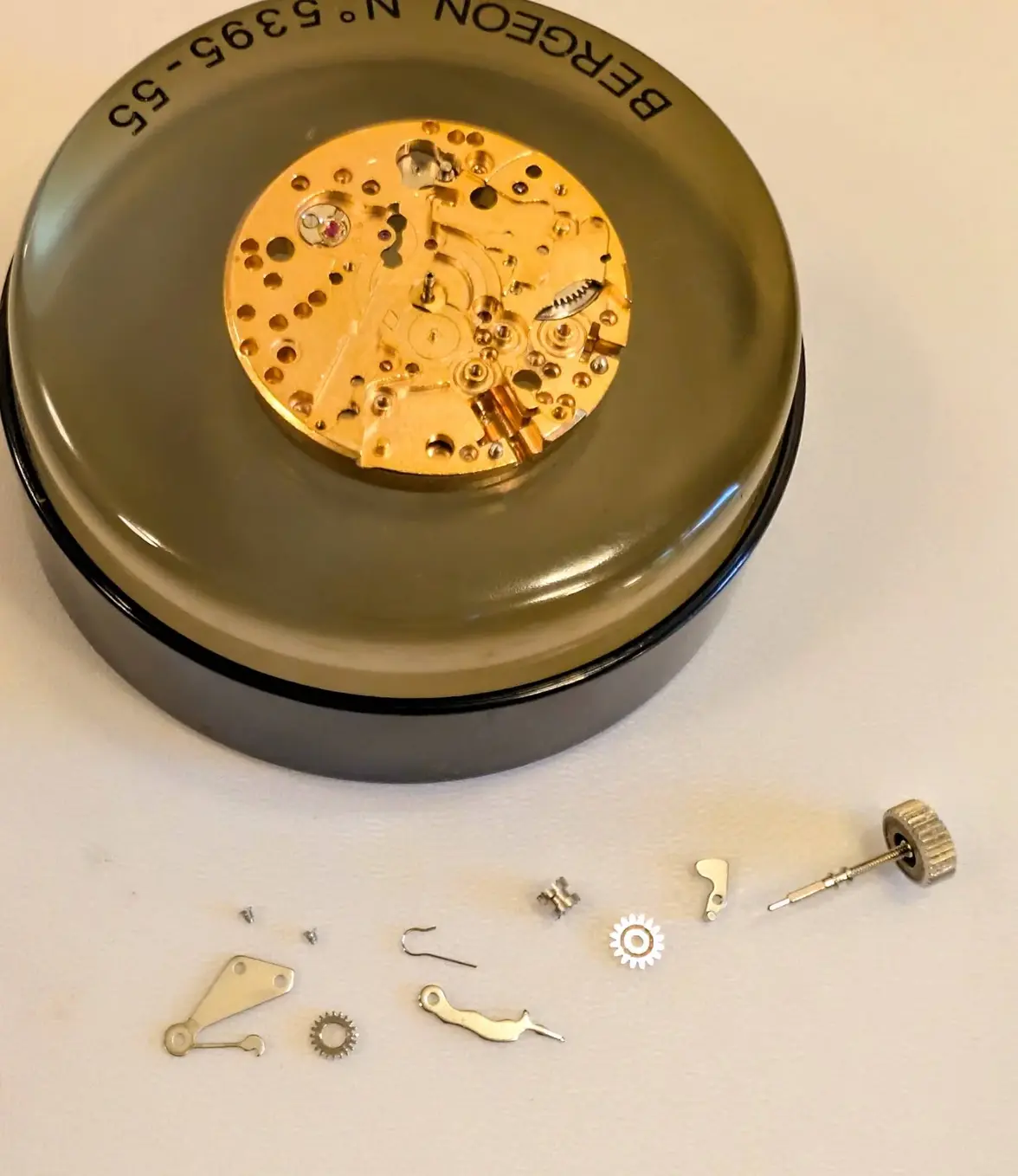
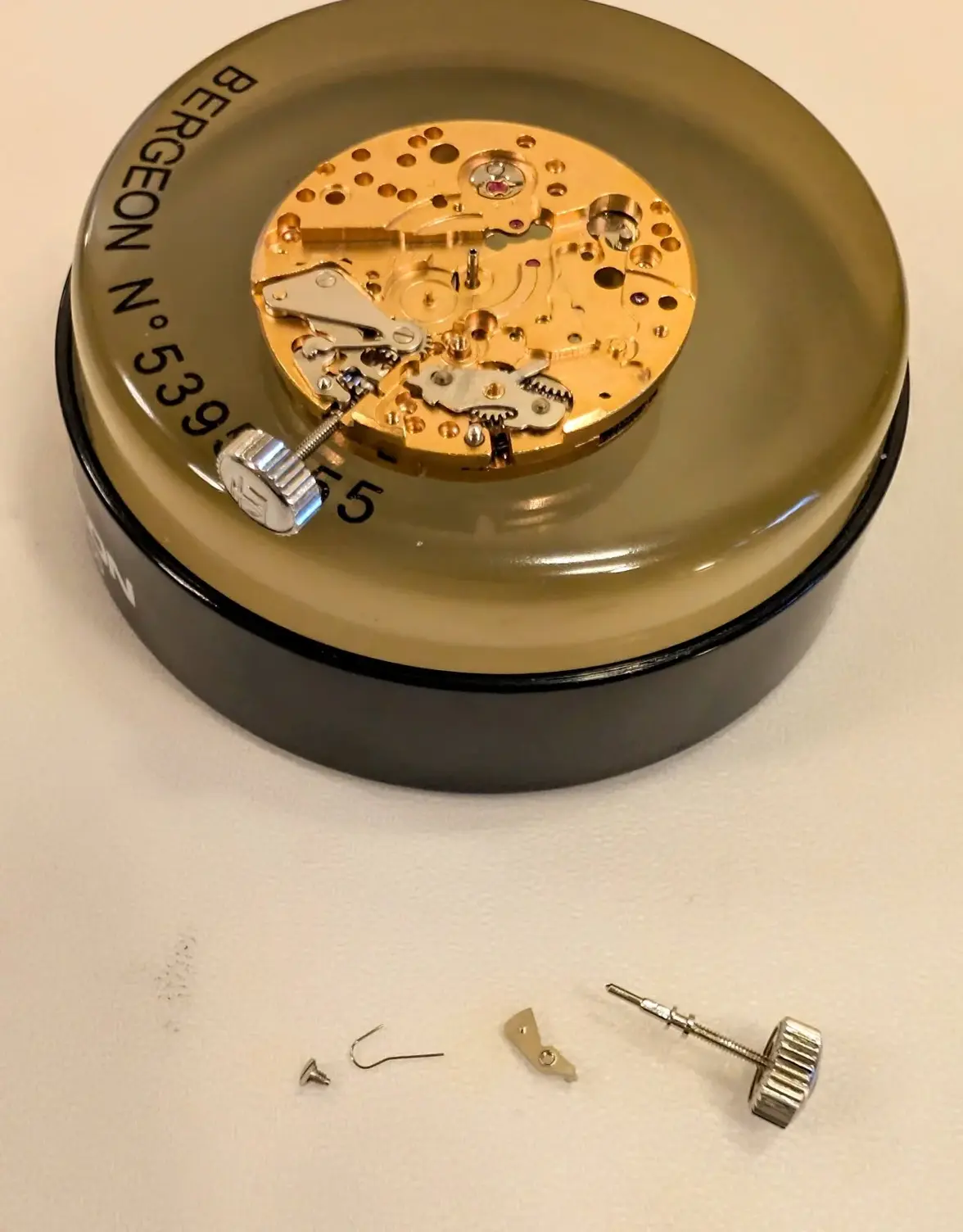
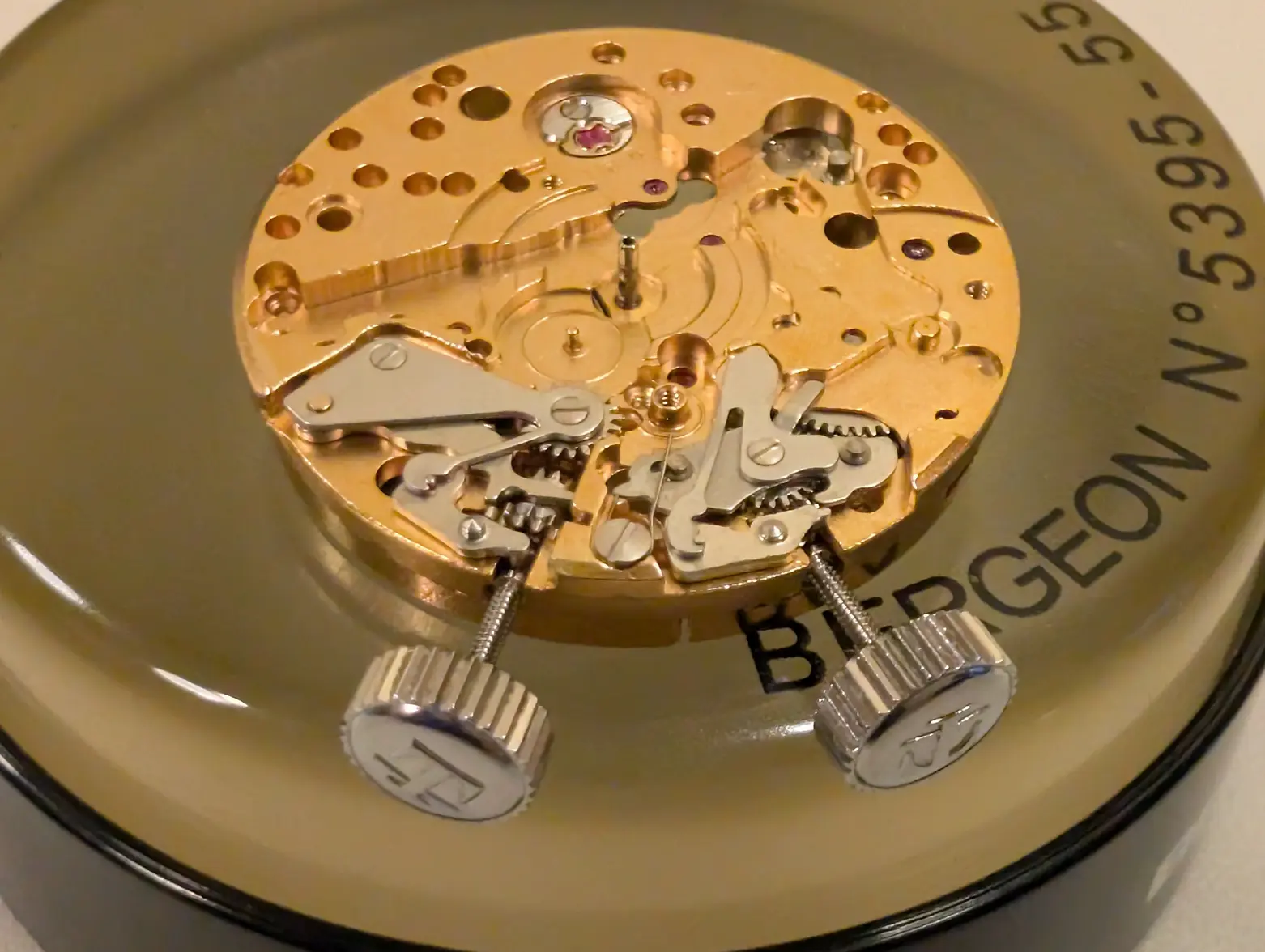
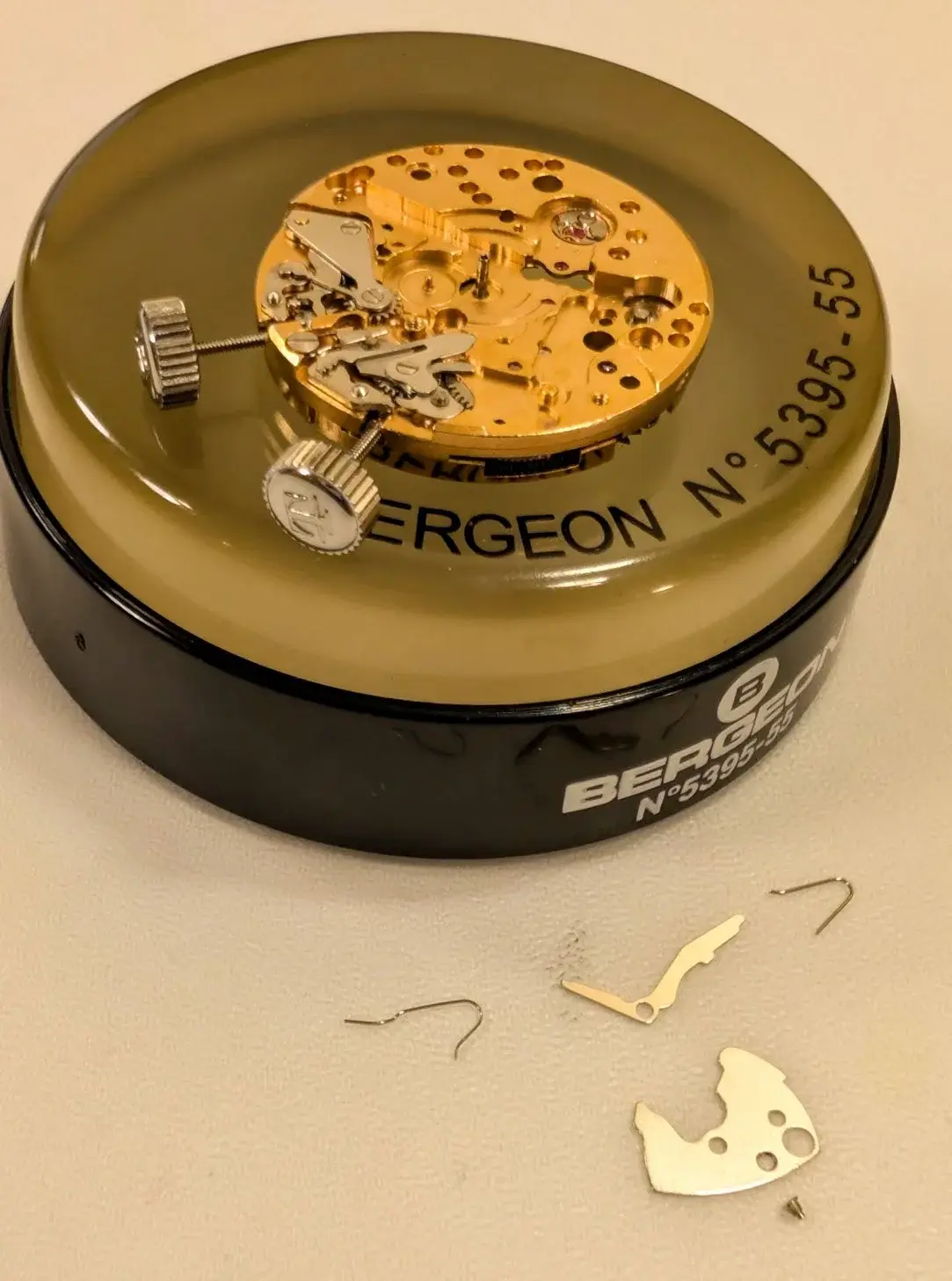
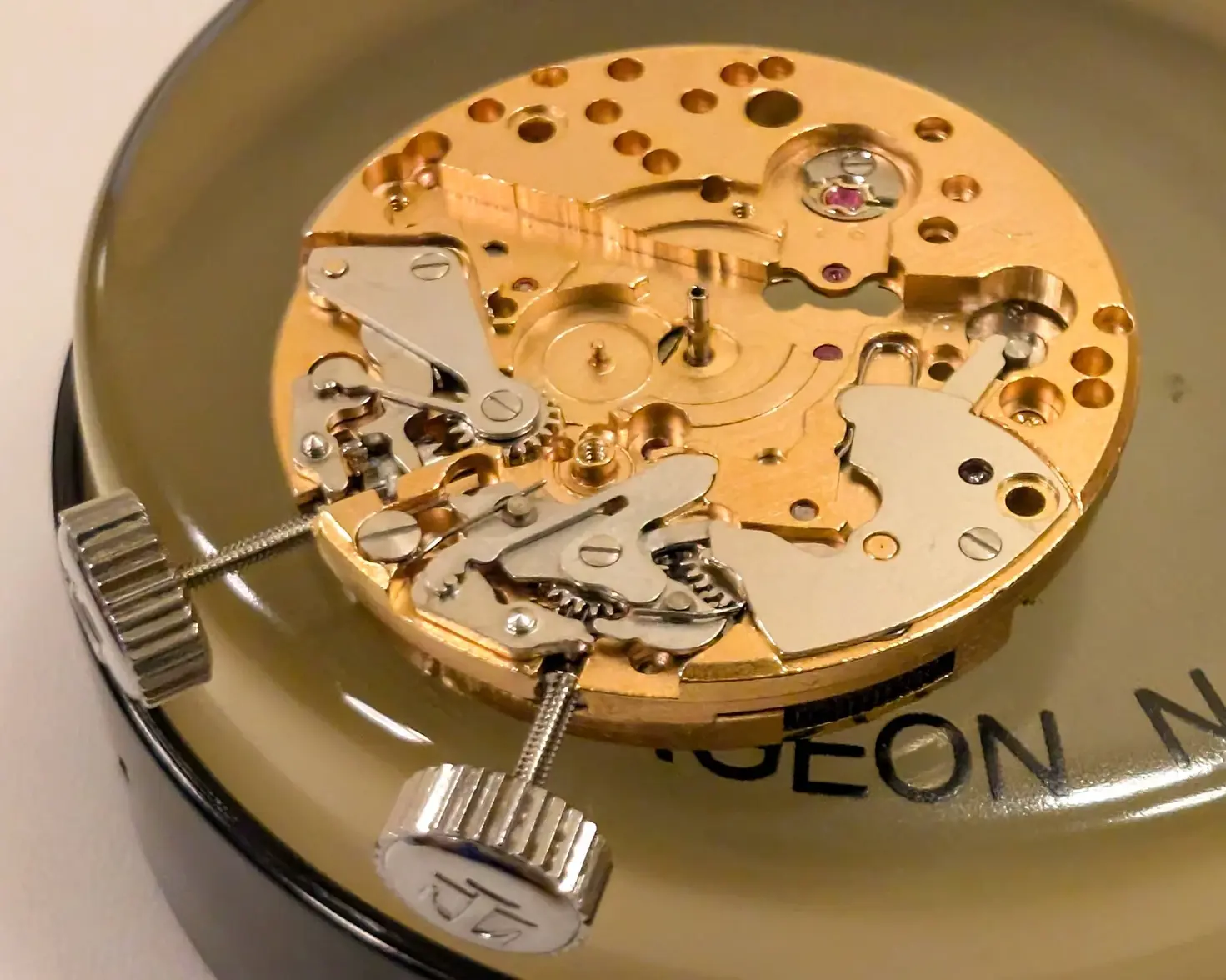
Back over to the watchmaker side to finish off the timekeeping components.
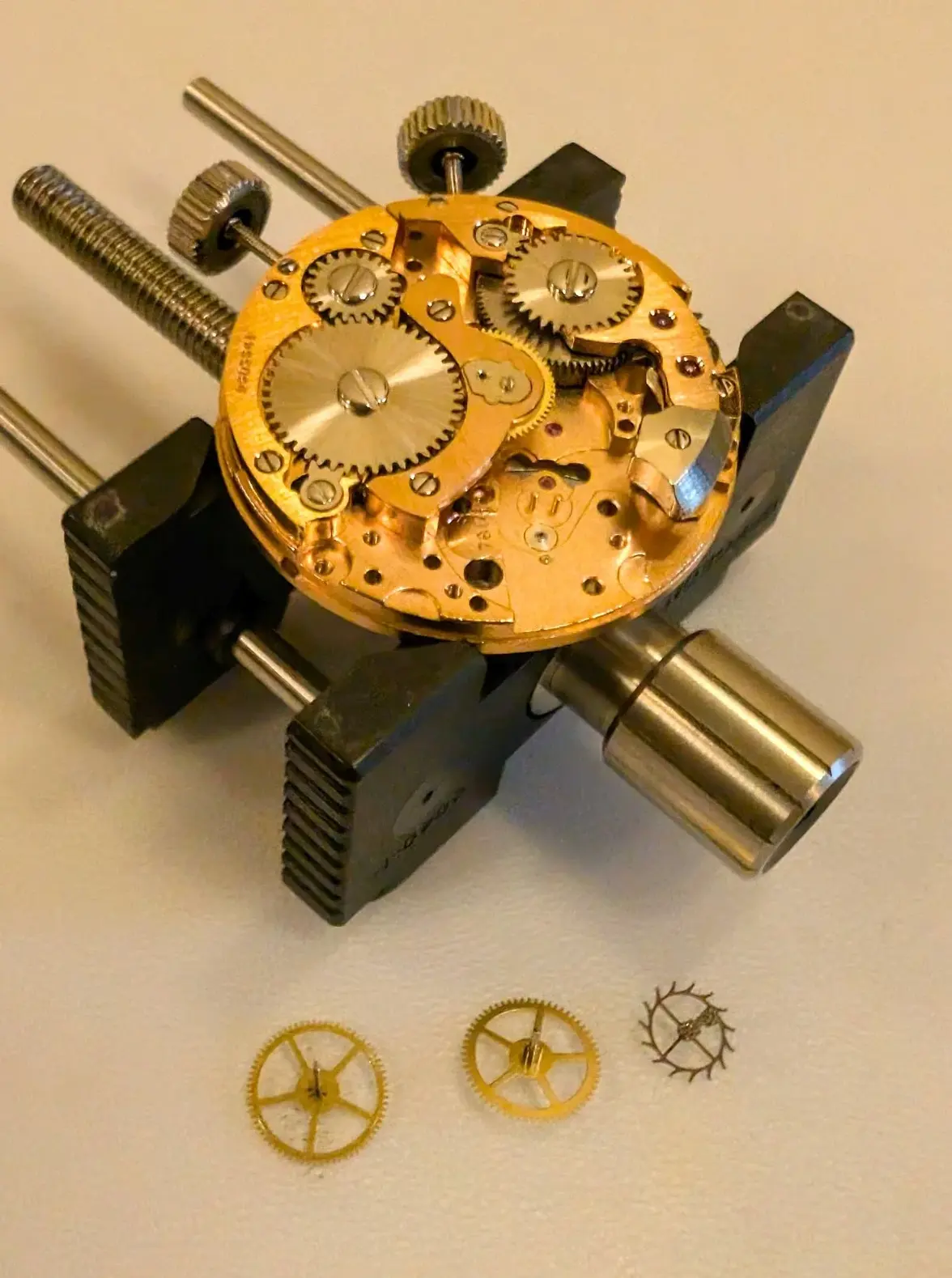
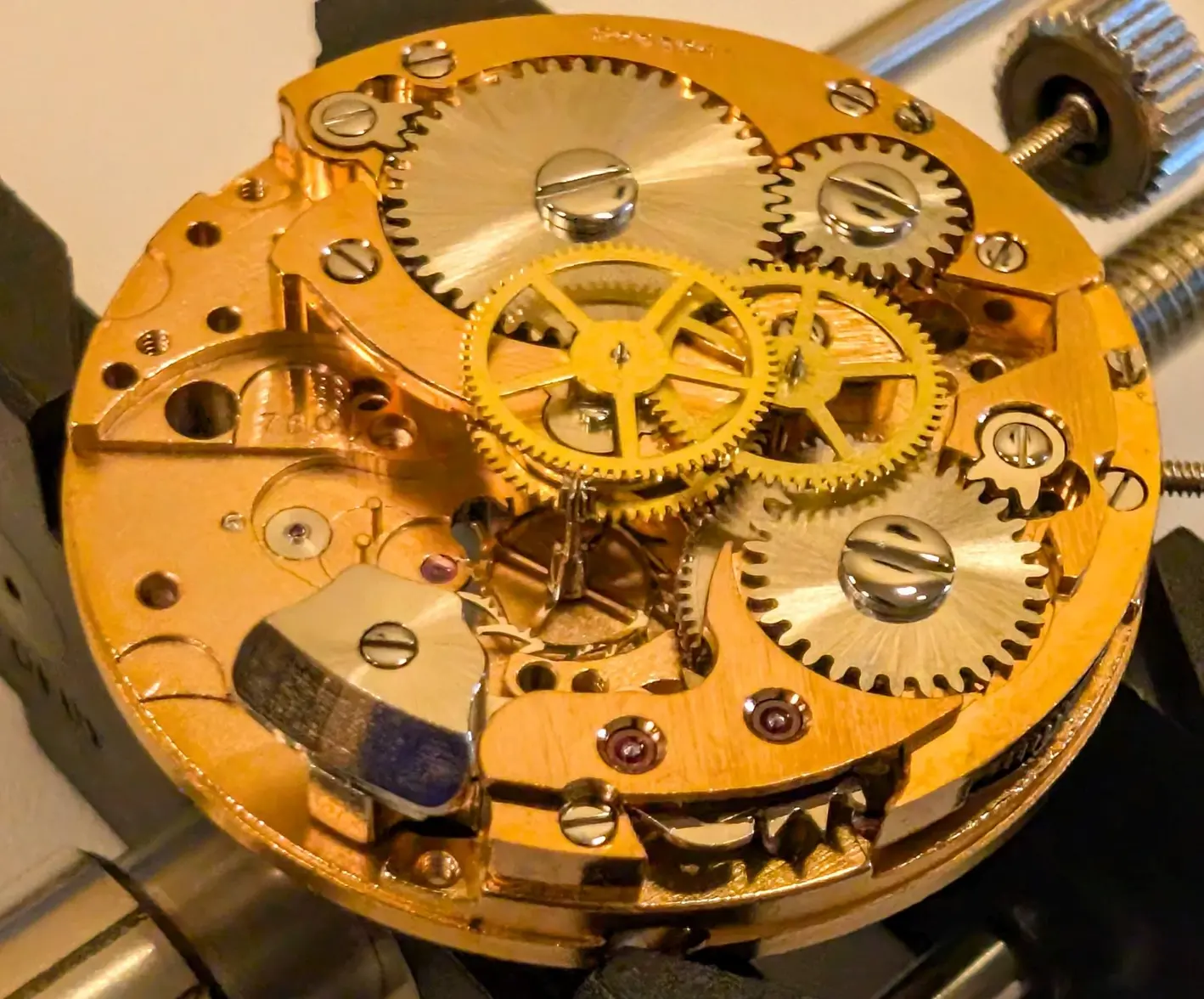
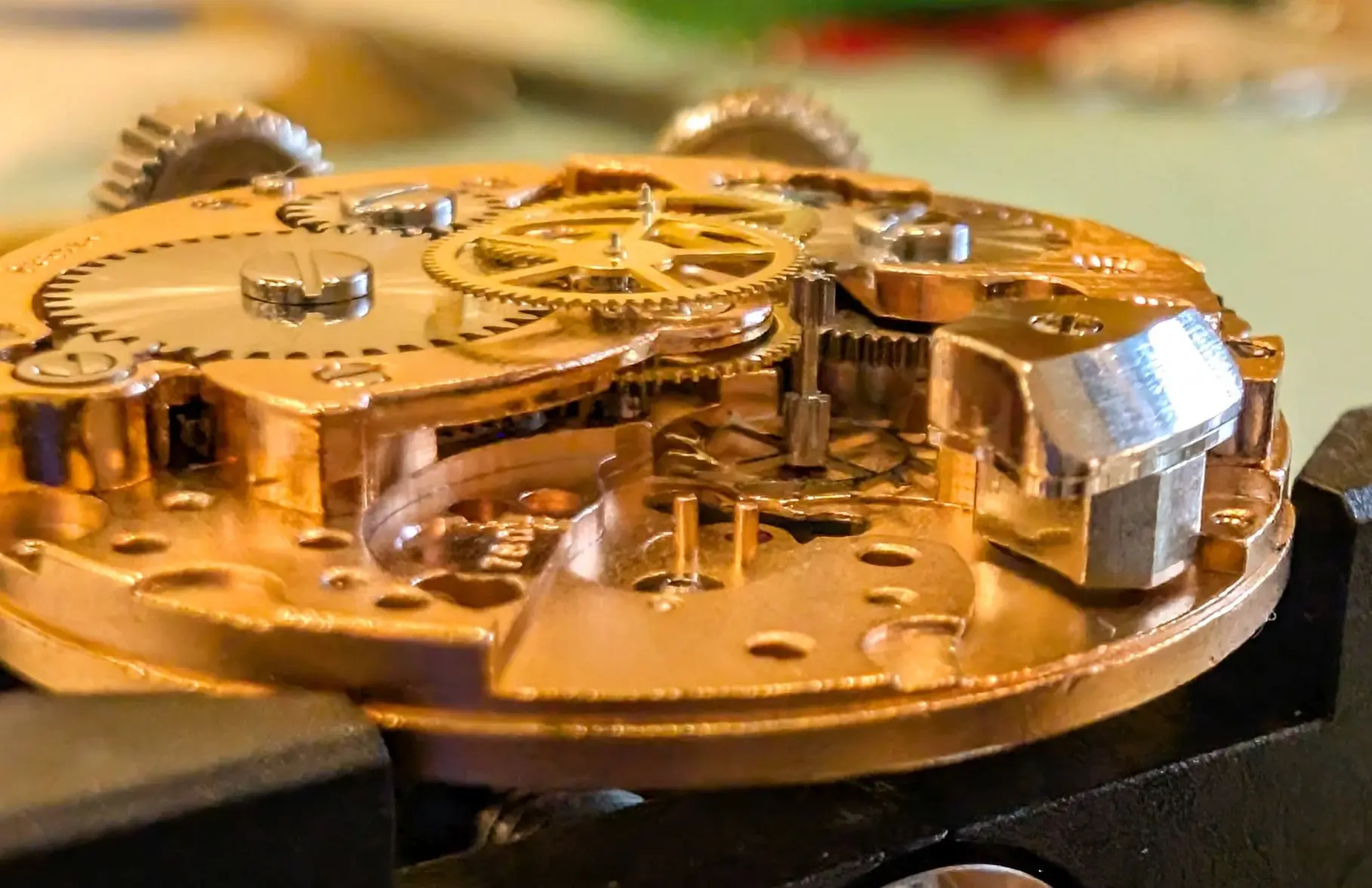
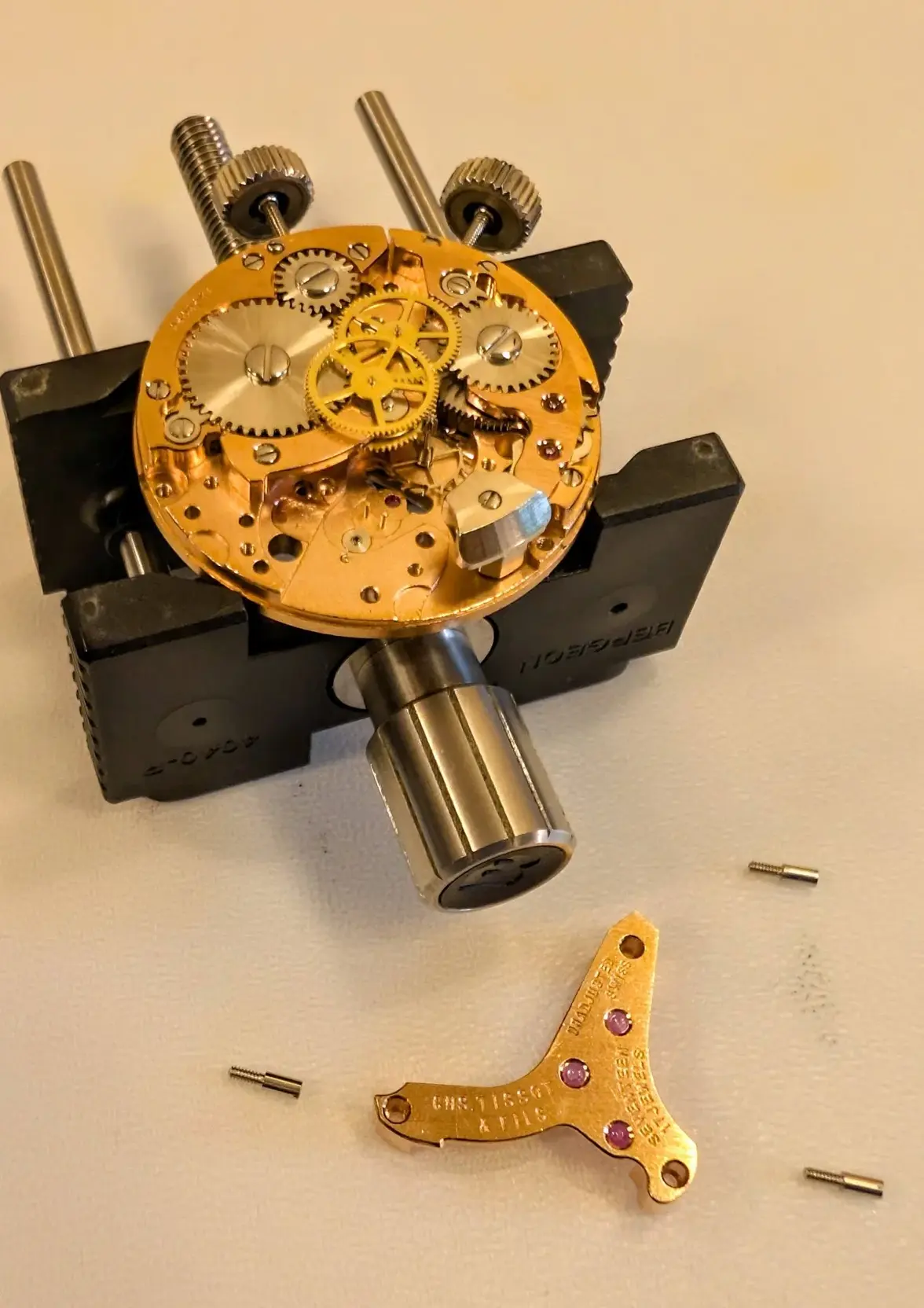
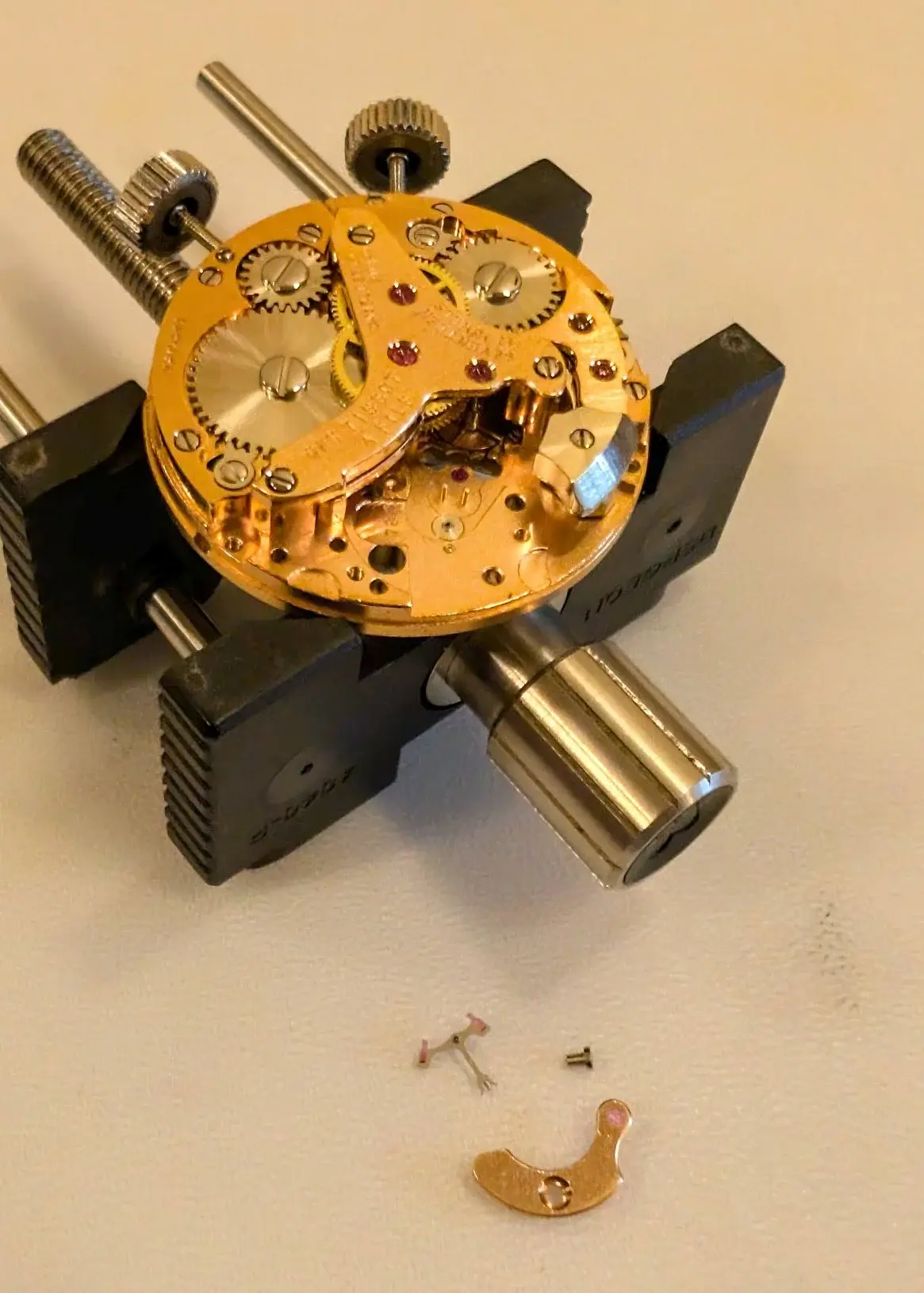
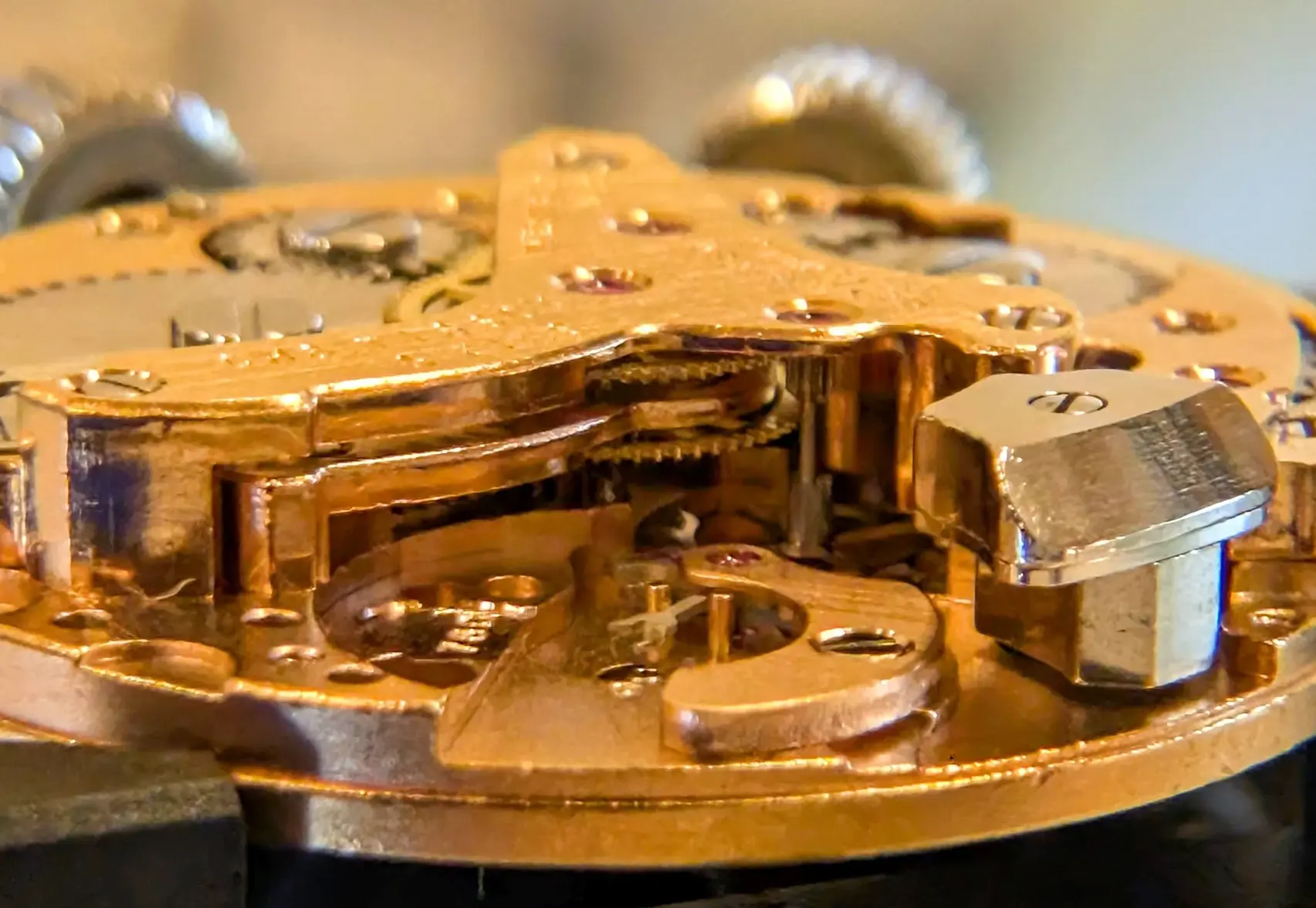
I always find the Tissot (or A Schild, if you prefer) movements of this era very attractive. Fine quality & a pleasure to work on, especially one like this 780 with the interesting & unique alarm complication.
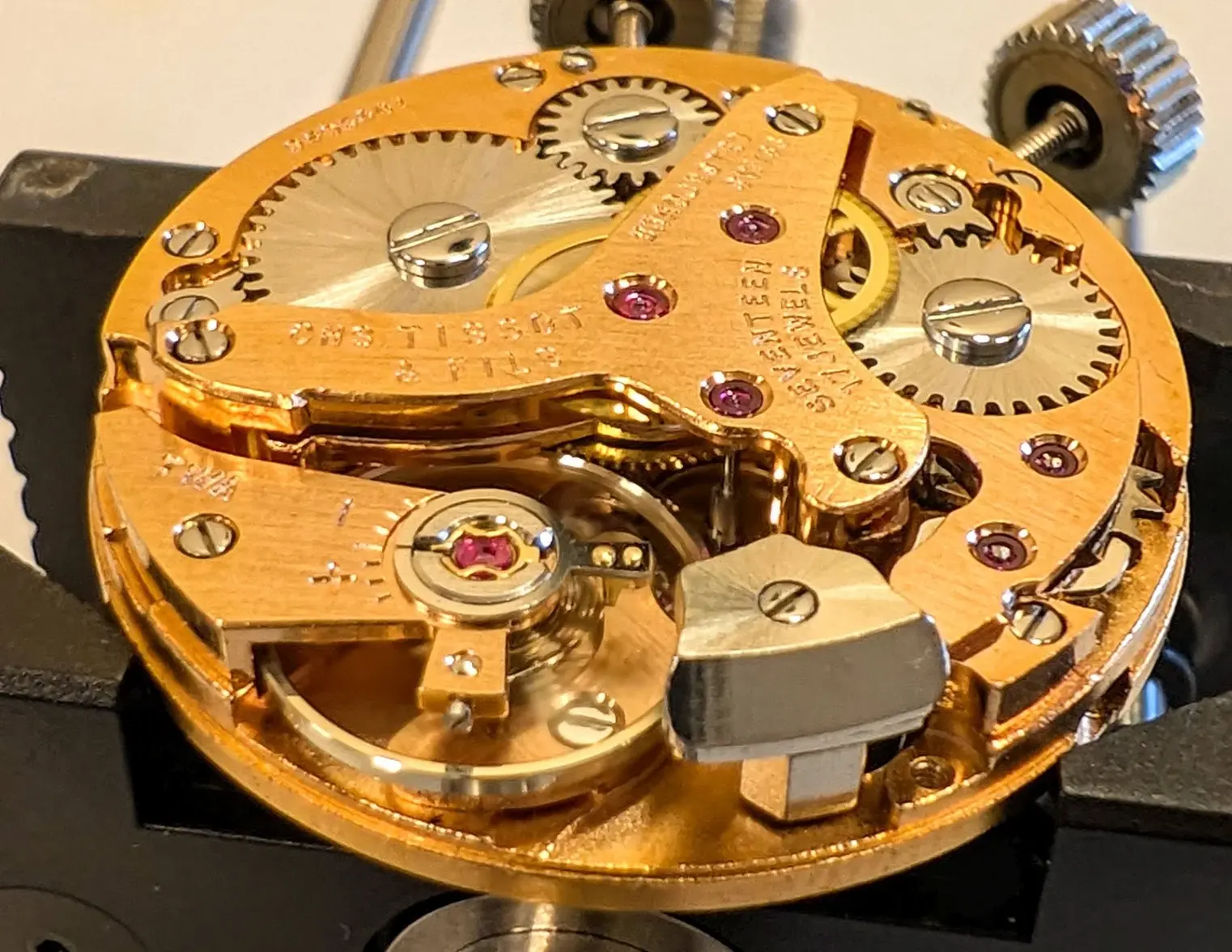
In the home stretch for the reassembly. Back over on the dial side to finish up the motion works & alarming mechanism.
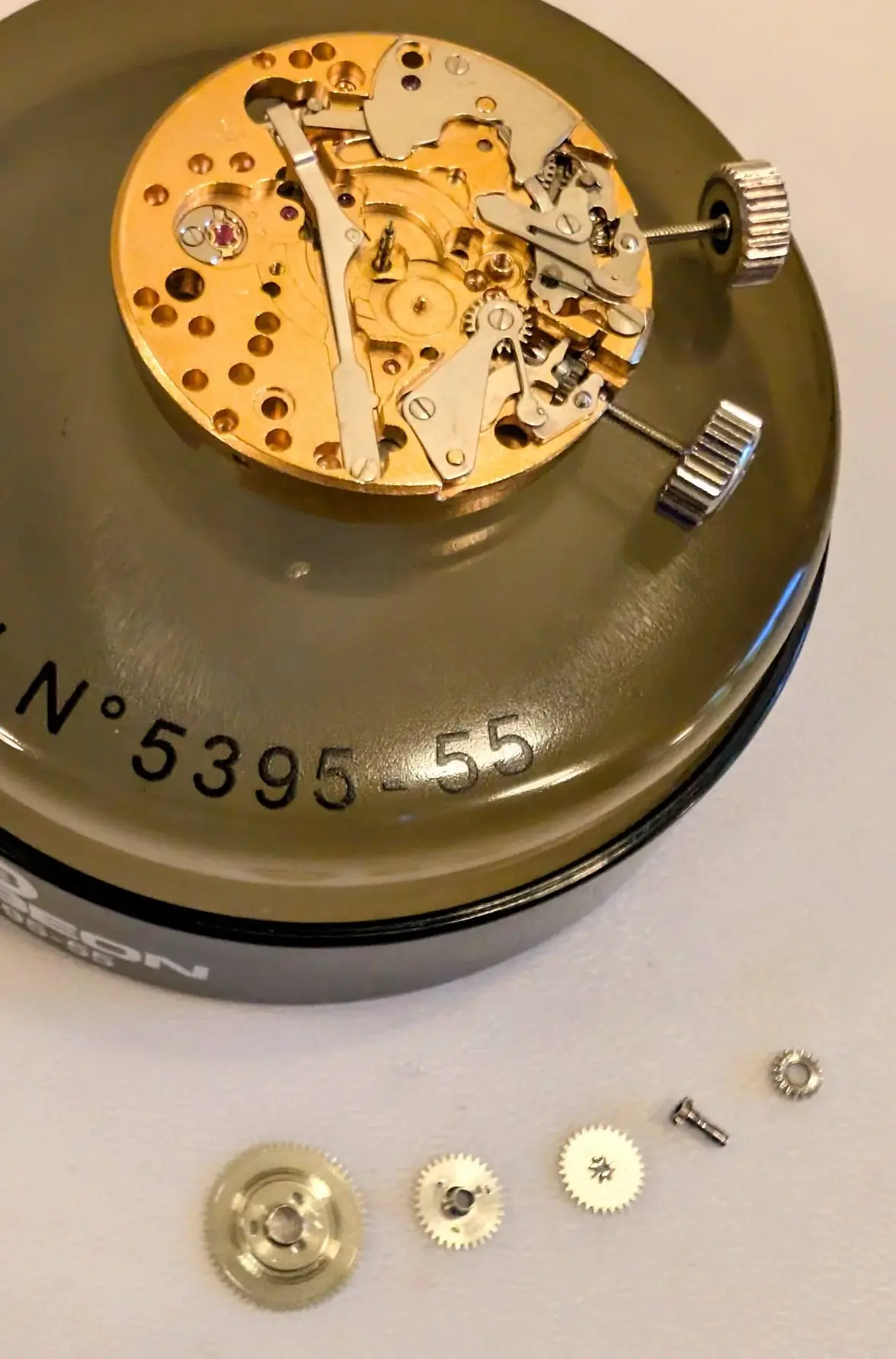
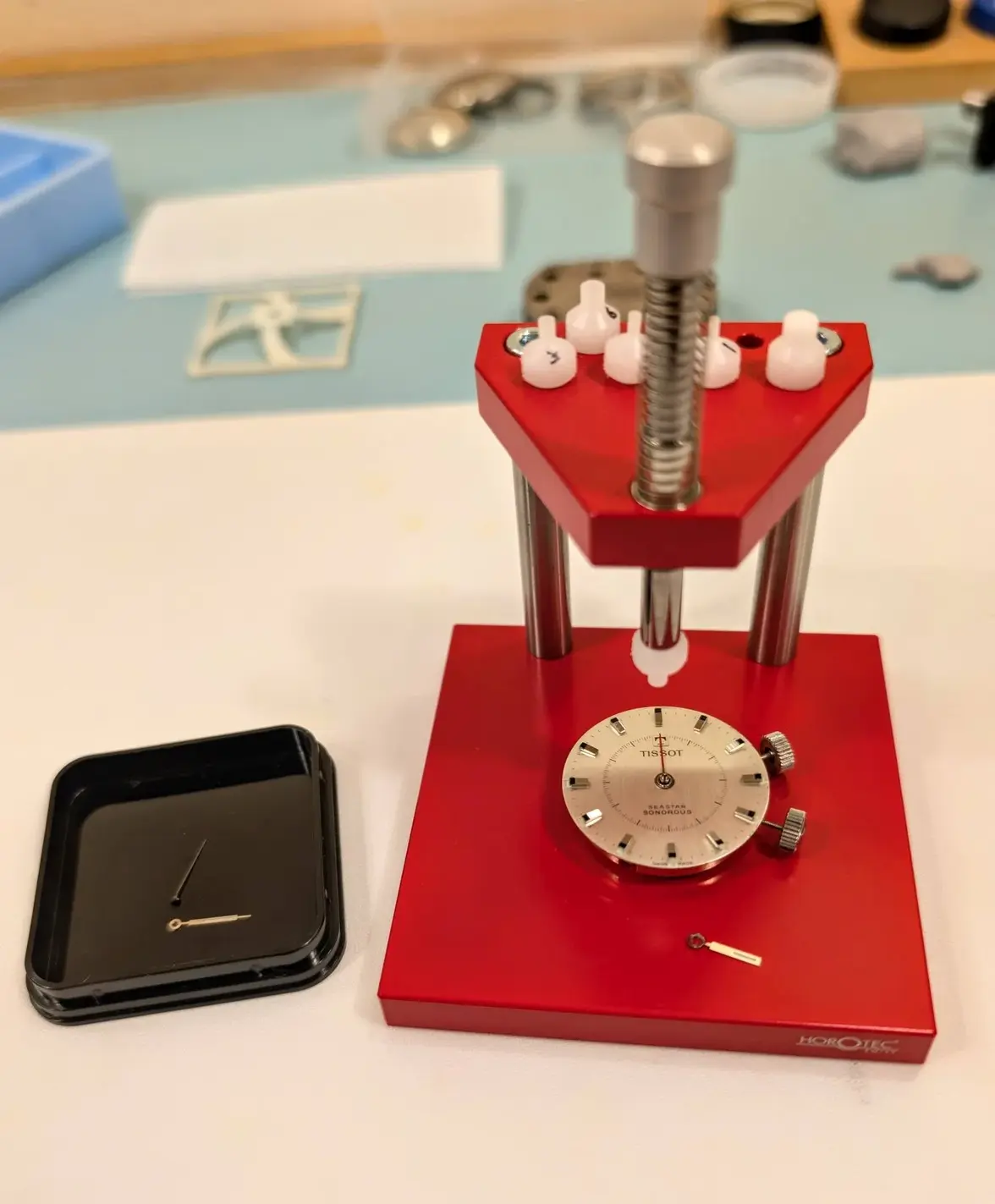
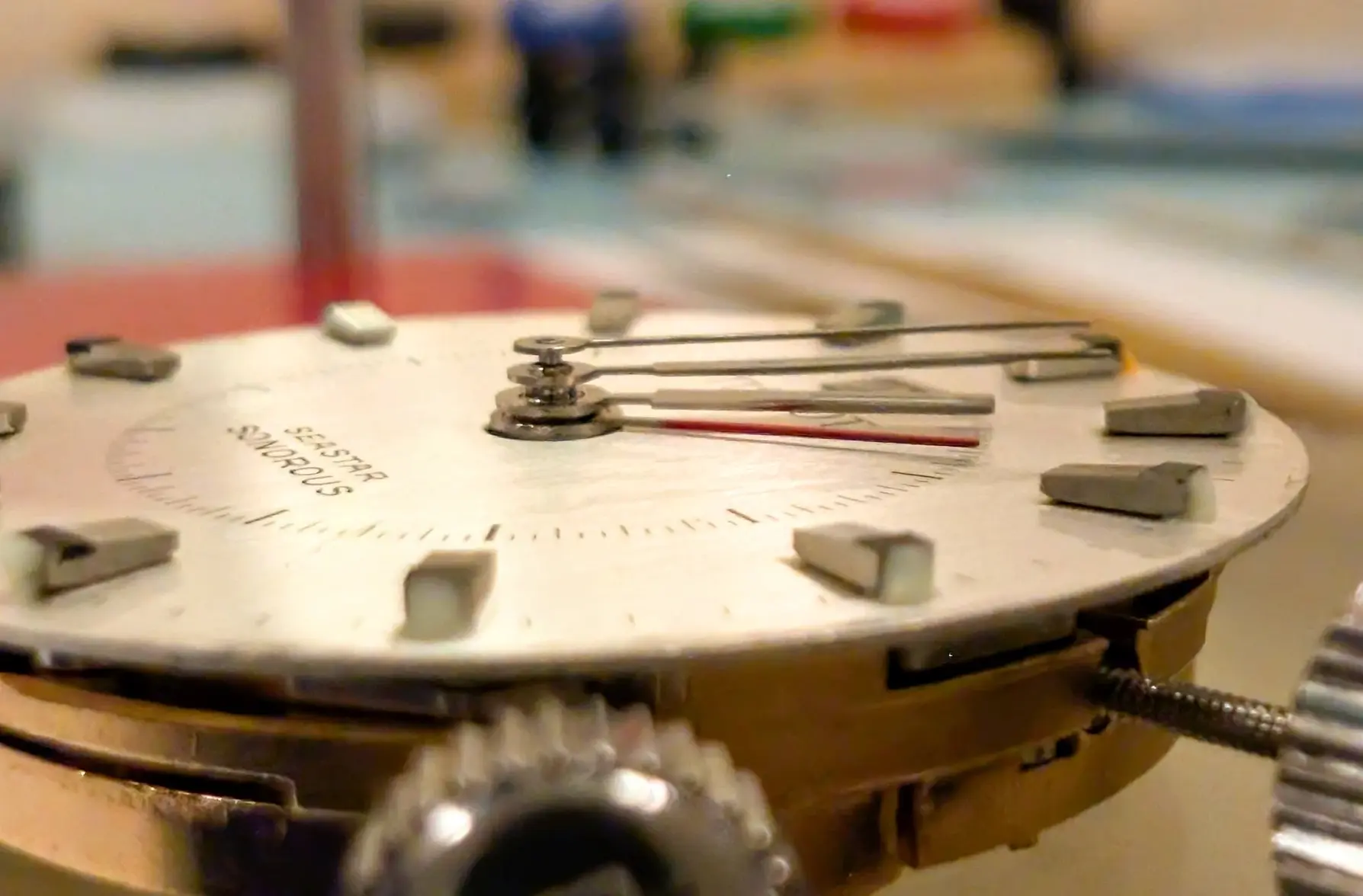
Four hands all on the same axis. Want to take care with this part of the process & ensure that all four hands end up parallel to the dial & to each other.
Casing up.
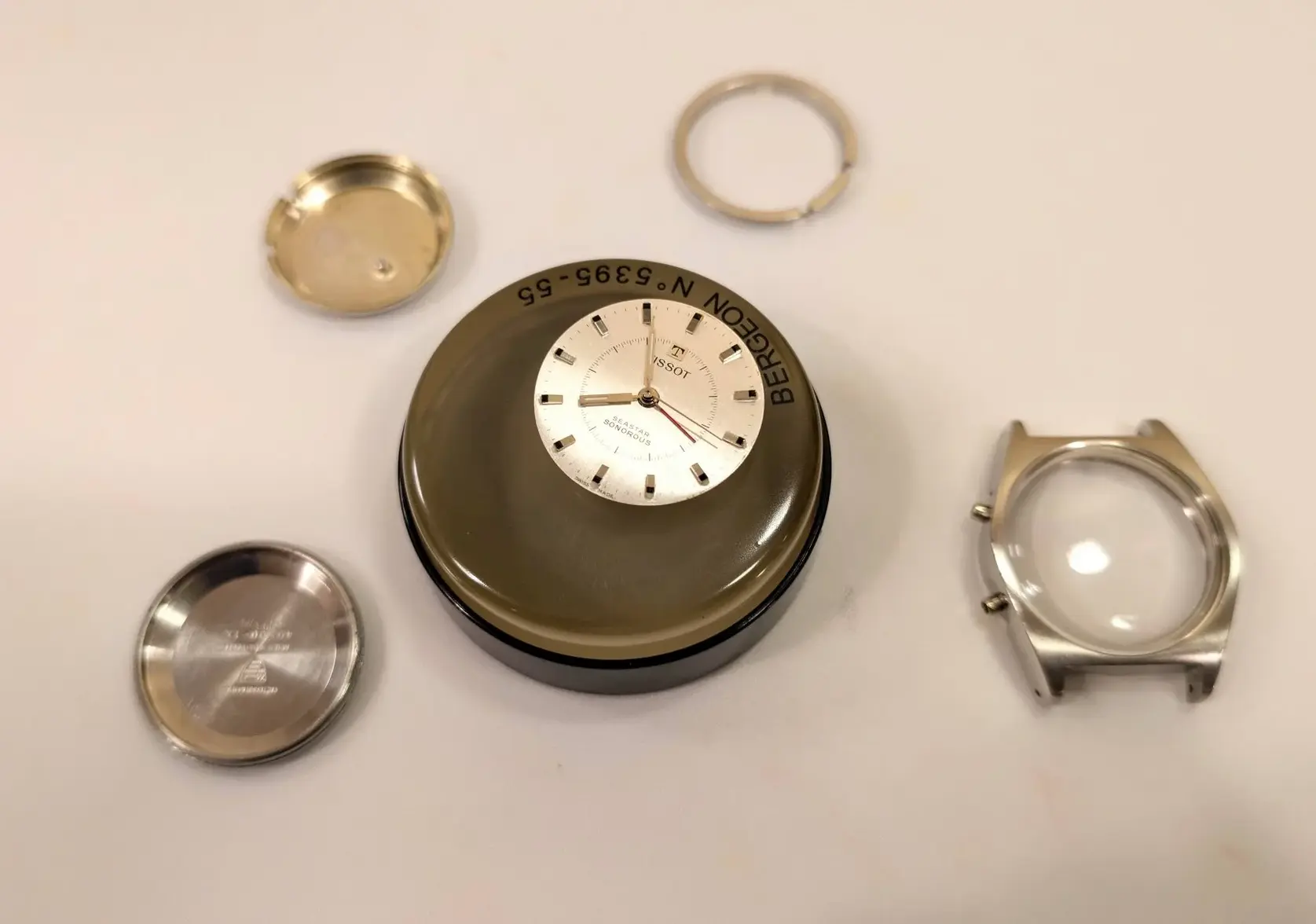
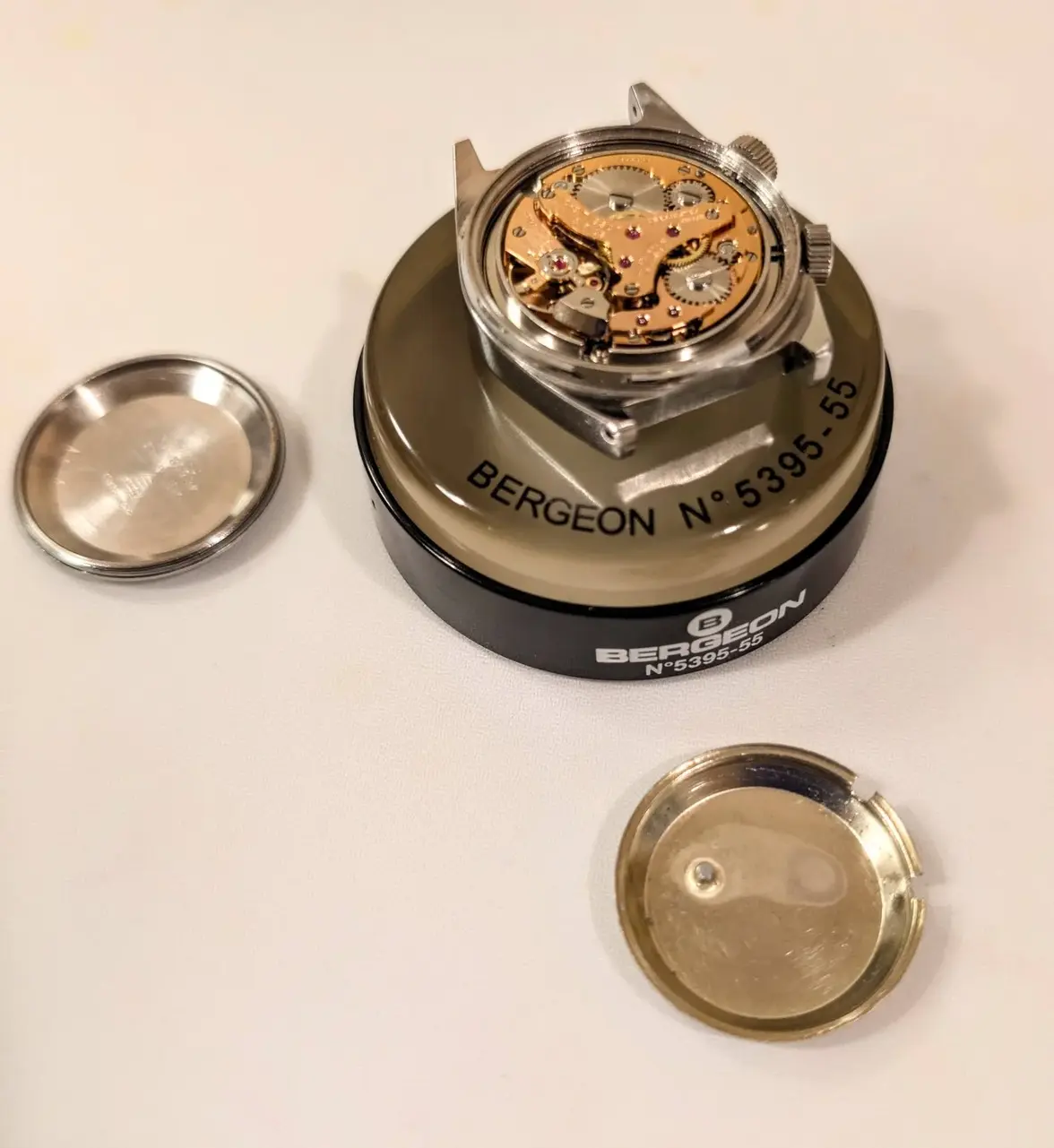
Job done.
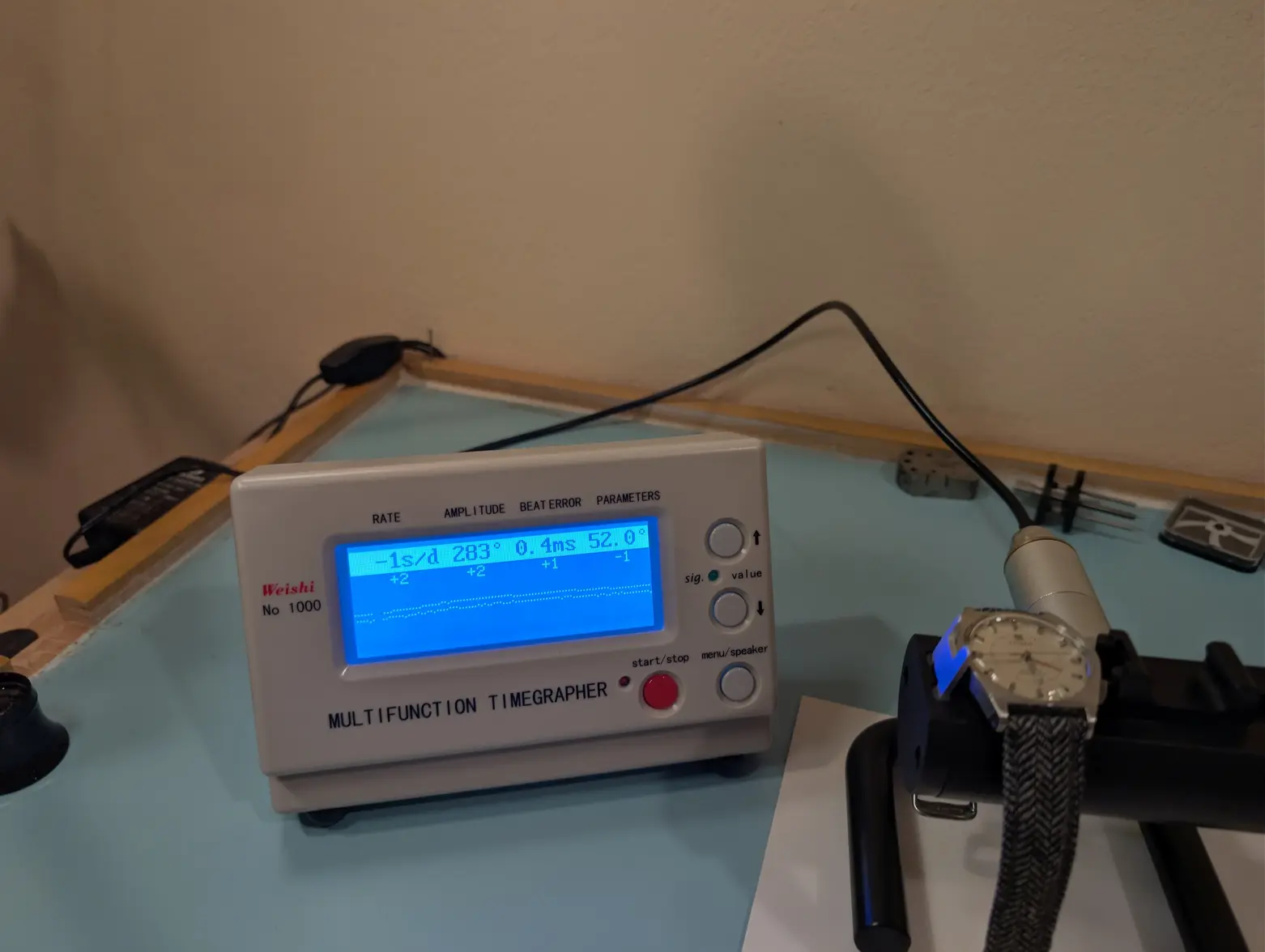
Timekeeping & amplitude are good. Beat error could be better, but the risk in handling & adjusting the balance to address this is probably not worth the incremental benefit to the timekeeping. Happy enough with this outcome (& with the substantial improvement compared to where we started out from with this old watch).
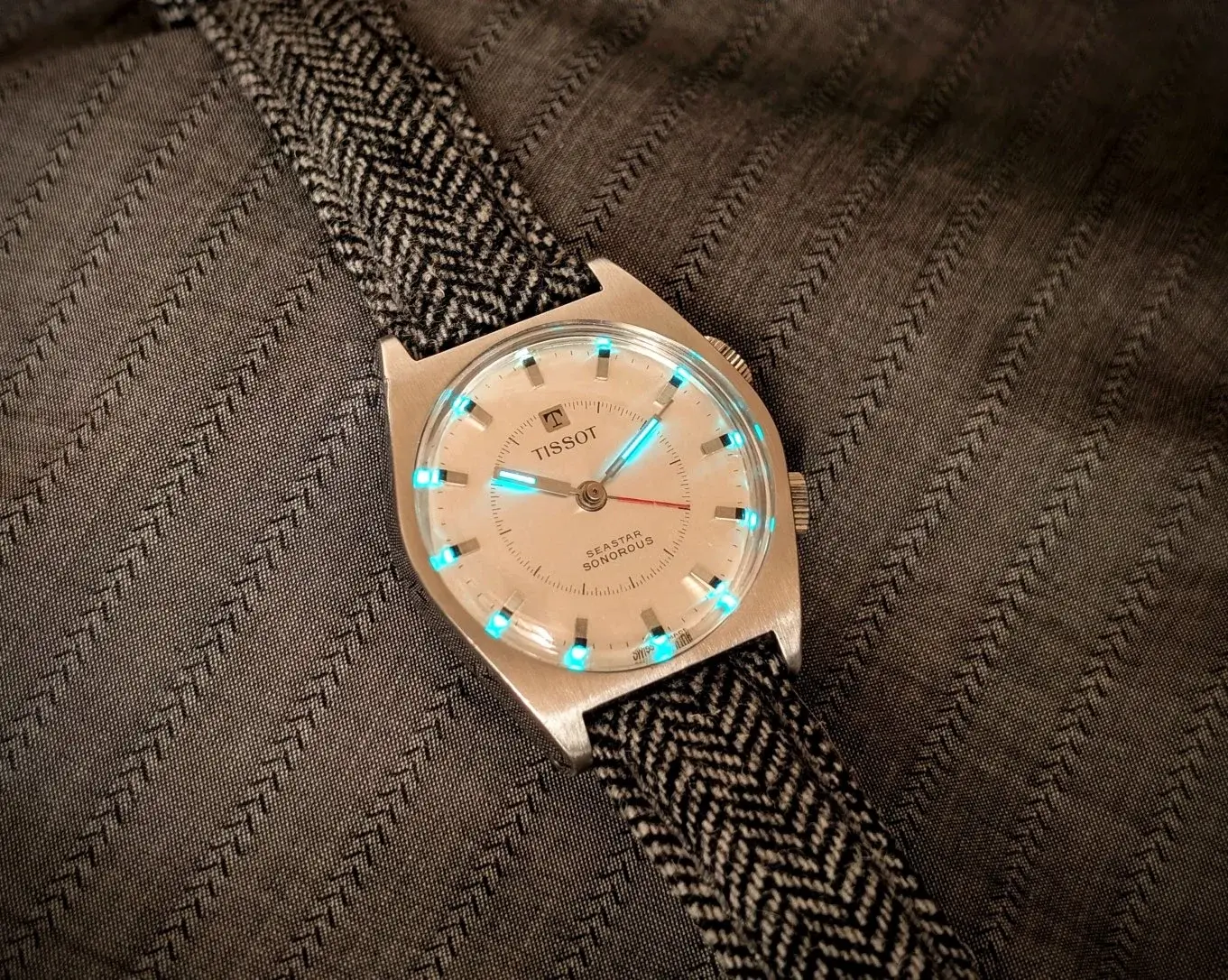
The watch came to me with its original Tritium lume, but this was decaying & falling away, & had long ago lost its luster. I generally like to do a sympathetic restoration; don't add anything, don't remove anything. But (for me, at least), this piece is not so precious that I'd feel any sense of loss over touching up the dial with a re-lume.
OK, that's all a lot of words, but what's it sound like?...
(Don't get your hopes up too high...)
In person, it's maybe a little bit louder, but not a lot...
Among the other popular alarm watches of this era, like the Vulcain Cricket or JLC Memovox, you could expect better alarm output. These & other watches like them have a perforated case back to let the sound escape, but then this introduces its own set of problems with dust, dirt, & all manner of other foreign contaminants finding easy access to the inside of the watch case.
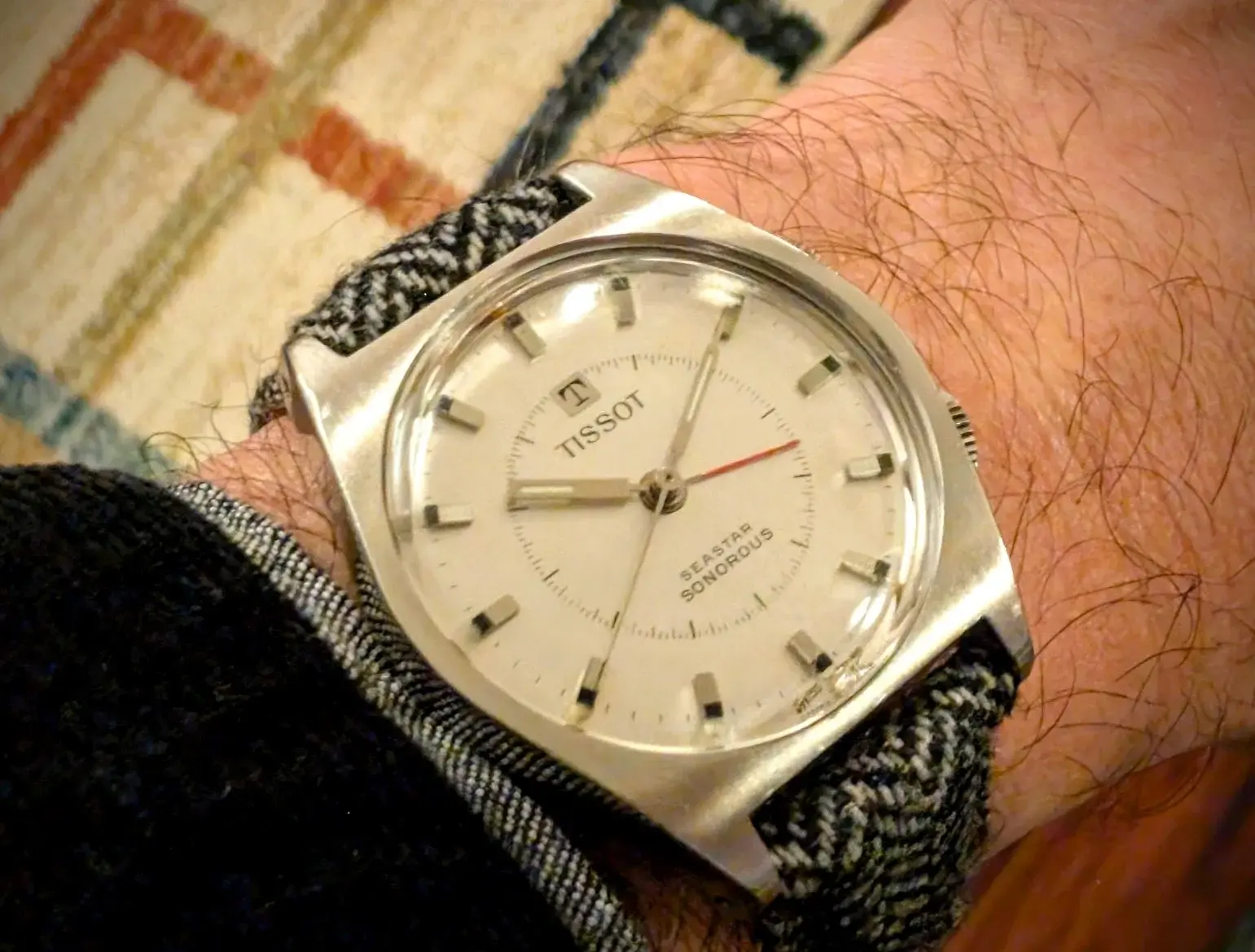
Hope everyone is having a great weekend, Cheers!
-
It looks a little bit scruffy now, but we'll get it cleaned up & singing just like back in the old days.
(Alarm time hand is hiding underneath the hour hand)
Two crowns. One for winding & setting the watch, one for winding & setting the alarm.
The timekeeping is not great but the watch is running, so that's an encouraging starting point for us.
The Resonator Plate has a post that the Alarm Hammer bangs on, all in service of getting the most/best sound out of the alarm.
Breakdown process starting on the dial side.
Looks like it has two of everything compared to a regular watch, & that's not far off from the truth...
For the alarm function, the Alarm Wheel (and Alarm Hand) remains fixed at the user's chosen alarm time. The Alarm Wheel has three recesses that will wait on the three detents of the Hour Wheel to align.
The Alarm Trigger Bar is under tension, & will assert a light lifting pressure from underneath the Hour Wheel. The added height of the detents cause the Hour Wheel to press down on the Alarm Bar, & the Alarm Bar being in the down position inhibits the alarm.
When the Hour Wheel time comes around to lining up with the Alarm time, the Hour Wheel detents then slip into place in the Alarm Wheel recesses.
The detents aligning with the recesses allow for the Hour Wheel to get lifted up slightly by the Alarm Bar, & this action of the Alarm Bar lifting up serves to activate the alarm which will then start sounding.
Over to the watchmaker side, & continuing with the breakdown.
Back over to the dial side for the 2 sets of keyless works.
The Alarm Setting Wig-wag moves with the Alarm Crown. This will alternately engage or disengage with either the Alarm Wheel for setting the alarm time (crown out), or with the Alarm Crown Wheel to wind power into the Alarm Mainspring (crown in).
Back over to the watchmaker side to finish up the breakdown.
The two Mainspring Barrels are different size & shape. The timekeeping side (l) needs long duration, even & steady power delivery, the alarm side (r) needs high power, short duration discharge.
Substantially higher number of individual components compared to your typical time-only watch movement.
Off to the cleaner
And now on to the reassembly, starting on the watchmaker side with the Timekeeping Mainspring Barrel and Barrel Bridge.
Both sets of winding works back in place.
Over to the dial side and continuing the keyless works reassembly.
Back over to the watchmaker side to finish off the timekeeping components.
I always find the Tissot (or A Schild, if you prefer) movements of this era very attractive. Fine quality & a pleasure to work on, especially one like this 780 with the interesting & unique alarm complication.
In the home stretch for the reassembly. Back over on the dial side to finish up the motion works & alarming mechanism.
Four hands all on the same axis. Want to take care with this part of the process & ensure that all four hands end up parallel to the dial & to each other.
Casing up.
Job done.
Timekeeping & amplitude are good. Beat error could be better, but the risk in handling & adjusting the balance to address this is probably not worth the incremental benefit to the timekeeping. Happy enough with this outcome (& with the substantial improvement compared to where we started out from with this old watch).
The watch came to me with its original Tritium lume, but this was decaying & falling away, & had long ago lost its luster. I generally like to do a sympathetic restoration; don't add anything, don't remove anything. But (for me, at least), this piece is not so precious that I'd feel any sense of loss over touching up the dial with a re-lume.
OK, that's all a lot of words, but what's it sound like?...
(Don't get your hopes up too high...)
In person, it's maybe a little bit louder, but not a lot...
Among the other popular alarm watches of this era, like the Vulcain Cricket or JLC Memovox, you could expect better alarm output. These & other watches like them have a perforated case back to let the sound escape, but then this introduces its own set of problems with dust, dirt, & all manner of other foreign contaminants finding easy access to the inside of the watch case.
Hope everyone is having a great weekend, Cheers!
-