There’s a fraction too little friction (1162 bracelet problem)

Posts
924
Likes
1,778
Hi guys & gals,

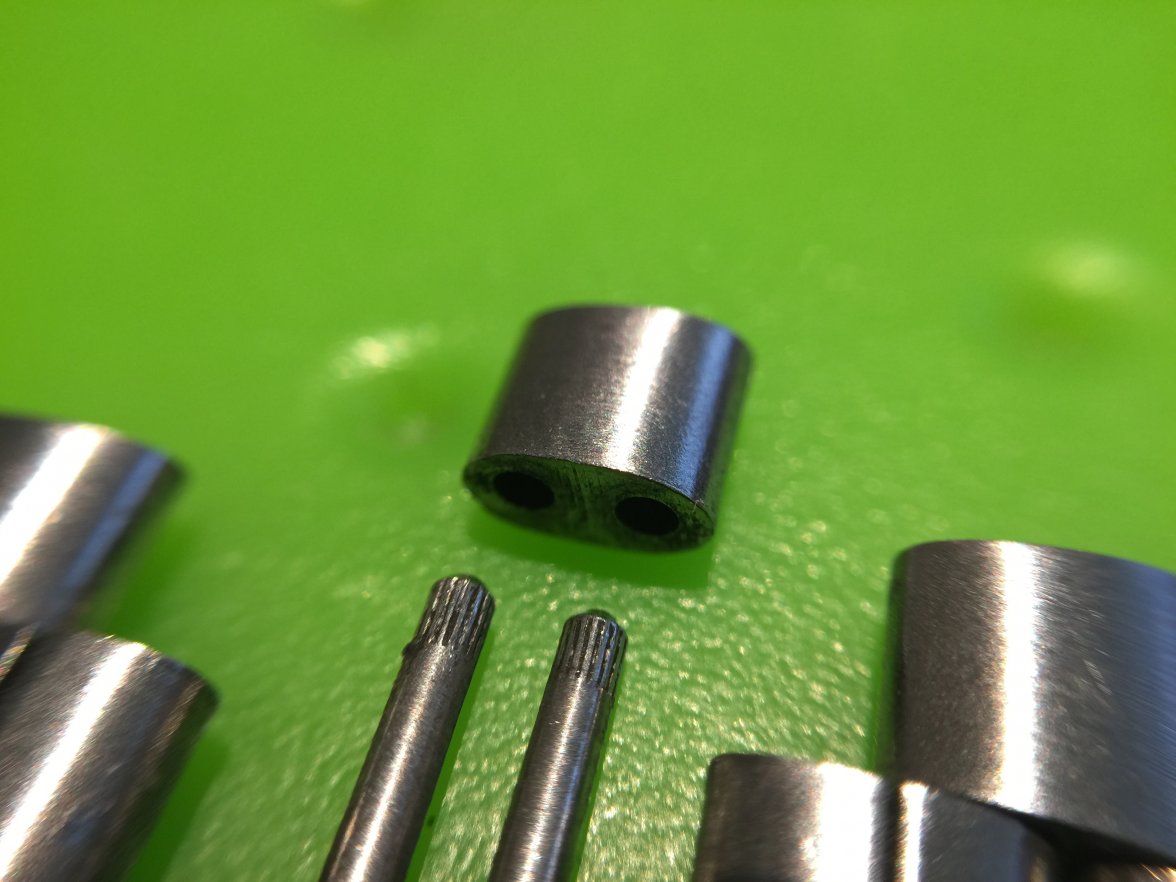
I have this old 1162 bracelet for my PloPlof, and when I was checking it for integrity, one of the (non-removable) links came off. Nothing appears to be broken: it’s just that one end has frictions pins that aren’t, well, very friction-y anymore.

Now I could just pour some random glue in the holes, but I’m sure there is some specific method or product that watch makers use. Anyone care to enlighten me?

Cheers,

Bram
Edited:

 
Posts
924
Likes
1,778
Um, sorry, this should have been in Vintage, not in Open. I guess 790+ posts weren’t enough for me to figure out how this place works 😬
 
Posts
3,234
Likes
14,045
I'm giving the OP a 'like' just because of the thread title. 😀
I would think a tiny dab of epoxy on each of those pins would permanently affix the end cap very nicely.
 
Posts
924
Likes
1,778
Thanks guys! Those new pins look somewhat different with the fatter ends. Maybe that’s a good thing in my case, but I’m not sure I can remove the other side of the pins without breaking something (plus, I guess I’d still have to glue the new ones’ smooth ends in place). But it’s good to know these things are readily available.

I think I’ll try the epoxy route first: if they don’t stay in place, I’ll try more complicated solutions. Any particular reason to choose epoxy over loctite?
Edited:
 
Posts
410
Likes
1,410
I would do like this:

First I would put those pins on some metal base. Than take small hammer and pounch them couple of times at the end to make them little flater ( rather than rounded that are now).

Then I would try to push them back in and if I would think that it goes tight enough I would put some strong glue( I would use UHU blue for this task) in the hole and then just put all together.

So you will have double security and if its made properly it will last for long.


Hope I wrote ok so you understand proces. GL.
 
Posts
17,631
Likes
36,871
............... Any particular reason to choose epoxy over loctite?

Epoxy is designed to stick things together, like broken vases etc.

"Loctite" is designed to do many things, but Loctite 263 is designed to retain metal parts.

Loctite® 263 High Strength Threadlocker
8799913738270.jpg


Loctite® 263 High Strength Threadlocker is a Versatile, high strength liquid threadlocker. Reliably locks and seals metal fasteners up to 1 in. Engineered to cure consistently on a variety of metals, despite minor surface contaminants. Works on steel, stainless steel and most plated fasteners. Tolerates thread lubrication, corrosion protection anti-fluids. Rated for 360°F (180°C). Heat required for removal.
 
Posts
597
Likes
3,195
Hi guys & gals,

I have this old 1162 bracelet for my PloPlof, and when I was checking it for integrity, one of the (non-removable) links came off. Nothing appears to be broken: it’s just that one end has frictions pins that aren’t, well, very friction-y anymore.

Now I could just pour some random glue in the holes, but I’m sure there is some specific method or product that watch makers use. Anyone care to enlighten me?

Cheers,

Bram

Tim Finn fan?

 
Posts
924
Likes
1,778
Thanks to everyone who contributed.

Turns out you can’t get Loctite products easily in The Netherlands. I sourced an equivalent to its threadlocker product at my local hardware store (manufactured by Bison). It seems to have done the job: the link is now no longer coming off even when applying moderate force with a pair of pliers. I’m confident it will come loose using strong force, but so would any other link in this flimsy vintage bracelet 😀

However, I do want to take to heart @Archer ’s recommendation: since there are no threads this product is indeed probably suboptimal, so I ordered a bottle of 638 retaining compound online for my future needs (...or for if this darn link comes off again).
 
Posts
29,246
Likes
75,639
However, I do want to take to heart @Archer ’s recommendation: since there are no threads this product is indeed probably suboptimal, so I ordered a bottle of 638 retaining compound online for my future needs (...or for if this darn link comes off again).

When you get the 638, compare it to the thread locker and it will be apparent that these are very different products.

Cheers, Al
 
Posts
17,631
Likes
36,871
When you get the 638, compare it to the thread locker and it will be apparent that these are very different products.

Cheers, Al

Not all that different, they both come in a red bottle. 😉
I agree it would have been better to use the retaining compound v thread locker. However, all I had on hand at the time was 222, 243 and 263, so I chose 263 as it was closest in temp rating and shear vs break torque.

638 is on my shopping list though.