The Watch of Theseus

Posts
1,542
Likes
3,354
The old philosophical conundrum of the ship of Theseus asks whether if an item, over time, has had all its parts replaced, can still be considered to be the original item.

So at what point does an original watch stop being an original watch? When a timepiece is advertised as fully refurbished, where each part has been carefully examined for wear and replaced with an authentic part if necessary, when the case has been tidied, edges sharpened, and the dial refinished, so that the item looks almost like it’s just come out of the factory, can the seller still legitimately claim the watch dates from a certain year just because of the number on the movement?

Where would you, as a collector, draw the line when it comes to parts replacement and cleaning/refurbishment?

 
Posts
16,863
Likes
47,901
Many parts get changed at service. Who knows what movement parts were changed in the last 50 years.

You don’t want the movement. dial and case anything but original in my book.

Plenty of watches get built from several watches to make one great watch that would be hard to tell without a extract. ( the more expensive some watches get the more of this you will see )
 
Posts
3,255
Likes
14,141
In my book too 👍
Rebuilt chronographs from the 1930s and '40s are quite common
 
Posts
17,941
Likes
37,516
As long as the parts in the watch that need replacing were identical*, there is no issue.

* identical /ʌɪˈdɛntɪk(ə)l/
adjective
  1. 1.
    similar in every detail; exactly alike.
 
Posts
1,301
Likes
2,575
... if an item, over time, has had all its parts replaced, can still be considered to be the original item.

IMHO no because original means "present or existing from the beginning; first or earliest".

As long as the parts in the watch that need replacing were identical*, there is no issue.

If, say, a movement is re-cased and dial replaced it definitely shouldn't be called original although it is identical to the original. On the other hand, if a minor component is replaced there's some room for latitude as to originality IMO. There's a grey area.
 
Posts
1,542
Likes
3,354
How long is a piece of string? 😕
So as a collector you are not averse to a substantial amount of rebuilding. The thing is, some people appear to prefer a watch that is tatty but original, while others like a watch to look fresh. Is this simply a difference from one collector to another?
 
Posts
29,672
Likes
76,830
As long as the parts in the watch that need replacing were identical*, there is no issue.

* identical /ʌɪˈdɛntɪk(ə)l/
adjective
  1. 1.
    similar in every detail; exactly alike.

If you are including movement parts, that is a requirement that may be very difficult to meet.

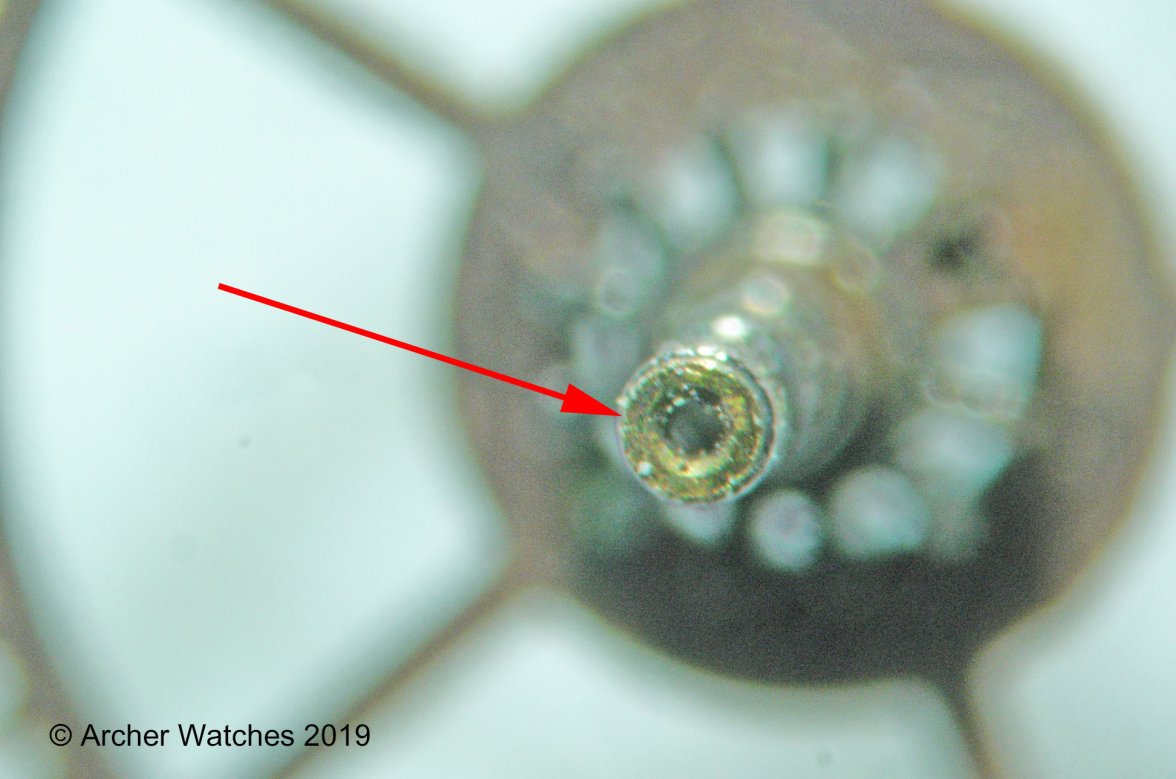
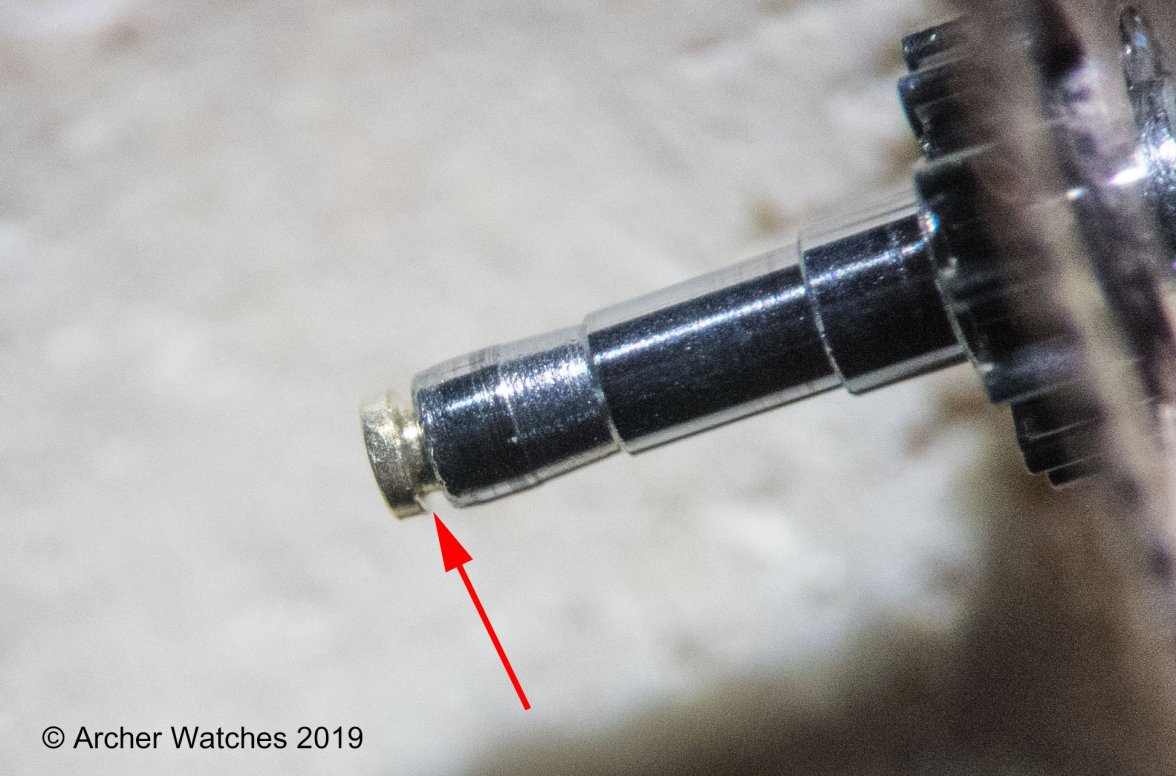
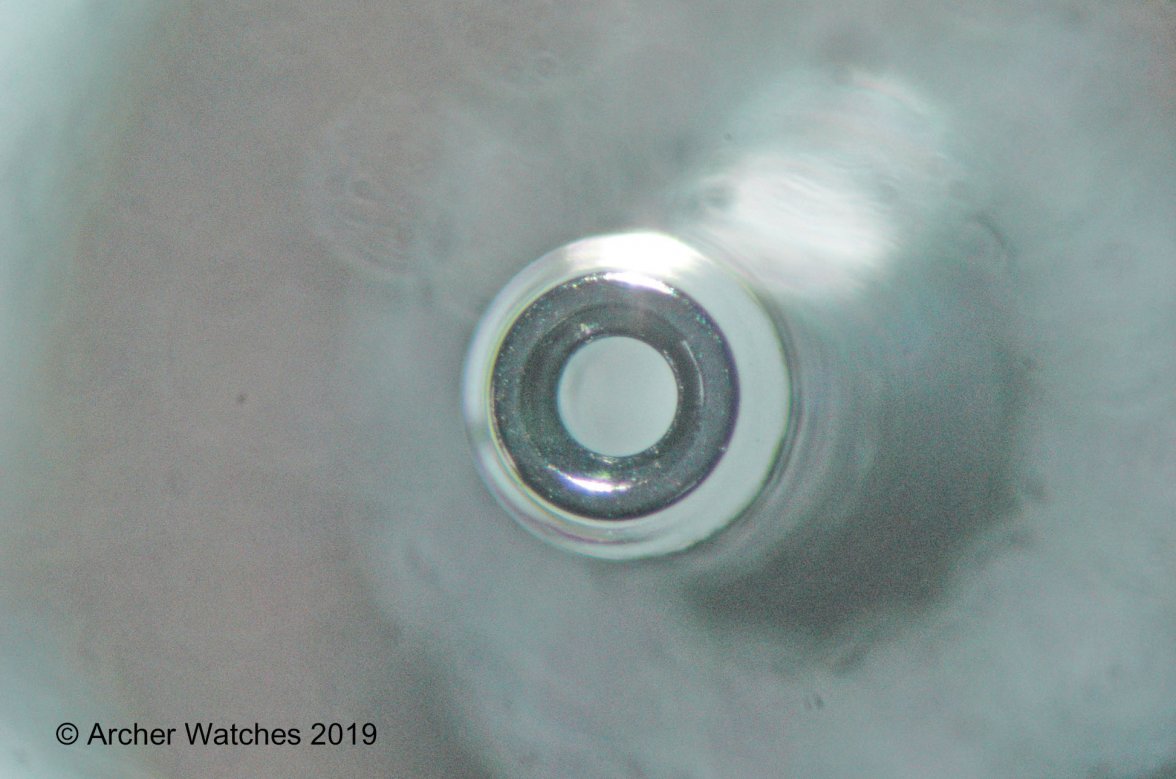
Watch movements go through very small tweaks made by the manufacturer all the time, and parts often change in subtle ways. Sometimes these changes are made to improve performance, and are listed as mandatory changes when the watch is serviced (similar to a hidden recall for your car that the dealer just handles when you bring it in for service). Here's an example...the center wheel in the 55X, 56X, and 75X movements come in two different styles. One has a bushing in it that acts as the guide for the sweep seconds pinion, and that bushing is pressed into the tube of the wheel, like so:


The problem with this style is that sometimes that bushing doesn't stay put - here's one that is nearly falling out:


And here's one where the bushing was completely missing when the watch came in:


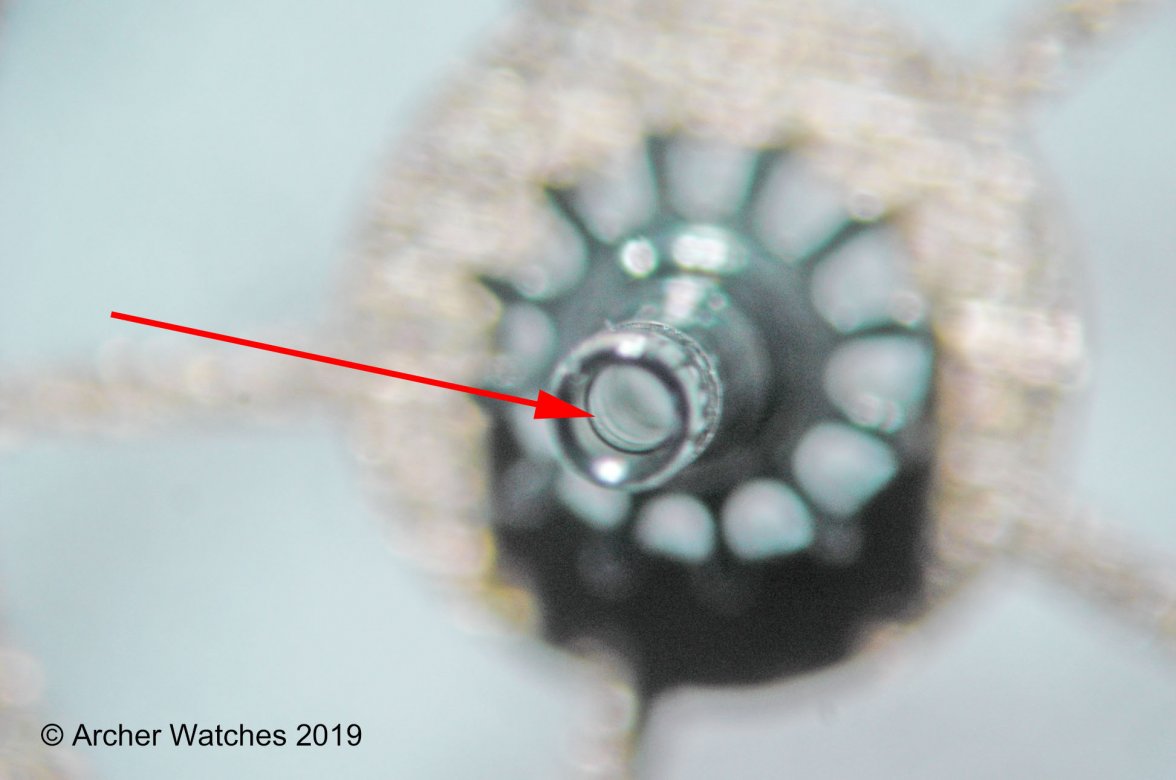
So Omega designed the part to incorporate the bushing right into the part, like this:


So you can't buy the old style anymore, so if you want it "exactly" the same, you have to find a good condition old style wheel. Note that even for vintage watches, Omega is still making changes to parts like this years after the movements themselves stopped being made. In fact this new center wheel was introduced in 2015 as a mandatory replacement part.

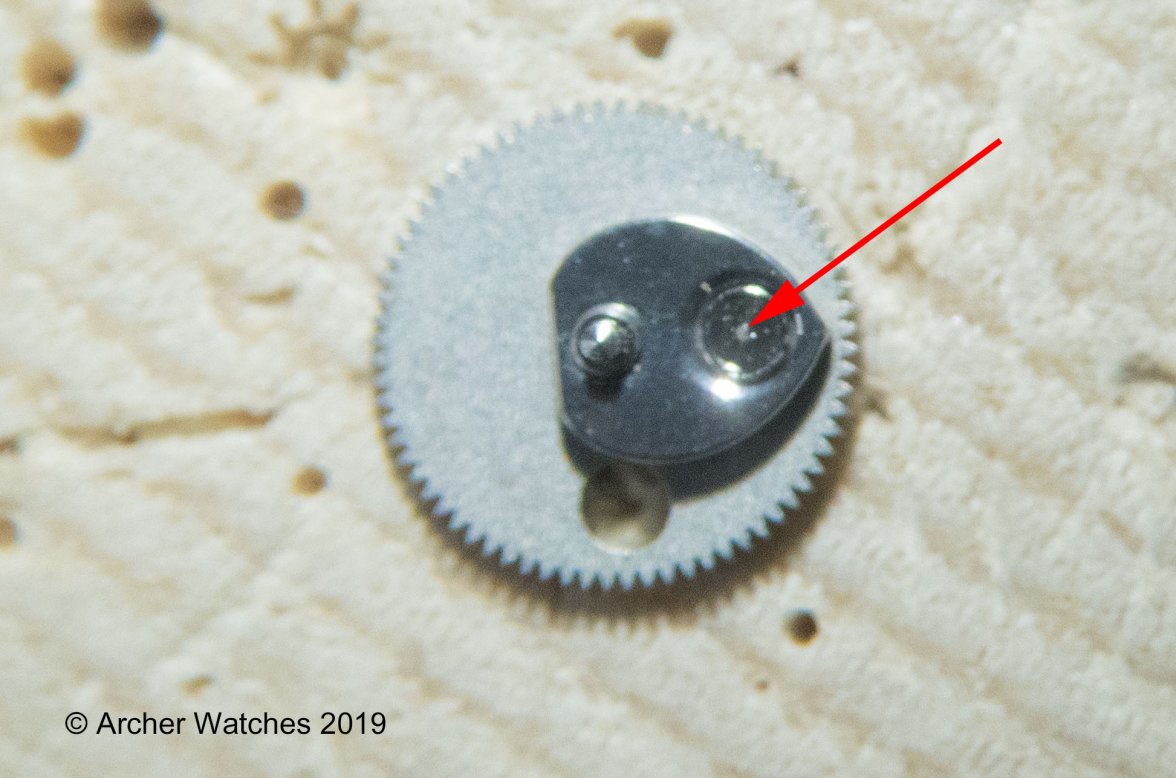
Other examples include changes that are not made for performance reasons - things like the hour recorder wheel for a Speedmaster Pro - here's a photo of the current design, and the red arrow points to a rivet that holds the cam to the wheel:


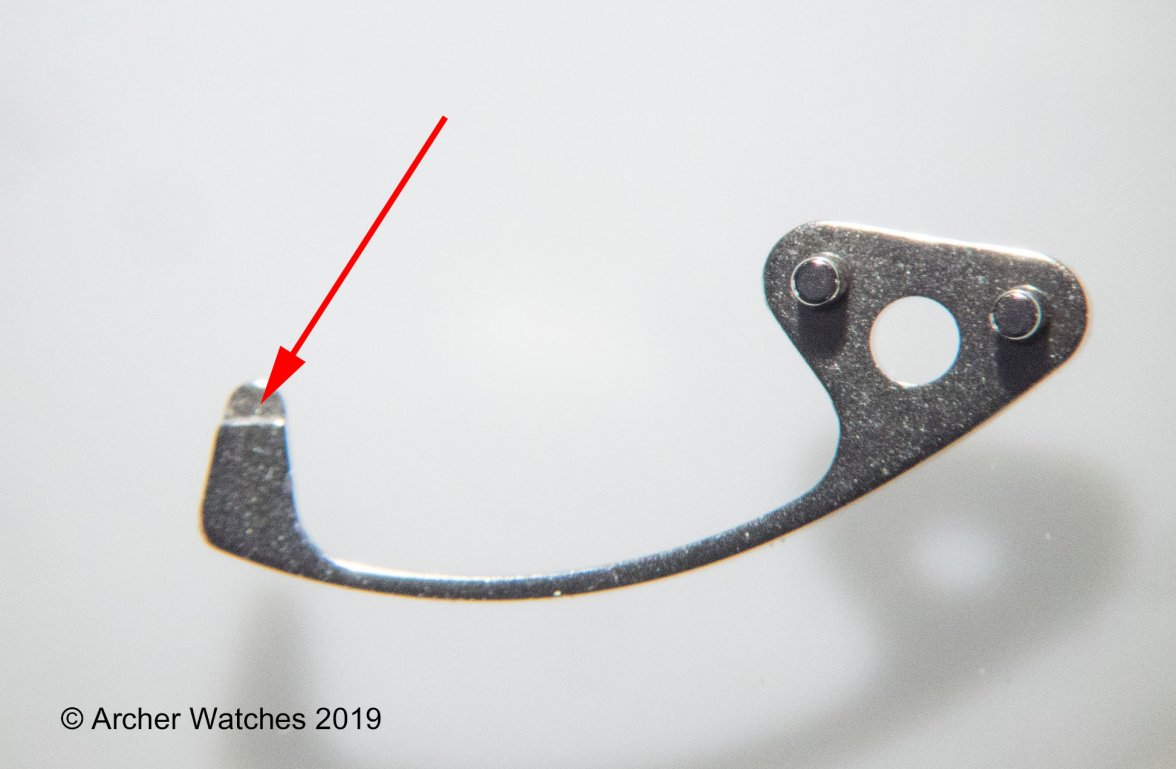
In the original design, the cam was held by a screw, and could be replaced, but I suspect for the sake of making this part cheaper and not having to carry 2 spare parts instead of 1, Omega changed it to this style. Another example is the spring for the coupling clutch:


The red arrow points to a recess under the edge of the spring where it contacts the coupling yoke - this newer design had the step, but the original design for the earlier 861's doesn't.

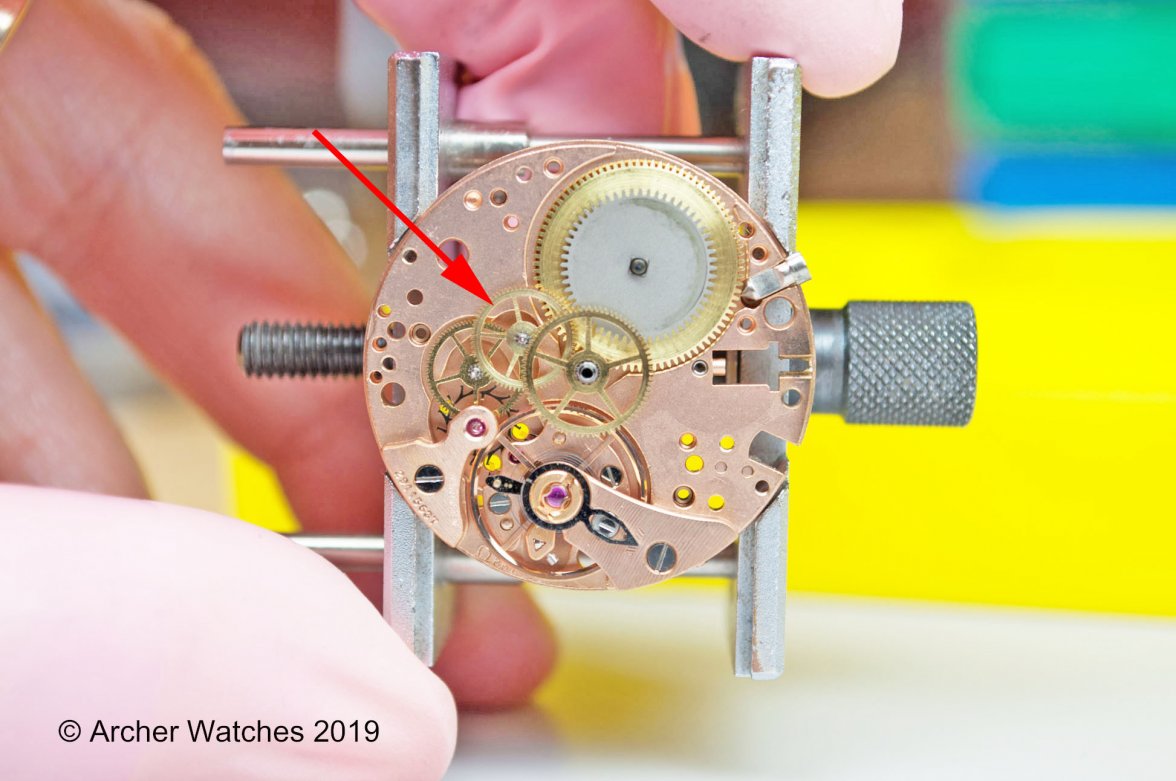
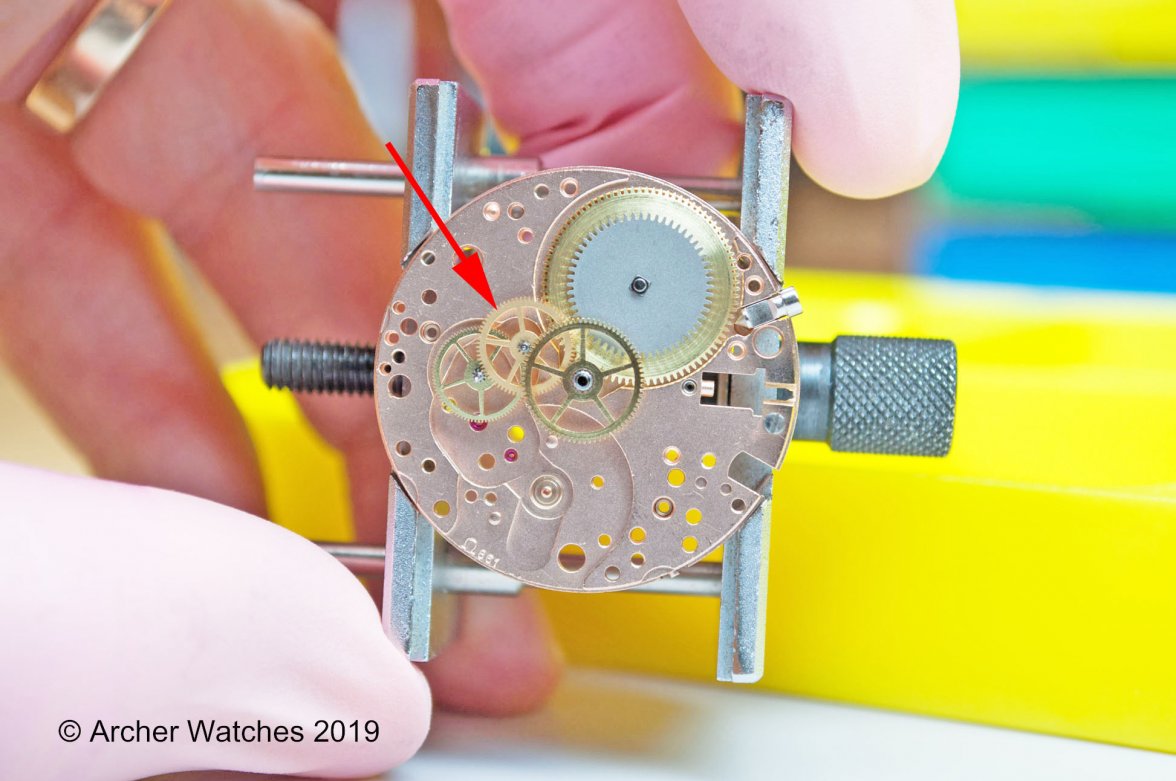
Even something simple like a replacement wheel can look very different - here's an 861 with the original wheels:


The red arrow is at the third wheel - it was worn so a new wheel was installed, and it has a clearly different finish:


So just like new cosmetic parts can sometimes differ from the originals (different logo shapes on crowns for example) movement parts can also have differences between generations that most are not aware of.

Cheers, Al
 
Posts
1,542
Likes
3,354
Thank you Archer, that's really interesting and I very much appreciate the knowledge you share on this platform. It seems then, that you would really need to be something of a purist if you wanted to stay as true to the original as possible, and that would sometimes be at the expense of a better timepiece. I'd be amazed, then, if a watch that used the type of replacement parts you have written about, was of lesser value than one where "authentic" replacements from another movement were used.
 
Posts
29,672
Likes
76,830
Thank you Archer, that's really interesting and I very much appreciate the knowledge you share on this platform. It seems then, that you would really need to be something of a purist if you wanted to stay as true to the original as possible, and that would sometimes be at the expense of a better timepiece. I'd be amazed, then, if a watch that used the type of replacement parts you have written about, was of lesser value than one where "authentic" replacements from another movement were used.

I suppose that's for the collector's to decide for themselves. People have very different tolerances for replacement parts on watches in my experience. So for some, even if the replacement part is external, and looks slightly different, they will choose that over keeping the watch original - the most common part like this that I replace is the crown, and it's done for water resistance.

But then there are people at the other end of the spectrum, who want to keep old case back gaskets in the watch because they are yellow, and the new ones are black. These old gaskets are no longer effective, but they want the yellow one for whatever reason.

For the specific movement parts I've outlined above (and many other examples that exist) I doubt people even know about these, so I don't think they are reflected in market values, at least not yet.
 
Posts
13,698
Likes
53,498
I like a watch that works well because I wear em. That means I believe in maintenance. I like watches that had owners who also believed in maintenance...