Space debris in Low Earth Orbit, ESA & Omega swiss watches

Posts
102
Likes
251
Very cool! Do you happen to have any more information about how exactly Omega will be involved? They were a bit vague on their page.
 
Posts
6,999
Likes
12,897
Space debris in LEO - Low Earth Orbit has become a huge problem, in the first place for manned spaceflight (we all remember the times when the ISS resident crew were warned to go and sit in the Soyuz as there was a possible collision alert of a piece of space-debris with the space station)!
With more and more spacefarers in LEO, the record being 19 simultaneously not counting any sub-orbital "tourists", as the Chinese have a permanent crewed space station (Tiangong 3 with 3 modules, in comparison the ISS has 16 modules) all nations assigned a high priority on solving the problem.
It's so important, most satellites are constructed with the "Design for Demise" philosophie.
Military activity remains an exception and both the USA & China have tested ASAT - Anti-Satellite weapons which after impact leave a lot of debris around our Blue Marble...
Luckily, we're close to an operational SSA - Space Situational Awareness system to track all Earth orbiting objects up from a certain size.
With both the European, US and Russian-Chinese space agencies planning a return to the Moon, it's hugely important to have a perfect idea of safe LEO area.
Let's not forget all manned missions have to pass through this are on their way to cislunar orbit.

Omega made a bold step to become involved in ClearSpace as it will be important for future spaceflight missions beyond Earth. The Omega legacy with (manned) spaceflight lives on...
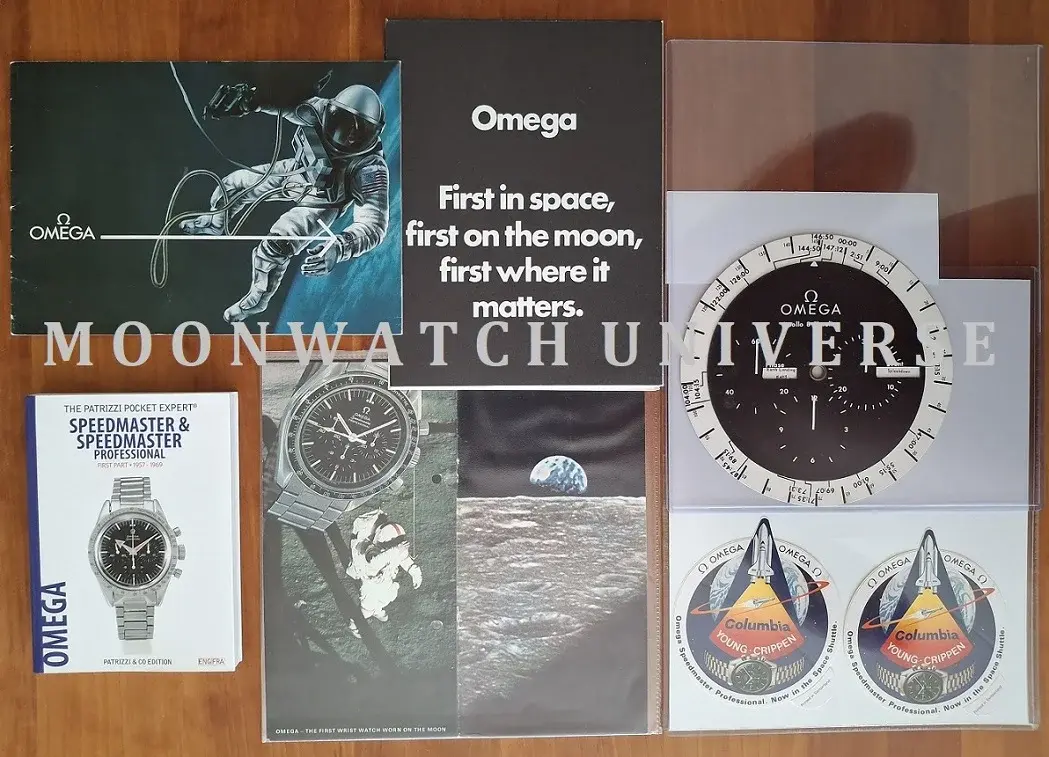
Here's an overview of a display of past Omega marketing memorabilia covering 1966 - 1981
(photo: Moonwatchuniverse)
.
 
Posts
2,770
Likes
3,678
Interesting side note (at least to me):

When I was getting my undergraduate degree in Aerospace Engineering at the University of Texas in the late 80s, one of the final classes was the Senior Design Project, where we responded to NASA request for a satellite mission design, came up with a concept, speced out orbits, flight systems, etc. Really fun. My group project was to design a system to retrieve orbital debris. Our choice was to use nets and smaller pods attached to main bus.

Anyway, we presented the concept to Johnson Space Center, wrote a report, and it is still archived at NASA:

https://ntrs.nasa.gov/citations/19920016139

I moved on, with my research evolving into satellite earth observations - I’m now a professor in an oceanography program. But I have noticed in the last three years that old report has started to be downloaded and cited - I get notices via a citation report from my university at least once a month or so. Kinda cool an old class project idea has finally come to fruition and that old work is still being read.

 
Posts
102
Likes
251
That's really interesting additional information about the debris build up.

Omega made a bold step to become involved in ClearSpace as it will be important for future spaceflight missions beyond Earth.
But I'm still not sure exactly how Omega is 'becom[ing] involved'.

They are equally vague on their website, saying:

A critical mission awaits us: the preservation of a clean and sustainable cosmos for future generations. Acknowledging this monumental challenge, OMEGA boldly steps up to the plate with its commitment to ClearSpace.
This dynamic collaboration signifies OMEGA's unwavering dedication to forging a path towards an environmentally conscious tomorrow, extending its influence from the depths of the ocean and the surface of our planet to the bustling and cluttered realms of space.

Are they financially sponsoring the clean-up process? This seems odd if it is run by a (multi-)governmental space agency ...

Are they giving free (discounted?) watches to the people involved in the process?

Or, are they providing some other logistical help?
 
Posts
6,999
Likes
12,897
We'll have to wait for a press release, looks like everything started as a sustainable future project.
AFAIK they never give free nor discounted wrist watches !
 
Posts
4,714
Likes
17,848
Interesting side note (at least to me):

When I was getting my undergraduate degree in Aerospace Engineering at the University of Texas in the late 80s, one of the final classes was the Senior Design Project, where we responded to NASA request for a satellite mission design, came up with a concept, speced out orbits, flight systems, etc. Really fun. My group project was to design a system to retrieve orbital debris. Our choice was to use nets and smaller pods attached to main bus.

Anyway, we presented the concept to Johnson Space Center, wrote a report, and it is still archived at NASA:

https://ntrs.nasa.gov/citations/19920016139

I moved on, with my research evolving into satellite earth observations - I’m now a professor in an oceanography program. But I have noticed in the last three years that old report has started to be downloaded and cited - I get notices via a citation report from my university at least once a month or so. Kinda cool an old class project idea has finally come to fruition and that old work is still being read.
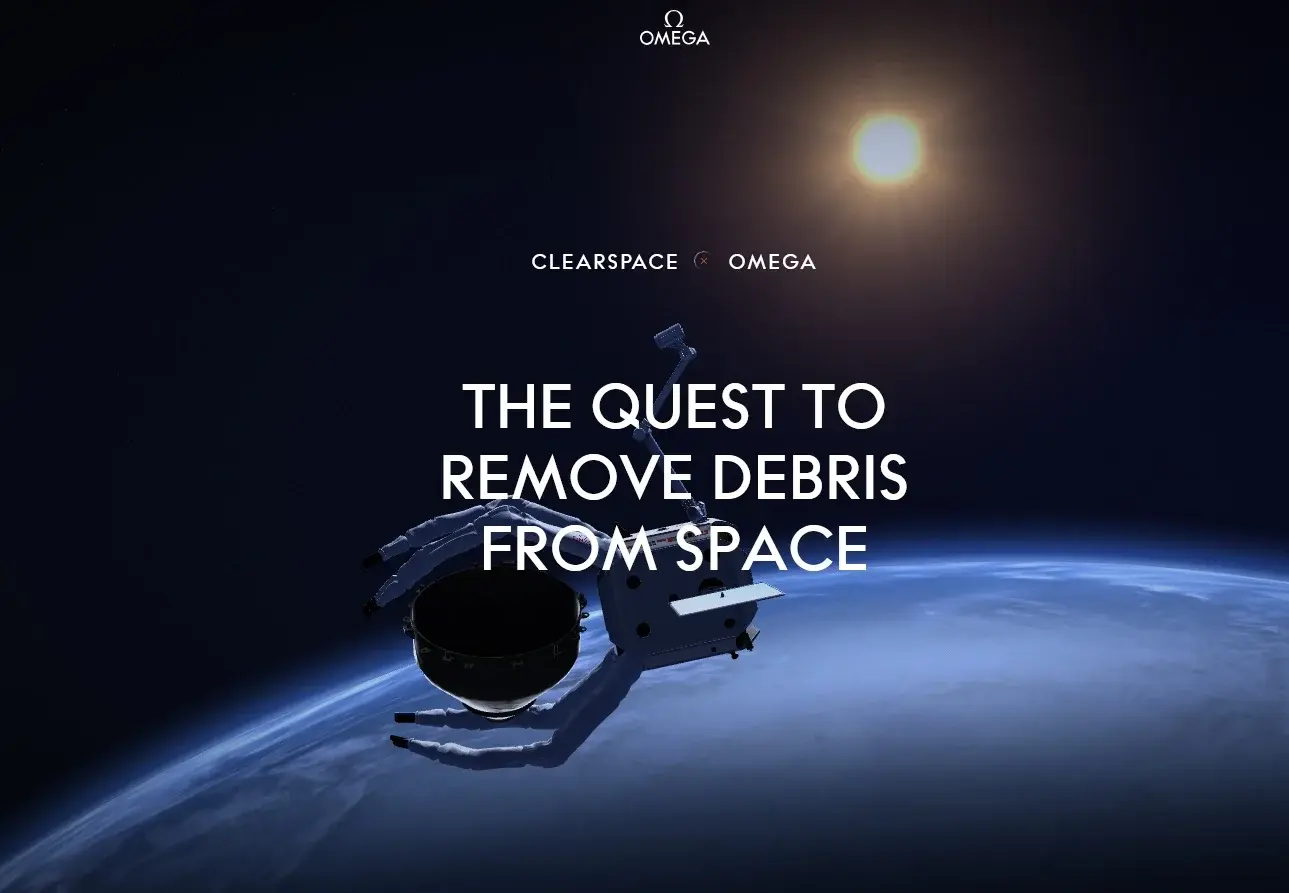
Your research focused on reuse which makes sense. As far as I can tell the project Omega is hooked into is based on de orbiting. I am not sure the infinite and mostly empty cosmos needs our help to keep it clean, but the earth sure does. I hope marketing have fully considered the project @SpeedyPhill . I can see why we need to clear debris out of key orbits as we put more and more stuff up there, but that is mainly about protecting satellites and keeping space usable. I’m less convinced that throwing it all back into the atmosphere and burning it up is environmentally the right answer. These things contain aluminium, titanium, batteries and all sorts of other metals and materials, and burning them up doesn’t make them disappear. It turns some of that material into extremely fine particles and metal oxides directly in the upper atmosphere. There is already research looking at whether increasing amounts of aluminium oxide from satellite re-entry could affect atmospheric chemistry and the ozone layer. We simply don’t understand the long-term cumulative effect yet. Having spent a fortune getting all that valuable material into space in the first place, surely longer term we should be looking at whether some of it can be collected, recycled or stored for future use rather than simply chucking it back at Earth. Even thousands of tiny fragments eventually add up. @Donn Chambers has the right idea (costs more short term of course) hence why authorities might not like it. Burning it in our upper atmosphere might put us all on a path to controlled disintegration long term ;0)
Edited:
 
Posts
2,770
Likes
3,678
Your research focused on reuse which makes sense. As far as I can tell the project Omega is hooked into is based on de orbiting. I am not sure the infinite and mostly empty cosmos needs our help to keep it clean, but the earth sure does. I hope marketing have fully considered the project @SpeedyPhill . I can see why we need to clear debris out of key orbits as we put more and more stuff up there, but that is mainly about protecting satellites and keeping space usable. I’m less convinced that throwing it all back into the atmosphere and burning it up is environmentally the right answer. These things contain aluminium, titanium, batteries and all sorts of other metals and materials, and burning them up doesn’t make them disappear. It turns some of that material into extremely fine particles and metal oxides directly in the upper atmosphere. There is already research looking at whether increasing amounts of aluminium oxide from satellite re-entry could affect atmospheric chemistry and the ozone layer. We simply don’t understand the long-term cumulative effect yet. Having spent a fortune getting all that valuable material into space in the first place, surely longer term we should be looking at whether some of it can be collected, recycled or stored for future use rather than simply chucking it back at Earth. Even thousands of tiny fragments eventually add up. @Donn Chambers has the right idea (costs more short term of course) hence why authorities might not like it. Burning it in our upper atmosphere might put us all on a path to controlled disintegration long term ;0)
To clarify, my project also de-orbited the items and expected them to burn up. We just collected smaller pieces in pods, then de-orbited them all at once.
 
Posts
4,714
Likes
17,848
To clarify, my project also de-orbited the items and expected them to burn up. We just collected smaller pieces in pods, then de-orbited them all at once.
Thanks for clarifying Donn, in the modern example, the capture vehicle goes down with the debris, one assumes that has propellent, batteries and electronics etc. Was yours just the net?
I guess we have to prove these technologies but (subject to seeing any research) it does seem possible burning up lots of at times exotic material in the upper atmosphere may have some consequences and that will increase as we launch more. I guess it would be a huge cost to push it out of orbit sun bound and again it seems a shame to waste material we spent money on getting it up there, especially if we need shielding material for radiation protection.
 
Posts
1,811
Likes
3,555
Interesting side note (at least to me):

When I was getting my undergraduate degree in Aerospace Engineering at the University of Texas in the late 80s, one of the final classes was the Senior Design Project, where we responded to NASA request for a satellite mission design, came up with a concept, speced out orbits, flight systems, etc. Really fun. My group project was to design a system to retrieve orbital debris. Our choice was to use nets and smaller pods attached to main bus.

Anyway, we presented the concept to Johnson Space Center, wrote a report, and it is still archived at NASA:

https://ntrs.nasa.gov/citations/19920016139

I moved on, with my research evolving into satellite earth observations - I’m now a professor in an oceanography program. But I have noticed in the last three years that old report has started to be downloaded and cited - I get notices via a citation report from my university at least once a month or so. Kinda cool an old class project idea has finally come to fruition and that old work is still being read.

That IS really cool that this is looked at again today !
And for my curiosity , if debri is moving that fast like 20000 Km/h ? you cant just stop it i guess, would it destroy anything put in its path due to such high energy impact ?
So whatever is usd for collecting must move at equal of faster speed ?
 
Posts
2,770
Likes
3,678
Thanks for clarifying Donn, in the modern example, the capture vehicle goes down with the debris, one assumes that has propellent, batteries and electronics etc. Was yours just the net?
I guess we have to prove these technologies but (subject to seeing any research) it does seem possible burning up lots of at times exotic material in the upper atmosphere may have some consequences and that will increase as we launch more. I guess it would be a huge cost to push it out of orbit sun bound and again it seems a shame to waste material we spent money on getting it up there, especially if we need shielding material for radiation protection.
we have been deorbiting spacecraft since the first days of satellites being launched. Most of it is burned up, some goes into the ocean. I. Not really familiar with any studies on contamination, but it is not likely to be even a fraction of the pollution generated every day in manufacturing or mining.

Yes, in our project, we collected the pods with nets then deobrited the entire space-craft. It was too cost prohibitive to have it collected by the shuttle on a future mission and reused.
 
Posts
2,770
Likes
3,678
That IS really cool that this is looked at again today !
And for my curiosity , if debri is moving that fast like 20000 Km/h ? you cant just stop it i guess, would it destroy anything put in its path due to such high energy impact ?
So whatever is usd for collecting must move at equal of faster speed ?
If you enter a similar orbit as the debris, then the relative velocity is near zero. That is how you can retrieve the junk. I’ve seen some studies proposing to use masses of exotic gels in orbit to sweep up small particles. The gel would have a large area, low mass, so drag would pull it into the atmosphere within a month or so. But even then, you can’t have a high relative speed difference - the particle will punch right through. The gell would have to be in a similar orbit and low relative velocities.