- Posts
- 1,288
- Likes
- 3,352
R3D9
·As requested, I’m posting a couple of dials that I recently identified (with the help of a few experienced Seiko collectors) as aftermarket.
I am far, far from an expert on this subject, so please correct anything you see mentioned here that is incorrect.
I’m also hoping others will contribute their own findings to the thread so we can build up a bit of an archive for members to refer to. In particular, I’ve heard that examples of 6138-8020 Pandas with AM dials are everywhere now, but have yet to see a good breakdown online explaining how to identify them.
The AM dial industry for vintage Seiko seems to be very robust and the dials are getting incredibly good... good to the point where you can easily own one and have absolutely no idea the dial isn’t original.
We’ll start with this beautiful 6117-6400:
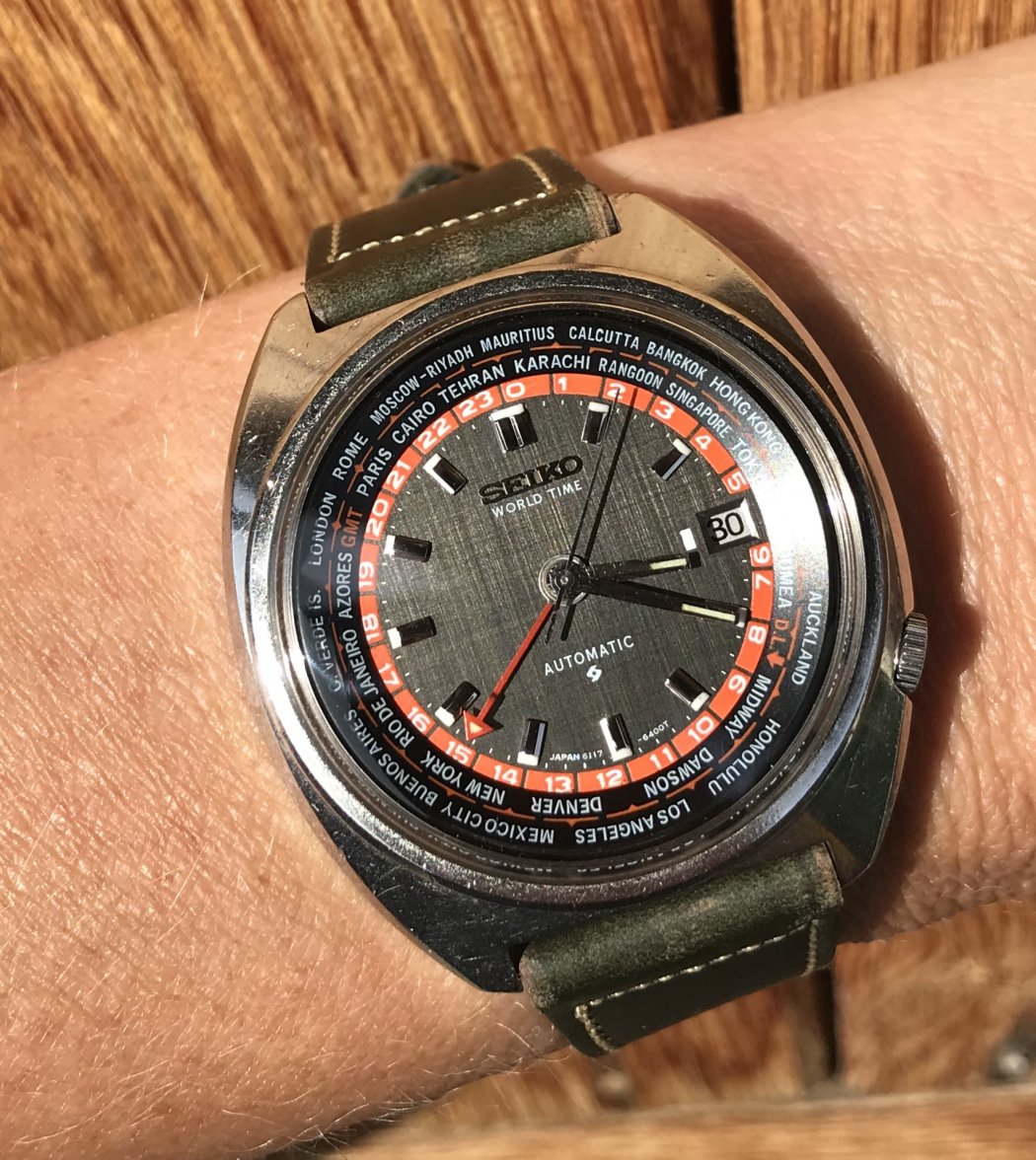
What is scary about this one is that you would assume the linen dial would be very difficult to reproduce.
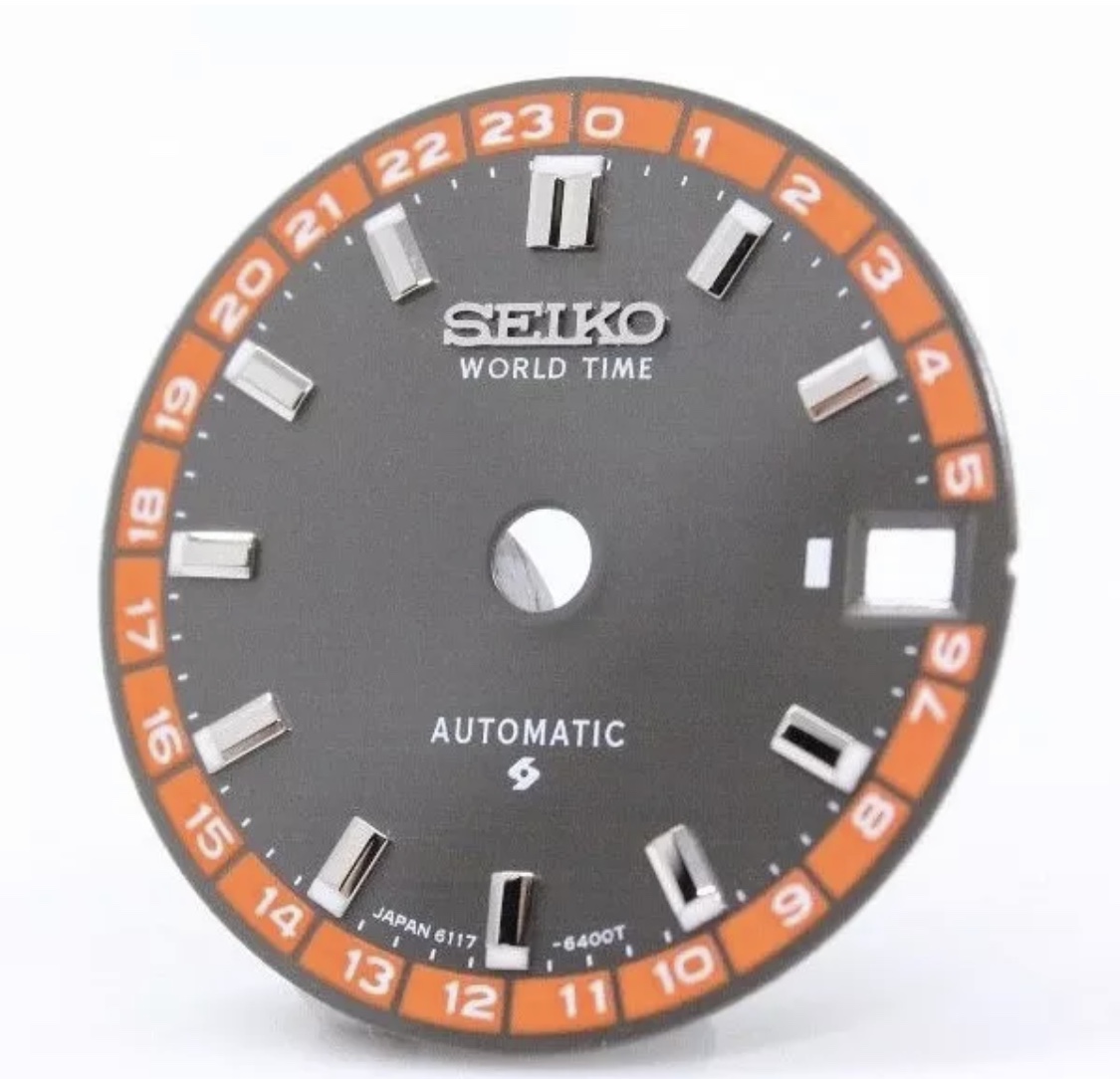
Below is a comparison of four World Time dials... the one on the left is the dial above. The others are known-correct, taken from Instagram.
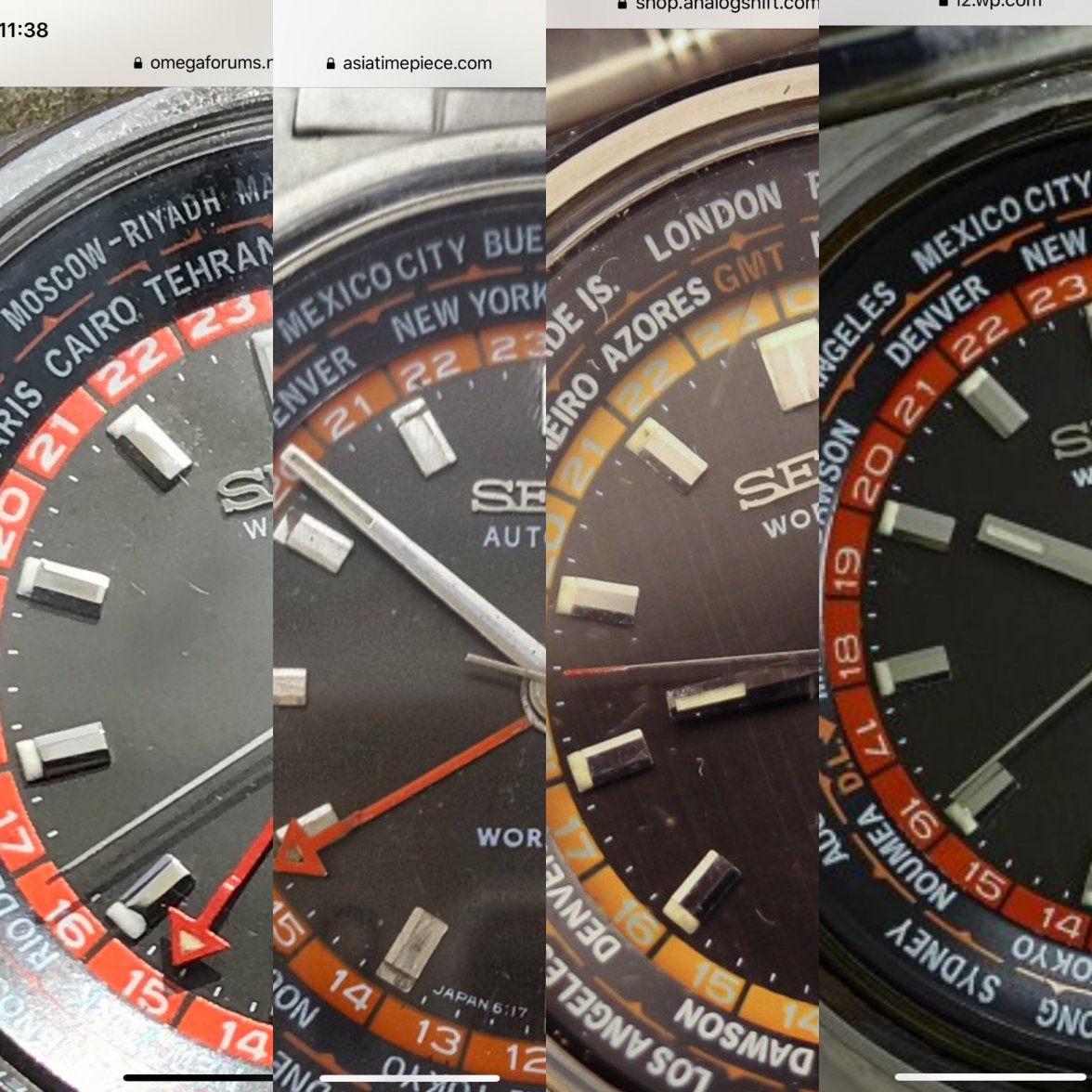
The telltale sign is the hours track. Notice the font of the number two in particular. Also notice how on the original dials there is little to no space between the numerals and the linen section of the dial... they butt up against it much more closely.
I think the applied indices are also slightly different as well... the top flat section on the AM dial seems to be slightly narrower.
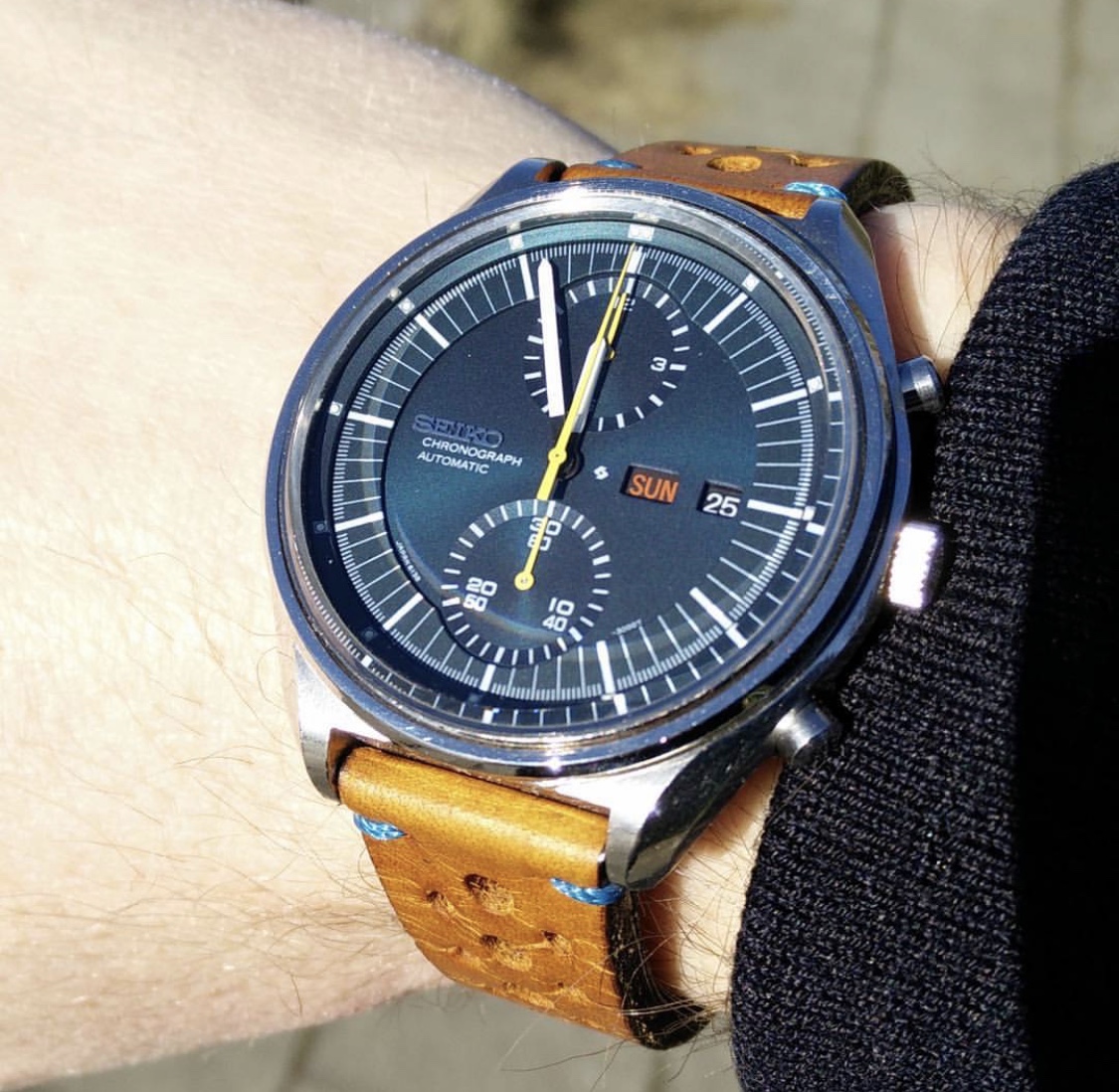
Next up is a 6138-3002, commonly referred to as the Jumbo.
The one I was considering purchasing had the very desirable Petrol dial. When I showed it to a couple of collector friends, they all immediately identified it as an AM dial.
There are more signs with this one than the World Timer above, but it still presents extremely well and I would not blame anyone if they owned it and considered it 100% authentic.
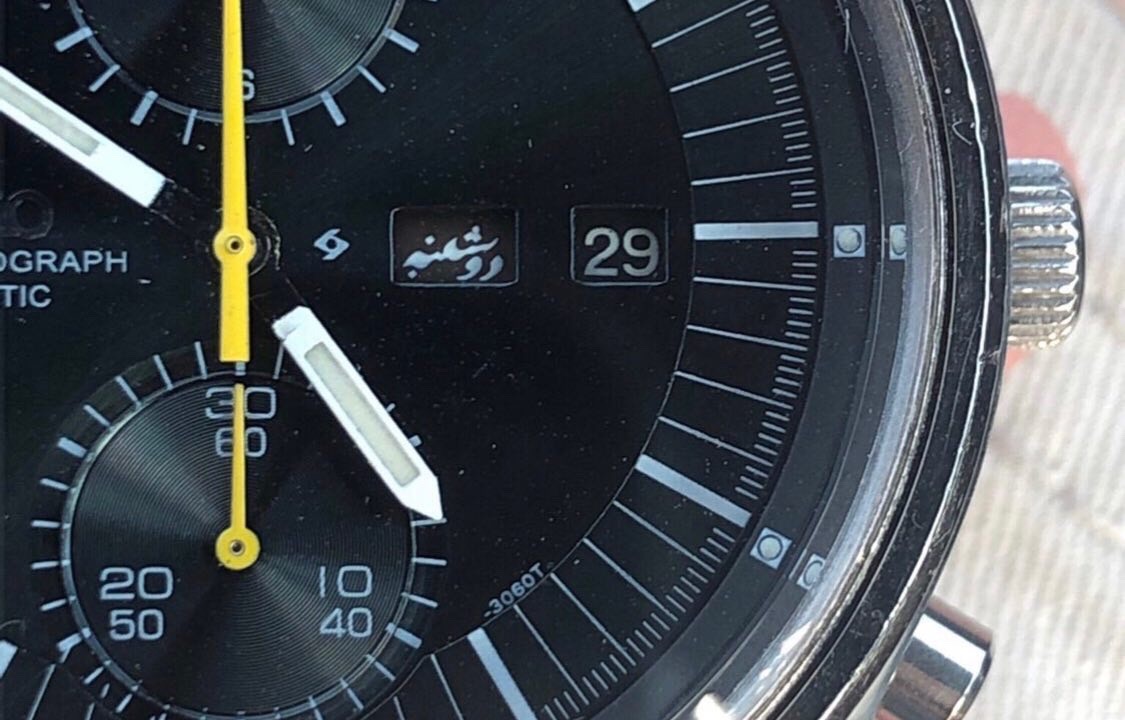
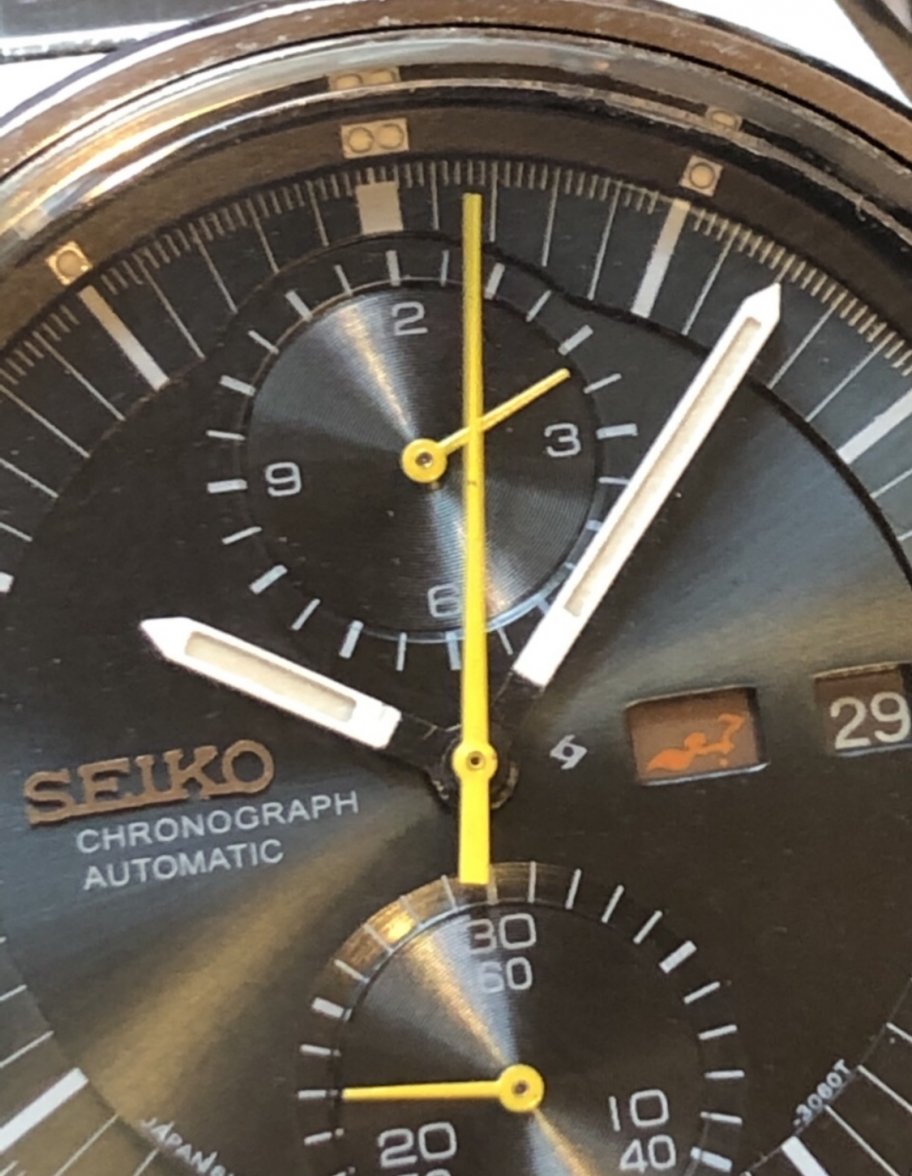
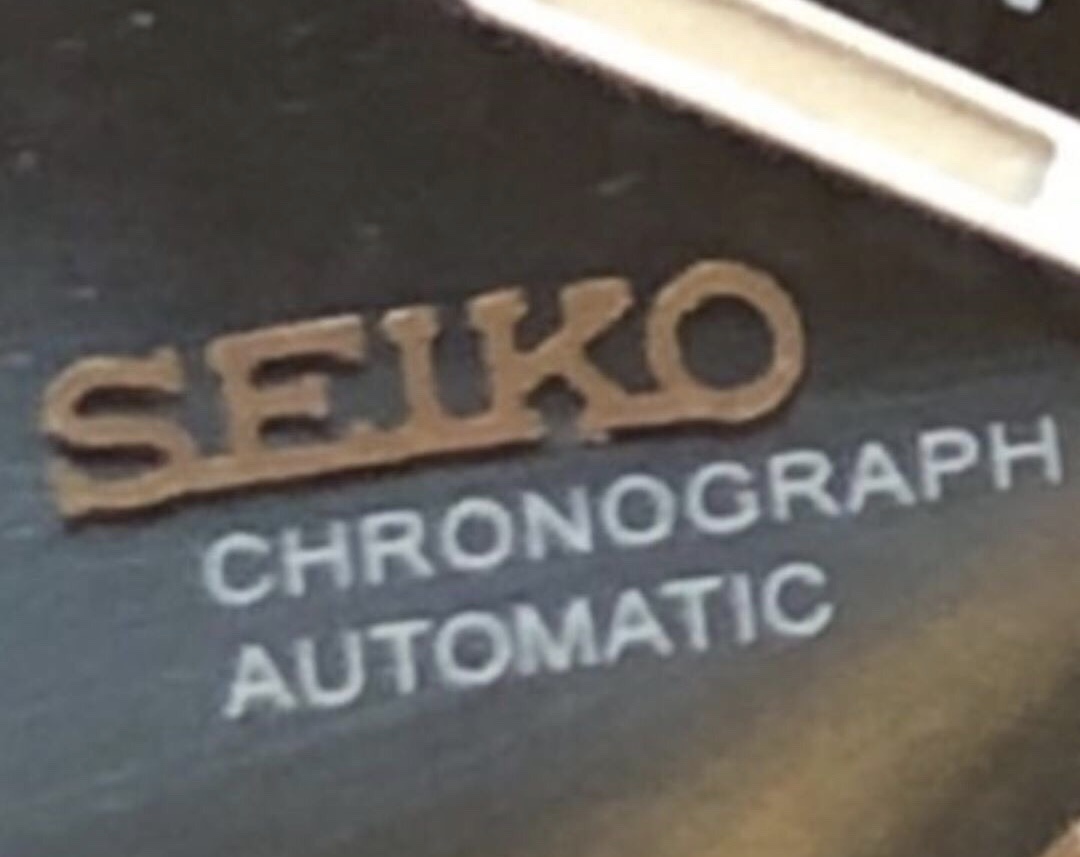
Things that give this one away:
a) the sun-ray effect across the dial is very pronounced. Genuine petrol dials seem to have a blotchier sheen... and there is a much more pronounced undertone or black in the dial of genuine examples.
b) the O in Seiko is more circular than a genuine dial and is evidently a common trait amongst many AM dials.
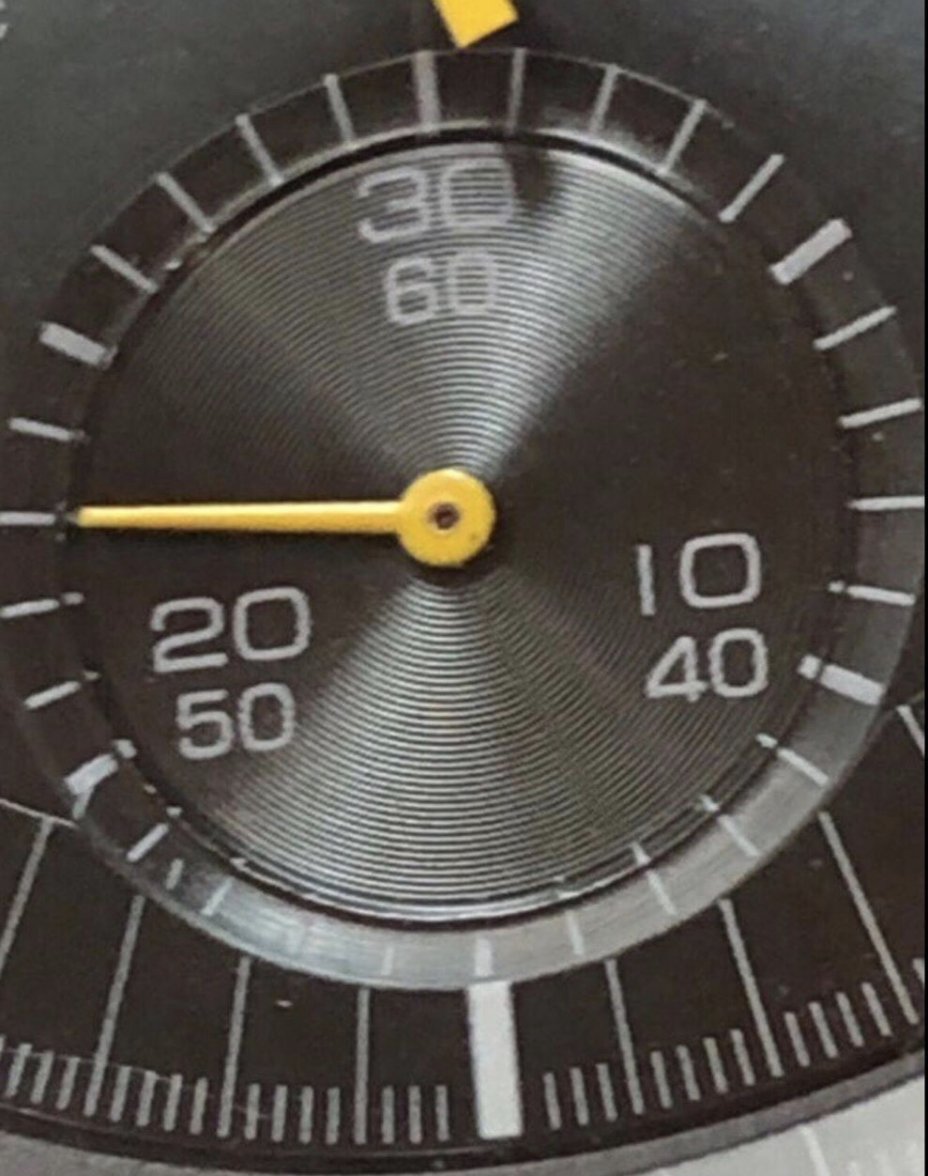
c) the sub-dials are the dead giveaway... the example above has circular grooves. Genuine examples are smooth.
d) both of my experts felt the chrono sweep hand (and possibly the sub dial hands as well) are AM. The sweep hand is definitely shorter, however I have trouble distinguishing what makes the sub-dial hands different.
e) the Farsi date wheel... at first I thought it was a very cool and rare detail, but there are no examples of this model that anyone I spoke to knew of... so a red flag from the jump.
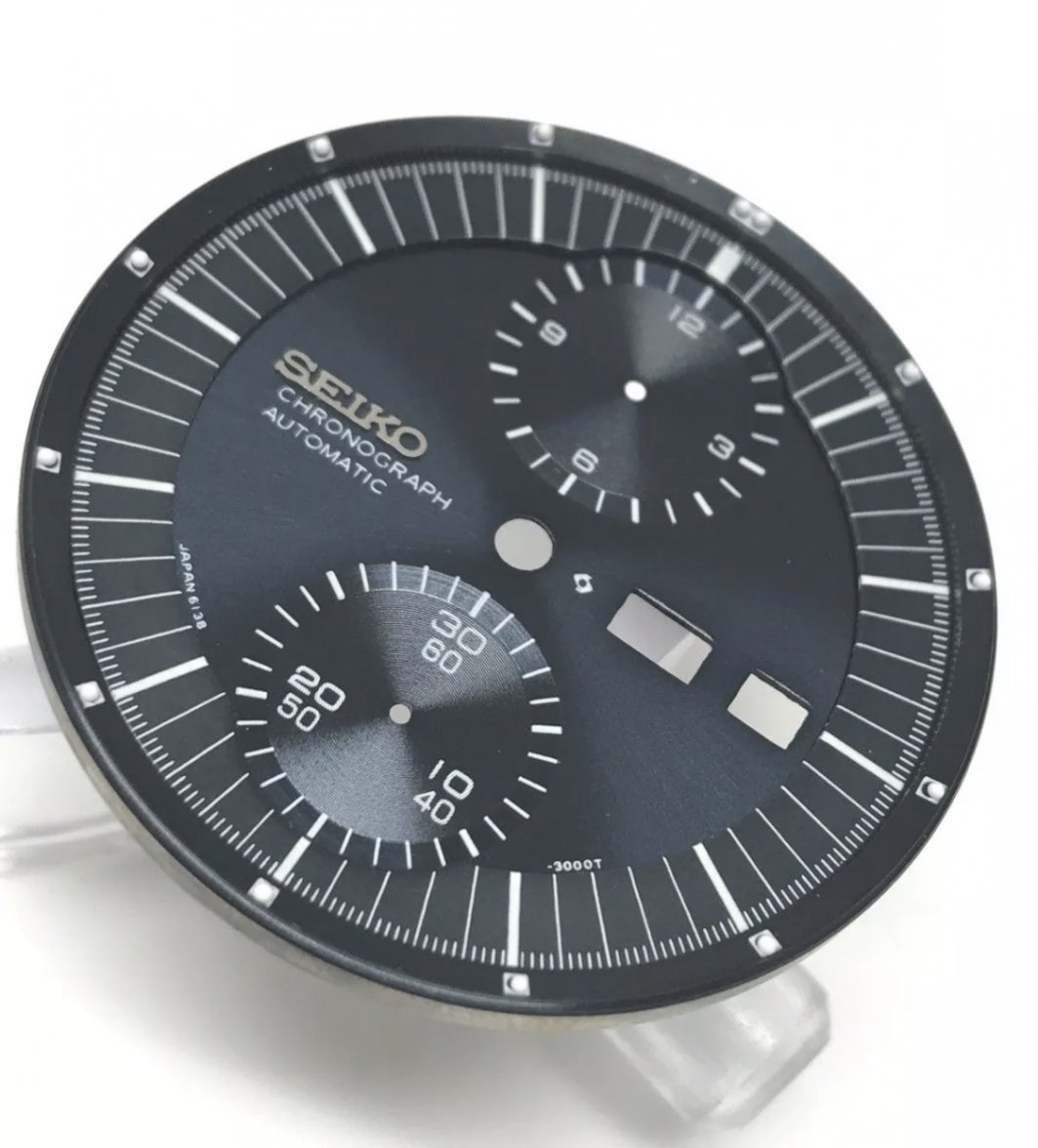
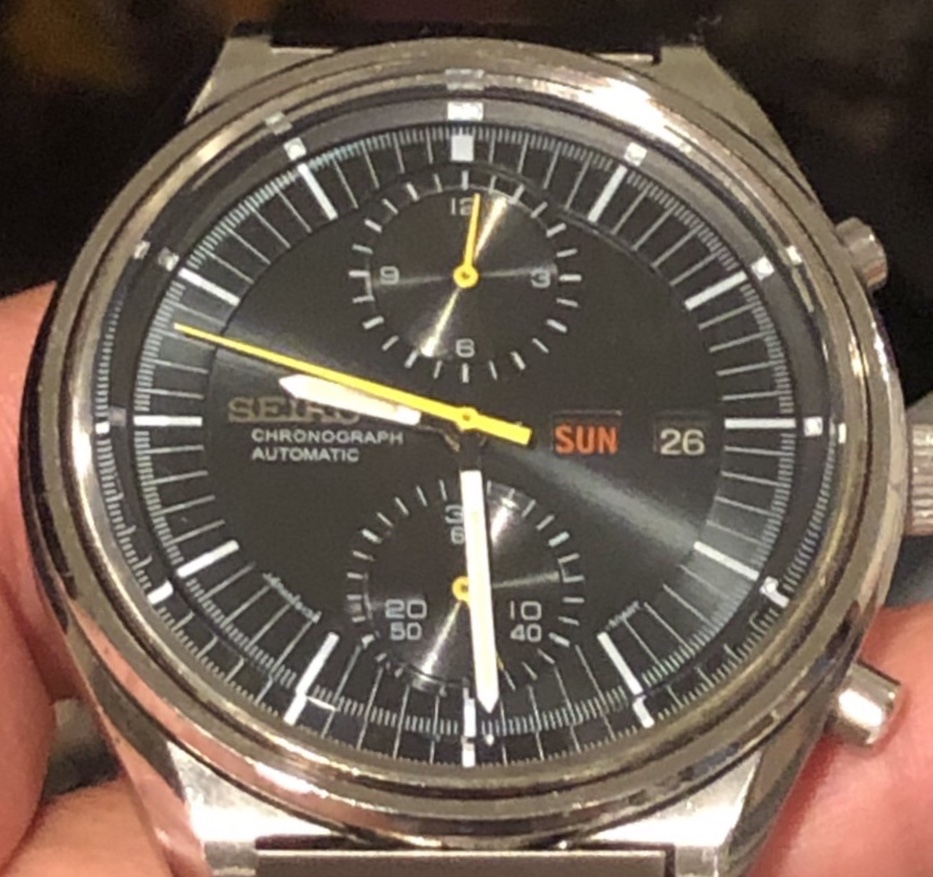
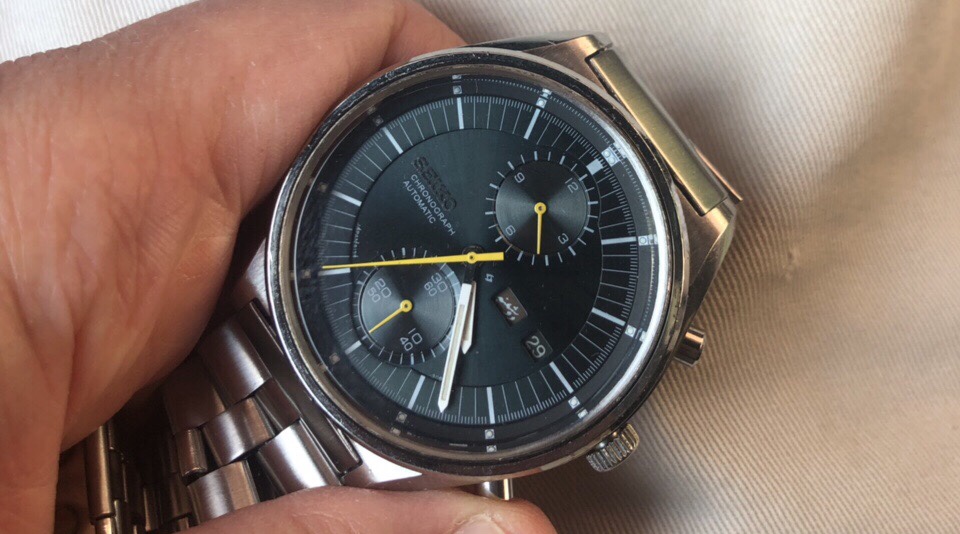
For reference, here are two Jumbo dials I believe to be correct and a closeup of a genuine subdial:
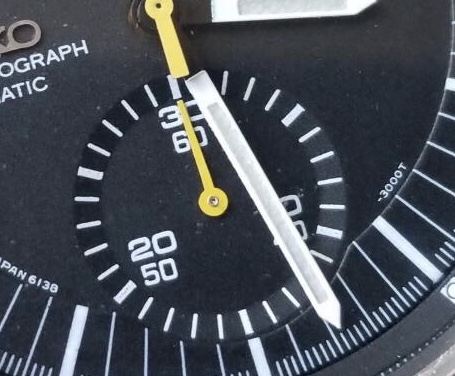
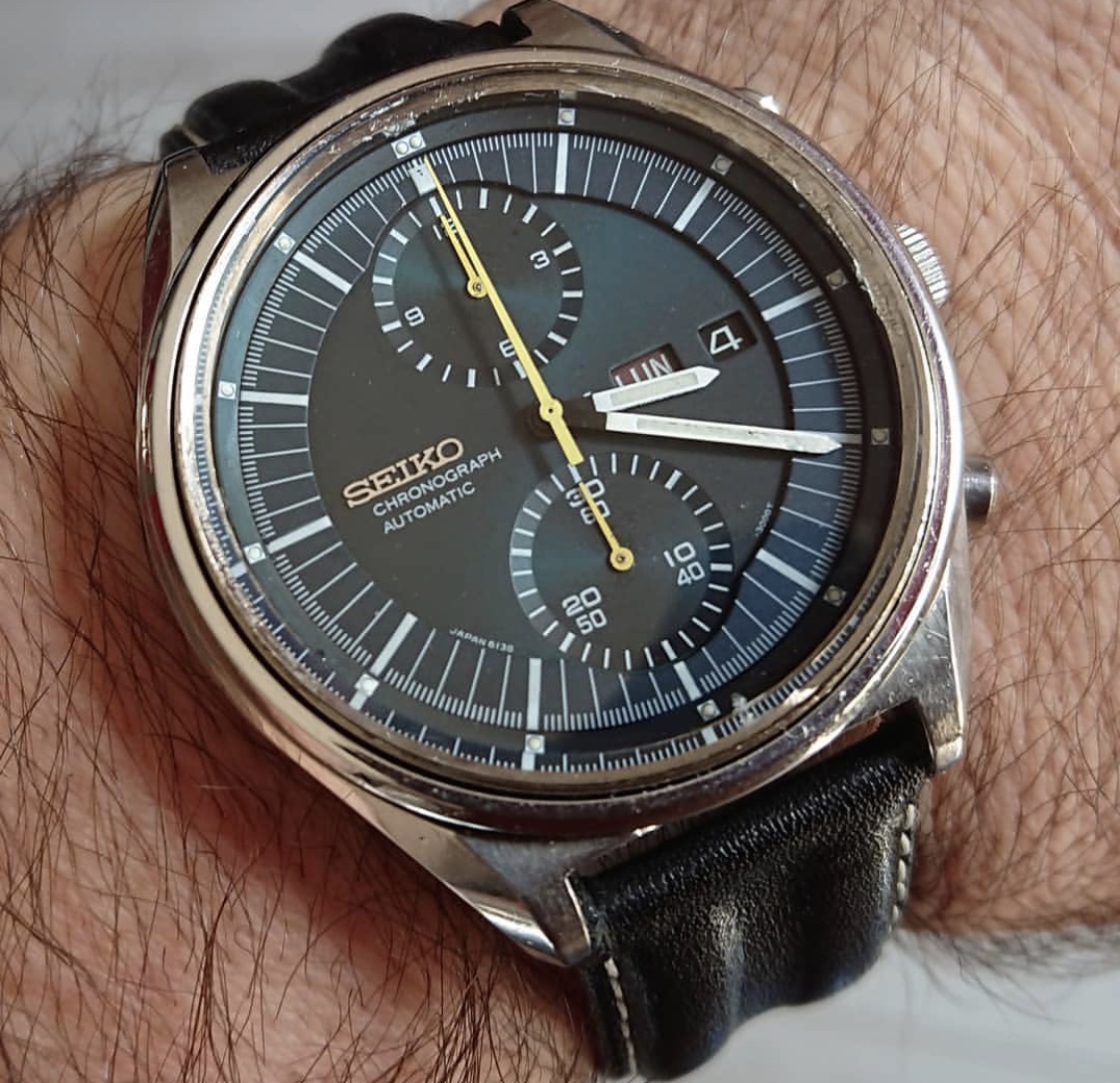
I am far, far from an expert on this subject, so please correct anything you see mentioned here that is incorrect.
I’m also hoping others will contribute their own findings to the thread so we can build up a bit of an archive for members to refer to. In particular, I’ve heard that examples of 6138-8020 Pandas with AM dials are everywhere now, but have yet to see a good breakdown online explaining how to identify them.
The AM dial industry for vintage Seiko seems to be very robust and the dials are getting incredibly good... good to the point where you can easily own one and have absolutely no idea the dial isn’t original.
We’ll start with this beautiful 6117-6400:
What is scary about this one is that you would assume the linen dial would be very difficult to reproduce.
Below is a comparison of four World Time dials... the one on the left is the dial above. The others are known-correct, taken from Instagram.
The telltale sign is the hours track. Notice the font of the number two in particular. Also notice how on the original dials there is little to no space between the numerals and the linen section of the dial... they butt up against it much more closely.
I think the applied indices are also slightly different as well... the top flat section on the AM dial seems to be slightly narrower.
Next up is a 6138-3002, commonly referred to as the Jumbo.
The one I was considering purchasing had the very desirable Petrol dial. When I showed it to a couple of collector friends, they all immediately identified it as an AM dial.
There are more signs with this one than the World Timer above, but it still presents extremely well and I would not blame anyone if they owned it and considered it 100% authentic.
Things that give this one away:
a) the sun-ray effect across the dial is very pronounced. Genuine petrol dials seem to have a blotchier sheen... and there is a much more pronounced undertone or black in the dial of genuine examples.
b) the O in Seiko is more circular than a genuine dial and is evidently a common trait amongst many AM dials.
c) the sub-dials are the dead giveaway... the example above has circular grooves. Genuine examples are smooth.
d) both of my experts felt the chrono sweep hand (and possibly the sub dial hands as well) are AM. The sweep hand is definitely shorter, however I have trouble distinguishing what makes the sub-dial hands different.
e) the Farsi date wheel... at first I thought it was a very cool and rare detail, but there are no examples of this model that anyone I spoke to knew of... so a red flag from the jump.
For reference, here are two Jumbo dials I believe to be correct and a closeup of a genuine subdial:
Edited: