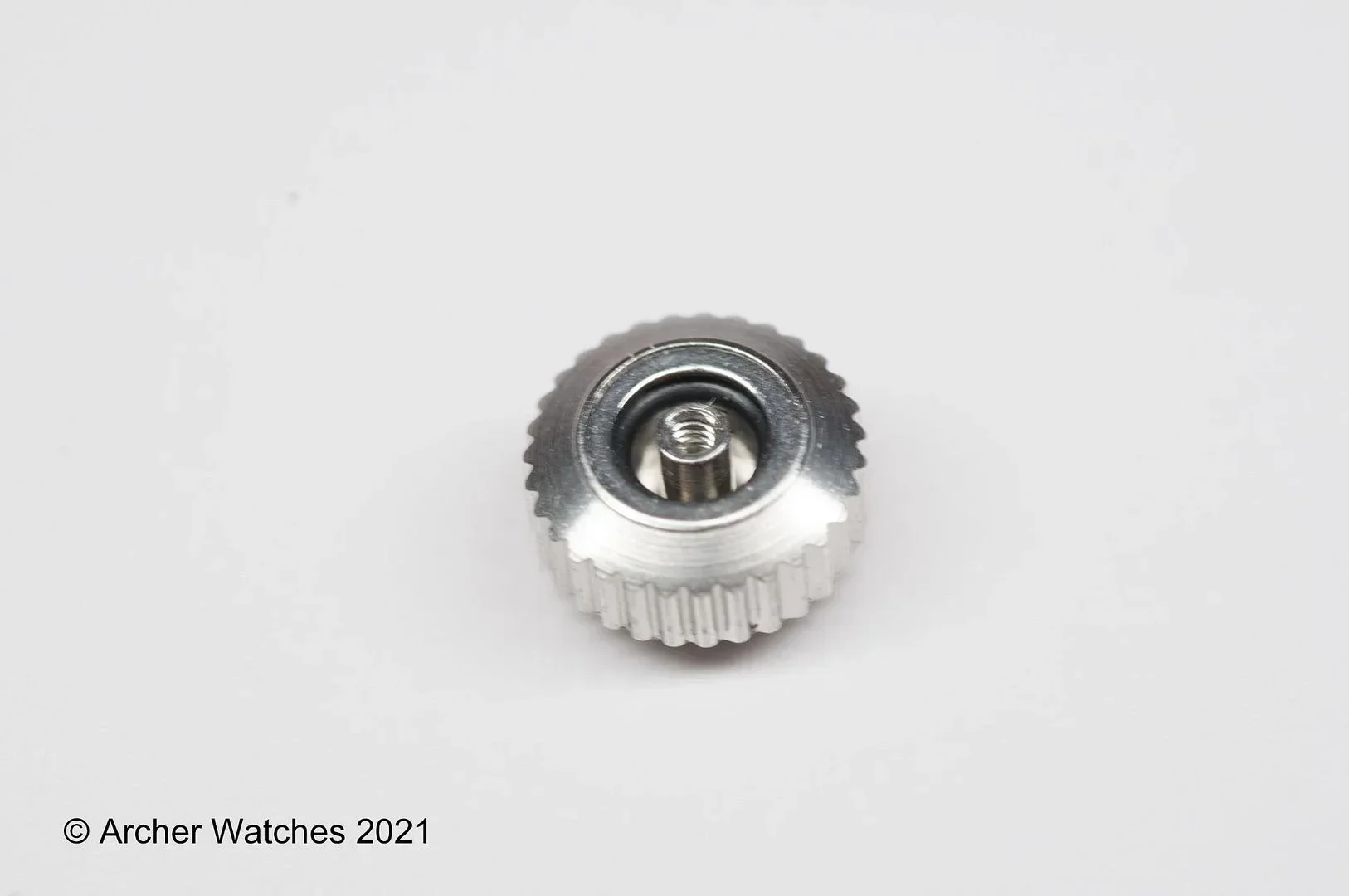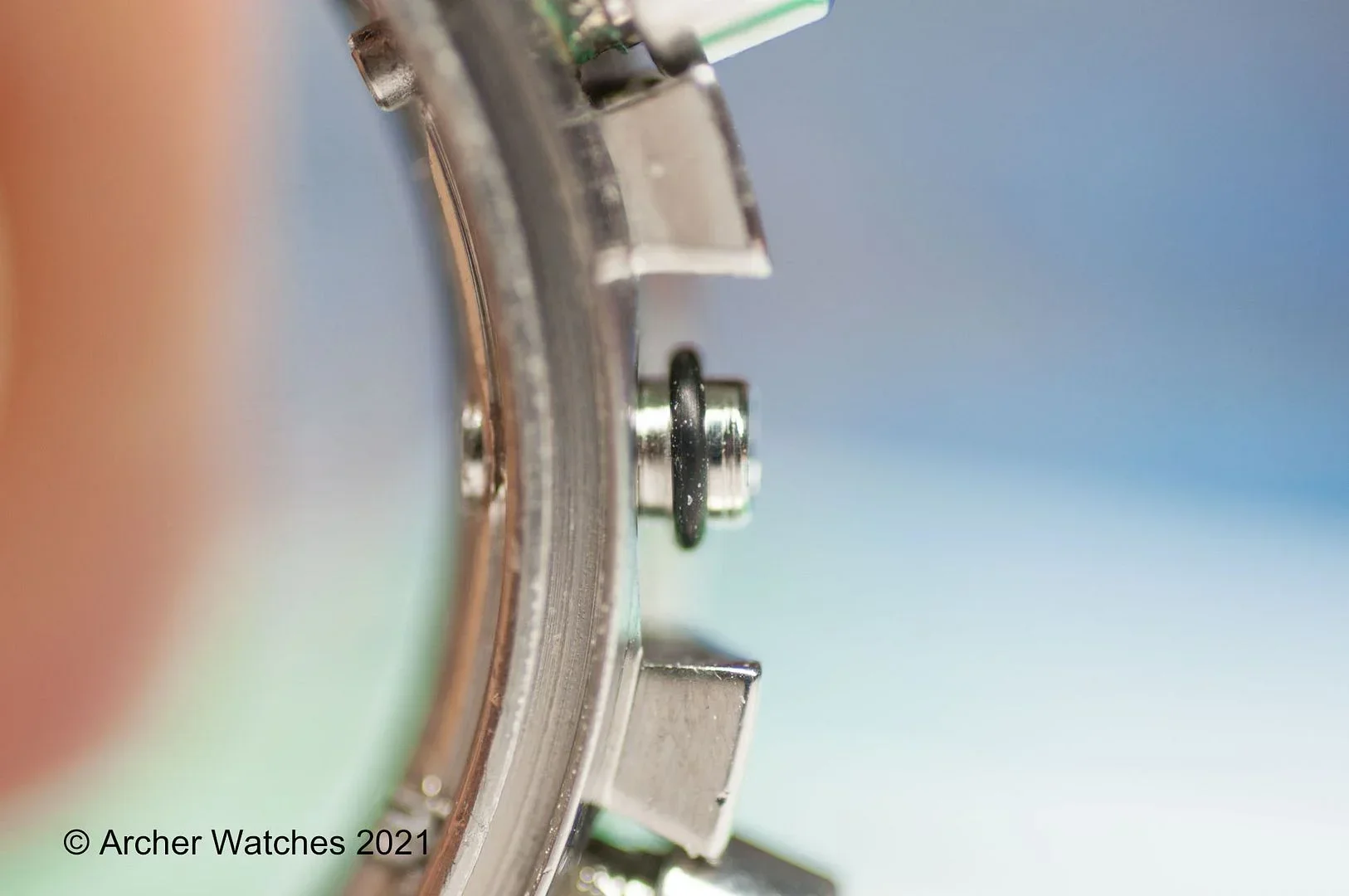
Rolex vs Omega screw down crowns…

Posts
7,382
Likes
23,844
I was wondering if anyone know the answer to this:

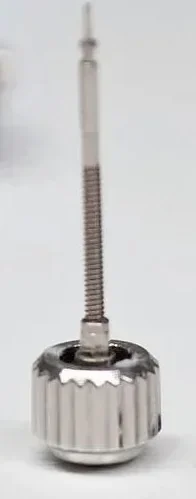
As you can see, Rolex uses a case tube with external threads, and the inside of the crown has threads to allow it to screw down.
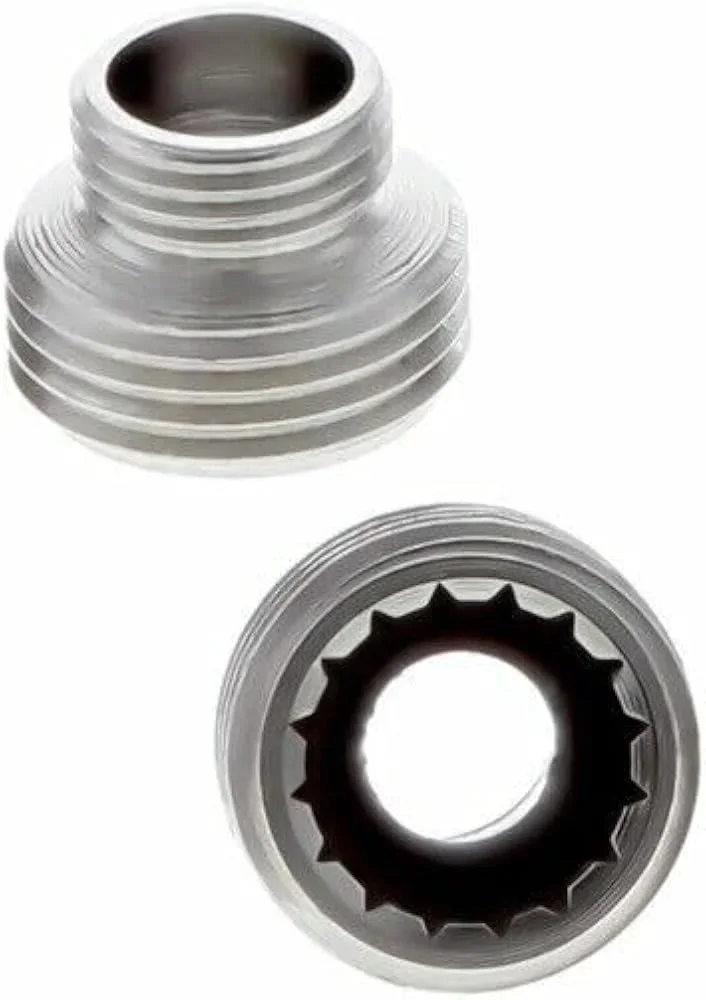
My question is, on a watch like the Heritage Seamaster 300 (and likely other models as well), do they use the same system? Or are the threads INTERNAL to the case tube, and thus also at the top of the stem on the inside of the crown, rather than on the inside if the crown itself? Thanks.
 
Posts
30,270
Likes
78,121
I can't speak to the specific model you are referring to (if you can give me the reference number I'll see what I can find) but the vast majority of the Omega case tubes and crown I've seen and worked on are opposite to what you pictured. The threads are on the inside of the case tube, not the outside.


This has some advantages - the threads are all inside and protected from dirt, so they never get jammed up with crud. The outside of the case tube is where the seal inside the crown rides on, and it is always in contact with the tube - this gives some added rigidity to the crown when pulled out to the farthest position from the case.
 
Posts
7,382
Likes
23,844
Thanks, Al. Very helpful.

The specific model is 234.30.41.21.03.001.


It’s interesting because there have been internet posts where owners were under the impression that the crown should be fully tightened against the case for water resistance, and have sent their watches in for service because of it. However, in many pictures, and my example, this is not the case. I would have thought that water ingress was prevented by the top of the tube hitting a gasket on the inside of the crown, not by the crown being tightened against the case. But that’s just a guess.
Edited:
 
Posts
30,270
Likes
78,121
Unfortunately no photos of the crown or case tube on the Extranet, so I can't show you what it looks like.

But just so you are aware, typically there is no seal in Omega screw down crowns that contacts the end of the case tube. The sealing is again done on the OD of the case tube - a piston seal arrangement.

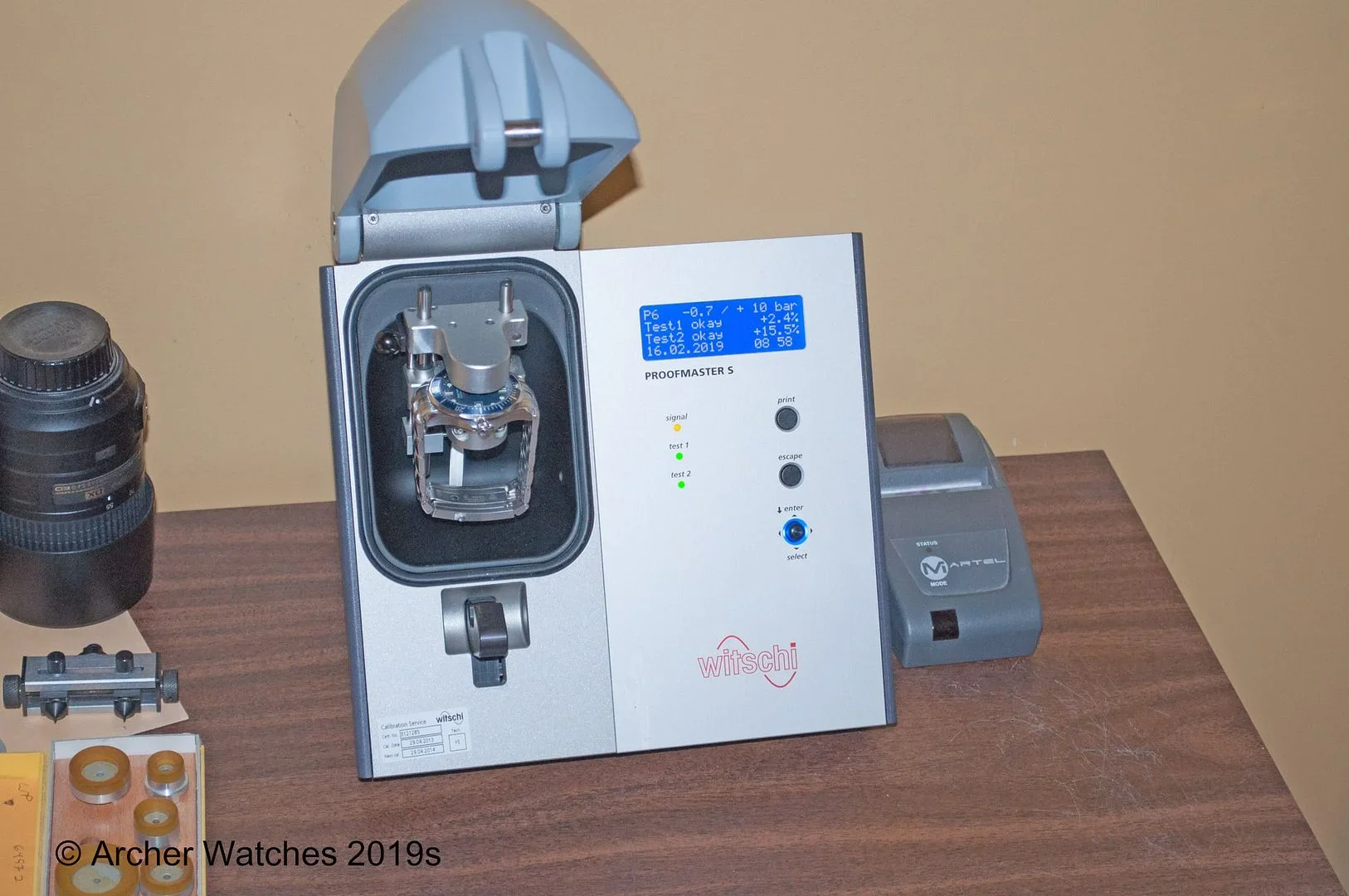
This is why you can fully unscrew the crown, pull it out to the setting position (as far away from the case as it will go) and it will still pass a pressure test...like this:


Now since I have not worked on the model in question personally, I can't say if the arrangement is any different than what Omega has been using since the start of the Bond SMP era, so it very well may be a different arrangement, but generally speaking if a crown must be fully screwed down to prevent water intrusion, it is a poor design...
 
Posts
7,382
Likes
23,844
But just so you are aware, typically there is no seal in Omega screw down crowns that contacts the end of the case tube. The sealing is again done on the OD of the case tube - a piston seal arrangement
Thanks, very interesting. So, there is a rubber gasket on the inside of the crown that surrounds the outside of the case tube for water resistance? Would this be a similar set-up for the non-screw down crown models, like the new cal. 321, for example?

Edit; looks more like there’s a gasket on the inside of the case tube?
 
Posts
30,270
Likes
78,121
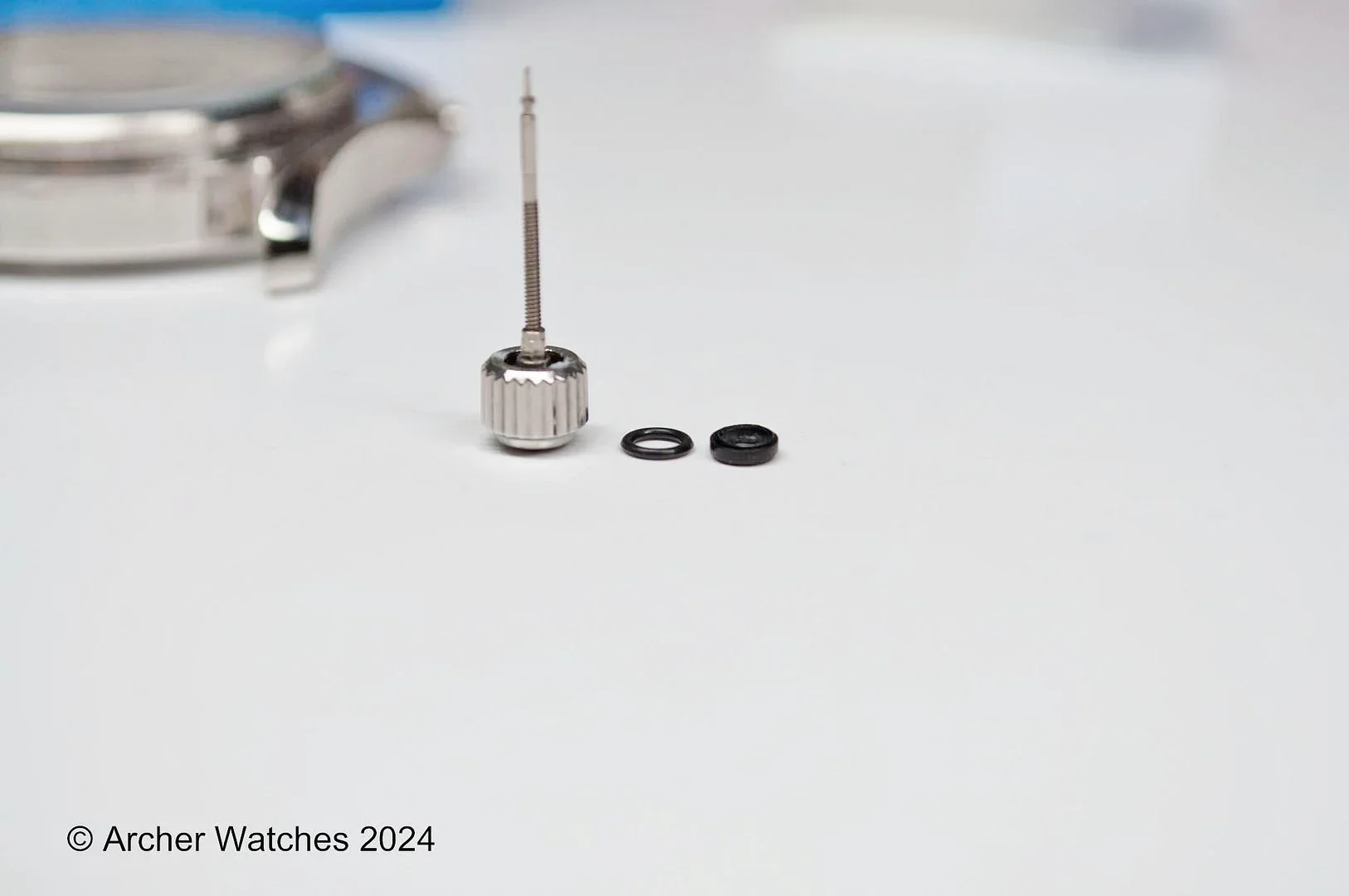
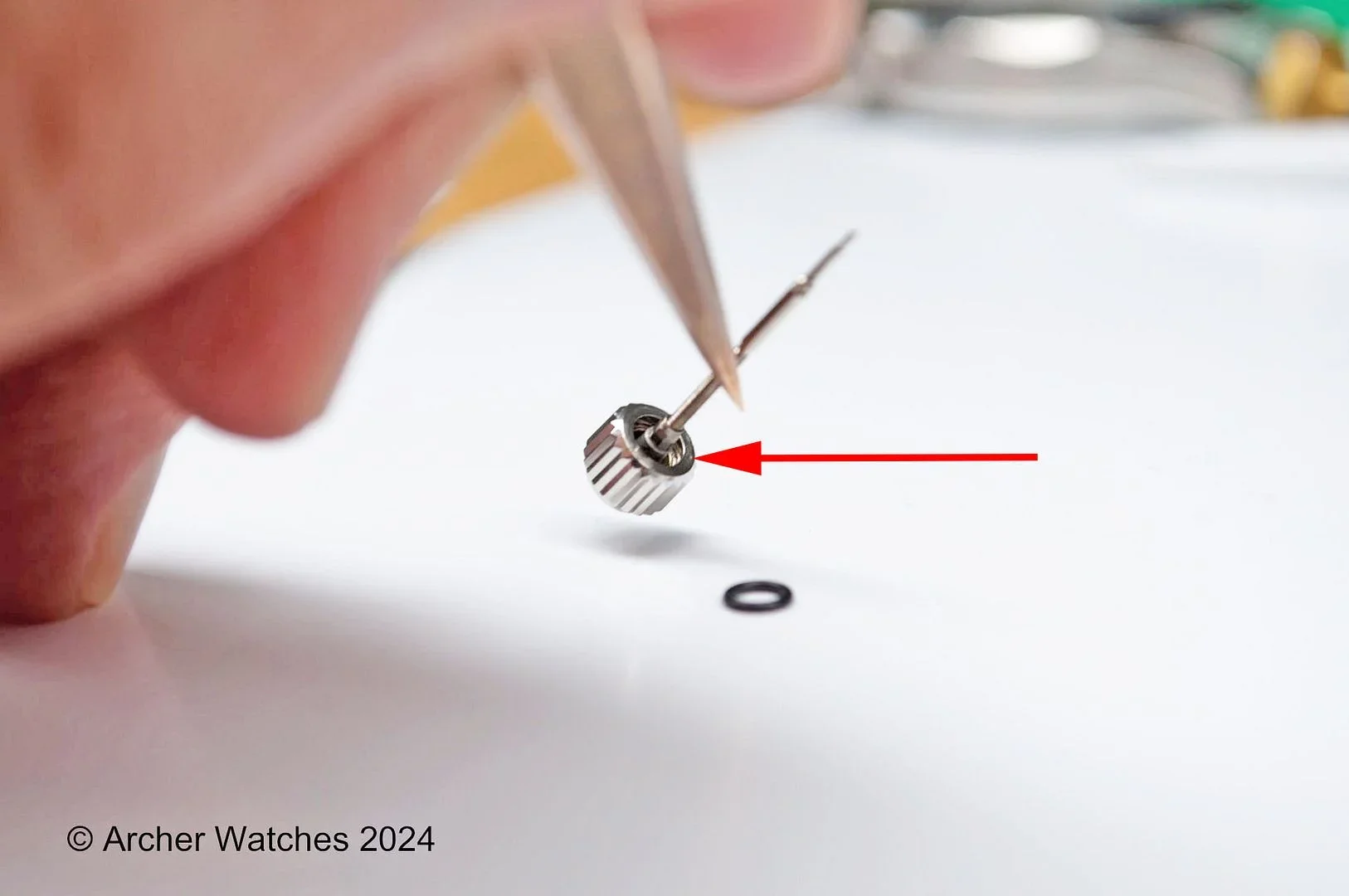
Yes, the seal is inside the crown and seals on the OD of the case tube only. Here I have removed the old seal from the crown on the right, and the new one on the left was installed:


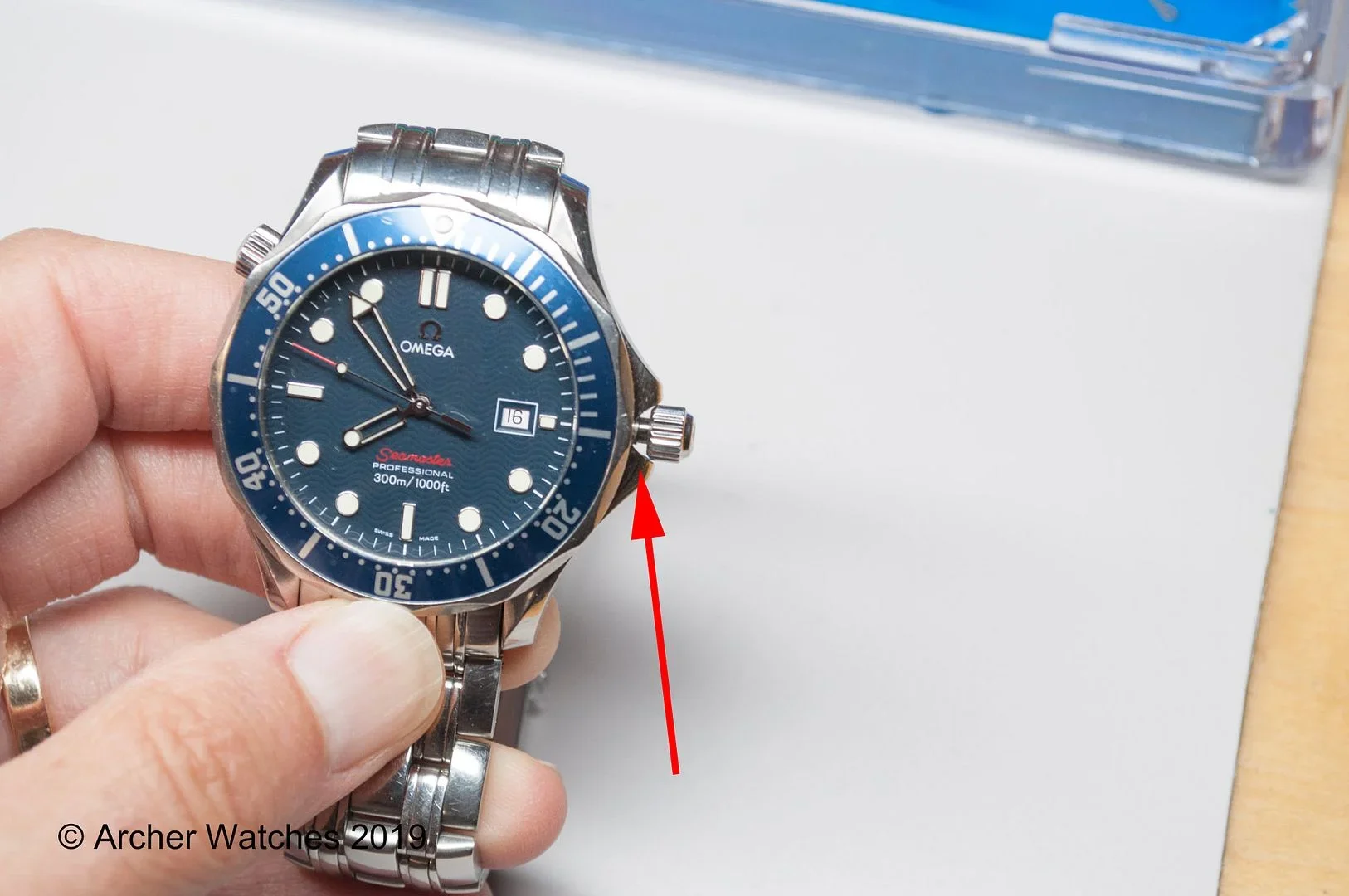
The seal goes in at the red arrow:


This is pretty much the same as with a standard crown, but in this case replacing the seal is much easier.
 
Posts
7,382
Likes
23,844
Thanks again. So, as noted above, if the rubber seals provide adequate water resistance even with the crown pulled out, does the screw down feature just exist to increase the depth rating?
 
Posts
30,270
Likes
78,121
It's mostly to keep the crown from being pulled out if it snags on something.

And of course to give the desk divers enough confidence to wash their hands...😉
 
Posts
7,382
Likes
23,844
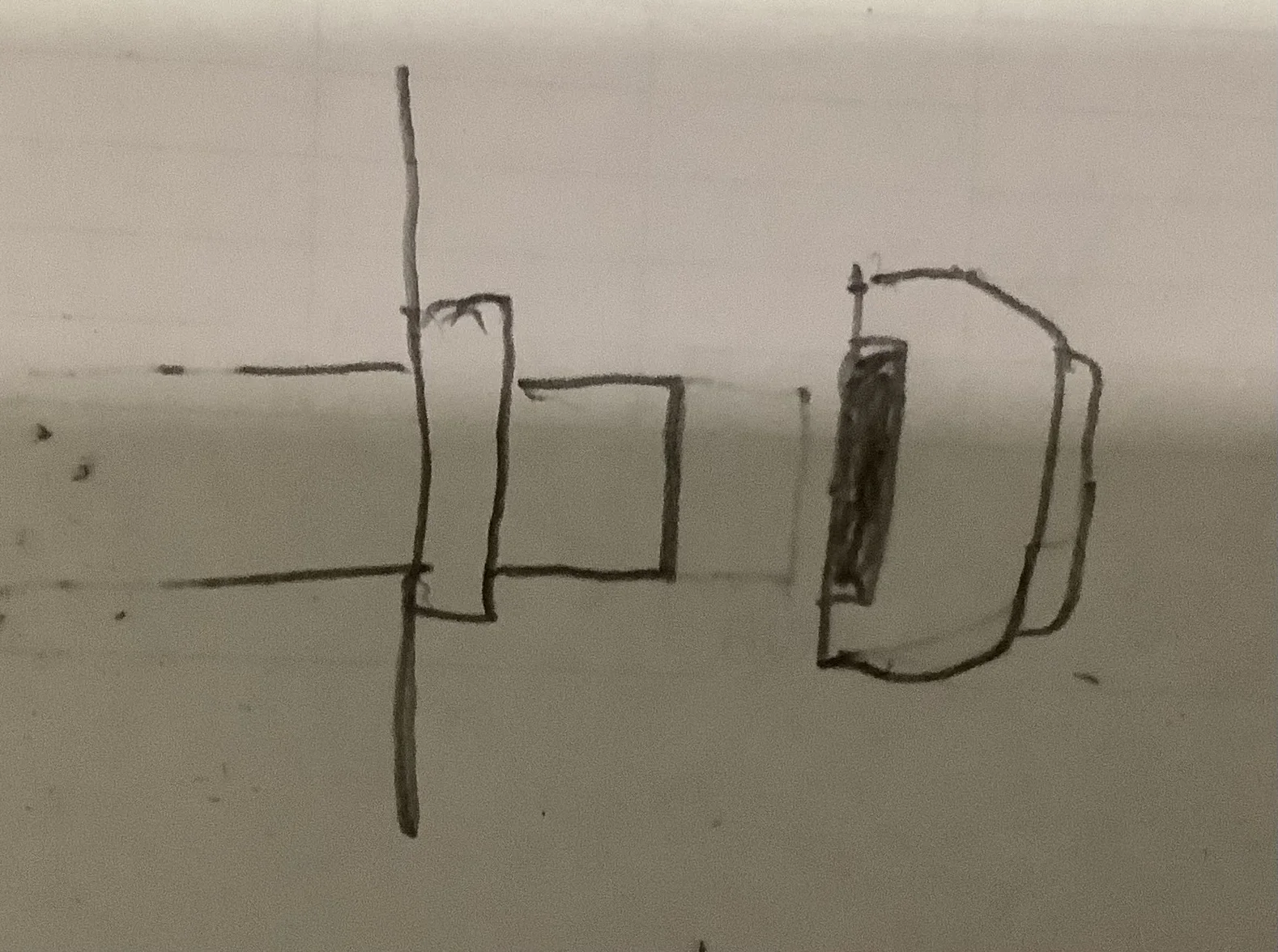
Just trying to visualize: is the optimal water resistance achieved when these two rubber gaskets come in contact, when the crown is either pushed or screwed down?


Or…maybe like this? Where the crown gasket simply encircles the case tube in both setting and winding positions?

Edited:
 
Posts
30,270
Likes
78,121
That doesn't really reflect how the Omega crowns work. This might help - I've posted these before I think...

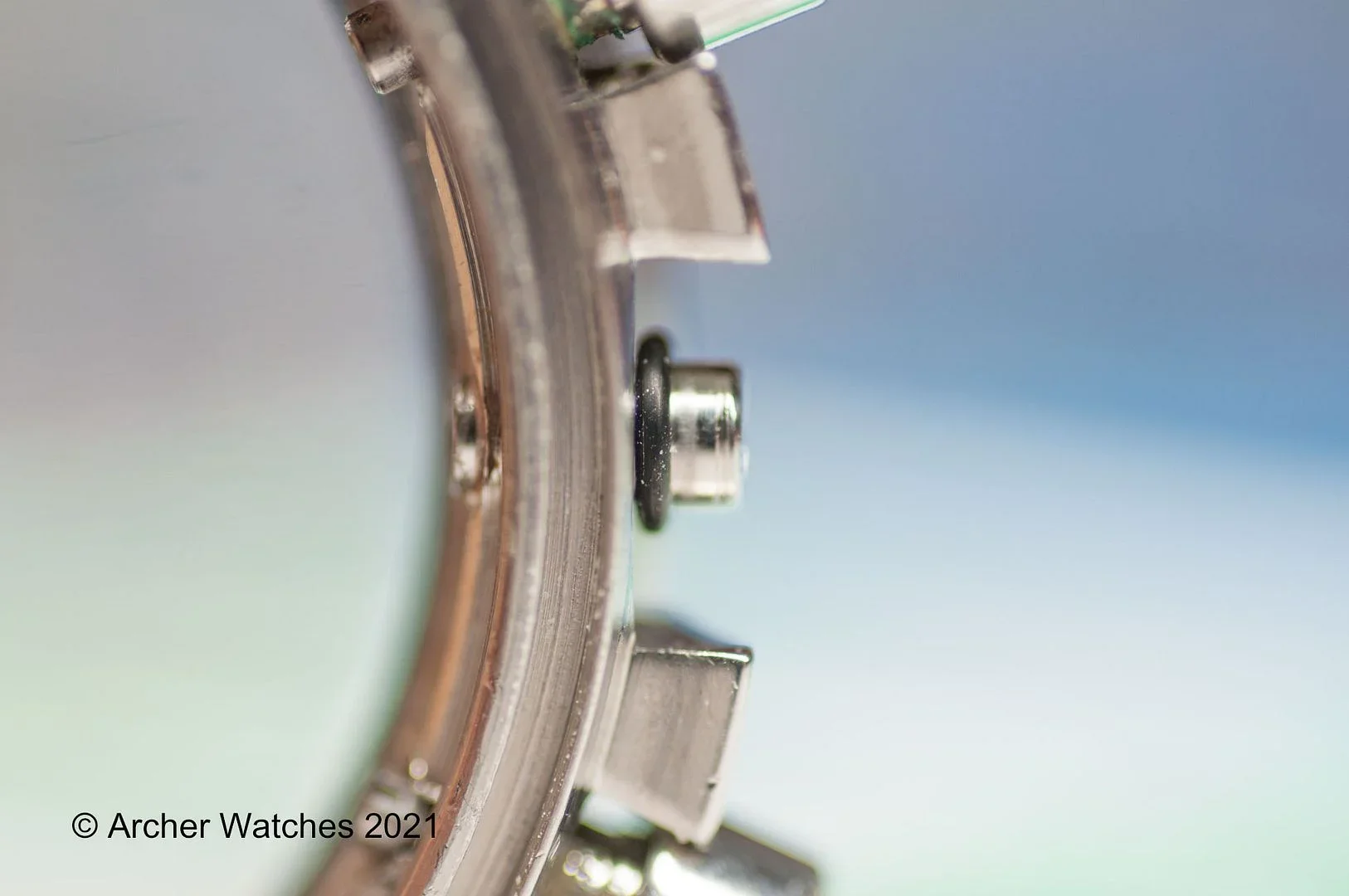
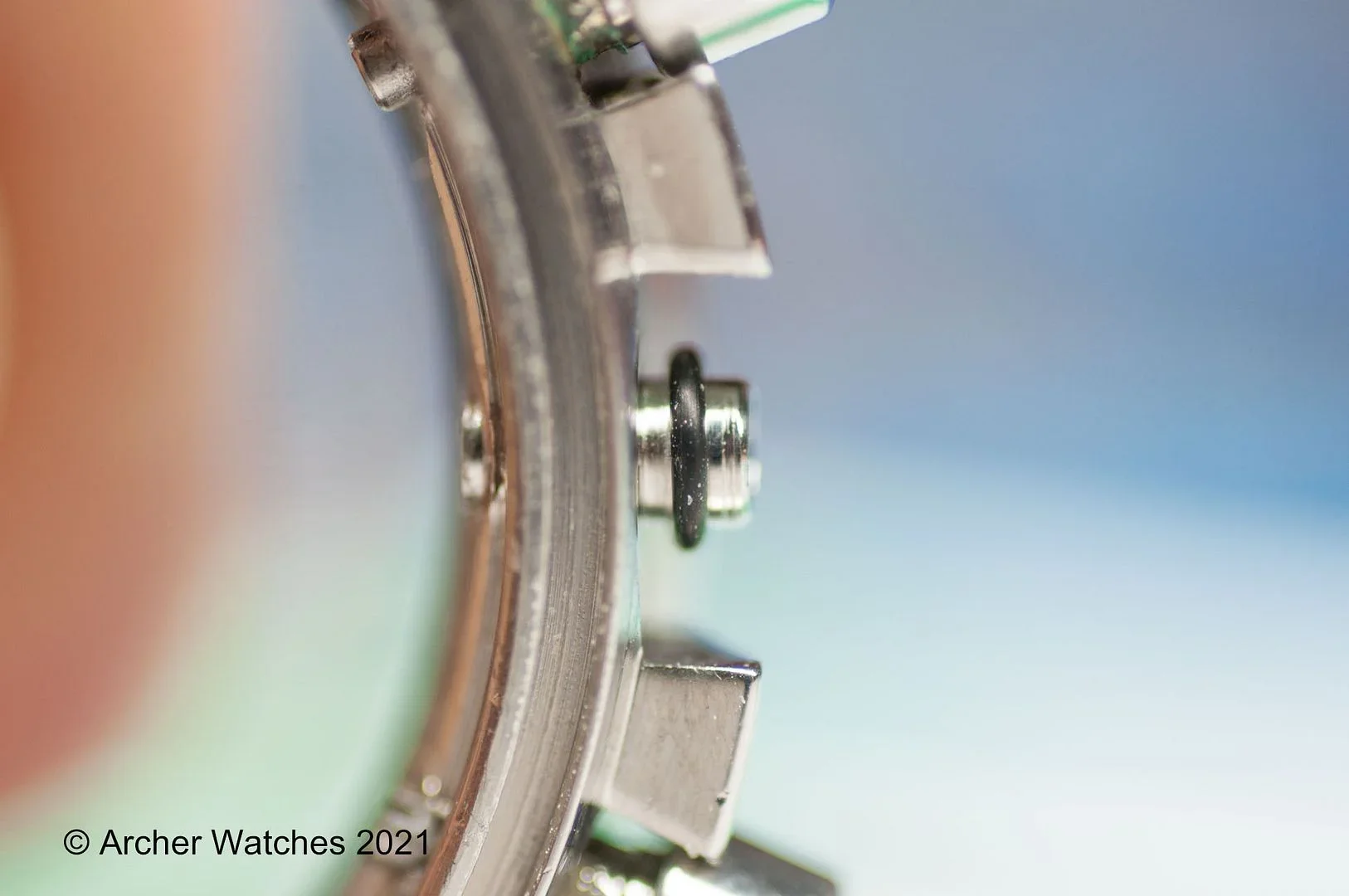
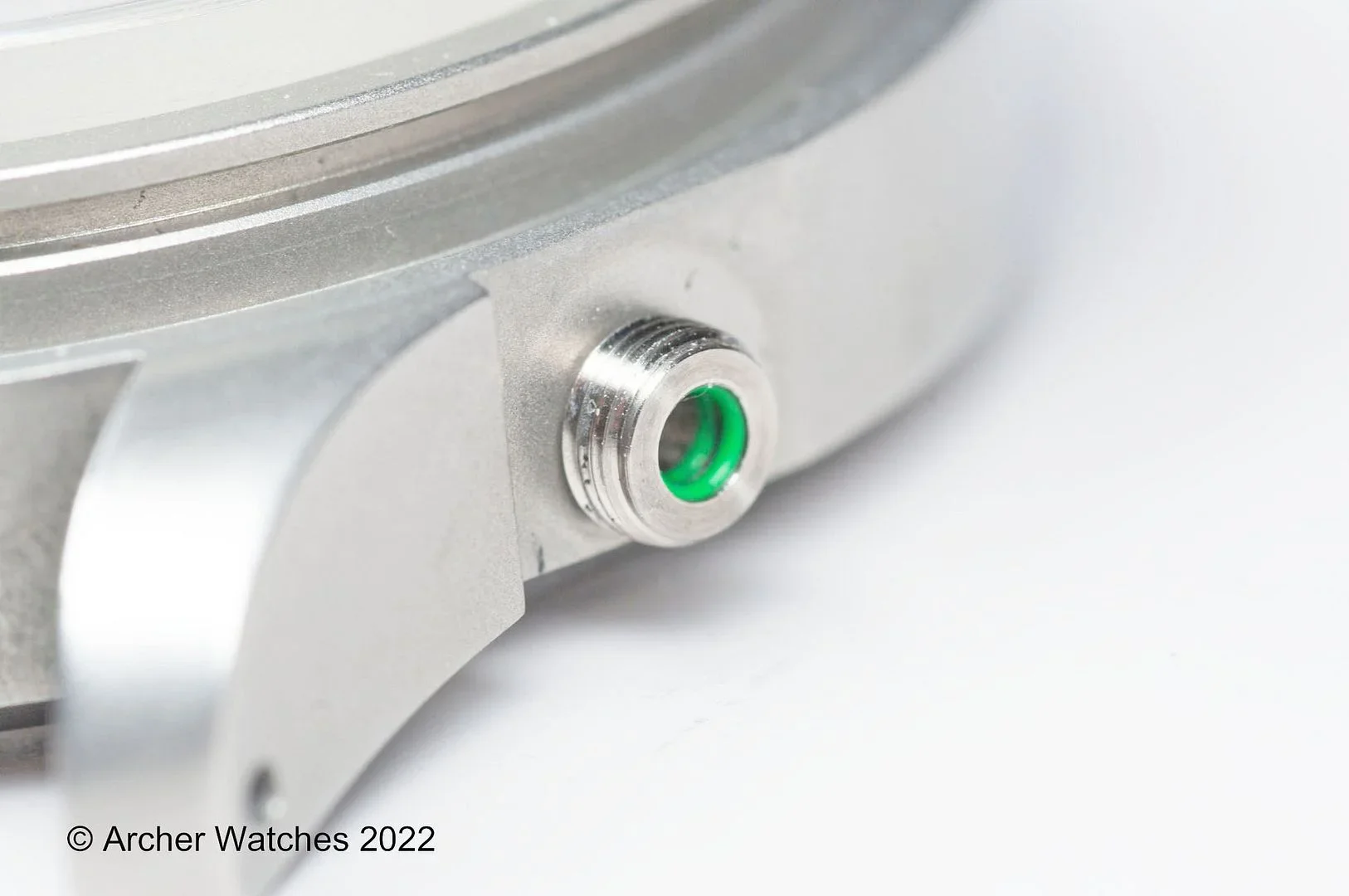
The threads are internal on Omega case tubes, so the case tube looks like a normal smooth case tube on any manual wind watch, like this Speedmater case. Here is an O-ring sealing on the outside of the case tube, and this O-ring would be inside the crown, like this one:


This is exactly how Omega's screw down crowns seal. This is the O-ring's approximate location when the crown is pushed in:


This is where it is when the crown is pulled out:


On a screw down crown, assuming the watch has 3 positions for the crown, it may come out a little farther from the case, but it never leaves contact with the case tube, ever. The only way it would is if you removed the crown and stem from the watch. Being screwed down or not makes no difference.

For an externally threaded crown, it looks more like this Sinn:


Seals inside the case tube, threads are external, and the seals you see above seal around the post on the crown. But there is also a seal at the very deepest part of the crown that when you screw it down,. seals against the flat end of the case tube:


Does this explain it better?
 
Posts
7,382
Likes
23,844
Yes, thanks, I get the gasket set up now.

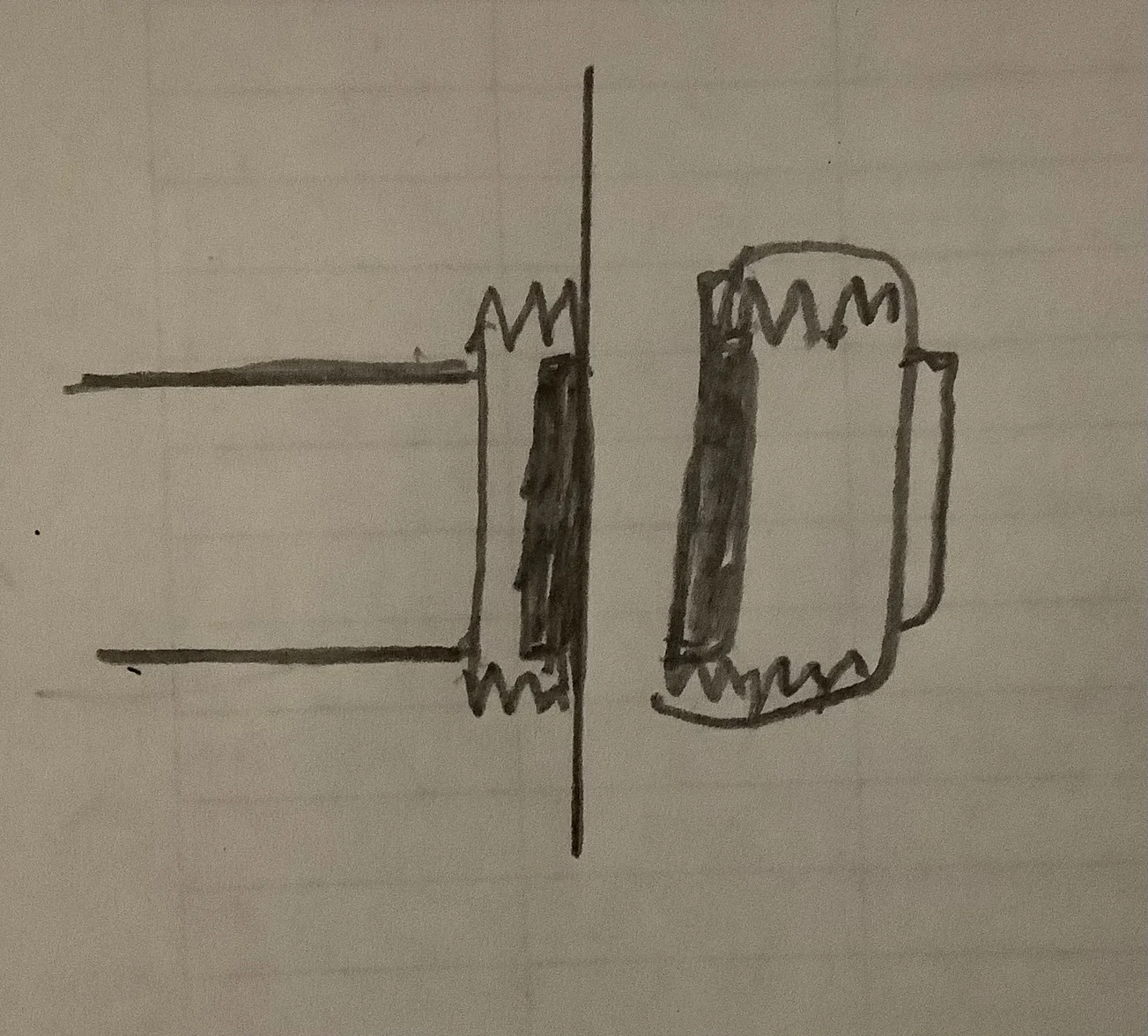
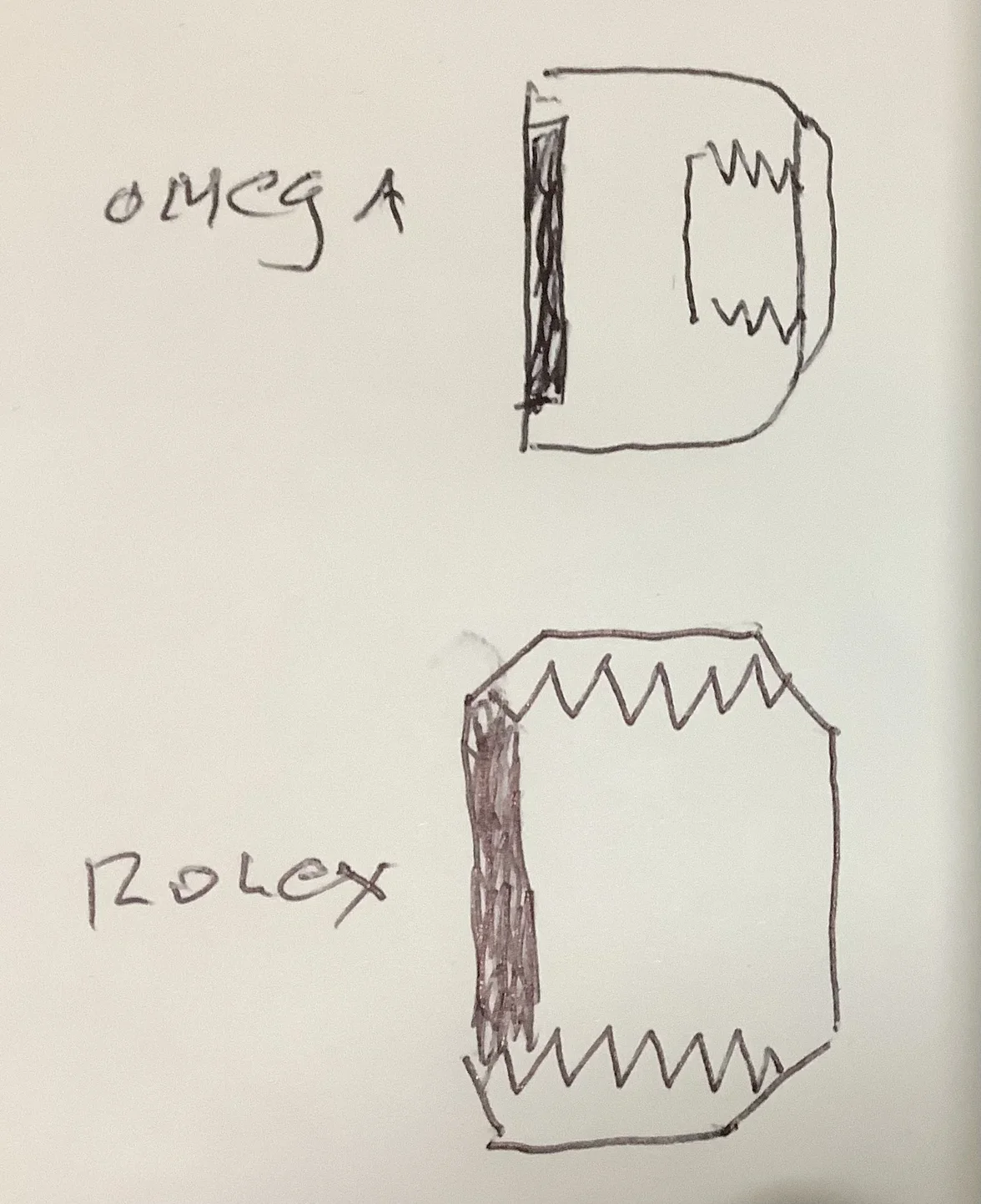
Regarding the crown and tube interface: so, the threads on this stem are what screws into this case tube?

 
Posts
30,270
Likes
78,121
No. You can't see the threads inside the crown easily...certainly not in that photo.

Of course they are of a size that matches the threads inside the case tube.
 
Posts
7,382
Likes
23,844
No. You can't see the threads inside the crown easily...certainly not in that photo.

Of course they are of a size that matches the threads inside the case tube.
Something more like this, then?

Edited:
 
Posts
30,270
Likes
78,121
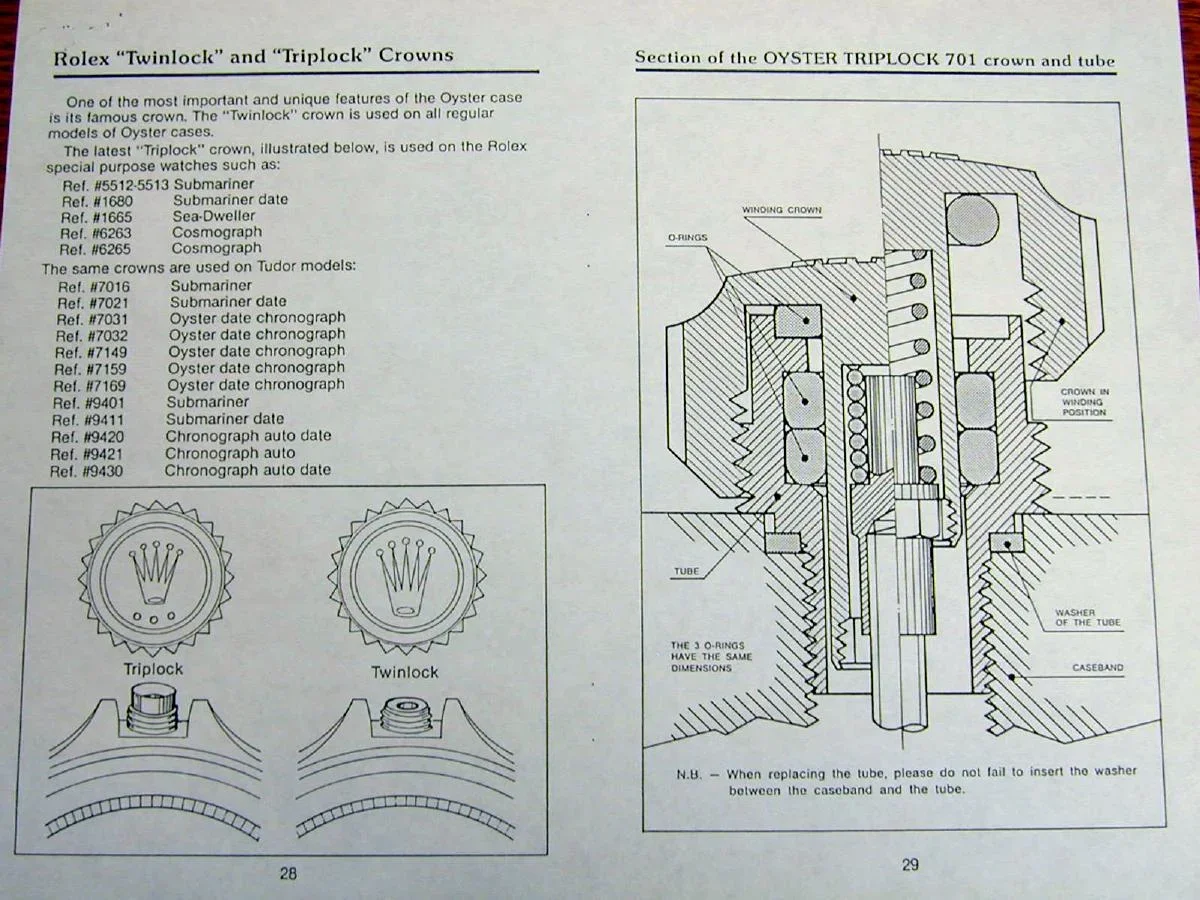
The seal in the Rolex crown that contacts the face of the case tube is at the bottom of the crown...since there are tons of illustrations on the interwebs showing Rolex crowns in cross section, here you go...

 
Posts
7,382
Likes
23,844
I see what you mean. The Rolex crown gasket is in the inside/back of the crown, not the front. The Omega sealing gasket is more to the front of the crown, as you noted in your picture below. But those internal threads in the Omega crown, that screw into the tube you also posted - are they so deep in the inside/back of the crown that they are hard to see? Because your photo is very clear, and even beyond the gasket, I can’t make out a hint of threading:

 
Posts
30,270
Likes
78,121
That's not a screw down crown -= just one I used as an example to show the seal location. But again the threads are hard to see. I'm busy as hell right now but if I get time I'll see if I can get a photo...
 
Posts
7,382
Likes
23,844
A follow-up question, if I may: you mentioned above that the internal crown and tube threaded system on the Omega is superior in terms of not attracting grime compared to the Rolex set up.

What’s your opinion about longevity, if you compare the two? Because I’ve never handled a pre-owned Rolex where the crown and tube weren’t mostly worn, and needed replacement. I’ve always wondered if that was due to the design, thread size, or possibly soft metal material.

Would it be accurate as well, that with the tube and gasket system you noted below, in a non-threaded variety, that the tube rarely needs replacement, as the gasket is the only major source of friction? Thanks.

 
Posts
30,270
Likes
78,121
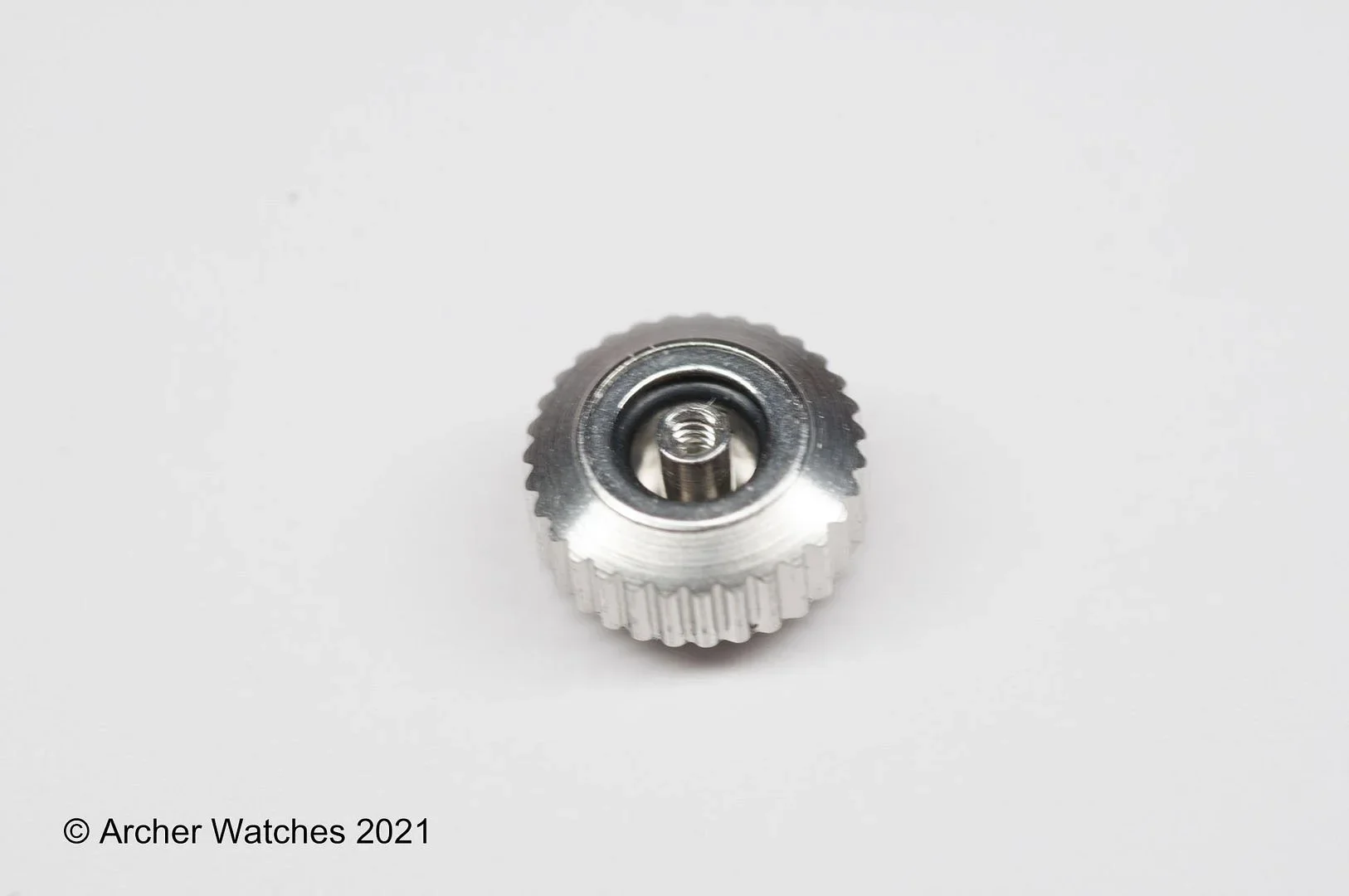
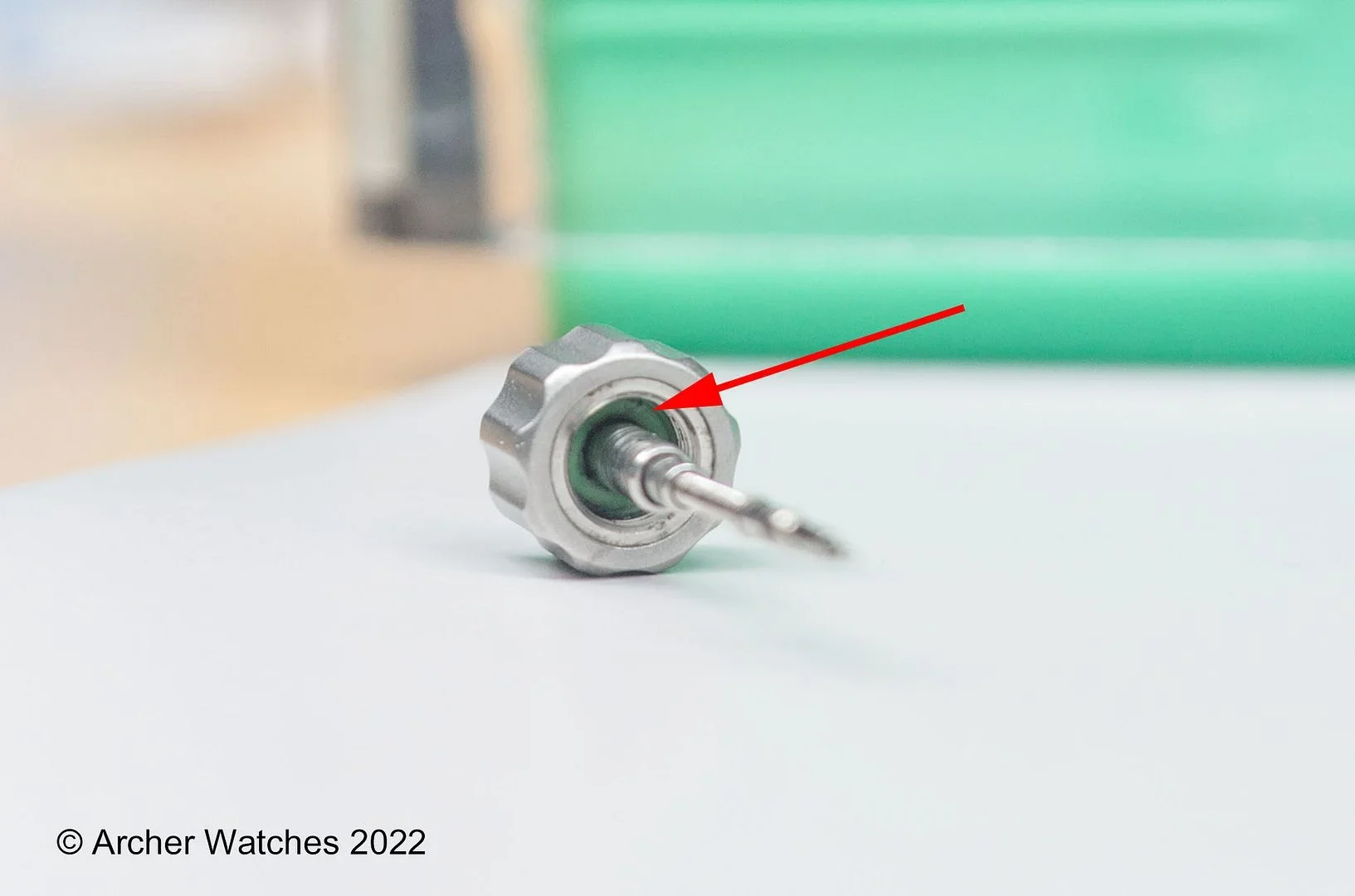
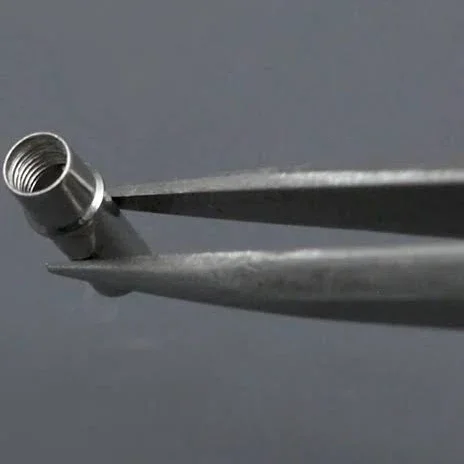
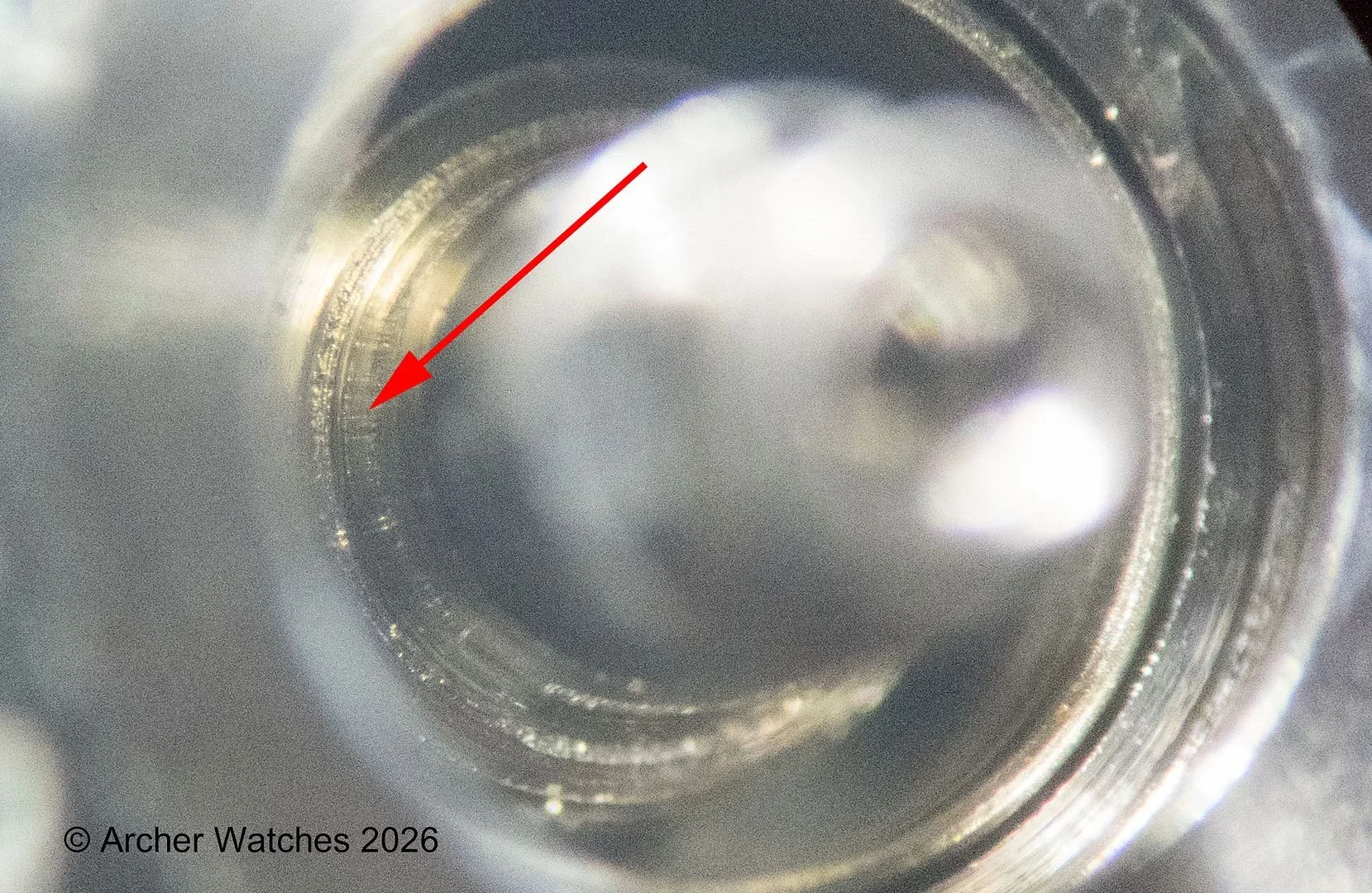
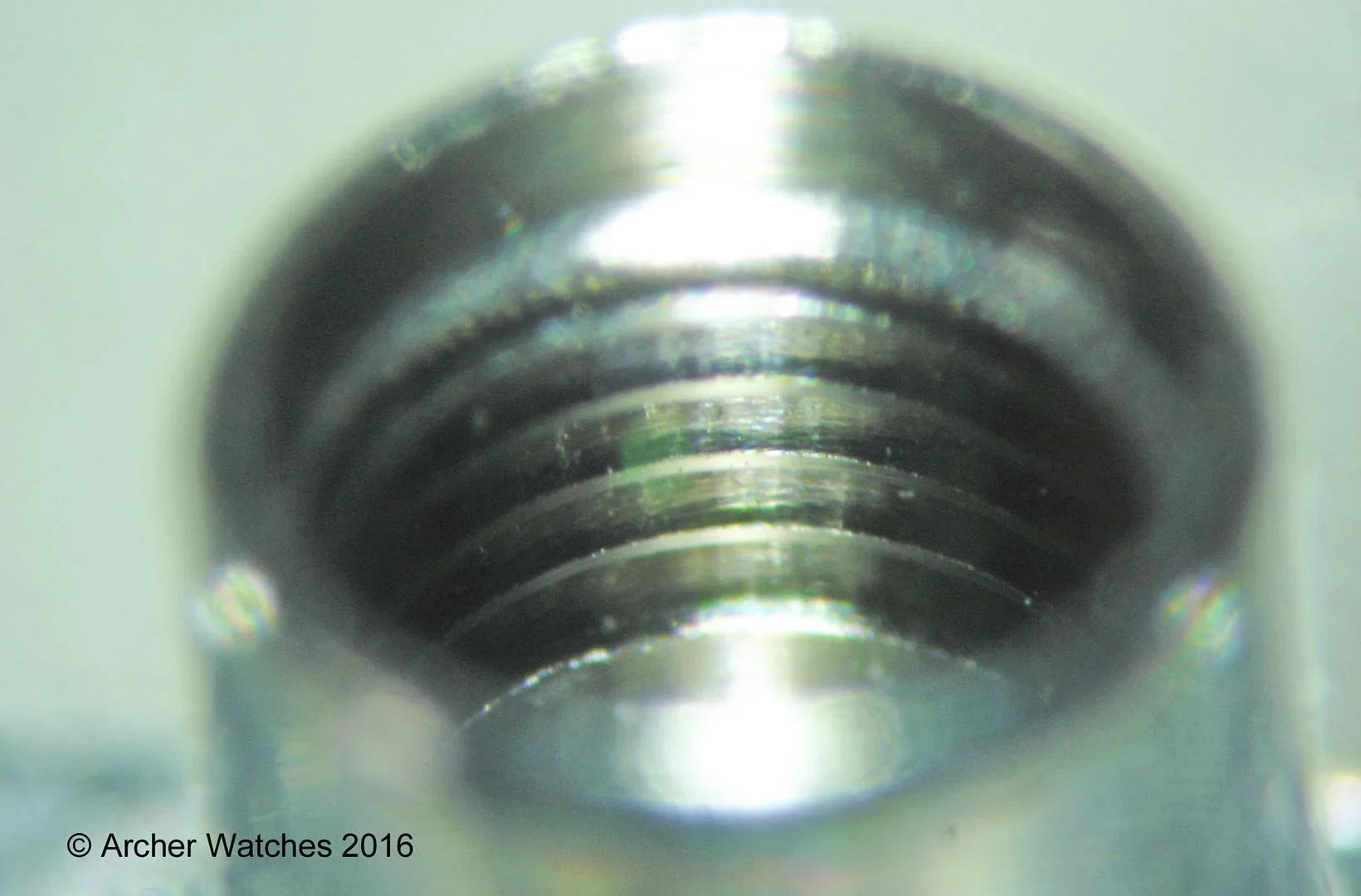
Here is a Seamaster screw down crown - brand new right out the package. I've removed the O-ring to get a better view, deeper inside the crown.


The red arrow points to the first thread, and you can see maybe one more below that - the angle makes it difficult to see much more that that.

Case tube wear - while tubes do wear, the ones I replace most often are from vintage watches where the tube was originally made of brass. These wear over time pretty regularly. The new tubes are made of stainless steel, and last much longer obviously.

For screw down case tubes, the only reason I replace those is from damage to the threads or the tube say from an impact- not wear. While I'm sure given a long enough time, with a dirty and dried up seal, it could wear the case tube, that will take a very long time indeed.