- Posts
- 10,029
- Likes
- 56,968
gbesq
·Americans who still wind a wristwatch usually share these traits
Story by Tom Ashby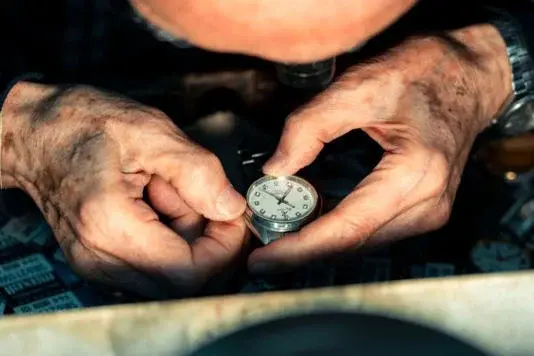
Americans Who Still Wind a Wristwatch Usually Share These Traits© Jimmy Liao / Pexels
Key Takeaways
- A small but steady group of Americans still winds mechanical watches by hand every day, even though quartz and digital models dominate the market.
- The daily winding ritual tends to show up alongside other patient, attentive habits in a person's routine.
- A well-kept mechanical watch can run for decades, often costing less over a lifetime than replacing disposable quartz watches again and again.
- Many wind-up watches carry family history on the wrist, turning a mechanical habit into a daily act of remembrance.
- Younger collectors are now buying vintage mechanical watches at rising rates, showing the habit is being passed down rather than fading out.
The Twelve Turns of the Crown
A small daily act that says more than it seemsAsk someone who winds a mechanical watch how many turns of the crown they give it, and most will have an answer without hesitating. Some count to twelve. Others just go until they feel the spring resist. It's a small, physical checkpoint at the start of the day, done before the phone gets picked up or the shoes get tied.
What makes it notable isn't the winding itself, it's how deliberate the motion is. There's no notification demanding attention, no screen to glance at. Just a hand, a crown, and a few seconds of focus. For people who keep this habit, it often functions less like a chore and more like a small anchor point, a moment where the day slows down just slightly before it speeds up again. That kind of quiet, hands-on attention to a simple object is rarer than it used to be, and it tends to say something about how a person approaches everything else on their wrist and off it.
From Pocket Chains to Smart Screens
How winding went from normal to nearly extinctIn 1950, almost every watch sold in the United States needed winding by hand. There was no other option. Quartz movements didn't hit the American consumer market until the 1970s, and even then they were seen as a novelty before they became the standard.
The shift happened fast once it started. By the time smartwatches and cheap digital models flooded stores decades later, mechanical watches had gone from the only choice to a niche one. Industry estimates suggest that by 2020, well over 80 percent of watches worn in the United States were quartz or digital, meaning the people still turning a crown each morning had become a distinct minority rather than the default.
That shift is worth pausing on. What was once simply how a watch worked became, over two generations, a deliberate choice. Nobody accidentally winds a watch today. They choose to, which is exactly what makes the habit worth looking at more closely.
Patience Is Baked Into the Habit
What a daily ritual reveals about a person's mindsetTom Bartlett, a horologist and longtime watch repair veteran, has spent years watching customers interact with their mechanical pieces, and he's noticed a pattern that goes beyond the watch itself. People who wind their watches tend to build small rituals into their day, and that habit doesn't stay confined to the wrist.
It shows up in how they cook, how they garden, how they maintain a car or a workshop. Winding a watch requires a small amount of patience and attentiveness every single day, with no shortcuts available. You can't rush a mainspring. You can't skip a day and catch up later without the watch simply stopping.
That daily discipline, small as it seems, tends to reflect a broader comfort with slower, hands-on processes. In a world built around instant results, choosing a habit that demands a few seconds of careful attention every morning is its own quiet statement about how a person likes to move through life.
Why the Old Watch Might Outlast the New One
The frugal math behind a hands-on habitA mechanical watch, kept clean and serviced occasionally, can run for 50 years or longer. Some family pieces have outlived three or four owners without needing anything more than a new strap and a periodic cleaning.
Compare that to a quartz watch, which typically needs a battery swap every year or two and often gets replaced outright once the movement wears down or the case degrades. Buy a new $40 quartz watch every few years for half a century, and the costs add up in a way that a single well-maintained mechanical watch simply avoids.
Most watch repair professionals will tell you the upkeep on a mechanical piece is minimal compared to what people assume. A basic service every few years, careful storage, and occasional attention is usually all it takes. For retirees who grew up valuing durability over disposability, that math lines up with a mindset already familiar to them, buy once, take care of it, and let it last.
The Watch That Belonged to Dad
When winding a watch is really an act of memoryFor a lot of owners, the watch on the wrist isn't just a timepiece. It's a grandfather's old Hamilton, its case worn smooth from decades of handling. It's a father's Bulova, still ticking away long after he's gone, wound each morning almost like a small conversation with someone who isn't there anymore.
These watches often aren't the most valuable pieces in a collection. Their worth isn't measured that way. Winding one daily becomes a small, repeated act of remembrance, a way of keeping a family connection alive without saying a word about it.
That emotional weight is part of why so many people resist switching to something newer, even when a modern watch would be more convenient. The battery-powered replacement might keep better time, but it doesn't carry a story. A wind-up watch passed down through a family carries decades of mornings, and winding it keeps that thread from breaking.
A Habit Finding New Fans Today
The surprising group keeping this tradition aliveThe common assumption is that mechanical watches are fading out along with the generation that grew up winding them. The numbers tell a different story. Vintage watch sales have climbed among younger buyers in recent years, with collectors in their twenties and thirties seeking out the same Hamiltons, Bulovas, and Timexes that once sat in a grandparent's dresser drawer.
part of the appeal seems tied to exactly what makes the habit stand out among older owners, the deliberate slowness, the mechanical craftsmanship, the sense of owning something built to be repaired rather than replaced. In a market saturated with disposable electronics, a watch that runs on nothing but a wound spring has become its own kind of statement piece.
Rather than dying out, the habit appears to be shifting hands. What started as a practical necessity in 1950 and became a personal choice by the 2000s is now, for a new generation, something closer to a discovery.
Practical Strategies
Wind at the Same Time
Pick one moment each day, right after waking up or before bed, and wind the watch then. Consistency keeps the mainspring evenly tensioned and turns the habit into an easy part of the routine instead of something forgotten.:
Get a Service Check
Most watch repair professionals recommend a basic service every three to five years, even if the watch seems to be running fine. A little lubrication and cleaning inside the case prevents bigger, costlier repairs down the road.:
Store It Off-Wrist Properly
A simple watch box or soft pouch keeps a mechanical piece protected from dust and scratches when it isn't being worn. Avoid leaving it near strong magnets or extreme temperature swings, both of which can throw off accuracy over time.:
Attach the Family Story
If a watch has been passed down, write down who owned it and when, even a short note tucked in the case. That small record turns the watch into something the next owner can pass on with the same meaning it carries now.:
The people who still wind a watch each morning aren't holding onto an outdated habit out of stubbornness. They're keeping something intentional, patient, and often deeply personal alive in a world that mostly runs on convenience. Whether the watch on the wrist is a grandfather's old Bulova or a piece bought secondhand out of curiosity, the twelve turns of the crown remain the same small, quiet act they always were. As more young collectors pick up the habit, it looks less like a relic and more like a tradition finding its next set of hands.
If you enjoyed this story, be sure to follow RightLivin on MSN.