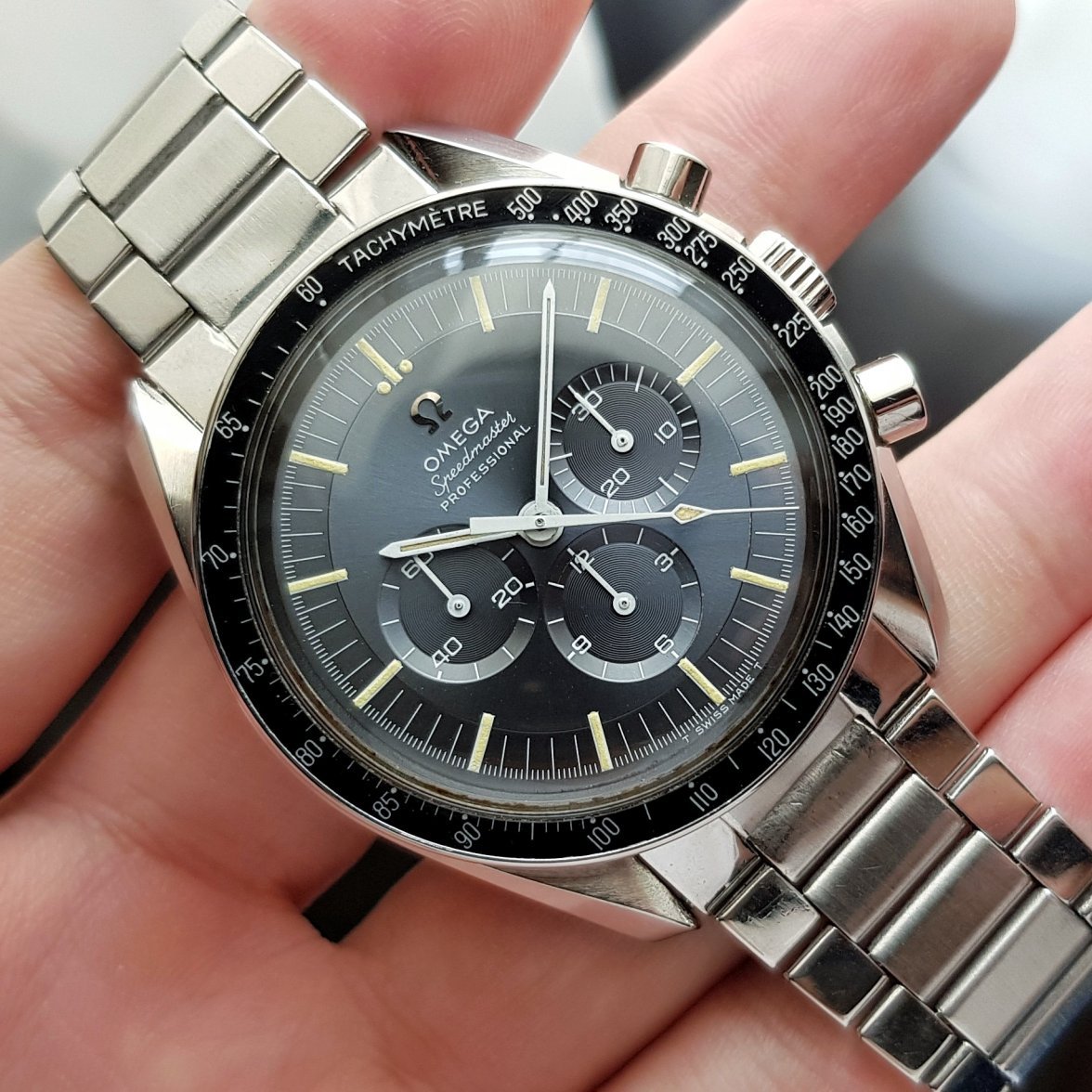
Thats a burial watch when a lease is over on a plot or for what ever reason a body is moved or removed this is what is know as grave goods. South America has many customs that seem strange to many.
With the economic situation in Venezuela, more than likely it was grave robbery. As said on page 3, this watch must have quite some story to tell. >>>
https://www.arkansasonline.com/news/2019/jun/19/poor-venezuelans-looting-graves-2019061/
Poor Venezuelans looting graves
Desperation fuels cemetery thefts in once-booming oil town
by RODRIGO ABD The Associated Press | June 19, 2019 at 3:51 a.m. | Updated June 19, 2019 at 3:51 a.m.
 A statue stands beside empty pedestals in front of desecrated vaults in El Cuadrado cemetery in Maracaibo, Venezuela, in this photo taken May 16. A once-thriving oil industry has given way to desperation and exhaustion.
MARACAIBO, Venezuela -- Even the dead aren't safe in Maracaibo, a sweltering, suffering city in Venezuela.
Thieves have broken into some of the vaults and coffins in El Cuadrado cemetery since late last year, stealing ornaments and sometimes items from corpses as the country sinks to new depths of deprivation.
"Starting eight months ago, they even took the gold teeth of the dead," said Jose Antonio Ferrer, who is in charge of the cemetery, where a prominent doctor, a university director and other luminaries are buried.
Much of Venezuela is in a state of decay and abandonment, created by shortages of things that people need the most: cash, food, water, medicine, power, gasoline.
Some of the most acute misery plays out every day on the streets of Maracaibo, Venezuela's second-largest city and a hub of the once-booming oil industry. It was there in March that residents, seemingly driven to desperation by nationwide power blackouts, looted and destroyed hundreds of buildings and businesses. Authorities blamed criminals for the rampage, which was of a kind that didn't happen elsewhere in Venezuela and only quickened the city's descent.
The destruction in Maracaibo, where blackouts were the norm long before March, defied easy understanding. The fittings of a hotel were torn out or just torn to shreds, leaving the structure littered with debris.
Maracaibo's mood today is less furious, more exhausted. Many who have the means leave, joining an exodus of more than 4 million Venezuelans who have left the country in recent years.
The city in northwestern Venezuela is close to the border with Colombia, host to more than one-quarter of the migrants.
The opposition blames Venezuela's misery on misguided economic policies, mismanagement and corruption by the socialist administration installed by the late Hugo Chavez. President Nicolas Maduro, like Chavez, says the troubles are the result of what he calls an economic war being waged on the country by the United States, which along with about four dozen other nations contends that Maduro's re-election last year was not legitimate because many strong opposition candidates couldn't run.
As in other cities, weary drivers nap on top of cars as they wait for scarce gasoline in long lines at service stations. "Operacion Libertad" -- Freedom Operation -- was scrawled in white on the back window of one taxi, a reference to opposition leader Juan Guaido's campaign to topple Maduro.
Guaido visited Maracaibo, an opposition stronghold of 1.5 million people, in April. He was forced to take a boat across Lake Maracaibo to dodge police roadblocks and reach throngs of supporters waiting to hear him speak.
As the political standoff drags on, so does life in Maracaibo.