Omega Tuning Fork 198 question

Posts
34
Likes
4
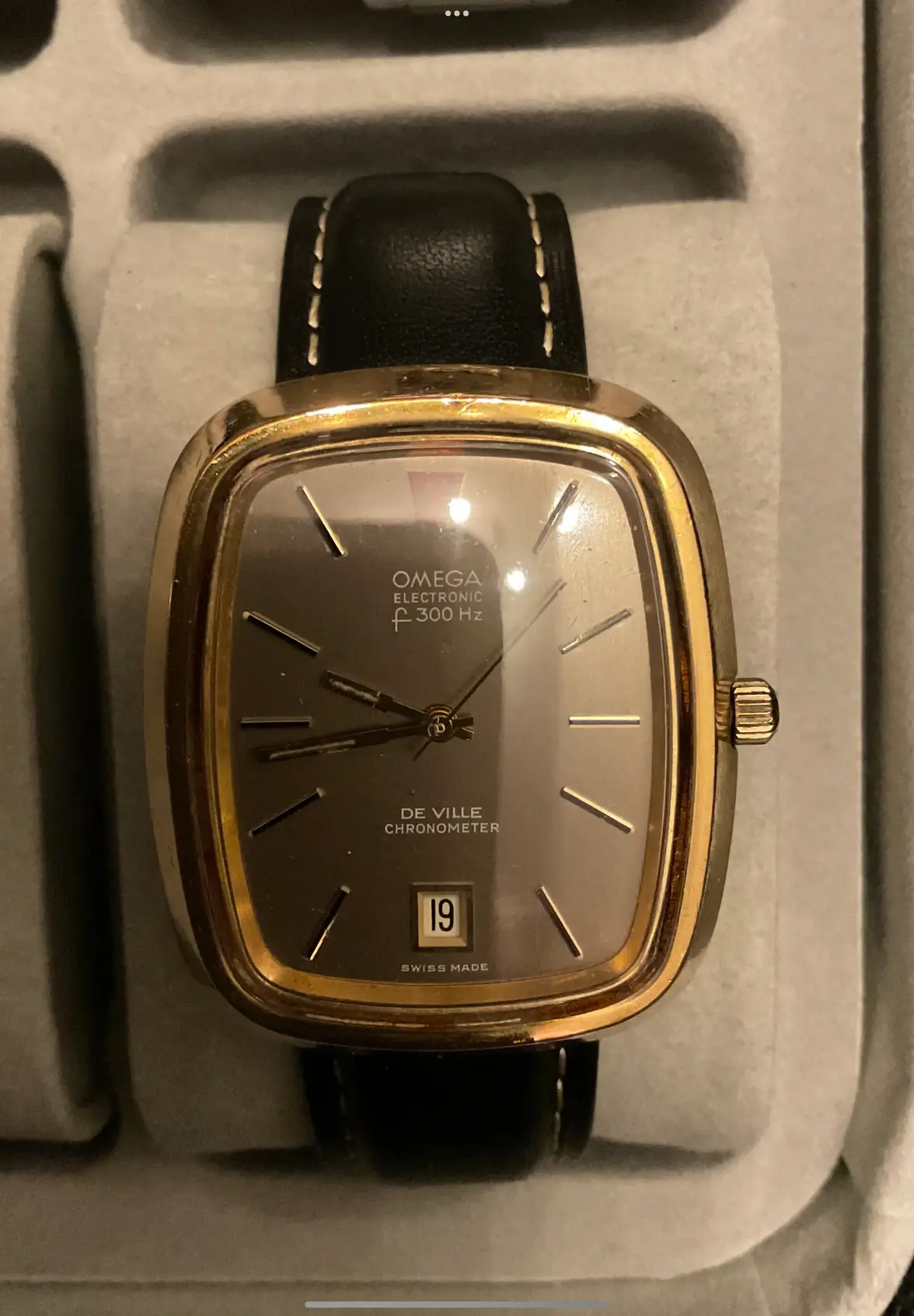
I’m very new to the Omega 198 line of tuning fork watches although I have a Bulova spaceview in my collection. Recently I have taken a bit of a dive into this line with a very nice a fully functional example in hand (and on wrist). I have also taken a few flyers on non working models recently when my low offers make sense to the seller.
The first and likely most beat up of these arrived today.
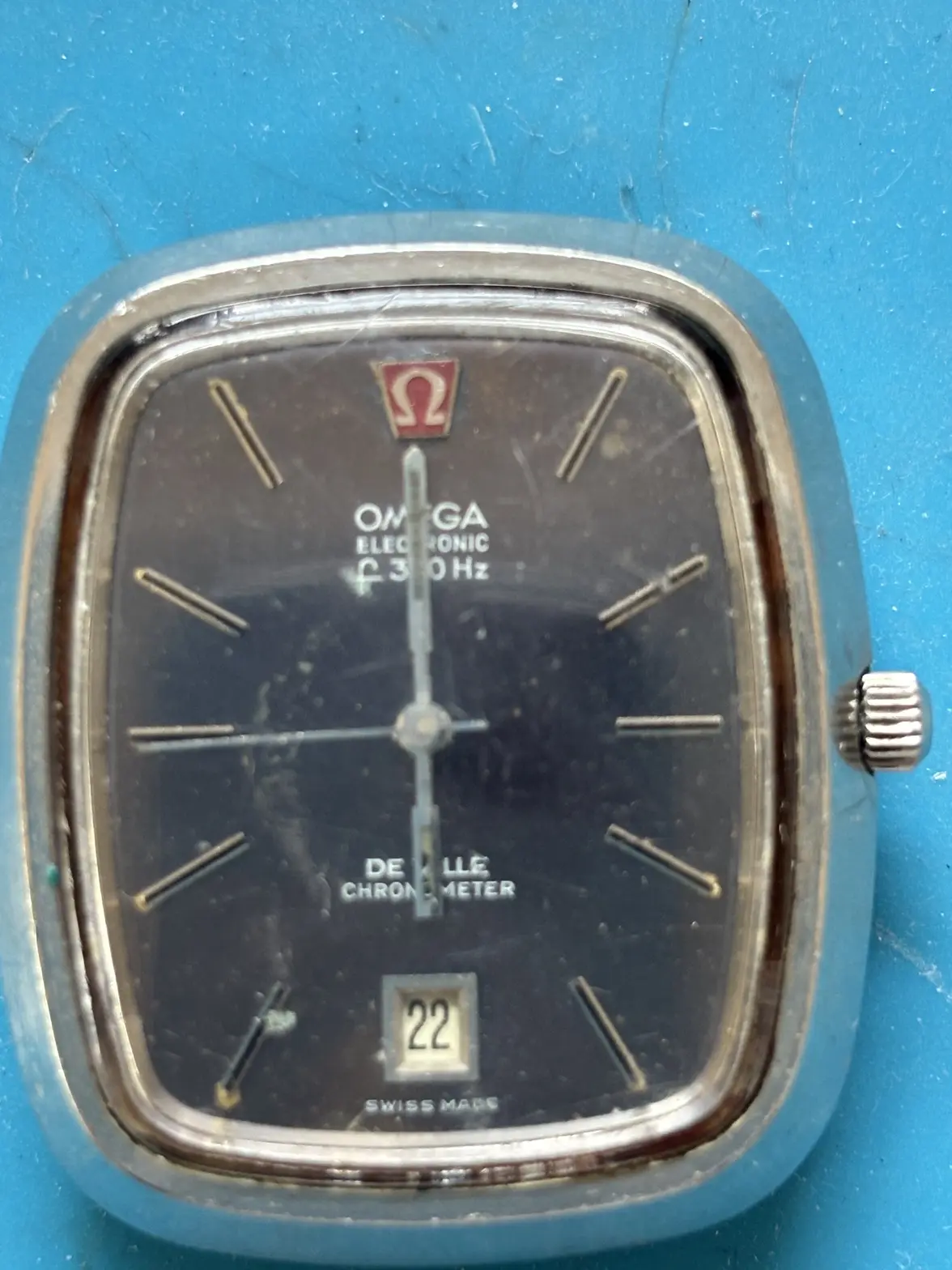
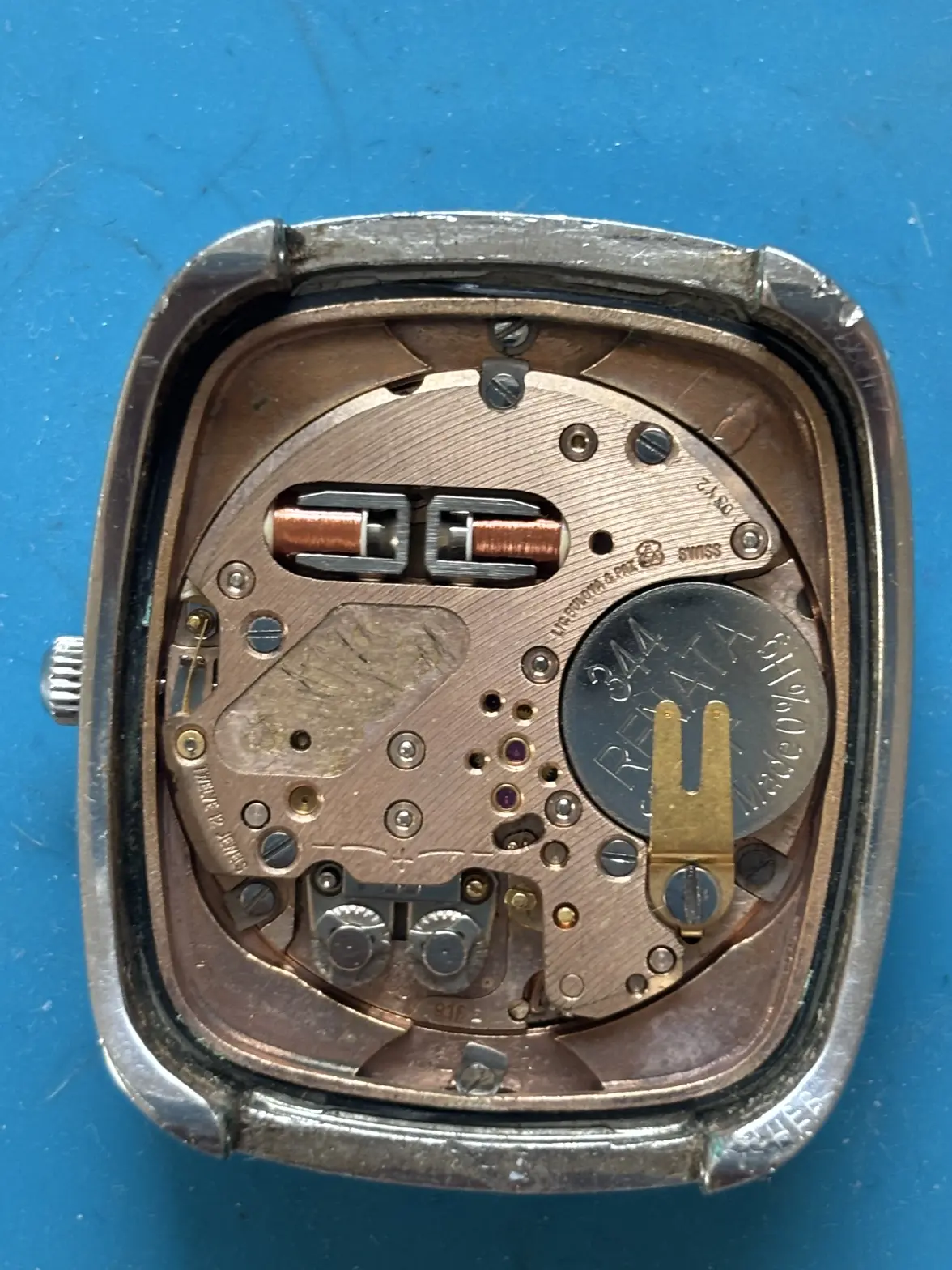
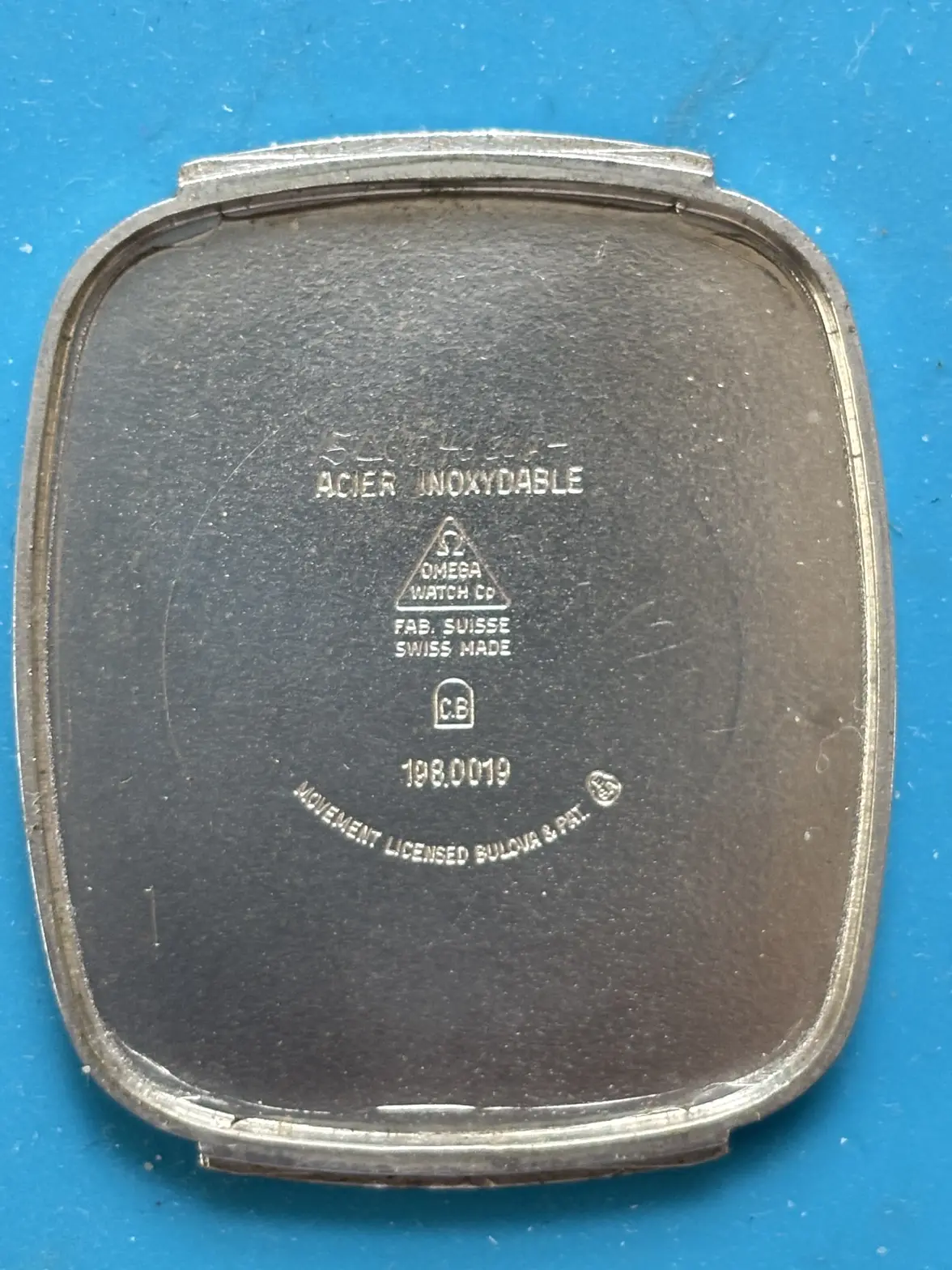
I had no expectations that this would be a functioning watch and purchased with the thought that it would be great for parts and to try my hand at polishing a crystal. So DOA was expected and delivered.
What I didn’t expect was to see a 343 battery in it as the battery I had read about and seen mostly on listings was the renata 344. The 344 you see is one I installed.
There is no movement of the hands but I do hear the hum of a tuning fork after the 344 went in.
The hands move freely as does the date - but when advancing the second had spins very quickly.
Curious if there are thoughts on a very novice watch collector with tools and ambition to fix but little experience could fix this issue. I have heard these movements are tricky - but with four in the mail from Japan with various states of function disclosed and to be found, I’m very curious on thoughts of whether this is a new parts watch for me or if this is fixable.
FWIW, after confirming that the hands don’t advance I have removed the new 344 battery.
Thanks so much for your insights.

 
Posts
15,475
Likes
45,806
Sounds to me as though the index and pawl jewels (if there) are not in contact with the index wheel. If there is a humming sound, the circuit and the tuning fork might be okay. That is, IF the index jewel and spring are still attached to the tuning fork, and in good shape.
 
Posts
744
Likes
1,391
Sounds like a broken index wheel. That's an incredibly fragile gear, so it wouldn't be surprising.

If you're going to work on these movements, I'd strongly recommend tracking down a technical guide to the movement. It's an ESA 9162 base, and the easiest version I've been able to find is for the Longines 6312. There are several specific procedures outlined in the guide, and there's probably a reason for all of them. For example, you should take the oscillator module off of the base movement before removing the movement from the case. That prevents any shifting of the hands from exerting back pressure on the index wheel and breaking its teeth. I've seen many online videos where the "watchmaker" doesn't do this (as well as skipping other steps), so I wouldn't rely on YouTube for reliable guidance.
 
Posts
146
Likes
164
Hello.

EDIT = Sorry, I missed the point but let it speak for itself. Okay? Thank you.

Maybe this YT-video help.

Surely its a "Lobster" but its about the movement, right.


Kind regards
Smilla
Edited:
 
Posts
34
Likes
4
Thank you all.
My other package was delayed in Japan (embossed leather band looked a touch like croc) so it’ll be a few more weeks before the next round of watches arrive. Direction being the better part of valor, I’m going to wait until four more arrive before I start to dig into the movements.
I was able to find a pdf of a service manual, so at least some progress.
 
Posts
434
Likes
198
Im no expert and im not saying this will fix yours or maybe a good idea but this fixed mine
I purchased this as non working
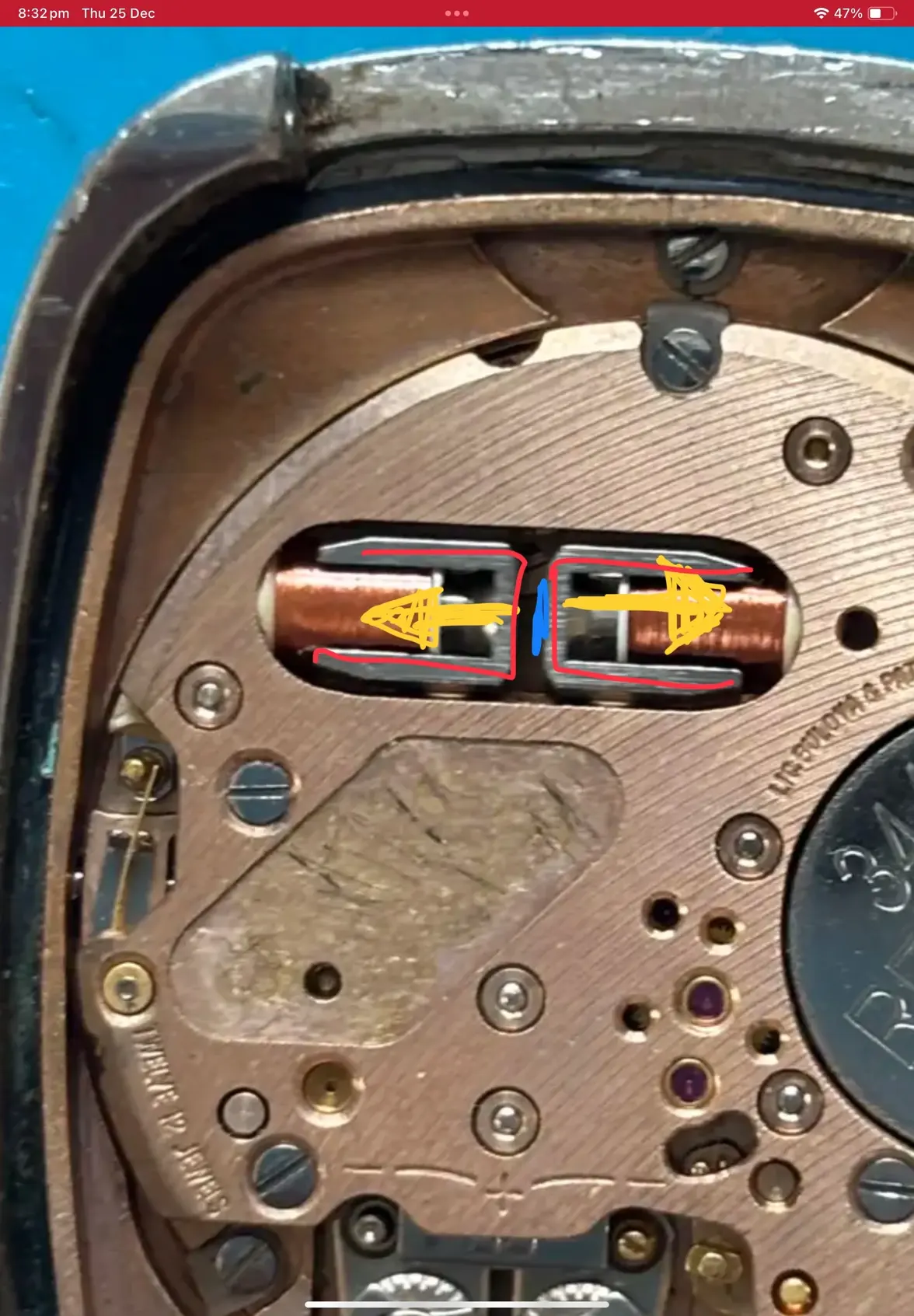
With same situation, hands and date all moved freely and was humming as should just no movement from the second hand or all hands . With all coil watches they make a small amount of magnesium attracting very small amounts of metal often when removing the case back getting stuck around the coil stopping the forks from vibrating properly. Have a good look around the coils as the forks do vibrate at very high speeds and are sprung. Here’s where it gets dodgy and fixed mine. With a soft wooden toothpick I placed in between the metal forks one at a time and gently pinged them pressing in and at the same time pulling out so it made them vibrate manually
And after a few goes jumped mine into life
I only paid £135 so I didn’t have much to lose if I couldn’t get it running as I knew I could just sell it back on for more then I paid
 
Posts
434
Likes
198
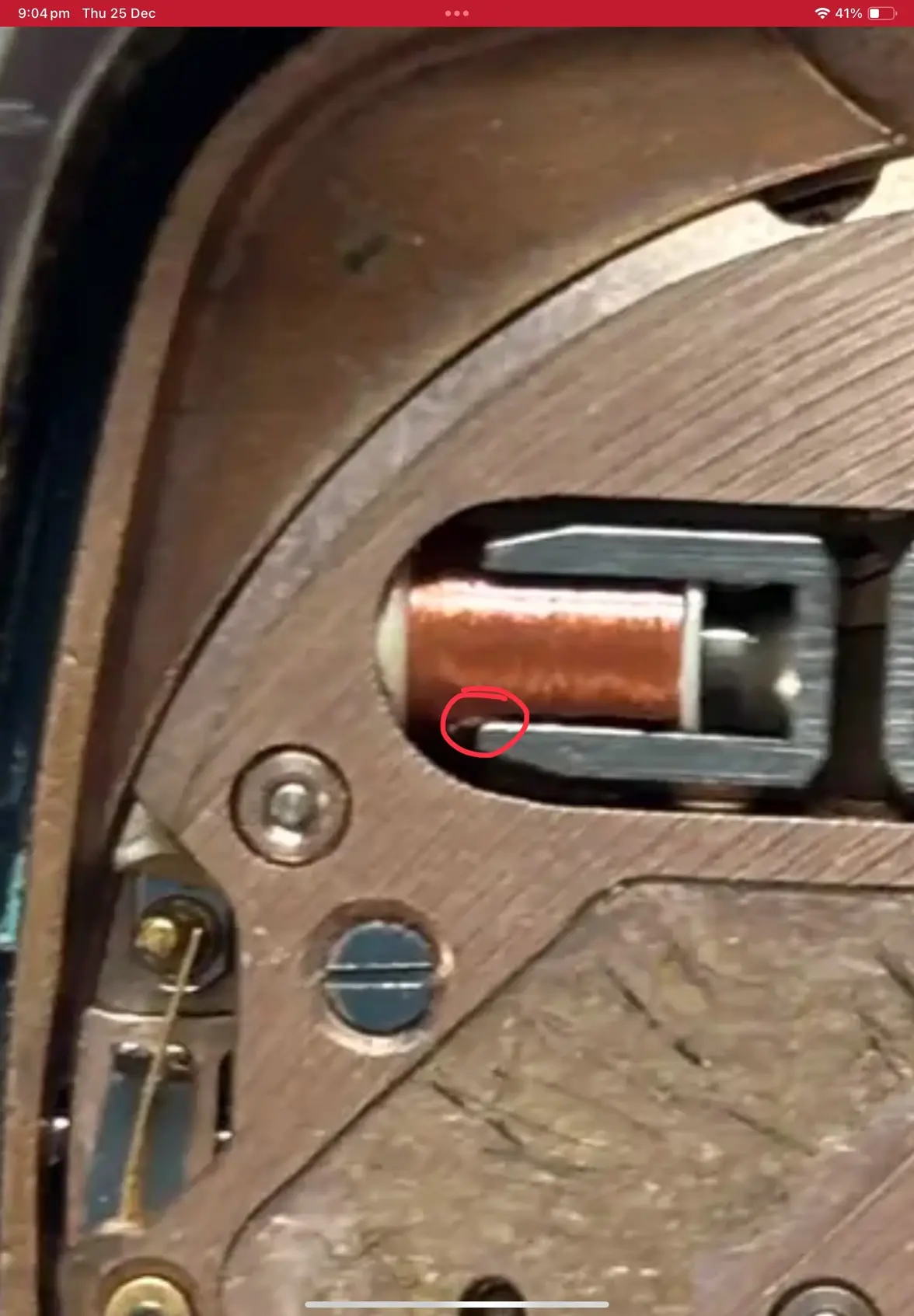
What’s this ??
Just be very very careful with touching the coils as the thin wire is very delicate
even just a very small amount of metal fragment will cause it to not run correctly
 
Posts
34
Likes
4
Almost wondering if a bit of compressed air is needed to clean out the coils? My example was admittedly beat to hell (but with a nice dial face).
 
Posts
34
Likes
4
What’s this ??
Just be very very careful with touching the coils as the thin wire is very delicate
even just a very small amount of metal fragment will cause it to not run correctly
What’s this ??
Just be very very careful with touching the coils as the thin wire is very delicate
even just a very small amount of metal fragment will cause it to not run correctly
And thank you - great eye. I’ll take a peek under magnification later.
 
Posts
34
Likes
4
I just took a deeper look at the movement while I was swapping two other 1250’s. Seems it is the index wheel. Given the need for a microscope to adjust after replacement I think this may be a repair I will wait on or use the other side of the movement for donor parts if needed later.
 
Posts
100
Likes
84
Even with a microscope, adjusting the timekeeping after changing the index wheel is quite tricky, as even the smallest adjustments can have a big impact. There are special timegraphers that can help you with this, but they are rare.
Also getting your hand on an NOS index wheel is not easy. Buying a NOS ETA-ESA 9162 and using that for parts was my way of tackling this. After quite some time of trial and error I got the movement running precisely, but can indeed be a troublesome process doing it the first time.
 
Posts
34
Likes
4
Even with a microscope, adjusting the timekeeping after changing the index wheel is quite tricky, as even the smallest adjustments can have a big impact. There are special timegraphers that can help you with this, but they are rare.
Also getting your hand on an NOS index wheel is not easy. Buying a NOS ETA-ESA 9162 and using that for parts was my way of tackling this. After quite some time of trial and error I got the movement running precisely, but can indeed be a troublesome process doing it the first time.
So true. I’ll replace a coil, a day or date wheel, but I’m not going deep on these movements especially when there are specialists around with the right tools. There is a half of this movement which is largely a no go area for me given my current skill set.