
Omega movements with silent rotor

Posts
746
Likes
865
I like collecting James Bond watches. No surprise majority of them are Omega.
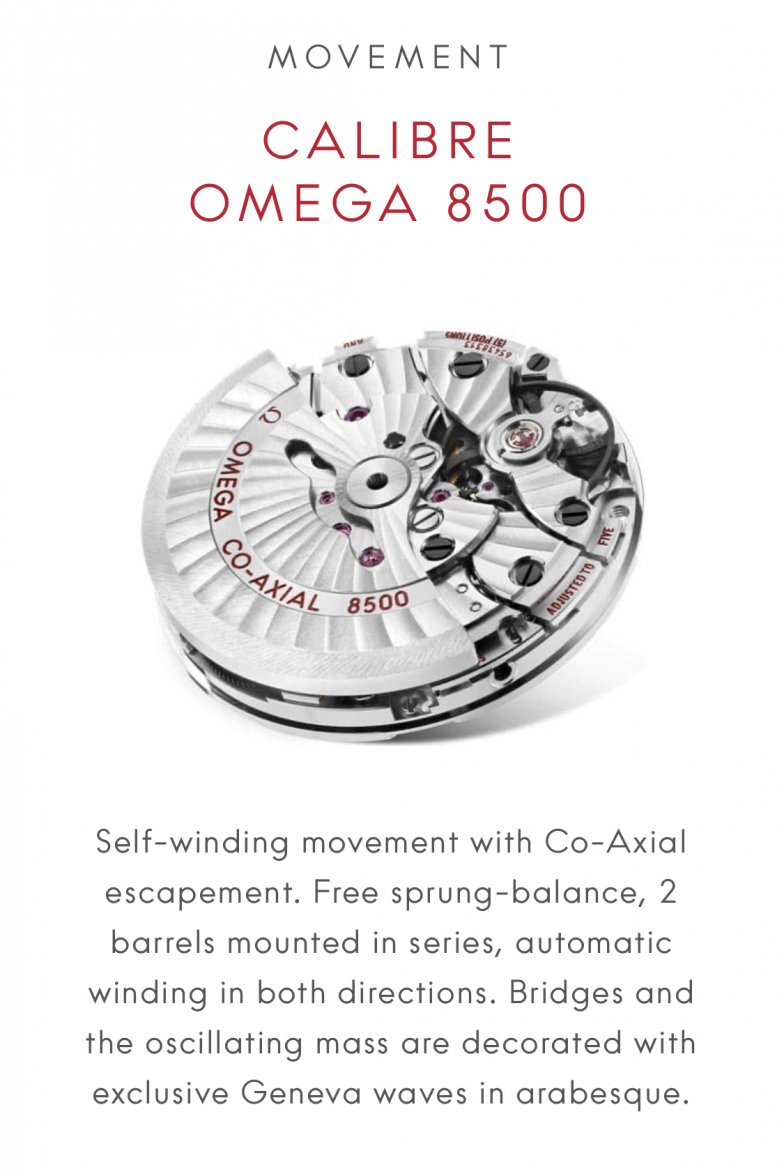
I know it’s normal you can hear the rotor inside when you turn your wrist. The only one that doesn’t make any rattling sound is the Skyfall Aqua Terra (8500 movement).
Is it because it’s a twin barrel movement? If that’s the case, doesn’t it mean all twin barrel movements are silent?
Been curious about this for a while now. Never bother posting. Hope some of your bored experts can educate me.
Also I noticed all the Rolex I own are silent. Is it just coincidence or all the Rolex movements are silent I wonder...
Edited:

 
Posts
974
Likes
1,514
I have noticed that too: my Rolex is dead silent. None of my other movements are....
 
Posts
15,482
Likes
45,856
I don’t know about a Rolex calibers after calibre 3135, but Rolex hasn’t used ball bearings on the rotor axle. The rotor post accommodates a jewelled bearing top and bottom in the centre of the rotor. These operate silently. Omega for the most part uses a ball bearing rotor. There is bound to be a difference in the sound, or lack of it. A quiet Aqua Terra? Sorry, unable to comment on that.
 
Posts
134
Likes
198
Now that you've mentioned this ive checked mine and i am also now curious as I have the same scenario! Following...
 
Posts
437
Likes
347
Alright so I've got two Omega timepieces at the moment with two similar, but different movements.

- Seamaster 300 MCA in Titanium; 8400.
- Seamaster pro diver in black/steel; 8800.

What I've noticed is that my titanium 300 is dead silent when it comes to rotor movement, while the diver makes quite a bit of racket when the rotor moves.

I also have a DJ41 which has that new 32xx series movement in it, It also makes a similar kind of noise to the 8800 diver if you listen closely. Both use ball bearings while the last gen 8xxx movements in the Omega MCA + 31xx movements in the last gen Rolex use the simple jewelled bearing.

Thus the noise isn't due to the barrels its due to the bearing the rotor uses to move in order to wind the timepiece. Your AT uses the 8500 or 8900 I think, which has that jewelled bearing, which = silent winding.

If it ever does start making a noise I would get it checked out. But just know hearing a slight rattling sound while winding the new gen Omega movements is perfectly normal due to those new ball bearings.

Incase your wondering about the upside of the new ball bearings, they're noisy but they require zero lubrication, while the jewelled bearings require it otherwise they seize up eventually.
Edited:
 
Posts
746
Likes
865
Alright so I've got two Omega timepieces at the moment with two similar, but different movements.

- Seamaster 300 MCA in Titanium; 8400.
- Seamaster pro diver in black/steel; 8800.

What I've noticed is that my titanium 300 is dead silent when it comes to rotor movement, while the diver makes quite a bit of racket when the rotor moves.

I also have a DJ41 which has that new 32xx series movement in it, It also makes a similar kind of noise to the 8800 diver if you listen closely. Both use ball bearings while the last gen 8xxx movements in the Omega MCA + 31xx movements in the last gen Rolex use the simple jewelled bearing.

Thus the noise isn't due to the barrels its due to the bearing the rotor uses to move in order to wind the timepiece. Your AT uses the 8500 or 8900 I think, which has that jewelled bearing, which = silent winding.

If it ever does start making a noise I would get it checked out. But just know hearing a slight rattling sound while winding the new gen Omega movements is perfectly normal due to those new ball bearings.

Incase your wondering about the upside of the new ball bearings, they're noisy but they require zero lubrication, while the jewelled bearings require it otherwise they seize up eventually.
Thanks for the info! Is there a way to tell if a movement is ball bearing or jewell bearing?
 
Posts
29,674
Likes
76,833
The 8500 family all use a plain bearing style mount for the rotor. The rotor’s axle turns in a sliding bearing equipped with zirconium-oxide jewels. This makes the rotor much more quiet than with a ball bearing.

Note that the 8800 is not part of this family, but the 8900 is.

Off the top of my head, this is the only modern Omega caliber family I can think of that has this arrangement. Why Omega went this way has a lot do to with who they hired around this time, and where that person once worked. You can figure it out if you give it some thought.

Rolex did finally move into the 1980's back in the year 2000, and put a bearing in the Cal. 4130 rotor, so they don't all use this old system...
 
Posts
746
Likes
865
Are Speedmaster movements 1861, 861 silent? I figure chronograph might be a whole different game.
 
Posts
29,674
Likes
76,833
Are Speedmaster movements 1861, 861 silent? I figure chronograph might be a whole different game.

Yes - mainly because they don't have rotors...
 
Posts
3,535
Likes
8,863
Are Speedmaster movements 1861, 861 silent? I figure chronograph might be a whole different game.

The relatively unloved "Reduced" with 3220 / ETA 2892-A2 movement is silent. Its ticking is almost silent too, unlike the old Valjoux which are audible almost at arms length in a quiet environment.
 
Posts
29,674
Likes
76,833
The relatively unloved "Reduced" with 3220 / ETA 2892-A2 movement is silent. Its ticking is almost silent too, unlike the old Valjoux which are audible almost at arms length in a quiet environment.

It uses the same ball bearing that the ETA 2892 uses, so it is not silent like the rigid axle and plain bearing rotors are...