New Aqua Terra 38 Link Screw Rust??

Posts
2
Likes
0
I bought a brand new AT 38 around 5 months ago from AD. All legit and verified serial number on the omega site.

Fast forward 5 months and I wanted half a link removed so decided to go to my local Omega.

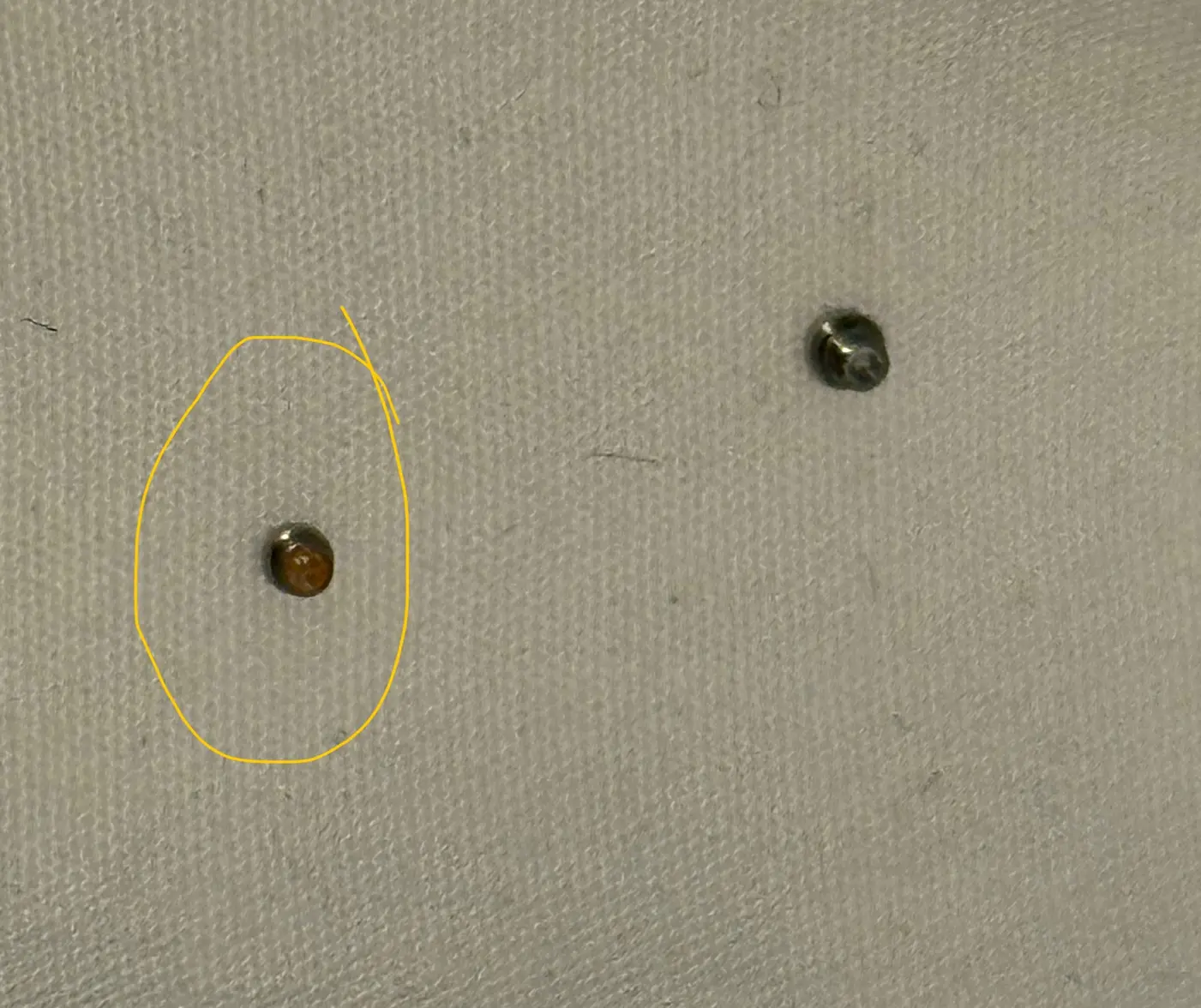
Fella does it no issues, I have a look at the parts out of curiosity and what looks like rust at the end of a screw. I’ve put a photo below.

It's not been wet or in contact with water. I thought stainless steel shouldn’t rust and I’m a bit surprised tbh.

Otherwise, so proud of my watch and I’m in love with my AT .
 
Posts
18,299
Likes
38,193
Are you sure it's rust and not threadlock residue?

All steels will rust, how much and how fast depends on their composition and their environment (exposure to corrosive fluids, dissimilar metals etc).

Basic steel will flash rust in minutes, quality stainless steel may take many many years if in a benign environment.

An example of stainless steel rust.

 
Posts
1,173
Likes
1,217
It's stainLESS not stainnone or stainproof.

Jokes aside, stainless steel can corrode. Just far less than carbon steel.

I have no idea why the inside of a screw on an AT would rust.
 
Posts
2
Likes
0
Yes positive it’s rust by the looks of it.

Just surprised me given I’ve only had it 5 months, seldom wore it and with no water contact.
 
Posts
714
Likes
2,761
All types of steel, including stainless steel contain some degree of carbon in their composition. This leads to some tarnish or staining that gives the appearance of rust. It's more prevalent in lower quality stainless steel, but it does still occur even in higher quality metals. There's a lot of discussion about this in high-end knife forums.

Another thing to keep in mind is that stainless steel is a low maintenance metal but definitely not no maintenance. Any metal whose maintenance is neglected will eventually suffer from corrosion.

In your case, I'd bet that it's nothing to worry about but if in doubt, ask your SA.
 
Posts
3,166
Likes
9,461
Stainless steel react with the oxygen in the air to form a thin layer of chromium oxide(Cr2O3). This layer is only some nano meters or atoms thick and protects the underlying metal against further oxidation. This layer is called passive, that means it wont react with oxygen again until scratched or abraded. It will then form a new passive layer over the scratch, its self repairing.

Stainless steels only corrode in certain conditiones, like clorides, high heat, oxygen free environments and combinations of materials.

Stainless steels contains over 10% chromium, like the 18/8 steels of the 304 and 316 containing 18% Chromium and 8% Nickel. Stainless steels goes thrugh a process of passivisation in a bath of nitric acid to remove the iron of the surface of the steel to form an iron free chromium oxide layer.

So maybe the screws have a lower chromium content or was not passified. Screws are sometimes made of 410 martensitic steel that contain only about 11 or 12 % Chromium makin them "less stainless". I would not combine the two in a construcktion, but shit happens. If your screws are magnetic they are probably martensitic.